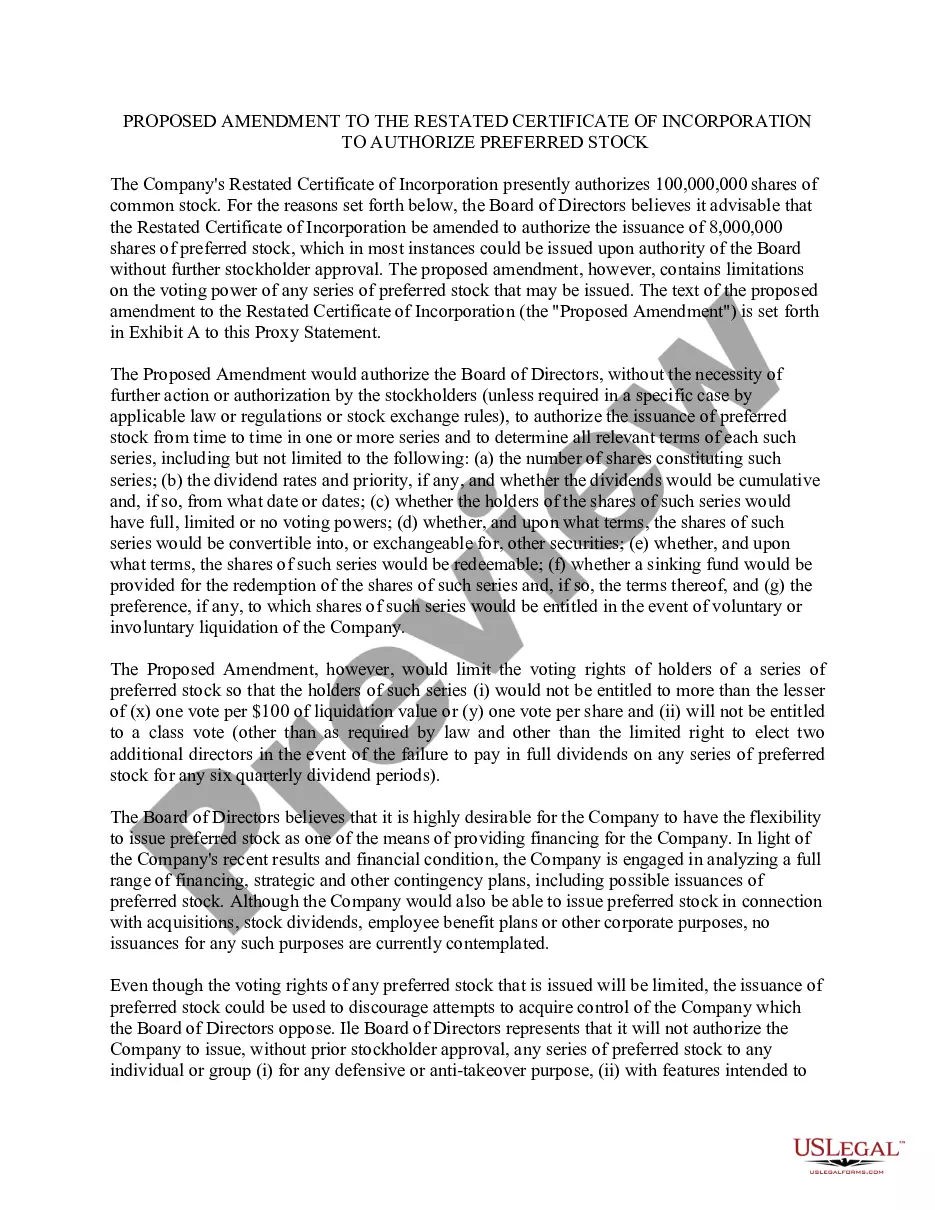
Proposed amendment to the certificate of incorporation to authorize up to 10,000,000 shares of preferred stock with amendment
About this form
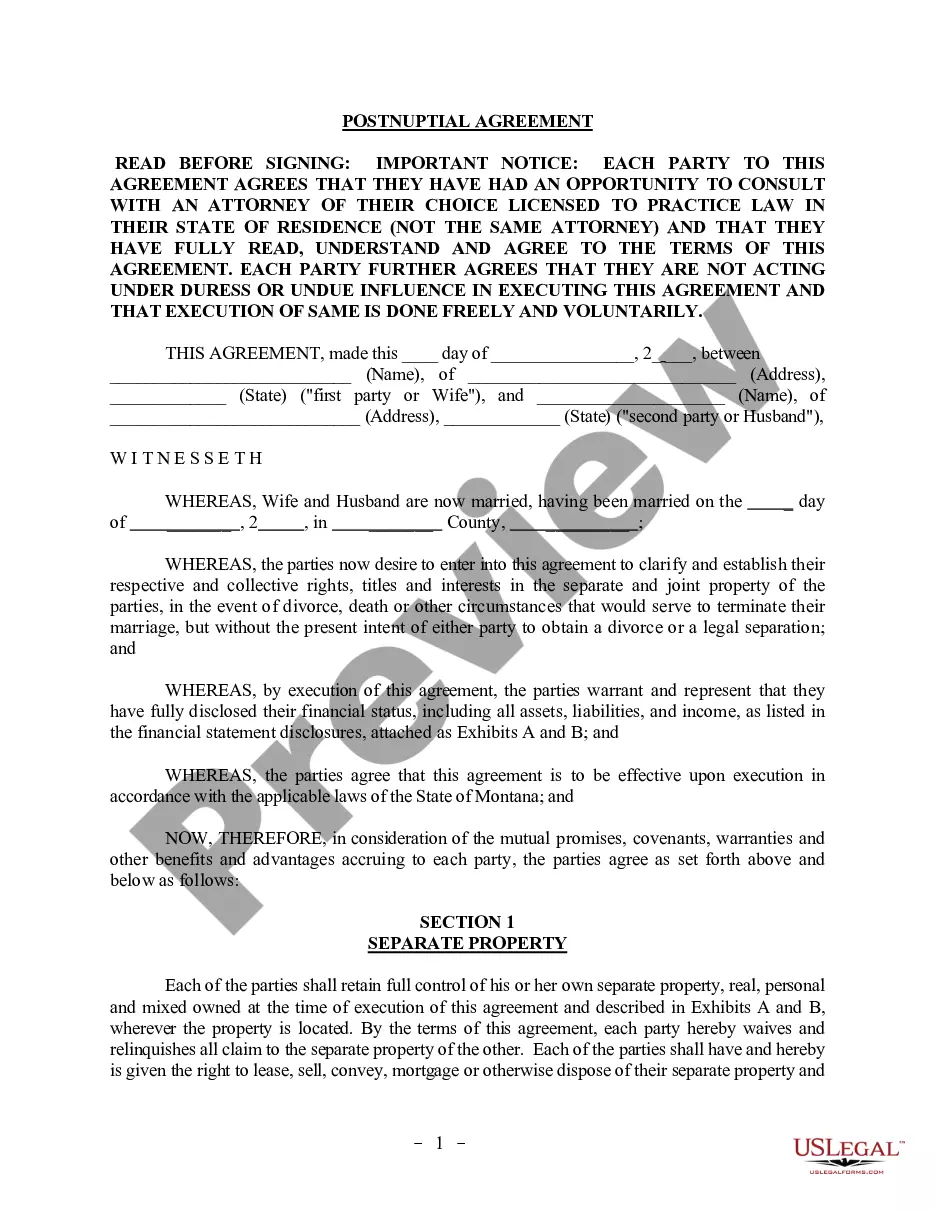
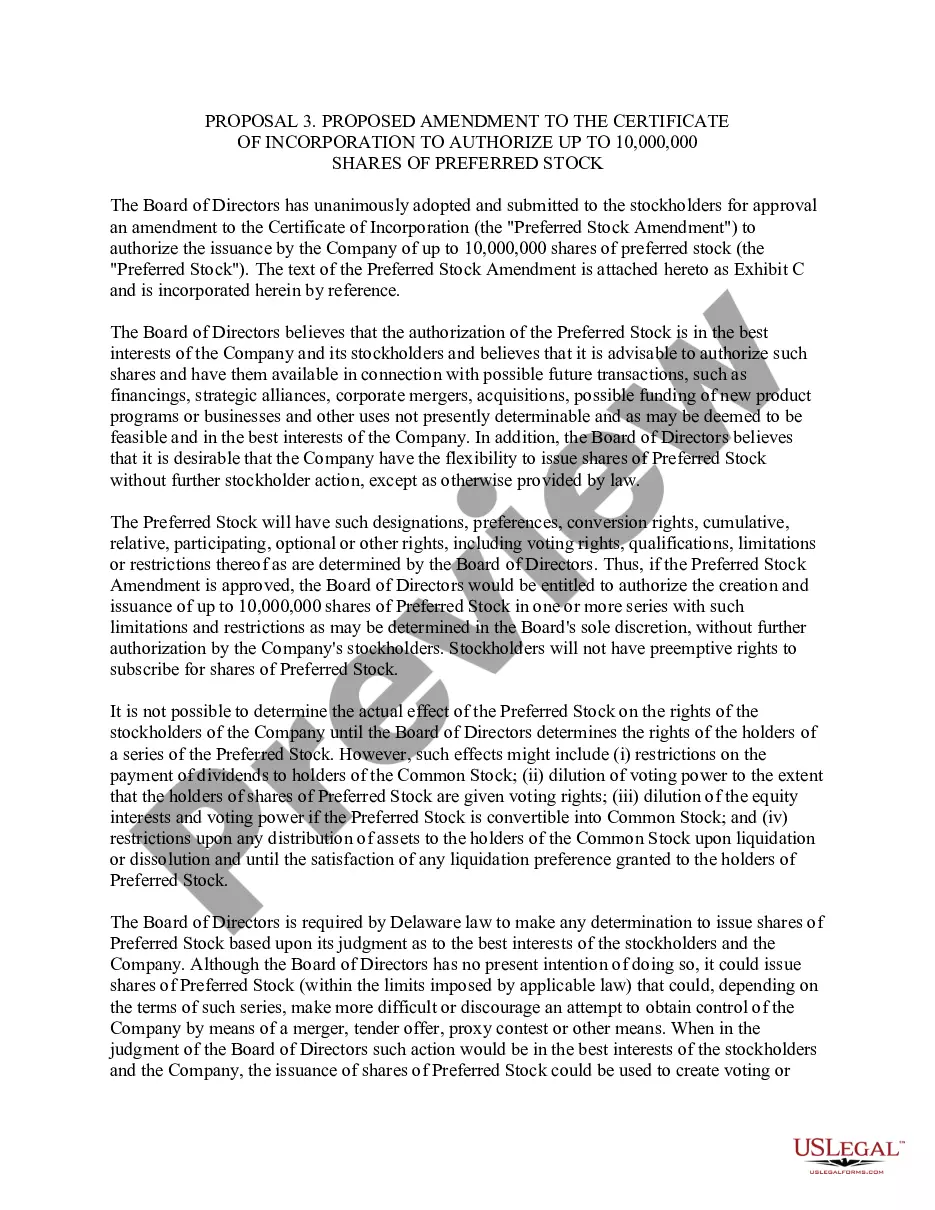
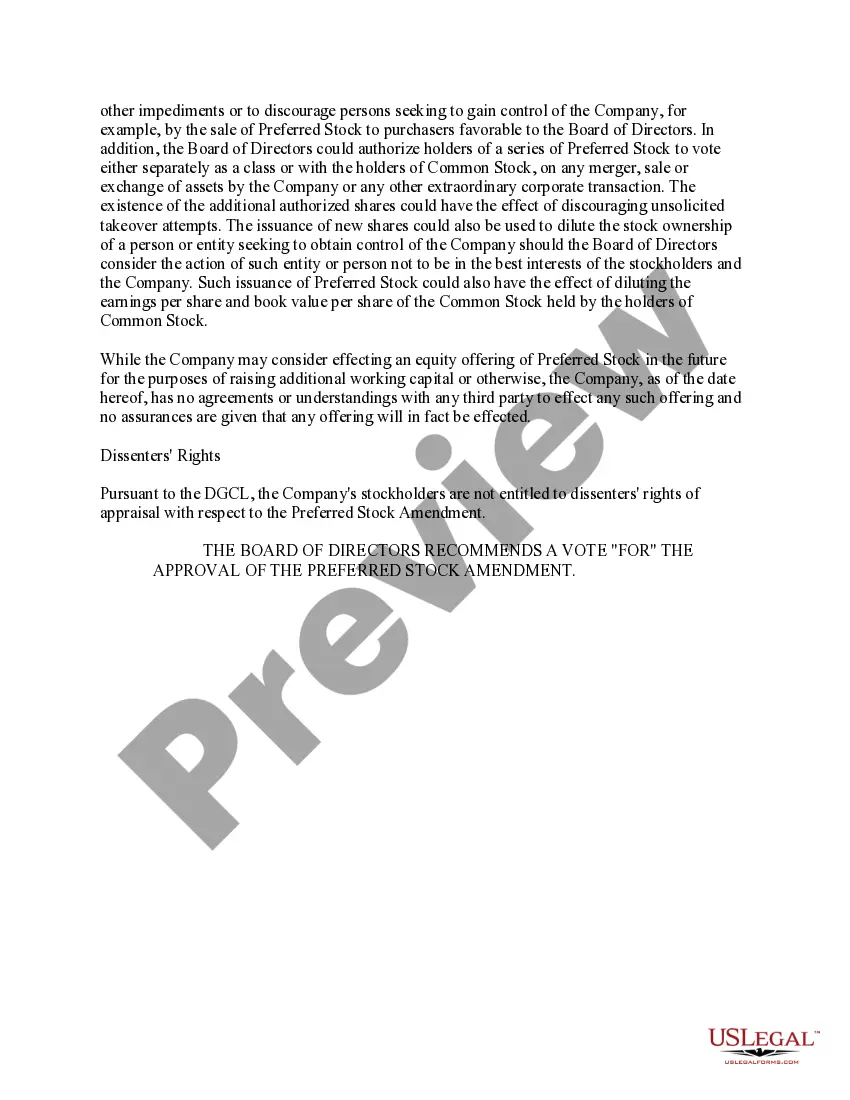
This Proposed Amendment to the Certificate of Incorporation allows a company to authorize up to 10,000,000 shares of preferred stock. The amendment is crucial for corporations aiming to expand their capital structure and provides flexibility for future transactions, including mergers and financing. This form stands apart from standard stock issuance forms as it specifically addresses the creation of preferred stock and outlines how these shares can be structured and issued by the Board of Directors.
Key parts of this document
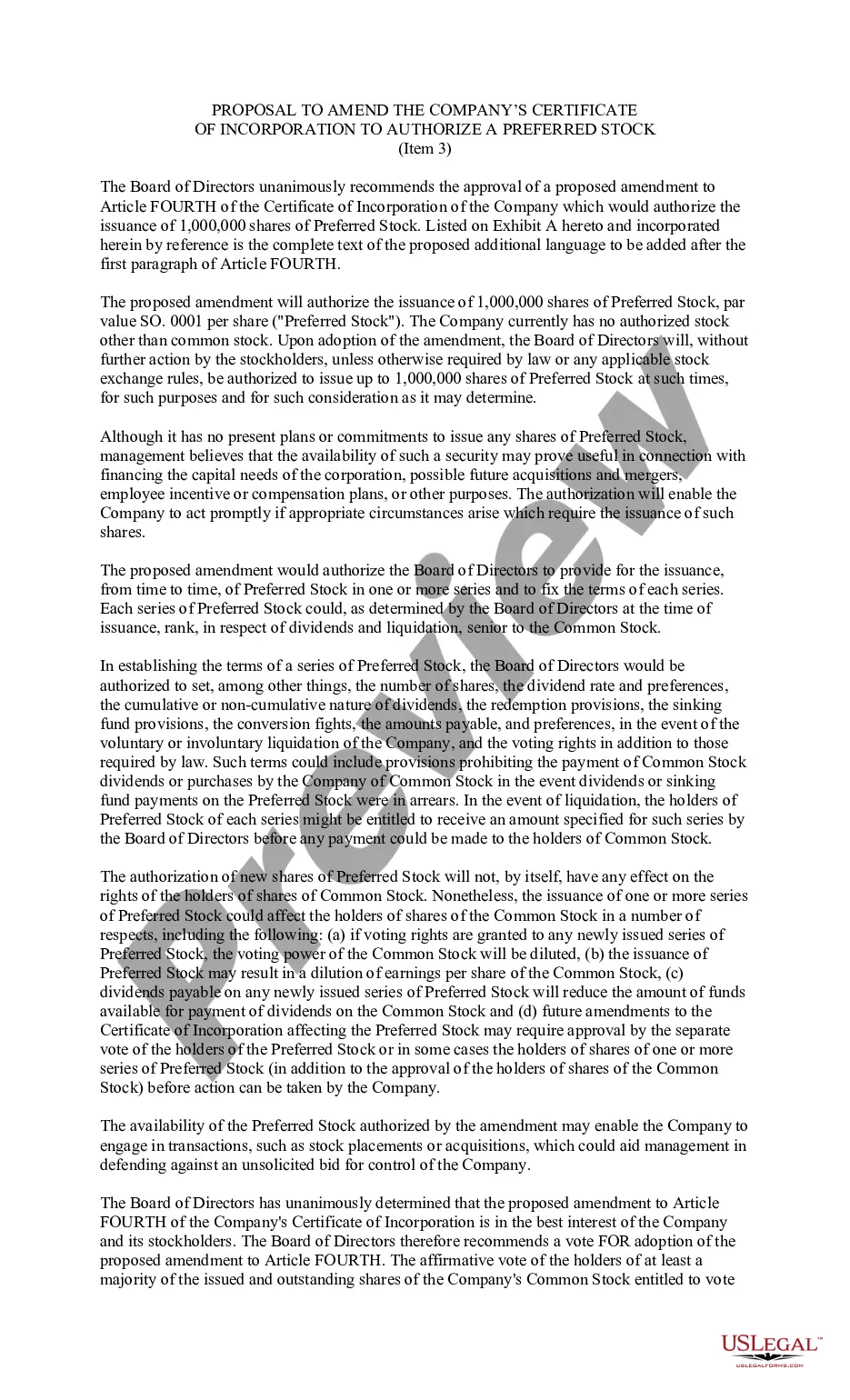
- Board of Directors approval and recommendation for stockholder vote.
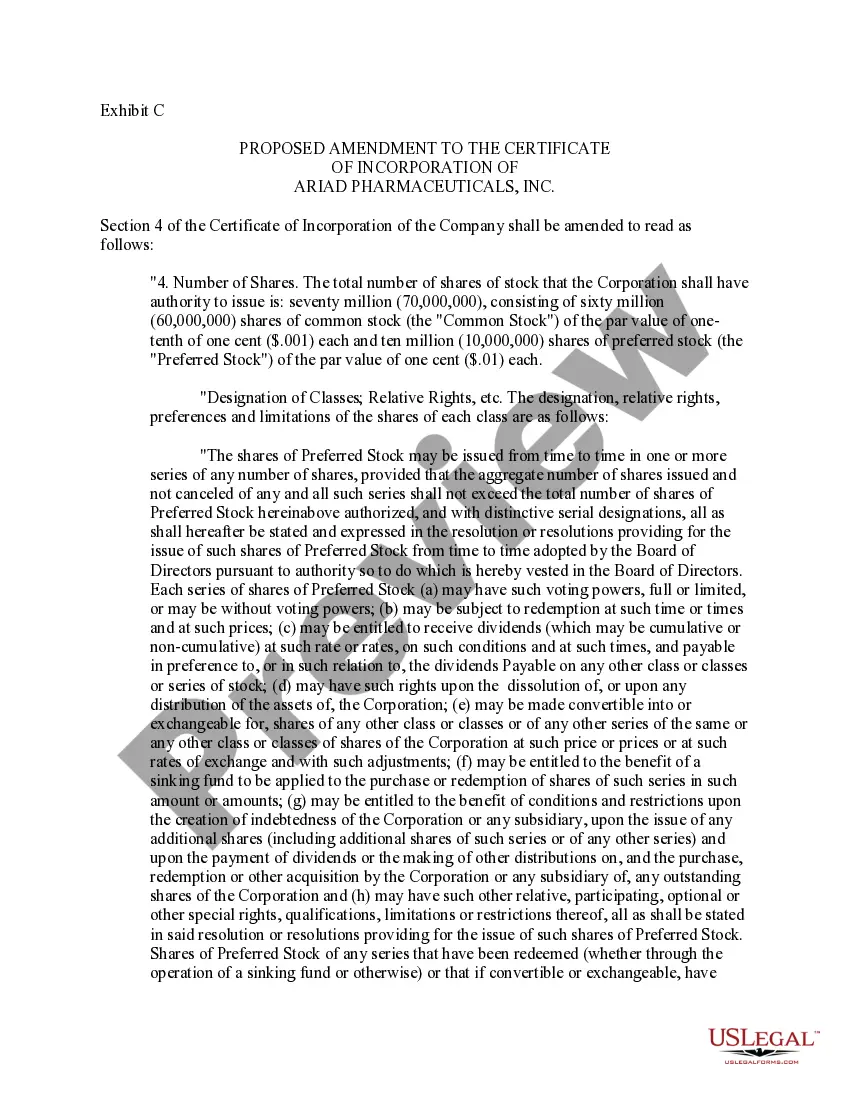
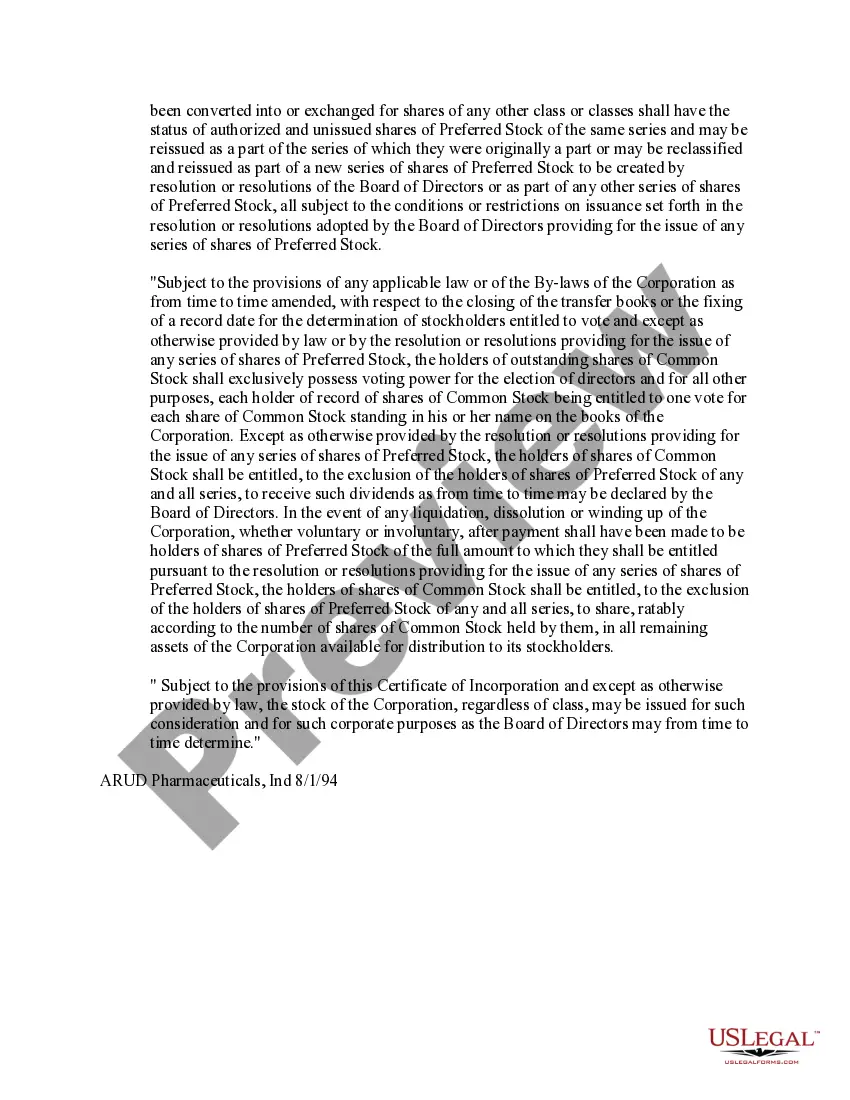
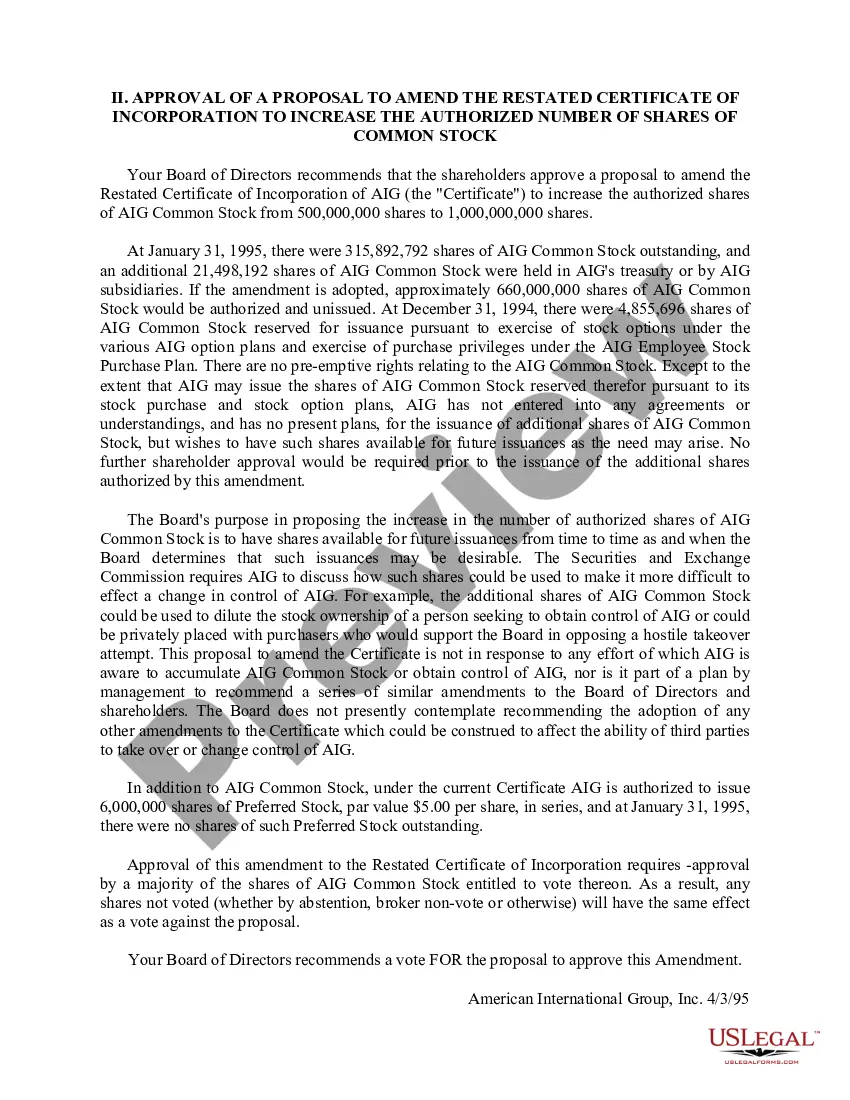
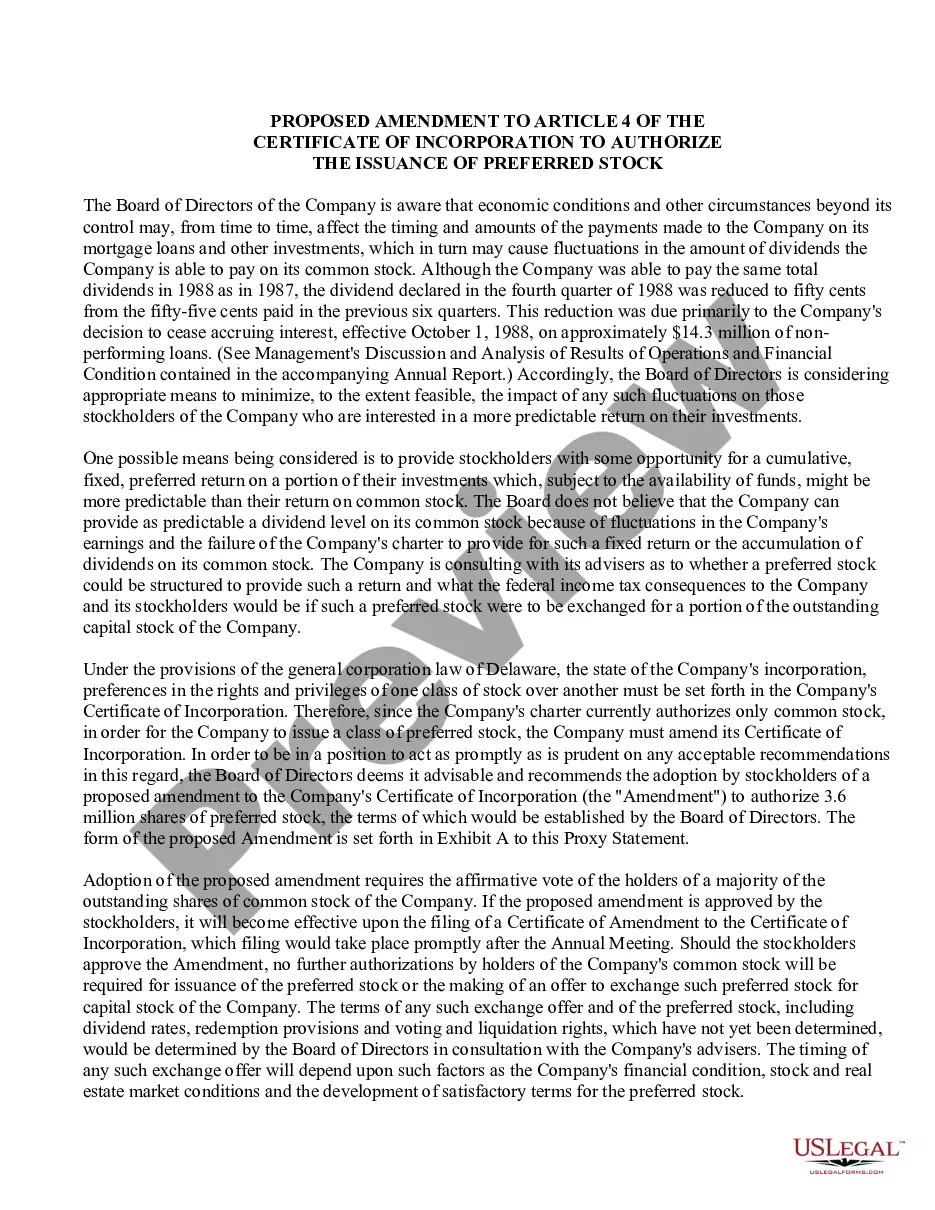
- Detailed description of the preferred stock amendment including the total number of shares and par value.
- Provisions for the designations, preferences, and voting rights attached to the preferred stock.
- Information on potential effects on common stockholders, including dilution of voting power and dividends.
- Exhibit detailing the new amendment language to be added to the Certificate of Incorporation.

When this form is needed
This form is used when a corporation wishes to amend its Certificate of Incorporation to issue preferred stock. It is relevant in various scenarios, such as preparing for a significant financing round, pursuing mergers, or attempting to secure strategic alliances. This amendment would be beneficial when a company seeks to enhance its capital structure or respond to market conditions.
Who this form is for
- Corporations planning to amend their charter to include preferred stock.
- Board members and corporate officials responsible for governance.
- Legal teams working on corporate restructuring or financing initiatives.
How to prepare this document
- Begin with the identification of the corporation and the existing Certificate of Incorporation details.
- Draft the amendment language clearly stating the number of shares and their par value.
- Detail the powers and rights of the preferred stock as determined by the Board of Directors.
- Include a provision for stockholder approval, along with the process for voting on the amendment.
- Attach the completed amendment as an exhibit to the Certificate of Incorporation for official filing.
Is notarization required?
Notarization is not commonly needed for this form. However, certain documents or local rules may make it necessary. Our notarization service, powered by Notarize, allows you to finalize it securely online anytime, day or night.
Get your form ready online
Our built-in tools help you complete, sign, share, and store your documents in one place.
Make edits, fill in missing information, and update formatting in US Legal Forms—just like you would in MS Word.
Download a copy, print it, send it by email, or mail it via USPS—whatever works best for your next step.
Sign and collect signatures with our SignNow integration. Send to multiple recipients, set reminders, and more. Go Premium to unlock E-Sign.
If this form requires notarization, complete it online through a secure video call—no need to meet a notary in person or wait for an appointment.
We protect your documents and personal data by following strict security and privacy standards.

Make edits, fill in missing information, and update formatting in US Legal Forms—just like you would in MS Word.

Download a copy, print it, send it by email, or mail it via USPS—whatever works best for your next step.

Sign and collect signatures with our SignNow integration. Send to multiple recipients, set reminders, and more. Go Premium to unlock E-Sign.

If this form requires notarization, complete it online through a secure video call—no need to meet a notary in person or wait for an appointment.

We protect your documents and personal data by following strict security and privacy standards.
Mistakes to watch out for
- Failing to obtain unanimous approval from the Board of Directors before presenting to stockholders.
- Not clearly defining the rights and preferences associated with the preferred stock.
- Neglecting to provide stockholders with adequate information for making an informed decision during the vote.
Benefits of completing this form online
- Convenient access to accurately drafted legal language tailored for your specific needs.
- Editability allows you to customize the form easily according to your corporate requirements.
- Reliable and secure downloads ensuring the latest legal standards are met.
Legal use & context
- This amendment must comply with state corporate laws governing stock issuance.
- Stockholders have the right to approve amendments related to the capital structure.
- The Board of Directors must act in the best interest of the company and its stockholders when issuing preferred stock.
Summary of main points
- This form is essential for corporations looking to issue preferred stock.
- Clear communication of the amendment's implications is crucial for stockholder agreement.
- Understanding state-specific requirements can prevent legal complications.
Looking for another form?




Form popularity
FAQ
Stock Certificates Are No Longer Necessary Today, most of the world's exchanges have either done away with or are phasing out paper certificates. Stock ownership is much easier to prove now thanks to electronic records and electronic communication networks (ECN).
The ownership transfer form can be found on the back of the stock certificate. Take the certificate to a notary public, and sign it in the notary's presence. Send the stock certificate to the transfer agent by certified mail along with any required documentation of your ownership rights.
Old stock certificates shouldn't be simply thrown away. They can still have value if they represent an existing or merged company, or if they are valued as collectibles. A little bit of research can help you determine the worth, if any, of your old paper stock certificate.
Old stock certificates shouldn't be simply thrown away. They can still have value if they represent an existing or merged company, or if they are valued as collectibles.If the stock has split over the years, the amount listed might not be the amount your certificate is worth.
Contact your stockbroker to search the stock's worth via its CUSIP number if the steps given earlier yield no results. This number is printed on the back of the stock certificate. Use a fee-based service to search your stock's history if the earlier steps come up empty. Fees can range from $40 to $85 or more.
In the 1980's, the NYSE and many companies stopped the physical trading of paper certificates and instead held them all at a central depository and kept records of the trading. Over the past three decades, paper certificates have become the distinct exception rather than the rule.
The share certificate should be issued in Form SH-1 or any document that resembles Form SH-1. Name of the Company. CIN Number of the Company. Registered Office of the Company. Name of the owners of the shares. Folio number of the member.
Some companies no longer issue paper stock certificates. However, when you own shares in a corporation that still provides them, you can be issued paper stocks.If the company offers a direct stock purchase plan, you might want to make your investment using this service.
First, look for any signs that suggest the stock certificate is still valid. A valid stock certificate bears the name of the beneficiary. Also, all seals and signatures should be undamaged. In other words, there should be no hole punches or stamps over any of the seals or signatures on the certificate.