Directors Stock Appreciation Rights Plan of American Annuity Group, Inc.
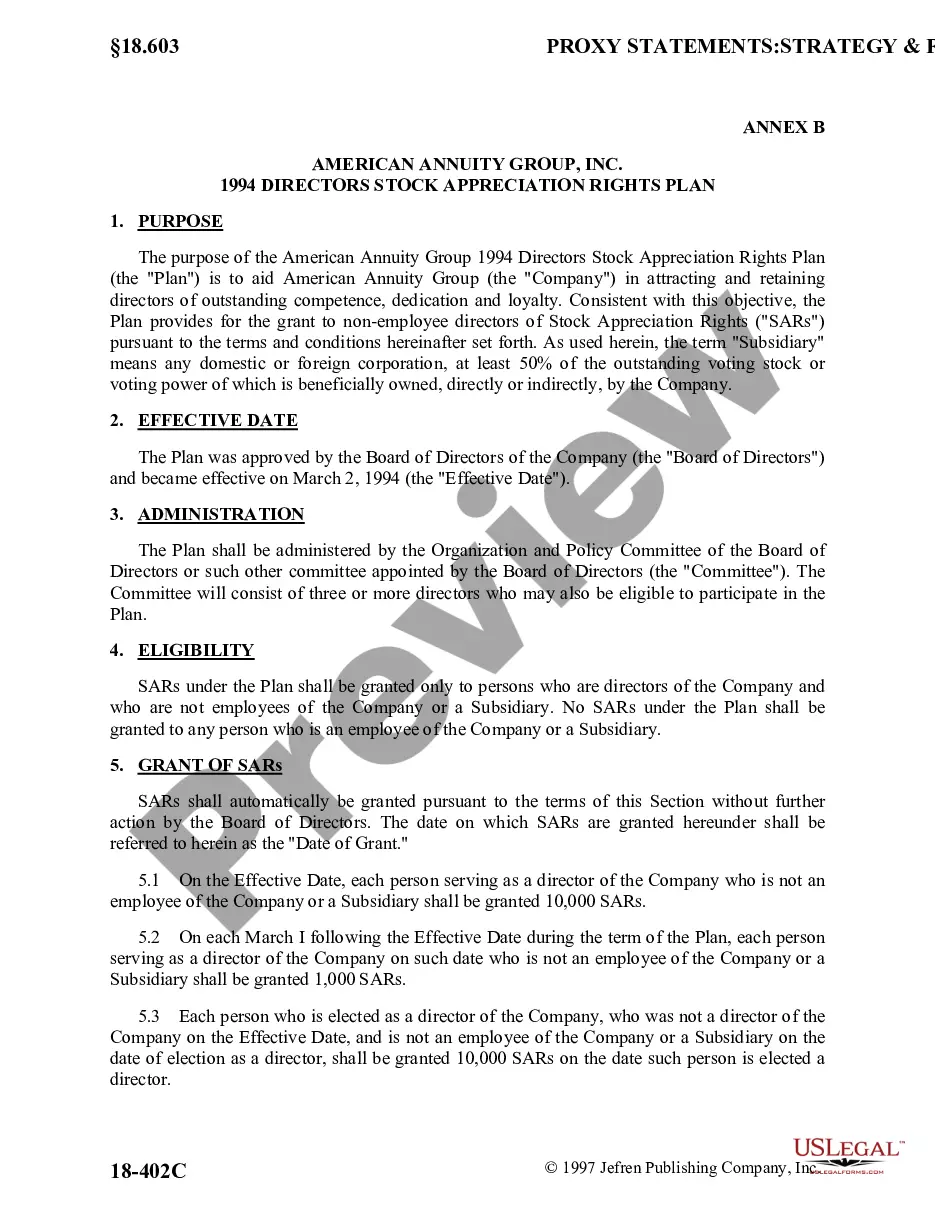
The Directors Stock Appreciation Rights Plan of American Annuity Group, Inc. is designed to enhance the companyâs ability to attract and retain high-caliber directors by providing them with Stock Appreciation Rights (SARs). This plan allows eligible non-employee directors to receive automatic grants of SARs, which can increase in value based on the performance of the companyâs stock over time. This plan is different from traditional stock options, as it focuses solely on appreciation in stock value without requiring the purchase of shares at a set price.
- Purpose: Aimed at attracting and retaining talented non-employee directors.
- Eligibility: SARs are granted exclusively to non-employee directors of American Annuity Group.
- Automatic Grants: Each non-employee director receives 10,000 SARs upon joining, with additional grants on each March 1st.
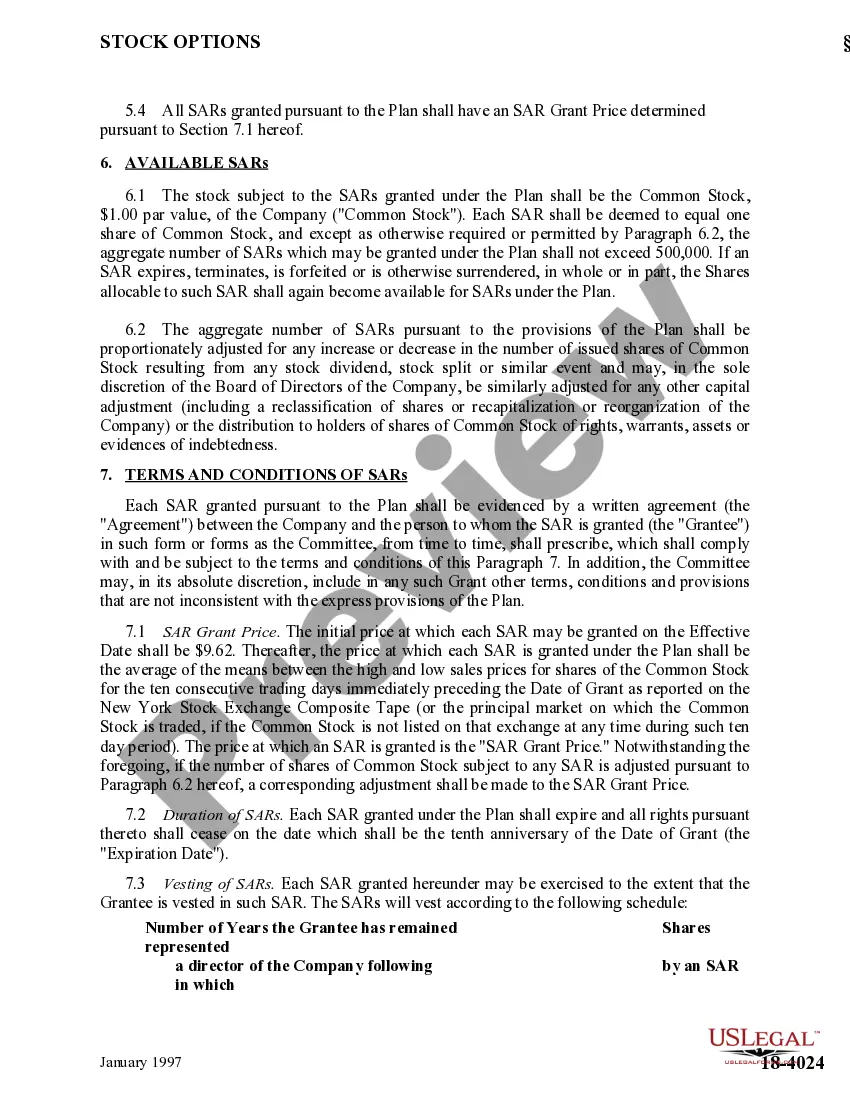
- Grant Price: SARs are initially priced at a fixed rate, with adjustments based on stock performance.
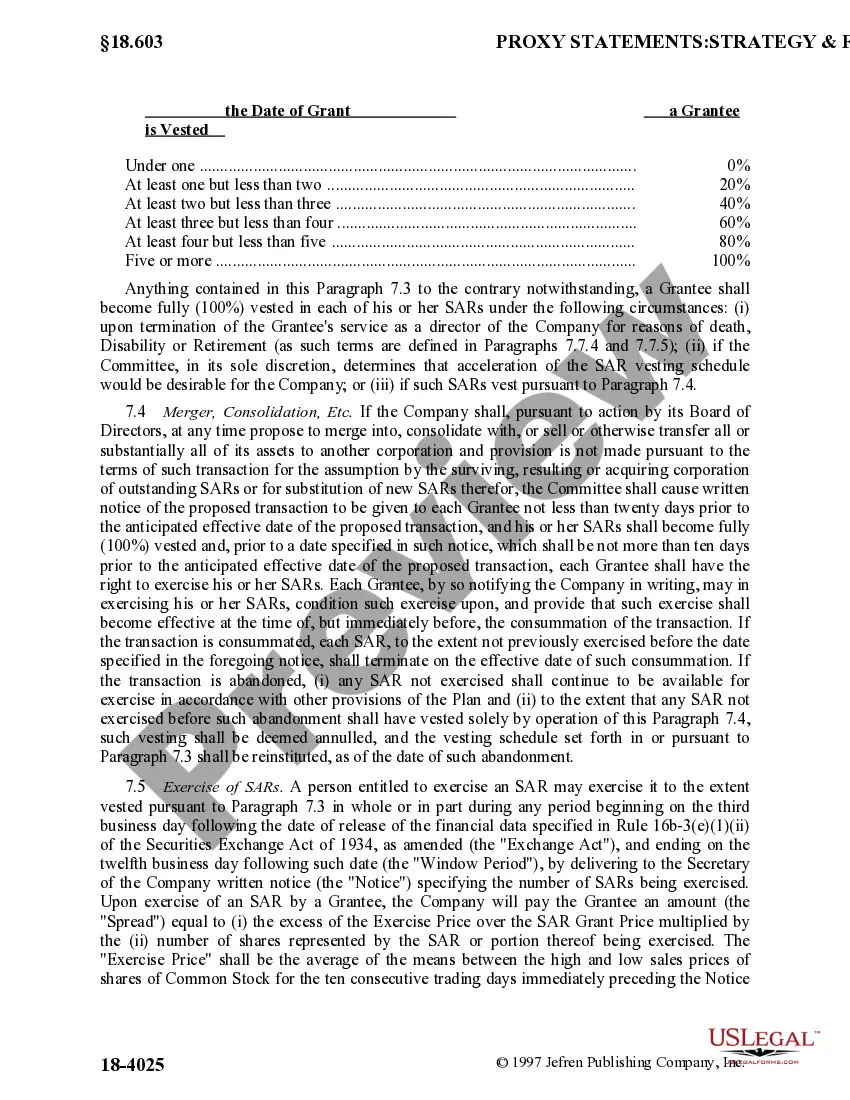
- Vesting Schedule: SARs vest based on the length of service and certain qualifying events like retirement or disability.
- Expiration: Each SAR expires ten years after the grant date unless exercised or terminated earlier.

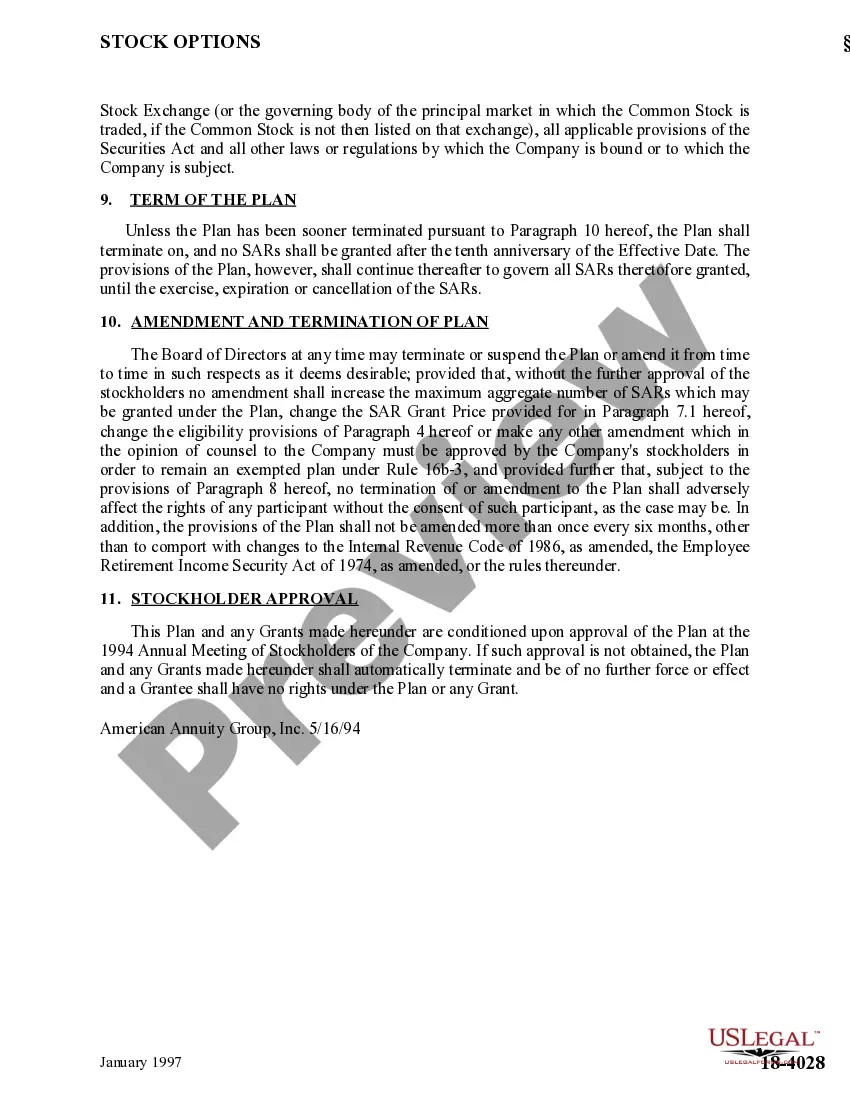


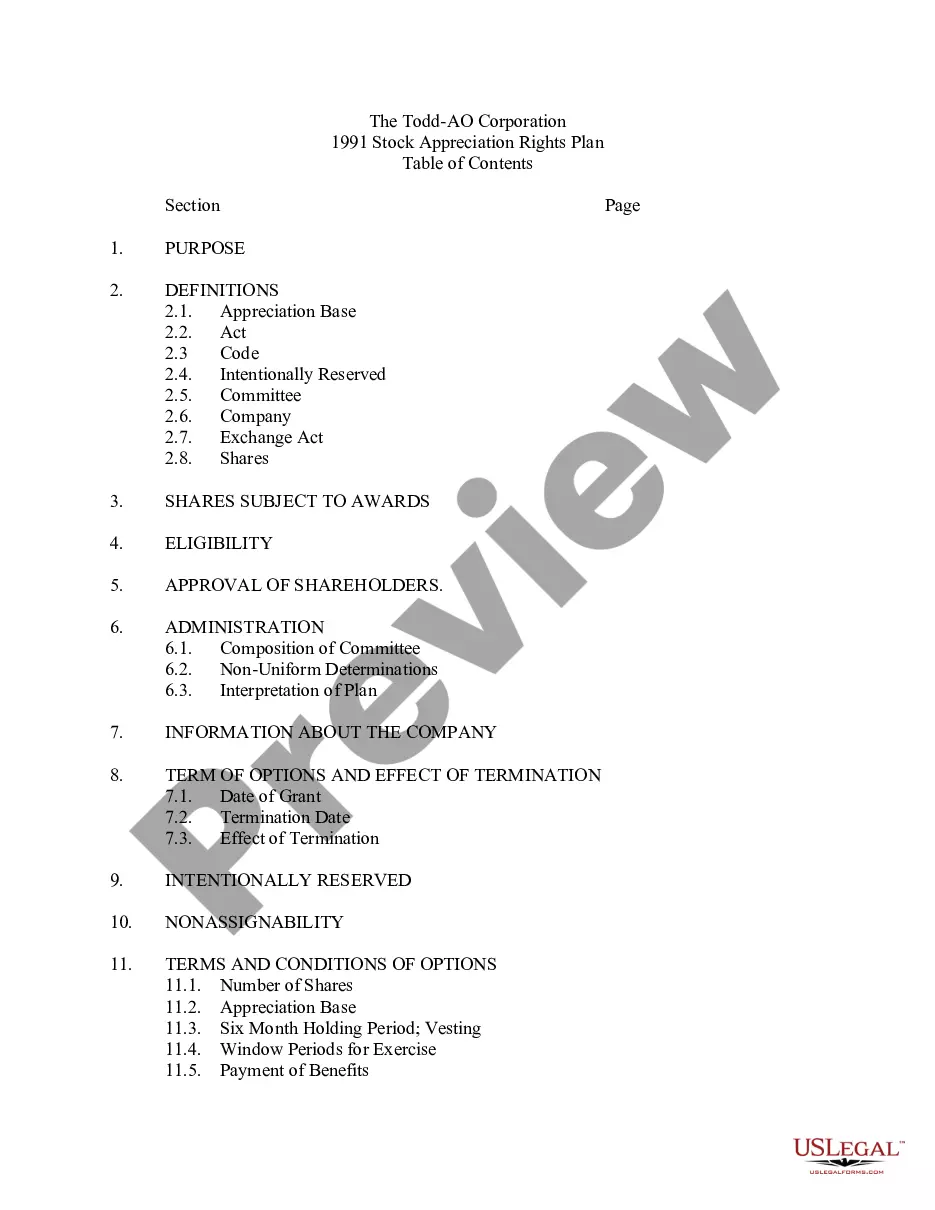
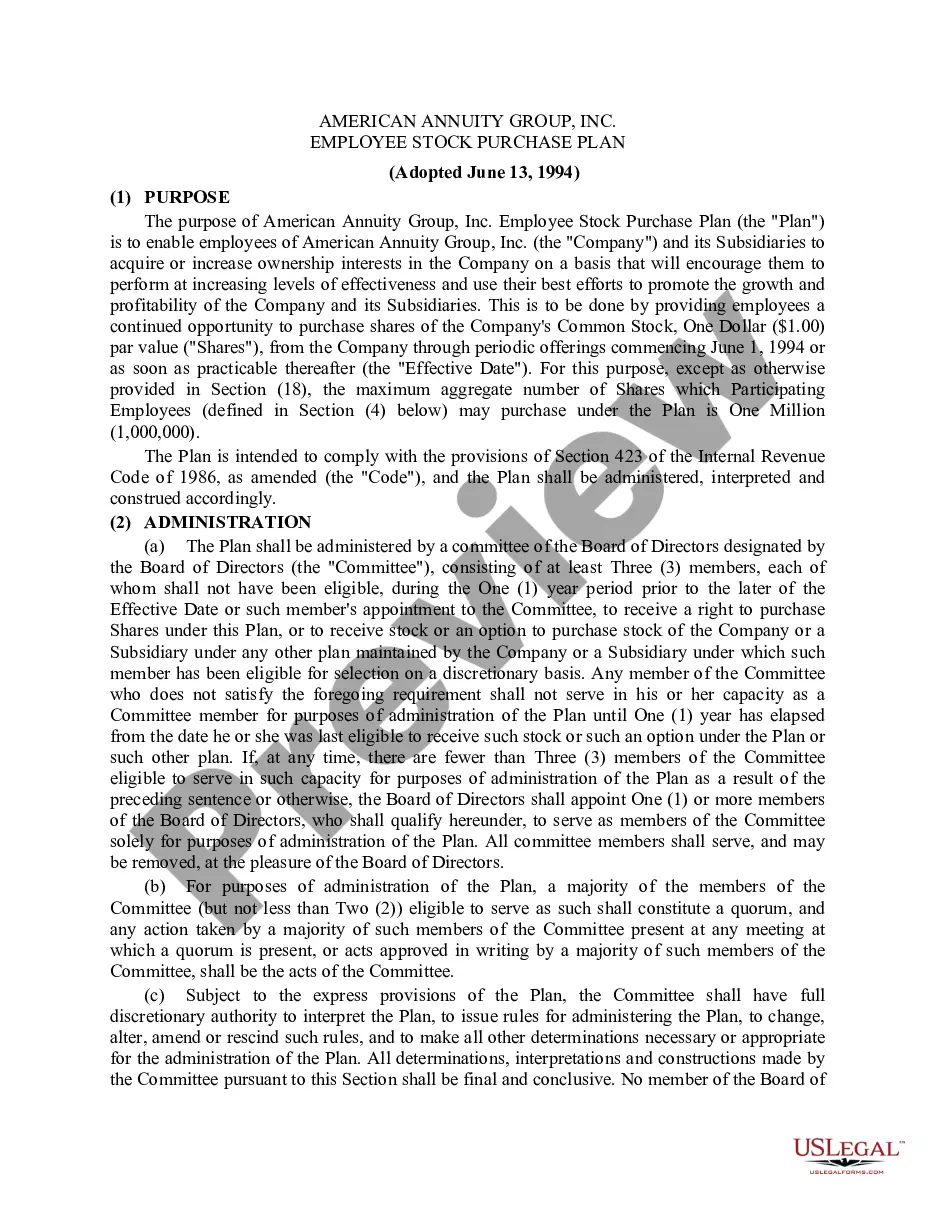

This form should be used when a corporation wishes to establish a formal plan to grant stock appreciation rights to its non-employee directors. This ensures these directors are aligned with shareholder interests as they benefit from the companyâs growth and profitability. Use this form when seeking to engage directors' loyalty, align their goals with those of shareholders, and provide them with a competitive incentive package.
Eligible users of this form include:
- Non-employee members on the board of directors of American Annuity Group, Inc.
- Corporate officers responsible for implementing stock incentive plans.
- Corporate legal consultants and advisors involved in corporate governance.
To complete this form, follow these steps:
- Identify the directors who will receive SARs under this plan.
- Document the effective date of the plan, ensuring the Board of Directors' approval is noted.
- Specify the number of SARs granted to each director upon their election and the annual grants thereafter.
- Include the SAR Grant Price based on the most recent stock performance data prior to the grant date.
- Confirm the vesting schedule as outlined in the plan and communicate this clearly to the directors.
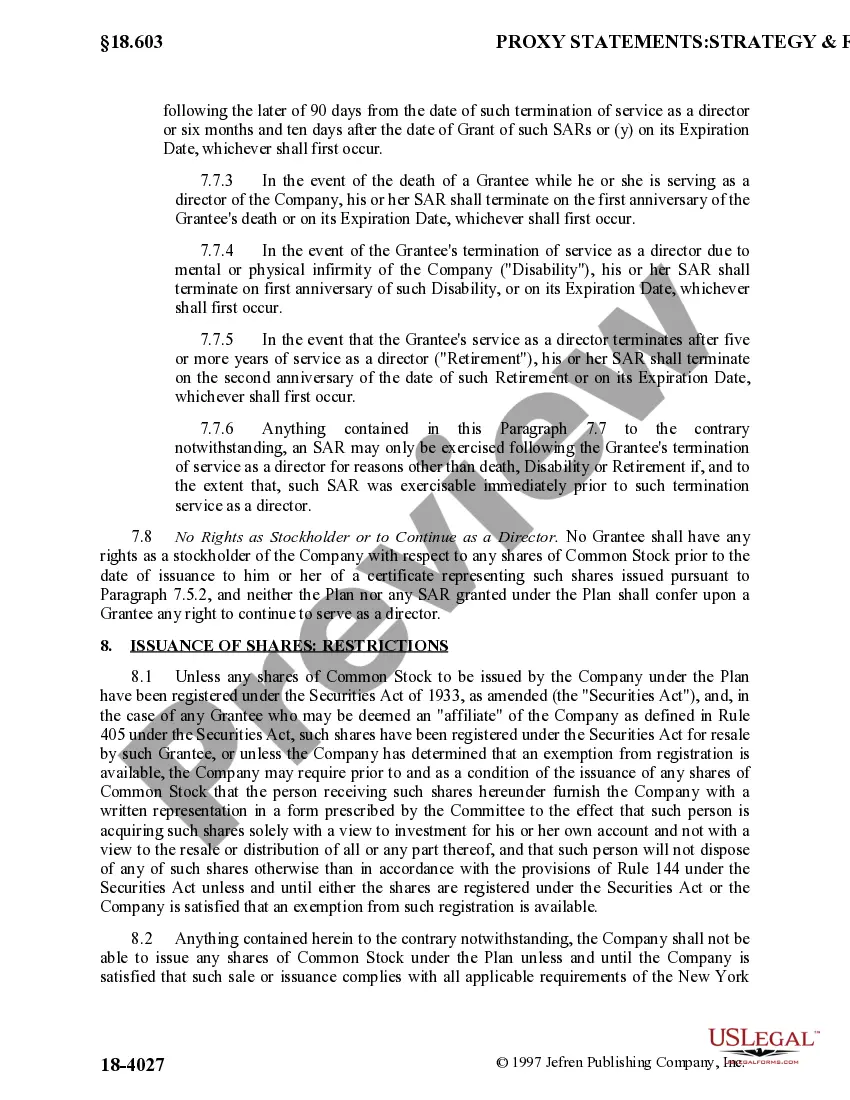
- Ensure proper governance procedures for exercising the rights and any implications related to termination of service.
Does this document require notarization?
Notarization is not commonly needed for this form. However, certain documents or local rules may make it necessary. Our notarization service, powered by Notarize, allows you to finalize it securely online anytime, day or night.
Get your form ready online
Our built-in tools help you complete, sign, share, and store your documents in one place.
Make edits, fill in missing information, and update formatting in US Legal Forms—just like you would in MS Word.
Download a copy, print it, send it by email, or mail it via USPS—whatever works best for your next step.
Sign and collect signatures with our SignNow integration. Send to multiple recipients, set reminders, and more. Go Premium to unlock E-Sign.
If this form requires notarization, complete it online through a secure video call—no need to meet a notary in person or wait for an appointment.
We protect your documents and personal data by following strict security and privacy standards.

Make edits, fill in missing information, and update formatting in US Legal Forms—just like you would in MS Word.

Download a copy, print it, send it by email, or mail it via USPS—whatever works best for your next step.

Sign and collect signatures with our SignNow integration. Send to multiple recipients, set reminders, and more. Go Premium to unlock E-Sign.

If this form requires notarization, complete it online through a secure video call—no need to meet a notary in person or wait for an appointment.

We protect your documents and personal data by following strict security and privacy standards.
- Failing to specify the eligibility criteria for granting SARs can lead to confusion.
- Not providing clear documentation and communication about vesting schedules can create misunderstandings among directors.
- Neglecting to regularly review and update the plan in compliance with changing regulations may lead to legal issues.
- Convenient online access for downloading and quickly implementing the form.
- Editable templates allow for customization based on the corporationâs specific needs.
- Reliability of professionally drafted forms that comply with legal standards.
- The Directors Stock Appreciation Rights Plan aims to align directors' incentives with shareholders.
- Automatic grants are made to eligible directors without board action on each grant date.
- The plan outlines specific vesting conditions and expiration terms for SARs.
- Consulting with a legal professional is advisable to ensure that the plan complies with applicable laws.
Looking for another form?









Form popularity
FAQ
Stock appreciation rights are a type of incentive plan based on your stock's value. Employees receive a bonus in cash or equivalent number of shares based on how much the stock value increases over a set period of time - usually from the date of granting the right up until the right is exercised.
There are no federal income tax consequences when you are granted stock appreciation rights. However, at exercise you must recognize compensation income on the fair market value of the amount received at vesting. An employer is generally obligated to withhold taxes.
Stock appreciation rights are a type of incentive plan based on your stock's value. Employees receive a bonus in cash or equivalent number of shares based on how much the stock value increases over a set period of time - usually from the date of granting the right up until the right is exercised.
Generally, any profit you make on the sale of a stock is taxable at either 0%, 15% or 20% if you held the shares for more than a year or at your ordinary tax rate if you held the shares for less than a year. Also, any dividends you receive from a stock are usually taxable.
Stock Appreciation Rights Are Not Securities. Claim that exercise of cash appreciation of Stock Appreciation Rights involved insider trading and securities fraud rejected for lack of evidence of fraud and because the Rights are not securities. Riverwood granted its senior executives stock appreciation rights (SARs).
There are no federal income tax consequences when you are granted stock appreciation rights. However, at exercise you must recognize compensation income on the fair market value of the amount received at vesting. An employer is generally obligated to withhold taxes.
Invest for the long term. Take advantage of tax-deferred retirement plans. Use capital losses to offset gains. Watch your holding periods. Pick your cost basis.
In many cases, you can calculate the stock price appreciation simply by subtracting the current price of the stock from the original price of the stock. For example, if you bought a stock for $100 a year ago and now it is worth $120, subtract $100 from $120 to find the stock price has appreciated by $20.