Approval of director warrants
Overview of this form
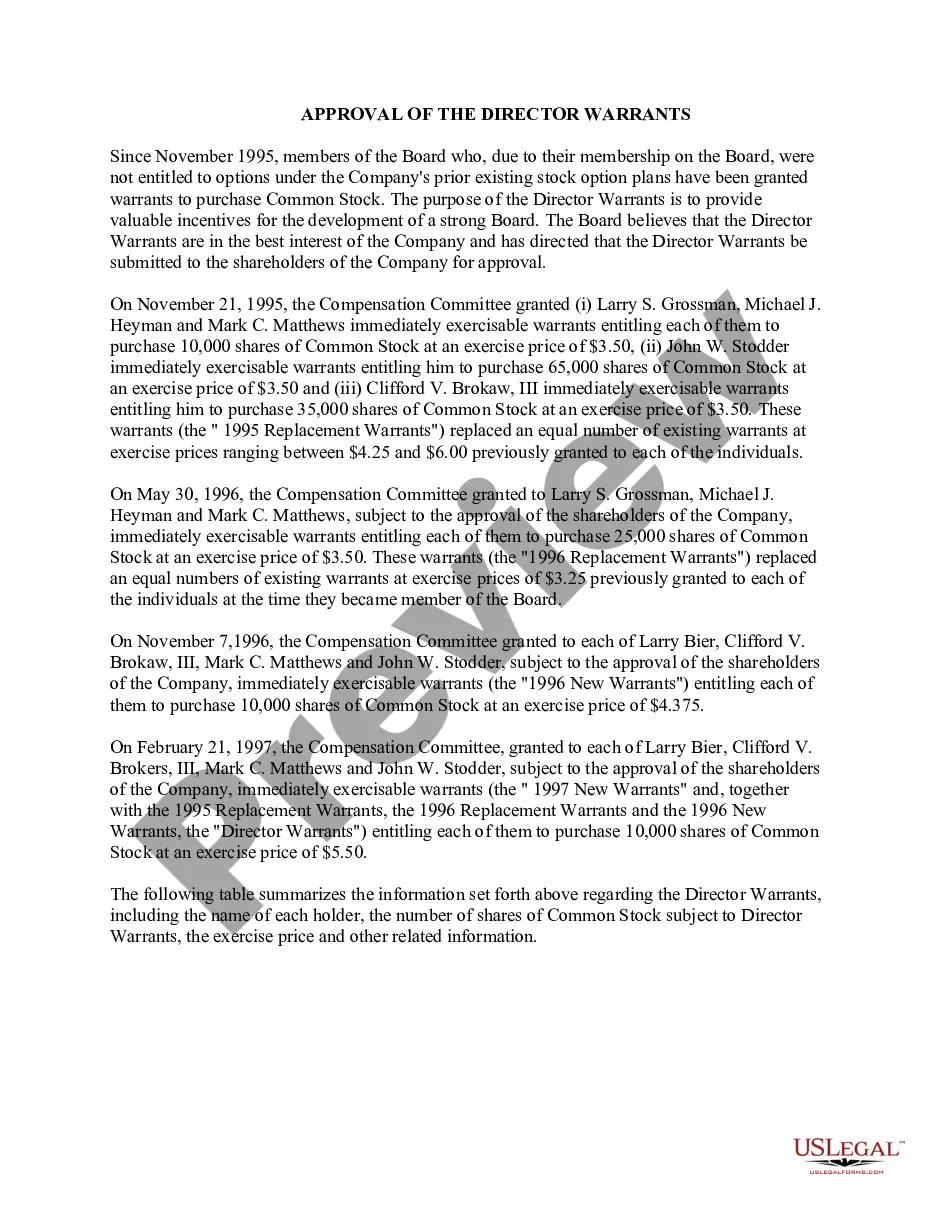
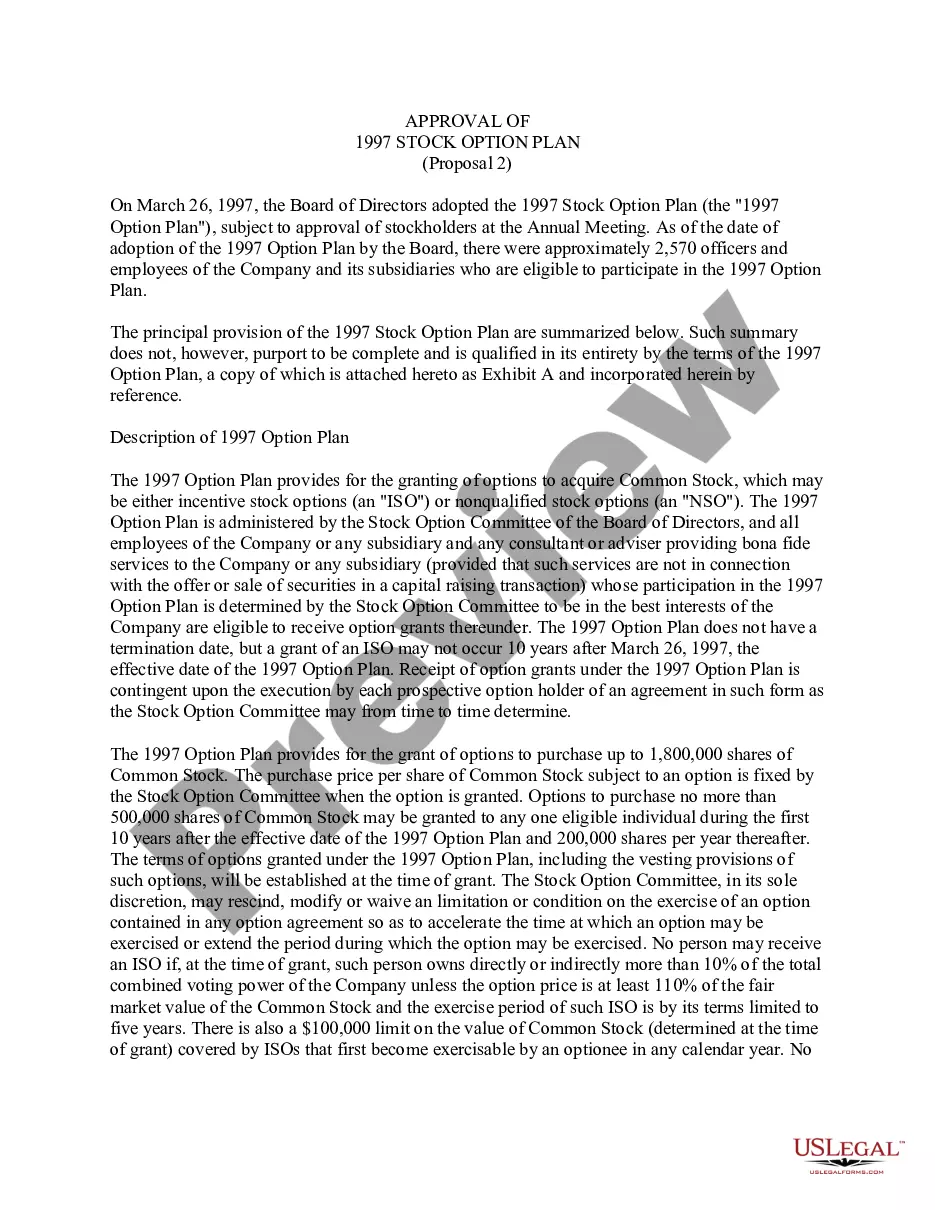
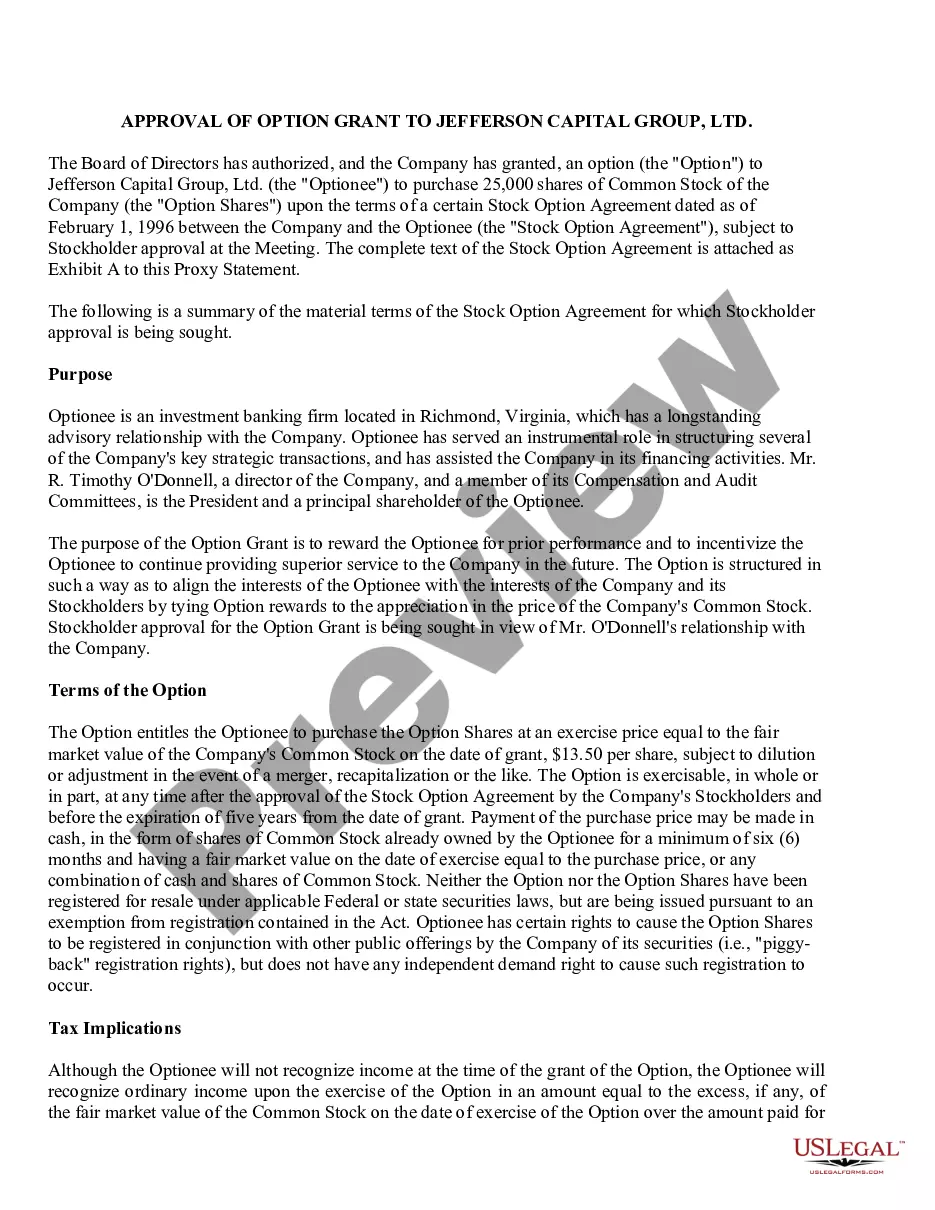
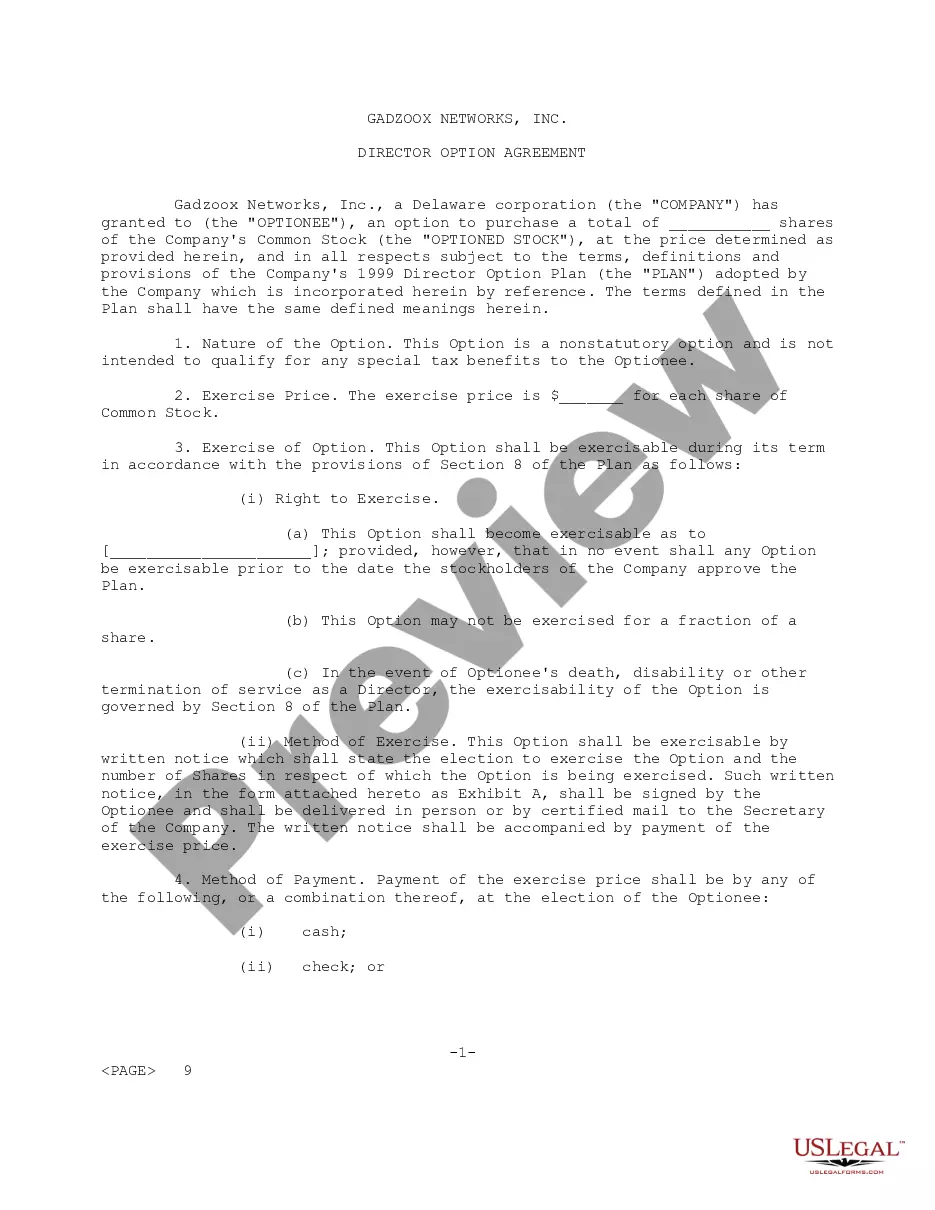
The Approval of Director Warrants form is used to secure shareholder approval for warrants granted to company directors to purchase common stock. This form is specific to situations where board members have received warrants as incentives but require shareholder consent to exercise these options. Unlike standard stock options, director warrants often come with specific conditions and terms that are detailed in the associated proxy statement.
Form components explained
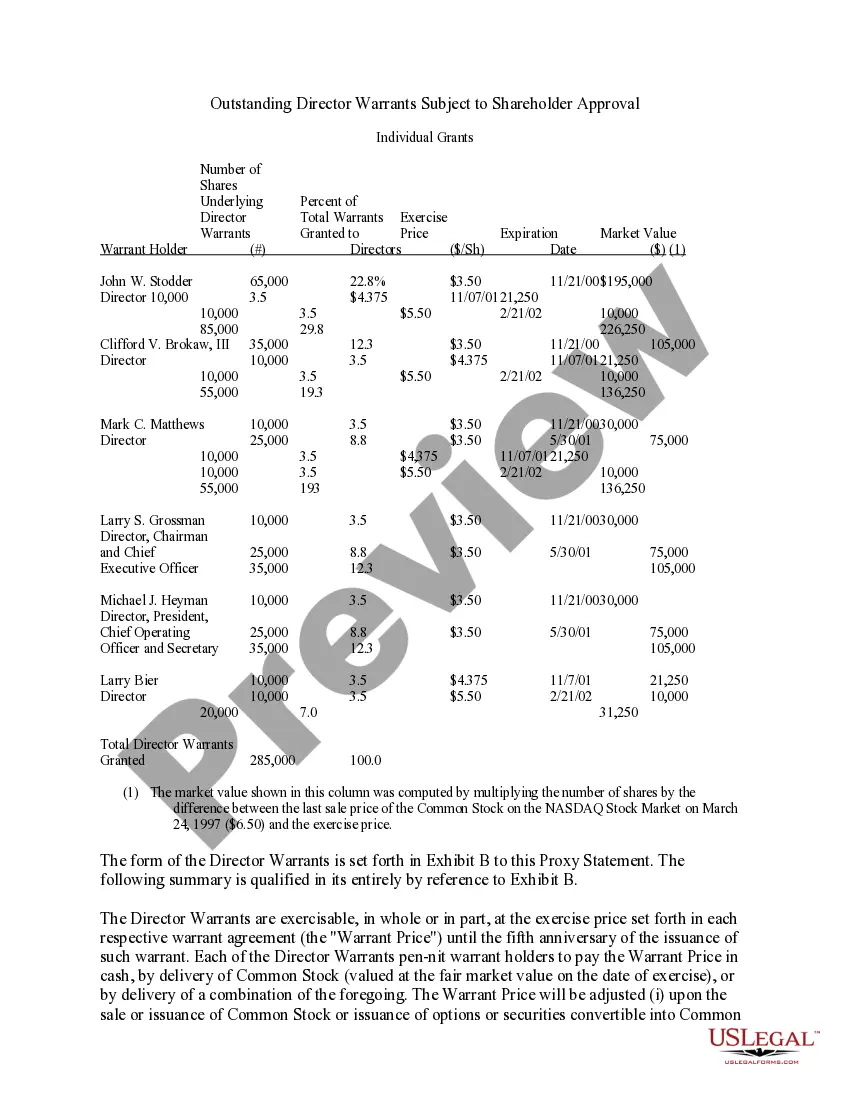
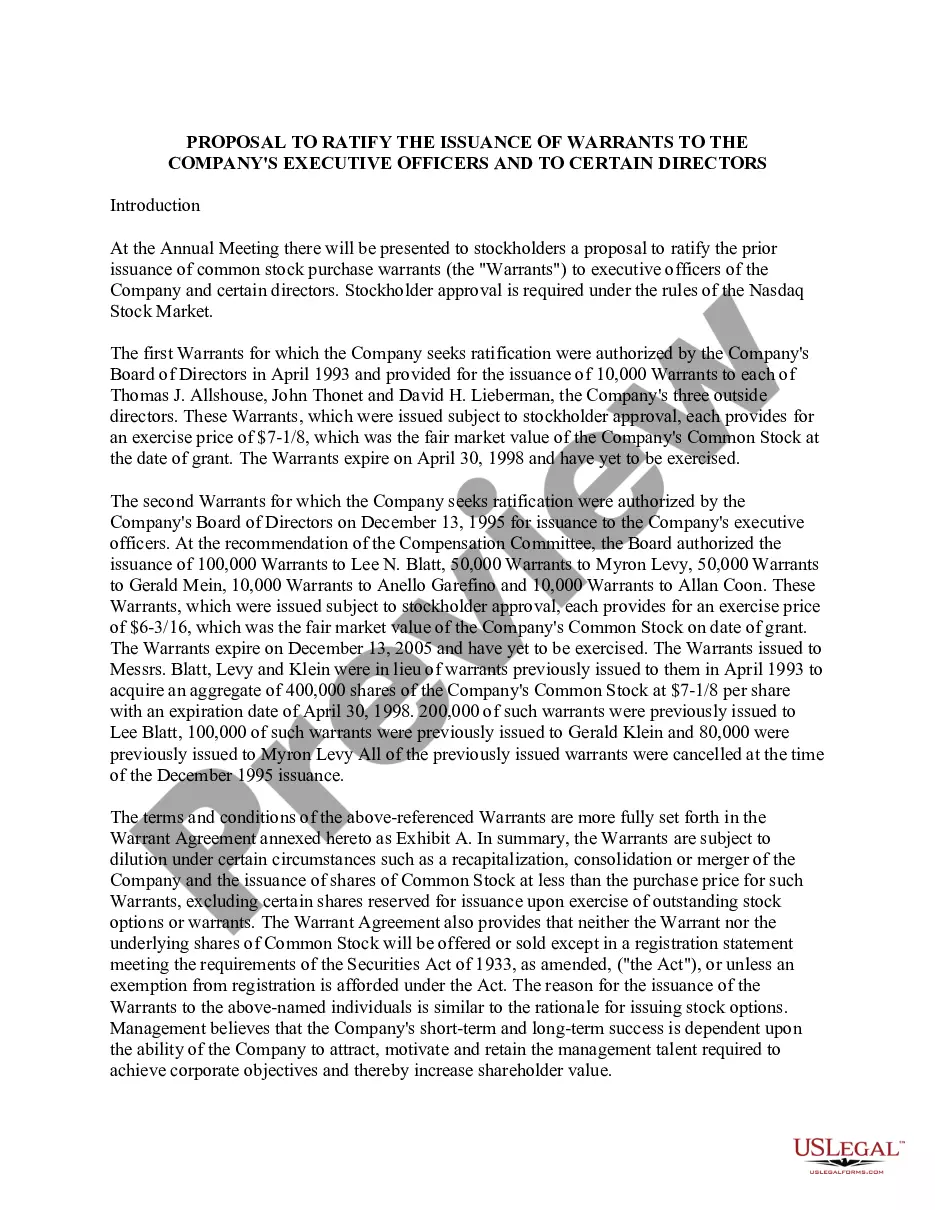
- Details on the number of shares and exercise prices for each director.
- Expiration dates for the warrants granted.
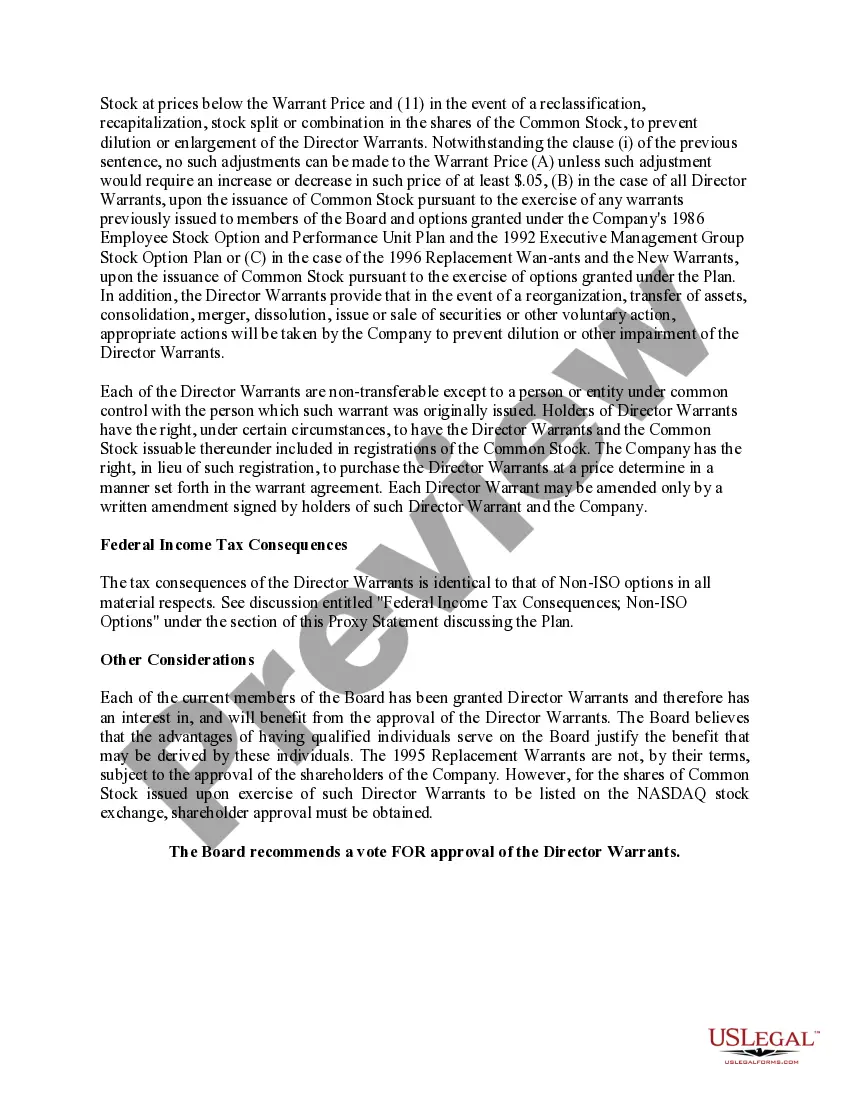
- Conditions under which the warrants can be exercised.
- Information on adjustments to the exercise price based on future stock activity.
- Approval considerations and recommendations from the Board of Directors.
When to use this form
Use this form when a company has granted warrants to its directors as an incentive and seeks to obtain shareholder approval for these warrants. This scenario commonly arises during annual meetings or special shareholder meetings when the board needs to formalize the granting of warrants and ensure compliance with corporate bylaws or state laws.
Who should use this form
This form is intended for:
- Corporate secretaries preparing shareholder meeting materials.
- Board members who have been granted director warrants.
- Shareholders voting on warrant approvals.
- Legal professionals advising corporations on compliance and governance issues.
Instructions for completing this form
- Identify the directors who are receiving warrants and specify their respective share amounts.
- Input the exercise price for each warrant as outlined in the board resolution.
- Attach any supporting documents, such as the proxy statement that details the warrant terms.
- Ensure that the form is signed by the appropriate corporate officers.
- Submit the completed form and accompanying documents to shareholders for their approval.
Notarization guidance
This form does not typically require notarization unless specified by local law. Each state may have different requirements for corporate documents, so it is advisable to check local regulations.
Get your form ready online
Our built-in tools help you complete, sign, share, and store your documents in one place.
Make edits, fill in missing information, and update formatting in US Legal Forms—just like you would in MS Word.
Download a copy, print it, send it by email, or mail it via USPS—whatever works best for your next step.
Sign and collect signatures with our SignNow integration. Send to multiple recipients, set reminders, and more. Go Premium to unlock E-Sign.
If this form requires notarization, complete it online through a secure video call—no need to meet a notary in person or wait for an appointment.
We protect your documents and personal data by following strict security and privacy standards.

Make edits, fill in missing information, and update formatting in US Legal Forms—just like you would in MS Word.

Download a copy, print it, send it by email, or mail it via USPS—whatever works best for your next step.

Sign and collect signatures with our SignNow integration. Send to multiple recipients, set reminders, and more. Go Premium to unlock E-Sign.

If this form requires notarization, complete it online through a secure video call—no need to meet a notary in person or wait for an appointment.

We protect your documents and personal data by following strict security and privacy standards.
Avoid these common issues
- Failing to provide all necessary details about each director's warrants.
- Not including the required signatures from corporate officers.
- Overlooking submission deadlines for shareholder meetings.
- Not reviewing state-specific laws that could affect the approval process.
Why complete this form online
- Quick access to the latest legal forms drafted by licensed attorneys.
- Easily editable templates to suit specific corporate needs.
- Convenience of downloading and printing the form immediately.
- Ensures compliance with legal requirements and corporate governance standards.
Legal use & context
- The form complies with corporate governance laws and protects the interests of shareholders.
- It lays the groundwork for ensuring transparency in compensation practices for directors.
- Failure to obtain proper approvals could lead to legal complications or challenges from shareholders.
Key takeaways
- The Approval of Director Warrants form is crucial for facilitating shareholder transparency regarding executive compensation.
- Understanding the terms and implications of warrants helps protect both board members and shareholders.
- Correct completion and approval of this form are essential for valid warrant issuance and compliance with corporate governance standards.
Looking for another form?





Form popularity
FAQ
The board of directors is elected to represent shareholders' interests. Every public company must have a board of directors composed of members from both inside and outside the company. The board makes decisions concerning the hiring and firing of personnel, dividend policies and payouts, and executive compensation.
Warrants differ from rights in that they must be purchased from a broker for a commission and usually qualify as marginable securities. Both rights and warrants conceptually resemble publicly traded call options in some respects. The value of all three instruments inherently depends on the underlying stock price.
Certain amendments to the certificate of incorporation or bylaws: Equity grants or transfers. Stockholder dividends and distributions. Employment decisions regarding senior management members. Adopting employee benefit plans (401(k), health insurance, etc.)
The Prescribed Processing of the Board of a Company According to these rules the number of board of directors should be seven and should not exceed this limit. Also in the case of stocks corporations, these corporations must stick to the rules directed by Securities and Exchange Board of India {SEBI}.
Recognize the fair value of the equity instruments issued or the fair value of the consideration received, whichever can be more reliably measured; and. Recognize the asset or expense related to the provided goods or services at the same time.
Board Approval means the affirmative vote of a majority of the Disinterested Directors of the Company or a unanimous written consent of the Board of Directors of the Company duly obtained in accordance with the applicable provisions of the Company's certificate of incorporation, bylaws and applicable law.
Warrants are issued by companies, giving the holder the right but not the obligation to buy a security at a particular price. Companies often include warrants as part of share offerings to entice investors into buying the new security.
Appointment of auditors (if there are any) Appointment or re-appointment of directors. Removal of a director or the auditor. Adoption of the annual accounts and the reports of the directors and auditors. Declaration of dividends.
A stock warrant is issued by an employer that gives the holder the right to buy company shares at a certain price before the expiration.When a warrant is exercised, the company issues new shares, increasing the total number of shares outstanding, which has a dilutive effect.