Adoption of Stock Option Plan of WSFS Financial Corporation
What this document covers
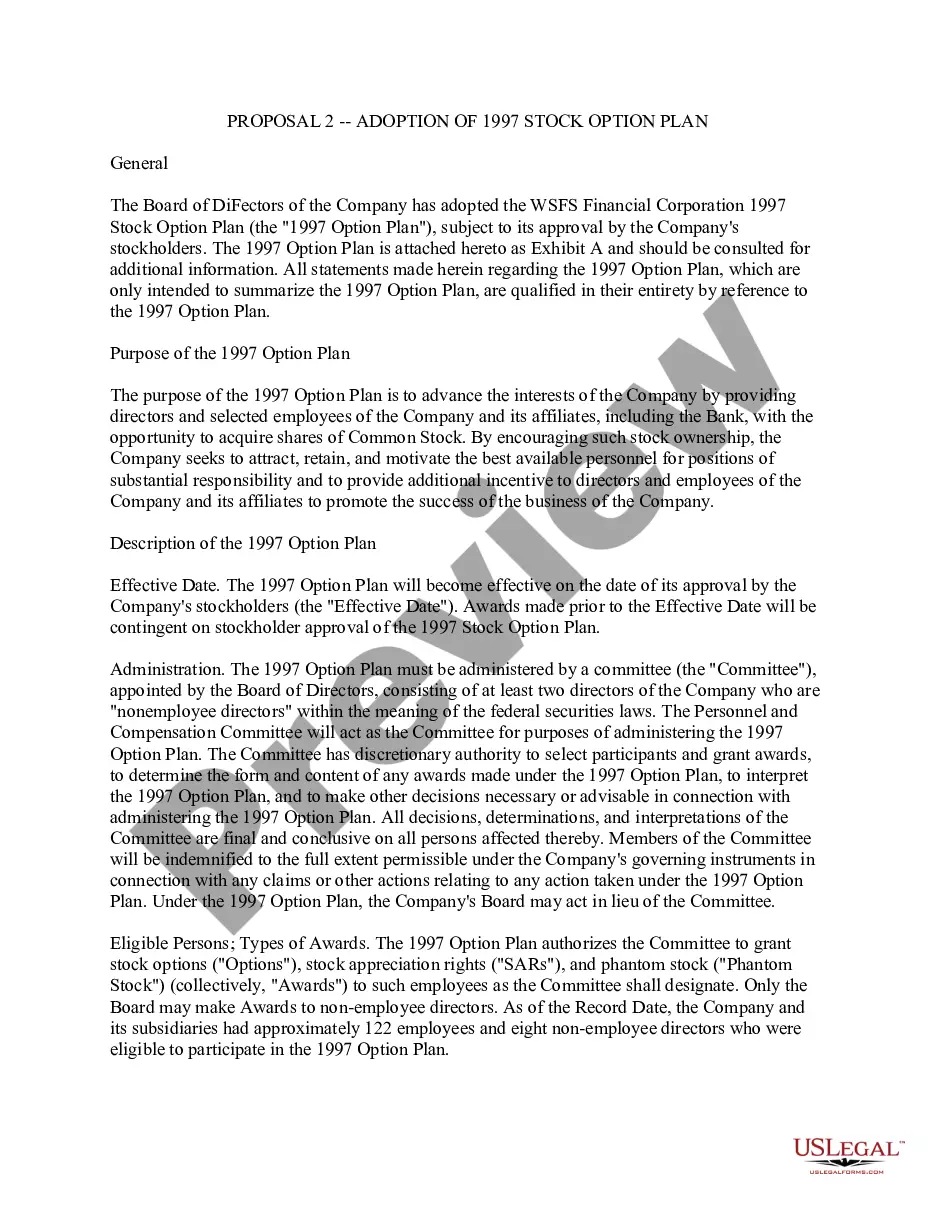
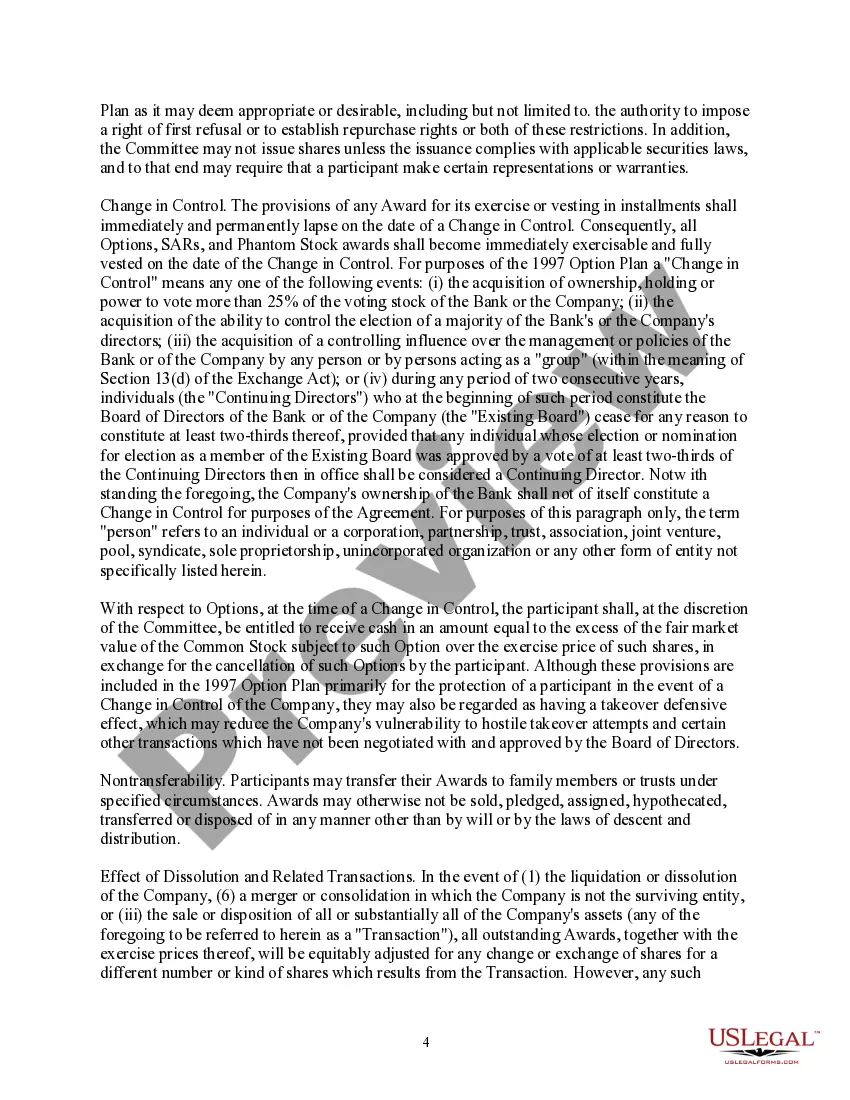
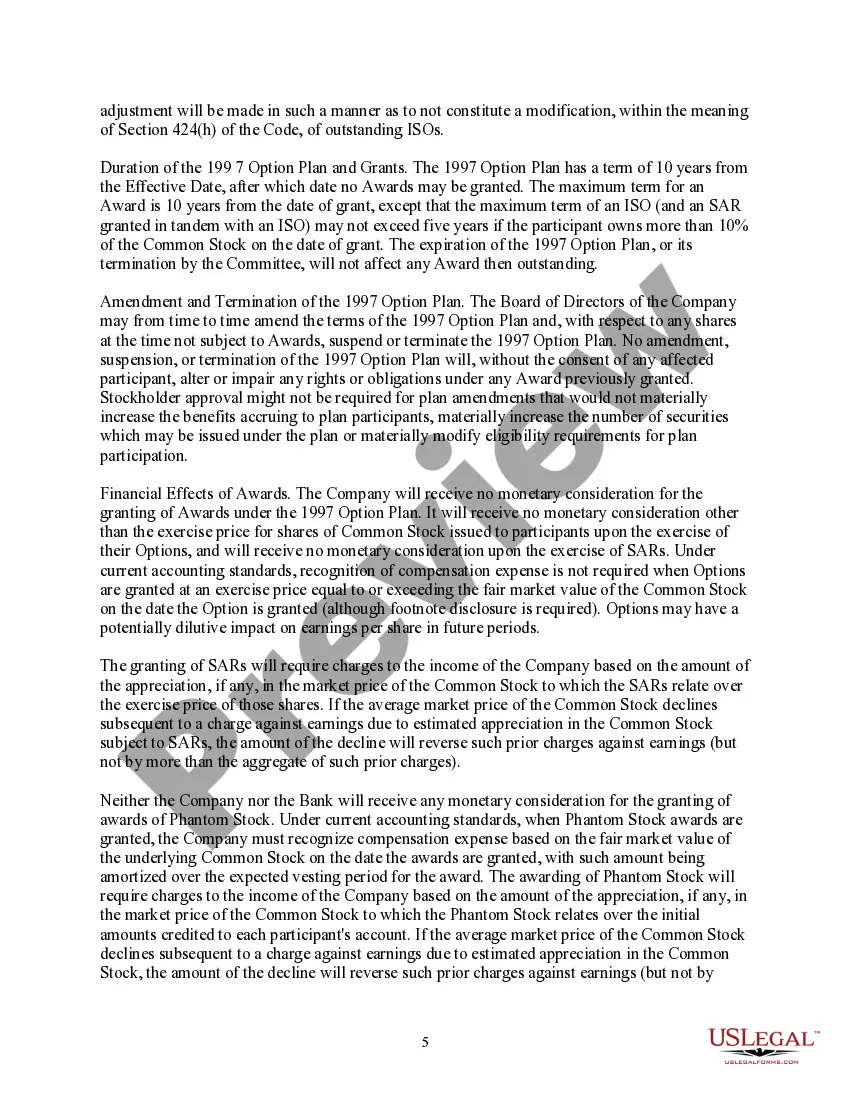
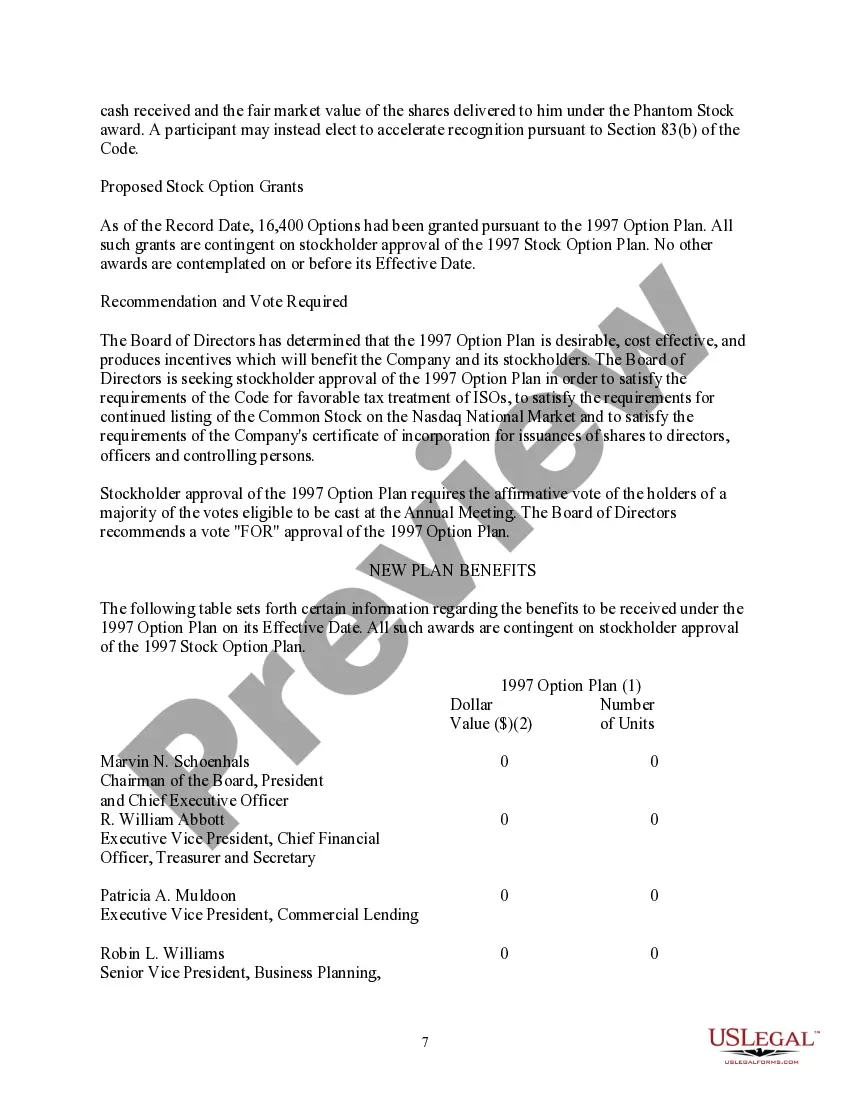
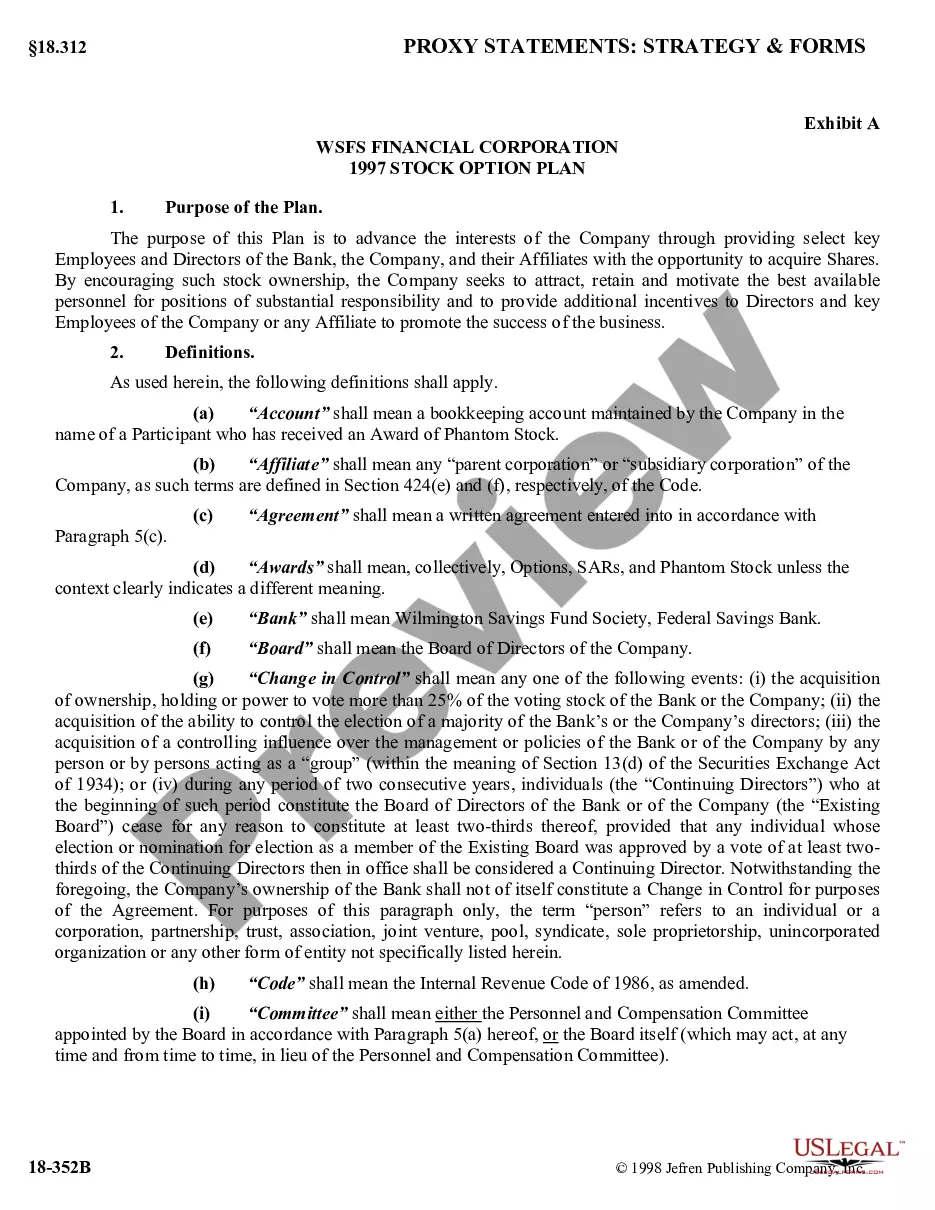
The Adoption of Stock Option Plan of WSFS Financial Corporation is a legal document that outlines a stock option plan intended to provide incentives to directors and selected employees of WSFS Financial Corporation. This plan facilitates the opportunity for eligible participants to acquire shares of Common Stock, aiming to attract and retain qualified personnel. Unlike other stock option plans, this form specifically pertains to the year 1997 and includes provisions for various types of awards, including stock options and stock appreciation rights (SARs).
Form components explained
- Purpose of the plan: Encourages stock ownership to motivate employees and directors.
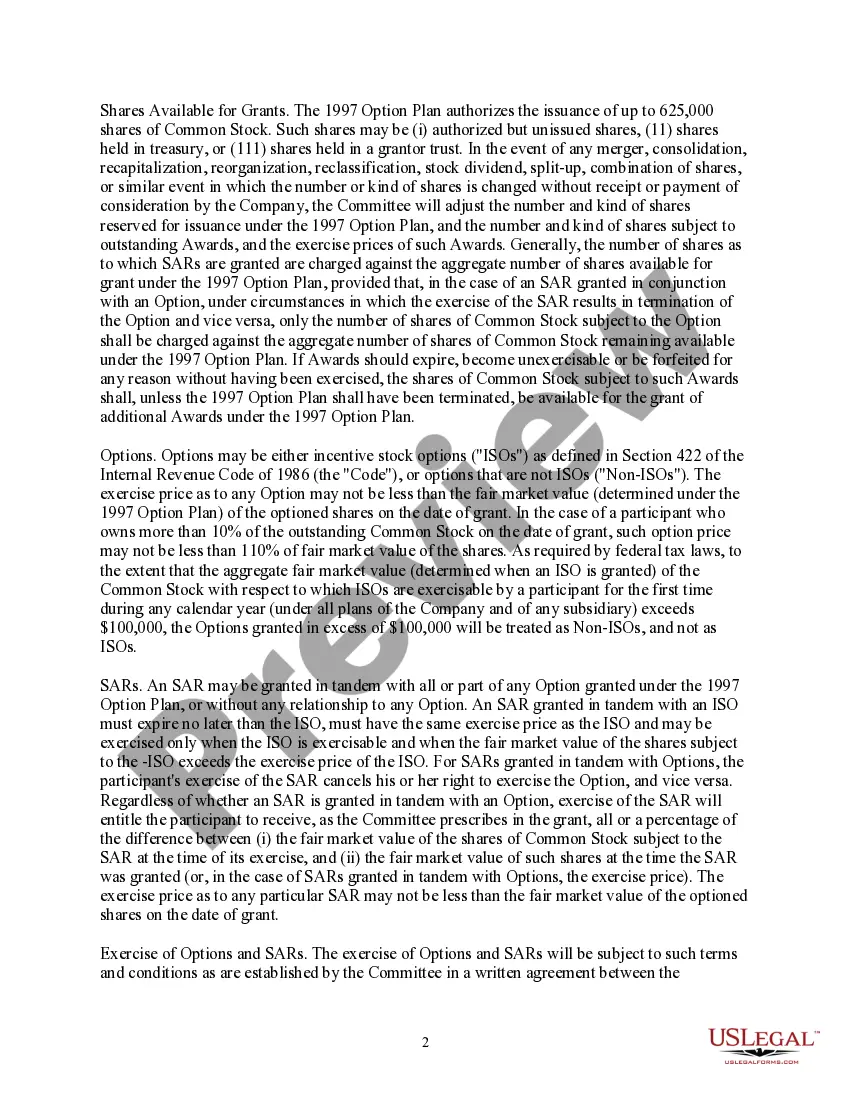
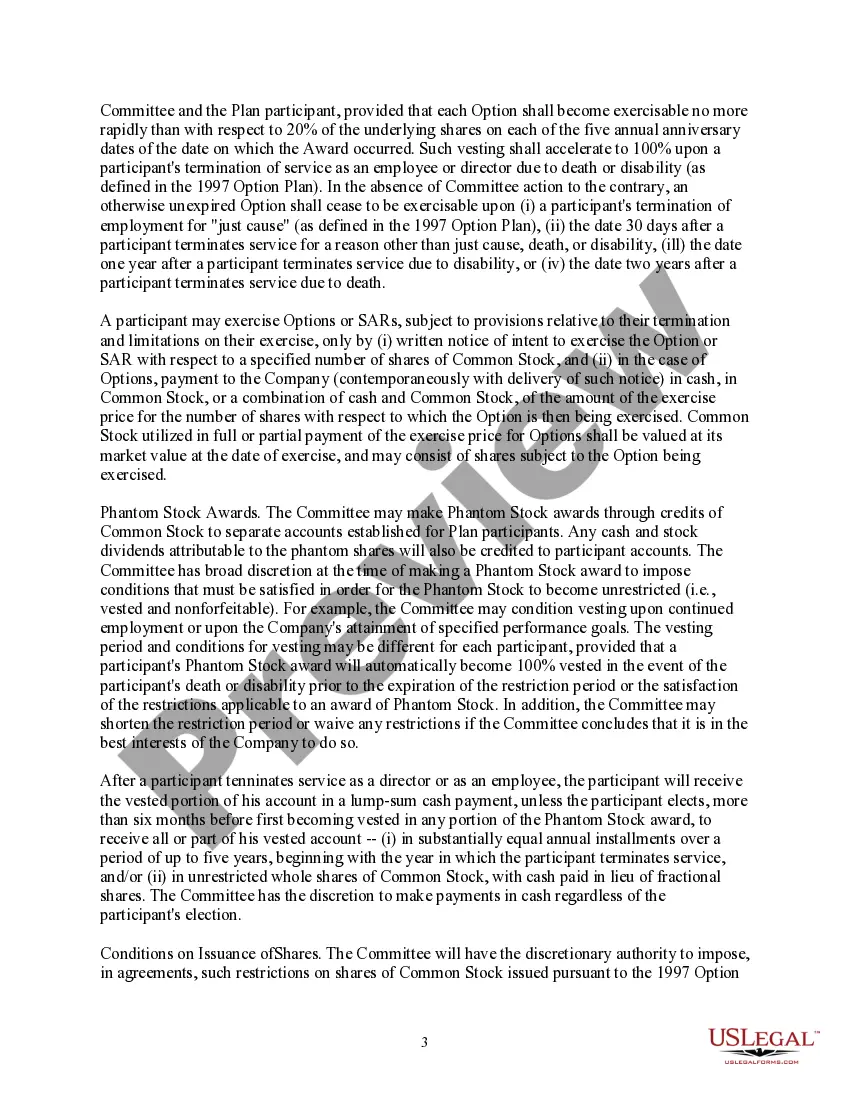
- Types of awards: Includes stock options, SARs, and phantom stock.
- Eligibility criteria: Defines who may participate in the plan (directors and employees).
- Administration: Managed by a board-appointed committee with specific powers and responsibilities.
- Conditions of awards: Details on how and when options may be exercised and any conditions for vesting.
- Change in control: Outlines the impact of a change in control on awards.

Situations where this form applies
This form should be used when a corporation, like WSFS Financial Corporation, wants to establish a stock option plan to incentivize its employees and directors. It is applicable when the corporation aims to attract talented individuals, encourage long-term investment in the company, or respond to stockholder requests for a formal incentive program. Additionally, it is essential when proposing changes to existing stock options or when new stock options are to be granted.
Who needs this form
This form is intended for:
- The board of directors of WSFS Financial Corporation.
- Employees and directors identified as eligible participants under the plan.
- Legal counselors or advisors assisting in the establishment or amendment of the stock option plan.
- Shareholders interested in understanding the governance of employee incentives.
Instructions for completing this form
- Review the contents of the 1997 Stock Option Plan and ensure it meets corporate goals.
- Specify the eligible participants to receive awards under the plan.
- Assign the committee responsible for administering the plan and outline their authorities.
- Detail the types of awards being granted and their respective terms and conditions.
- Obtain required stockholder approval for the implementation of the plan.
Is notarization required?
Notarization is generally not required for this form. However, certain states or situations might demand it. You can complete notarization online through US Legal Forms, powered by Notarize, using a verified video call available anytime.
Get your form ready online
Our built-in tools help you complete, sign, share, and store your documents in one place.
Make edits, fill in missing information, and update formatting in US Legal Forms—just like you would in MS Word.
Download a copy, print it, send it by email, or mail it via USPS—whatever works best for your next step.
Sign and collect signatures with our SignNow integration. Send to multiple recipients, set reminders, and more. Go Premium to unlock E-Sign.
If this form requires notarization, complete it online through a secure video call—no need to meet a notary in person or wait for an appointment.
We protect your documents and personal data by following strict security and privacy standards.

Make edits, fill in missing information, and update formatting in US Legal Forms—just like you would in MS Word.

Download a copy, print it, send it by email, or mail it via USPS—whatever works best for your next step.

Sign and collect signatures with our SignNow integration. Send to multiple recipients, set reminders, and more. Go Premium to unlock E-Sign.

If this form requires notarization, complete it online through a secure video call—no need to meet a notary in person or wait for an appointment.

We protect your documents and personal data by following strict security and privacy standards.
Common mistakes
- Failing to obtain necessary stockholder approval before implementing the plan.
- Not clearly defining the roles and powers of the administering committee.
- Overlooking the eligibility criteria for participants which may lead to legal complications.
- Failing to adequately communicate the terms of the awards to eligible participants.
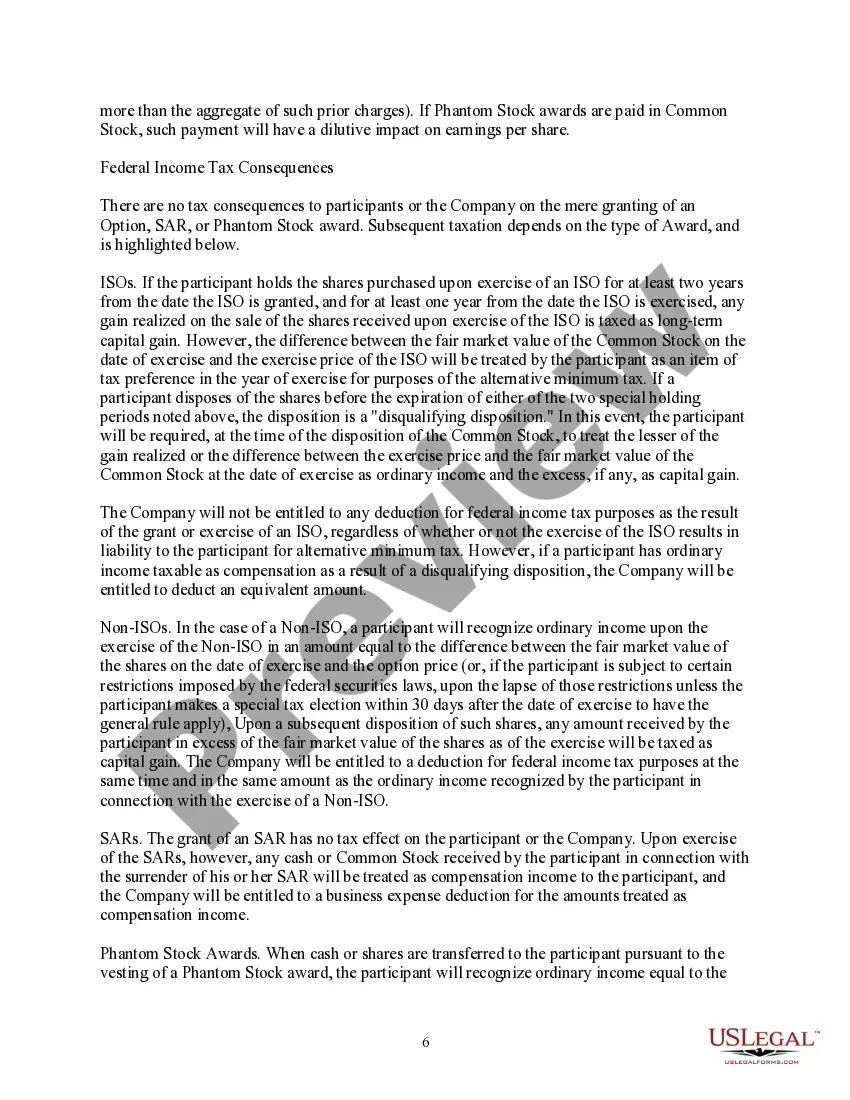
- Neglecting to consider tax implications for both the company and the participants.
Benefits of completing this form online
- Convenient access to legal templates tailored for specific needs.
- Easy editing capabilities to customize the plan based on different circumstances.
- Ensured compliance with legal standards set by licensed attorneys.
- Secure storage of documents for future reference or updates.
- Immediate availability without the need for in-person consultations.
Legal use & context
- This form establishes a legally binding stock option plan once adopted.
- Non-compliance with shareholder requirements can invalidate the plan.
- Proper administration and adherence to responsibilities are critical to enforceability.
Quick recap
- The Adoption of Stock Option Plan is vital for aligning employee incentives with corporate performance.
- Maintaining compliance with shareholder approval is mandatory for legal implementation.
- Clear documentation and understanding of the plan's benefits can enhance employee motivation and retention.
Looking for another form?
Form popularity
FAQ
The first difference is purpose. Stock corporations are organized for profit to be enjoyed by stockholders.In stock corporations, profits are declared and they are distributed to stockholders. On the other hand, profits in non-stock corporations are not so distributed but used to further its own purposes.
Taxes. Corporations must file their annual tax returns. Securities. Corporations must issue stock as their security laws and articles of incorporation mandate. Bookkeeping. Board meetings. Meeting minutes. State registration. Licensing.
Yes. All states allow a single shareholder to create and run a corporation. And all states allow it to have just one director as well. So you can be the sole shareholder, director and officer for your company.
Incorporators are those stockholders or members mentioned in the Articles of Incorporation as originally forming and composing the corporation, and who are signatories thereof. Each incorporator of a stock corporation must own, or be a subscriber to, at least one share of the capital stock.
After all, corporations need to have boards of directors and hold shareholder meetings -- which sounds more like a room full of suits than a single person working from home. However, all states do allow corporations to have just one owner. You can be the sole shareholder, director and officer for your company.
A Non-Stock Corporation is basically a corporation that does not issue shares of stock. It can be formed as either a for-profit or non-profit corporation. Since the Non-Stock Corporation has no shareholders, it is owned by its members meaning a member-owned corporation that does not issue shares of stock.
A non-stock corporation is a corporation that does not have owners represented by shares of stock.Instead, a non-stock corporation typically has members who are the functional equivalent of stockholders in a stock corporation (they have the right to vote, etc.)
A non-corporate shareholder is a person or partnership that owns shares in a corporation. This distinctions is easy enough, but in practice, it creates several tax, corporate governance, and legal issues that investors should be aware of.
Ownership is the major difference between a for-profit business and a nonprofit organization. For-profit businesses can be privately owned and can distribute earnings to employees or shareholders. But nonprofit organizations do not have private owners and they do not issue stock or pay dividends.