Washington Last Will and Testament for a Domestic Partner With No Children
Understanding this form
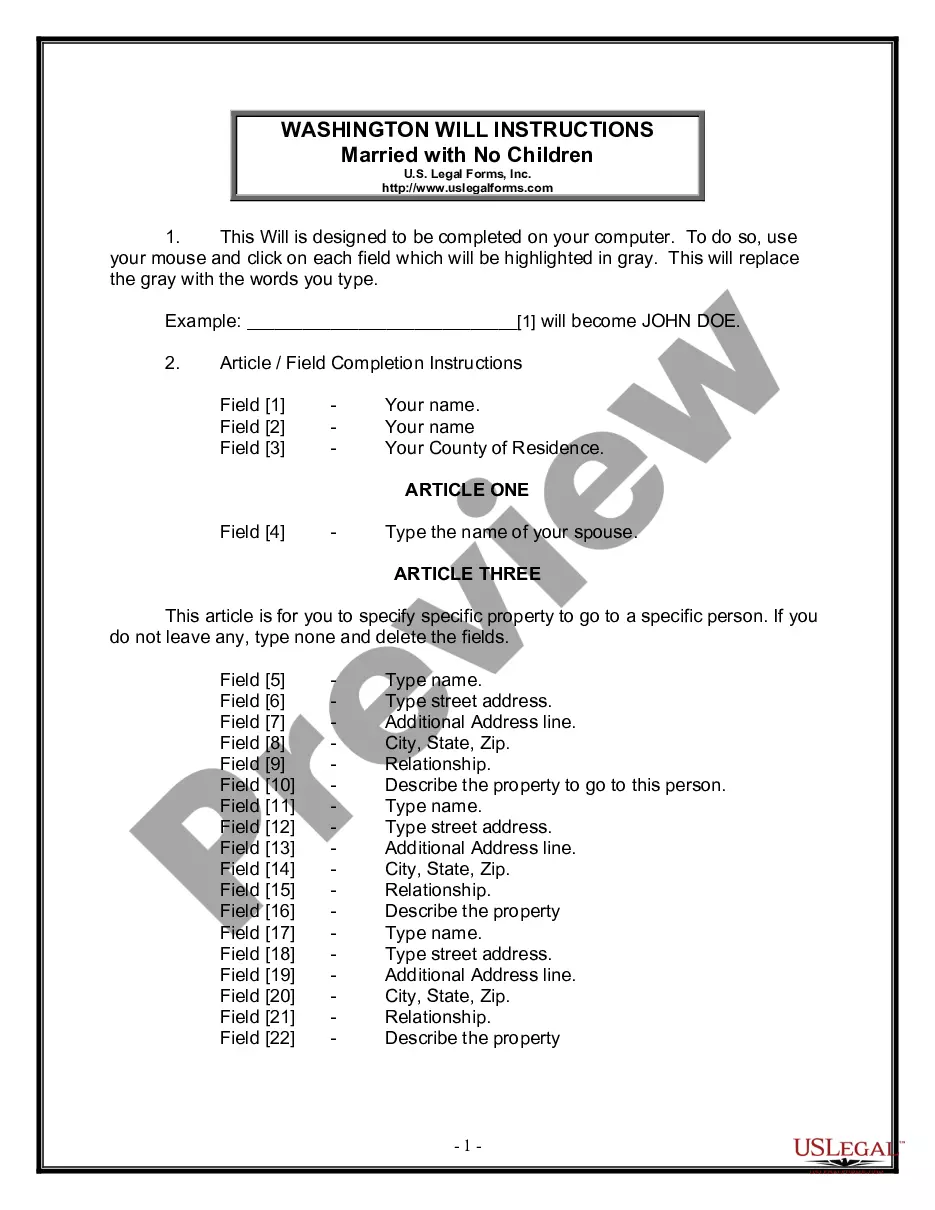
This Last Will and Testament is a legal document specifically designed for individuals in a domestic partnership without children. It outlines your wishes regarding the distribution of your property and assets upon your death. This form provides clarity on who will be appointed as your personal representative or executor, ensuring that your partner is taken care of after your passing. Unlike traditional wills that might cater to families with children, this document focuses specifically on the needs of domestic partners without the complexities related to minor children.
What’s included in this form
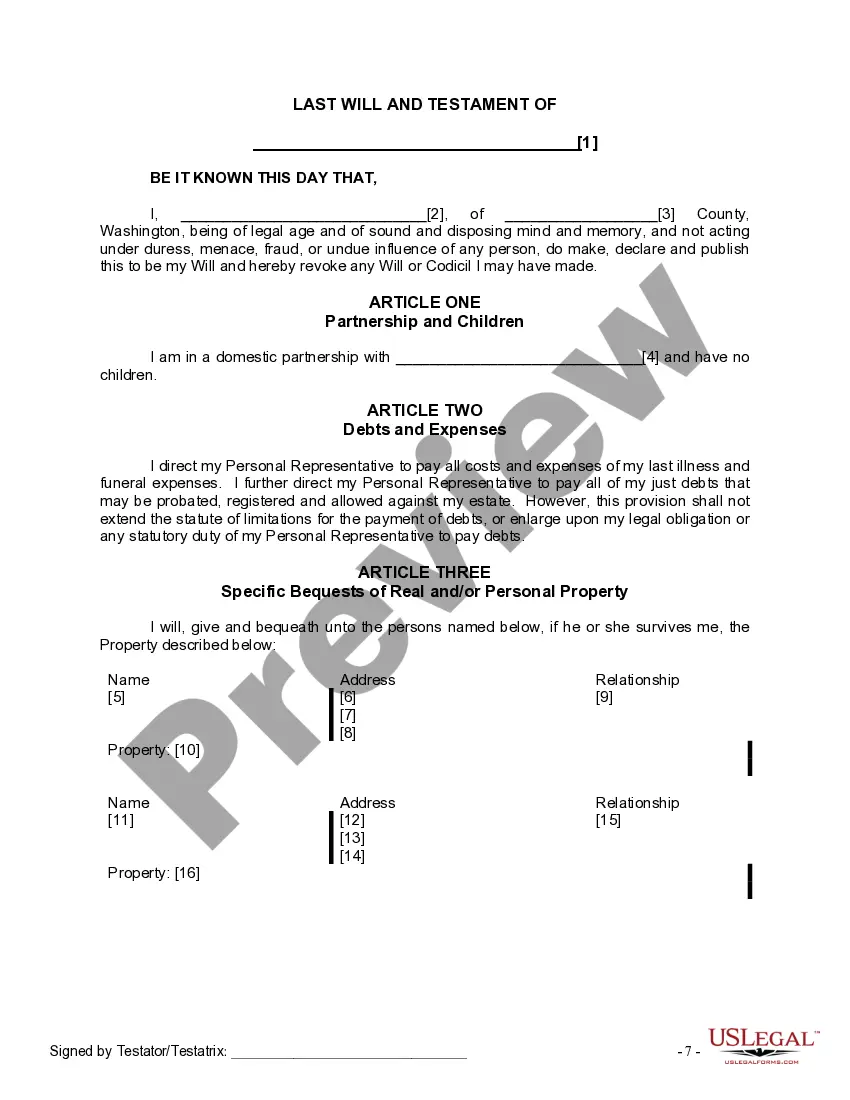
- Personal information: Includes your name and county of residence.
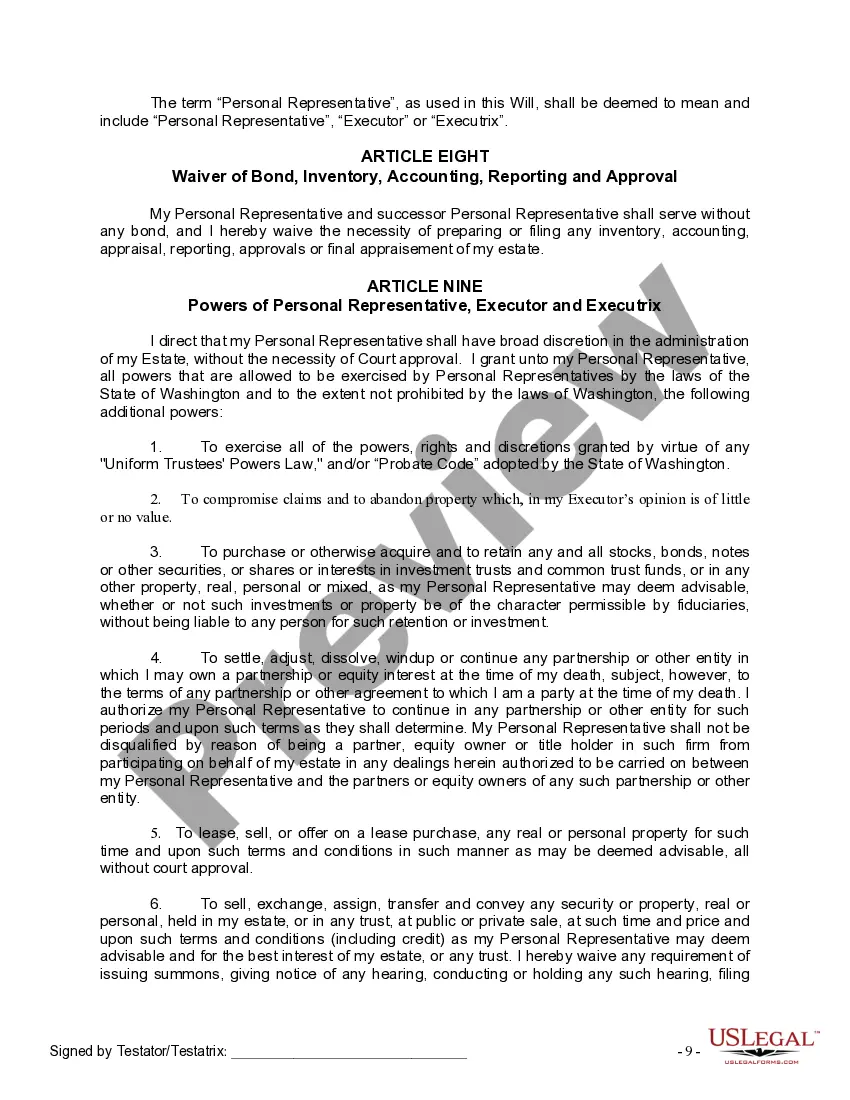
- Appointment of executor: Designates a personal representative to manage your estate.
- Specific bequests: Allows you to specify certain items to be given to individuals.
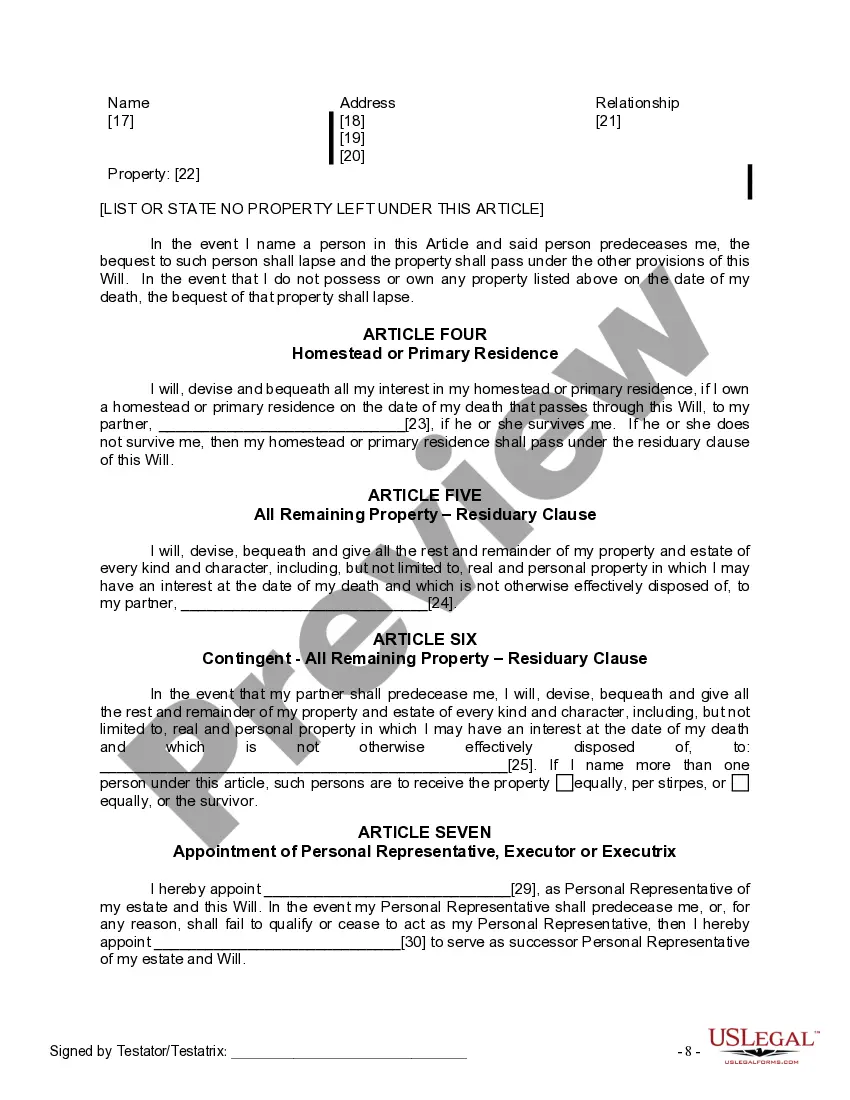
- Homestead provision: Directs who receives your primary residence.
- Residuary clause: Specifies how remaining property should be distributed.
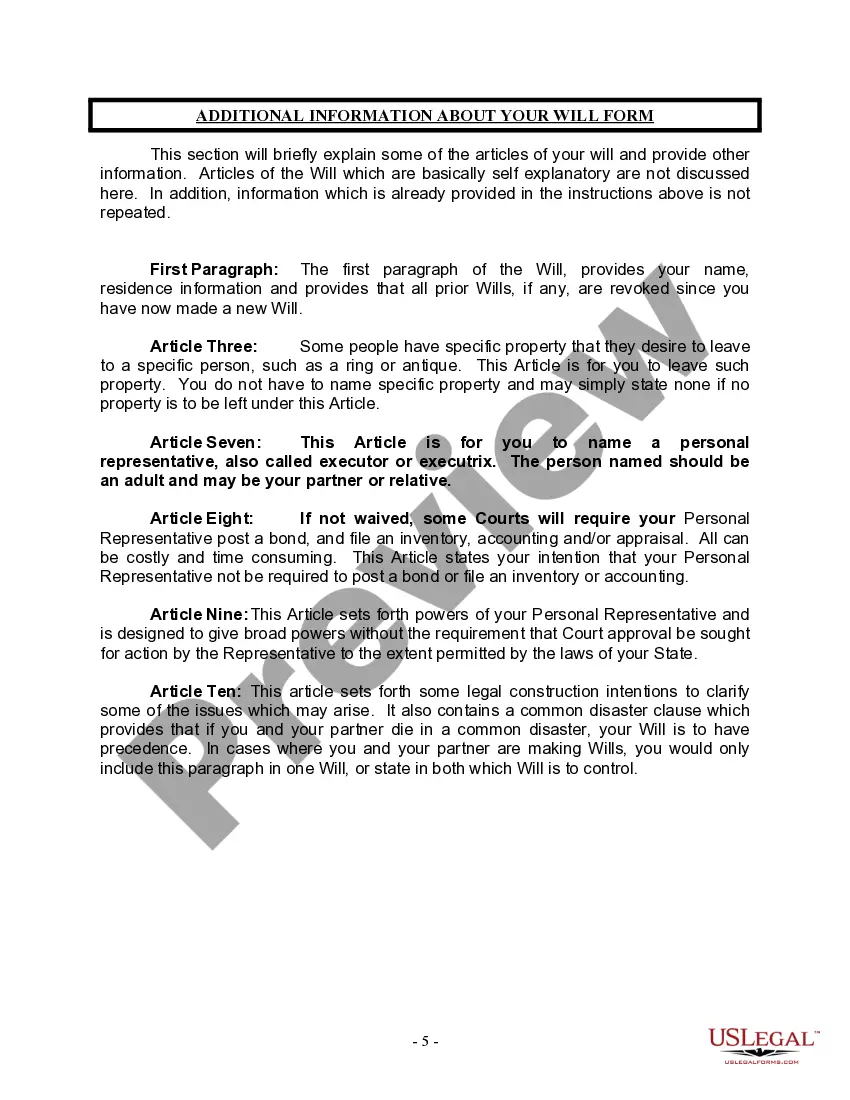
- Common disaster clause: Clarifies which will governs if both partners pass away simultaneously.




Common use cases
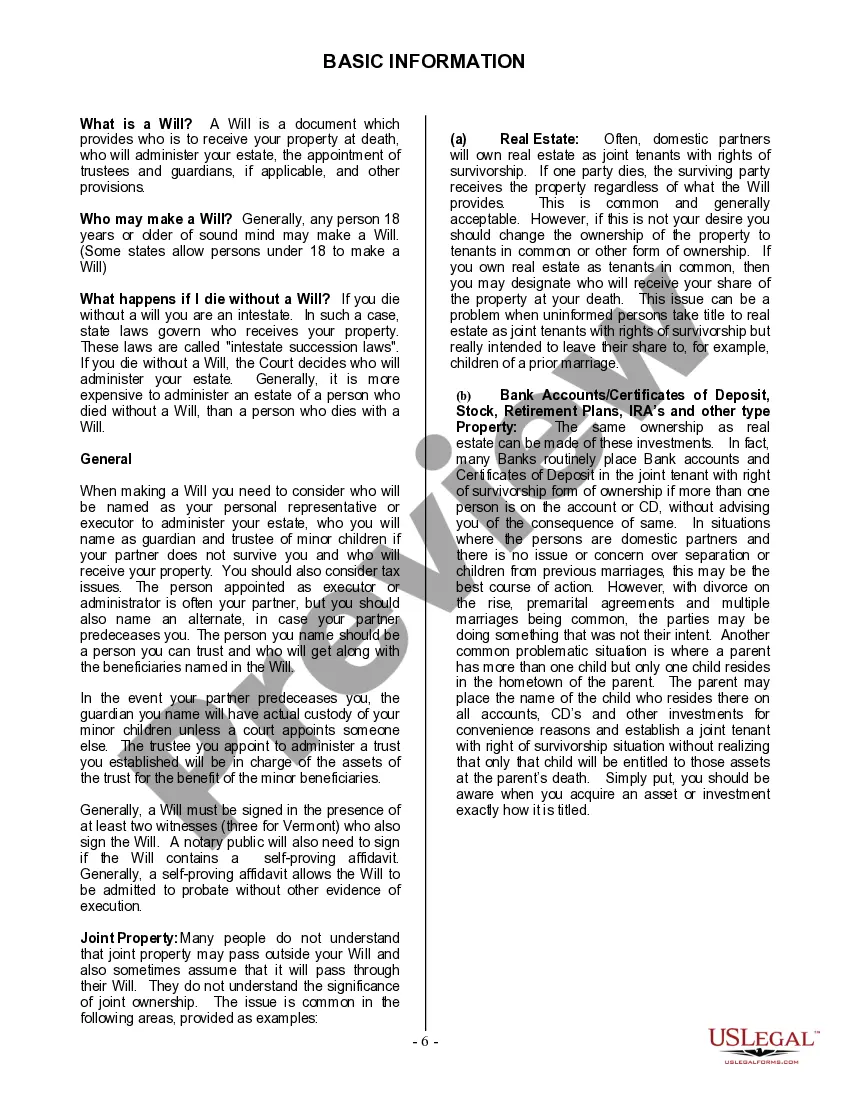
This form is ideal to use when you want to ensure that your domestic partner receives your assets upon your death and there are no children involved. It is particularly useful for those who have specific wishes about how their property should be allocated and wish to avoid intestacy laws that could govern the division of their estate. Additionally, if you want to simplify the legal process for your partner during an already difficult time, this document is a valuable tool.
Who this form is for
- Domestic partners without children who wish to make their wishes clear regarding asset distribution.
- Individuals looking to ensure their partner has legal authority to make decisions regarding their estate.
- Anyone wanting to avoid the complexities of intestate succession laws.
Steps to complete this form
- Identify the parties involved, including your name and that of your partner.
- Enter the county where you reside.
- Specify any specific bequests of property you wish to allocate to others.
- Designate your personal representative who will oversee your estate after death.
- Review the will for accuracy, ensuring all signatures are included in front of the required witnesses.
Notarization requirements for this form
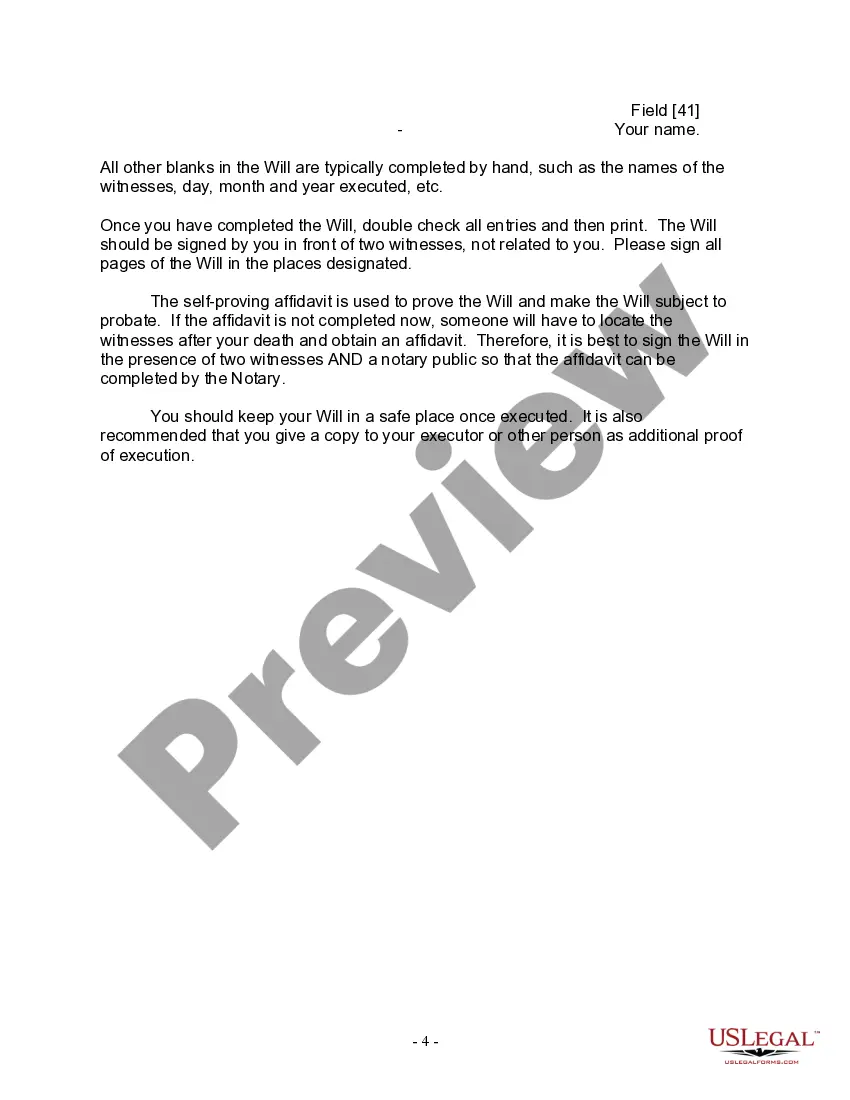
Yes, this form must be notarized to be legally valid. A notary public should be present when you sign the document to confirm your identity and the authenticity of the signatures, ensuring it meets state requirements for probate.
Get your form ready online
Our built-in tools help you complete, sign, share, and store your documents in one place.
Make edits, fill in missing information, and update formatting in US Legal Forms—just like you would in MS Word.
Download a copy, print it, send it by email, or mail it via USPS—whatever works best for your next step.
Sign and collect signatures with our SignNow integration. Send to multiple recipients, set reminders, and more. Go Premium to unlock E-Sign.
If this form requires notarization, complete it online through a secure video call—no need to meet a notary in person or wait for an appointment.
We protect your documents and personal data by following strict security and privacy standards.

Make edits, fill in missing information, and update formatting in US Legal Forms—just like you would in MS Word.

Download a copy, print it, send it by email, or mail it via USPS—whatever works best for your next step.

Sign and collect signatures with our SignNow integration. Send to multiple recipients, set reminders, and more. Go Premium to unlock E-Sign.

If this form requires notarization, complete it online through a secure video call—no need to meet a notary in person or wait for an appointment.

We protect your documents and personal data by following strict security and privacy standards.
Mistakes to watch out for
- Failing to have the will signed in the presence of two witnesses.
- Not specifying alternate beneficiaries if the primary beneficiary predeceases you.
- Omitting details about specific bequests, which can lead to confusion.
Why complete this form online
- Conveniently fill out and save the document on your computer.
- Edit the form as necessary to ensure it meets your particular needs.
- Access attorney-drafted templates that provide legal assurance of completeness.
Legal use & context
- A well-drafted will helps clarify your wishes and can prevent family disputes.
- Wills can be contested in court, but having a properly executed will strengthens your intentions.
- This document legally identifies who will receive your assets, but it does not prevent all taxes or debts from affecting your estate.
Key takeaways
- A Last Will and Testament for a domestic partner is crucial for ensuring your partner receives your assets.
- Completing the form correctly requires attention to signing and witness requirements.
- Utilizing an online form can offer convenience and peace of mind through attorney-reviewed content.
Looking for another form?
Form popularity
FAQ
In the state of Washington, handwritten wills may be accepted for probate, provided the handwritten will meets all other requirements under Washington law.
No, you aren't required to hire a lawyer to prepare your will, though an experienced lawyer can provide useful advice on estate-planning strategies such as living trusts.
Include personal identifying information. Include a statement about your age and mental status. Designate an executor. Decide who will take care of your children. Choose your beneficiaries. List your funeral details. Sign and date your Last Will and Testament.
To file the will, you should go to the Superior Court Clerk's office in any Washington Superior Court and file it there. In King County, the Clerk will require you to pay $20 to do this. Bring the original will and a copy, along with a completed Case Designation Coversheet (check Will Only on the second page).
Washington doesn't recognize holographic, or handwritten Wills, signed only by the testator. A valid Will in Washington needs to be signed by the testator in the presence of two disinterested witnesses who also sign. The same if true of any changes that are later made to a Will.
Washington doesn't recognize holographic, or handwritten Wills, signed only by the testator. A valid Will in Washington needs to be signed by the testator in the presence of two disinterested witnesses who also sign.
No, in Washington, you do not need to notarize your will to make it legal. However, Washington allows you to make your will "self-proving" and you'll need to go to a notary if you want to do that. A self-proving will speeds up probate because the court can accept the will without contacting the witnesses who signed it.
Age: The testator must be at least 18 years old. Capacity: The testator must be of sound mind. Signature: The will must be signed by the testator or by someone else in the testator's name in his presence, by his direction.