Stock Option Plan - Permits Optionees to Transfer Stock Options to Family Members or Other Persons for Estate Planning Purposes
Overview of this form
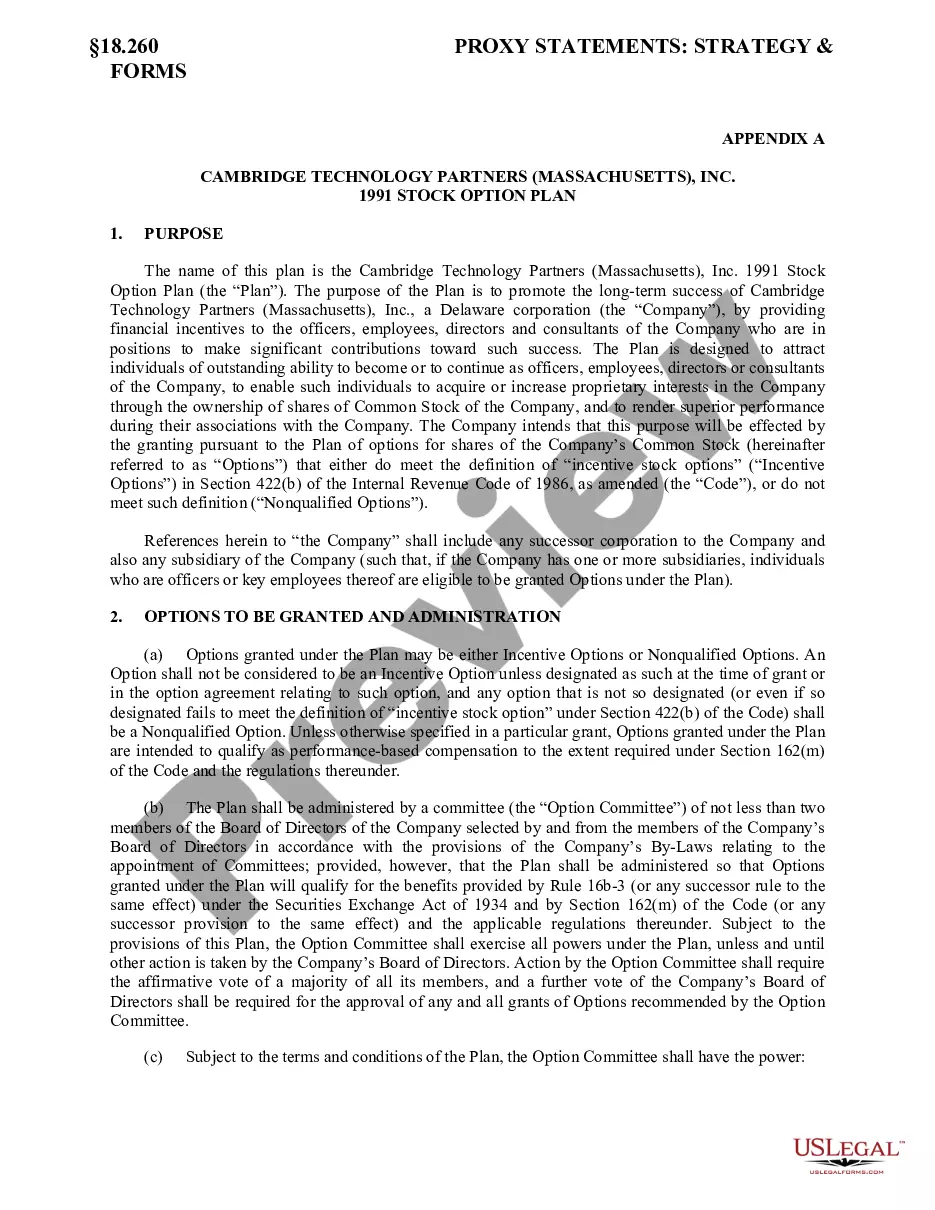
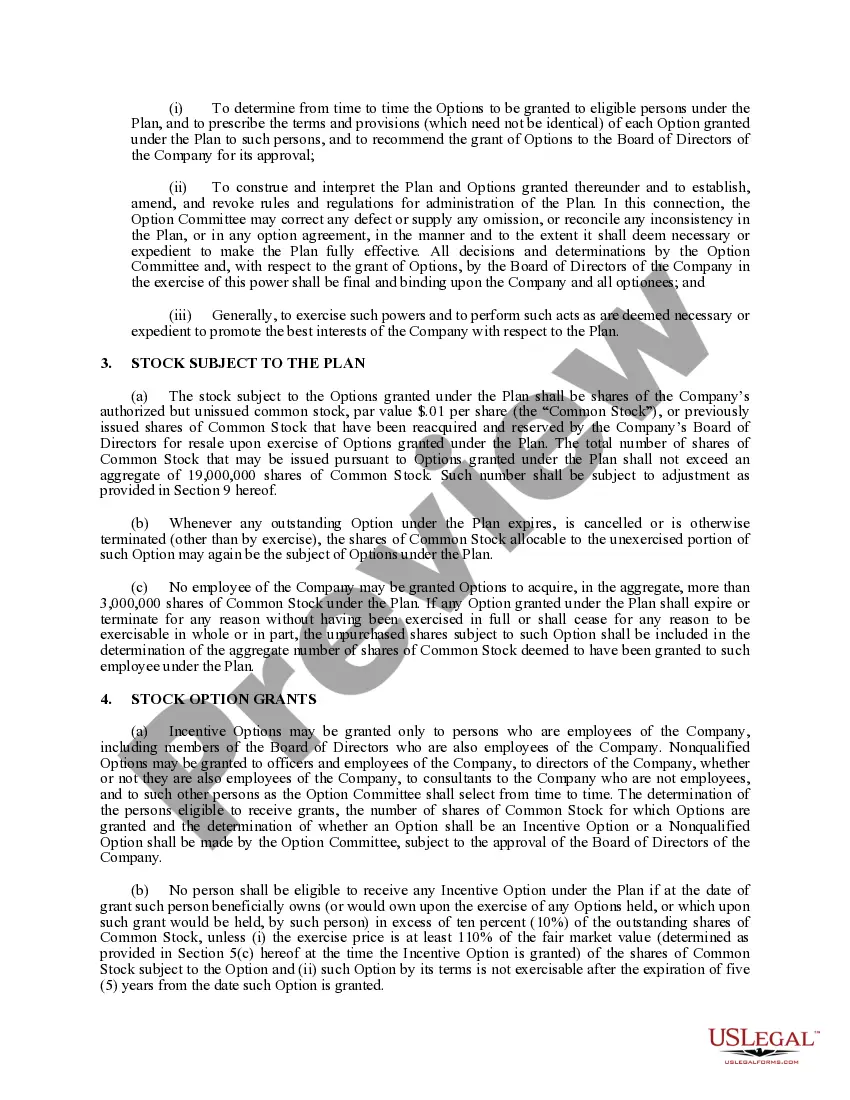
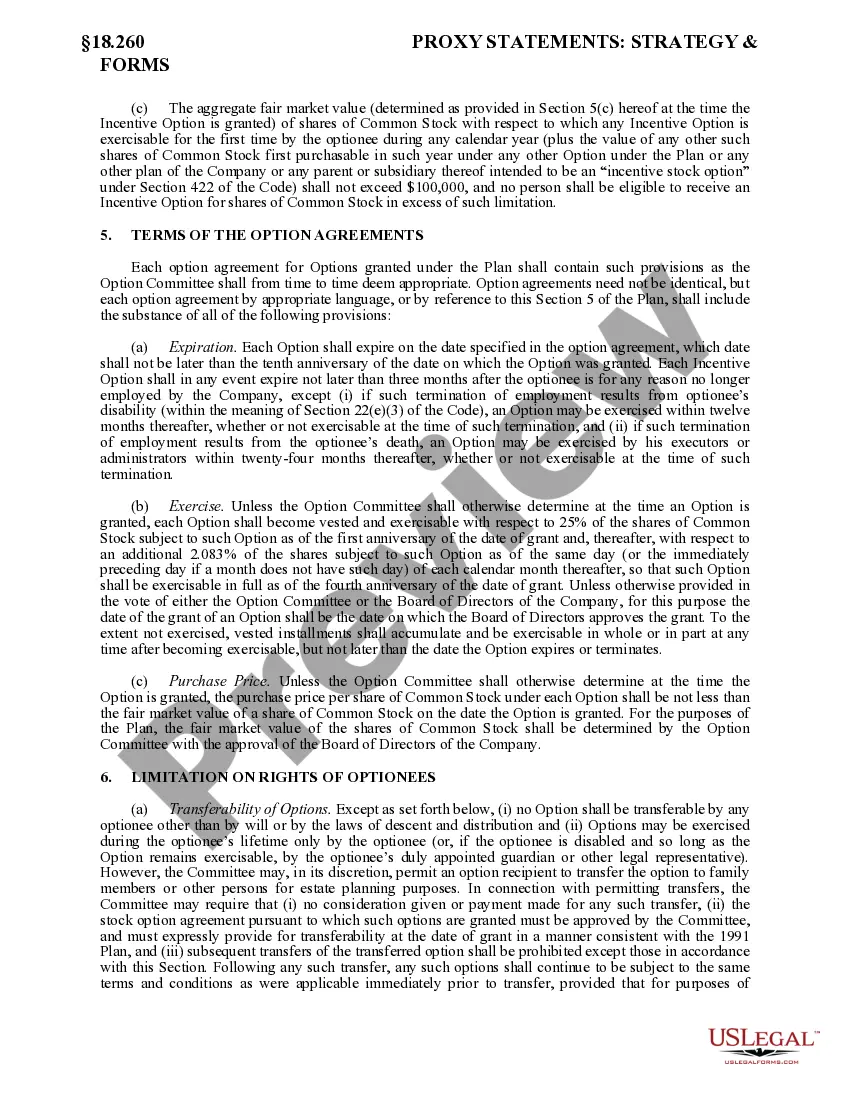
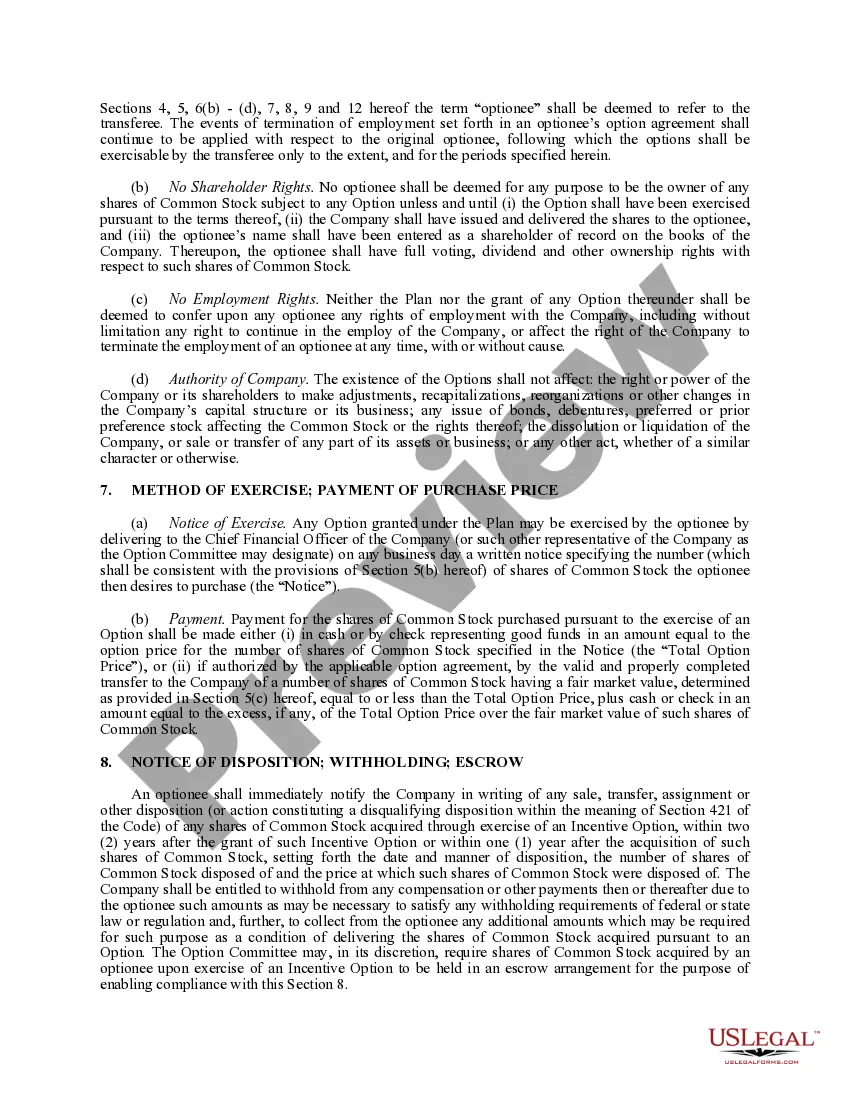
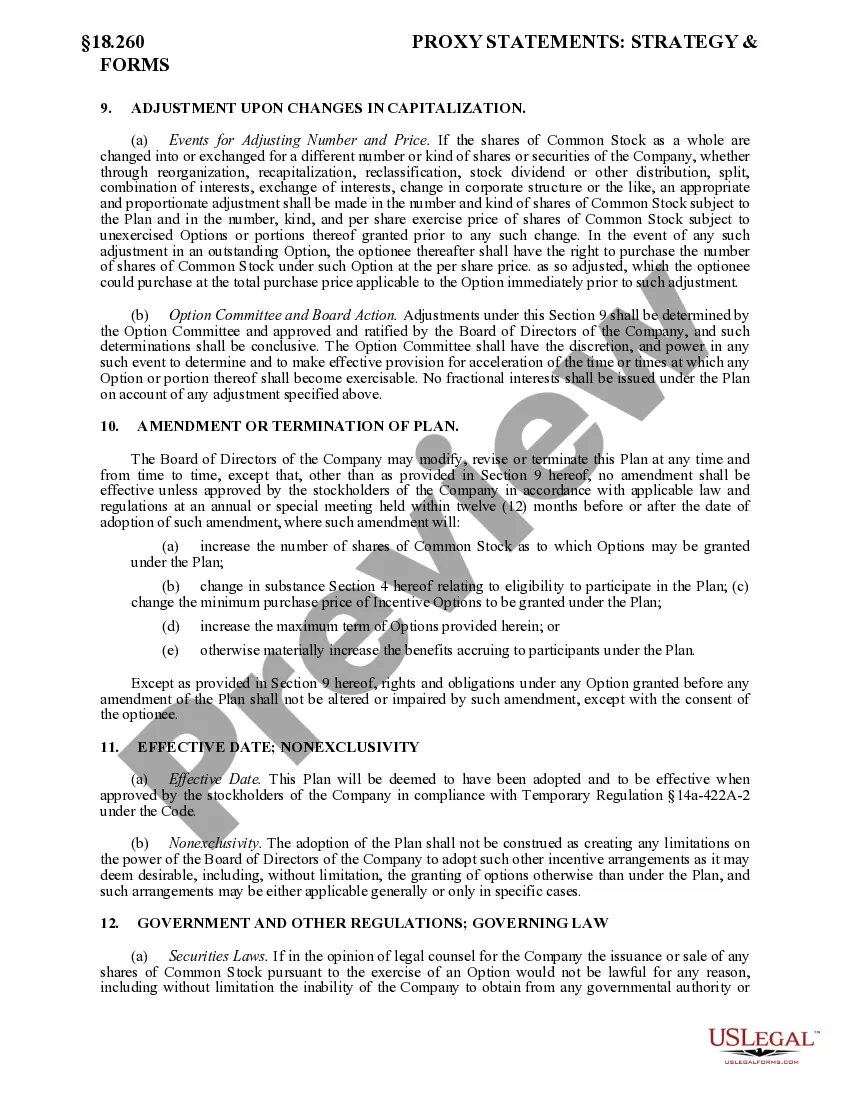
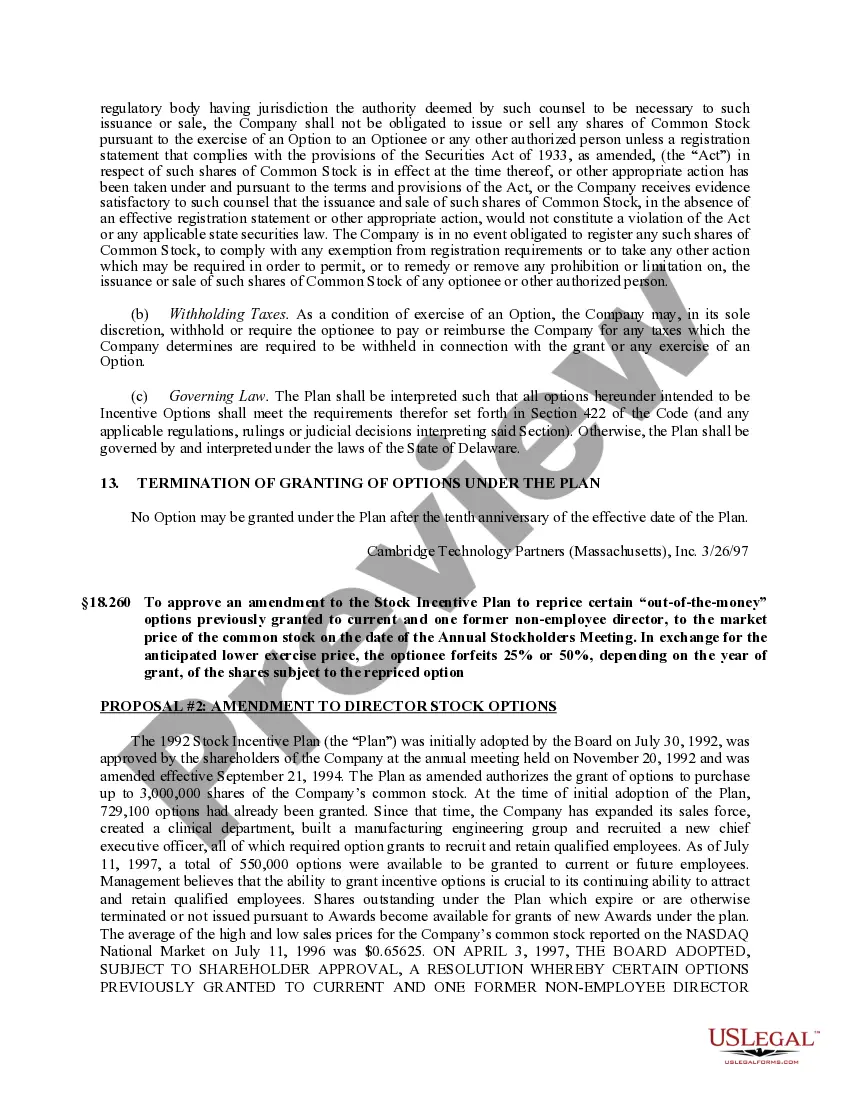
The Stock Option Plan allows optionees to transfer stock options to family members or other individuals for estate planning purposes. This form is designed to provide financial incentives to employees, directors, and consultants while facilitating the transfer of these options as allowed under the Securities Exchange Act of 1934, specifically the amendment made on August 15, 1996. Unlike standard stock option agreements, this plan explicitly focuses on the transferability of options for the benefit of the optionees' estate planning needs.
Form components explained
- Purpose: Promotes long-term success by providing financial incentives.
- Types of Options: Includes both Incentive Stock Options and Nonqualified Options.
- Transferability: Options can be transferred to family members or designated individuals under specific conditions.
- Option Committee: A designated committee administers and approves option grants.
- Terms of Agreement: Specifies expiration, exercise price, and other conditions related to options.


Common use cases
This form is beneficial when a company seeks to offer stock options to key employees while also wanting to allow for flexible management of those options for estate planning. It can be used in cases where an employee wishes to ensure that their stock options can be passed on to family members or others upon their passing or in preparation for disability.
Intended users of this form
This form is intended for:
- Companies looking to implement a stock option plan for their employees.
- Employees and optionees who wish to transfer their options as part of estate planning.
- Executives and directors engaged in managing stock options and aware of incentives tied to company performance.
Completing this form step by step
- Identify the option holders who will receive stock options under the plan.
- Specify the terms of each option grant, including vesting schedule and exercise price.
- Outline the transferability options for family members or other designated persons.
- Have the Option Committee approve the plan and individual option grants.
- Ensure compliance with all relevant securities laws and regulations.
Does this form need to be notarized?
This form does not typically require notarization to be legally valid. However, some jurisdictions or document types may still require it. US Legal Forms provides secure online notarization powered by Notarize, available 24/7 for added convenience.
Get your form ready online
Our built-in tools help you complete, sign, share, and store your documents in one place.
Make edits, fill in missing information, and update formatting in US Legal Forms—just like you would in MS Word.
Download a copy, print it, send it by email, or mail it via USPS—whatever works best for your next step.
Sign and collect signatures with our SignNow integration. Send to multiple recipients, set reminders, and more. Go Premium to unlock E-Sign.
If this form requires notarization, complete it online through a secure video call—no need to meet a notary in person or wait for an appointment.
We protect your documents and personal data by following strict security and privacy standards.

Make edits, fill in missing information, and update formatting in US Legal Forms—just like you would in MS Word.

Download a copy, print it, send it by email, or mail it via USPS—whatever works best for your next step.

Sign and collect signatures with our SignNow integration. Send to multiple recipients, set reminders, and more. Go Premium to unlock E-Sign.

If this form requires notarization, complete it online through a secure video call—no need to meet a notary in person or wait for an appointment.

We protect your documents and personal data by following strict security and privacy standards.
Typical mistakes to avoid
- Not clearly specifying the terms of option transferability.
- Failure to keep the plan compliant with changing laws and regulations.
- Neglecting to properly document all option grants and transfers.
- Overlooking the need for board approval of option grants.
Benefits of completing this form online
- Convenience of completing and managing the form digitally.
- Editability allows users to tailor the plan to their specific needs.
- Accessibility to legal advice and updates via integrated online resource platforms.
- Reliability of having attorney-drafted documents, ensuring compliance and accuracy.
Legal use & context
- This form serves to create legally binding agreements regarding stock options.
- Transferability clauses are specifically designed to comply with securities regulations.
- Allows companies to maintain control over stock option plans while facilitating employee benefits.
What to keep in mind
- The Stock Option Plan helps manage stock options effectively for estate planning.
- Proper completion is crucial for legal validity and compliance with regulations.
- Understanding the transferability of options can maximize financial benefits for families.
Looking for another form?





Form popularity
FAQ
Stocks can be given to a recipient as a gift whereby the recipient benefits from any gains in the stock's price. Gifting stock from an existing brokerage account involves an electronic transfer of the shares to the recipients' brokerage account.
Develop your philosophy. Your stock option plan is an expression of your company philosophy. Paper it. Adopt your stock plan and option agreements and get board and stockholder approval. Make it official. Work with your lawyers to obtain all relevant state permits for your option plan.
The strike price of the options. The vesting schedule. The last round valuation (per share as well as in dollars, post-money) The last round date and lead investors. Details on the terms of the last round. The company's employee count over the past few years (get a LinkedIn premium account to do this)
These options, which are contracts, give an employee the right to buy or exercise a set number of shares of the company stock at a pre-set price, also known as the grant price. This offer doesn't last forever, though. You have a set amount of time to exercise your options before they expire.
You'll pay capital gains tax on any increase between the stock price when you sell and the stock price when you exercised. In this example, you'd pay capital gains tax on $5 per share (the $10 sale price minus $5, which was the price of the stock when you exercised).
The quick way of calculating the value of your options is to take the value of the company as given by the TechCrunch announcement of its latest funding round, divide by the number of outstanding shares and multiply by the number of options you have.
Cost-Basis Confusion With nonqualified stock options, for employees the spread at exercise is reported to the IRS on Form W-2 For nonemployees, it is reported on Form 1099-MISC (starting with the 2020 tax year, it will be reported on Form 1099-NEC ). It is included in your income for the year of exercise.
Non-Qualified Stock Options (NQSOs) are transferrable to a charity in theory, but many option plans will not allow such a transfer, and, even if they do, donors rarely decide to contribute NQSOs because of the way they are taxed.
Determine the market compensation for the role (e.g. $100k/year). Determine how much you can/want to pay in cash (e.g. $80k/year). Determine for how long this gap should be covered. Determine the value and strike price of the stock options. Determine the number of stock options to be granted.