Nonemployee Directors Nonqualified Stock Option Plan of Cucos, Inc.
About this form
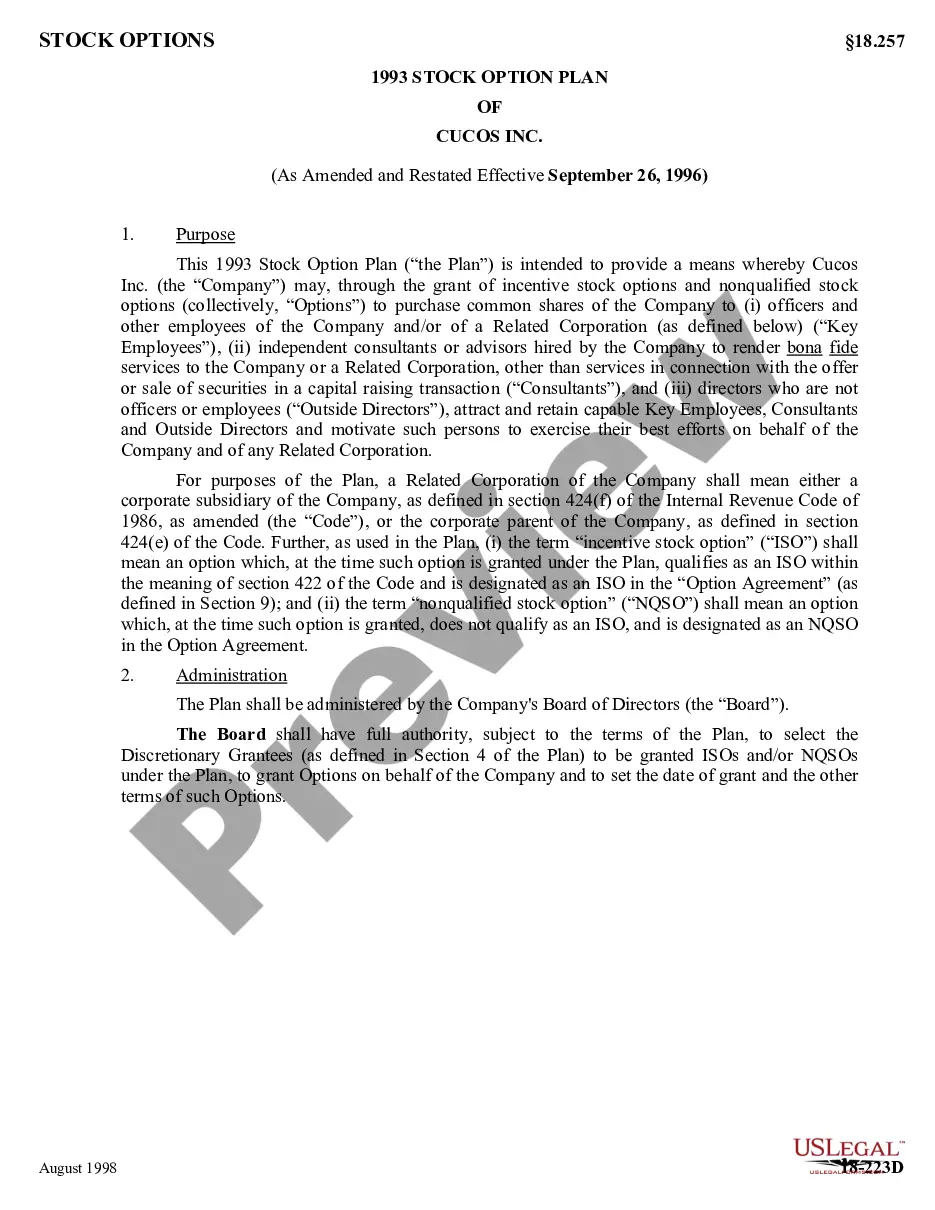
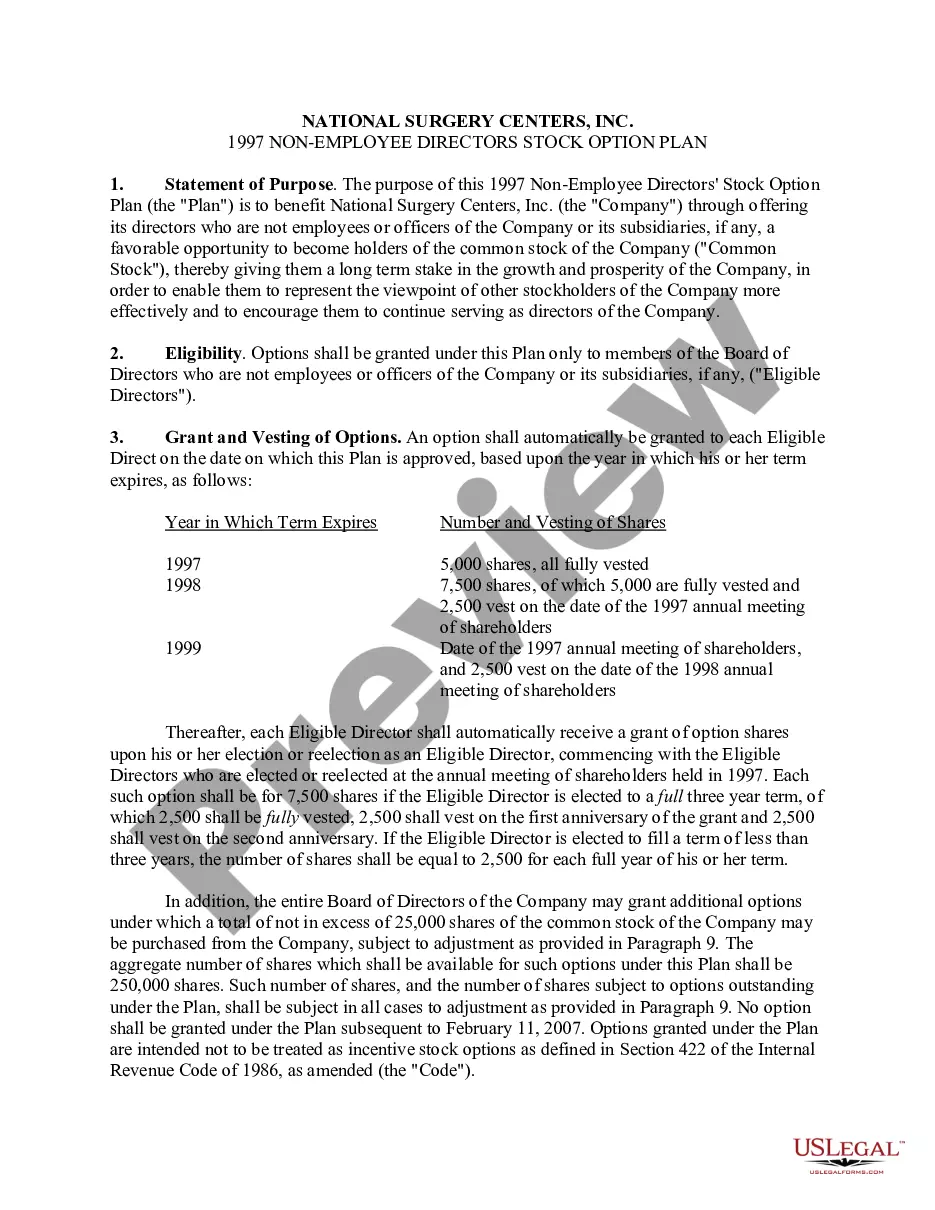
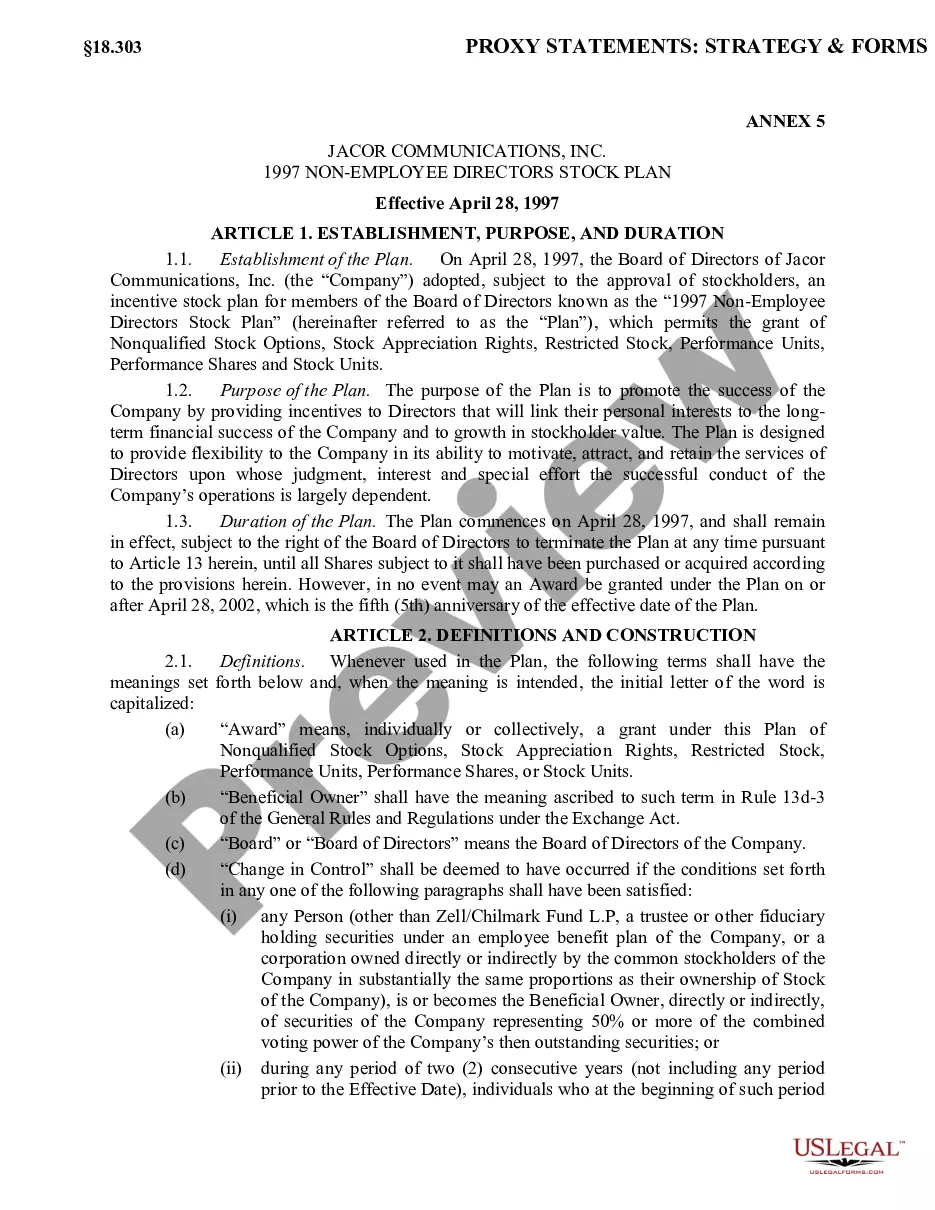
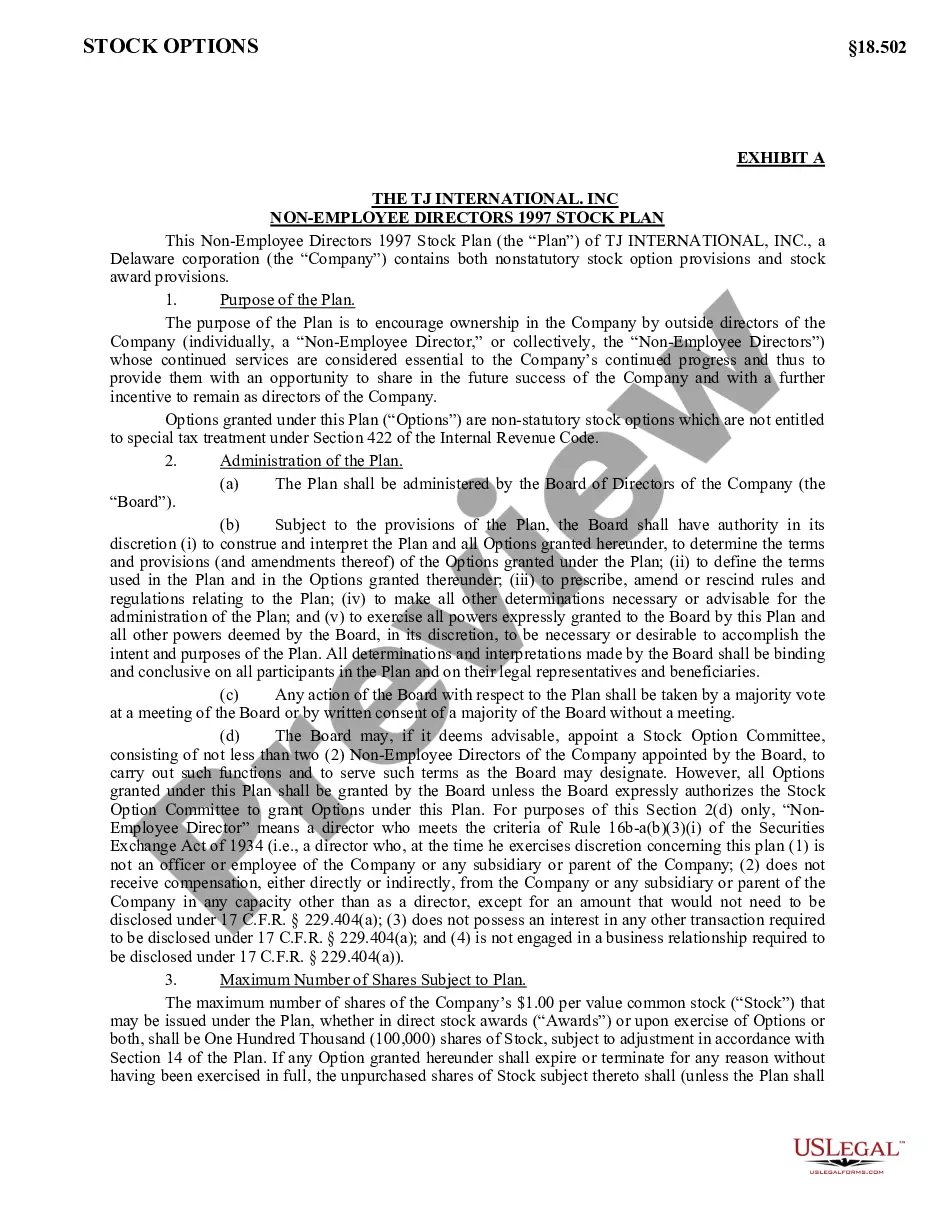
The Nonemployee Directors Nonqualified Stock Option Plan of Cucos, Inc. provides a structured way for the company to grant nonqualified stock options (NQSOs) to its non-employee directors. This form is designed to help the company attract and retain qualified directors by offering them the opportunity to purchase shares at a specified price. Unlike incentive stock options (ISOs), which are reserved for employees, NQSOs can be granted to a broader range of individuals, including outside directors and consultants.
Form components explained
- Purpose: Establishes the goals for offering stock options to enhance motivation and retention.
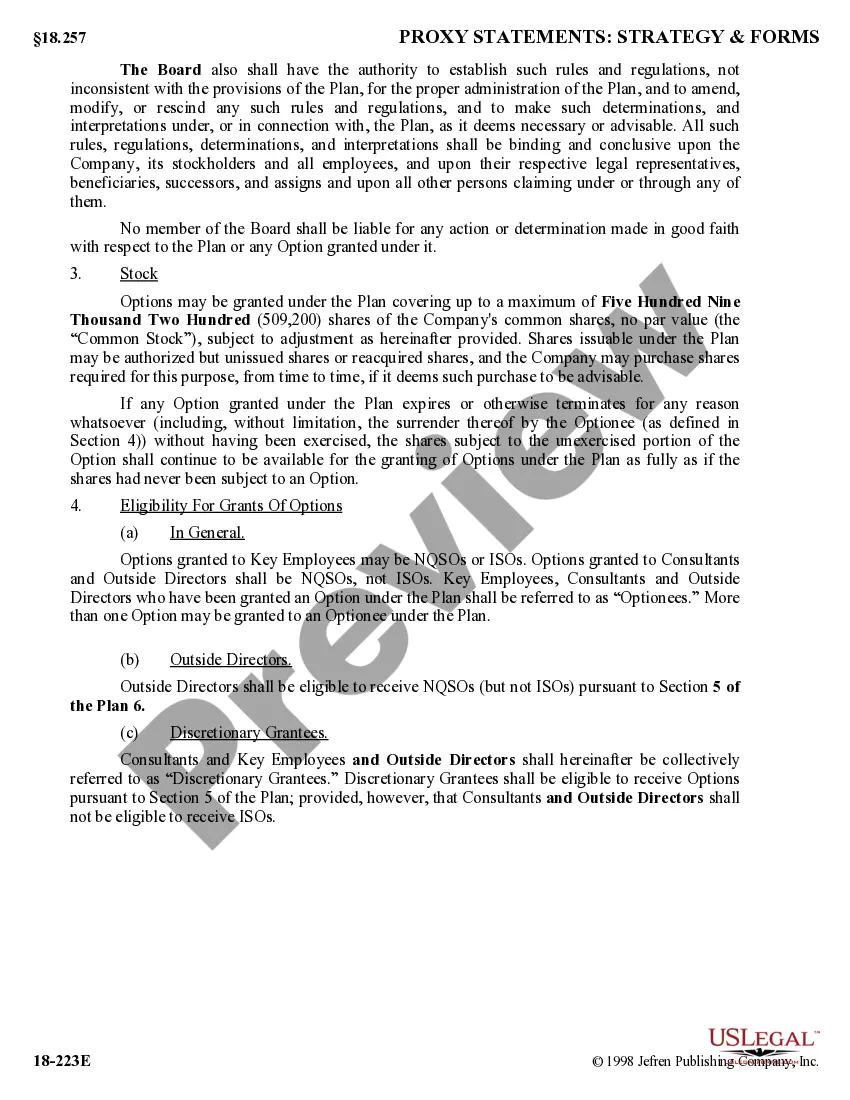
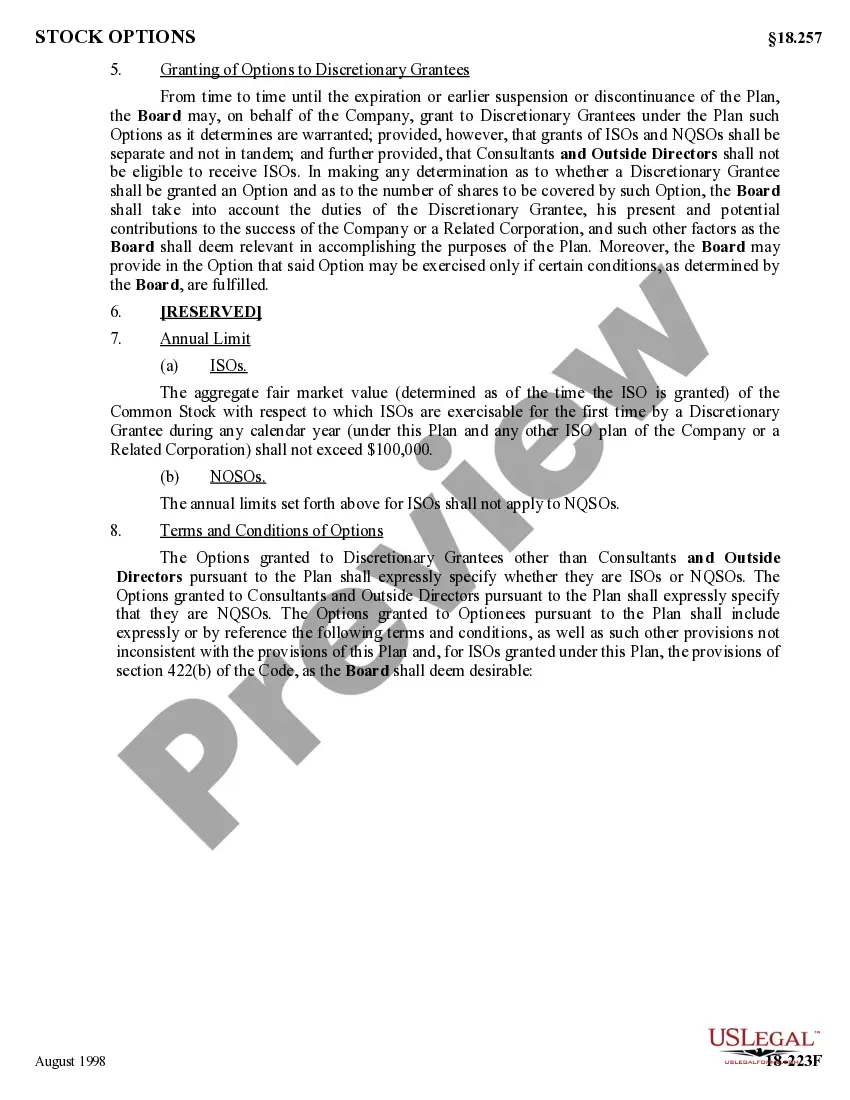
- Eligibility: Specifies who can receive NQSOs, including outside directors and consultants.
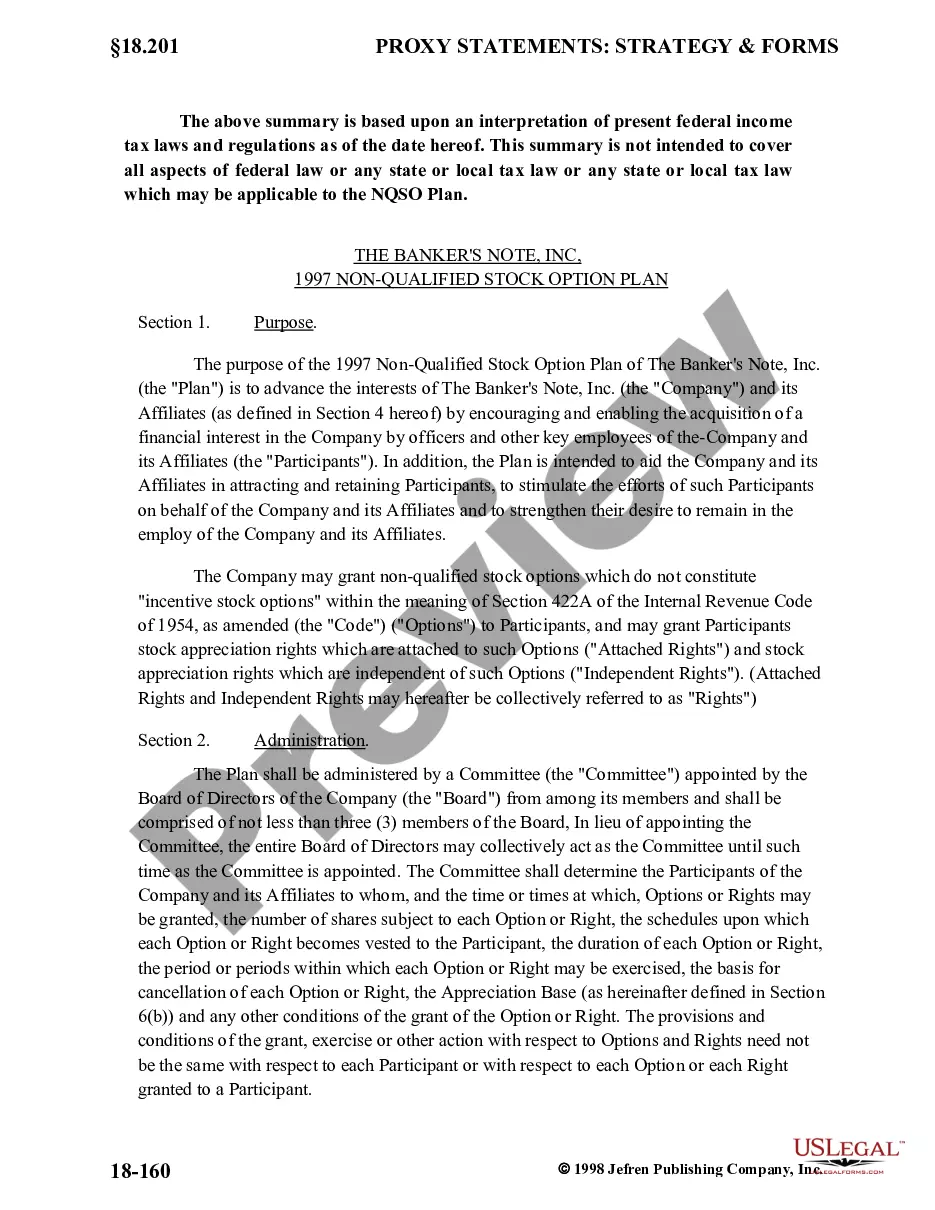
- Administration: Outlines the powers of the Board of Directors in managing the plan, including granting options.
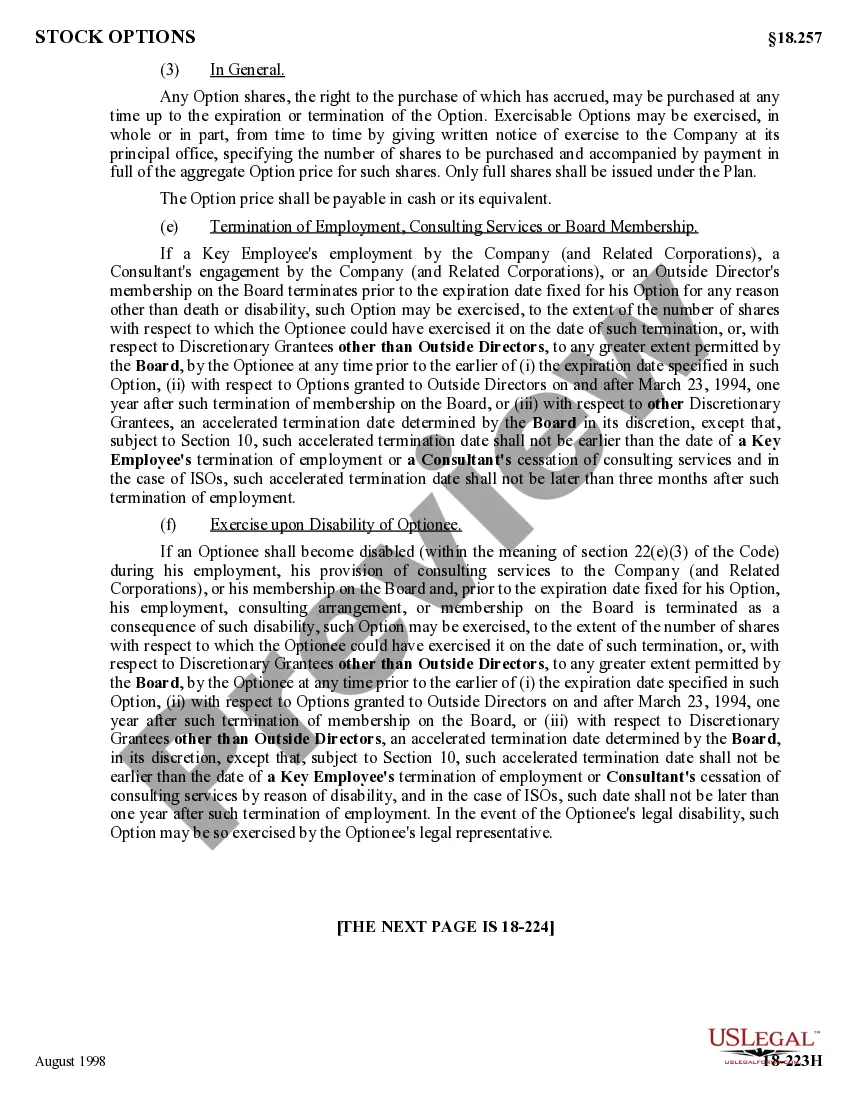
- Option Terms: Details the conditions under which stock options can be exercised, including price and duration.
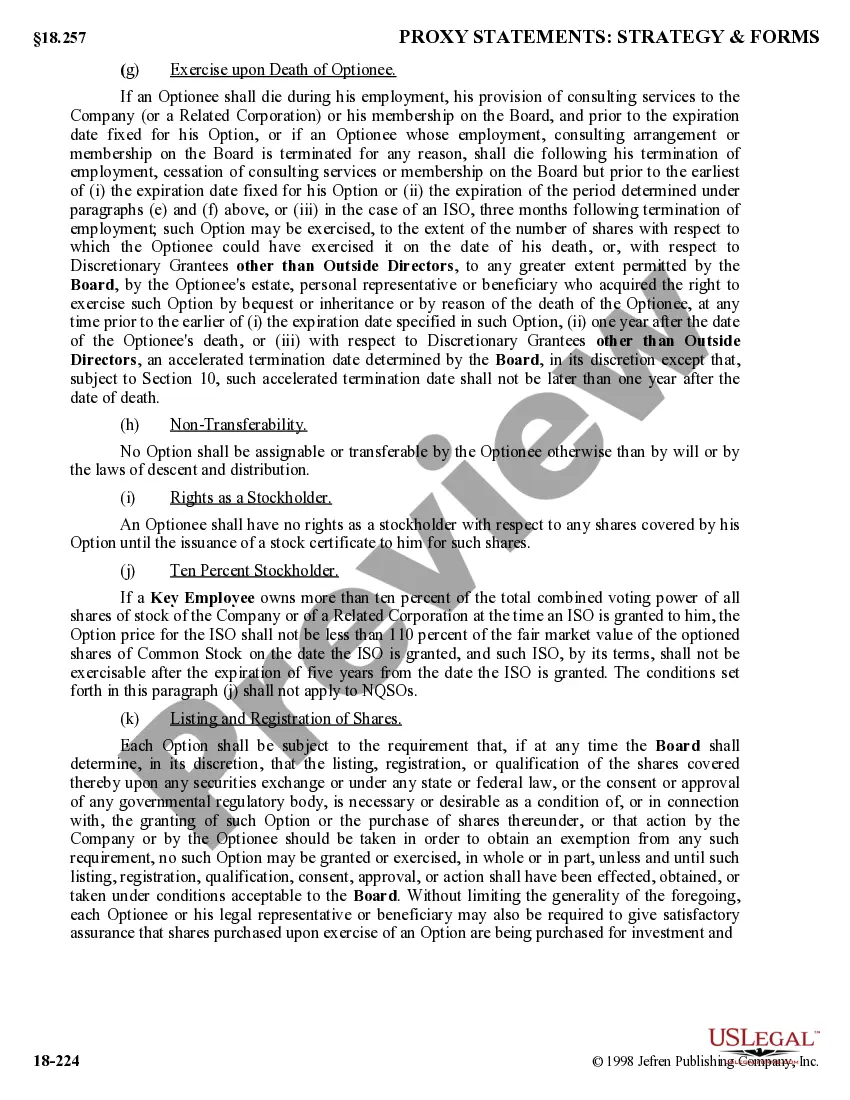
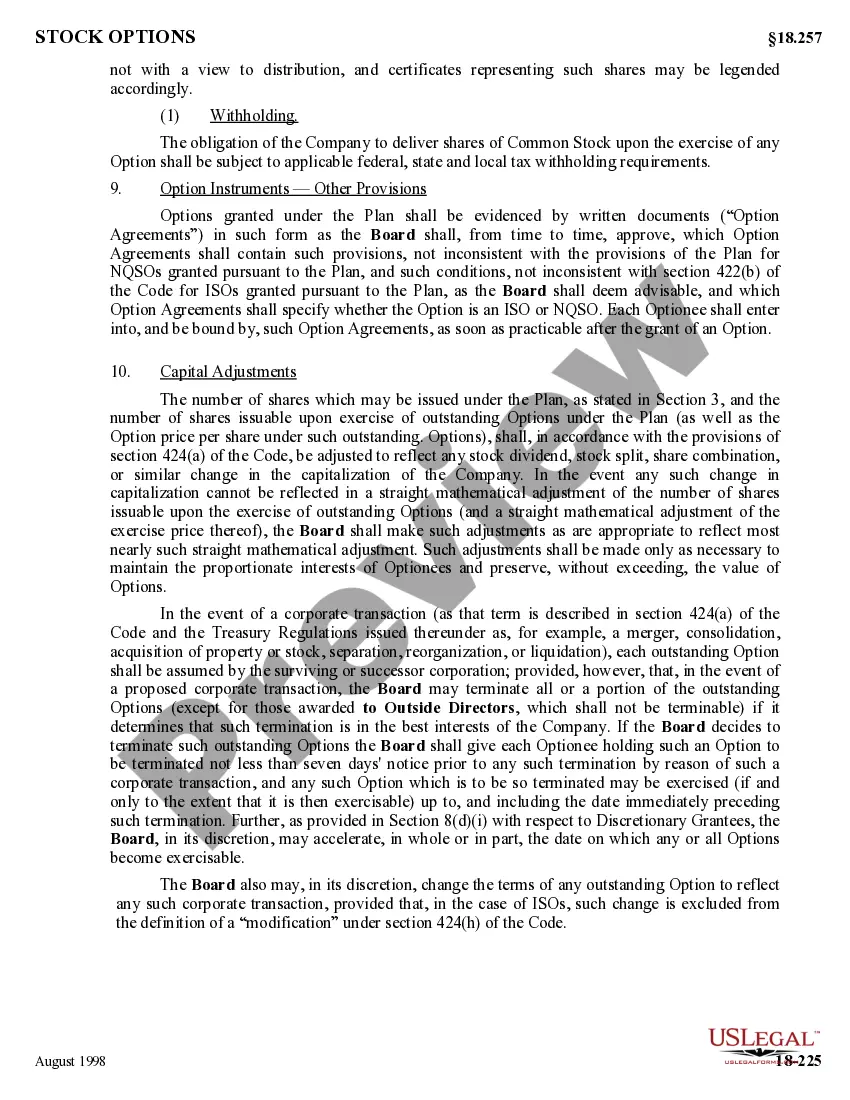
- Transferability: States that options are non-transferable except by will or laws of descent.
- Tax Considerations: Indicates tax withholding obligations upon the exercise of options.



When this form is needed
This form should be used when Cucos, Inc. wants to establish a formal plan for granting stock options to its non-employee directors. It is particularly important when the company seeks to align the interests of directors with those of shareholders and attract experienced professionals to its Board. Additionally, this form can be utilized during annual board meetings or specific events where stock options are discussed or granted.
Who can use this document
- Corporate boards looking to incentivize and retain their non-employee directors.
- Companies seeking to establish a formal stock option plan for their governance structure.
- Legal representatives overseeing the structure of executive compensation packages.
- HR professionals involved in managing director performance incentives.
Instructions for completing this form
- Identify the parties: Clearly state the name of Cucos, Inc. and the non-employee directors involved.
- Specify the terms: Outline the number of shares, option prices, and vesting schedules for the options granted.
- Describe eligibility: Include definitions of eligible parties, differentiating between outside directors and consultants.
- Include necessary provisions: Add clauses regarding termination, transferability, and compliance with tax obligations.
- Obtain necessary approvals: Ensure that the board of directors reviews and approves the plan as required.
Does this document require notarization?
In most cases, this form does not require notarization. However, some jurisdictions or signing circumstances might. US Legal Forms offers online notarization powered by Notarize, accessible 24/7 for a quick, remote process.
Get your form ready online
Our built-in tools help you complete, sign, share, and store your documents in one place.
Make edits, fill in missing information, and update formatting in US Legal Forms—just like you would in MS Word.
Download a copy, print it, send it by email, or mail it via USPS—whatever works best for your next step.
Sign and collect signatures with our SignNow integration. Send to multiple recipients, set reminders, and more. Go Premium to unlock E-Sign.
If this form requires notarization, complete it online through a secure video call—no need to meet a notary in person or wait for an appointment.
We protect your documents and personal data by following strict security and privacy standards.

Make edits, fill in missing information, and update formatting in US Legal Forms—just like you would in MS Word.

Download a copy, print it, send it by email, or mail it via USPS—whatever works best for your next step.

Sign and collect signatures with our SignNow integration. Send to multiple recipients, set reminders, and more. Go Premium to unlock E-Sign.

If this form requires notarization, complete it online through a secure video call—no need to meet a notary in person or wait for an appointment.

We protect your documents and personal data by following strict security and privacy standards.
Typical mistakes to avoid
- Failing to clearly define eligibility for stock options, leading to confusion over who can receive them.
- Neglecting to outline the vesting schedule and exercise period, which can impact director motivation.
- Overlooking tax implications and withholding requirements, resulting in potential legal issues.
- Not obtaining the necessary board approvals before implementing the stock option plan.
Benefits of using this form online
- Convenience: Easily accessible for review and completion at any time.
- Editability: Users can customize the form to fit specific requirements and circumstances.
- Reliability: Access to templates drafted by licensed attorneys ensures legal compliance and recognition.
Legal use & context
- The plan must comply with relevant provisions of the Internal Revenue Code for nonqualified stock options.
- It should follow corporate governance rules to ensure legality and enforceability.
- Understanding the tax implications for both the company and the directors receiving options is crucial.
Key takeaways
- This stock option plan is essential for motivating non-employee directors through equity compensation.
- Clearly defining the eligibility and terms of the options helps prevent confusion and legal issues.
- Using this form online streamlines the process and enhances the ease of customization and compliance.
Looking for another form?

Form popularity
FAQ
Stock options are of two main types. Incentive stock options, generally only offered to key employees and top management, receive preferential tax treatment in many cases, as the IRS treats gains on such options as long-term capital gains.
Employers must report the income from a 2020 exercise of Non-qualified Stock Options in Box 12 of the 2020 Form W-2 using the code V. The compensation element is already included in Boxes 1, 3 (if applicable) and 5, but is also reported separately in Box 12 to clearly indicate the amount of compensation arising from
Start with Form 8949, Part I, Short-Term Capital Gains and Losses. Check Box C since you did not receive a Form 1099. On Line 1, Column A, Description of Property, enter the name of the company or its symbol, and after that write "call options" and the number of call options you sold.
In some situations companies choose to pay independent contractors with company stock in the form of stock options, restricted stock or outright stock grants.However, companies can offer stock to any independent contractor.
Qualified stock options, also known as incentive stock options, can only be granted to employees. Non-qualified stock options can be granted to employees, directors, contractors and others. This gives you greater flexibility to recognize the contributions of non-employees.
If your income is nonemployee compensation, you'll likely need to complete Schedule C, Profit or Loss From Business, and then transfer the net earnings to Form 1040. For rents or royalties, you will typically complete Schedule E, Supplemental Income or Loss, and then transfer the applicable amount to Form 1040.
In a simple option transfer to a family member, you transfer a vested option to a child, grandchild, or other heir. The transfer of the vested option is treated as a completed gift for gift-tax purposes. In 2021, you can generally give annual gifts of up to $15,000 (married couples $30,000) to each donee.
Once you exercise your non-qualified stock option, the difference between the stock price and the strike price is taxed as ordinary income. This income is usually reported on your paystub.If you hold the shares for less than one year, any gain is taxed at your ordinary income tax rates, which are usually higher.