Restricted Stock Plan and Trust Agreement of Home Federal Savings and Loan Assoc.
Understanding this form
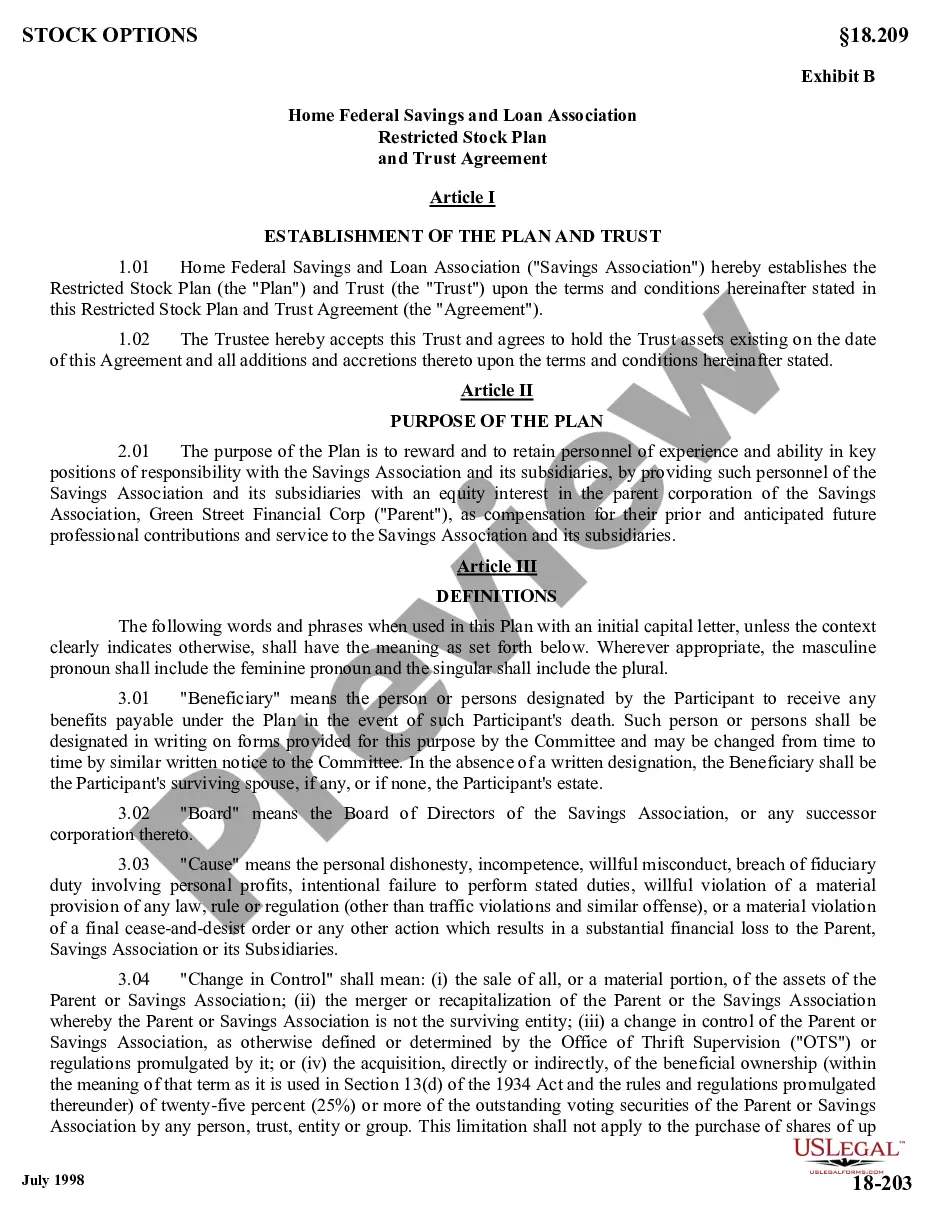
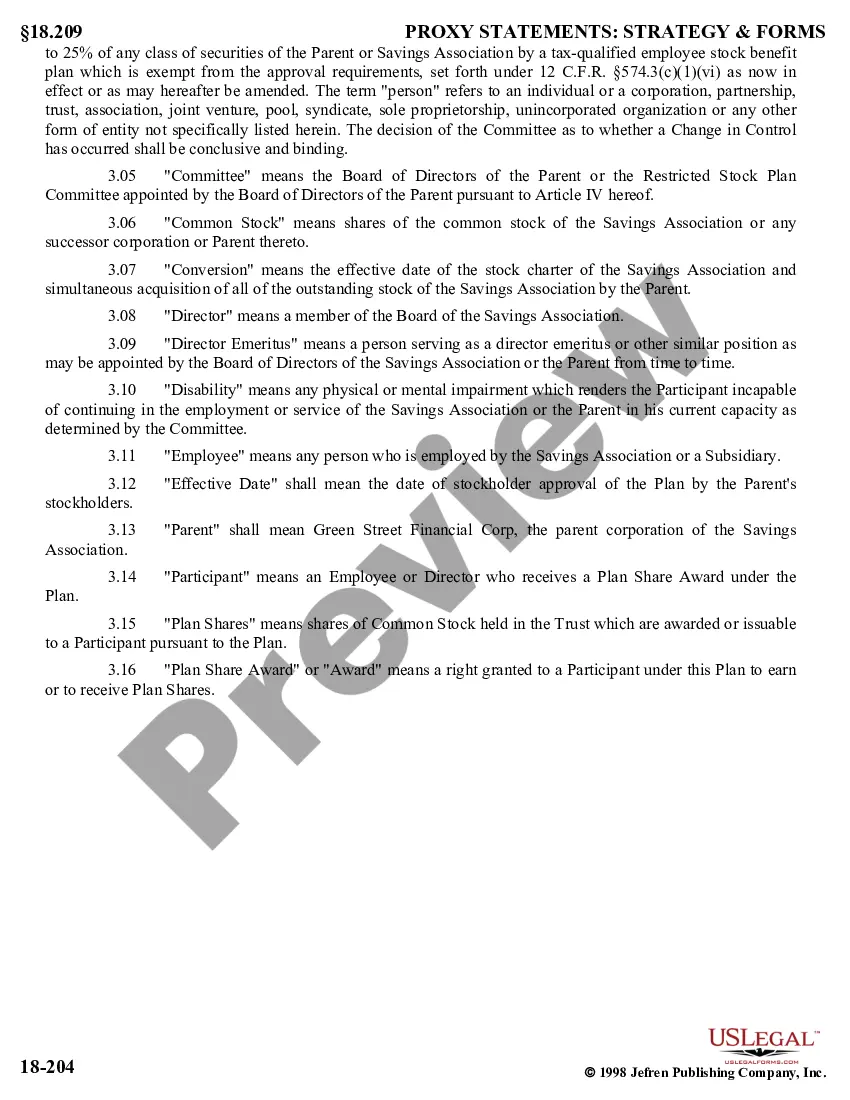
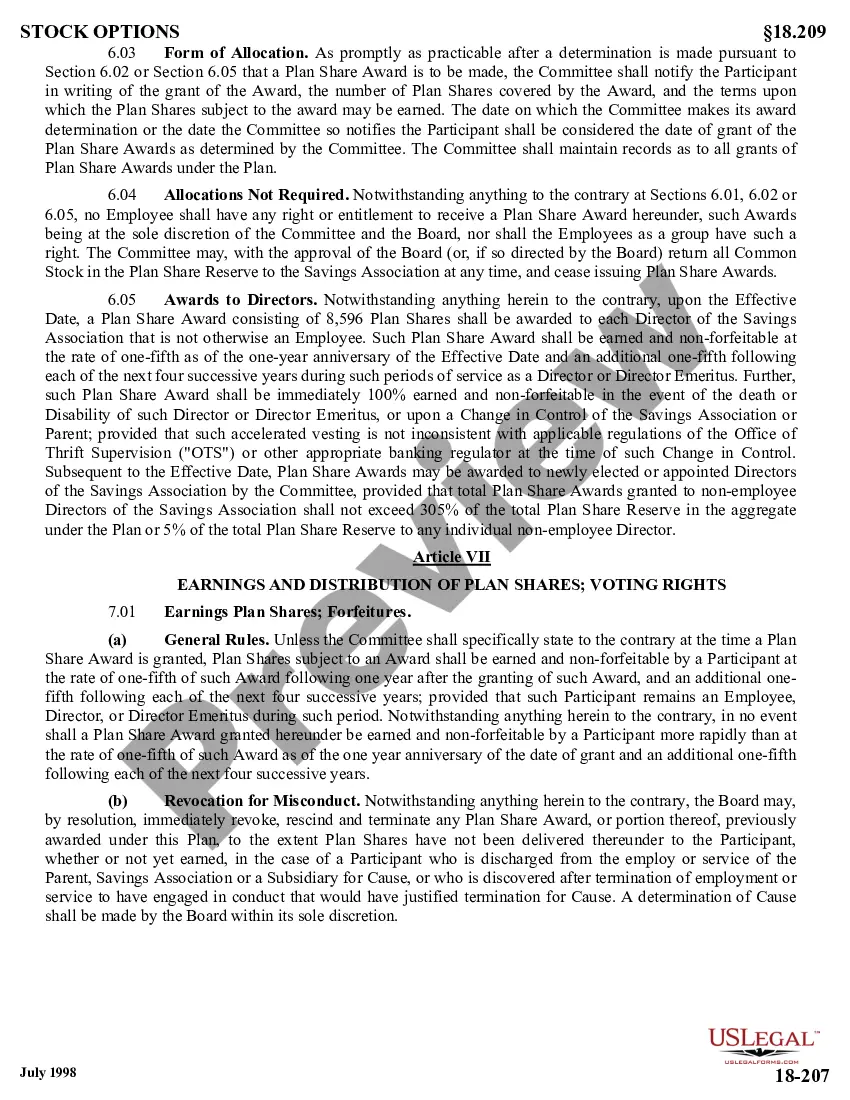
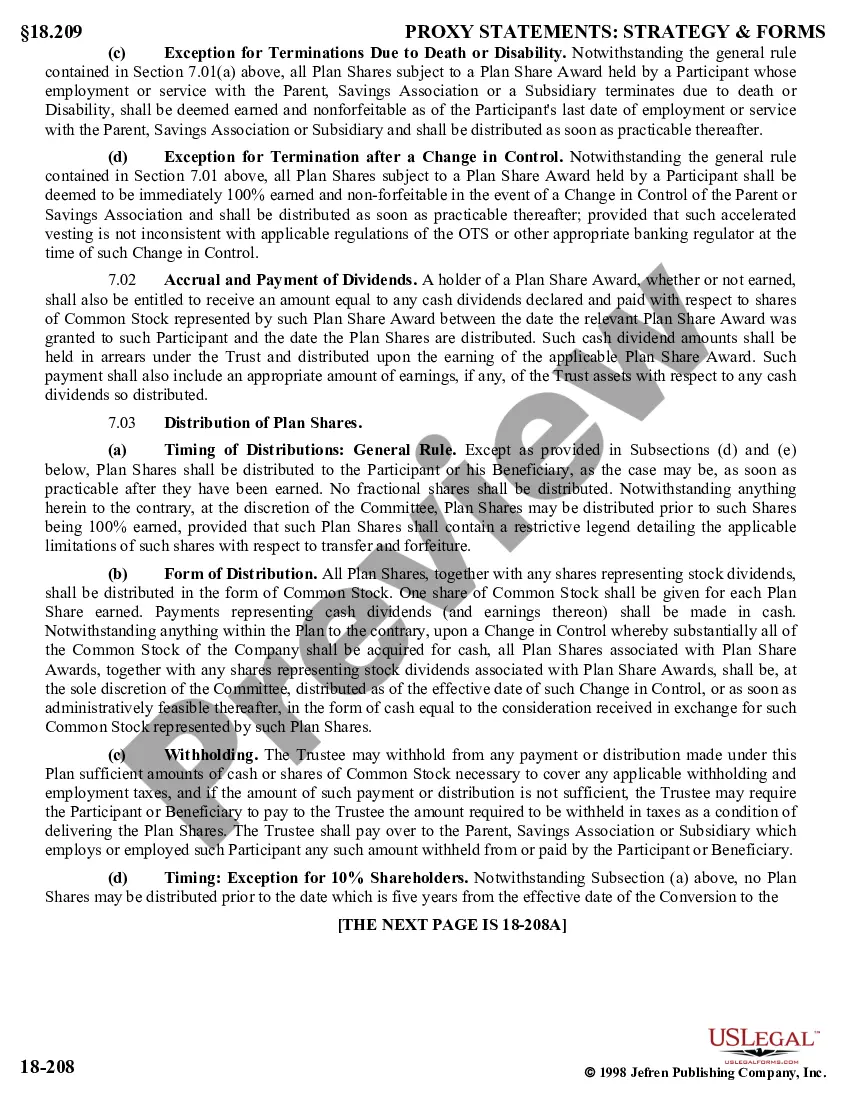
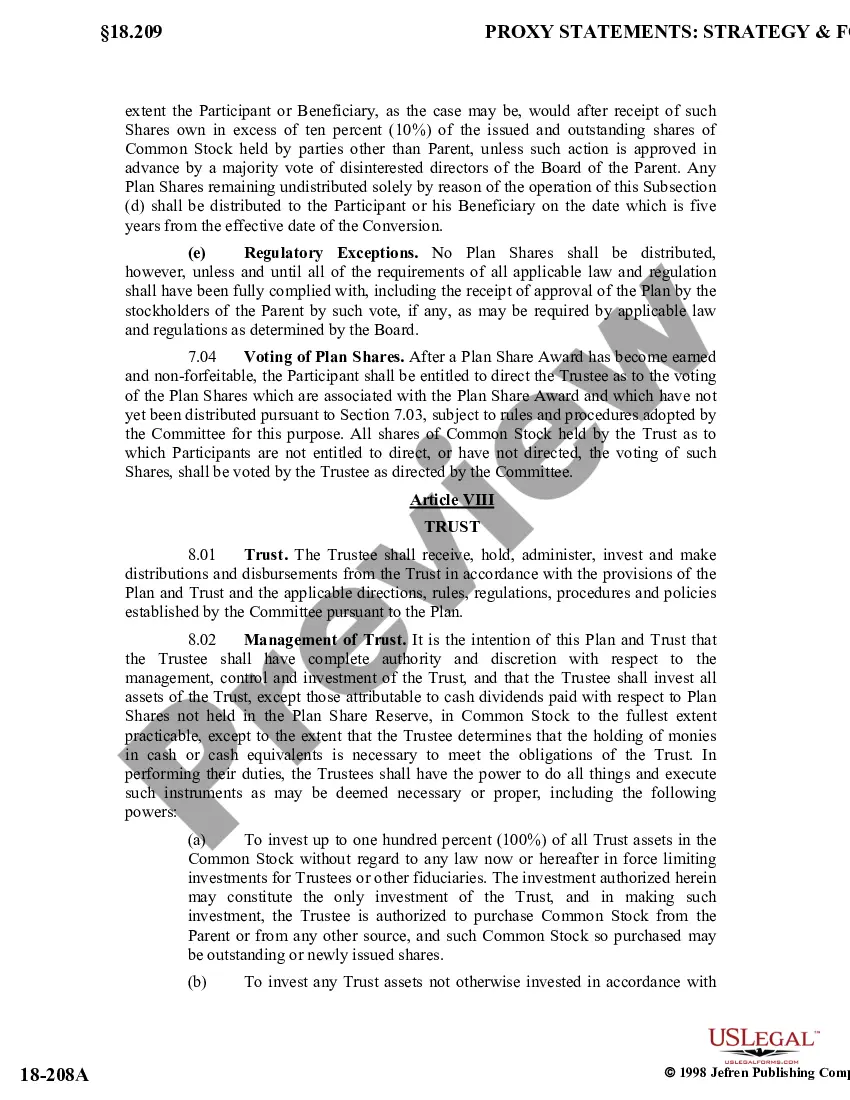
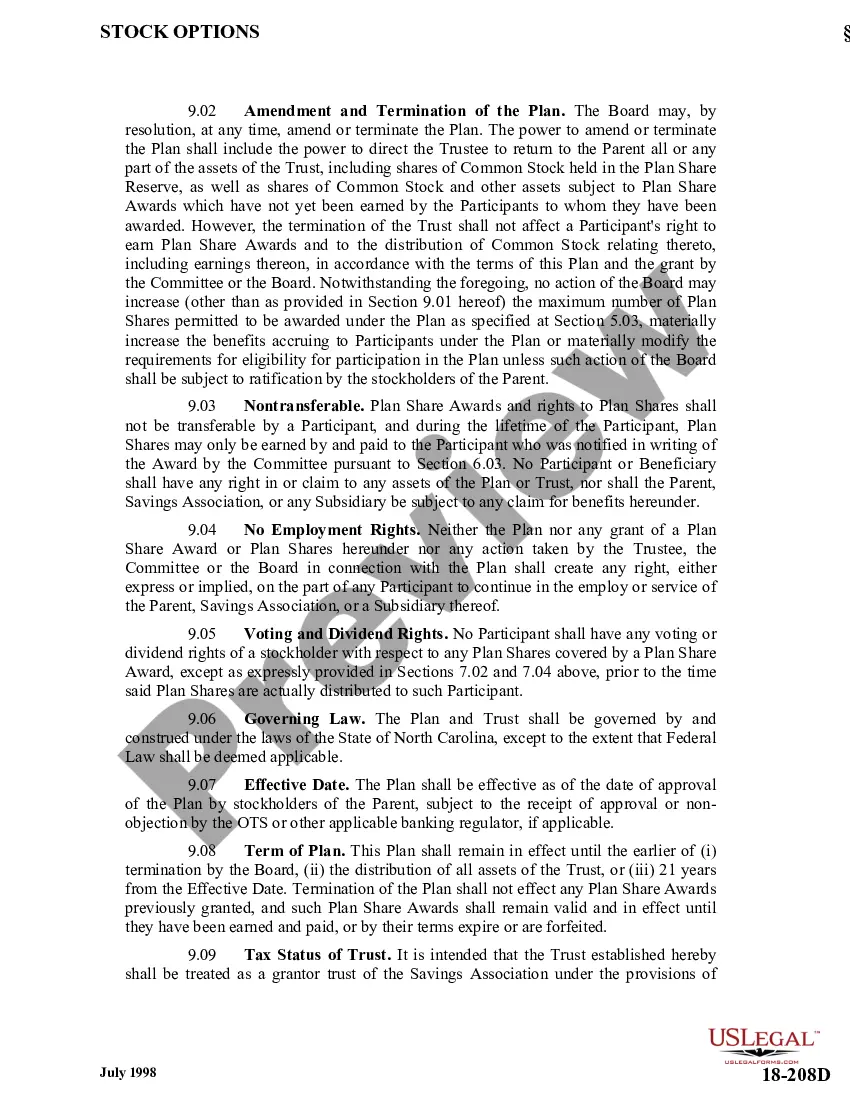
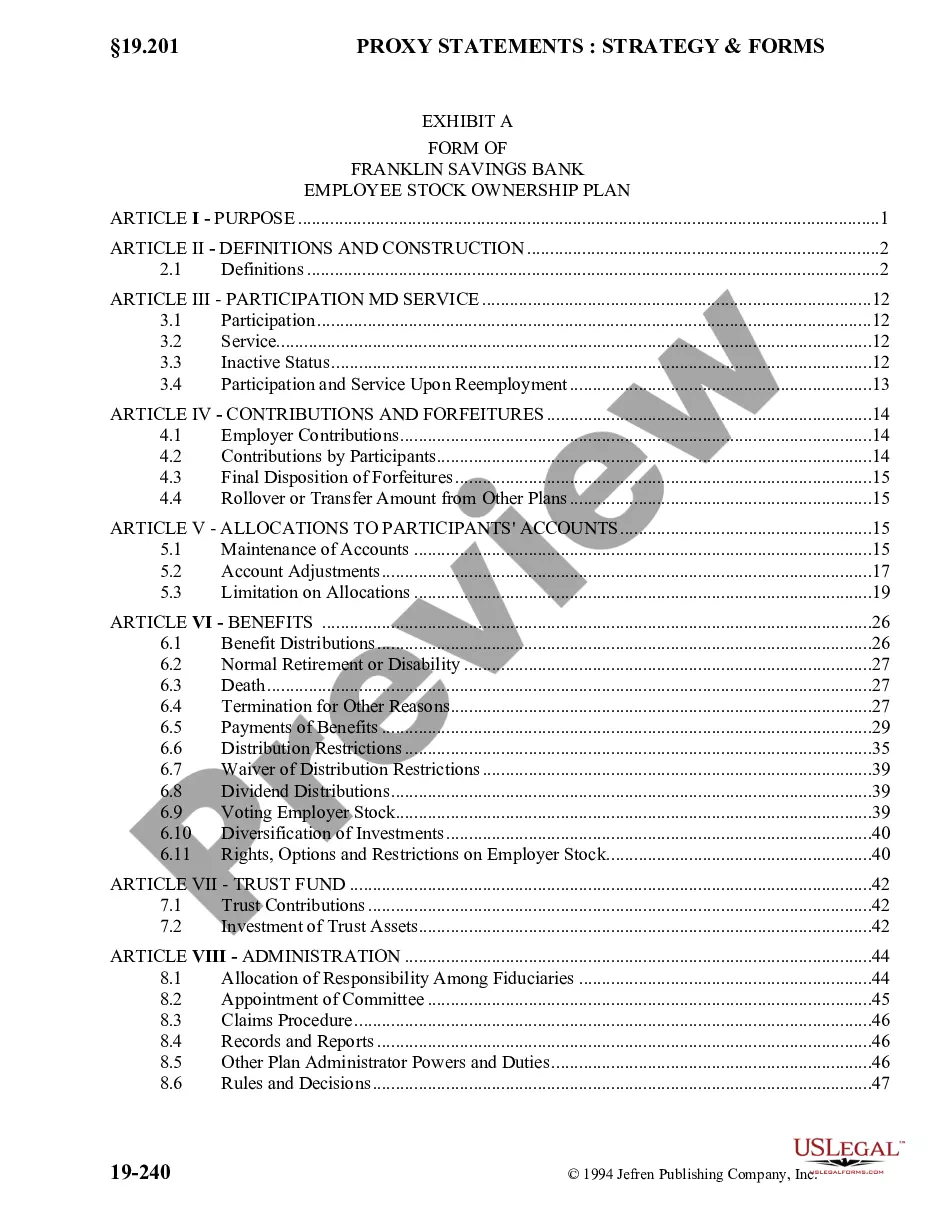
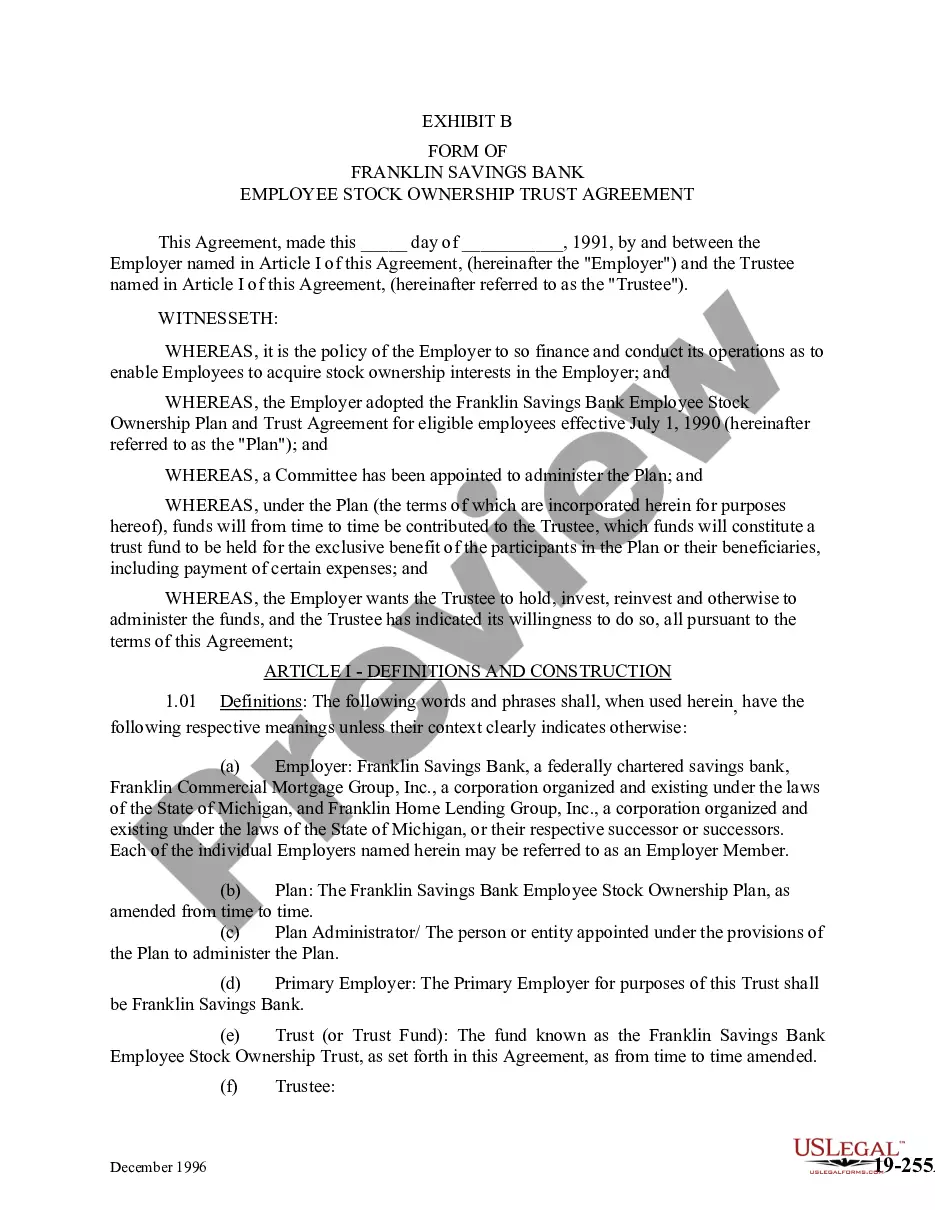
The Restricted Stock Plan and Trust Agreement of Home Federal Savings and Loan Association is a formal agreement that establishes a plan for granting restricted stock awards to designated employees, directors, and key personnel within the organization. This plan provides a method for the corporation to reward and retain individuals by giving them an equity interest in the parent organization, Green Street Financial Corp, as a form of compensation. It differs from other compensation forms by focusing specifically on stock awards that have certain restrictions and conditions for vesting.
Form components explained
- Establishment of the Plan and Trust: This section outlines the creation of the Restricted Stock Plan and the Trust to manage its assets.
- Purpose of the Plan: It specifies the intent to recruit and retain experienced personnel by providing them common stock as part of their compensation.
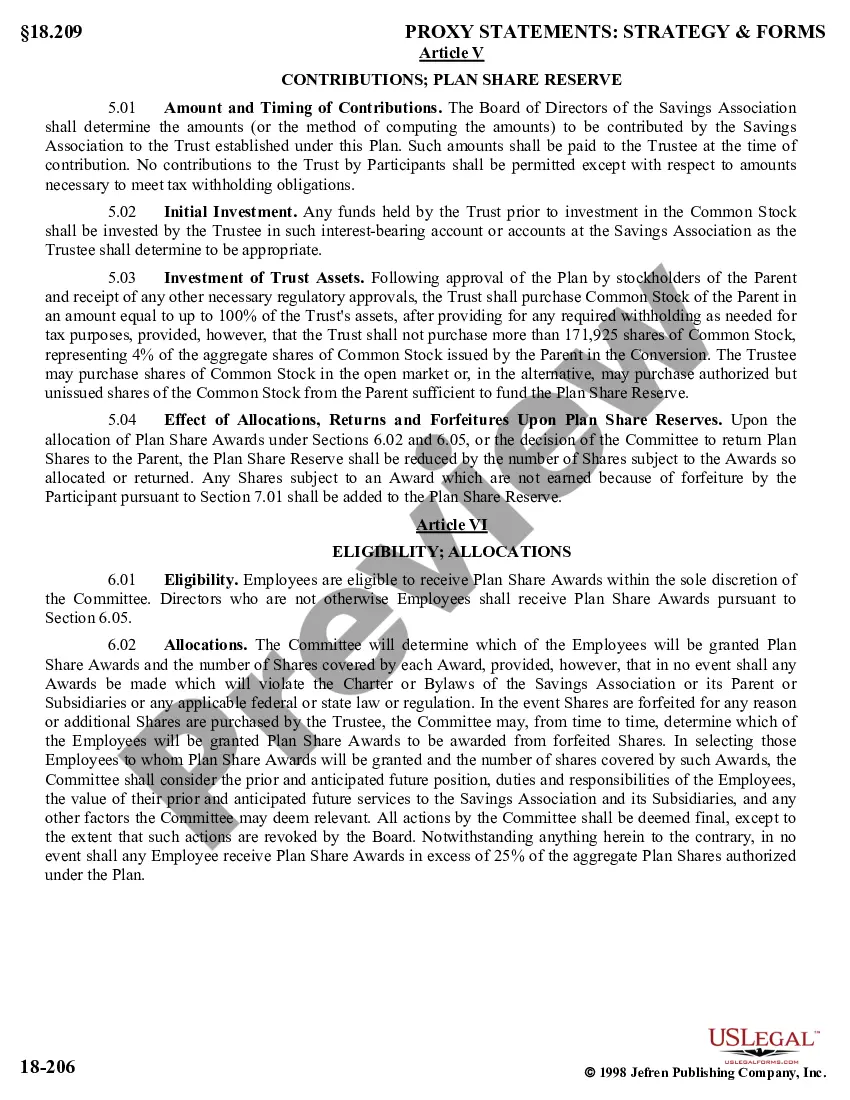
- Eligibility and Allocations: Details the criteria for employees and directors to receive stock awards and how those awards are allocated.
- Earnings and Forfeitures: Defines how and when the restricted stock will vest and the conditions under which it can be forfeited.
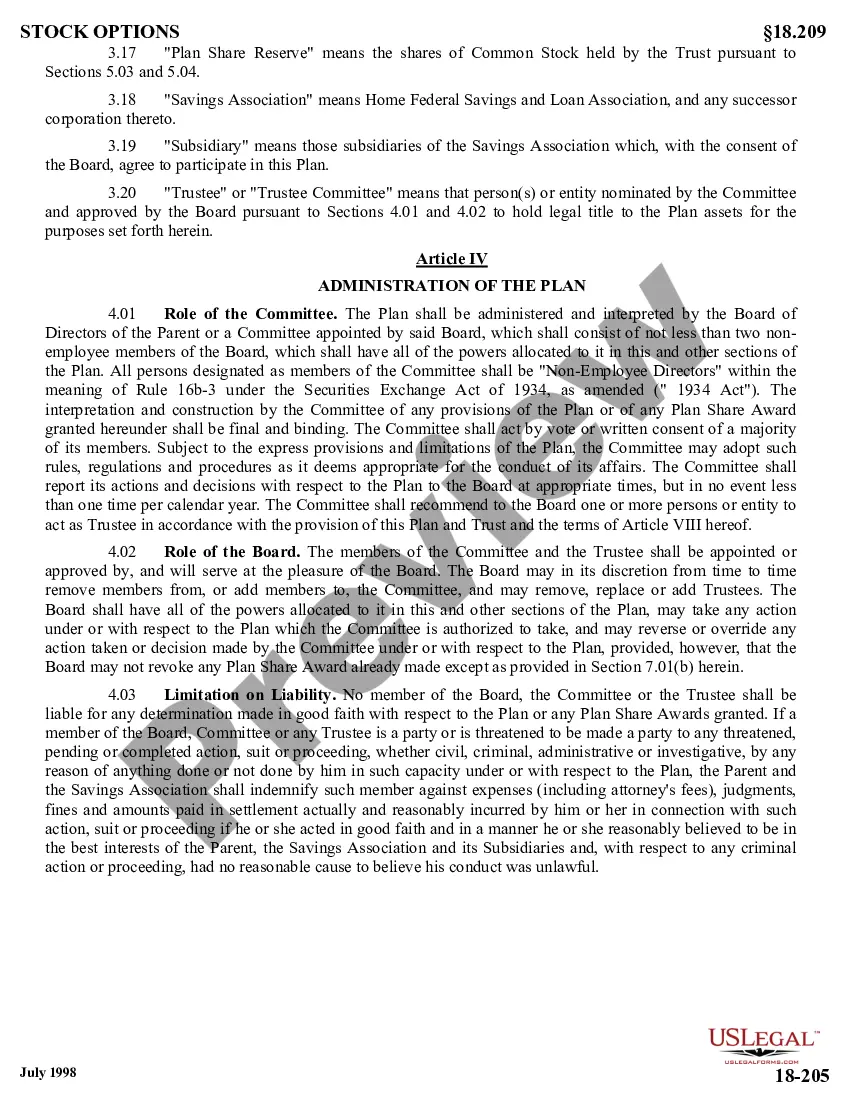
- Administration of the Plan: Describes the roles of the Board of Directors and the Committee responsible for overseeing the planâs execution and management.


Situations where this form applies
This form should be used by the Home Federal Savings and Loan Association when establishing a Restricted Stock Plan aimed at compensating its directors and key employees with stock awards. It is particularly relevant when the organization seeks to enhance employee retention and attract talented individuals by offering them equity in the company.
Who needs this form
- Organizations looking to establish a Restricted Stock Plan for their employees.
- Companies that want to incentivize and retain critical personnel through equity compensation.
- Management teams of banks or savings associations looking to reward their executives and key employees.
- Board members of the organization who are involved in decision-making regarding compensation practices.
Instructions for completing this form
- Identify the parties involved: the Home Federal Savings and Loan Association and the designated trustee.
- Define the purpose of the Restricted Stock Plan within the document.
- Outline eligibility criteria for employees and directors who may receive stock awards.
- Specify the terms of earnings and conditions for vesting of the restricted stock awards.
- Provide proper signatures from authorized individuals, including board members and the trustee.
Notarization guidance
This form does not typically require notarization unless specified by local law. However, organizations should verify any additional requirements based on jurisdiction and specific circumstances.
Get your form ready online
Our built-in tools help you complete, sign, share, and store your documents in one place.
Make edits, fill in missing information, and update formatting in US Legal Forms—just like you would in MS Word.
Download a copy, print it, send it by email, or mail it via USPS—whatever works best for your next step.
Sign and collect signatures with our SignNow integration. Send to multiple recipients, set reminders, and more. Go Premium to unlock E-Sign.
If this form requires notarization, complete it online through a secure video call—no need to meet a notary in person or wait for an appointment.
We protect your documents and personal data by following strict security and privacy standards.

Make edits, fill in missing information, and update formatting in US Legal Forms—just like you would in MS Word.

Download a copy, print it, send it by email, or mail it via USPS—whatever works best for your next step.

Sign and collect signatures with our SignNow integration. Send to multiple recipients, set reminders, and more. Go Premium to unlock E-Sign.

If this form requires notarization, complete it online through a secure video call—no need to meet a notary in person or wait for an appointment.

We protect your documents and personal data by following strict security and privacy standards.
Common mistakes to avoid
- Failing to clearly define eligibility criteria for stock awards.
- Not specifying the vesting schedule or conditions under which restrictions apply.
- Neglecting to include the necessary signatures from board members or trustees.
- Overlooking compliance with applicable laws and regulations governing stock plans.
Benefits of using this form online
- Convenient access to document templates, reducing time spent on manual drafting.
- Editability ensures that specific terms can be adapted to meet organizational needs.
- Reliability of forms drafted by licensed attorneys, ensuring legal validity and compliance.
- The agreement is legally binding once executed properly by the participating entity and approved by necessary parties.
- Eligibility for awards is determined by the criteria set forth in the plan, which can influence the enforceability of awards.
- All provisions must comply with applicable federal and state laws governing restricted stock plans.
Summary of main points
- The Restricted Stock Plan is designed to incentivize and retain key personnel in the organization.
- Proper administration and compliance are crucial for the success of the plan.
- Understanding eligibility and vesting conditions is essential for participants.
- This form provides a clear structure for equity compensation within the federal savings and loan association framework.
Looking for another form?
Form popularity
FAQ
A restrictive covenant, also known as a negative covenant, is any type of agreement in a contract or obligation that restricts the buyer from taking some action or requires they abstain from a specific action.These covenants can be simple or complex and can levy penalties against buyers who fail to obey them.
Certain restrictive covenants will be enforceable, if you are able to prove that they are: reasonable. necessary to protect legitimate business interests; and. of a duration no longer than is necessary to protect those interests.
A restrictive covenant is a clause in an employment contract or services agreement that works to prohibit an individual from (among other things) competing with his or her ex-employer for a certain period after he or she has left the business.
In legal and financial terminology, a covenant is a promise in an indenture, or any other formal debt agreement, that certain activities will or will not be carried out or that certain thresholds will be met.
A covenant, in its most general sense and historical sense, is a solemn promise to engage in or refrain from a specified action.In real property law, the juristic term real covenants means conditions tied to the ownership or use of land.
A formal agreement or promise, usually included in a contract or deed, to do or not do a particular act; a compact or stipulation made in writing or by parol.
What Is The Purpose Of Restrictive Covenants? Restrictive covenants can offer benefits to homeowners. Restrictive covenants enforce a standard of uniformity across a development. These covenants stop your neighbors from letting their homes fall into decay and lowering your property values.
What Is A Restrictive Covenant? A restrictive covenant creates a deed restricted community. It is an agreement that states what a homeowner can or cannot do with their house or land.
A restrictive covenant is an agreement that restricts a company or other party to a contract from engaging in certain actions. For example, a restrictive covenant entered into with a public company might limit the amount of dividends the firm can pay its shareholders.