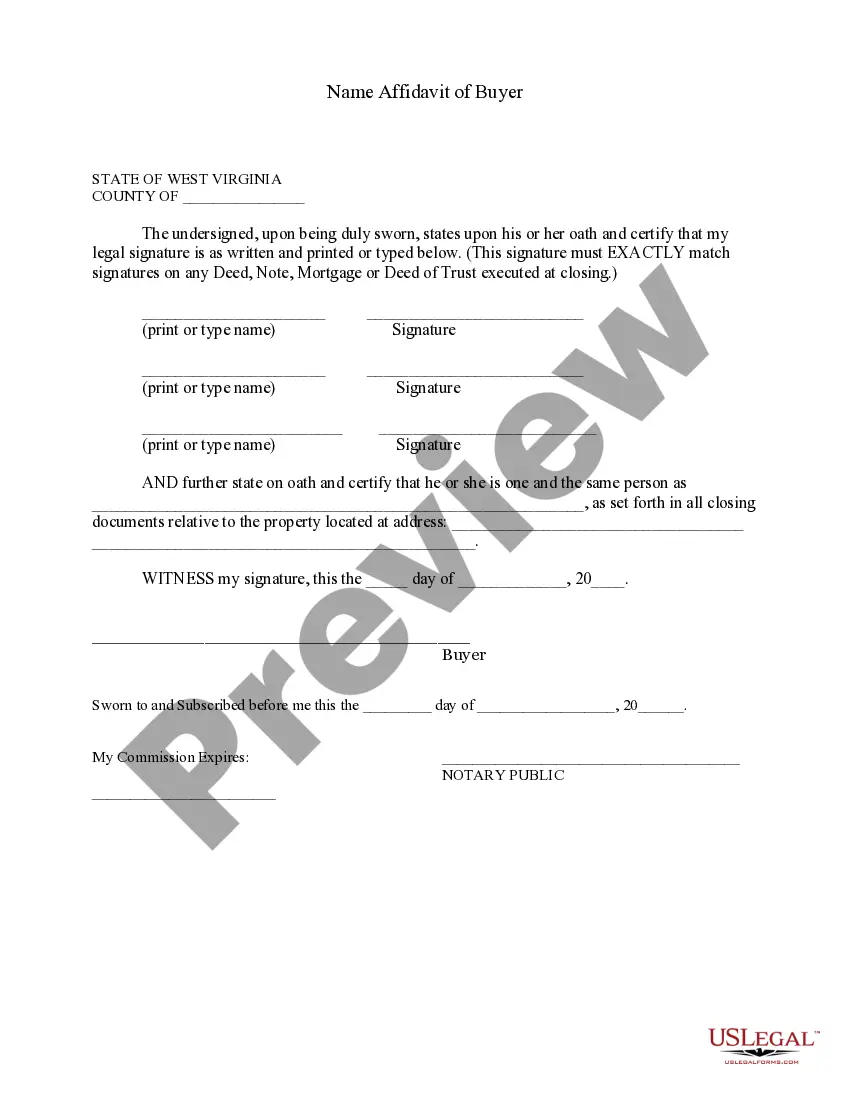
Indemnification Agreement between corporation and its directors regarding method for determining whether standards for indemnification have been met
Understanding this form
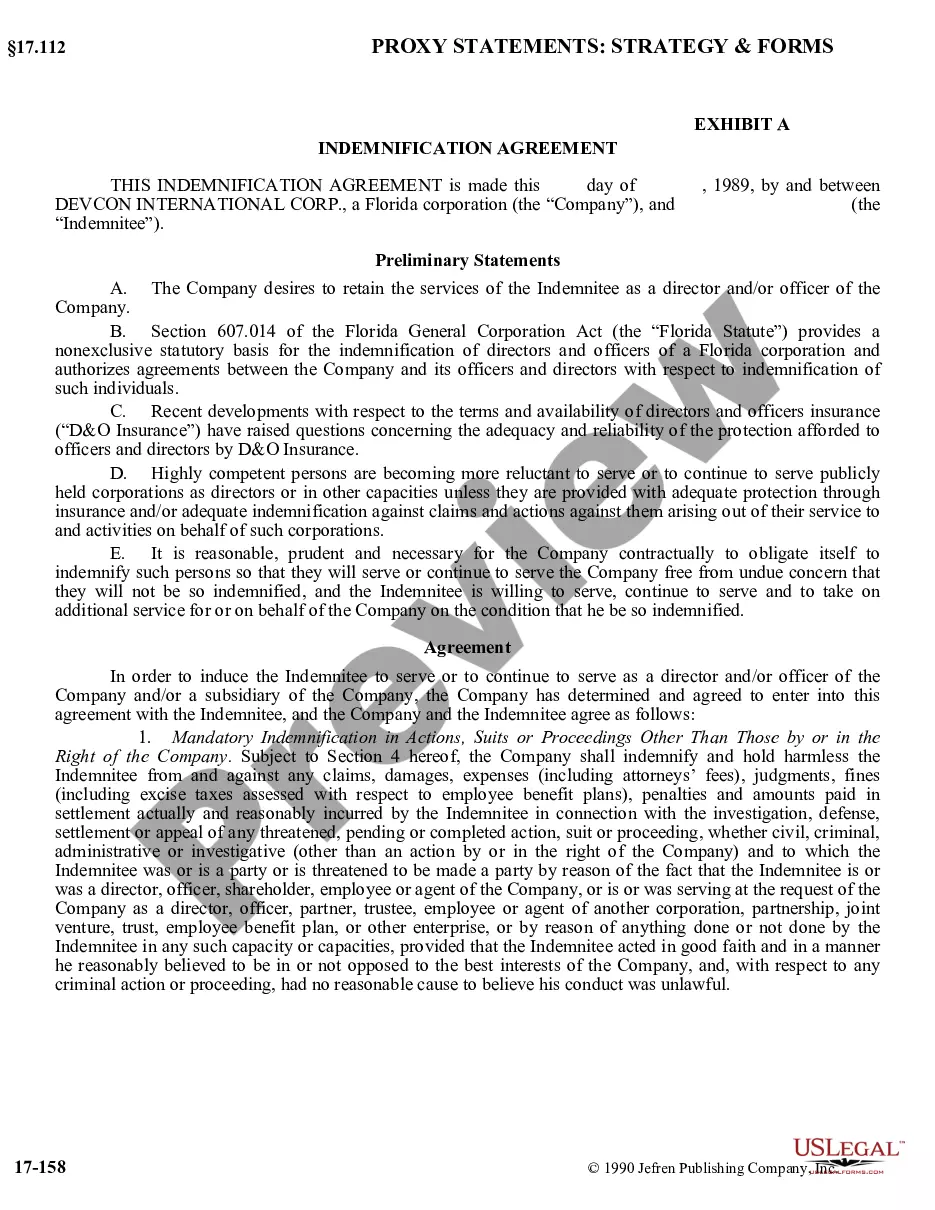
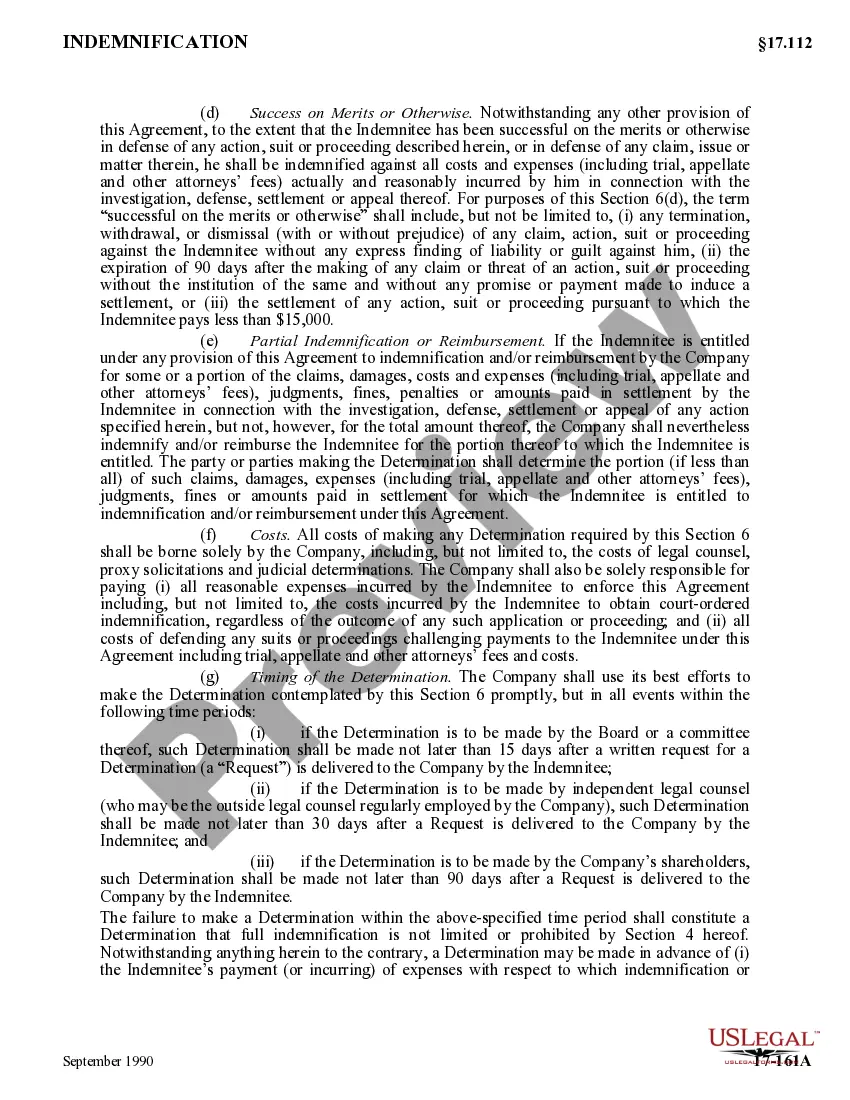
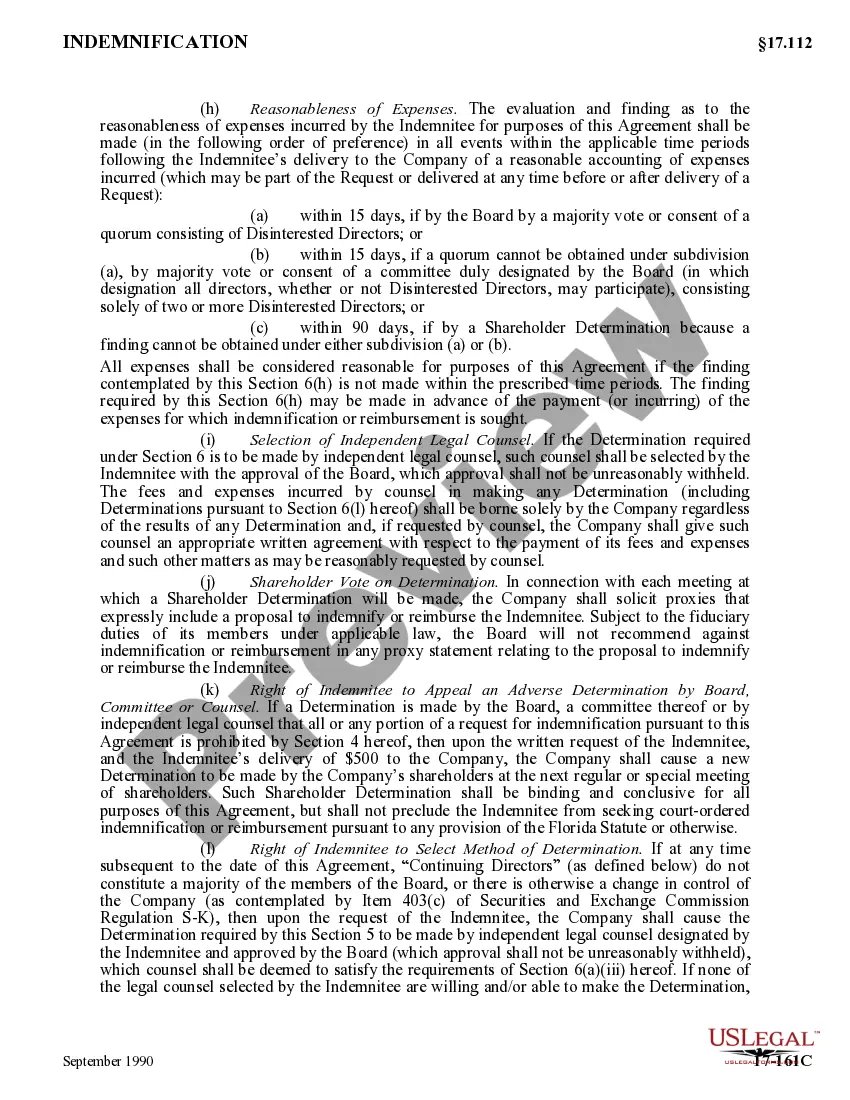
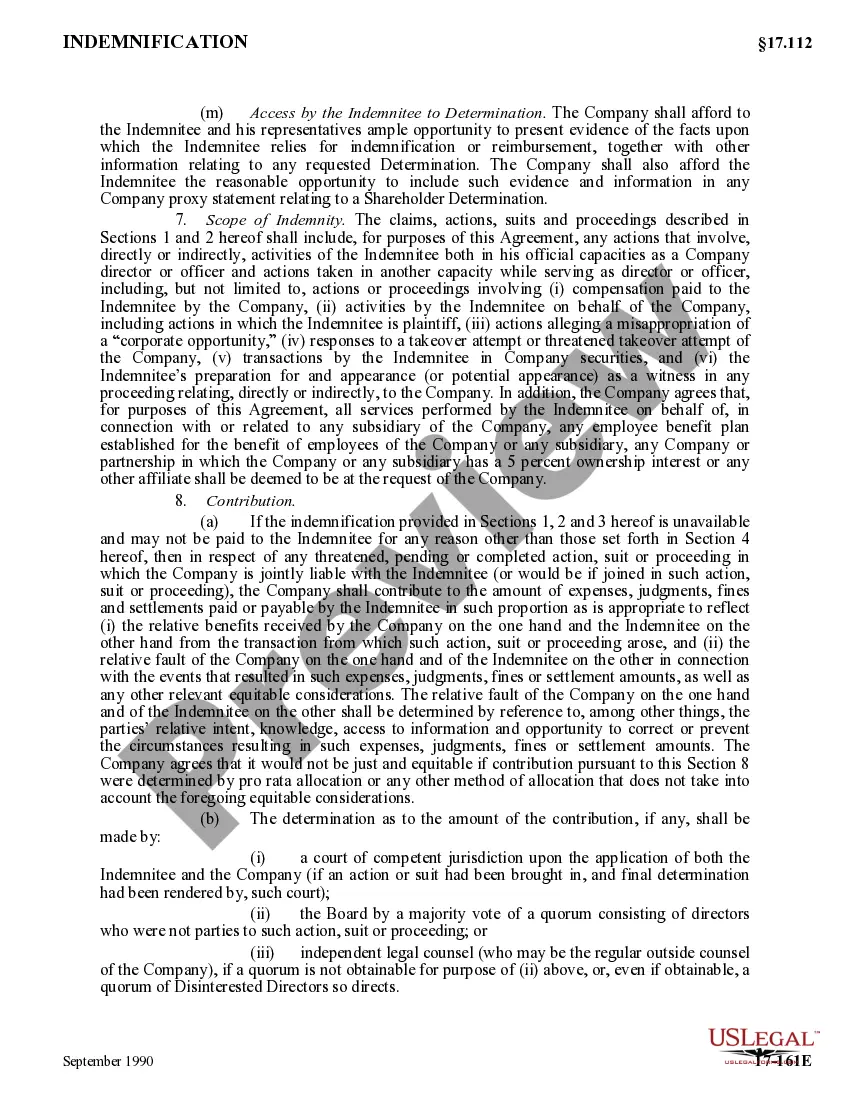
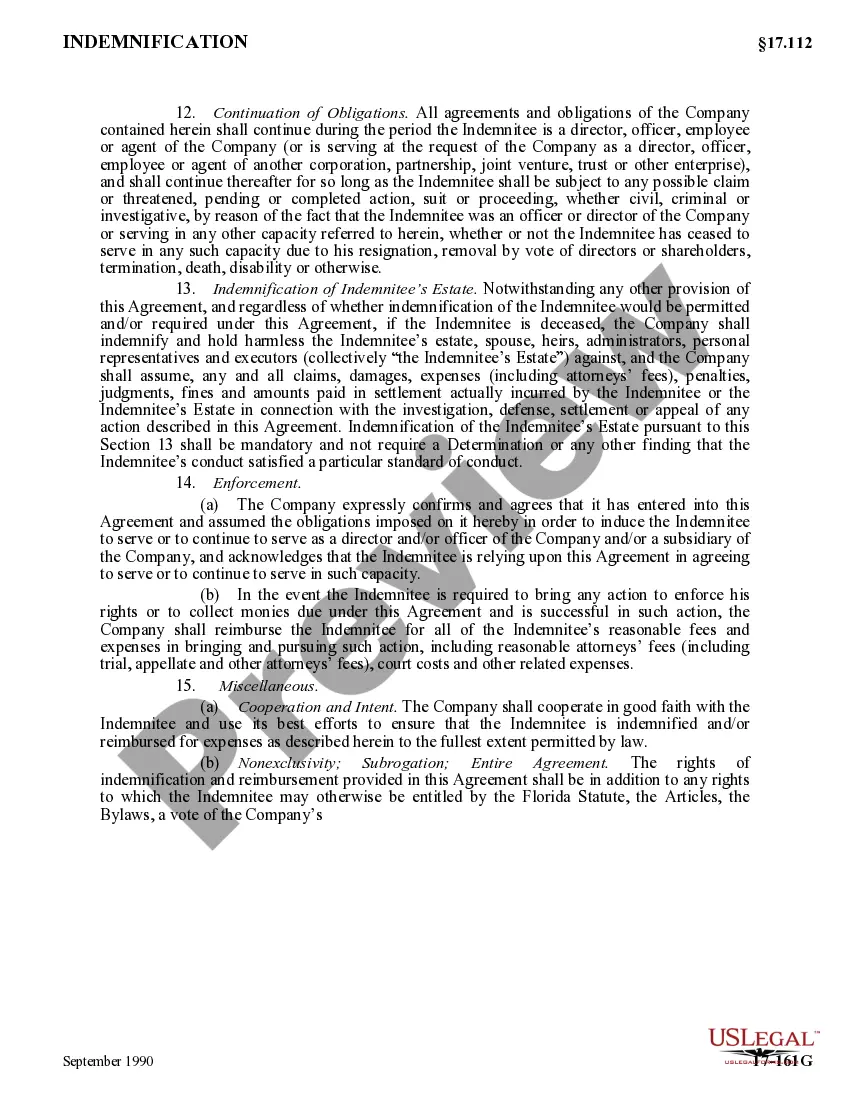
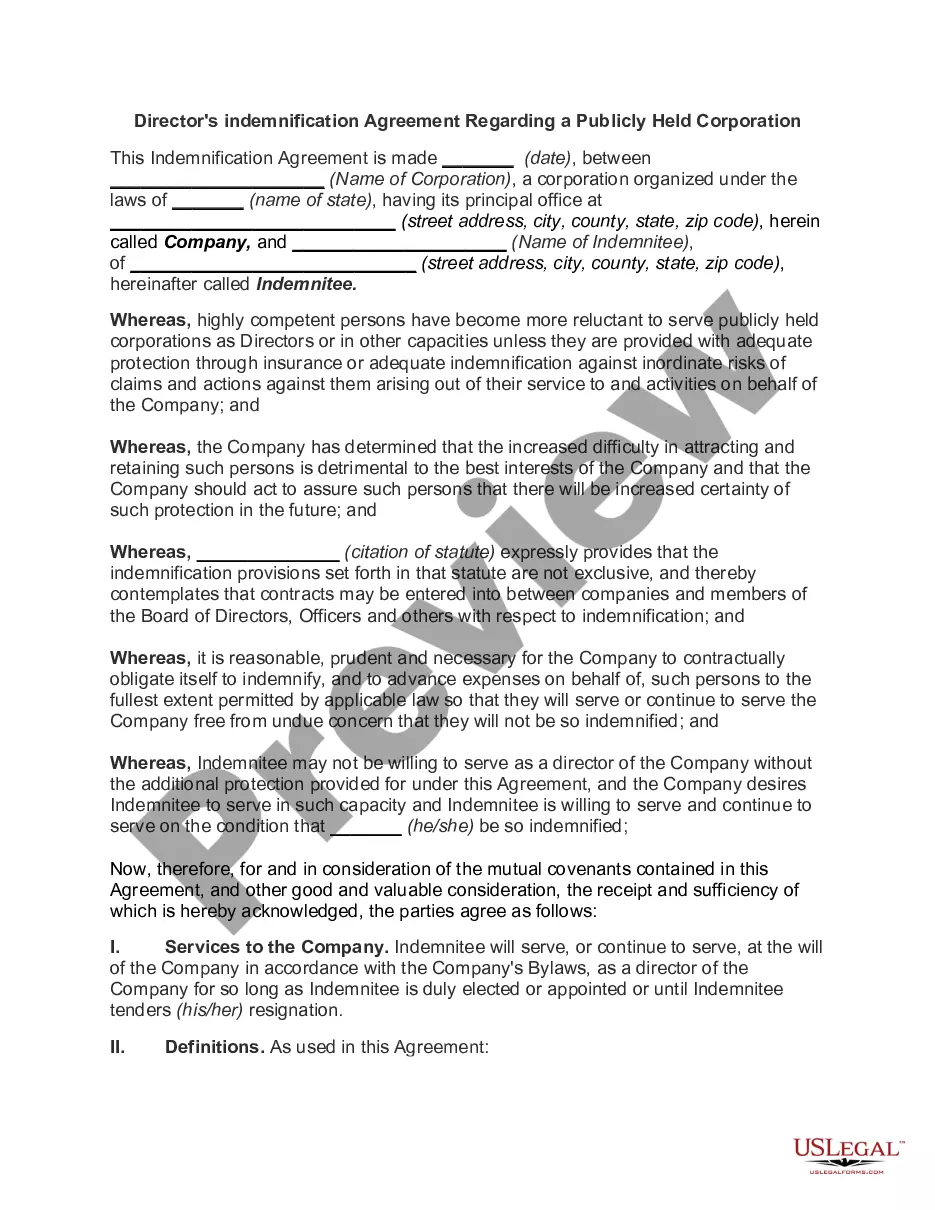
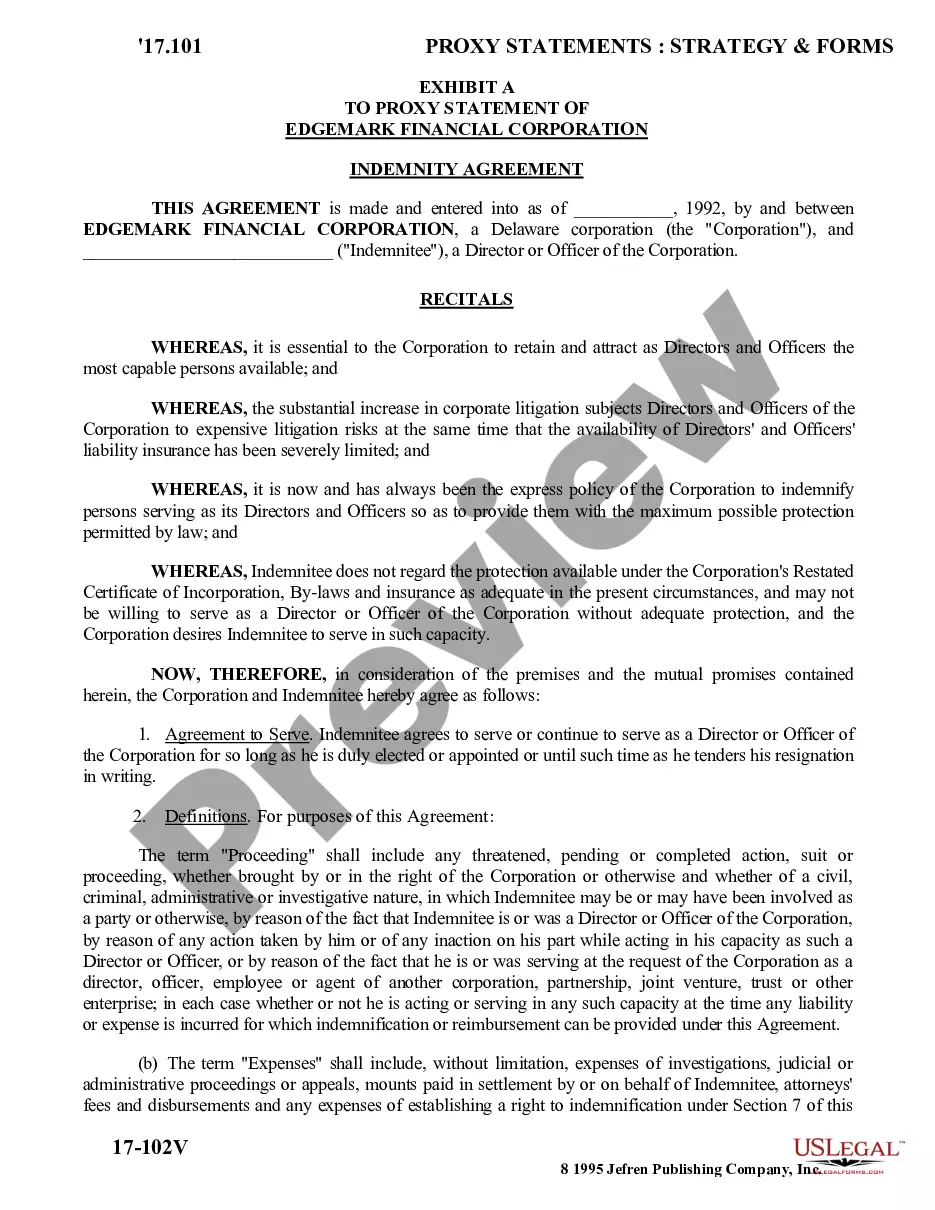
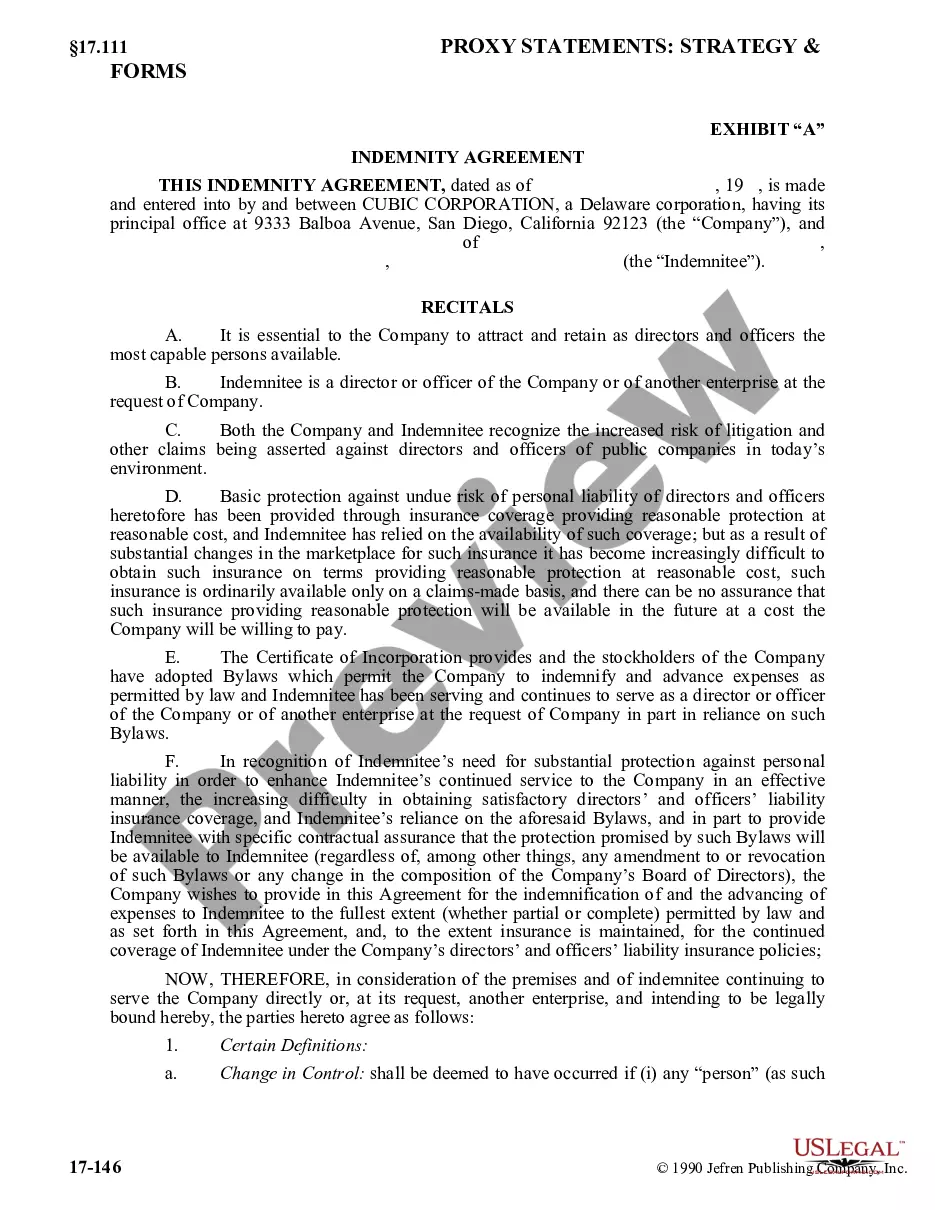
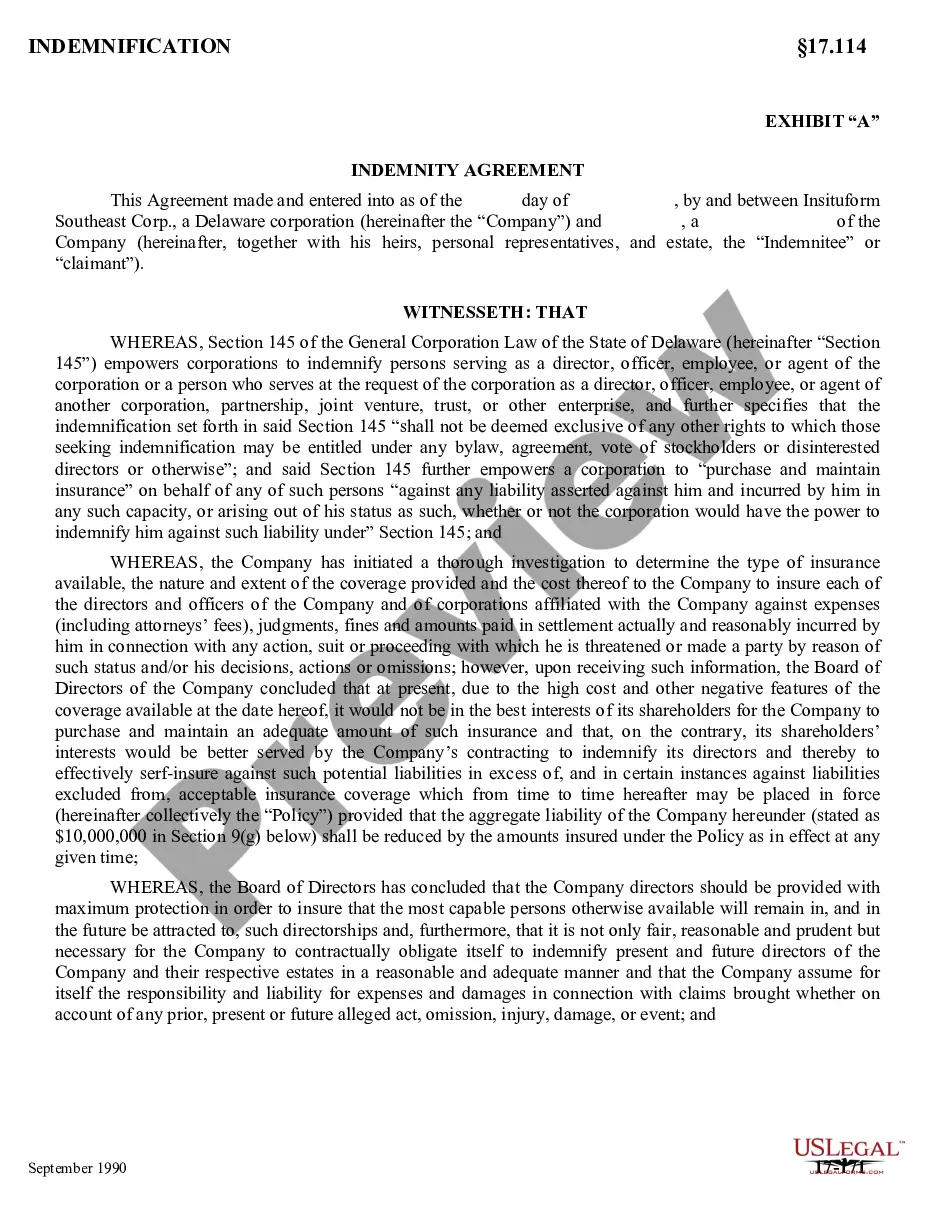
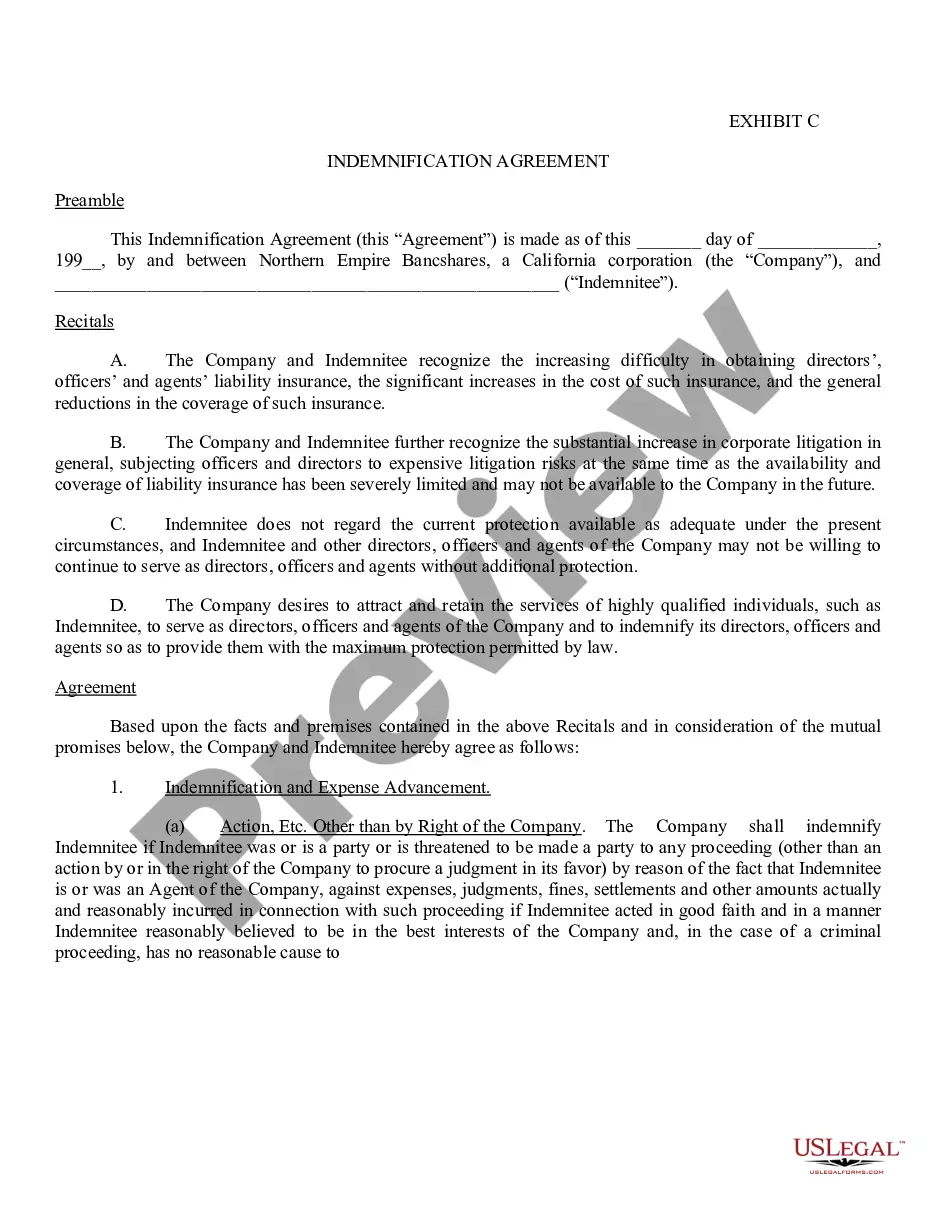
This form is an indemnification agreement between a corporation and its directors, outlining the conditions under which the company will indemnify its directors and officers against various legal claims and liabilities. This agreement ensures that directors can make decisions without the fear of personal financial loss due to legal actions that may arise from their service. Unlike general indemnification provisions, this form includes specific methods for determining the eligibility and extent of indemnification based on various circumstances.
What’s included in this form
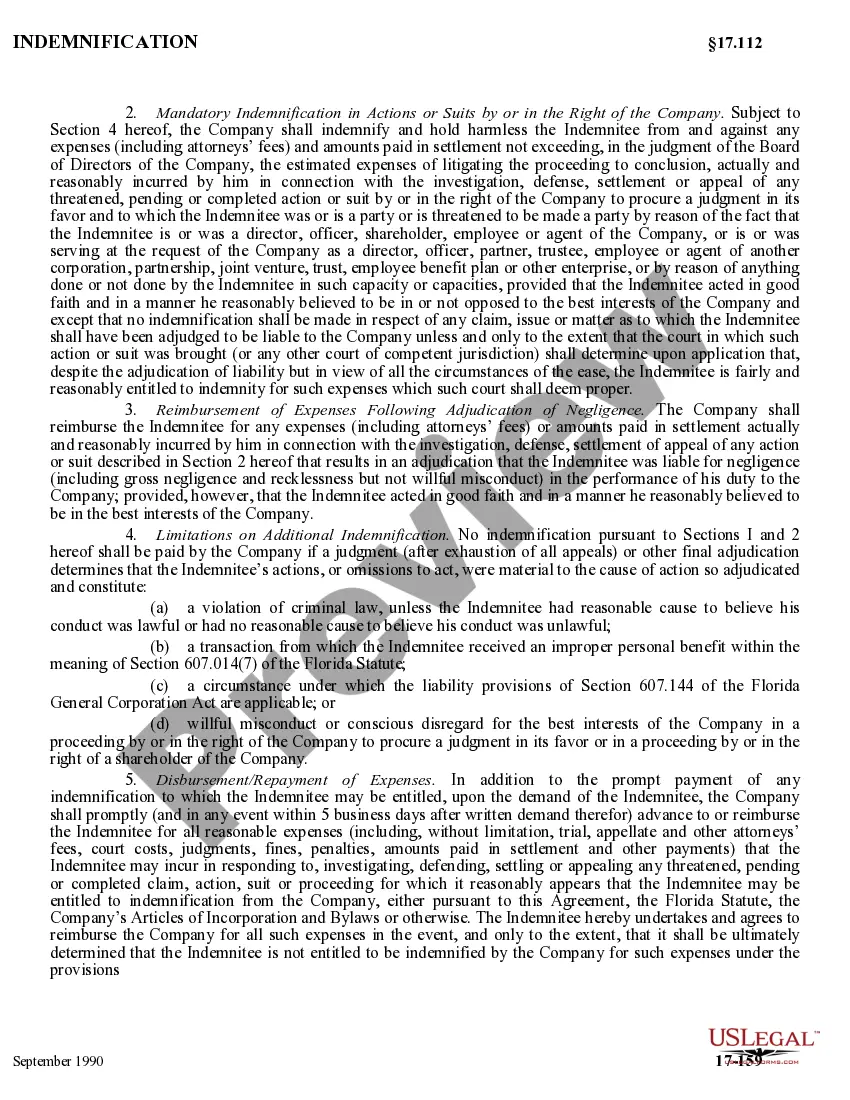
- Mandatory indemnification clauses for actions, suits, or proceedings against directors and officers.
- Provisions for reimbursement of legal expenses, including attorneys' fees.
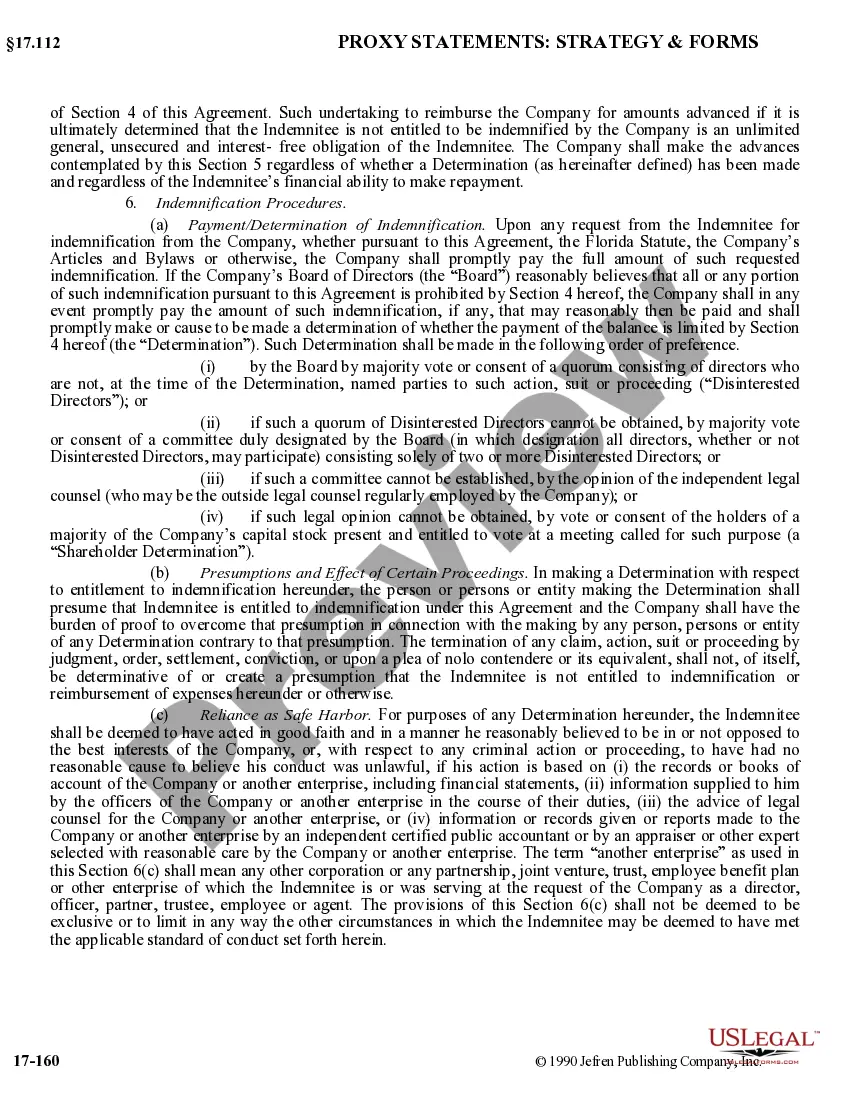
- Criteria for determining eligibility for indemnification, emphasizing good faith actions.
- Procedures for making a determination regarding indemnification requests.
- Limitations on indemnification, particularly in cases of misconduct or illegality.
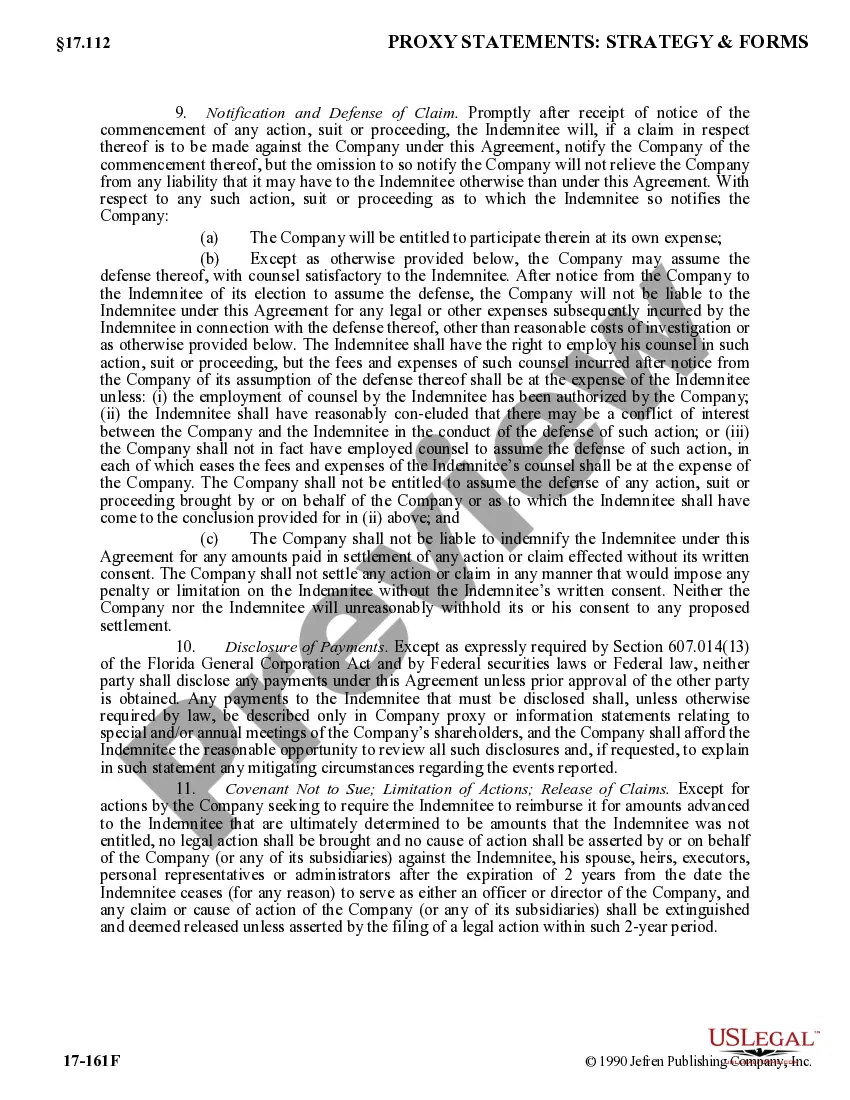

Common use cases
This form is necessary when a corporation wants to provide its directors and officers protection against the risk of personal liability for actions taken on behalf of the company. It is particularly useful in scenarios involving lawsuits, regulatory investigations, or other legal proceedings where the directors' decisions or actions may be challenged.
Intended users of this form
- Corporations looking to establish indemnification agreements with their board members.
- Directors and officers who want assurance of protection against personal liability while serving in their roles.
- Legal professionals who prepare corporate governance documents.
Completing this form step by step
- Identify the corporation's name and the name of the indemnitee (director/officer).
- Specify the effective date of the agreement.
- Review the specific indemnification clauses to ensure alignment with corporate policies.
- Collect signatures from both the corporate representative and the indemnitee.
- Maintain a copy of the signed agreement for company records.
Is notarization required?
Notarization is not commonly needed for this form. However, certain documents or local rules may make it necessary. Our notarization service, powered by Notarize, allows you to finalize it securely online anytime, day or night.
Get your form ready online
Our built-in tools help you complete, sign, share, and store your documents in one place.
Make edits, fill in missing information, and update formatting in US Legal Forms—just like you would in MS Word.
Download a copy, print it, send it by email, or mail it via USPS—whatever works best for your next step.
Sign and collect signatures with our SignNow integration. Send to multiple recipients, set reminders, and more. Go Premium to unlock E-Sign.
If this form requires notarization, complete it online through a secure video call—no need to meet a notary in person or wait for an appointment.
We protect your documents and personal data by following strict security and privacy standards.

Make edits, fill in missing information, and update formatting in US Legal Forms—just like you would in MS Word.

Download a copy, print it, send it by email, or mail it via USPS—whatever works best for your next step.

Sign and collect signatures with our SignNow integration. Send to multiple recipients, set reminders, and more. Go Premium to unlock E-Sign.

If this form requires notarization, complete it online through a secure video call—no need to meet a notary in person or wait for an appointment.

We protect your documents and personal data by following strict security and privacy standards.
Common mistakes to avoid
- Failing to specify the effective date of the agreement.
- Not updating the indemnification clause to reflect changes in the law or company policy.
- Omitting signatures, which can invalidate the agreement.
Benefits of using this form online
- Convenient access to download and customize the indemnification agreement.
- Drafted by licensed attorneys to ensure compliance with applicable laws.
- Editable format allows for quick adjustments as needed.
Looking for another form?







Form popularity
FAQ
The main difference in this case is that hold harmless may require a party to protect against actual losses as well as potential losses while indemnification protects against actual losses only.
A company can indemnify its directors against personal liability so long as the indemnity does not cover:other liabilities (such as legal costs) in criminal cases where the director is convicted, or in civil cases brought by the company where the final judgment goes against the director.
Indemnity is a comprehensive form of insurance compensation for damages or loss.Indemnity is a contractual agreement between two parties. In this arrangement, one party agrees to pay for potential losses or damages caused by another party.
To indemnify means to compensate someone for his/her harm or loss. In most contracts, an indemnification clause serves to compensate a party for harm or loss arising in connection with the other party's actions or failure to act. The intent is to shift liability away from one party, and on to the indemnifying party.
It's still your business decision whether you sign them or not, but you should do so only where it is a critical contract that you have no way of modifying or negotiating changes. In contrast, the best kind of Indemnity Agreement is commonly called a Mutual Indemnity Agreement or a Mutual Hold Harmless Provision.
What does "Corporate Indemnification" mean?In the context of business organizations, a limited liability company or corporation will often indemnify its officers and directors, covering their expenses (including legal fees) and judgment amounts incurred by such persons as a result of their service to the entity.
In practice, a hold harmless and an indemnity are functionally equivalent in that both require a party to assume responsibility for losses incurred by another party in connection with certain acts and circumstances. Some argue that while an indemnity shifts losses, a hold harmless shifts both losses and liability.
Indemnification. Indemnification is an undertaking by the company to defend the director and officer against the cost of certain claims, including legal fees, litigation awards and settlement costs.