Indemnity Agreement between corporation and directors officers employees and agents of corporation
Overview of this form
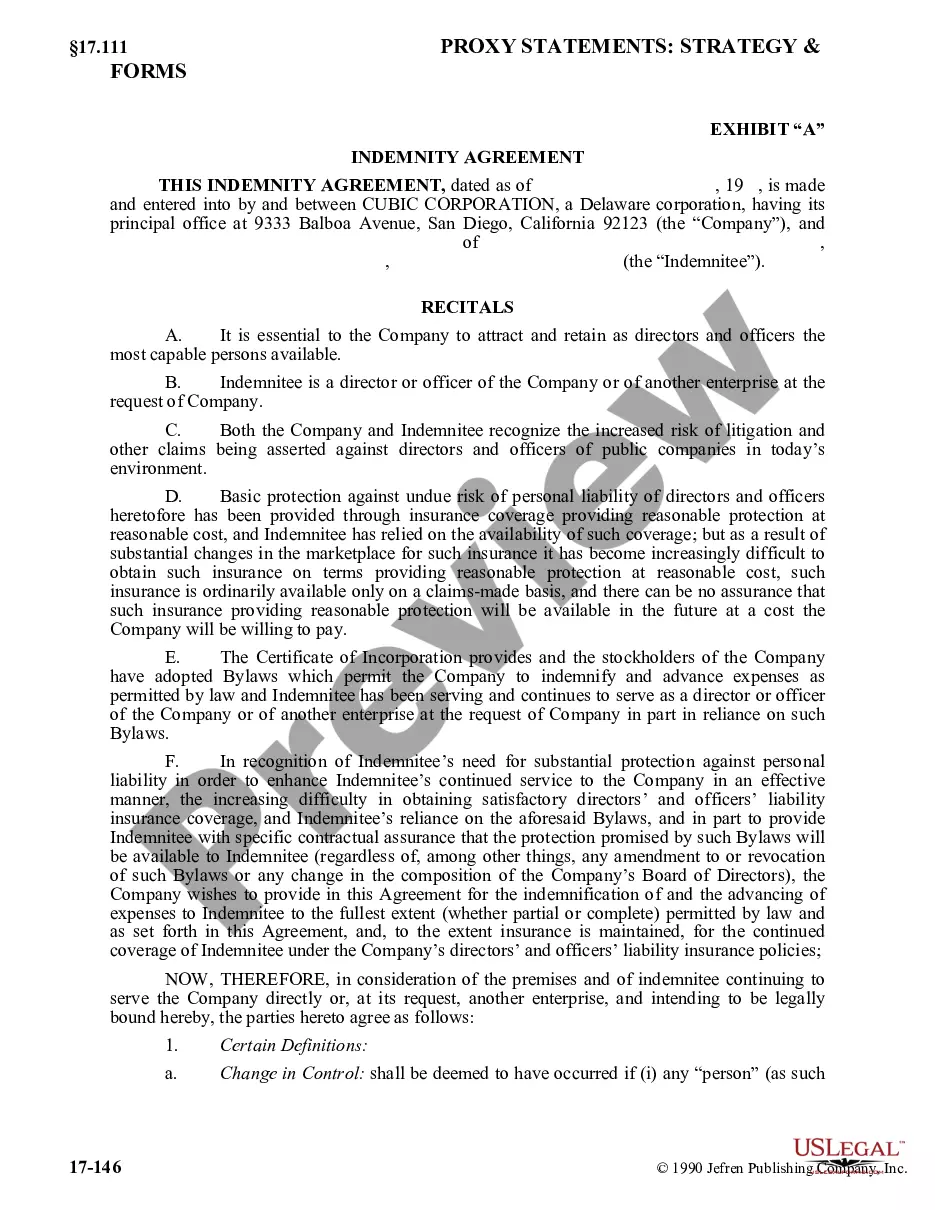
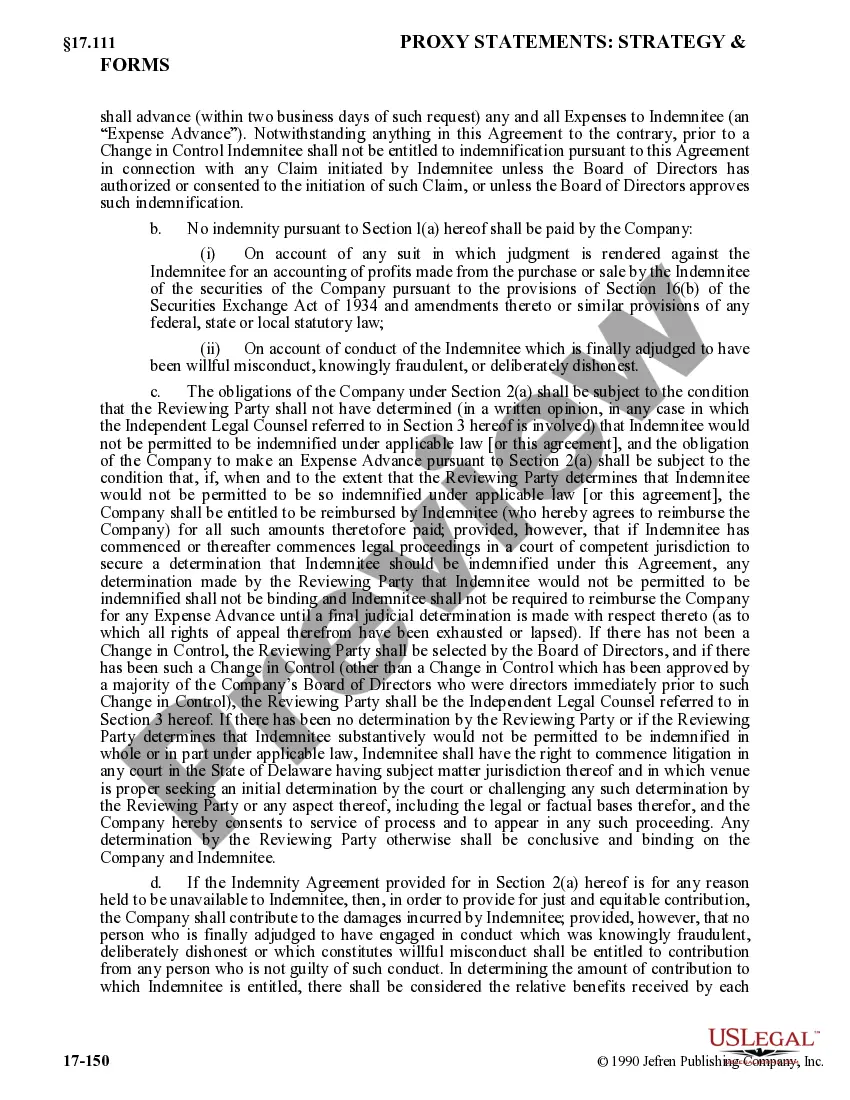
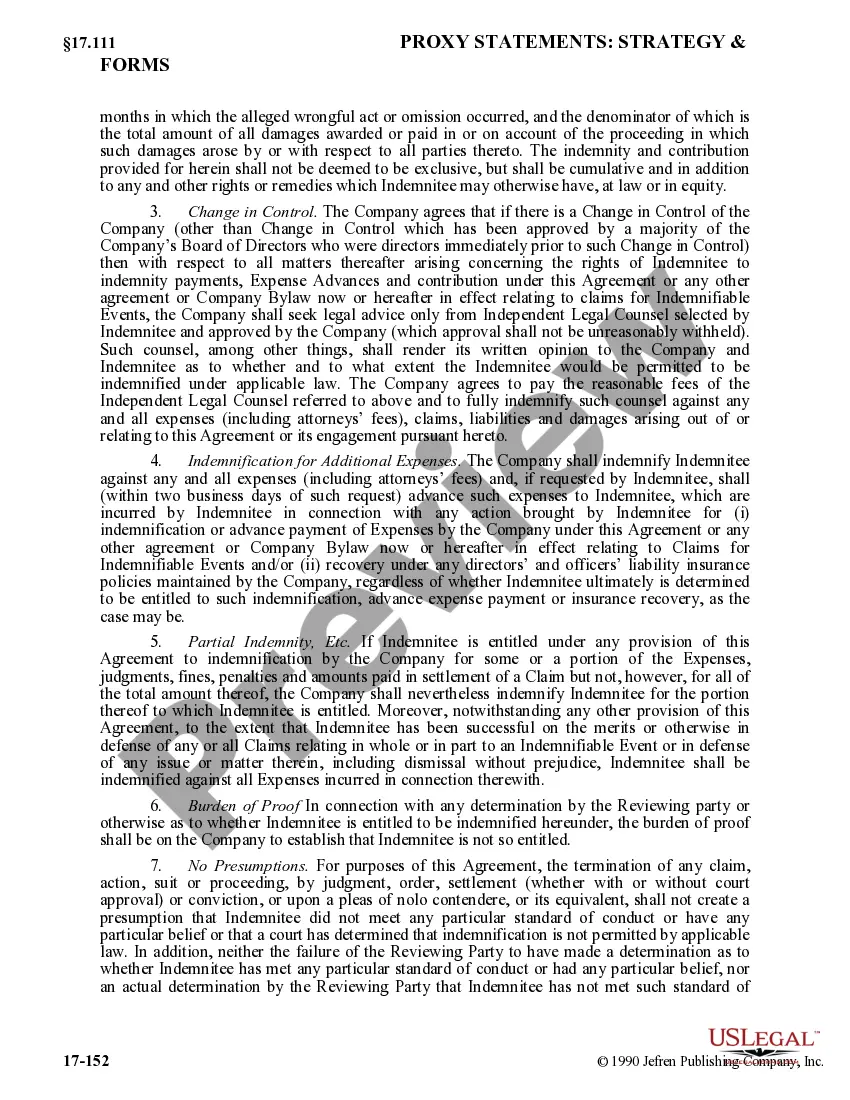
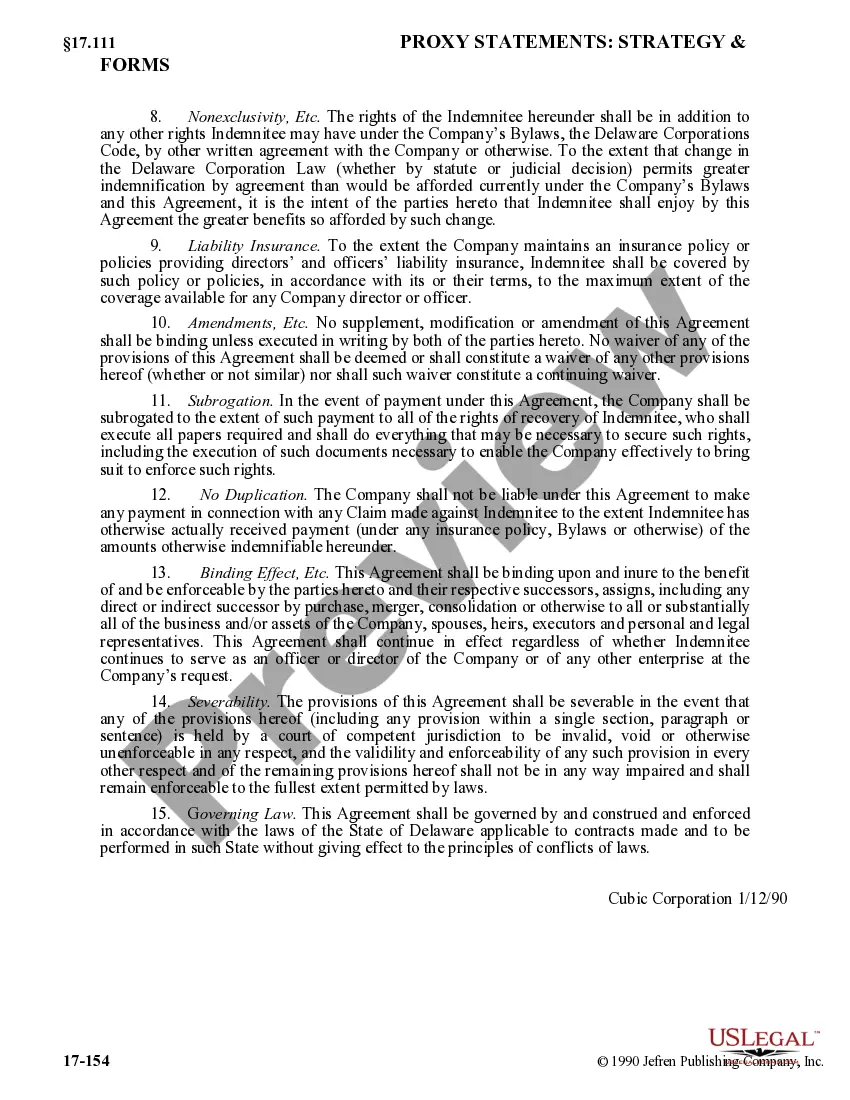
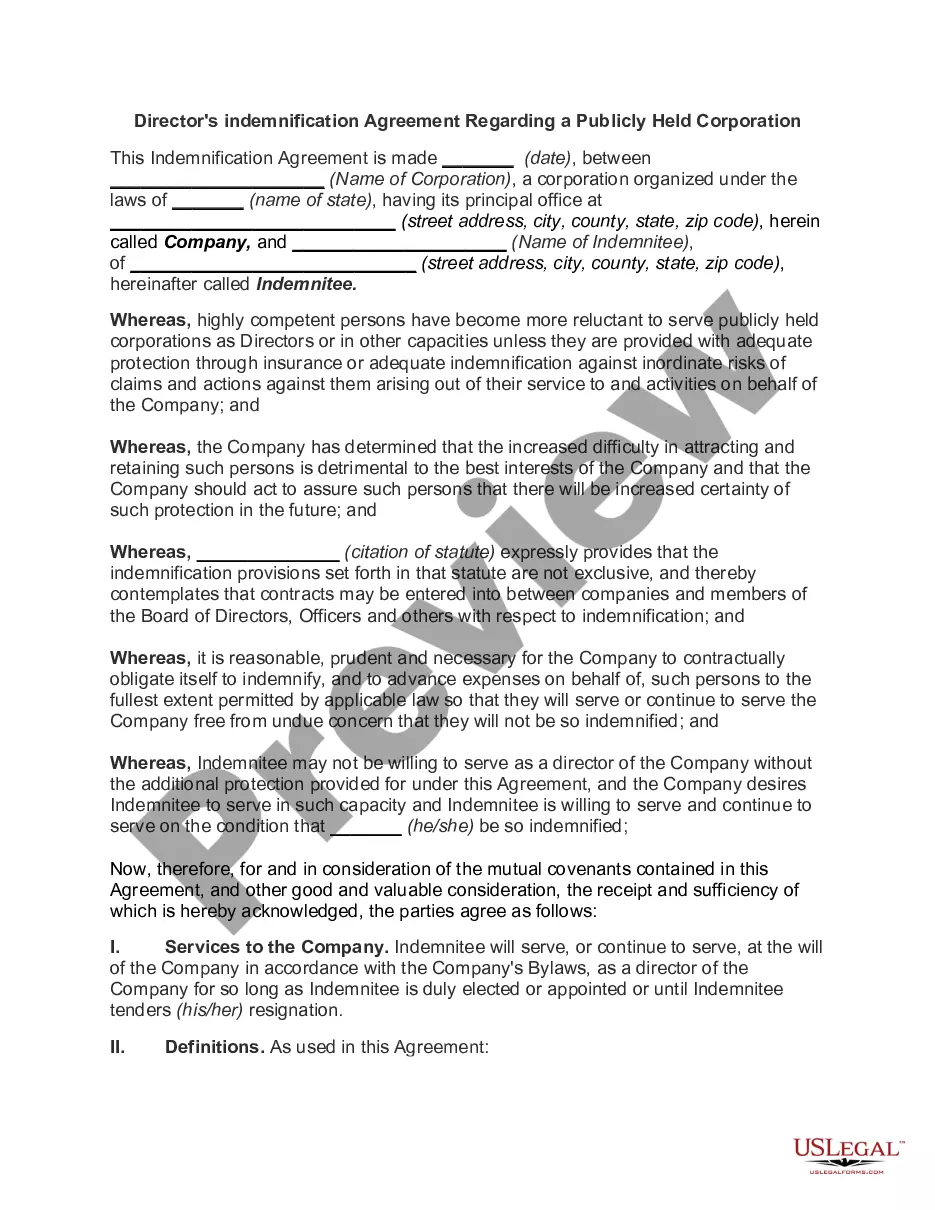
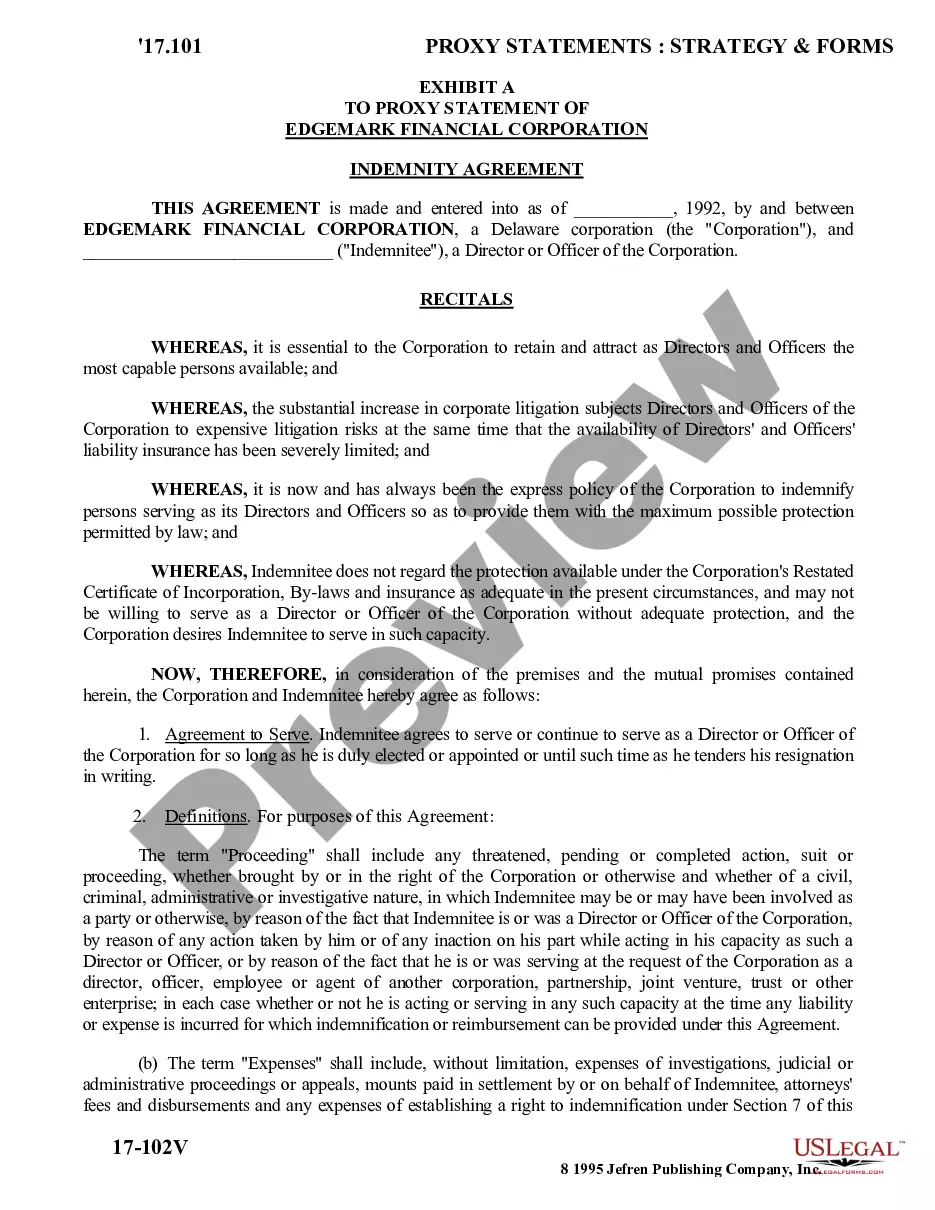
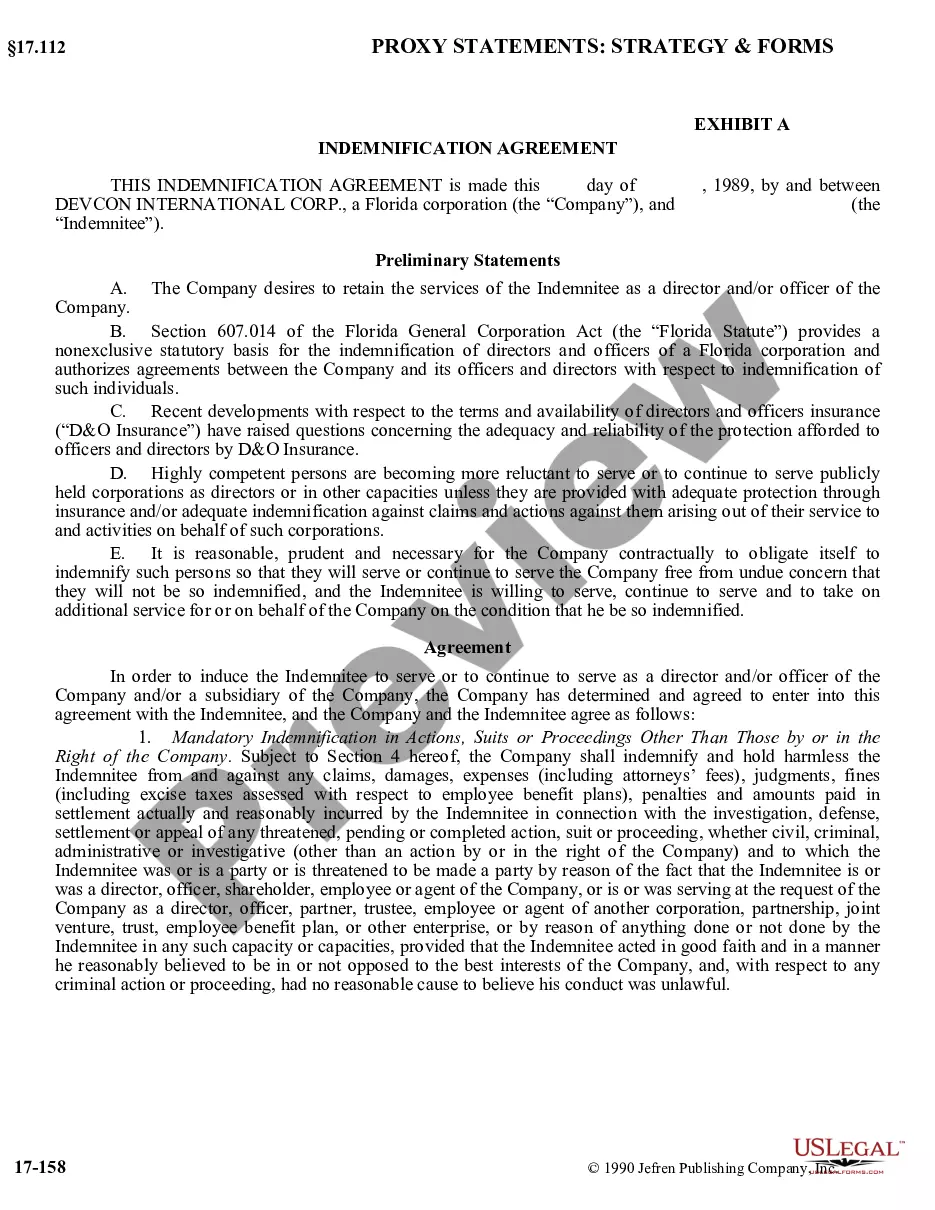
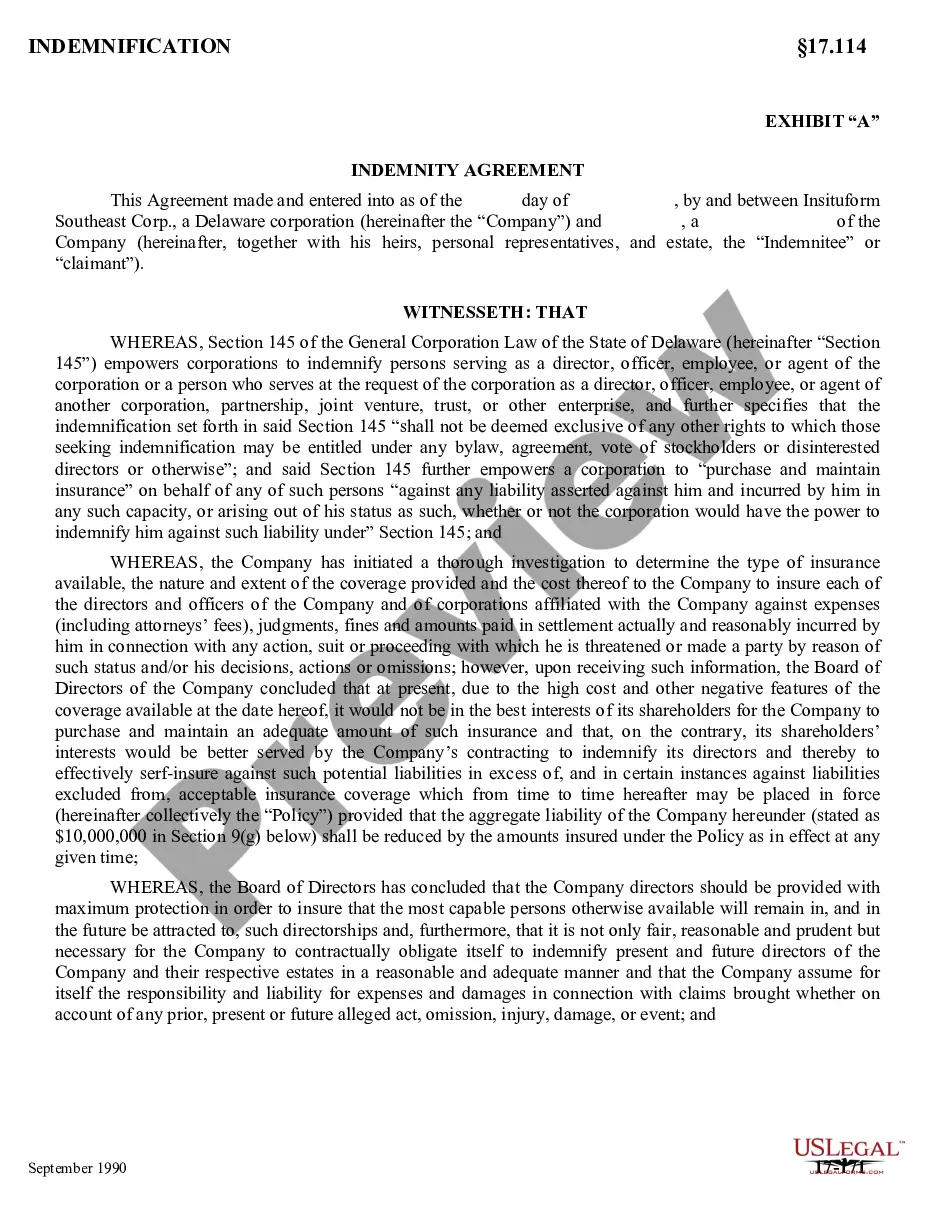
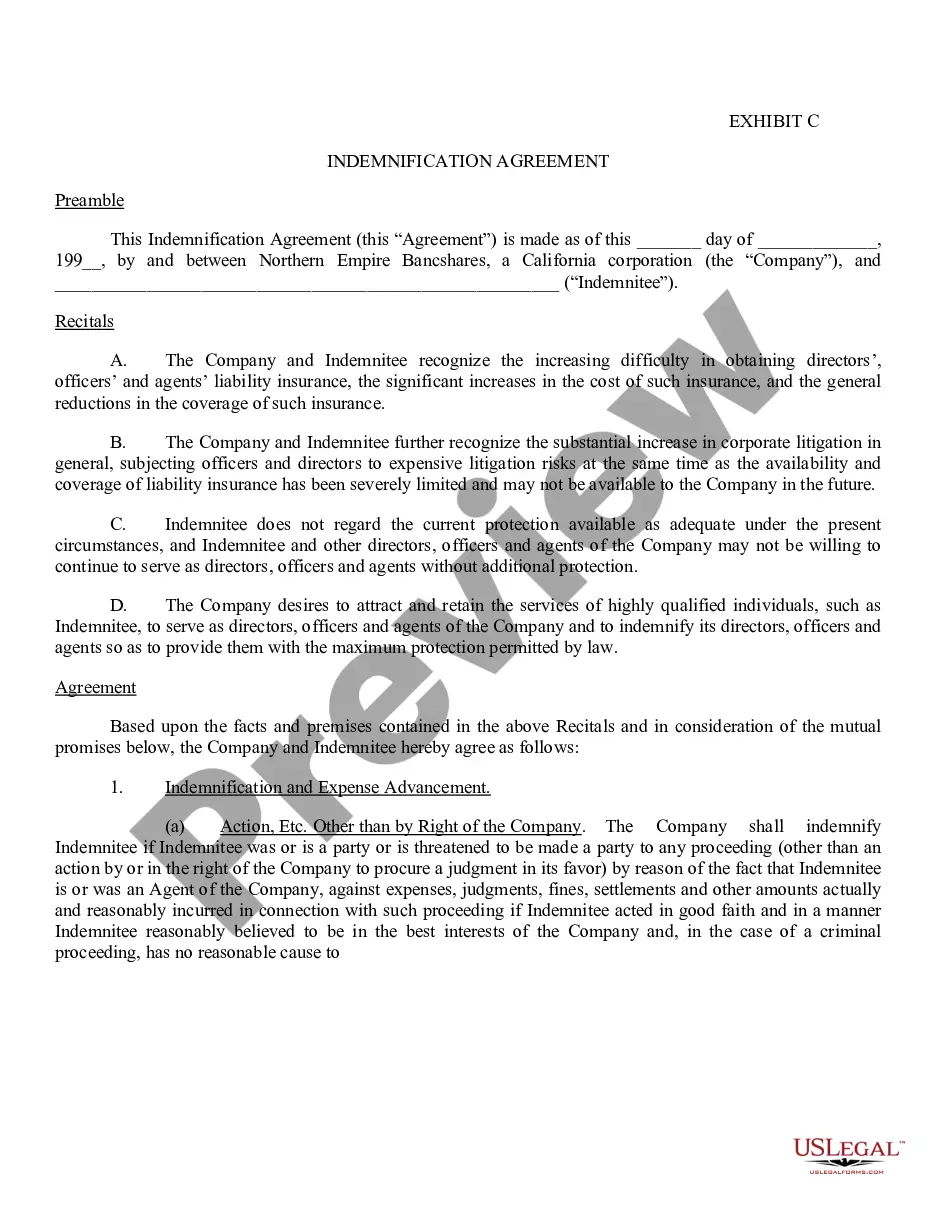
This Indemnity Agreement is a legal document designed for corporations to provide protection to their directors, officers, employees, and agents against personal liability. Unlike similar forms, this agreement specifies the circumstances under which indemnitees can receive indemnification and expense advancements. It is essential for corporations looking to attract and retain talented individuals by ensuring protection against litigation or other claims arising from their service to the corporation.
Main sections of this form
- Parties Involved: Clearly identifies the corporation and the indemnitee.
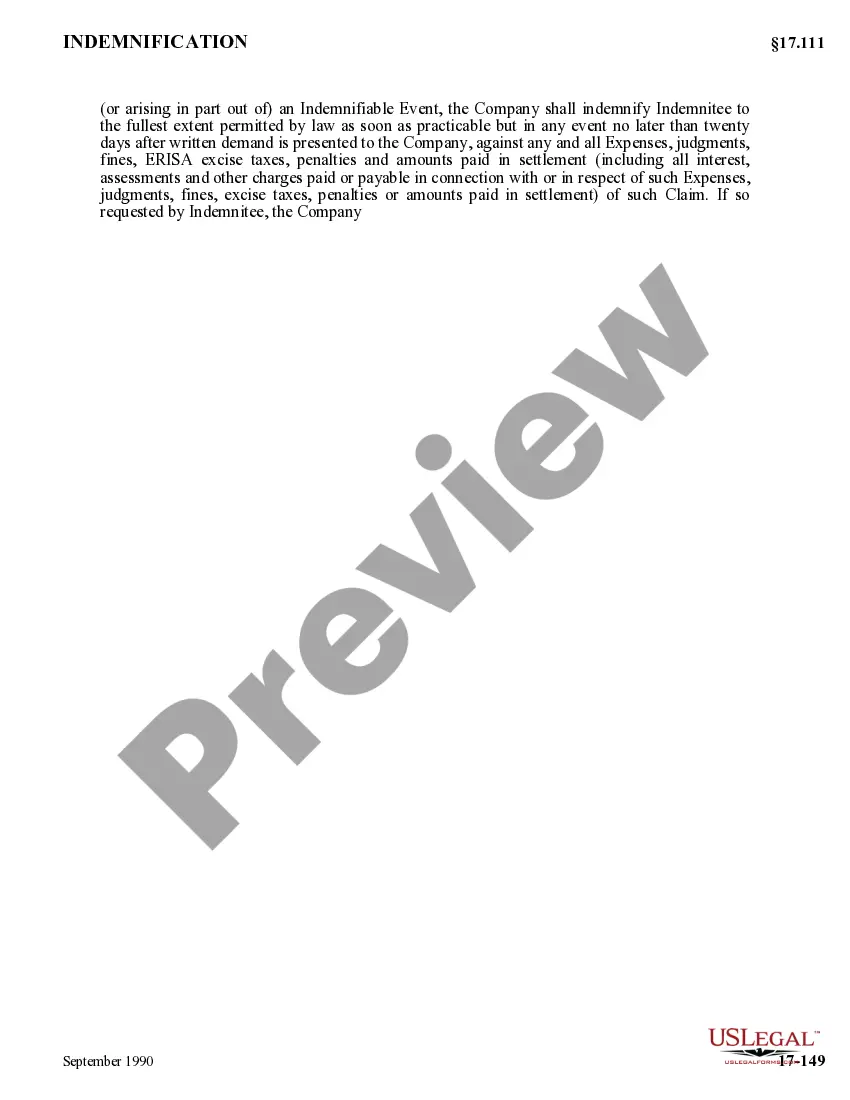
- Indemnification Provisions: Details the terms under which the corporation agrees to indemnify the indemnitee.
- Expense Advancements: Specifies the conditions for advancing expenses incurred by the indemnitee in legal proceedings.
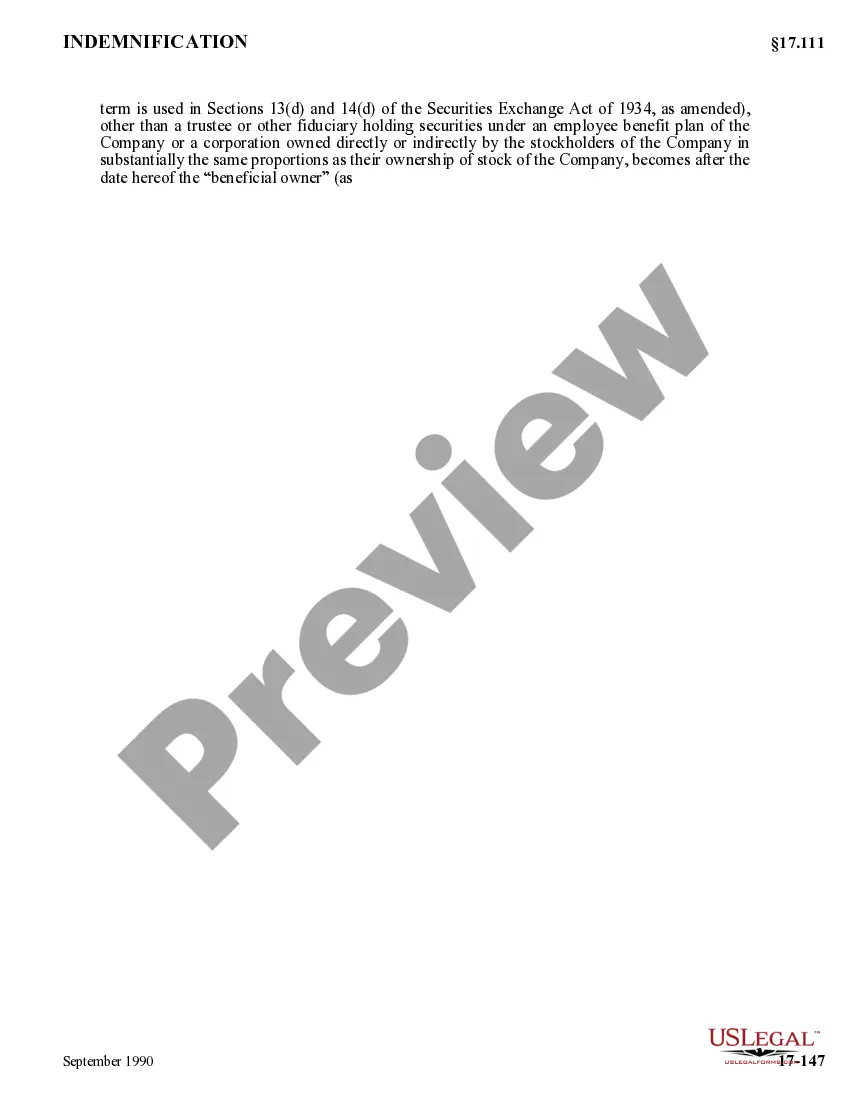
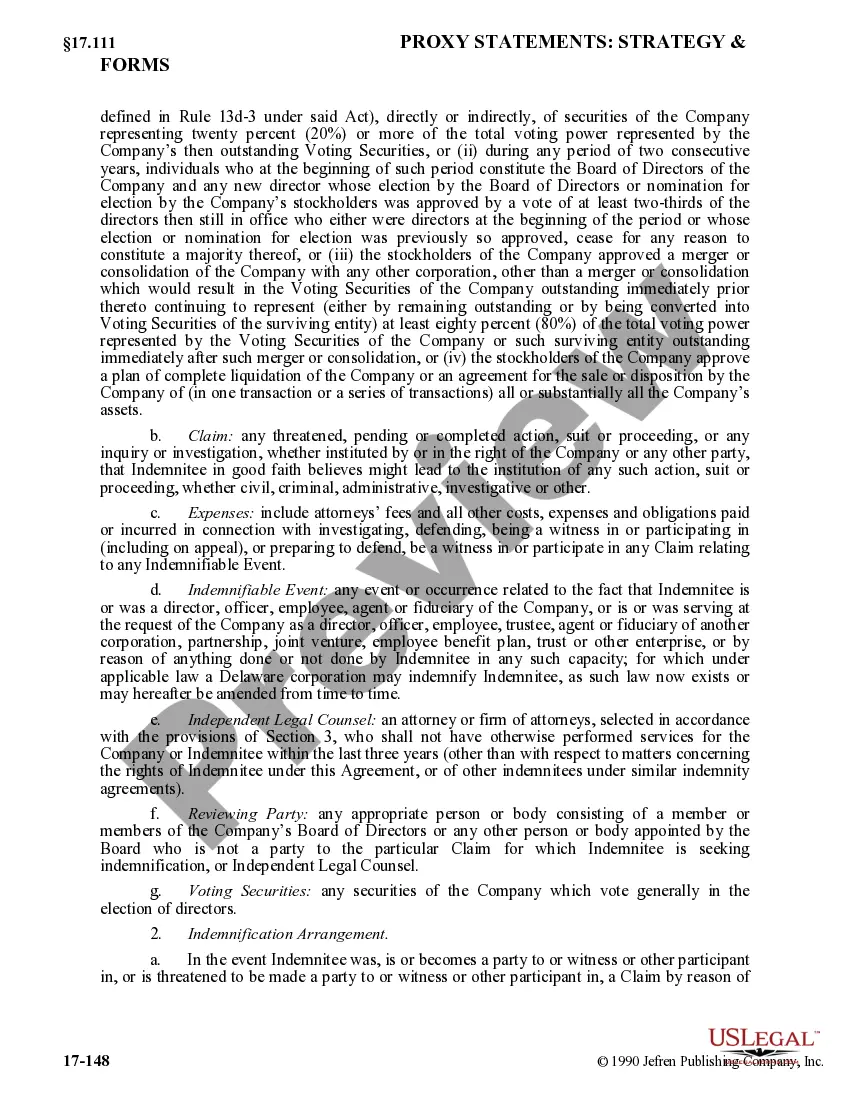
- Definition of Indemnifiable Events: Clarifies what constitutes events covered by the indemnity.
- Legal Counsel Involvement: Outlines the role of independent legal counsel in assessing indemnity claims.
When to use this document
This form should be used when a corporation wishes to formalize the terms under which it will indemnify its directors, officers, employees, or agents. It is particularly relevant in situations where individuals may face legal claims as a result of their roles within the company, helping to mitigate the risks associated with such positions.
Who this form is for
This form is intended for:
- Corporations looking to protect their executives and employees from potential legal liabilities.
- Directors and officers who want assurance of protection against personal liability.
- Legal professionals advising corporations on best practices for indemnification policies.
How to prepare this document
- Identify the parties: Enter the full legal name and address of the corporation and the indemnitee.
- Specify the date: Fill in the date the indemnity agreement is executed.
- Define terms: Review and adapt the definitions of "indemnifiable events" and "expenses" as relevant to your situation.
- Include governing laws: Confirm that the governing law stated aligns with corporate requirements.
- Obtain signatures: Ensure that both the authorized representative of the corporation and the indemnitee sign the document.
Is notarization required?
In most cases, this form does not require notarization. However, some jurisdictions or signing circumstances might. US Legal Forms offers online notarization powered by Notarize, accessible 24/7 for a quick, remote process.
Get your form ready online
Our built-in tools help you complete, sign, share, and store your documents in one place.
Make edits, fill in missing information, and update formatting in US Legal Forms—just like you would in MS Word.
Download a copy, print it, send it by email, or mail it via USPS—whatever works best for your next step.
Sign and collect signatures with our SignNow integration. Send to multiple recipients, set reminders, and more. Go Premium to unlock E-Sign.
If this form requires notarization, complete it online through a secure video call—no need to meet a notary in person or wait for an appointment.
We protect your documents and personal data by following strict security and privacy standards.

Make edits, fill in missing information, and update formatting in US Legal Forms—just like you would in MS Word.

Download a copy, print it, send it by email, or mail it via USPS—whatever works best for your next step.

Sign and collect signatures with our SignNow integration. Send to multiple recipients, set reminders, and more. Go Premium to unlock E-Sign.

If this form requires notarization, complete it online through a secure video call—no need to meet a notary in person or wait for an appointment.

We protect your documents and personal data by following strict security and privacy standards.
Common mistakes
- Failing to specify the indemnifiable events clearly can lead to misunderstandings in legal protection.
- Neglecting to update the agreement when corporate bylaws or state laws change may invalidate certain provisions.
- Not obtaining the necessary signatures could result in the agreement being unenforceable.
Advantages of online completion
- Convenience: Download and complete the form from anywhere at any time, without the need for in-person appointments.
- Editability: Modify the agreement as needed to suit specific corporate situations and needs.
- Reliability: Access legally vetted templates designed by licensed attorneys, ensuring compliance with state laws.
Legal use & context
- Indemnity agreements are enforceable under corporate laws in many jurisdictions, provided they are properly executed.
- Limitations exist for indemnifications in cases of fraud, willful misconduct, or breaches of fiduciary duty.
- It is important to understand that indemnification does not cover unlawful actions or gross negligence.
Looking for another form?
Form popularity
FAQ
An indemnity agreement is a contract that 'holds a business or company harmless' for any burden, loss, or damage. An indemnity agreement also ensures proper compensation is available for such loss or damage.
If you've signed a contract, chances are you've seen an indemnity clause.In its simplest form, indemnity means that one party in the contract is responsible for compensating another for loss, damages, and/or injury incurred as a result of that party's actions.
When the term indemnity is used in the legal sense, it may also refer to an exemption from liability for damages. Indemnity is a contractual agreement between two parties. In this arrangement, one party agrees to pay for potential losses or damages caused by another party.
Title the letter as a "Letter of Indemnity" to make it clear what the document is about. Include a statement that the agreement will be governed by the laws of the specific state (where the agreement would be taken to court). Begin the letter confirming the contract already in place with the other party.
It's still your business decision whether you sign them or not, but you should do so only where it is a critical contract that you have no way of modifying or negotiating changes. In contrast, the best kind of Indemnity Agreement is commonly called a Mutual Indemnity Agreement or a Mutual Hold Harmless Provision.
Indemnity is compensation paid by one party to another to cover damages, injury or losses.An example of an indemnity would be an insurance contract, where the insurer agrees to compensate for any damages that the entity protected by the insurer experiences.
It's still your business decision whether you sign them or not, but you should do so only where it is a critical contract that you have no way of modifying or negotiating changes. In contrast, the best kind of Indemnity Agreement is commonly called a Mutual Indemnity Agreement or a Mutual Hold Harmless Provision.