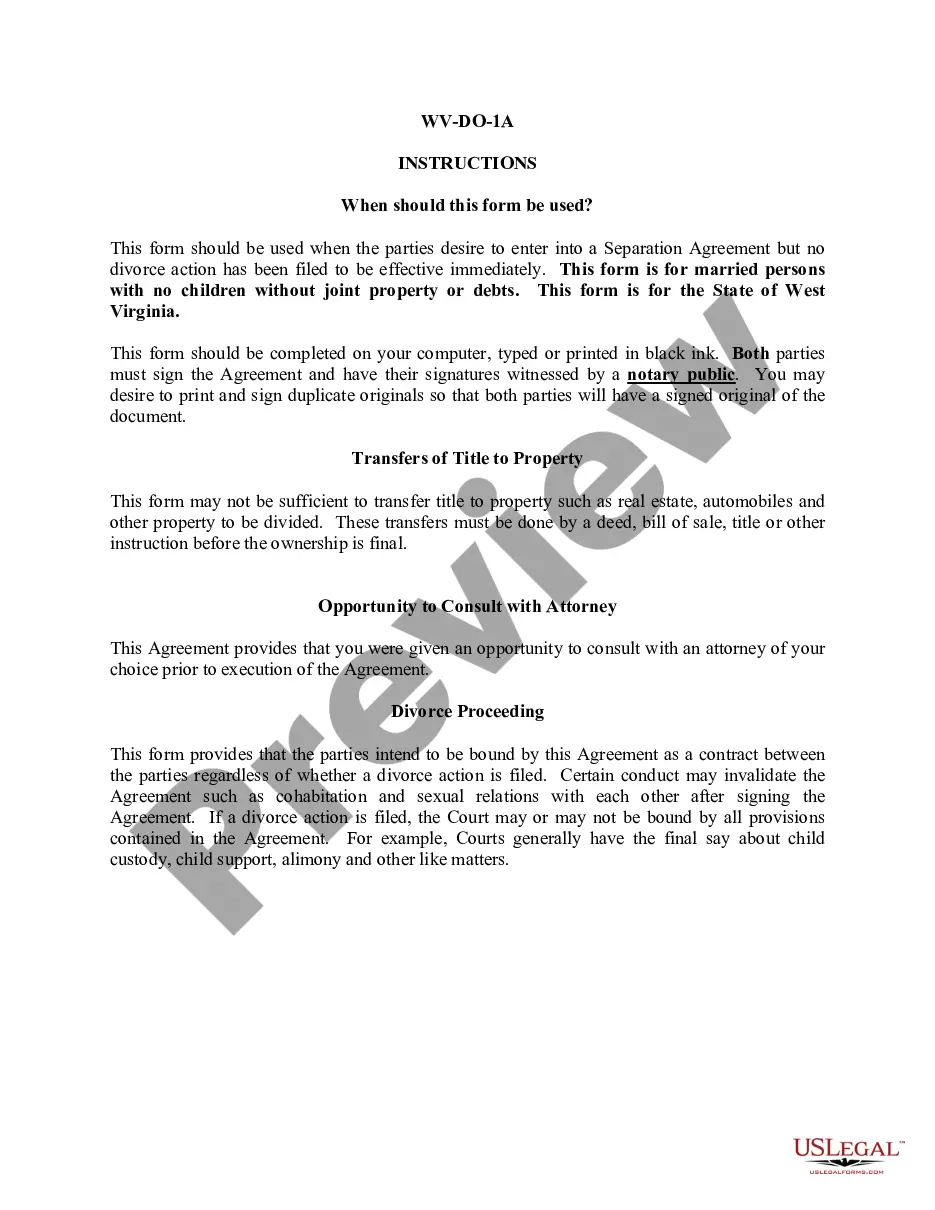
Articles of Incorporation with Indemnification
What is this form?
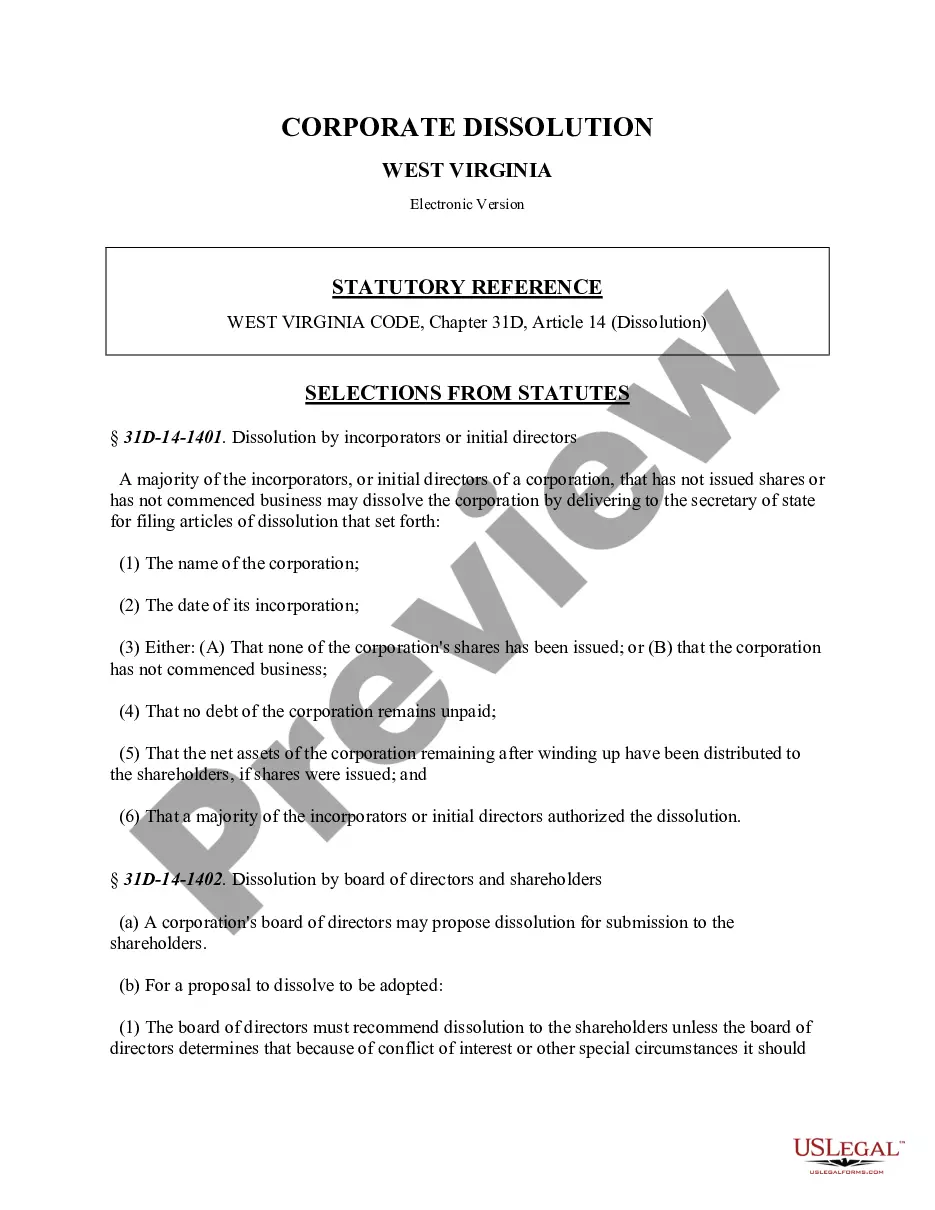
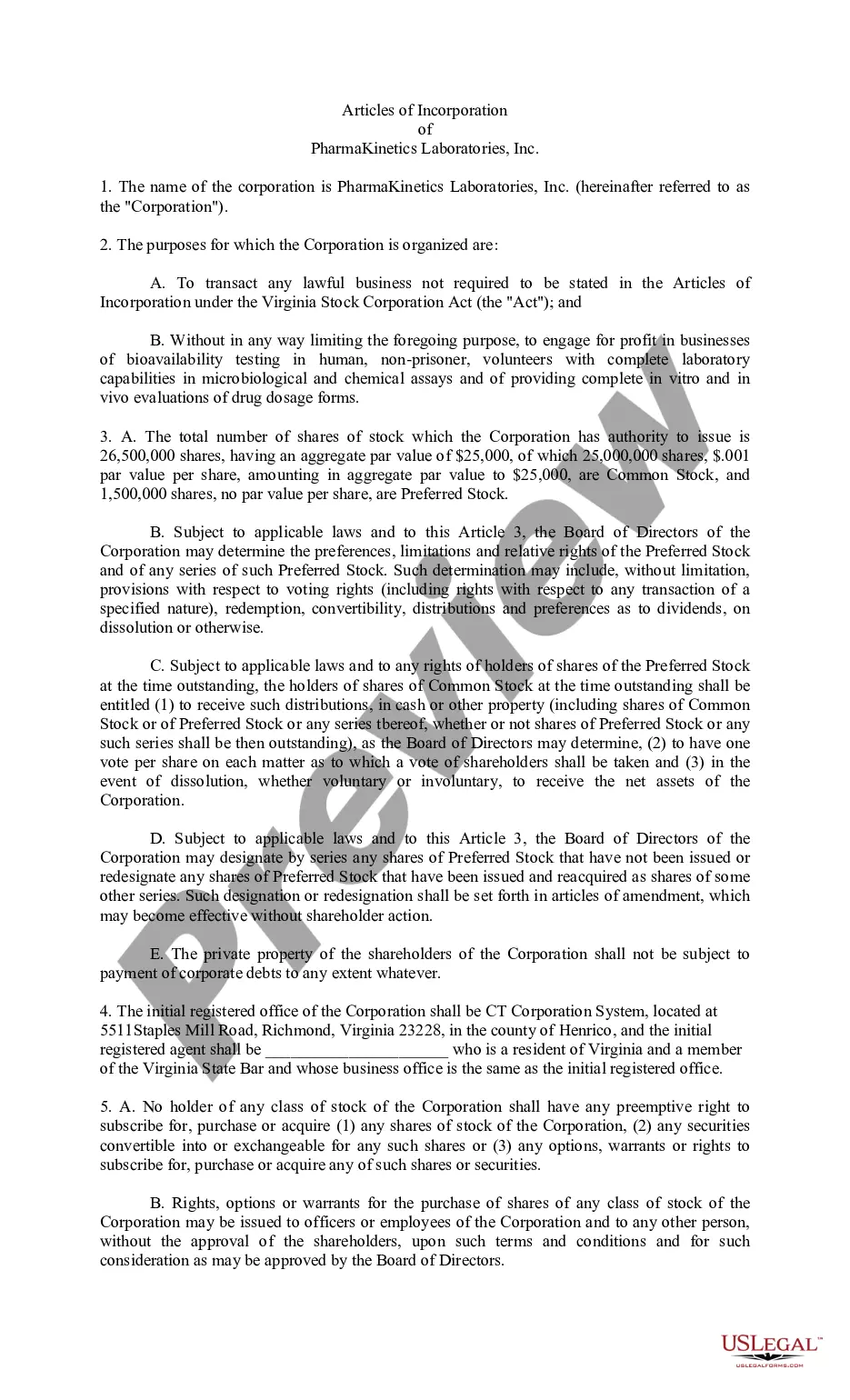
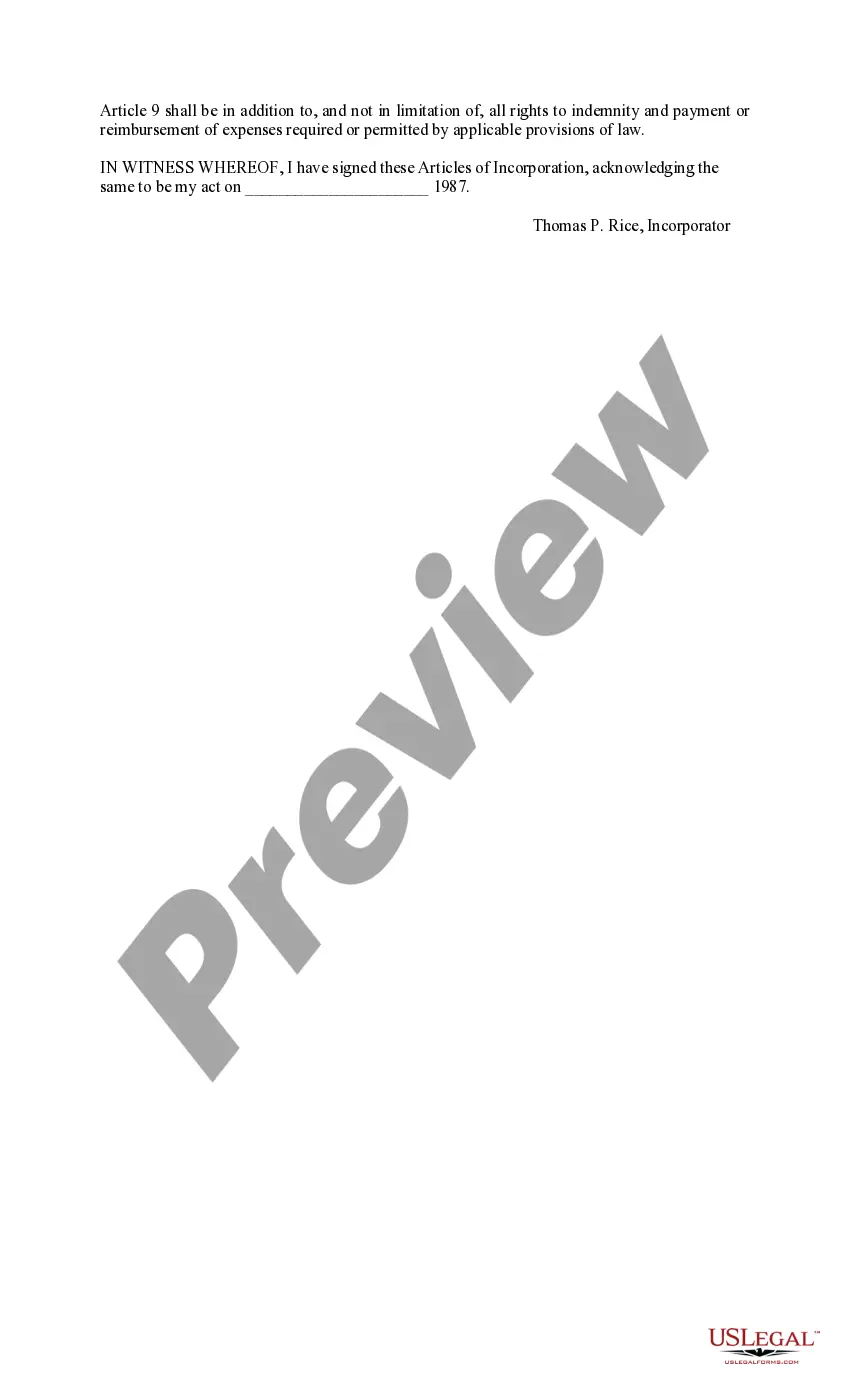
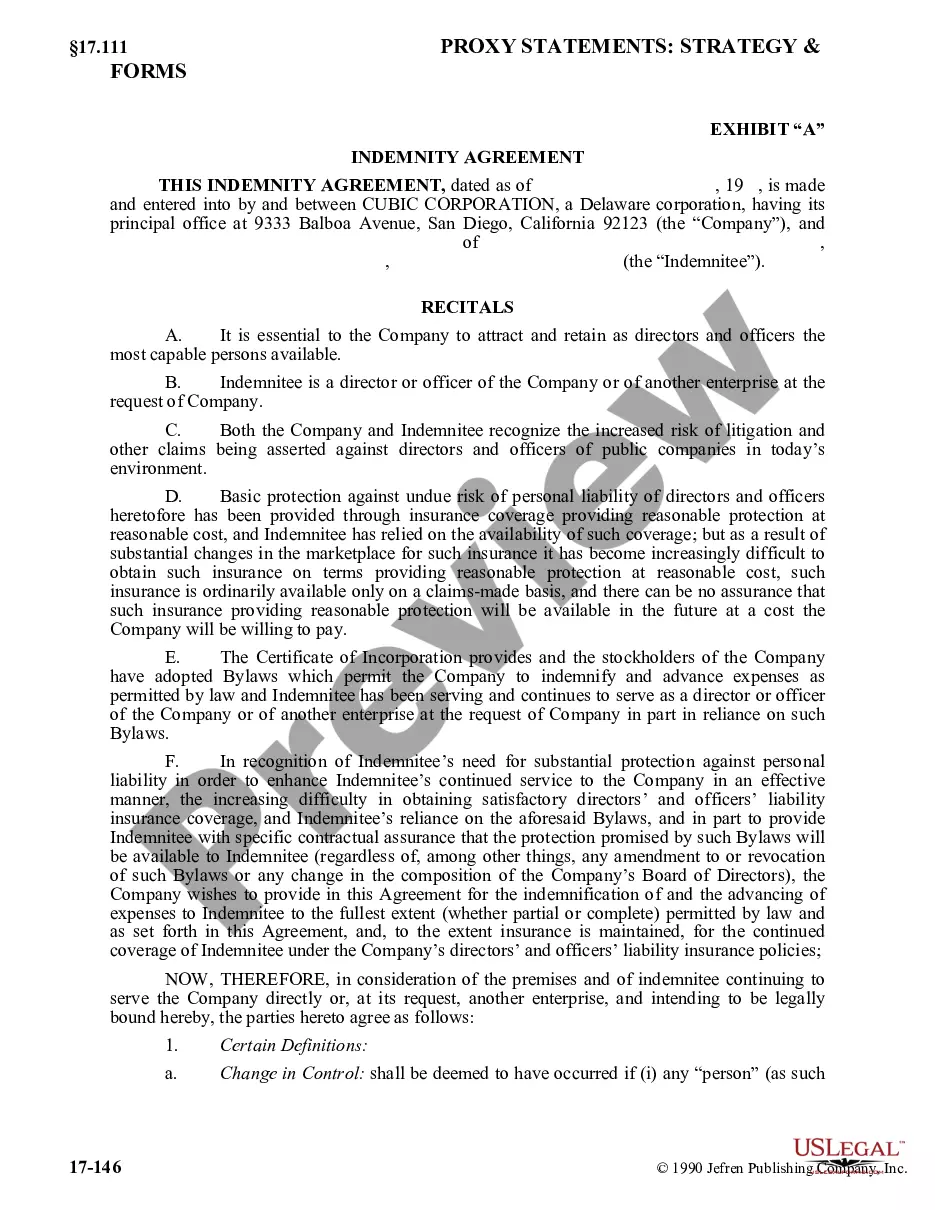
The Articles of Incorporation with Indemnification is a legal document used to establish a corporation's existence under state law and outline the structure and regulations governing the corporation. This form differs from general incorporation forms by specifically including clauses related to indemnification, protecting directors and officers from personal liability in certain situations. It provides essential details about the corporation's name, purpose, stock structure, and governance, ensuring compliance with state-specific regulations.
Key parts of this document
- Corporation name and purpose
- Authorized shares of stock, including common and preferred stock
- Identifying information for the initial registered office and agent
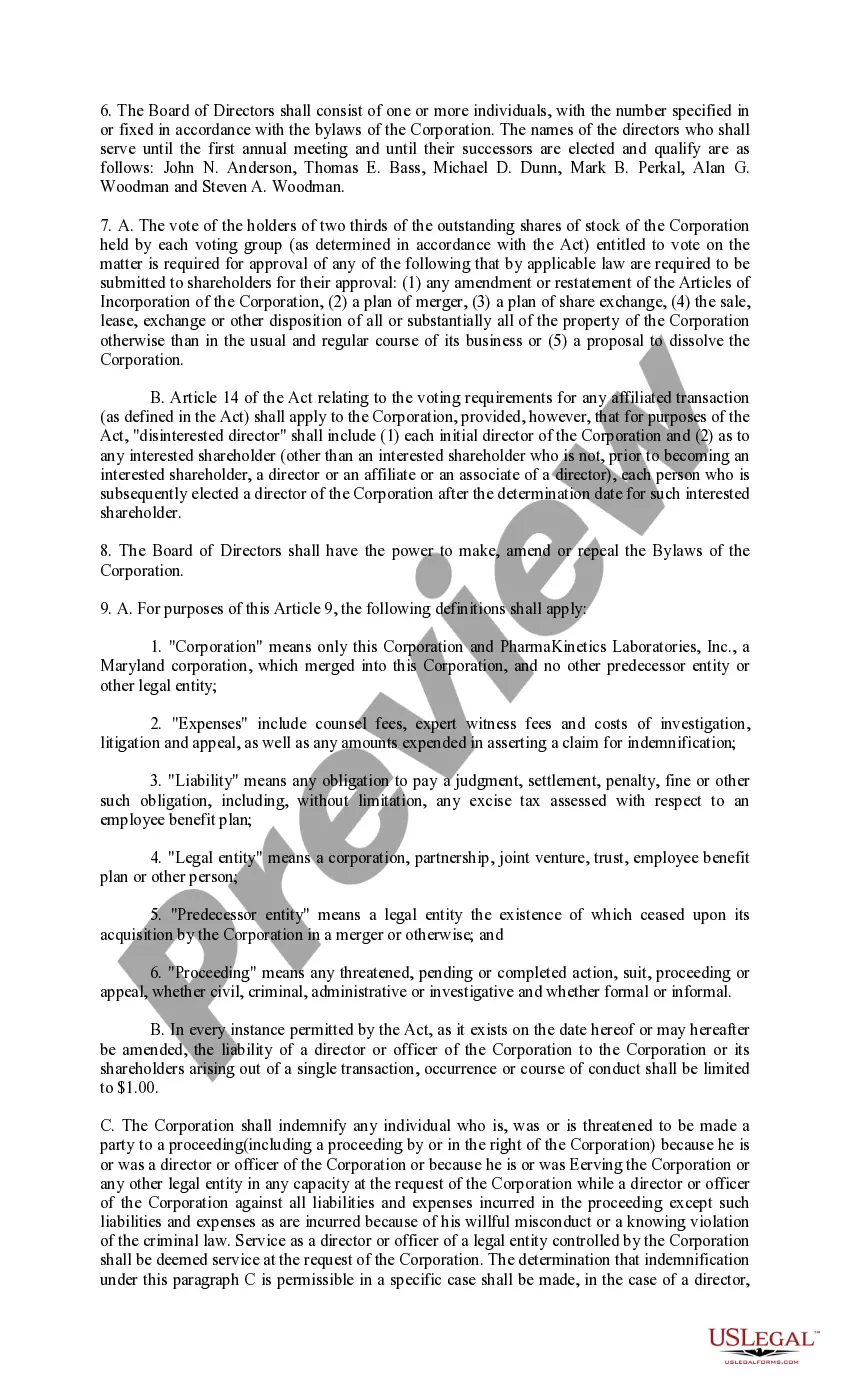
- Governance structure, including the Board of Directors
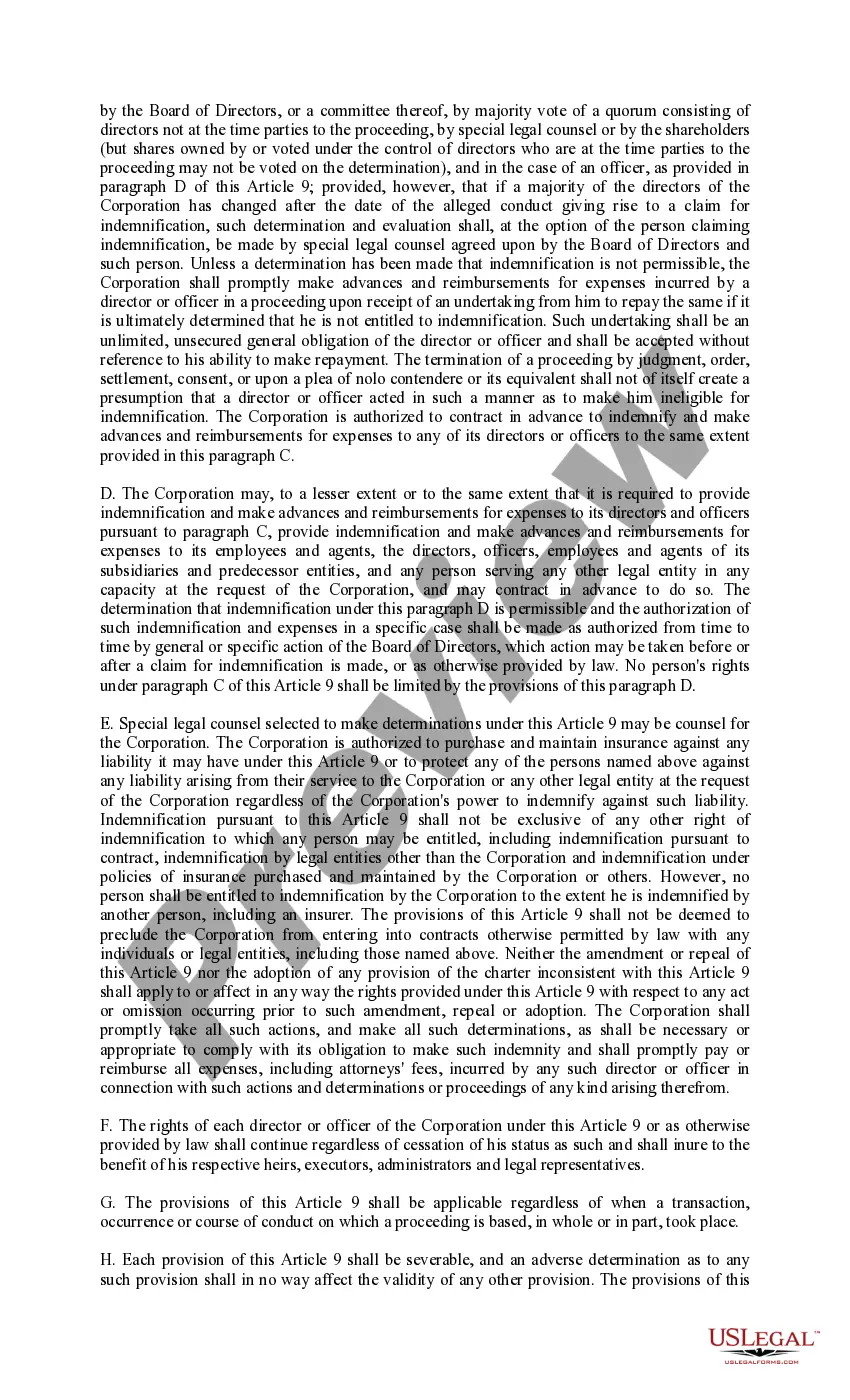
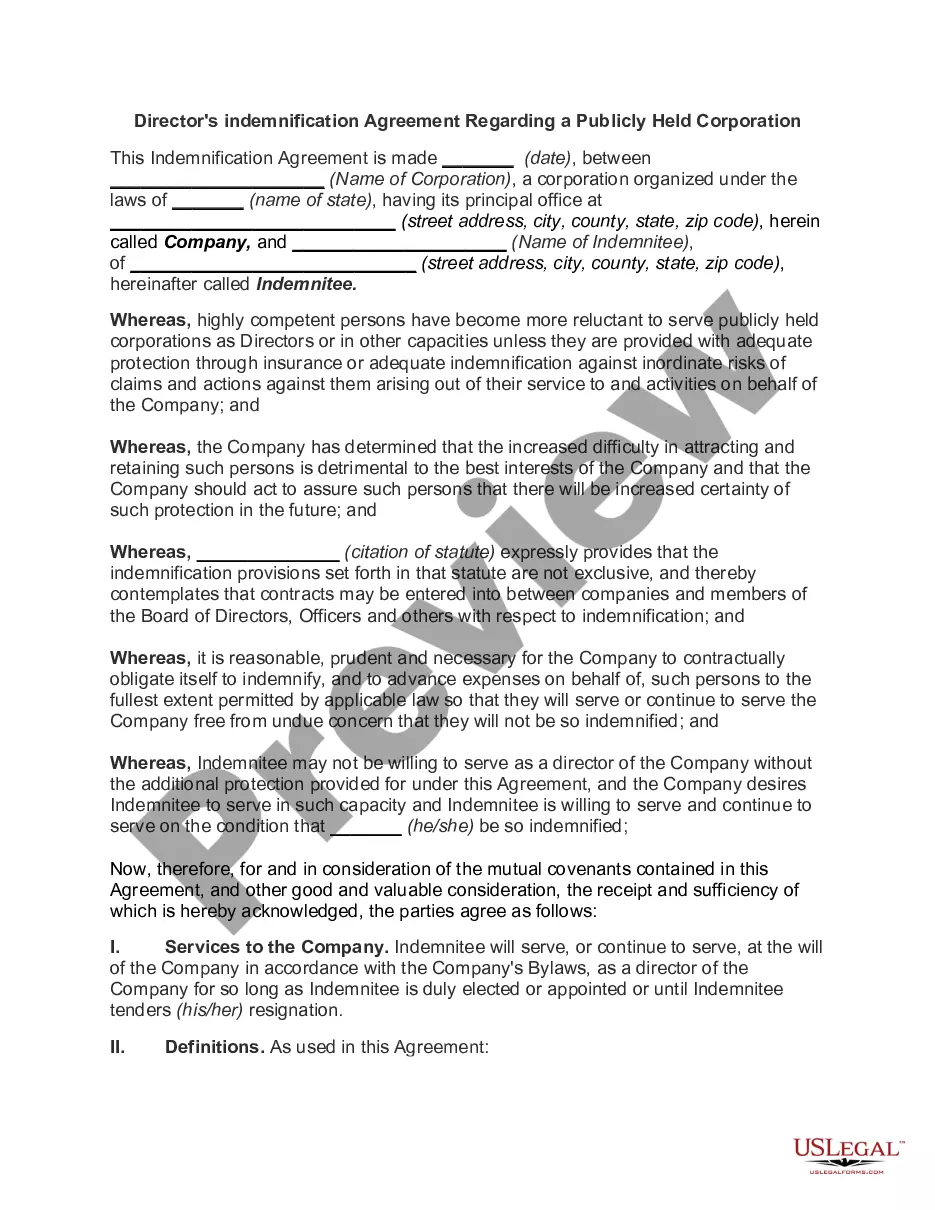
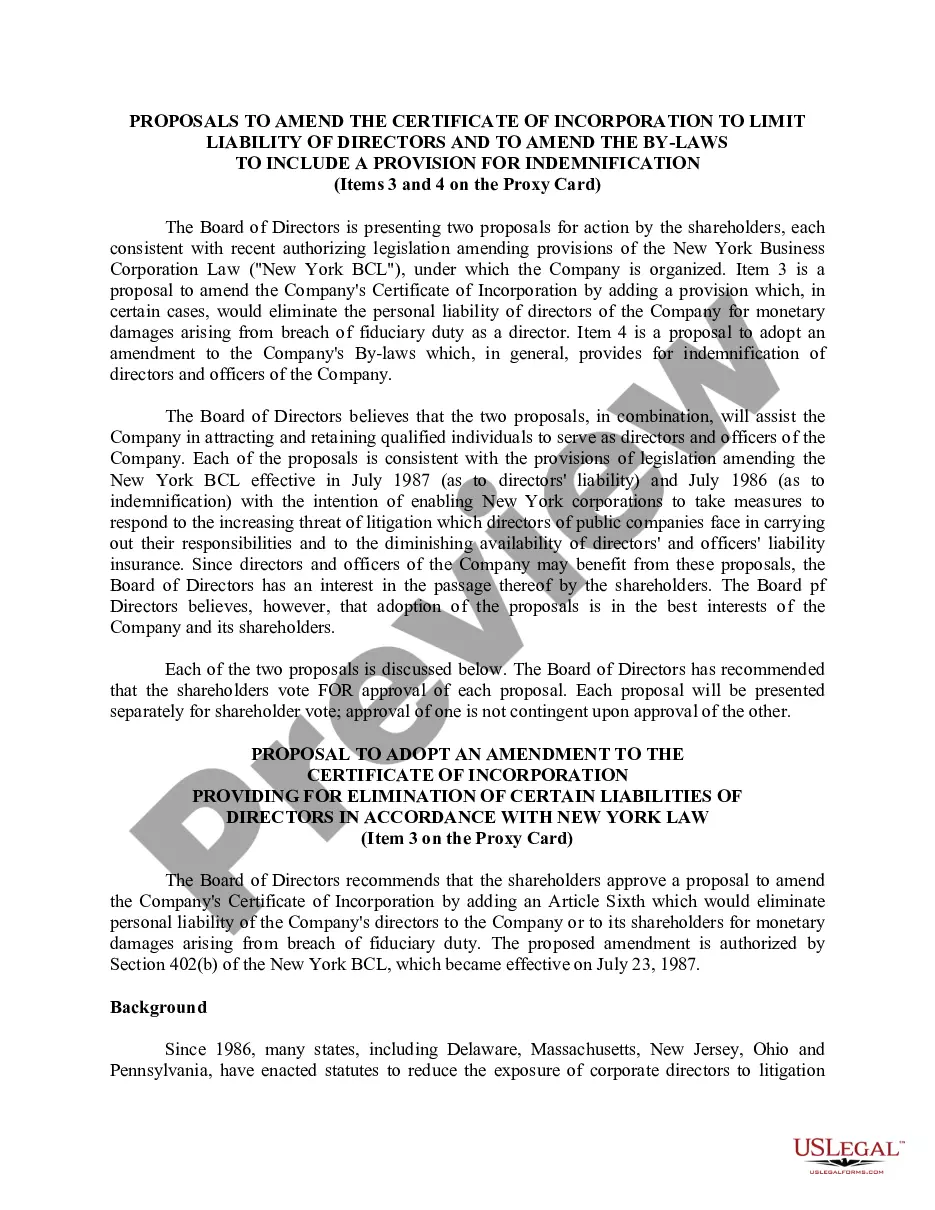
- Indemnification provisions for directors and officers
- Voting requirements for significant corporate actions
When to use this form
This form should be used when forming a new corporation and detailing its operational framework. It is particularly beneficial when the founders want to ensure protection against personal liability for corporate actions undertaken by directors and officers. It is commonly utilized by businesses aiming to establish clear governance and operational protocols right from inception.
Who can use this document
- Entrepreneurs planning to start a new corporation
- Business partners looking to formalize their corporate structure
- Corporate directors and officers seeking indemnification provisions
- Individuals requiring a template to adapt for specific corporate needs
Completing this form step by step
- Enter the full name of the corporation in the designated field.
- Specify the purpose of the corporation, including any specific business activities.
- Indicate the total authorized shares of stock and their classifications (common and preferred).
- Provide details about the registered office and registered agent for the corporation.
- List the names of the initial directors and their responsibilities.
- Sign and date the form to validate it before submission.
Does this document require notarization?
Notarization is generally not required for this form. However, certain states or situations might demand it. You can complete notarization online through US Legal Forms, powered by Notarize, using a verified video call available anytime.
Get your form ready online
Our built-in tools help you complete, sign, share, and store your documents in one place.
Make edits, fill in missing information, and update formatting in US Legal Forms—just like you would in MS Word.
Download a copy, print it, send it by email, or mail it via USPS—whatever works best for your next step.
Sign and collect signatures with our SignNow integration. Send to multiple recipients, set reminders, and more. Go Premium to unlock E-Sign.
If this form requires notarization, complete it online through a secure video call—no need to meet a notary in person or wait for an appointment.
We protect your documents and personal data by following strict security and privacy standards.

Make edits, fill in missing information, and update formatting in US Legal Forms—just like you would in MS Word.

Download a copy, print it, send it by email, or mail it via USPS—whatever works best for your next step.

Sign and collect signatures with our SignNow integration. Send to multiple recipients, set reminders, and more. Go Premium to unlock E-Sign.

If this form requires notarization, complete it online through a secure video call—no need to meet a notary in person or wait for an appointment.

We protect your documents and personal data by following strict security and privacy standards.
Avoid these common issues
- Failing to specify the correct name of the corporation as required by state law.
- Leaving out the registered agent's information or selecting an unqualified individual.
- Incorrectly detailing the stock structure or missing necessary share classifications.
- Not signing the document, which can render it invalid.
Why use this form online
- Easy access to downloadable templates that can be tailored to specific needs.
- Convenience of completing forms at your own pace without the need for an in-person visit.
- Reliability of legally vetted forms drafted by licensed attorneys.
Legal use & context
- Establishing the corporation as a legal entity separate from its owners.
- Providing legal protection for shareholders and minimizing personal liability.
- Ensuring that corporate governance protocols are legally established.
Looking for another form?



Form popularity
FAQ
Indemnification provisions are generally enforceable. There are certain exceptions however. Indemnifications that require a party to indemnify another party for any claim irrespective of fault ('broad form' or 'no fault' indemnities) generally have been found to violate public policy.
Indemnification clauses are clauses in contracts that set out to protect one party from liability if a third-party or third entity is harmed in any way. It's a clause that contractually obligates one party to compensate another party for losses or damages that have occurred or could occur in the future.
Indemnity is defined by Black's Law Dictionary as a duty to make good any loss, damage, or liability incurred by another. Indemnity has a general meaning of holding one harmless; that is to say, that one party holds the other harmless for some loss or damage.
An indemnity clause is a promise by one party (the indemnifying party) to be responsible for and cover the loss of the other party (the indemnified party) in circumstances where it would be unfair for the indemnified party to bear the loss. In this way, an indemnity clause is a risk management tool.
What does "Corporate Indemnification" mean?In the context of business organizations, a limited liability company or corporation will often indemnify its officers and directors, covering their expenses (including legal fees) and judgment amounts incurred by such persons as a result of their service to the entity.
To indemnify someone is to absolve that person from responsibility for damage or loss arising from a transaction. Indemnification is the act of not being held liable for or being protected from harm, loss, or damages, by shifting the liability to another party.
A company can indemnify its directors against personal liability so long as the indemnity does not cover:other liabilities (such as legal costs) in criminal cases where the director is convicted, or in civil cases brought by the company where the final judgment goes against the director.
To indemnify means to compensate someone for his/her harm or loss. In most contracts, an indemnification clause serves to compensate a party for harm or loss arising in connection with the other party's actions or failure to act. The intent is to shift liability away from one party, and on to the indemnifying party.
Indemnification under Companies Act, 2013: While Section 201 of the erstwhile Companies Act, 1956 had restricted a company from indemnifying the directors of the company, the Companies Act, 2013 does not have any such restriction and therefore, directors can now be indemnified by companies against liabilities.