Reduction in Authorized Number of Directors
Overview of this form
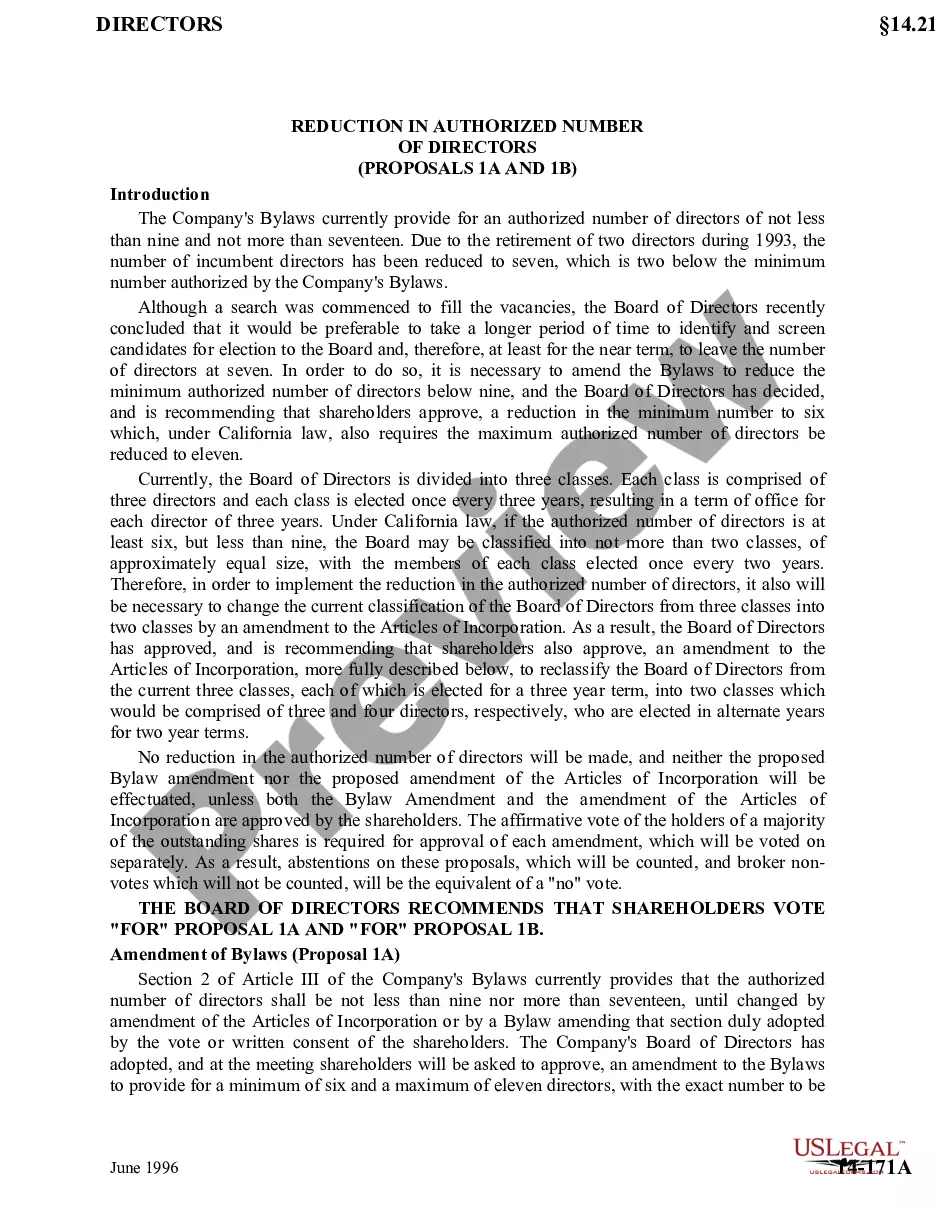
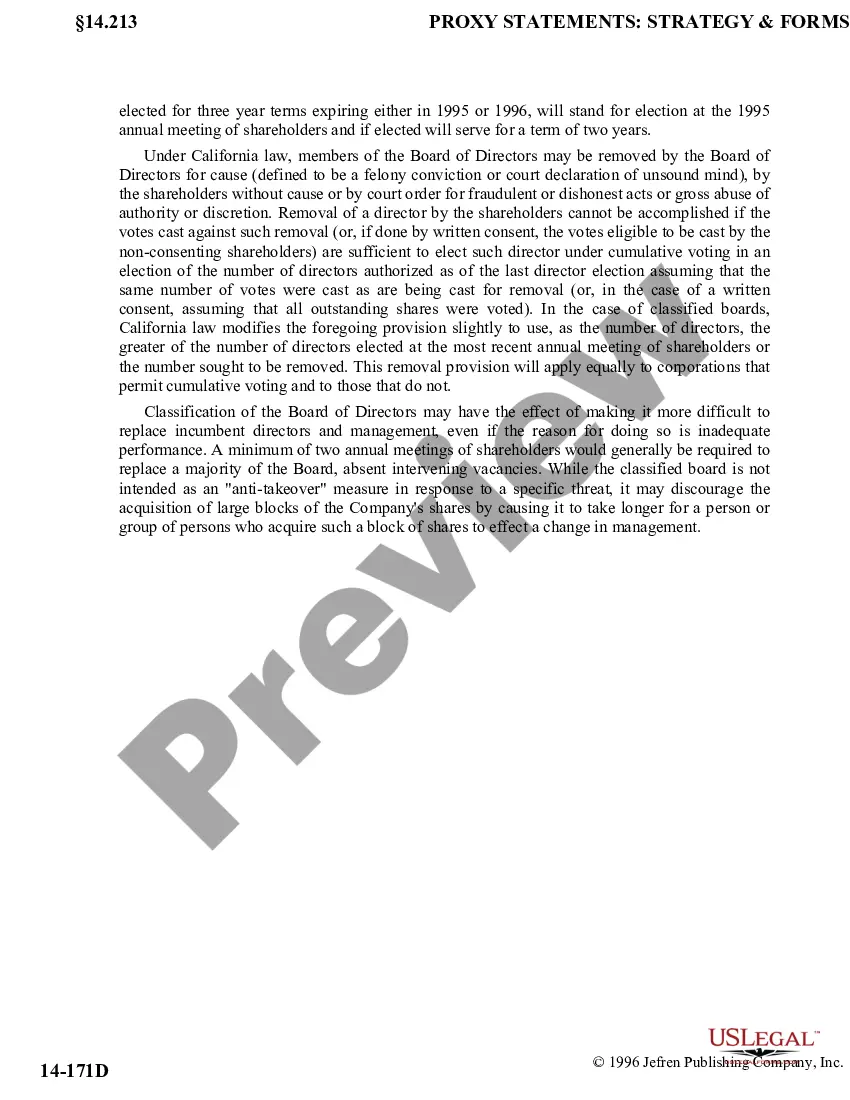
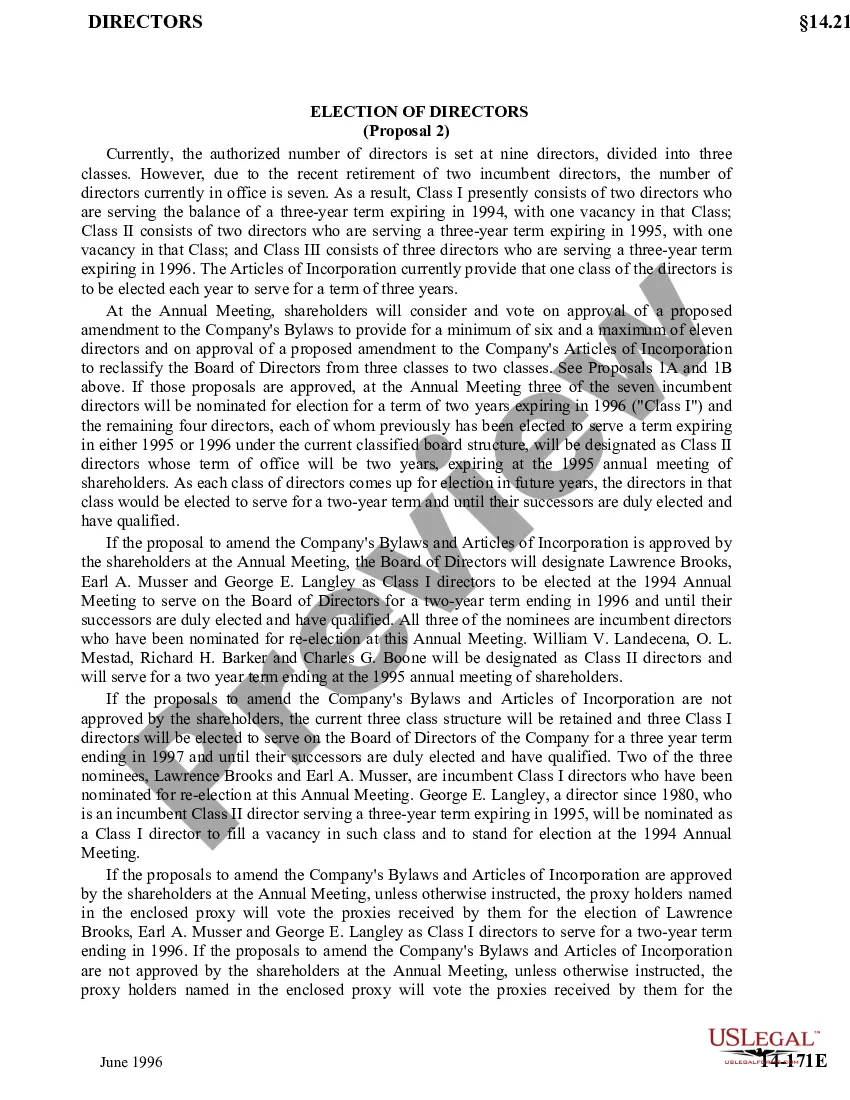
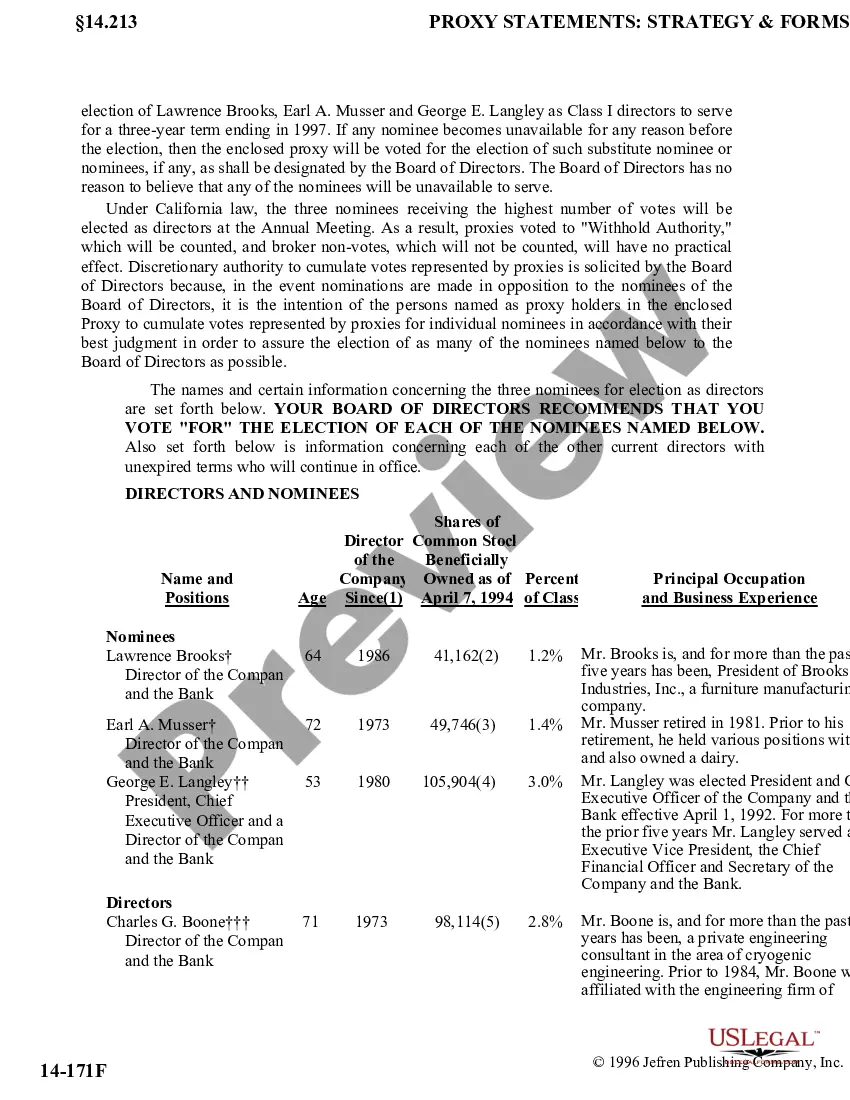
The Reduction in Authorized Number of Directors form is used by companies to amend their bylaws to reduce the minimum number of authorized directors. This form comes into play when the Board of Directors or shareholders decide that the number of directors should be decreased, often due to practical considerations like retirements or the optimal functioning of the board. It is essential for ensuring that the governance structure reflects the current needs of the company while adhering to state regulations.
Main sections of this form
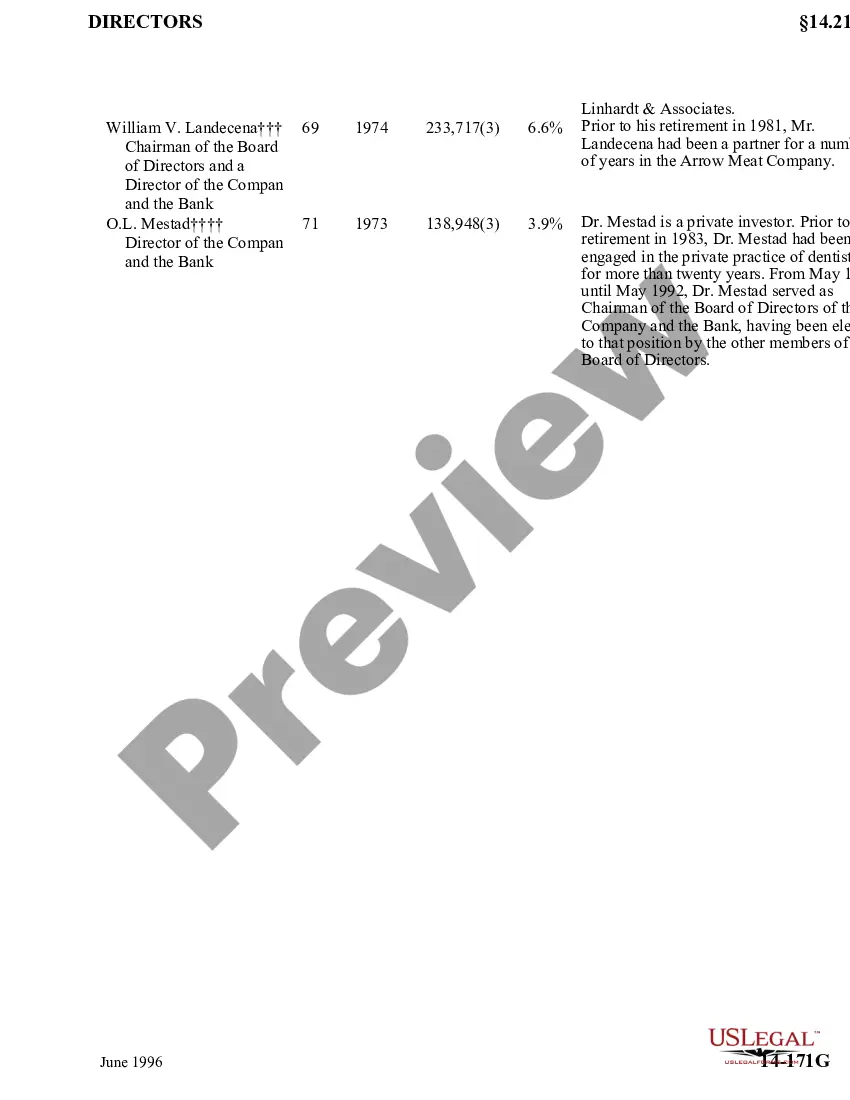
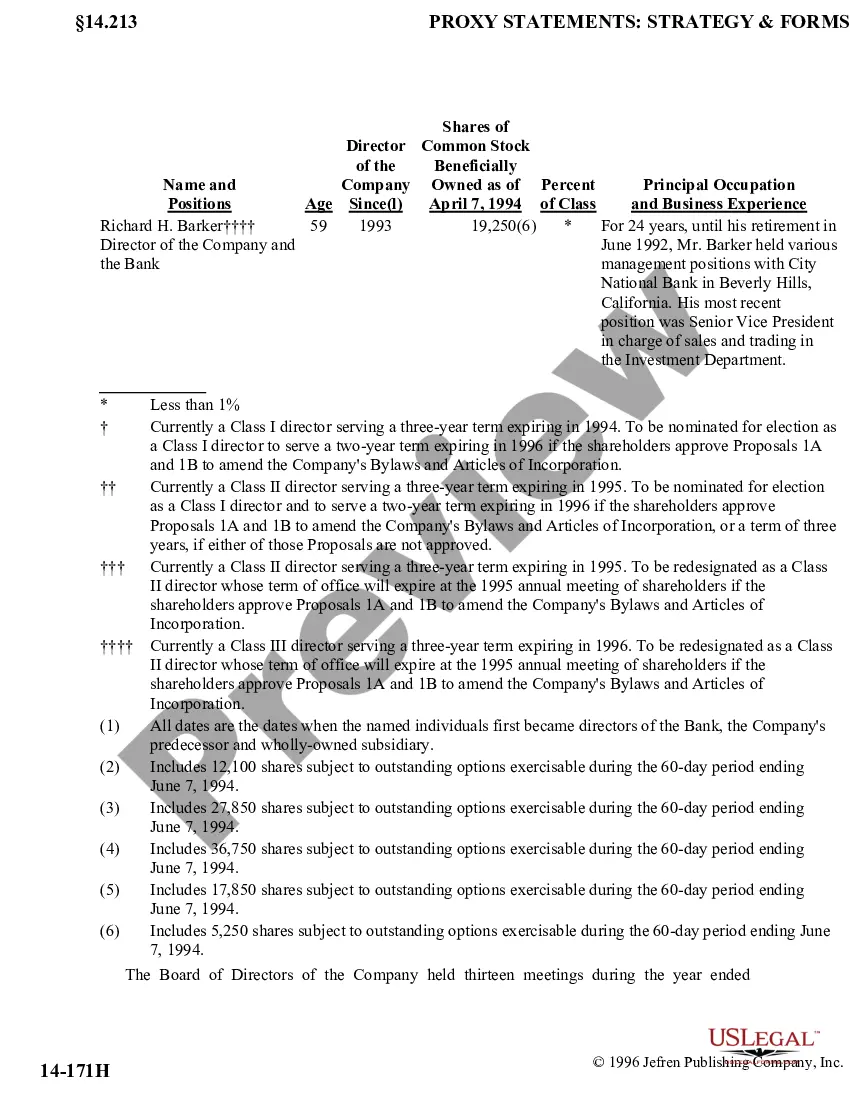
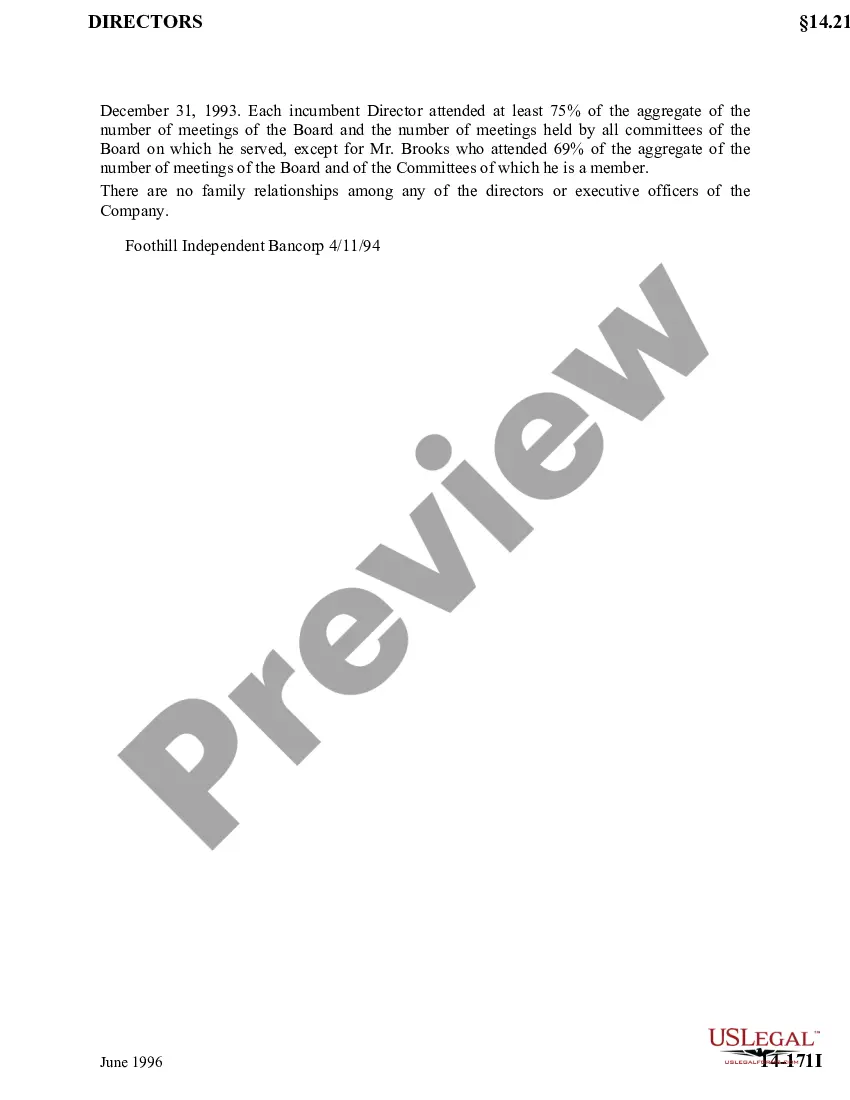
- Identification of the current number and class structure of directors.
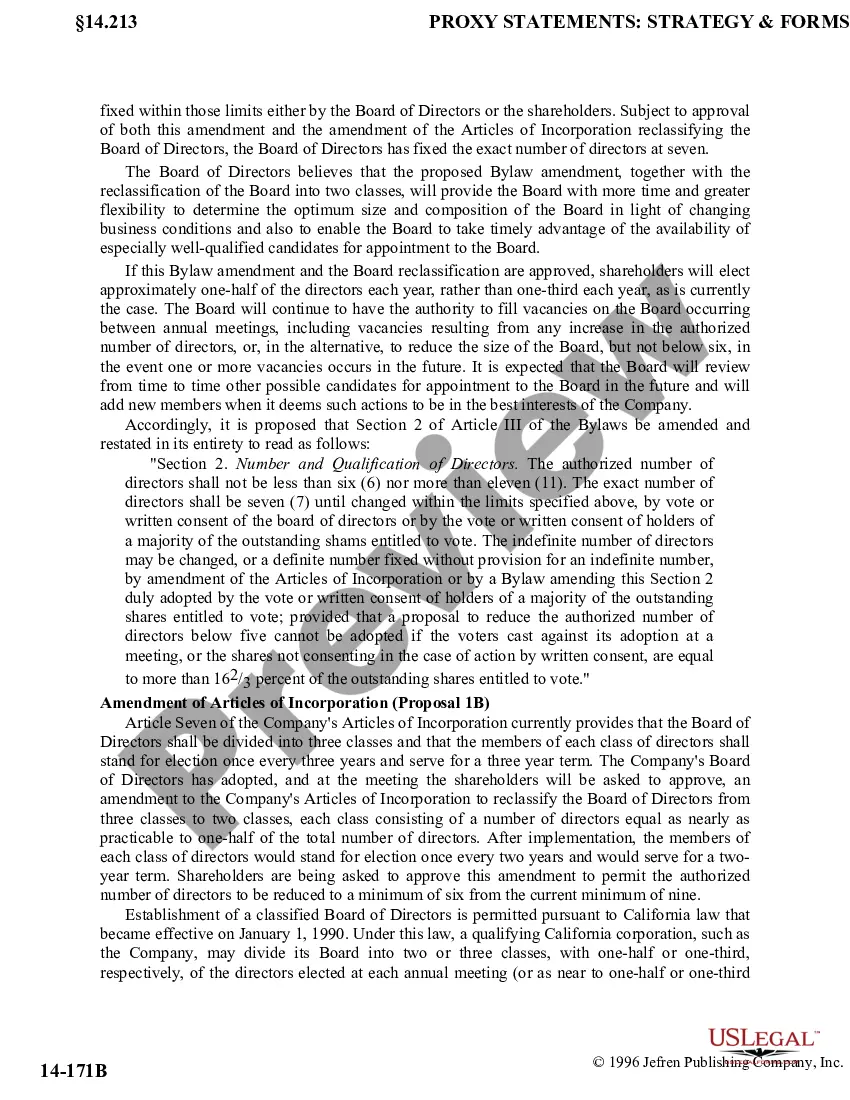
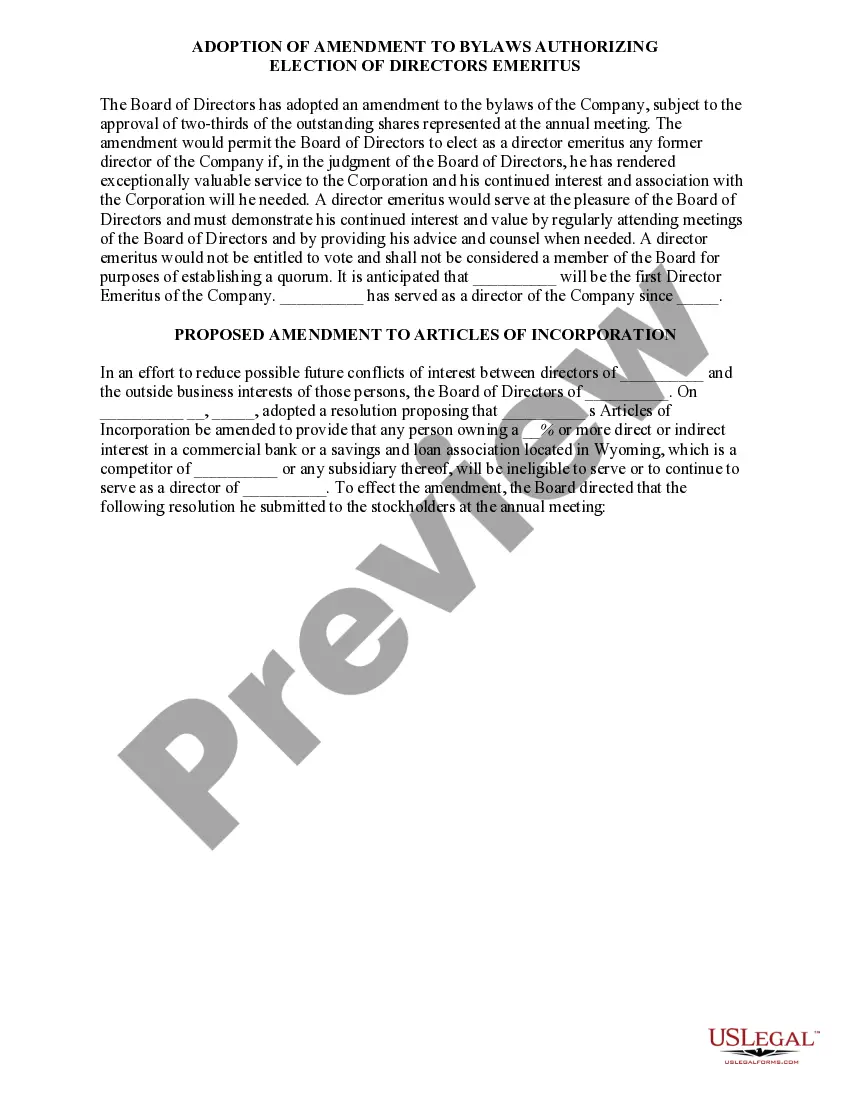
- Proposed amendments to the bylaws for reducing the number of authorized directors.
- Details on the voting requirements for shareholder approval.
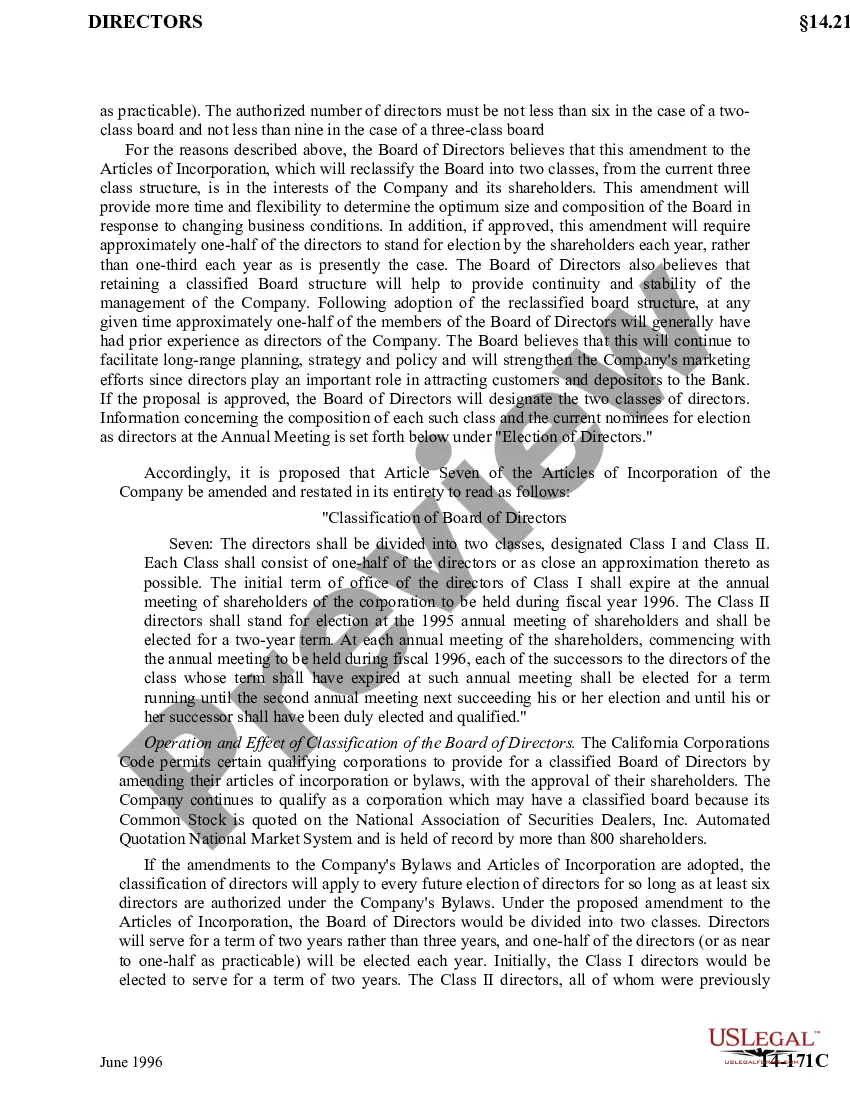
- Specification of the terms for newly classified directors.
- Consequences of the amendment on future director elections.


Situations where this form applies
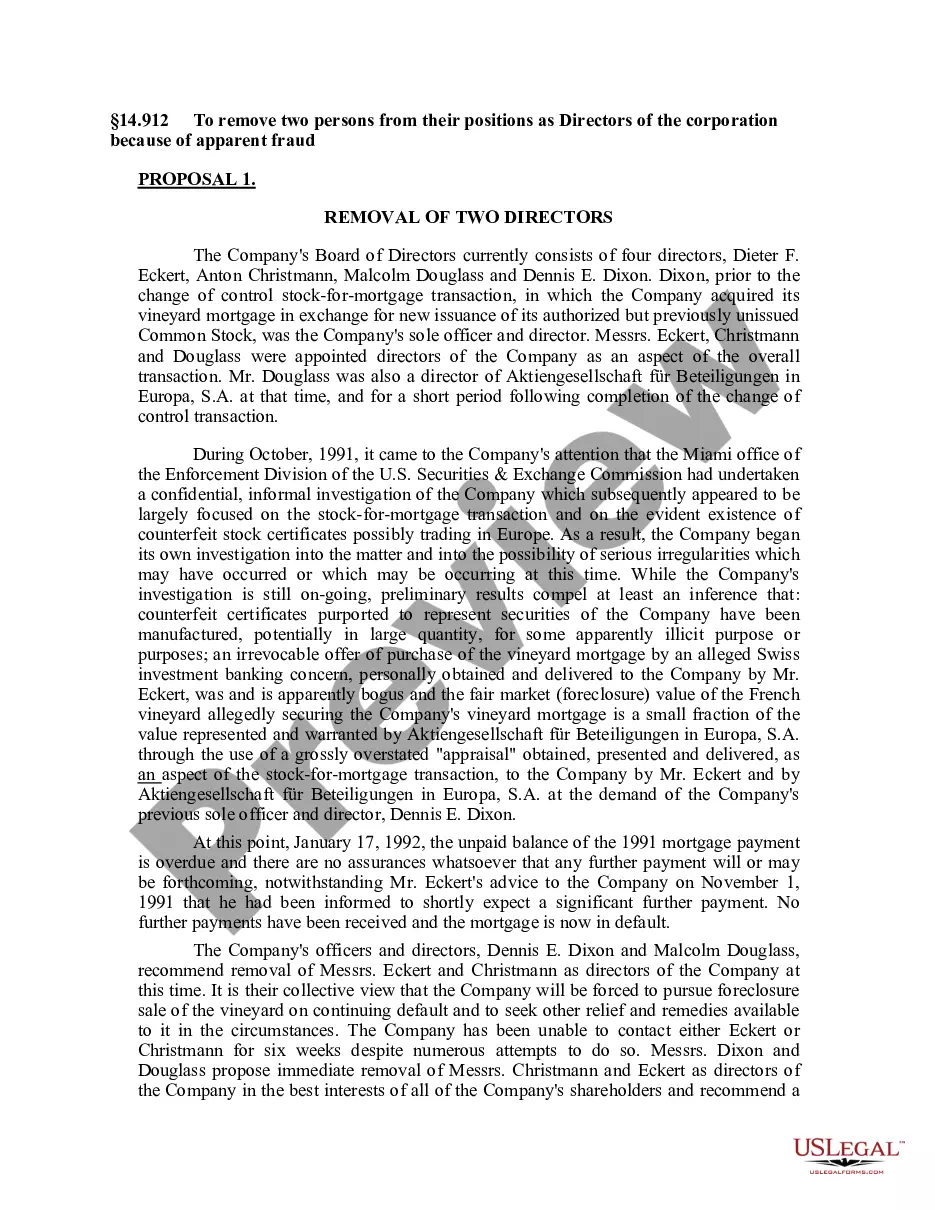
This form is necessary when a companyâs Board of Directors or its shareholders determine that the existing number of authorized directors is too high and needs to be adjusted. Situations may include the retirement of directors, restructuring of the board, or a desire to streamline governance for better operational efficiency.
Who can use this document
- Corporations considering a reduction in the number of authorized directors.
- Members of the Board of Directors recommending changes to board structure.
- Shareholders voting on proposed amendments to corporate bylaws.
- Legal representatives aiding companies in governance restructuring.
How to prepare this document
- Identify the current authorized number and classification of directors within the company.
- Draft the proposed changes to the bylaws to reflect the new minimum number of directors.
- Include details on the reclassification of the board structure, if applicable.
- Gather signatures or consents from the Board of Directors and shareholders as needed.
- Submit the completed form for approval at the next shareholder meeting.
Notarization guidance
This form does not typically require notarization unless specified by local law. However, it's always crucial to check state regulations to determine if notarization is necessary for specific amendments in corporate governance documents.
Get your form ready online
Our built-in tools help you complete, sign, share, and store your documents in one place.
Make edits, fill in missing information, and update formatting in US Legal Forms—just like you would in MS Word.
Download a copy, print it, send it by email, or mail it via USPS—whatever works best for your next step.
Sign and collect signatures with our SignNow integration. Send to multiple recipients, set reminders, and more. Go Premium to unlock E-Sign.
If this form requires notarization, complete it online through a secure video call—no need to meet a notary in person or wait for an appointment.
We protect your documents and personal data by following strict security and privacy standards.

Make edits, fill in missing information, and update formatting in US Legal Forms—just like you would in MS Word.

Download a copy, print it, send it by email, or mail it via USPS—whatever works best for your next step.

Sign and collect signatures with our SignNow integration. Send to multiple recipients, set reminders, and more. Go Premium to unlock E-Sign.

If this form requires notarization, complete it online through a secure video call—no need to meet a notary in person or wait for an appointment.

We protect your documents and personal data by following strict security and privacy standards.
Common mistakes
- Failing to meet state-specific voting requirements for amendments.
- Not clearly specifying the new minimum and maximum number of directors.
- Omitting necessary details about the classification of directors.
- Neglecting to inform all shareholders about the amendments in advance of voting.
Advantages of online completion
- Convenient access to up-to-date legal templates prepared by licensed attorneys.
- Editable forms allow for customization to suit specific corporate needs.
- Quick turnaround time for obtaining essential business documents.
Legal use & context
- This form is legally recognized for amending corporate bylaws related to director numbers.
- It ensures compliance with state laws regarding corporate governance practices.
- Proper completion and filing are essential for maintaining valid corporate structure and compliance.
Summary of main points
- The Reduction in Authorized Number of Directors form is crucial for amending governance structures in corporations.
- It requires careful consideration of shareholder input and legal obligations.
- Using this form facilitates effective corporate management and adapts to changing business environments.
Looking for another form?


Form popularity
FAQ
Authorized stock refers to the maximum number of shares a publicly-traded company can issue, as specified in its articles of incorporation or charter. Those shares which have already been issued to the public, known as outstanding shares, make up some portion of a company's authorized stock.
Authorised shares are units of ownership in the company available to be issued to shareholders. Issued shares are the units of ownership already issued to shareholders.The current Companies Act only make provision for companies to be registered with no par value shares.
Authorised shares are units of ownership in the company available to be issued to shareholders. Issued shares are the units of ownership already issued to shareholders.No par value means that there is no standard value attached to the shares.
Authorized stock is the maximum number of shares a company can issue.Issued stock is what the company has issued, which is less than the authorized stock. Each share of common stock represents an ownership interest, which is the ratio of the shares you hold to the outstanding shares.
Issued shares are those that the owners have decided to sell in exchange for cash, which may be less than the number of shares actually authorized. Shares issued generate the assets or other value given for founding a company or growing it later on.
If you know the number of shares issued and unissued, or those authorized but not sold to shareholders, you can calculate authorized shares: shares authorized = shares issued + shares unissued.
The number of authorized shares can be increased by the shareholders of the company at annual shareholder meetings, provided a majority of the current shareholders vote for the change.The issued or outstanding number of shares can be either equal to or less than the number of authorized shares.
Authorized shares are the maximum number of shares a company is allowed to issue to investors, as laid out in its articles of incorporation. Outstanding shares are the actual shares issued or sold to investors from the available number of authorized shares.