Notice of Post-Termination Obligations
Understanding this form
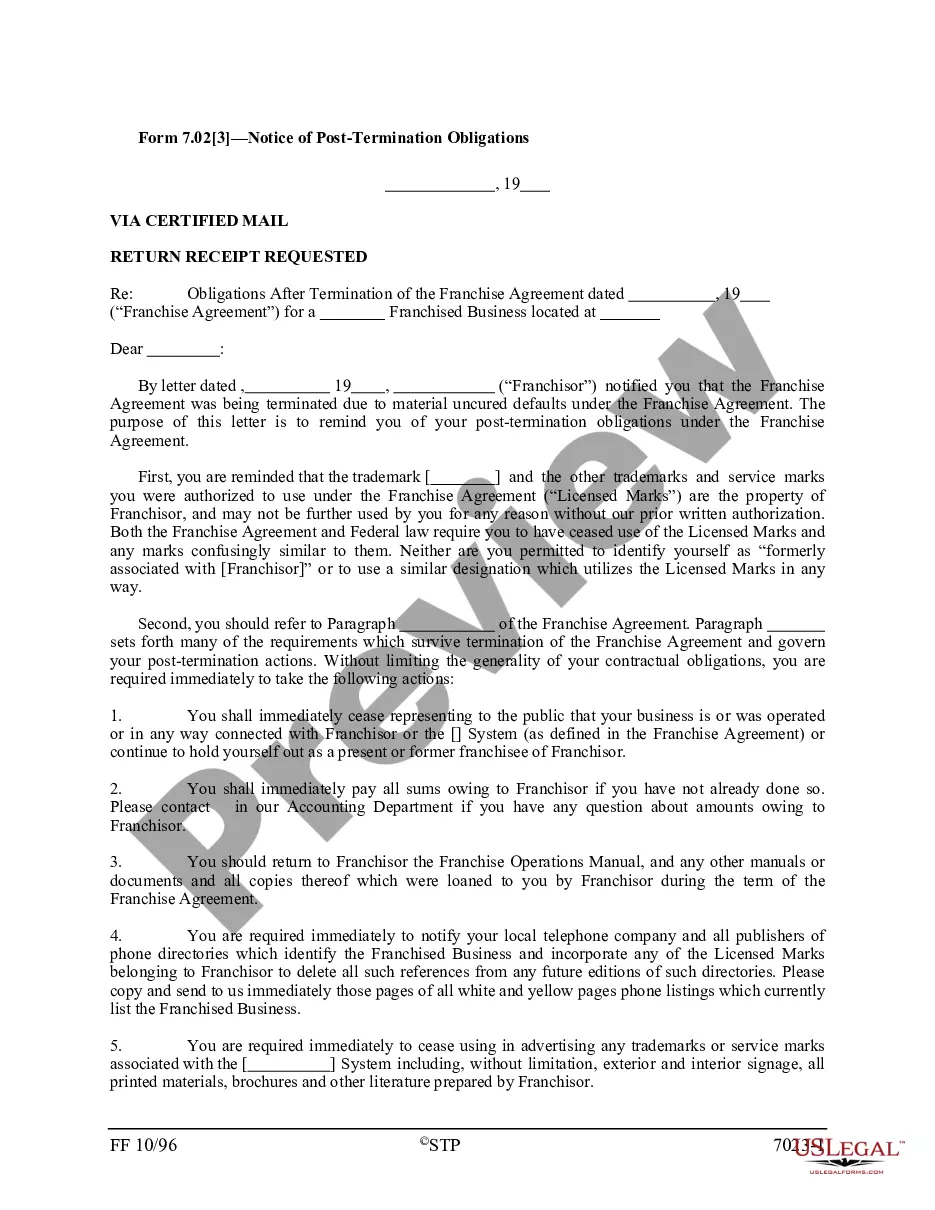
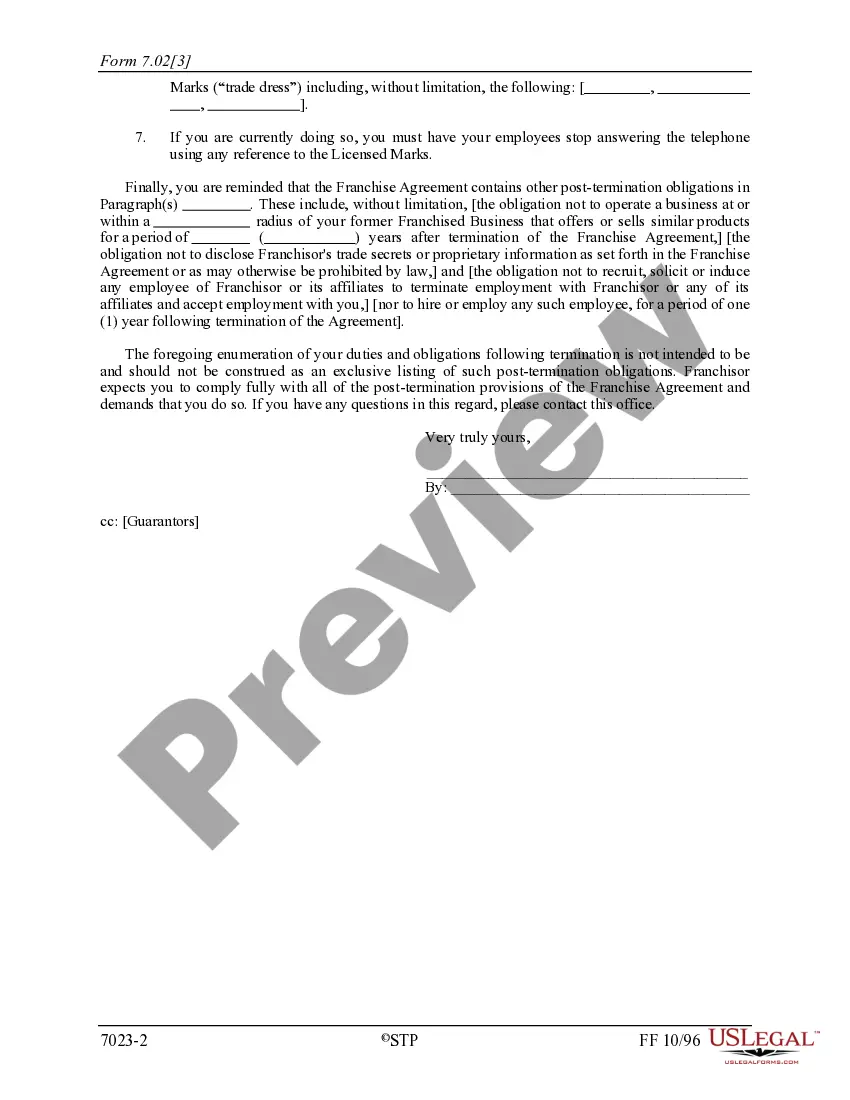
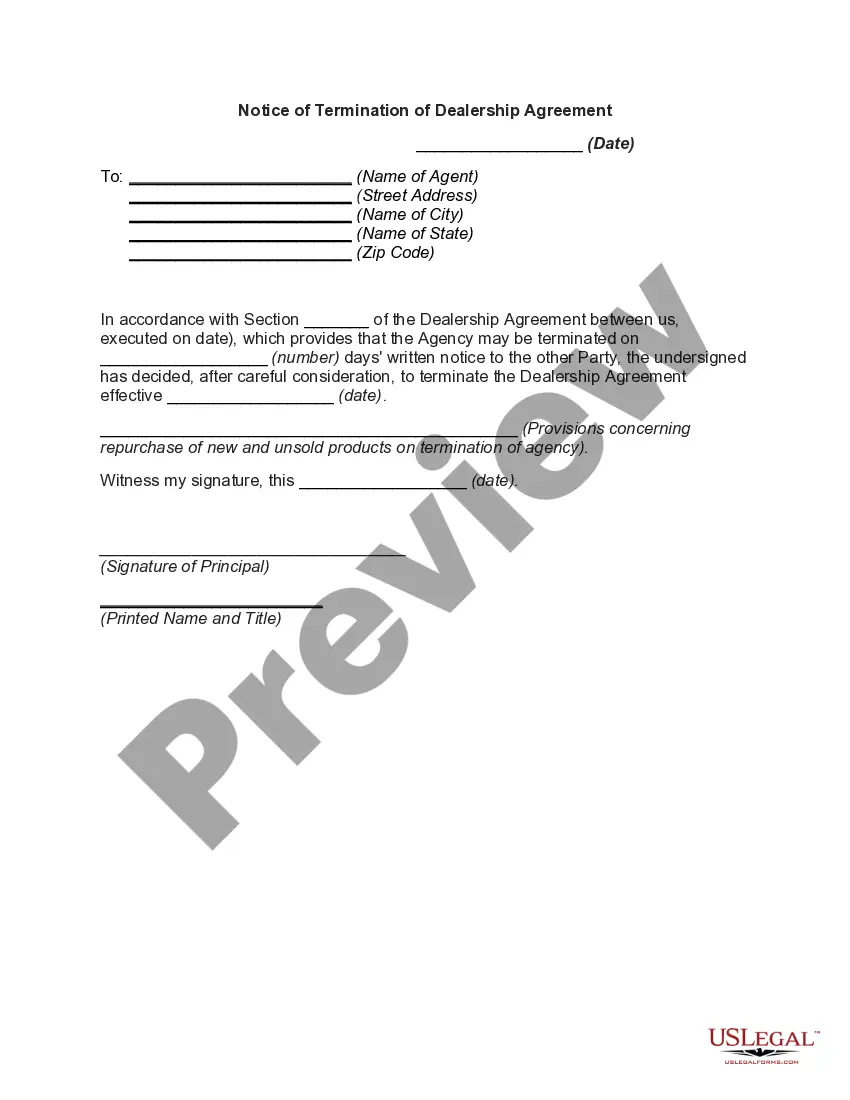
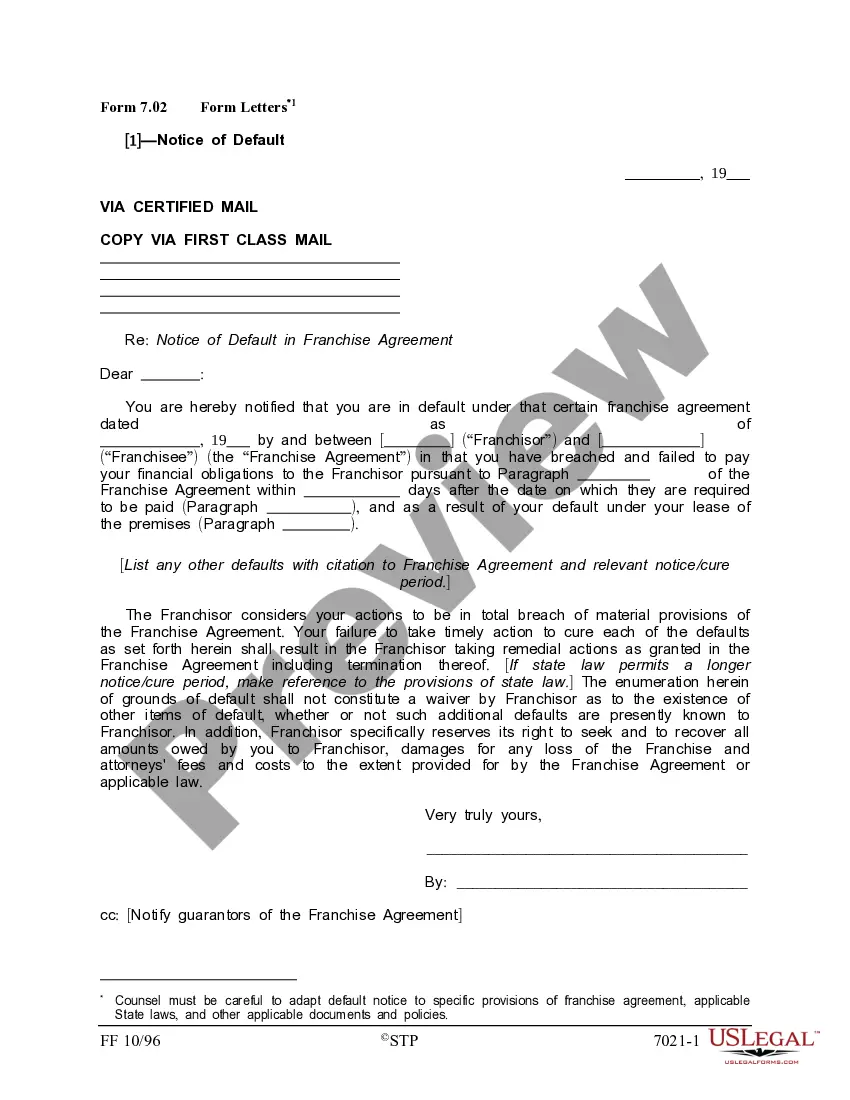
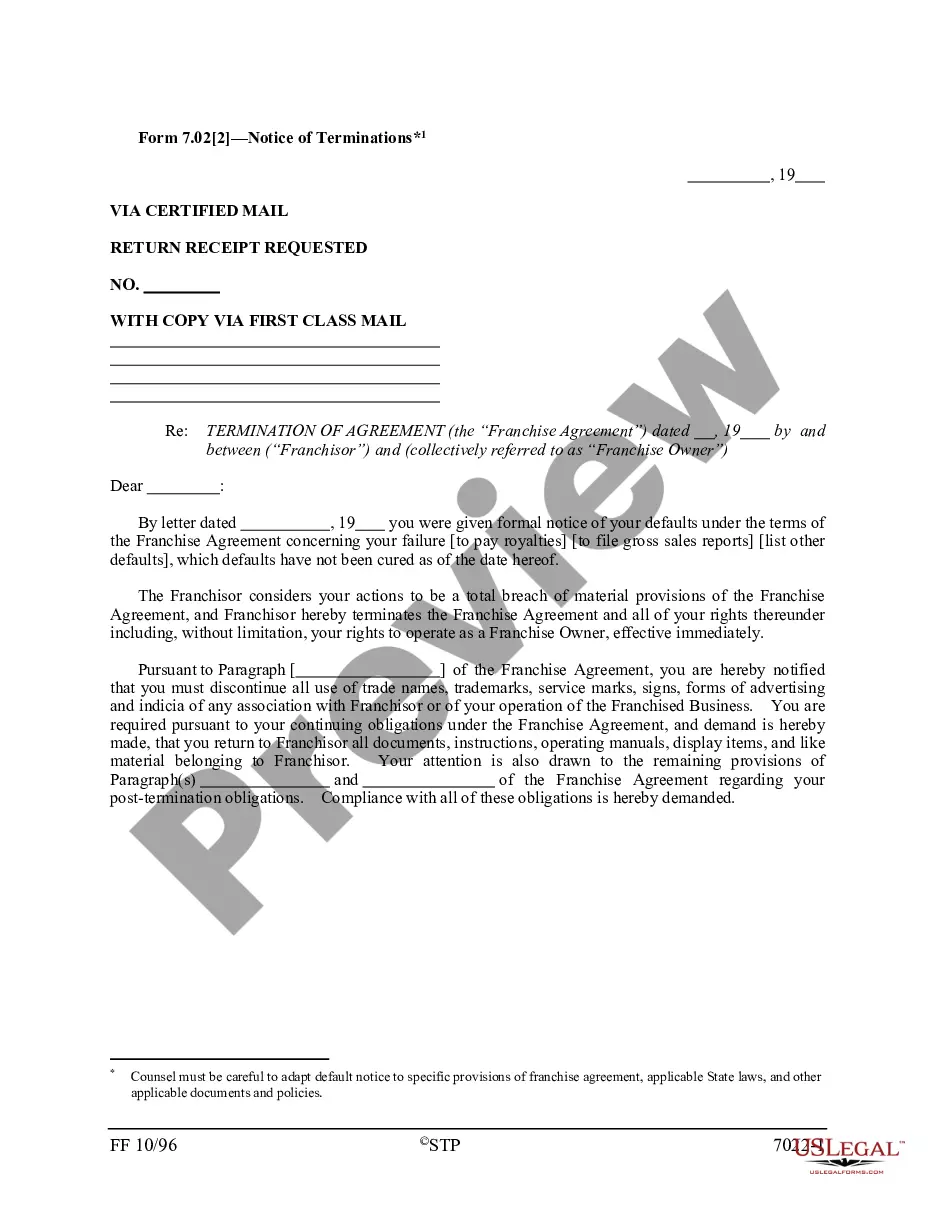
The Notice of Post-Termination Obligations is a legal document intended for franchisees who have experienced the termination of their franchise agreement. This form serves to remind the franchisee of their obligations following the end of their agreement with the franchisor due to material uncured defaults. Unlike other franchise-related documents, this notice specifically outlines the necessary actions that must be taken by the franchisee to comply with the terms of the termination.
Key parts of this document
- Identification of the franchisor and franchisee involved.
- Reference to the terminated franchise agreement and reasons for termination.
- Detailed description of post-termination obligations, including the cessation of trademark use.
- Requirements for returning franchisor materials and notifying directories.
- Actions related to employee communications and business representations.
- Summary of additional obligations, such as non-compete clauses and confidentiality.
Situations where this form applies
This form is utilized when a franchisee receives notice of termination from the franchisor due to serious breaches of the franchise agreement. It is crucial for the franchisee to understand and adhere to post-termination obligations to avoid potential legal repercussions. This form is particularly important if the franchisor has cited specific defaults and the franchisee needs a clear understanding of their responsibilities after the agreement ends.
Who this form is for
- Franchisees who have been notified of the termination of their franchise agreement.
- Franchise owners seeking guidance on their post-termination obligations.
- Legal representatives assisting franchisees during the termination process.
How to prepare this document
- Enter the date of the notice and relevant details about the franchise agreement.
- Clearly state the reasons provided by the franchisor for the termination.
- List the post-termination obligations that the franchisee must fulfill.
- Include any necessary references to the original franchise agreement and its clauses.
- Ensure that all actions required of the franchisee are clearly outlined.
Notarization guidance
This form does not typically require notarization unless specified by local law.
Get your form ready online
Our built-in tools help you complete, sign, share, and store your documents in one place.
Make edits, fill in missing information, and update formatting in US Legal Forms—just like you would in MS Word.
Download a copy, print it, send it by email, or mail it via USPS—whatever works best for your next step.
Sign and collect signatures with our SignNow integration. Send to multiple recipients, set reminders, and more. Go Premium to unlock E-Sign.
If this form requires notarization, complete it online through a secure video call—no need to meet a notary in person or wait for an appointment.
We protect your documents and personal data by following strict security and privacy standards.

Make edits, fill in missing information, and update formatting in US Legal Forms—just like you would in MS Word.

Download a copy, print it, send it by email, or mail it via USPS—whatever works best for your next step.

Sign and collect signatures with our SignNow integration. Send to multiple recipients, set reminders, and more. Go Premium to unlock E-Sign.

If this form requires notarization, complete it online through a secure video call—no need to meet a notary in person or wait for an appointment.

We protect your documents and personal data by following strict security and privacy standards.
Typical mistakes to avoid
- Failing to identify all specific obligations outlined in the franchise agreement.
- Neglecting to provide accurate franchise agreement details.
- Overlooking the requirement to cease using licensed trademarks immediately.
- Not returning borrowed materials to the franchisor.
Advantages of online completion
- Convenient access to up-to-date legal templates tailored for franchisees.
- Edit and customize the form easily to fit specific circumstances.
- Reliable resources drafted by licensed attorneys.
- Fast and secure delivery options for completed documents.
Legal use & context
- This form is legally binding as it enforces the post-termination obligations described in the franchise agreement.
- Failure to comply with this form can lead to legal action by the franchisor.
What to keep in mind
- The Notice of Post-Termination Obligations is essential for franchisees after termination.
- Compliance with post-termination obligations protects the franchisee from legal consequences.
- The form provides clear guidance on how to fulfill these obligations effectively.
Looking for another form?





Form popularity
FAQ
The following states require that employers provide written notice of separation (discharge, layoff, voluntary resignation) to a departing employee: Arizona, California, Connecticut, Georgia, Illinois, Louisiana, Massachusetts, Michigan, New Jersey, New York, and Tennessee.
Not signing doesn't make them go away. The third type of termination papers are a bit more serious.Even if you think you were terminated for an illegal reason, if the severance they are offering is more than a token amount, it's probably more than you'll see in a lawsuit and you should consider signing.
An employee is considered terminated at the conclusion of such a contract, unless a new contract is offered or the clauses in the initial contract are amended. As in most countries, employees in India who are terminated by employers are often given one month notice or payment of one month of wages in lieu thereof.
The following states require that employers provide written notice of separation (discharge, layoff, voluntary resignation) to a departing employee: Arizona, California, Connecticut, Georgia, Illinois, Louisiana, Massachusetts, Michigan, New Jersey, New York, and Tennessee.
Post-Termination Period means the period beginning on the date that the Key Employee's employment terminates and ending on the first anniversary of such date.Post-Termination Period means the twenty four (24) month period following Executive's Date of Termination.
Your employer can terminate your employment at any time and without warning. They do not need to have a good or valid reason to let you go, so long as they are not firing you for discriminatory reasons. If your termination is not tied to severe workplace misconduct, you dismissal is considered one without cause.
State labor law in Karnataka and Tamil NaduUnder the Karnataka Shops and Establishments Act, 1961 and the Tamil Nadu Shops and Establishments Act, 1947, an employer cannot terminate an employee who has been with the enterprise for more than six months, except on the grounds of reasonable cause. In addition, an
Federally, and in most states, a termination letter is not legally required. In some states, currently including Arizona, California, Illinois and New Jersey, written termination notices are required by law. Some of these states have specific templates employers must use for the letter.