Self-Employed Independent Contractor Employment Agreement - General
Overview of this form
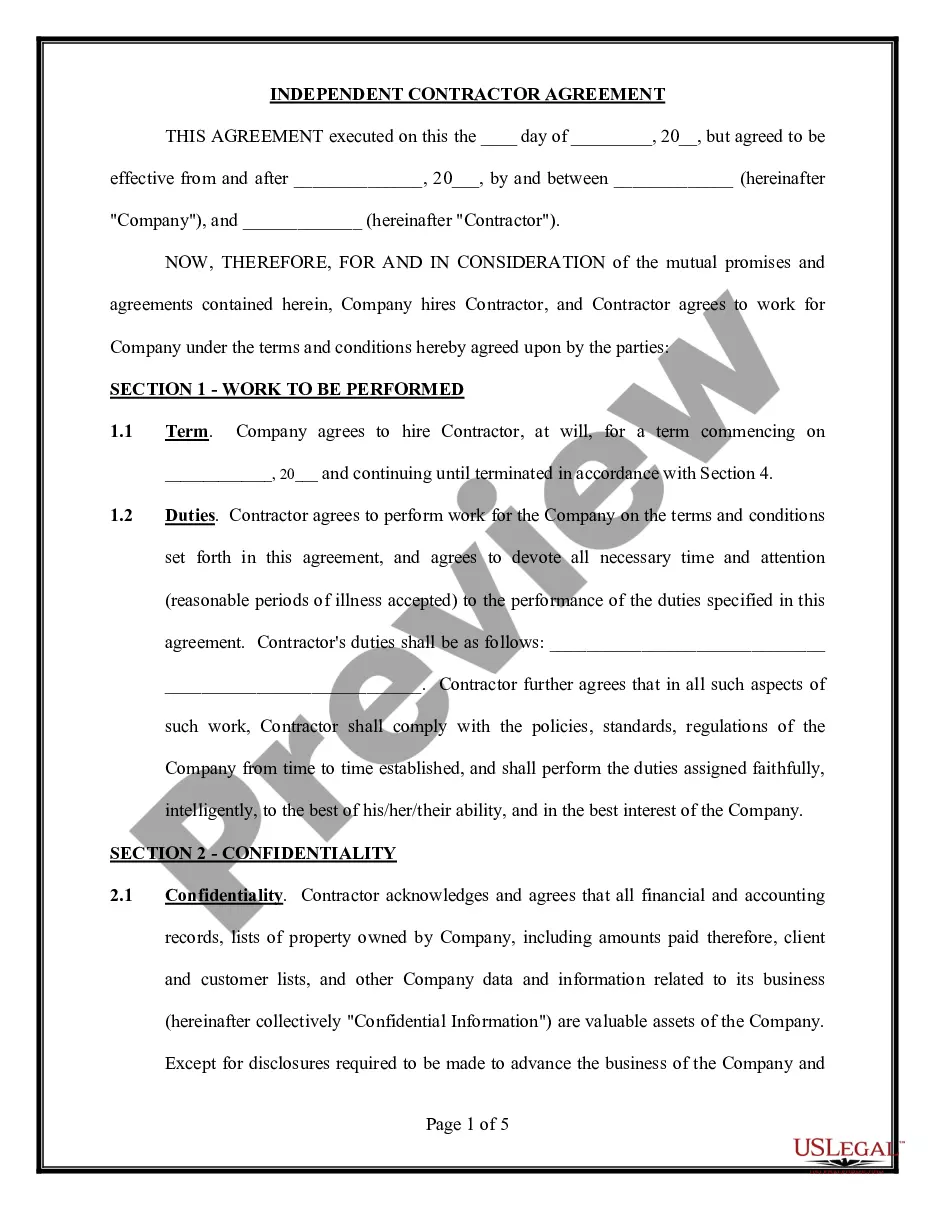
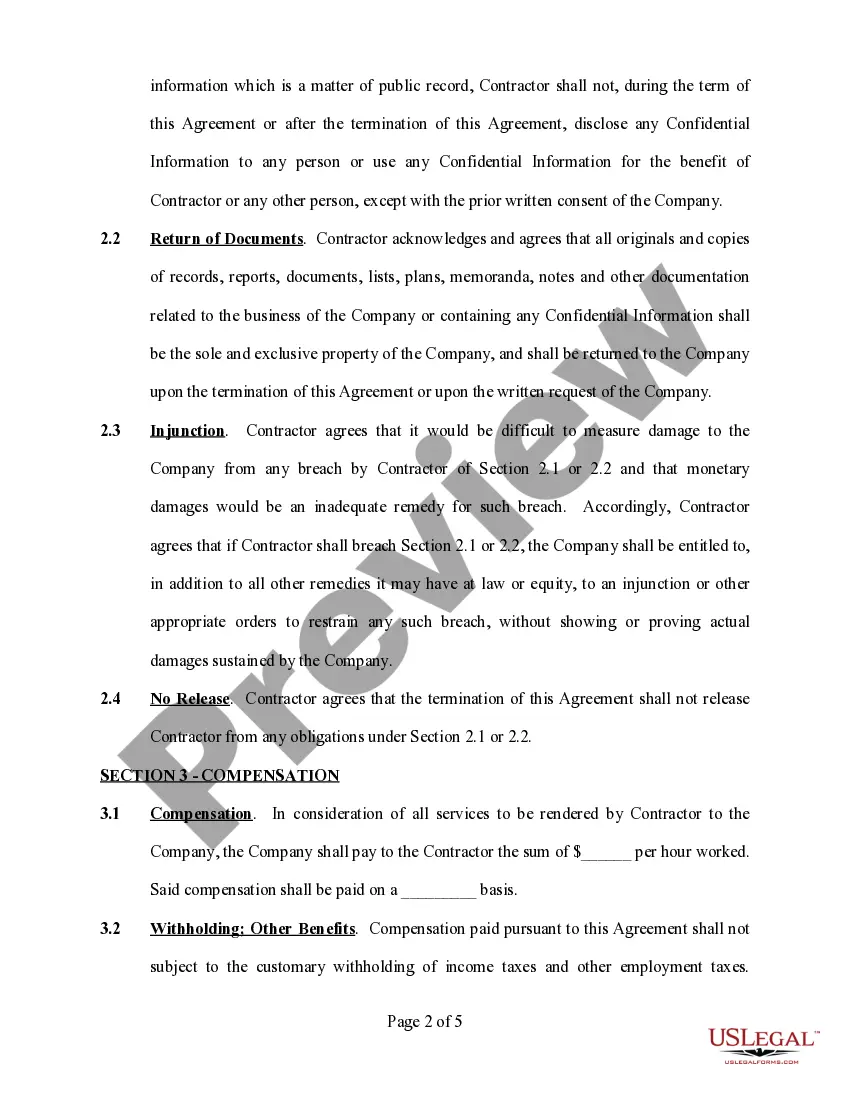
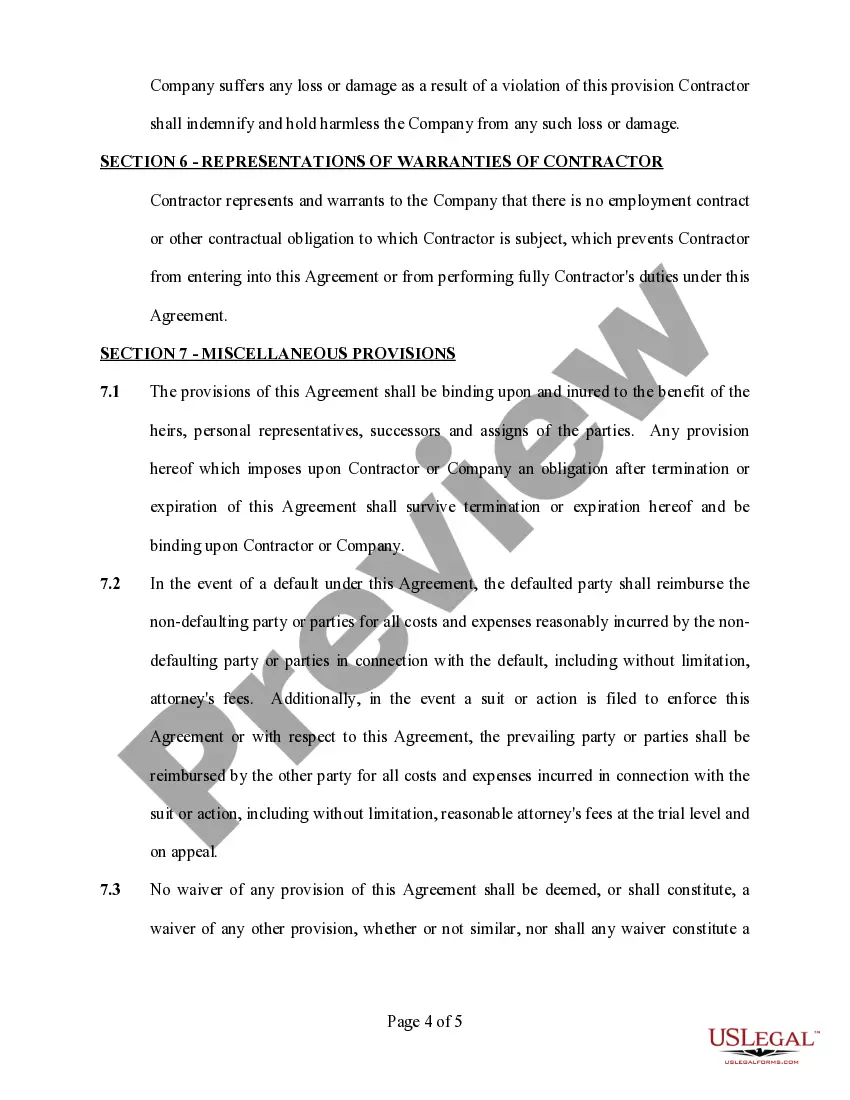
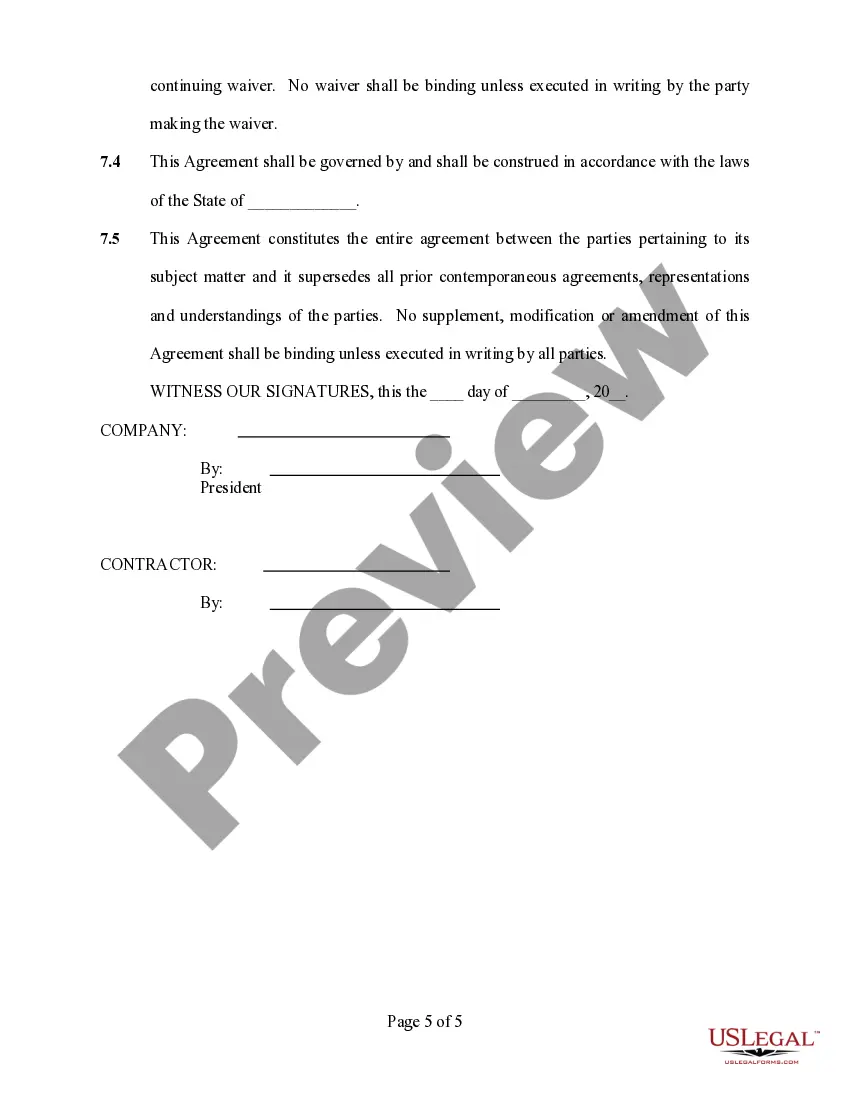
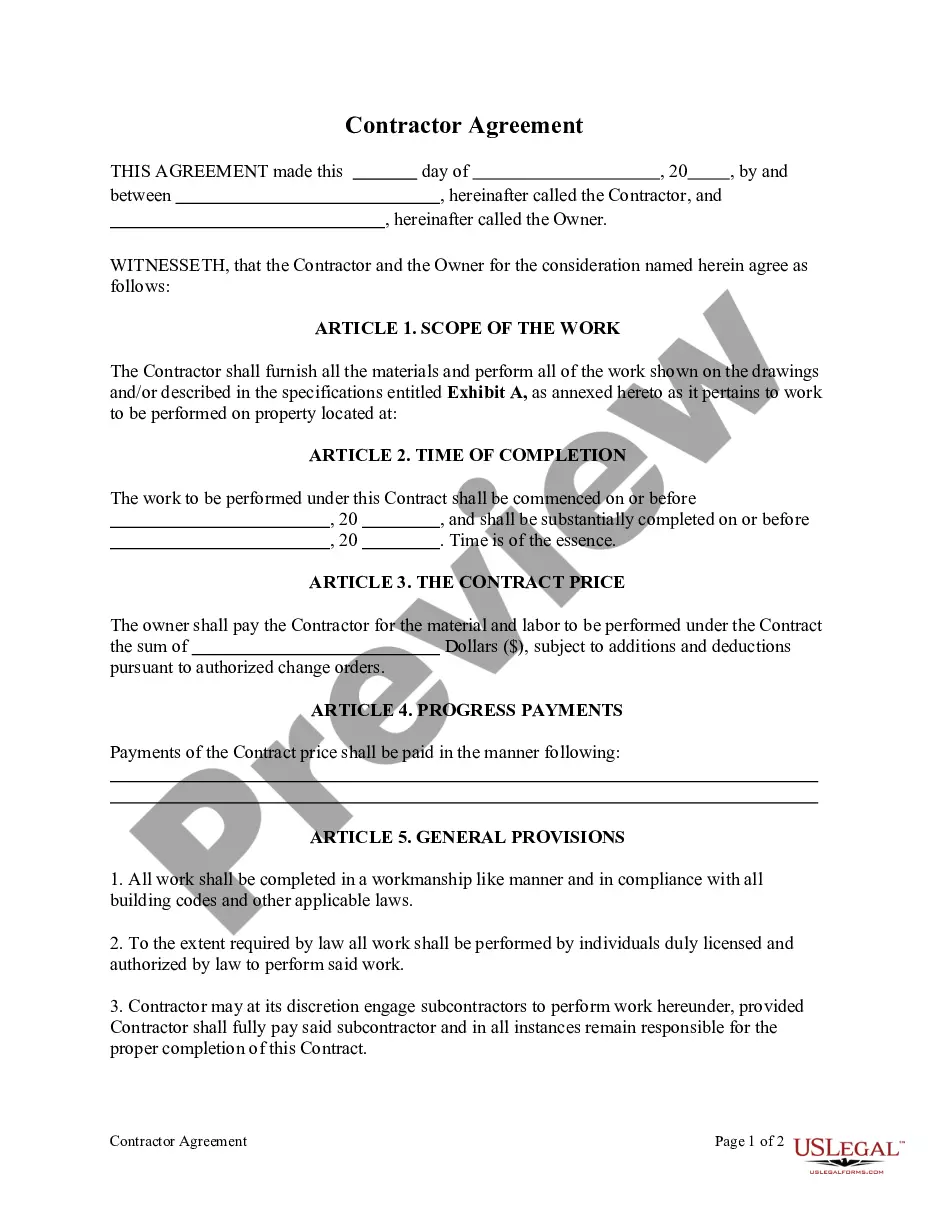
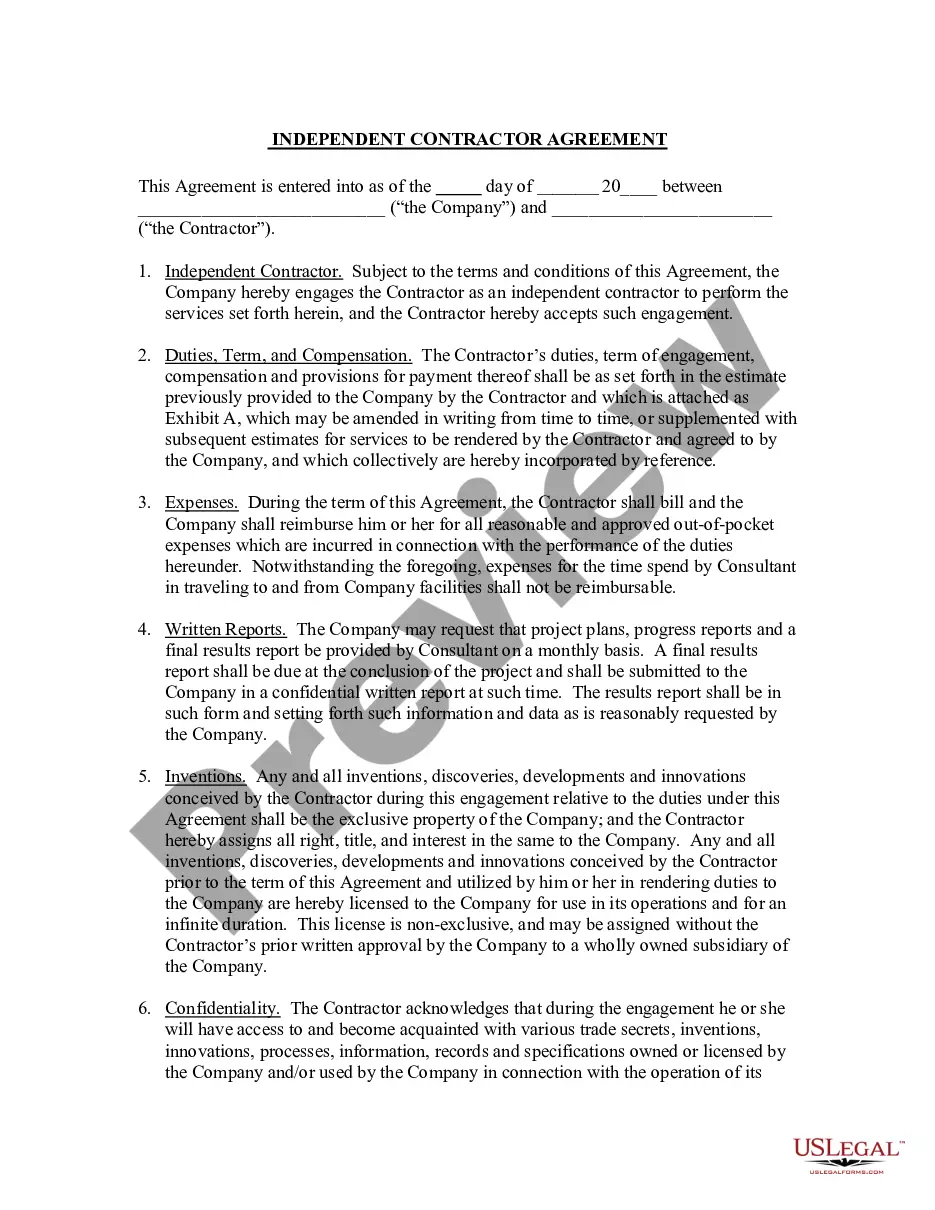
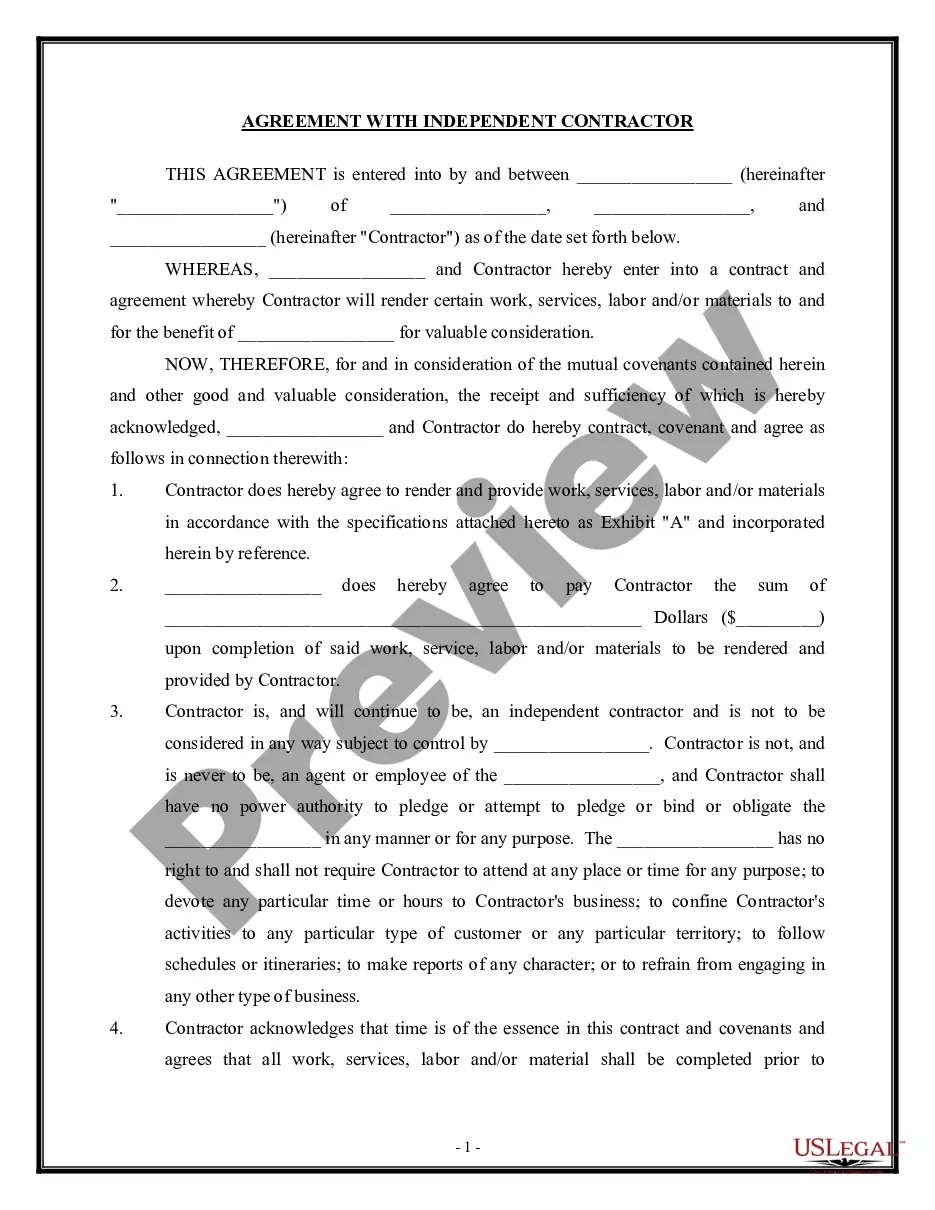
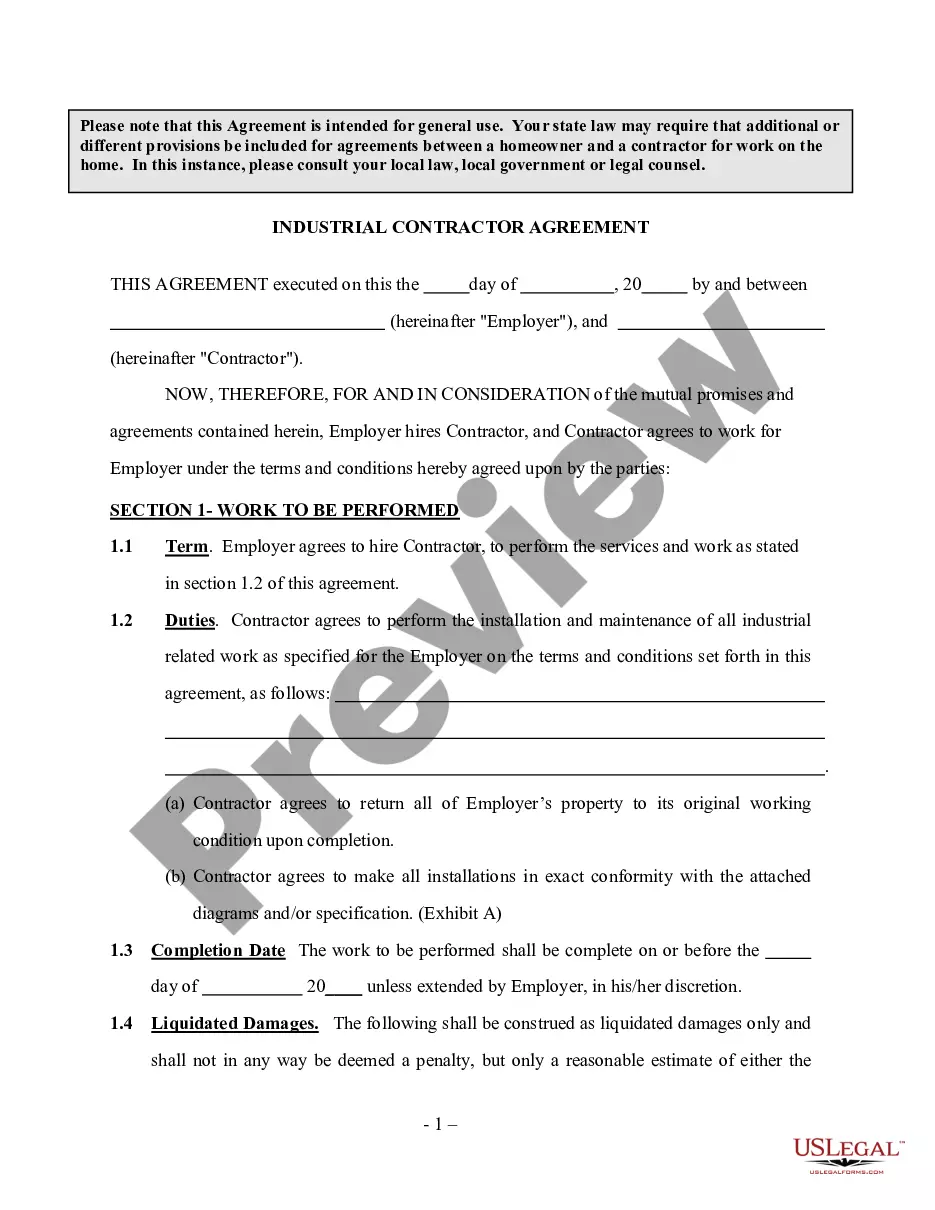
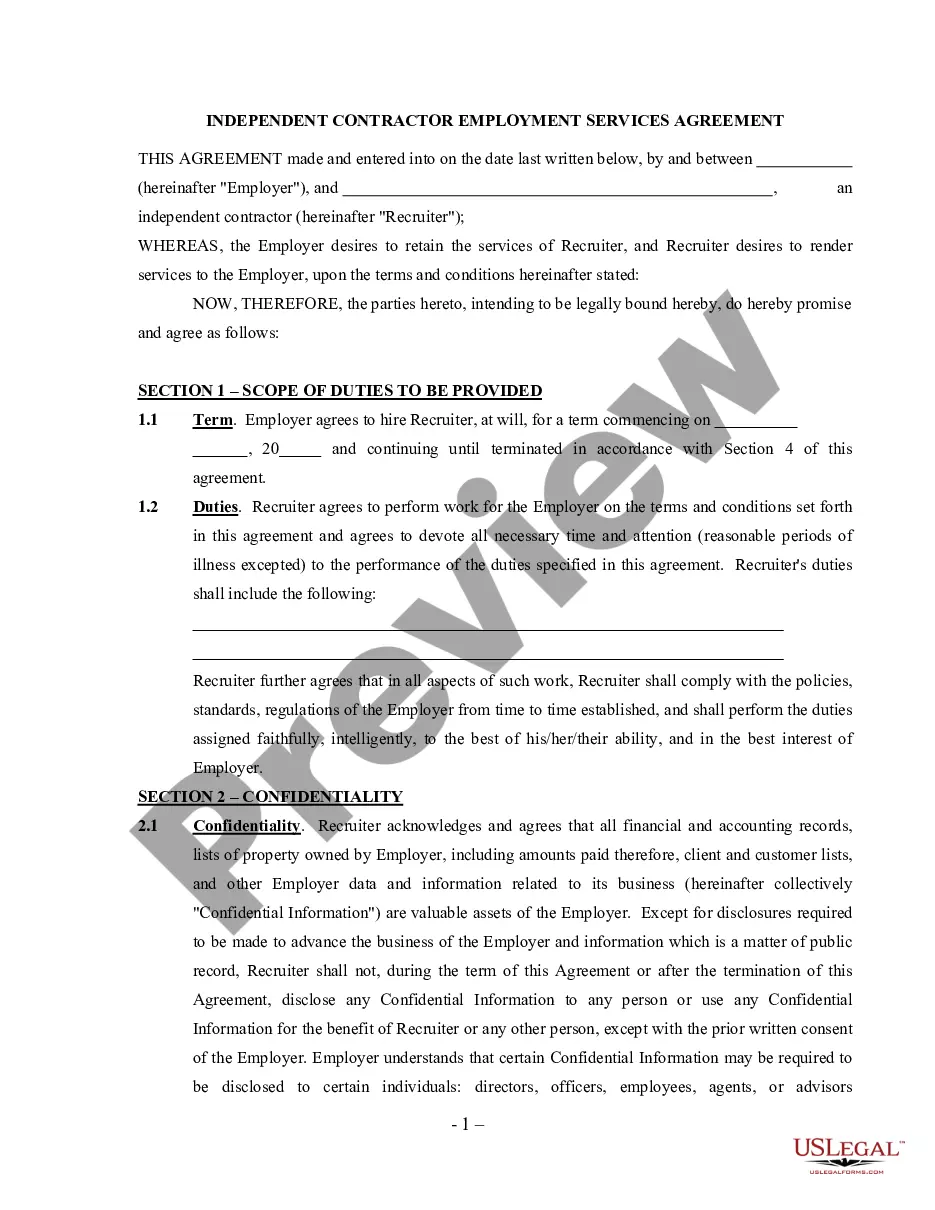
The Self-Employed Independent Contractor Employment Agreement - General is a legal document that sets forth the terms under which a contractor is hired by a company. This agreement outlines the contractor's responsibilities, compensation, confidentiality obligations, and the independent status of the contractor. It differs from employee contracts by emphasizing that the contractor is not considered an employee of the company, meaning they do not receive the same benefits or tax withholdings as traditional employees. This form is essential for establishing a clear professional relationship and protecting both parties involved.
What’s included in this form
- Work to be performed: Specifies the duration, duties, and commitment of the contractor to the company.
- Confidentiality: Details the contractor's obligation to protect the company's confidential information.
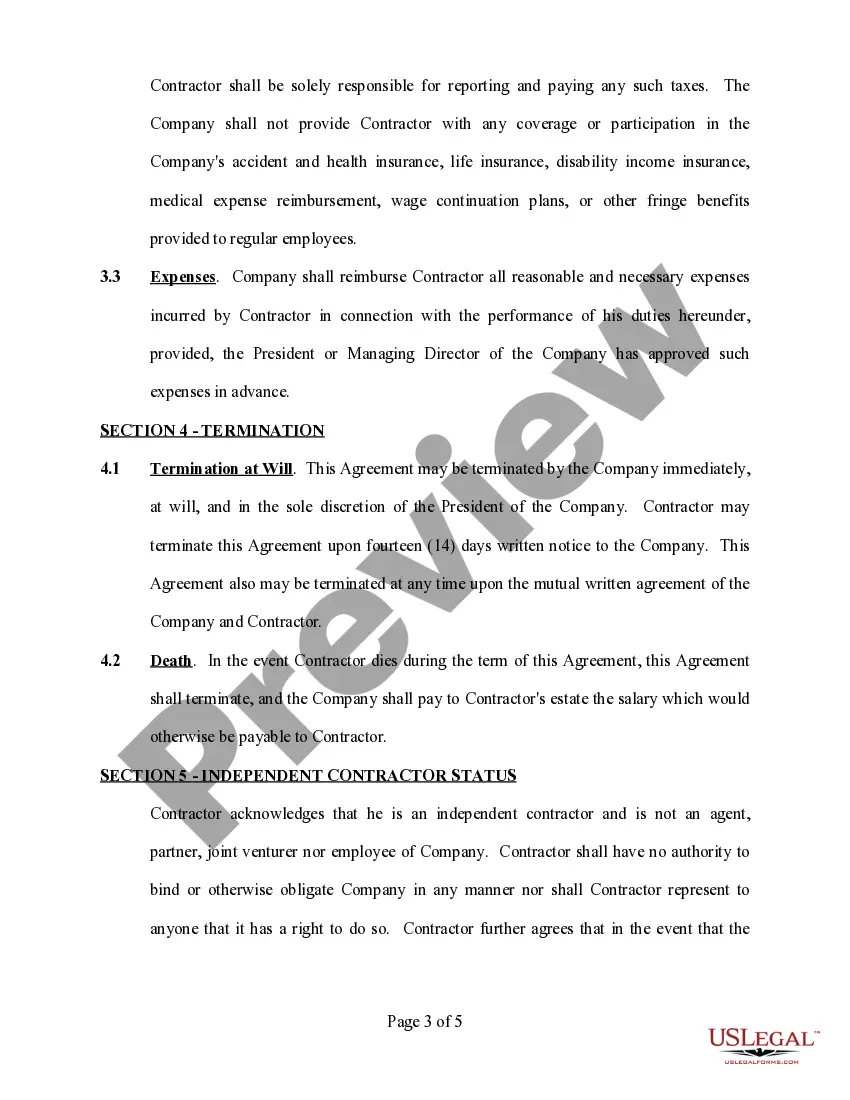
- Compensation: Outlines the payment structure and reimbursement for expenses incurred during work.
- Termination: Describes the conditions under which the agreement can be terminated by either party.
- Independent contractor status: Clarifies the contractor's status and limitations regarding binding the company.
Situations where this form applies
This form is needed when a company intends to hire a contractor for specific work or projects while maintaining independent contractor status. It is particularly useful in scenarios such as project-based work, freelance services, consulting roles, or any situation where a company wants to engage a self-employed individual without establishing an employer-employee relationship. Using this form helps both parties understand their rights and responsibilities, reducing the risk of disputes later on.
Who this form is for
- Companies seeking to hire independent contractors for specific tasks or projects.
- Self-employed individuals who want to formalize their working relationship with a client or company.
- Freelancers or consultants looking for clarity on their compensation and duties.
- Businesses that want to protect their confidential information while working with contractors.
How to prepare this document
- Identify the parties involved: Fill in the company name and contractor's name in the appropriate sections.
- Specify the start date of the agreement and any applicable terms related to the duration of the work.
- Outline the contractor's specific duties and responsibilities to ensure clarity.
- Detail the compensation structure, including payment rates and expense reimbursement procedures.
- Include any important confidentiality stipulations that both parties must agree to.
- Review the termination clauses to understand how either party can exit the agreement.
Notarization guidance
In most cases, this form does not require notarization. However, some jurisdictions or signing circumstances might. US Legal Forms offers online notarization powered by Notarize, accessible 24/7 for a quick, remote process.
Get your form ready online
Our built-in tools help you complete, sign, share, and store your documents in one place.
Make edits, fill in missing information, and update formatting in US Legal Forms—just like you would in MS Word.
Download a copy, print it, send it by email, or mail it via USPS—whatever works best for your next step.
Sign and collect signatures with our SignNow integration. Send to multiple recipients, set reminders, and more. Go Premium to unlock E-Sign.
If this form requires notarization, complete it online through a secure video call—no need to meet a notary in person or wait for an appointment.
We protect your documents and personal data by following strict security and privacy standards.

Make edits, fill in missing information, and update formatting in US Legal Forms—just like you would in MS Word.

Download a copy, print it, send it by email, or mail it via USPS—whatever works best for your next step.

Sign and collect signatures with our SignNow integration. Send to multiple recipients, set reminders, and more. Go Premium to unlock E-Sign.

If this form requires notarization, complete it online through a secure video call—no need to meet a notary in person or wait for an appointment.

We protect your documents and personal data by following strict security and privacy standards.
Avoid these common issues
- Failing to clearly define the contractor's duties can lead to confusion later.
- Not specifying the compensation details, which can cause payment disputes.
- Neglecting to include confidentiality clauses can risk sensitive company information.
- Forgetting to review the termination rights of both parties before signing.
Advantages of online completion
- Convenience of downloading and printing the agreement at your discretion.
- Editability allows for customization to fit specific terms and conditions.
- Access to professionally drafted forms ensures legal reliability and thoroughness.
- Quick transaction that saves time compared to traditional legal services.
Legal use & context
- Understanding and adhering to the terms outlined protects both parties from disputes.
- This agreement can serve as a reference in case of legal disputes regarding employment status.
- It establishes clear expectations for both the contractor and the company, promoting a healthy working relationship.
Summary of main points
- The agreement clearly defines the roles and responsibilities of both the contractor and the company.
- It's essential for protecting sensitive company information through confidentiality clauses.
- This form can help avoid misclassification of workers and ensure compliance with labor laws.
Looking for another form?
Form popularity
FAQ
This form is a legal agreement that sets the terms under which a self-employed contractor is hired by a company. It clarifies the contractor's duties, how they will be paid, and confidentiality obligations, while affirming the contractor's independent status. Used when engaging a contractor for specific work on a project, it helps define the relationship and protect both parties.
At a minimum, this form documents five key components: Work to be performed, Confidentiality, Compensation, Termination, and Independent contractor status. It also helps specify duration, duties, and commitment, while ensuring the contractor is not treated as an employee. Together, these provisions establish expectations, protect confidential information, and prevent misclassification disputes.
Look for clear description of the work to be done, explicit confidentiality obligations, how and when payments are made (including expense reimbursement), conditions under which the agreement can be terminated, and a firm statement of the contractor’s independent status. These elements help ensure duties and compensation are understood and reduce risk of misclassification.
Confidentiality is central to this form. The agreement requires the contractor to protect the company’s confidential information, so sensitive details about clients, trade secrets, or internal processes should not be disclosed. Practically, only information necessary to perform the work should be shared, and confidential material should be safeguarded as required by the contract.
This form’s Compensation clause describes the payment structure and the reimbursement of reasonable expenses when engaging a self-employed contractor. It does not set or alter the legality of cash payments under local law. For cash payments and compliance, consult a licensed attorney or review applicable state and local requirements.
This form is designed to govern relationships with independent contractors, not employees. It explicitly states the contractor’s independent status, which means the party typically does not receive employee benefits or tax withholdings. It also emphasizes confidentiality and project-based work terms, helping to prevent an employer-employee relationship from arising.