Employee Handbook Acknowledgment
About this form
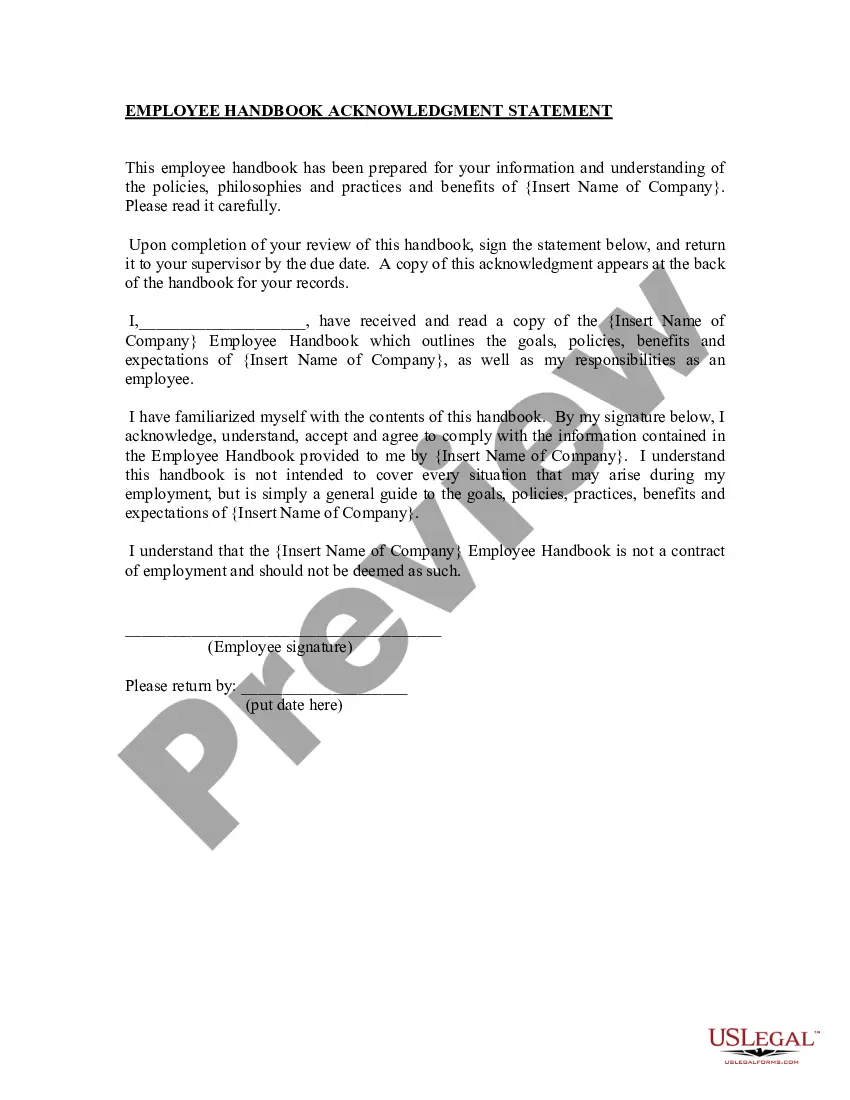
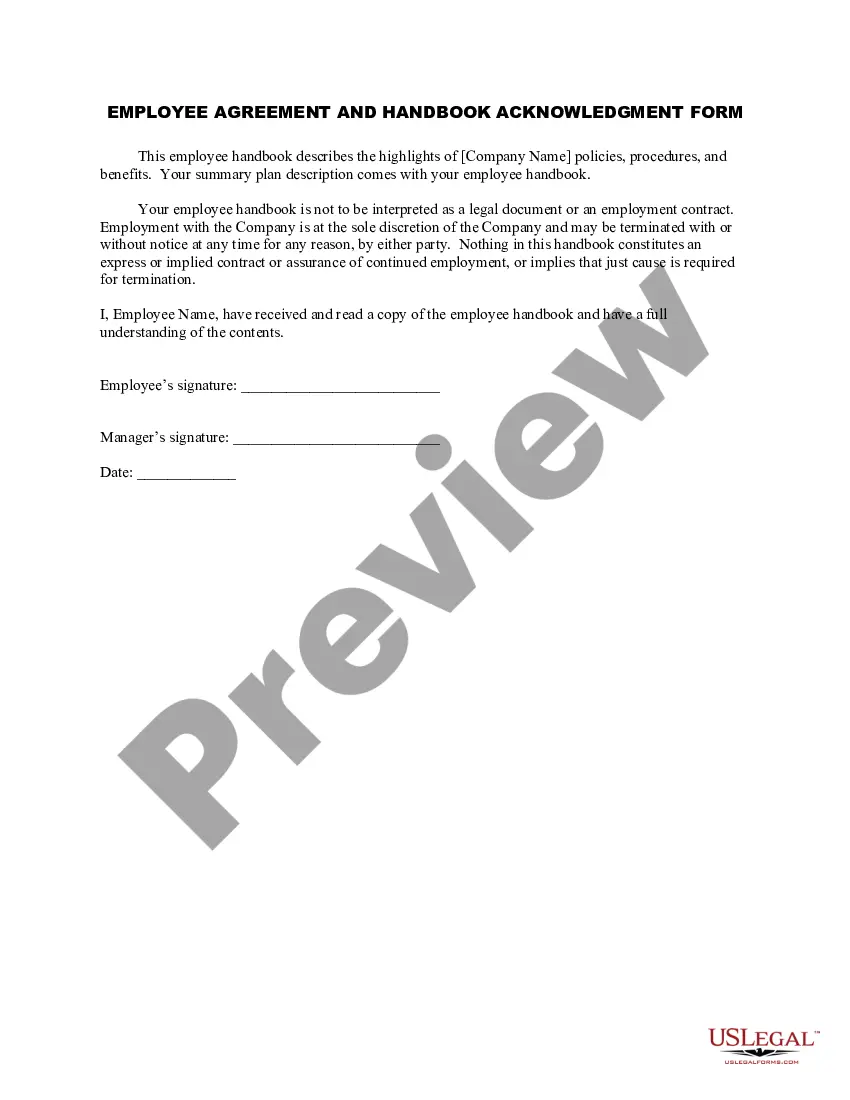
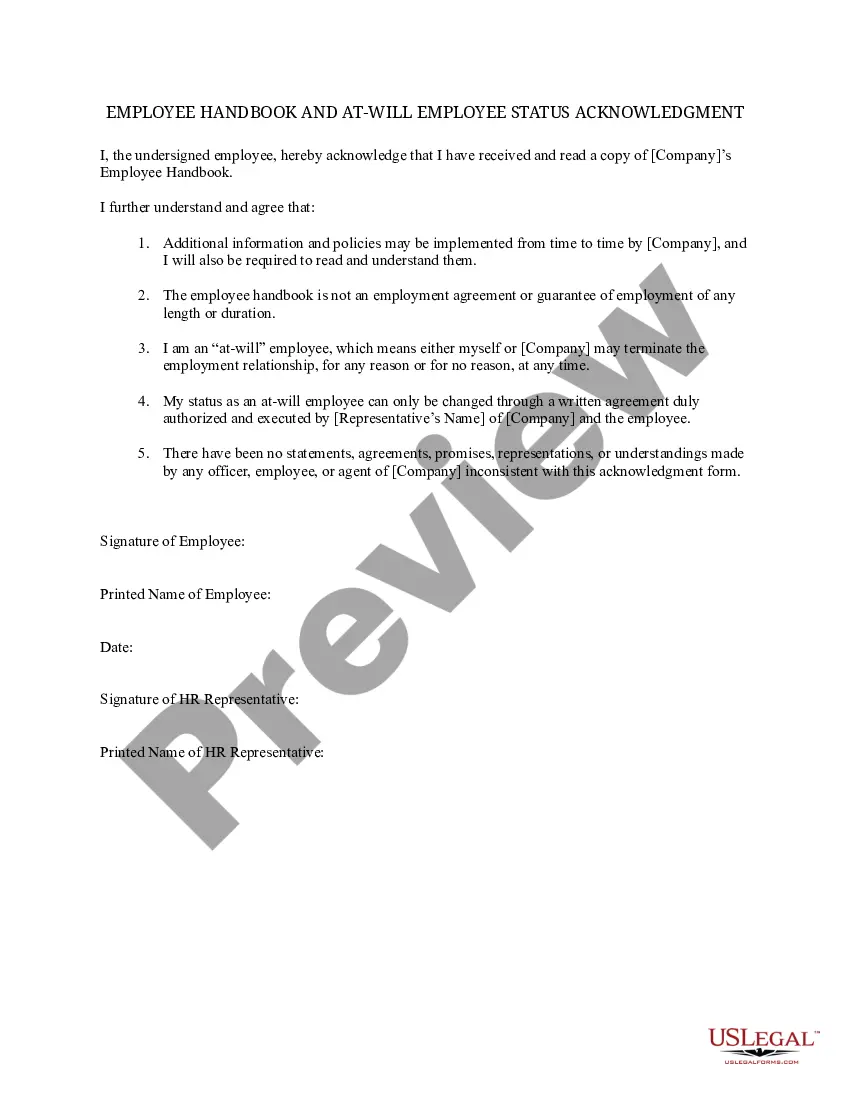
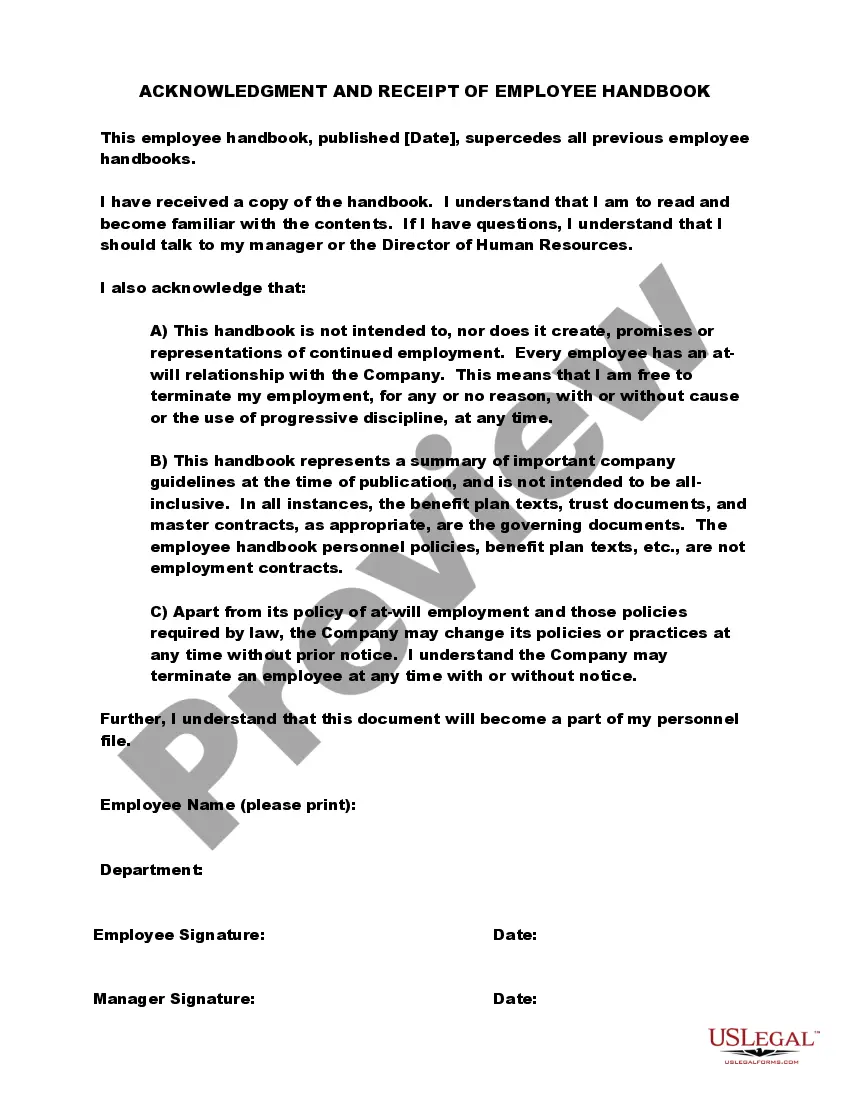
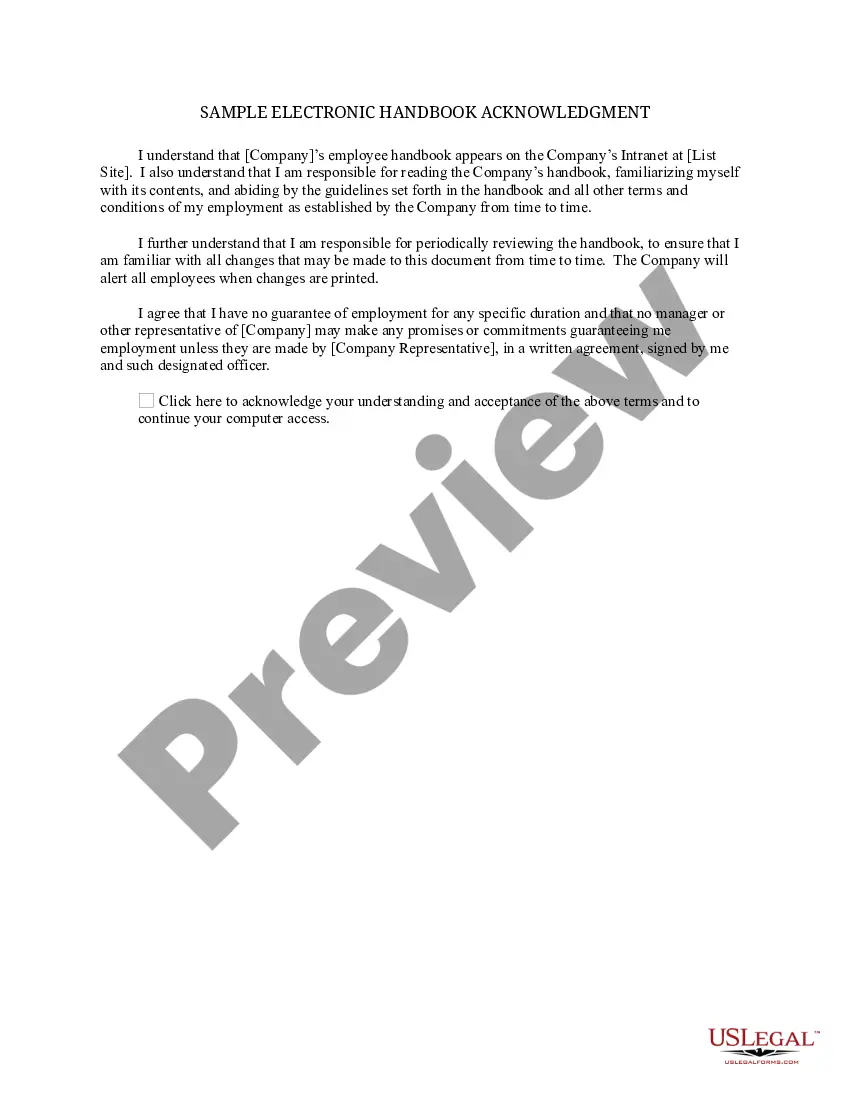
The Employee Handbook Acknowledgment form serves as a confirmation that an employee has received and read their company's employee handbook. This form is essential for ensuring that employees are aware of the policies, procedures, and expectations outlined in the handbook, thereby fostering a clear understanding of workplace guidelines. Unlike other employment-related forms, this acknowledgment specifically focuses on the receipt and understanding of the handbook content, which may include important company policies and employee rights.
Key components of this form
- Section for the employeeâs name and signature confirming receipt of the handbook.
- Date line indicating when the acknowledgment should be returned.
- Clear statement that the handbook is not a contract of employment.
- Statement highlighting that the handbook serves as a general guide for the company's policies and expectations.
- Optional inclusion of a copy of the acknowledgment for the employeeâs records.
Situations where this form applies
This form should be used whenever a company provides an employee handbook to its staff. It is particularly important during onboarding processes, when new employees start, or when existing employees receive a revised version of the handbook. By utilizing this form, companies can ensure that each employee acknowledges their understanding of the company policies and their responsibilities, which protects both the employer and employee in the workplace.
Who needs this form
- Employers looking to ensure compliance with workplace policies.
- Human resources personnel managing employee records and onboarding processes.
- Employees who are required to acknowledge receipt of the employee handbook.
- Organizations implementing updates to existing employee handbooks.
- Any business needing to clarify expectations between employees and management.
How to prepare this document
- Read the employee handbook thoroughly to understand the company policies.
- Fill in your name in the designated space on the acknowledgment form.
- Sign the form to confirm that you have received and read the handbook.
- Write the date by which the acknowledgment needs to be returned.
- Submit the signed acknowledgment to your supervisor by the specified due date.
Does this document require notarization?
In most cases, this form does not require notarization. However, some jurisdictions or signing circumstances might. US Legal Forms offers online notarization powered by Notarize, accessible 24/7 for a quick, remote process.
Get your form ready online
Our built-in tools help you complete, sign, share, and store your documents in one place.
Make edits, fill in missing information, and update formatting in US Legal Forms—just like you would in MS Word.
Download a copy, print it, send it by email, or mail it via USPS—whatever works best for your next step.
Sign and collect signatures with our SignNow integration. Send to multiple recipients, set reminders, and more. Go Premium to unlock E-Sign.
If this form requires notarization, complete it online through a secure video call—no need to meet a notary in person or wait for an appointment.
We protect your documents and personal data by following strict security and privacy standards.

Make edits, fill in missing information, and update formatting in US Legal Forms—just like you would in MS Word.

Download a copy, print it, send it by email, or mail it via USPS—whatever works best for your next step.

Sign and collect signatures with our SignNow integration. Send to multiple recipients, set reminders, and more. Go Premium to unlock E-Sign.

If this form requires notarization, complete it online through a secure video call—no need to meet a notary in person or wait for an appointment.

We protect your documents and personal data by following strict security and privacy standards.
Typical mistakes to avoid
- Not reading the handbook carefully before signing the acknowledgment.
- Failing to return the signed acknowledgment by the due date.
- Leaving the form unsigned, which invalidates the acknowledgment.
- Misunderstanding that the handbook represents a binding contract of employment.
Why complete this form online
- Instant access to the form, allowing for quick distribution to employees.
- Easy editing capabilities to tailor the form to specific company needs.
- Reliable storage options ensuring the acknowledgment is saved securely.
- Time-saving by allowing for digital signatures where applicable.
Legal use & context
- This form serves as a vital record to demonstrate that employees acknowledge company policies.
- It helps mitigate liability by providing evidence that employees are informed of their responsibilities.
- The form does not constitute a legally binding employment contract.
What to keep in mind
- The Employee Handbook Acknowledgment confirms an employee's understanding of company policies.
- It is essential for onboarding and later updates to the handbook.
- Employees should complete and return the acknowledgment promptly.
Looking for another form?

Form popularity
FAQ
This form confirms that an employee has received and read the company's Employee Handbook and that the handbook is a general guide, not a contract of employment. It is typically used during onboarding or after handbook updates to document the employee’s awareness of workplace policies and expectations.
Required entries include the employee’s full name, signature, and the date of acknowledgment. It should also include a clear statement that the handbook is not a contract of employment and that the handbook serves as a general guide for policies. An optional copy can be kept in the employee’s records.
To write the Employee Handbook Acknowledgment, fill in the employee’s name, sign and date the form, and include the non-contract language that the handbook is a general guide. If a copy is requested for records, provide one. Use this form during onboarding or when the handbook is updated.
An Employee Handbook Acknowledgment is a form used to confirm that an employee has received and read the handbook, understands its policies, and recognizes that the handbook is a general guide and not a contract of employment. It is often used during onboarding and whenever the handbook is updated.
An example of a completed Employee Handbook Acknowledgment might read: 'I, [Name], acknowledge receipt of the Employee Handbook dated [Date]. I have read and understand its policies, and I understand that the handbook is a general guide and not a contract of employment.' This demonstrates the form’s required elements.
It is specifically tied to the company handbook and includes language stating the handbook is not a contract of employment. It also supports onboarding and updates by documenting receipt and understanding of handbook policies, whereas a generic acknowledgment may not reference the handbook or contract status.