Employment Conditions Notice - Notice to Existing Employees of Flexibility in Working Arrangements
About this form
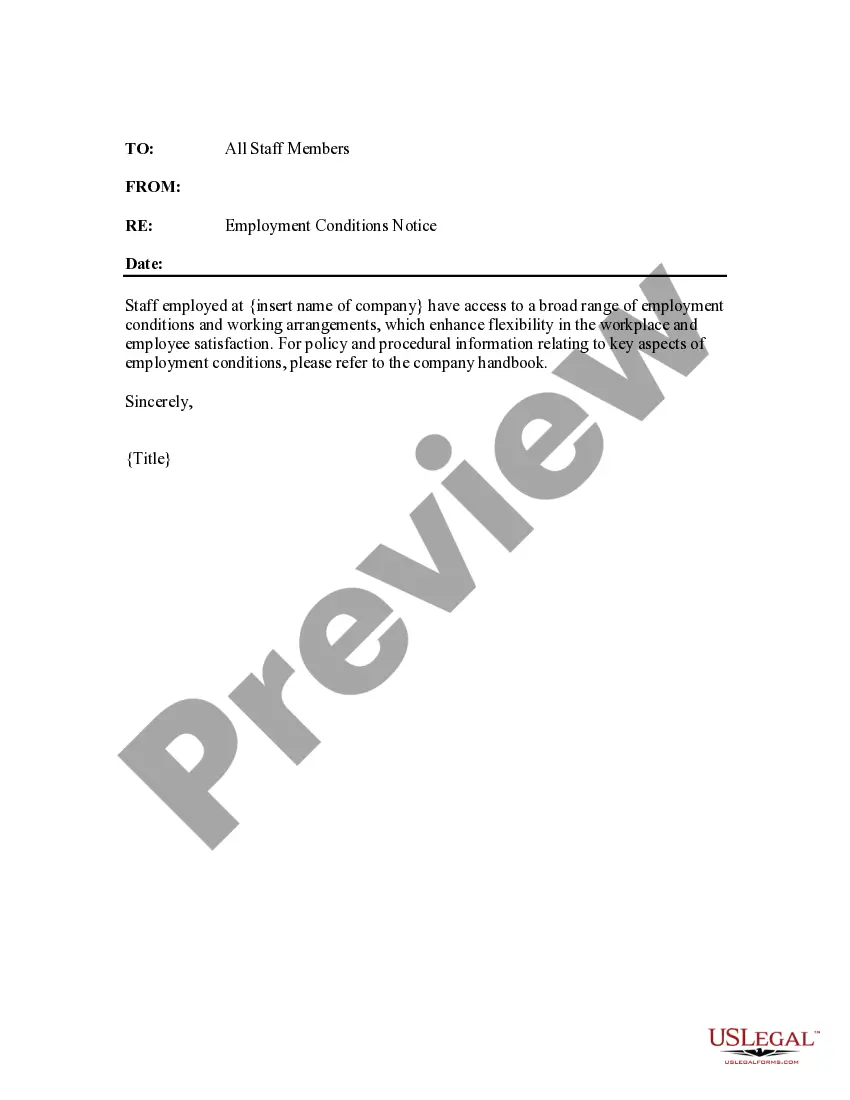
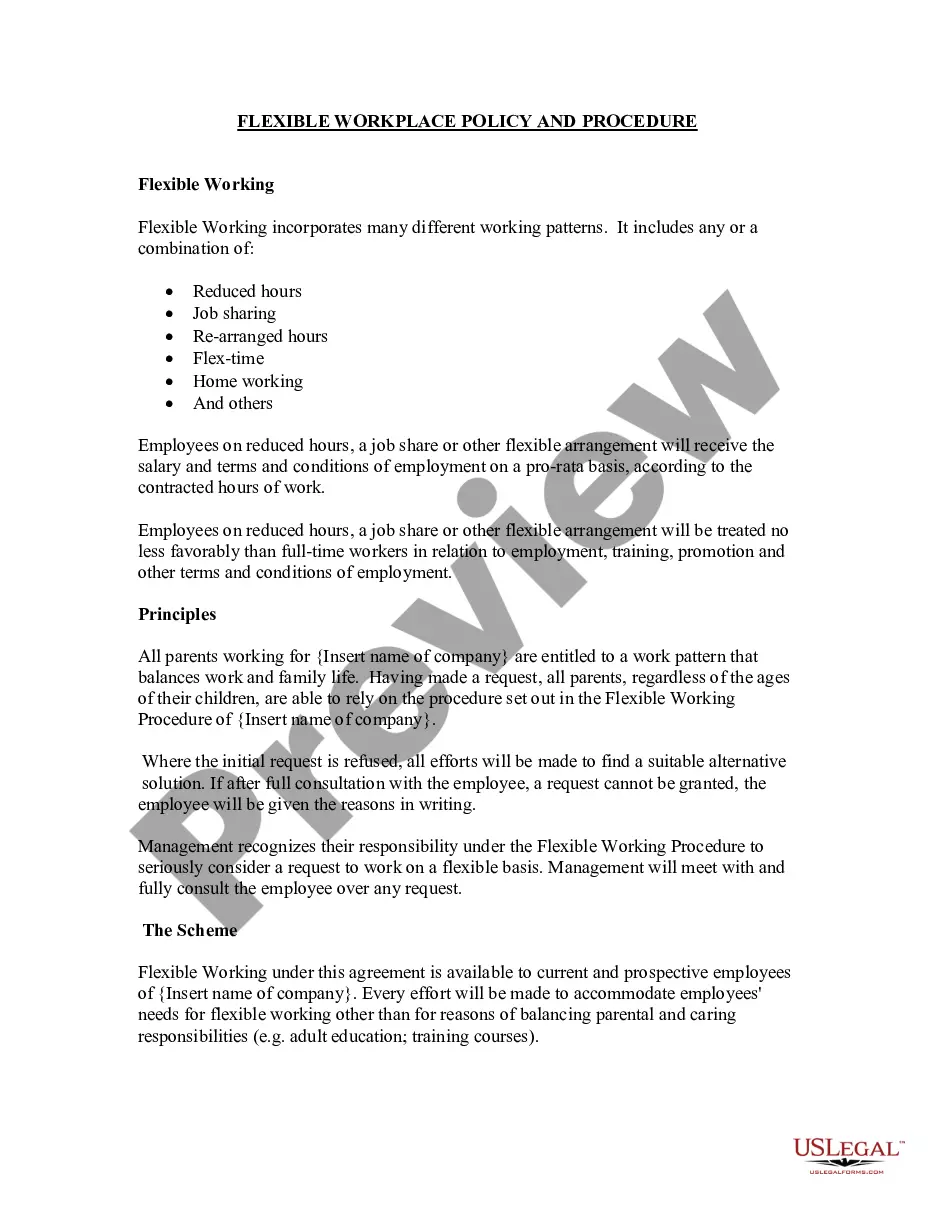
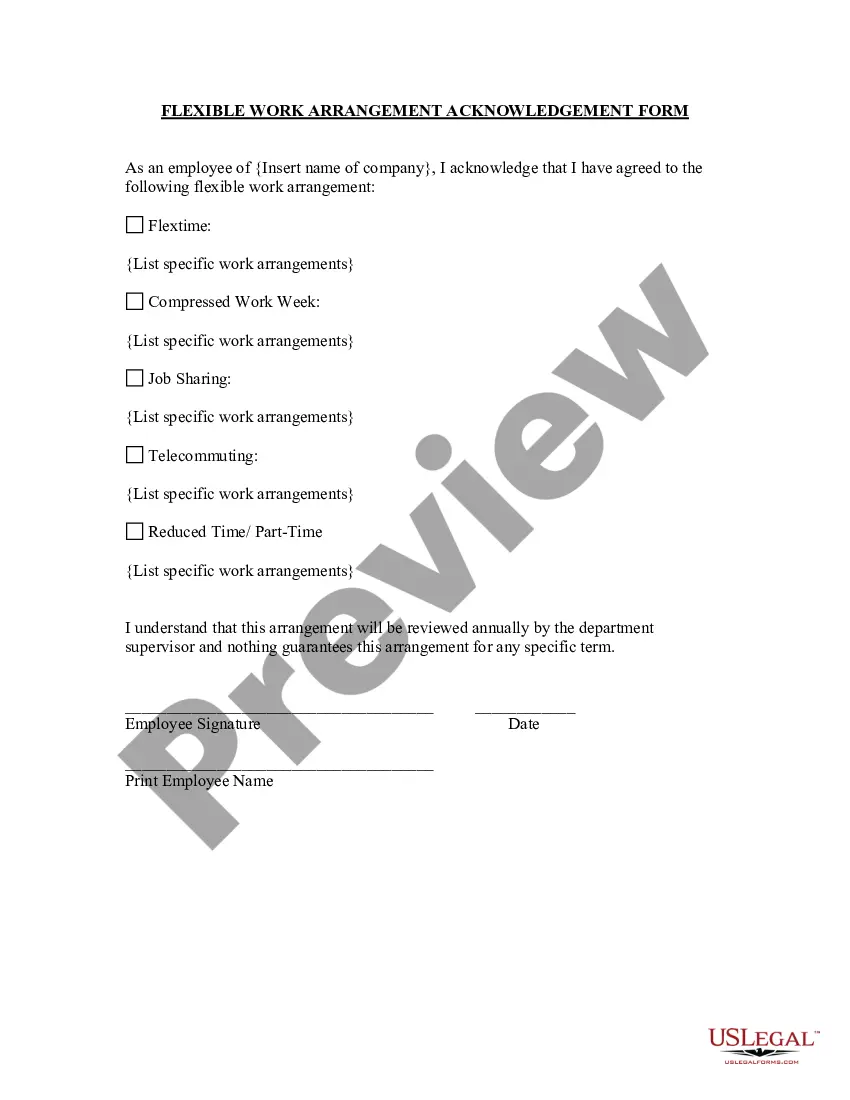
The Employment Conditions Notice - Notice to Existing Employees of Flexibility in Working Arrangements is a document that informs employees of updates or changes to their working conditions. This notice specifically provides guidance on how employees can find information about flexible working arrangements offered by their employer. Unlike other employment notices, this form focuses on communicating flexibility options to existing employees.
Form components explained
- Instructions for employees on where to access detailed information about employment conditions.
- Details regarding the specific flexibility options available to employees.
- Contact information for further inquiries or clarifications.
- Important dates related to the implementation of the flexible working arrangements.
- Signature line for management acknowledgement.
Common use cases
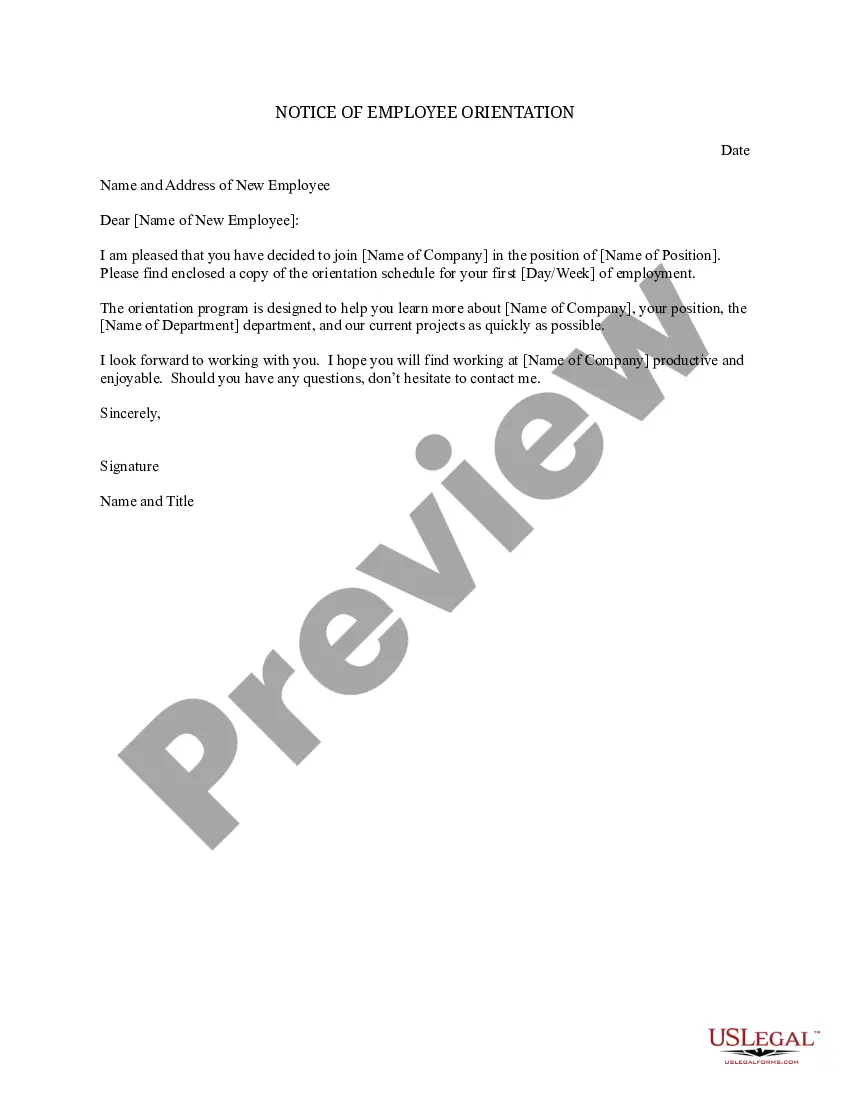
This form should be used when a company wants to formally inform its existing employees about the availability of flexible working arrangements. It is appropriate for organizations that are modifying their employment conditions or introducing new policies that affect their workforce. This notice helps ensure that all employees are aware of their options and the resources available to them.
Intended users of this form
This form is intended for:
- Employers who are implementing flexible working arrangements.
- Human resources professionals responsible for employee communications.
- Managers who need to update employees on changes in employment conditions.
Instructions for completing this form
- Review the list of flexible working arrangements and ensure the information is up to date.
- Fill in the contact details where employees can seek further information.
- Specify the important dates relevant to the flexible working arrangements.
- Provide a clear instruction on where to access more detailed employment condition information.
- Sign the notice where indicated to formally acknowledge the communication.
Notarization requirements for this form
This form does not typically require notarization unless specified by local law. It is crucial to verify state-specific regulations to ensure compliance.
Get your form ready online
Our built-in tools help you complete, sign, share, and store your documents in one place.
Make edits, fill in missing information, and update formatting in US Legal Forms—just like you would in MS Word.
Download a copy, print it, send it by email, or mail it via USPS—whatever works best for your next step.
Sign and collect signatures with our SignNow integration. Send to multiple recipients, set reminders, and more. Go Premium to unlock E-Sign.
If this form requires notarization, complete it online through a secure video call—no need to meet a notary in person or wait for an appointment.
We protect your documents and personal data by following strict security and privacy standards.

Make edits, fill in missing information, and update formatting in US Legal Forms—just like you would in MS Word.

Download a copy, print it, send it by email, or mail it via USPS—whatever works best for your next step.

Sign and collect signatures with our SignNow integration. Send to multiple recipients, set reminders, and more. Go Premium to unlock E-Sign.

If this form requires notarization, complete it online through a secure video call—no need to meet a notary in person or wait for an appointment.

We protect your documents and personal data by following strict security and privacy standards.
Mistakes to watch out for
- Not updating the document with the latest flexible working options.
- Forgetting to include contact information for follow-up inquiries.
- Neglecting to mention important implementation dates.
- Failing to distribute the notice to all affected employees.
Advantages of online completion
- Instant access to downloadable and editable templates.
- Convenient customization to fit specific organizational needs.
- Reliable guidance drafted by licensed attorneys to ensure legal compliance.
Legal use & context
- This form helps ensure compliance with employment laws related to flexible work arrangements.
- It serves as a formal record of communication regarding employment conditions.
Main things to remember
- The Employment Conditions Notice outlines flexible working options for employees.
- This form helps employers keep their workforce informed and compliant.
- It is essential to ensure the information is clear, up to date, and accessible.
Looking for another form?
Form popularity
FAQ
A contract of employment is a legal agreement between the employer and the employee. Its terms cannot lawfully be changed by the employer without agreement from the employee (either individually or through a recognised trade union).Your employer should not breach equality laws when changing contract terms.
Telecommuting or working remotely. With this type of flexible working arrangement, the employer does not dictate where the employee is located to do the work. Shortened workweek through a compressed work schedule. Adjusted work hours. Part-time work. Job sharing. Vacation time flexibility.
Some employees may ask, Can my employer change my flexible working agreement? The short answer is no.They may also ask, Can an employer withdraw a flexible working agreement? No. You can't change the terms and conditions without the employee's consent in general unless there is a flexibility clause.
By law, you have the right to make a flexible working request if: you've worked for your employer for at least 26 weeks. you're legally classed as an employee. you've not made any other flexible working request in the last 12 months.
Employers can refuse an application to work flexibly only if there is a valid business reason, such as: the burden of additional costs; inability to meet customer demand or reorganise work among other employees; detrimental effect on quality or performance; insufficient work when the employee proposes to work, etc.
By law, you have the right to make a flexible working request if: you've worked for your employer for at least 26 weeks. you're legally classed as an employee. you've not made any other flexible working request in the last 12 months.
Flex time. Reduced hours/Part-time. Compressed work week. Telework/Working Remotely/Telecommuting. Job sharing. Banking of Hours/ Annualized hours. Gradual Retirement. Leaves and Sabbaticals.
Create a flexible working hours policy. Once you've created your policy, share it with your employees. Document flexible working terms. Guide your staff. Assess your line managers support. Communicate changes clearly. Measure employee performance. Listen to your people. Flexibility is key.
If your employer agrees to your flexible working request, it will mean a permanent change to your contract. You can both agree a trial period to make sure the new arrangements work. If you don't want to make a permanent change to your contract, you might be able to agree a temporary change with your employer.