Discrimination Complaint Form for Employee to Employer Company
About this form
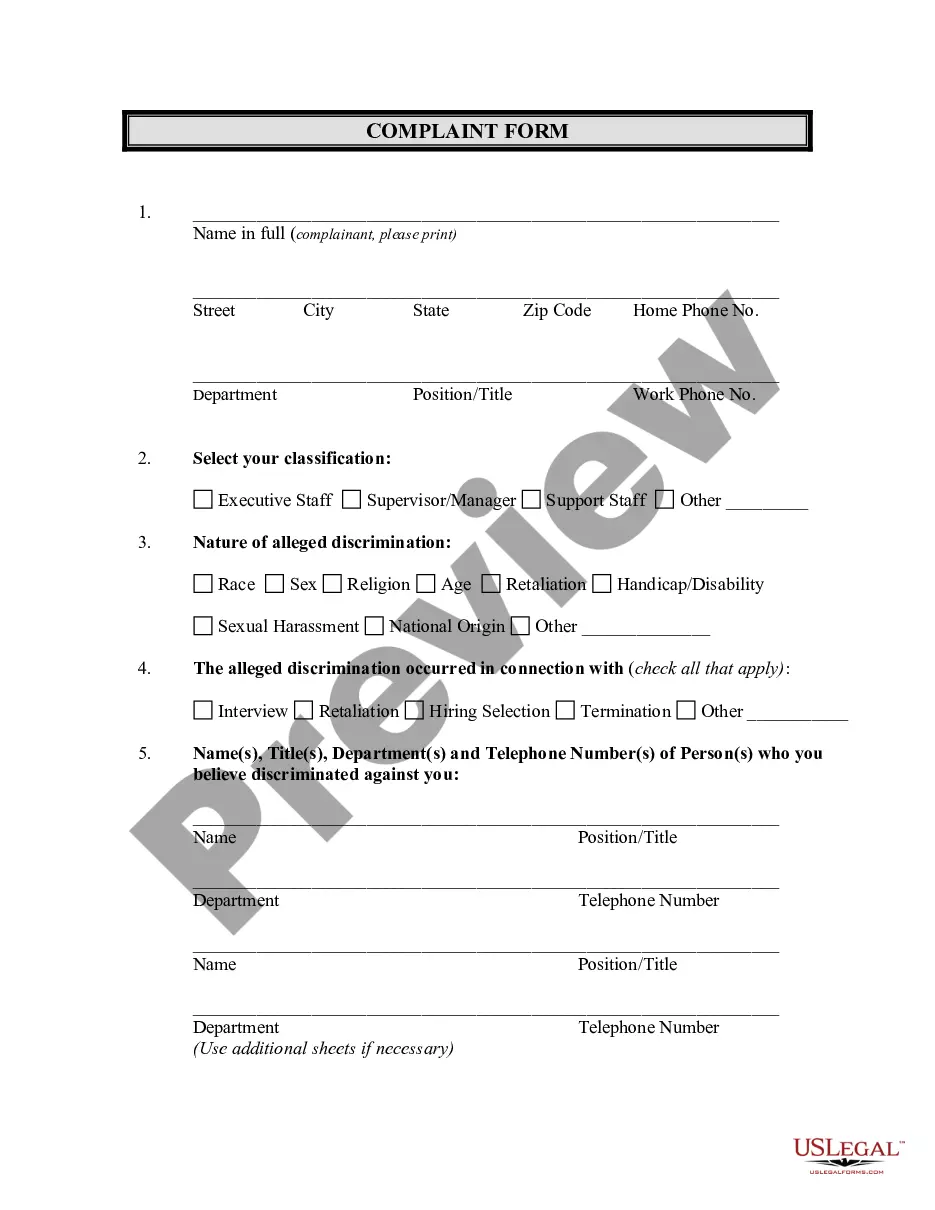
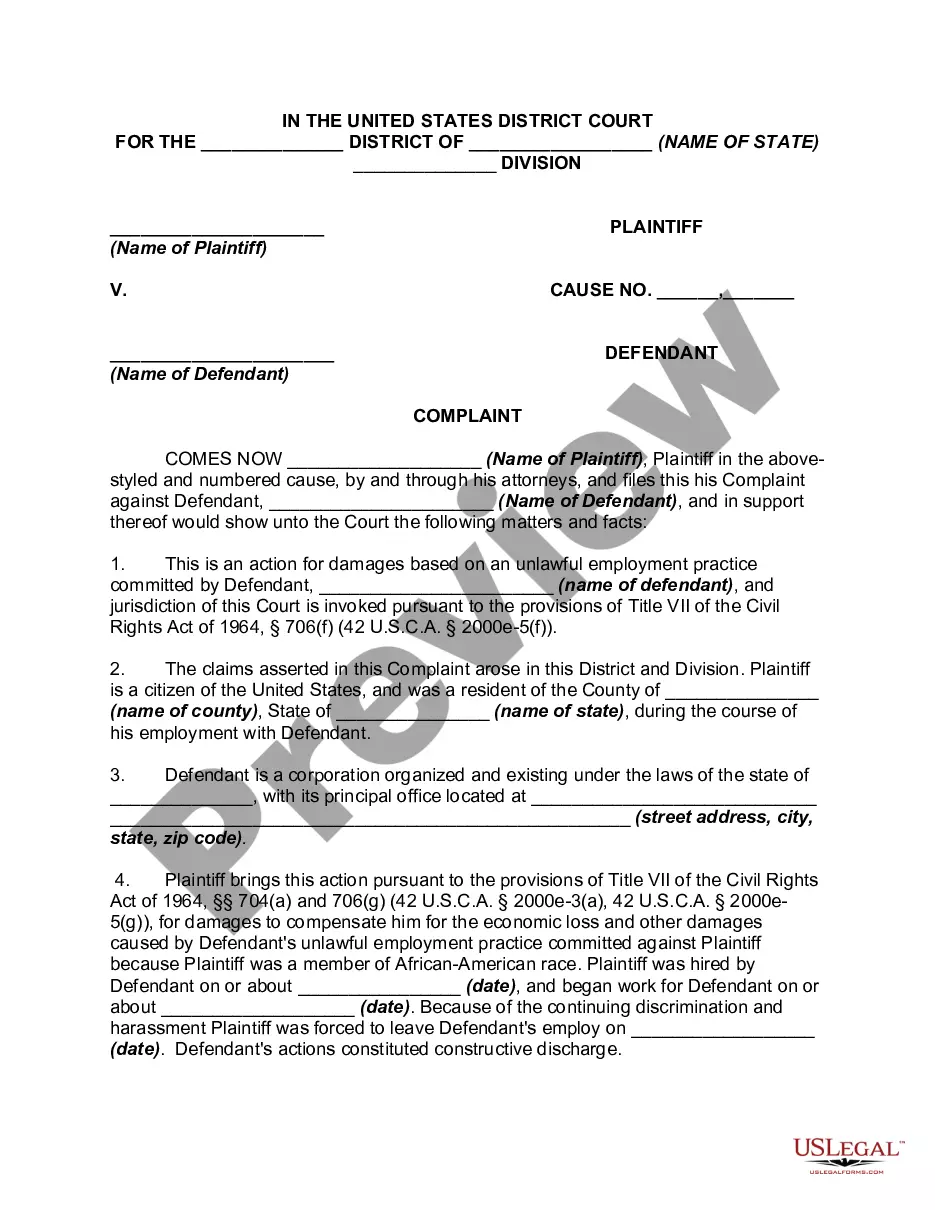
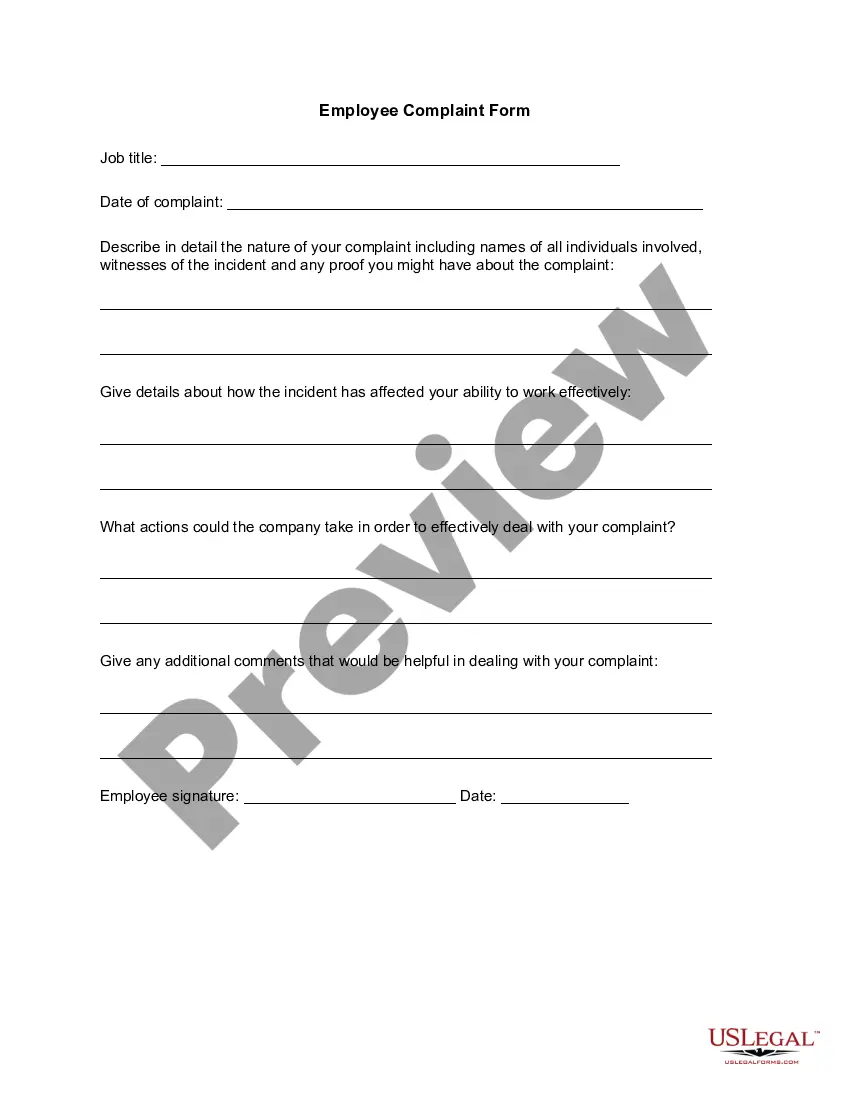
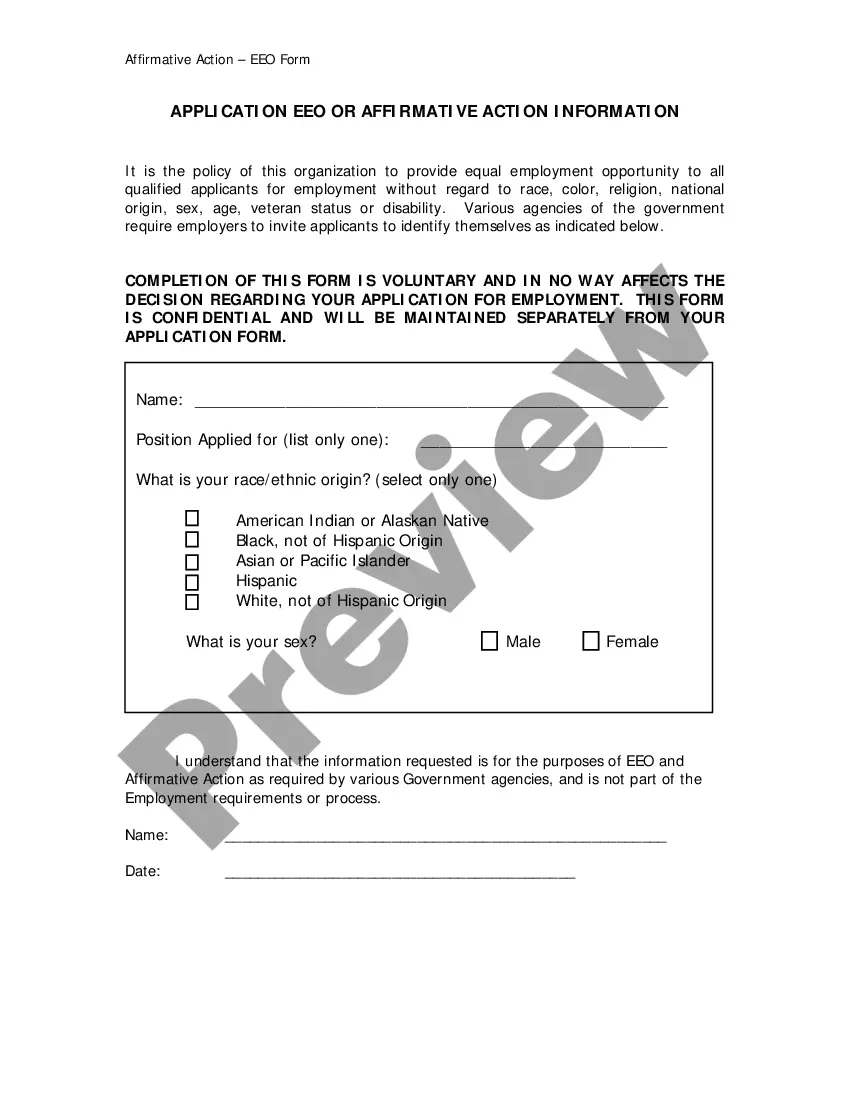
The Discrimination Complaint Form for Employee to Employer Company is a legal document that allows employees to formally report instances of discrimination within their workplace. This form is essential for initiating a complaint and differs from informal grievance procedures by providing a structured method for filing serious allegations against an employer. This form ensures that the complaint is documented and submitted to the human resources department for further investigation and resolution.
Key components of this form
- Name and contact information of the complainant
- Description of the complainant's job title and department
- Classification of the employee within the organization
- Specific nature of the alleged discrimination
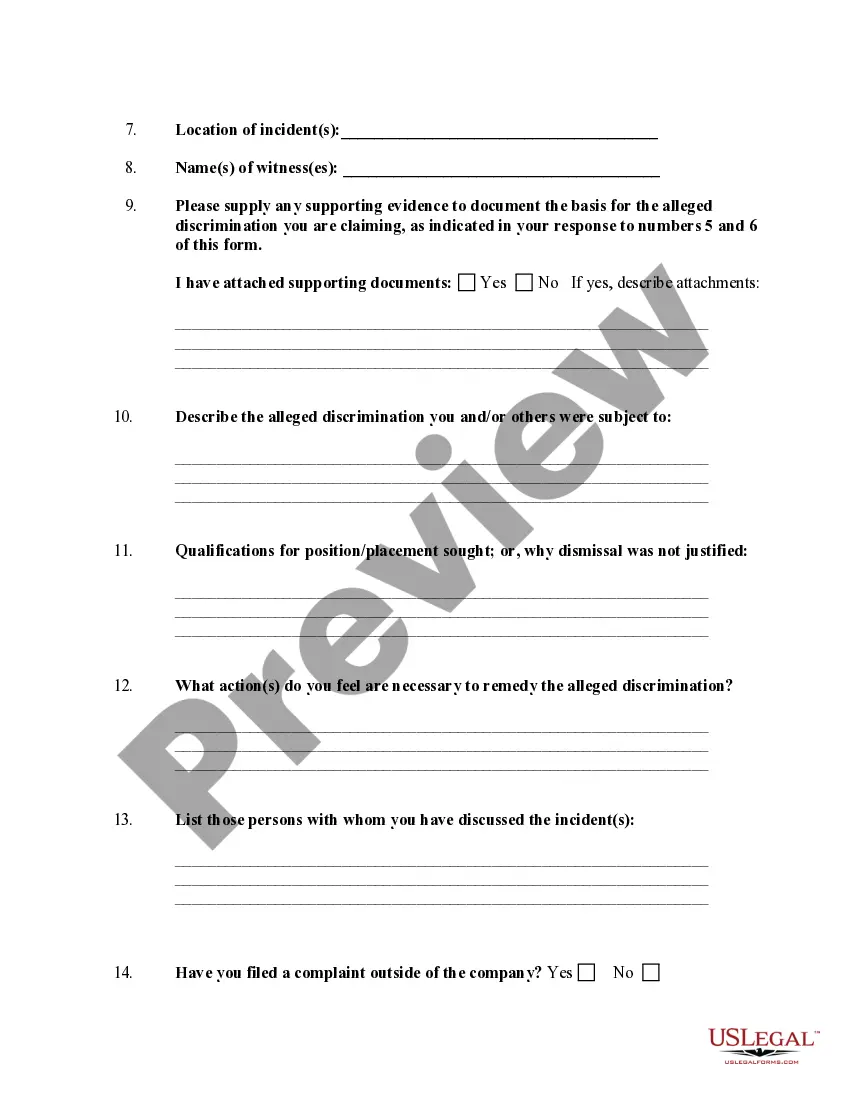
- Details of the incident, including date and location
- Information about witnesses and any supporting evidence
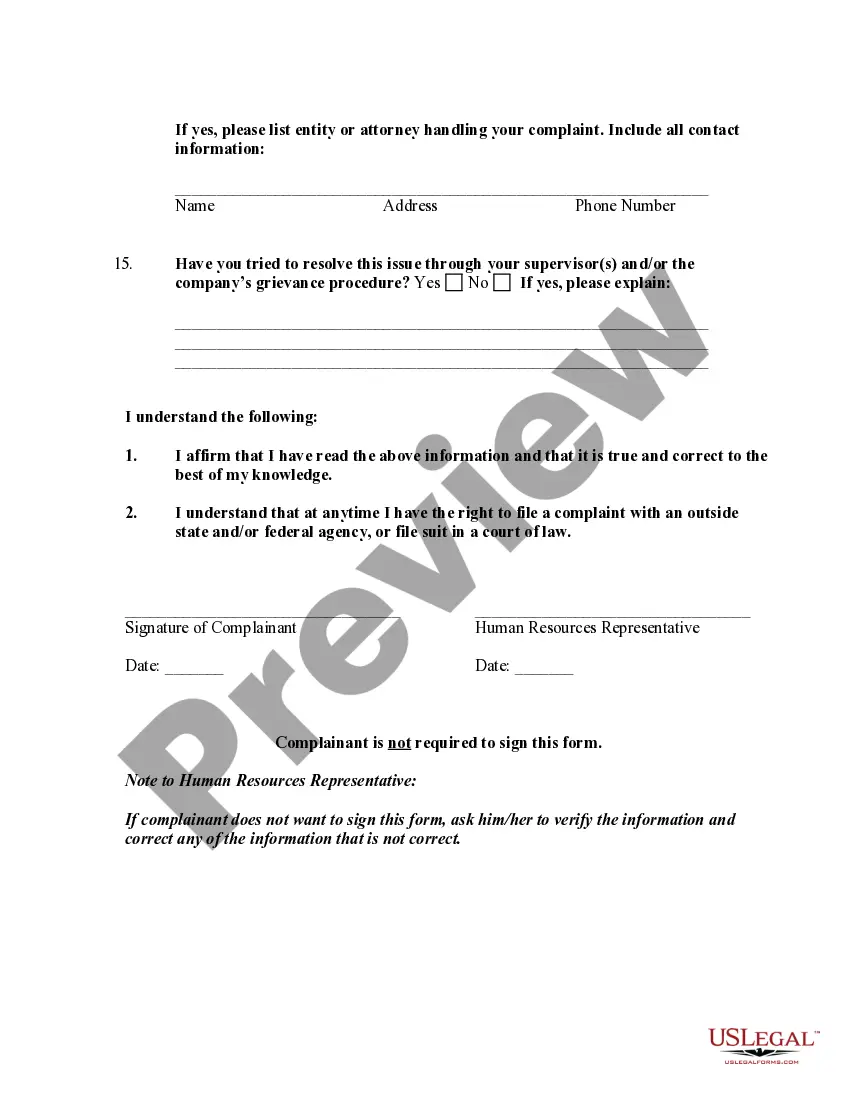
- Actions the complainant seeks to remedy the situation
Common use cases
This form should be used when an employee believes they have experienced discrimination based on factors such as race, gender, religion, age, or disability, among others. It is applicable when the employee wishes to formally document and report their grievances to human resources. Situations may include unfair treatment during hiring, promotions, evaluations, or other employment practices.
Who needs this form
- Employees who feel they have been discriminated against in the workplace
- Individuals seeking to formally document their complaints for internal resolution
- Workers who wish to pursue further actions involving legal or regulatory agencies
Steps to complete this form
- Begin by entering your full name and contact information in the designated fields.
- Indicate your job title, department, and employment classification.
- Select the type of discrimination you are alleging from the provided options.
- Provide details about the incident, including the date, location, and any witnesses.
- Attach supporting documentation that substantiates your complaint, if available.
- Finally, sign and date the form, verifying that the information is accurate.
Is notarization required?
Notarization is not commonly needed for this form. However, certain documents or local rules may make it necessary. Our notarization service, powered by Notarize, allows you to finalize it securely online anytime, day or night.
Get your form ready online
Our built-in tools help you complete, sign, share, and store your documents in one place.
Make edits, fill in missing information, and update formatting in US Legal Forms—just like you would in MS Word.
Download a copy, print it, send it by email, or mail it via USPS—whatever works best for your next step.
Sign and collect signatures with our SignNow integration. Send to multiple recipients, set reminders, and more. Go Premium to unlock E-Sign.
If this form requires notarization, complete it online through a secure video call—no need to meet a notary in person or wait for an appointment.
We protect your documents and personal data by following strict security and privacy standards.

Make edits, fill in missing information, and update formatting in US Legal Forms—just like you would in MS Word.

Download a copy, print it, send it by email, or mail it via USPS—whatever works best for your next step.

Sign and collect signatures with our SignNow integration. Send to multiple recipients, set reminders, and more. Go Premium to unlock E-Sign.

If this form requires notarization, complete it online through a secure video call—no need to meet a notary in person or wait for an appointment.

We protect your documents and personal data by following strict security and privacy standards.
Typical mistakes to avoid
- Failing to provide complete contact information.
- Not specifying the nature of the discrimination clearly.
- Neglecting to detail relevant dates and locations of incidents.
- Omitting witness information or supporting evidence.
- Not signing or dating the form if applicable.
Why use this form online
- Convenient access to the form at any time.
- Ability to complete the form at your own pace and review it before submission.
- Improved accuracy by reducing the chance of errors compared to handwritten forms.
- Secure storage of your complaint for future reference.
Looking for another form?
Form popularity
FAQ
Here are just a few examples of unfair treatment at work: Passing up someone for a training opportunity or promotion because of someone's race, color, gender or other protected characteristic. Creating offensive comments, emails or social media posts about an employee.
In most cases, firing an employee isn't illegal. Firing an employee because he filed a claim with the U.S. Equal Employment Opportunity Commission constitutes employer retaliation, which is illegal.
HR reports into the business, just the same way every other department does. That means, if your complaint is about a first level line manager, HR can probably step in, offer some coaching, and help fix the problem.
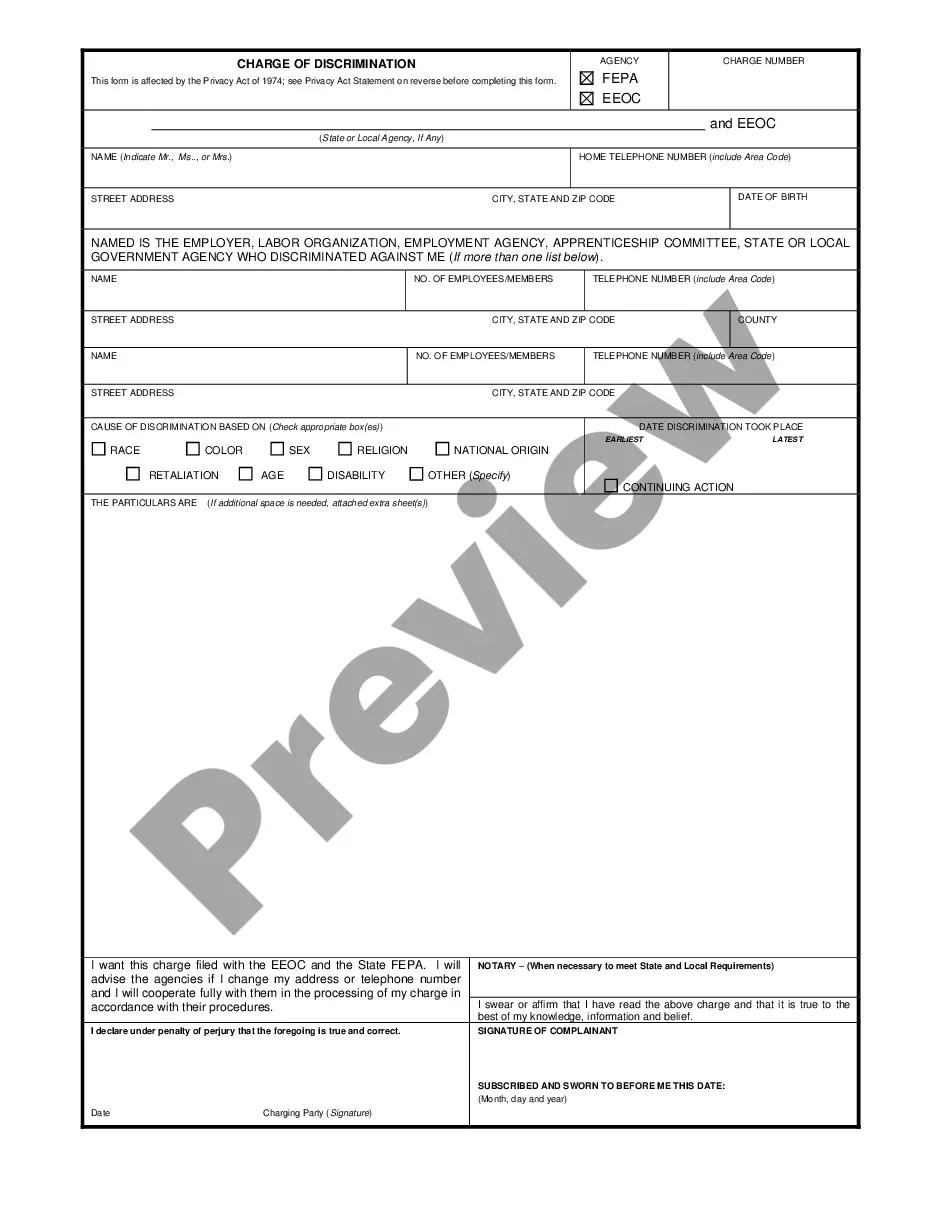
A job discrimination complaint may be filed by mail or in person at the nearest EEOC office. You can find the closest EEOC office by calling the EEOC at 1-800-669-4000, or by going to the EEOC's Field Office List and Jurisdiction Map and selecting the office closest to you.
Before EEOC can conclude that you were discriminated against, it would need to have proof that: 1. You were treated differently than someone of a different sex, race, national origin, color, religion, or age. EEOC will ask what you know about the person whom you believe was treated more favorable than you.
A description of the events you believed to be discriminatory, and when they occurred; Why you believe you were discriminated against, such as because of your race, ethnicity, sex, age, disability, pregnancy, or other reason;
You can file a formal job discrimination complaint with the EEOC whenever you believe you are: Being treated unfairly on the job because of your race, color, religion, sex (including pregnancy, gender identity, and sexual orientation), national origin, disability, age (age 40 or older) or genetic information; or.
Listen fully to the complaint. Even if it seems like a frivolous issue, listen completely. Ask lots of questions. During the conversation, ask a lot of questions about the incident. Ask for something in writing. Advise the person to keep the complaint to themselves. Ensure action.
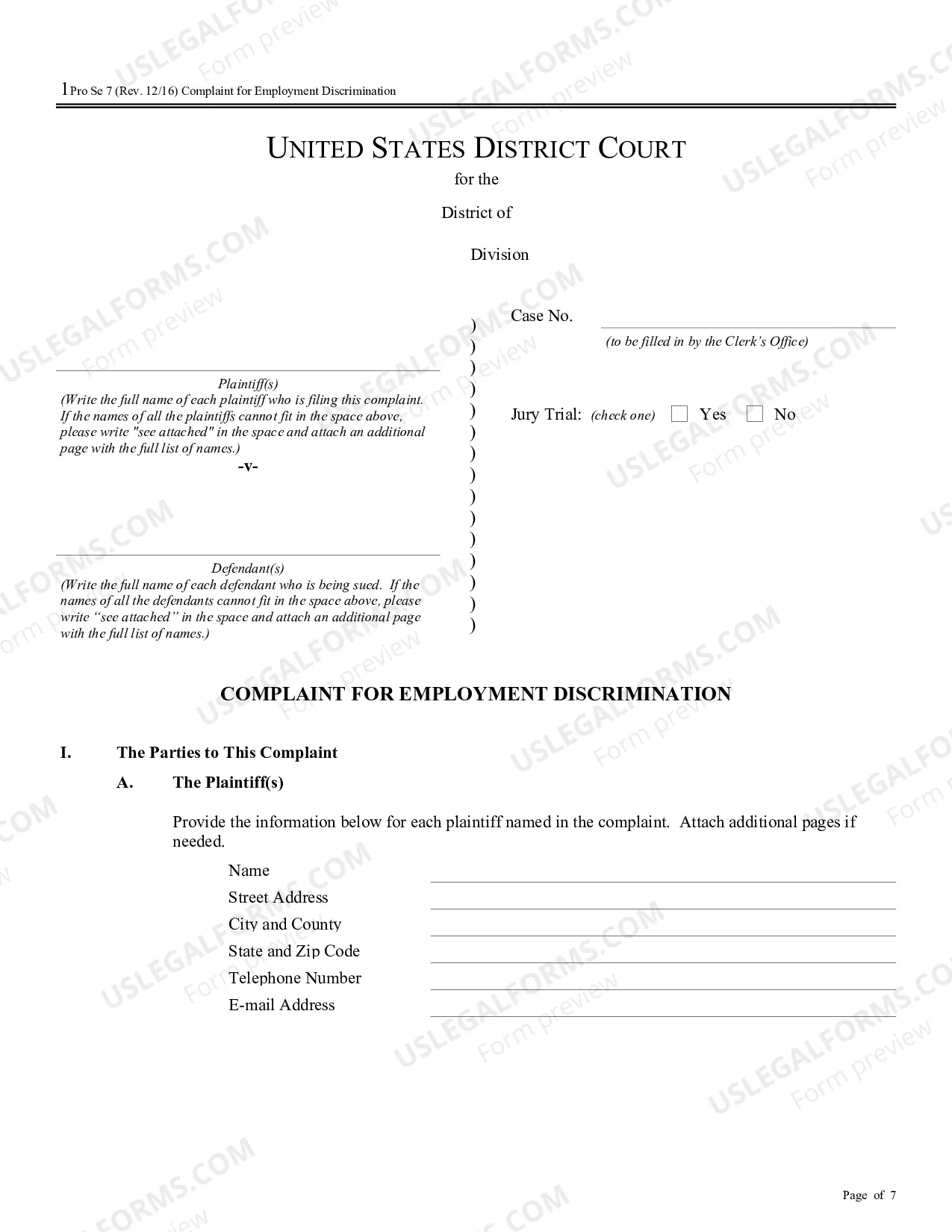
Answer. You don't have to hire a lawyer to file a charge of harassment with the Equal Employment Opportunity Commission (EEOC).If you want to file a lawsuit against your employer for harassment, you have to file a charge with the EEOC or a state agency first.