Jury Instruction - Sale Or Receipt Of Stolen Property
Overview of this form
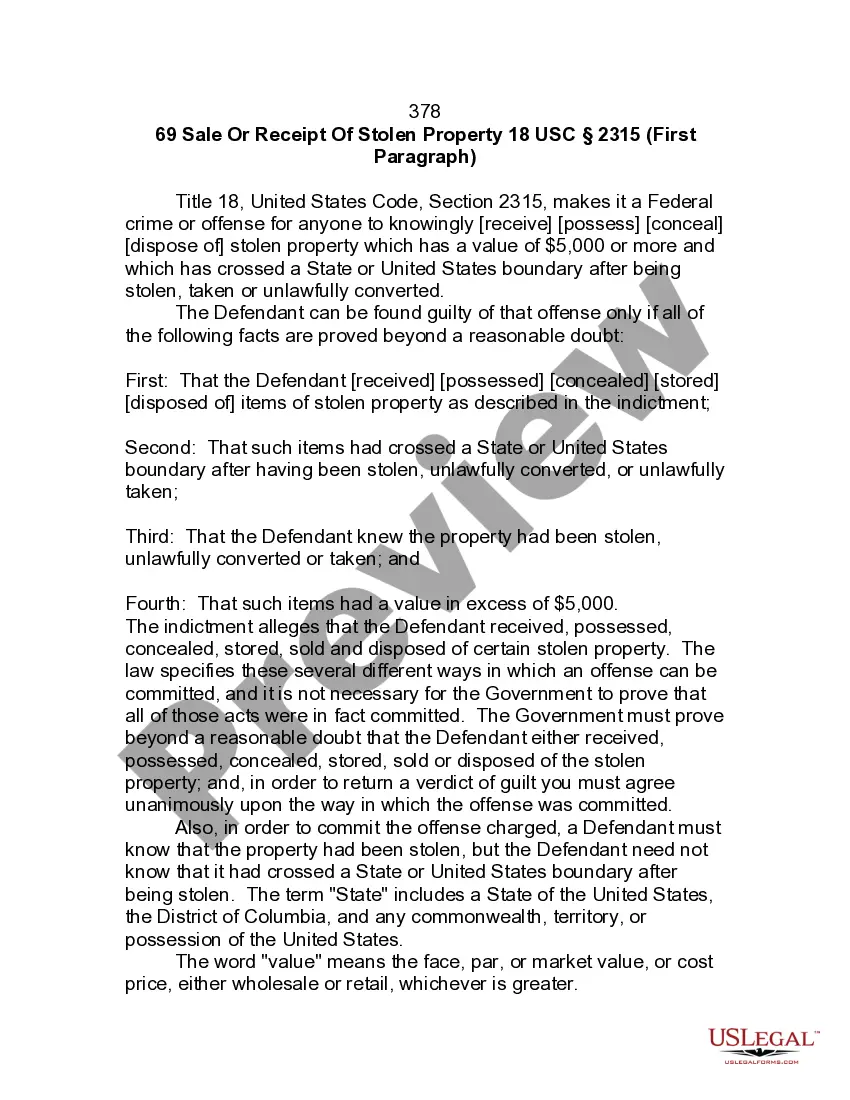
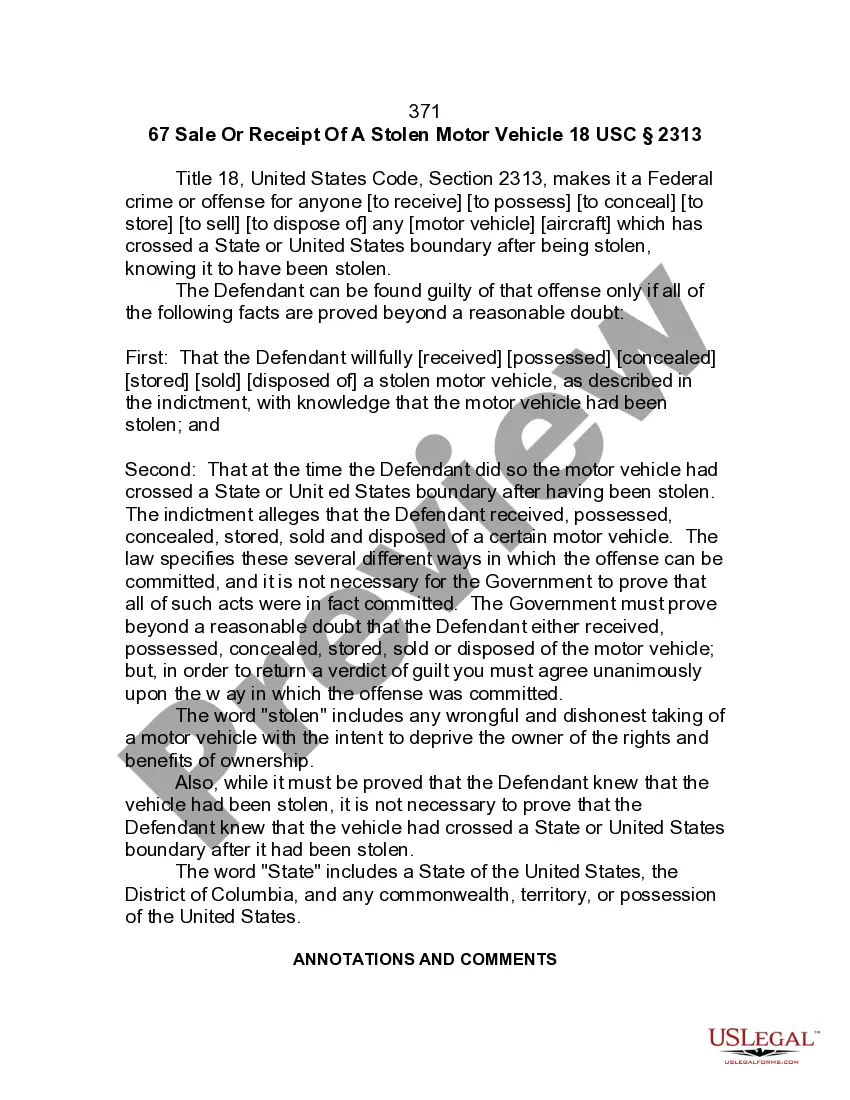
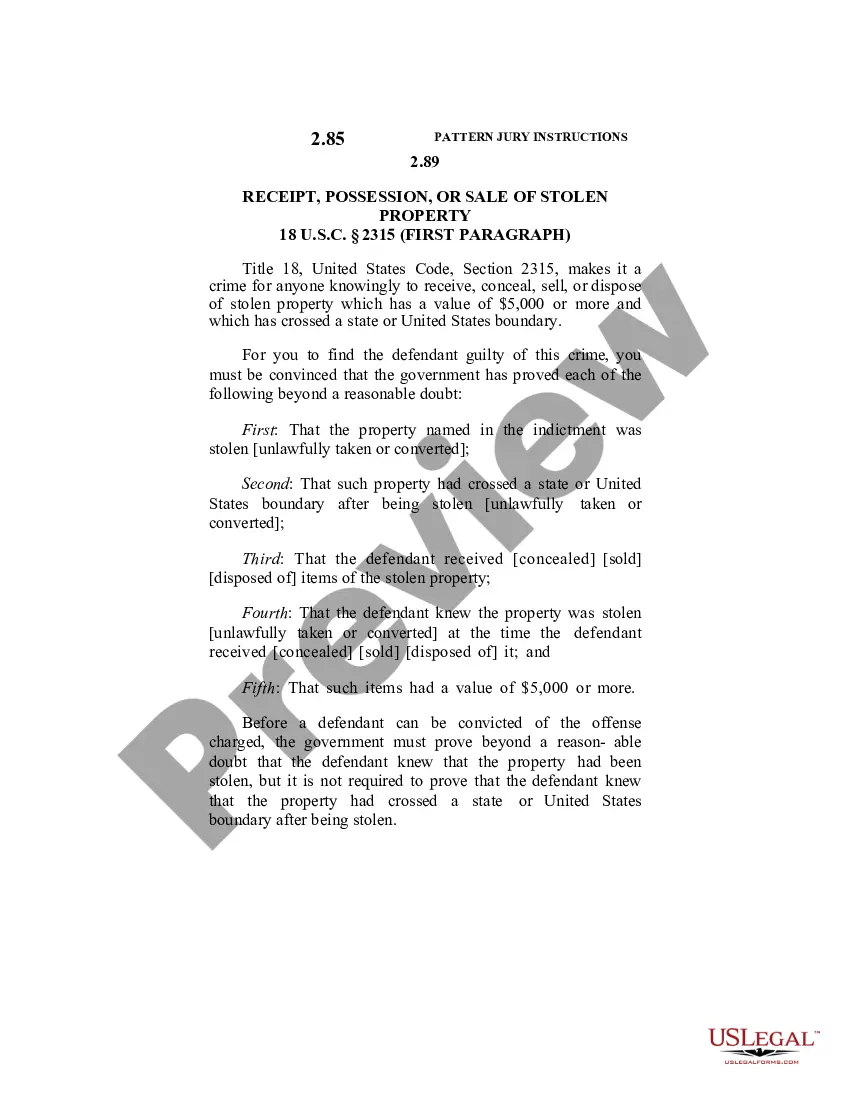
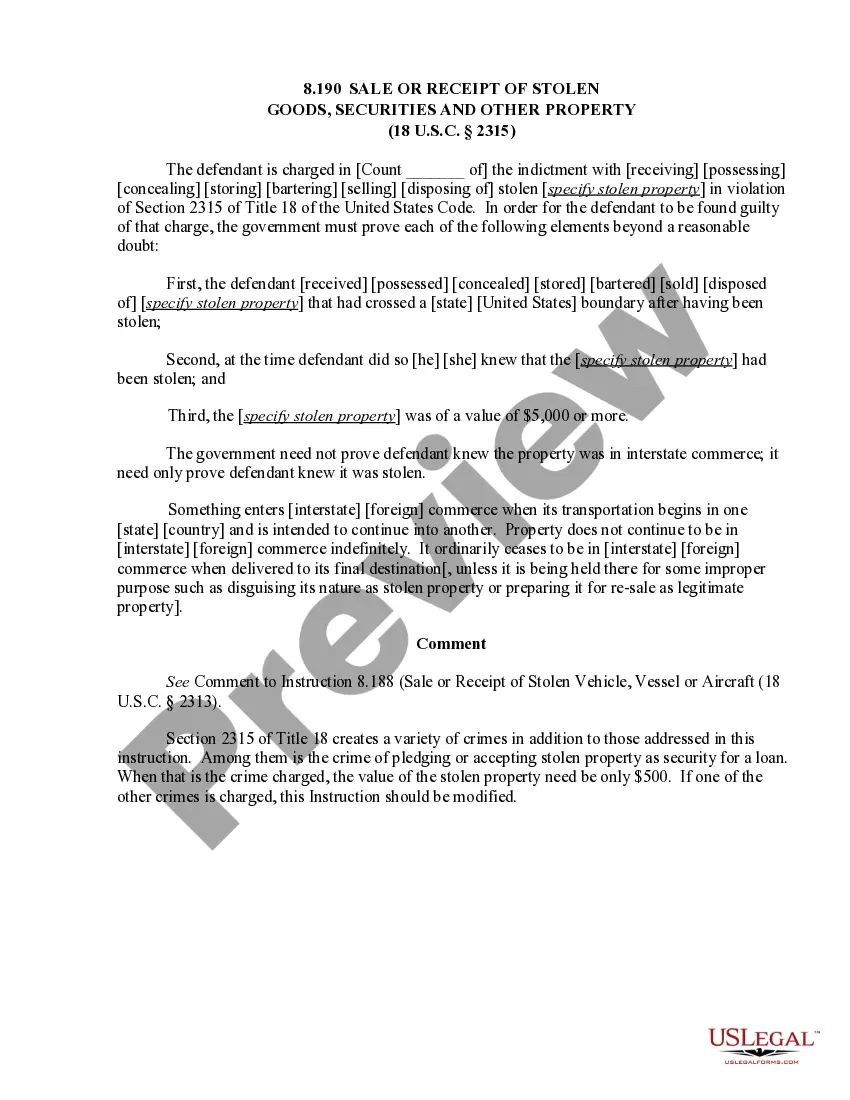
The Jury Instruction - Sale or Receipt of Stolen Property form provides sample jury instructions for cases concerning the receipt or sale of stolen property, as defined under Title 18, United States Code, Section 2315. This form serves as a guide for judges and juries to understand the legal standards and requirements for conviction in these cases, specifically emphasizing the elements of the crime such as knowing possession and the value of the property involved. It differs from other legal forms by focusing specifically on the context of jury instructions, making it essential for legal proceedings regarding stolen property.
Form components explained
- Definition of the federal offense related to the sale or receipt of stolen property.
- Criteria for proving the defendant's guilt, including knowledge and value of the property.
- Different methods by which the offense can be committed.
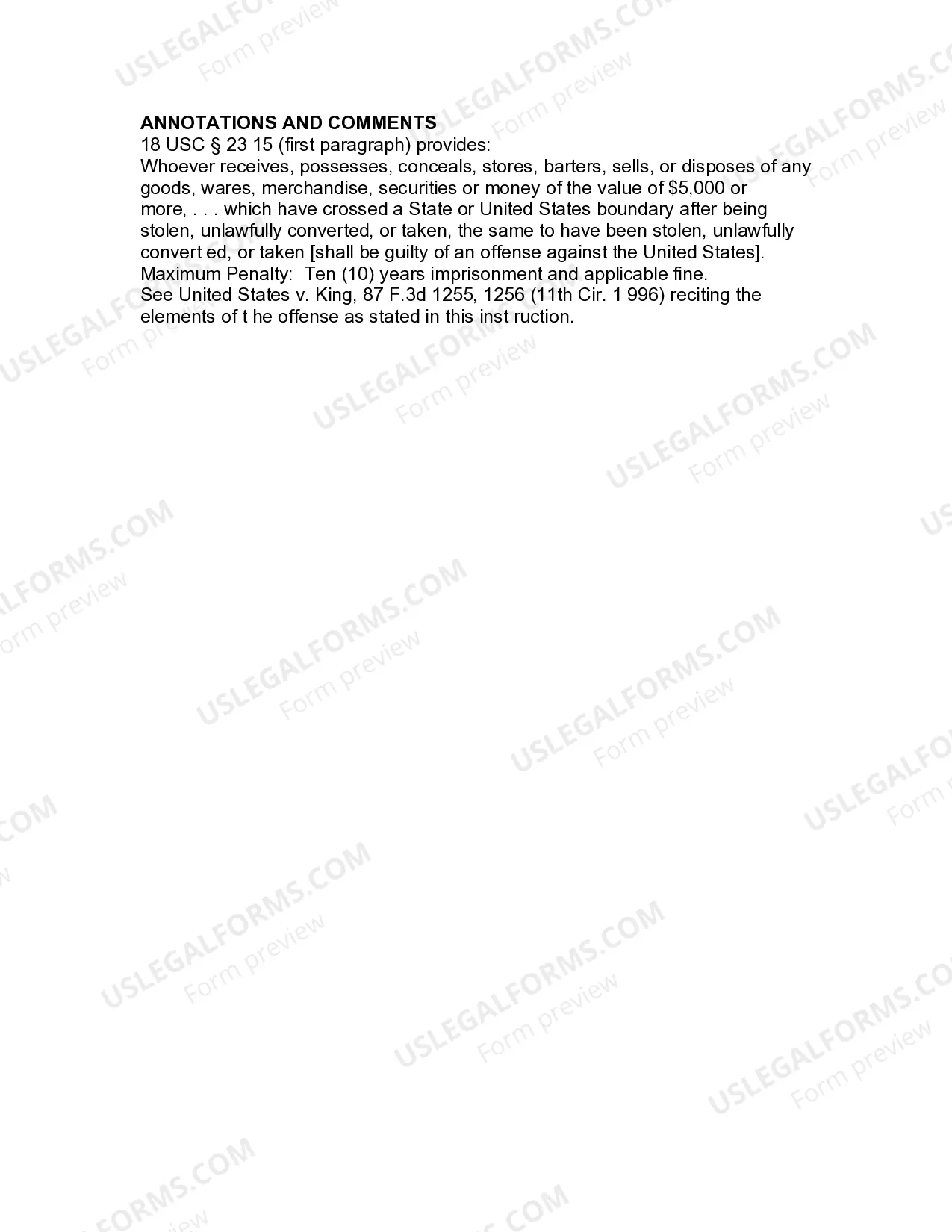
- Legal implications and maximum penalties for the offense.
- Clarification on jurisdictional aspects pertaining to the crossing of state boundaries.
When to use this document
This form is used in a legal context to instruct a jury on the pertinent laws surrounding the sale or receipt of stolen property. It is relevant in criminal cases where an individual is accused of knowingly possessing or selling property they knew to be stolen, particularly when the value exceeds $5,000 and the property has crossed state lines. Utilizing this jury instruction model can guide legal professionals in accurately conveying the necessary legal standards during trial.
Who can use this document
- Judges in federal or state courts presiding over cases involving stolen property.
- Legal practitioners representing clients accused of receiving or selling stolen goods.
- Juries that need clear guidelines on the legal definitions and standards for conviction related to stolen property.
How to complete this form
- Review the elements of the offense as outlined in the instructions.
- Adapt the jury instruction language to fit the specific circumstances of the case.
- Ensure all necessary legal definitions and standards are included for clarity.
- Provide context and examples relevant to the issues at hand in the case.
- Finalize the instruction with clear directives for jury deliberations.
Notarization guidance
Notarization is generally not required for this form. However, certain states or situations might demand it. You can complete notarization online through US Legal Forms, powered by Notarize, using a verified video call available anytime.
Get your form ready online
Our built-in tools help you complete, sign, share, and store your documents in one place.
Make edits, fill in missing information, and update formatting in US Legal Forms—just like you would in MS Word.
Download a copy, print it, send it by email, or mail it via USPS—whatever works best for your next step.
Sign and collect signatures with our SignNow integration. Send to multiple recipients, set reminders, and more. Go Premium to unlock E-Sign.
If this form requires notarization, complete it online through a secure video call—no need to meet a notary in person or wait for an appointment.
We protect your documents and personal data by following strict security and privacy standards.

Make edits, fill in missing information, and update formatting in US Legal Forms—just like you would in MS Word.

Download a copy, print it, send it by email, or mail it via USPS—whatever works best for your next step.

Sign and collect signatures with our SignNow integration. Send to multiple recipients, set reminders, and more. Go Premium to unlock E-Sign.

If this form requires notarization, complete it online through a secure video call—no need to meet a notary in person or wait for an appointment.

We protect your documents and personal data by following strict security and privacy standards.
Common mistakes
- Failing to clearly define "knowing" possession, which can lead to jury confusion.
- Not specifying the value threshold, which may impact the legal interpretation.
- Overlooking jurisdictional nuances, particularly regarding state lines.
Why complete this form online
- Convenience of accessing legal templates anytime and anywhere.
- Editability allows for customization to fit specific case needs.
- Reliability ensured through preparation by licensed attorneys.
Legal use & context
- The form outlines the legal framework for jury instructions in cases of stolen property.
- It serves as a crucial resource for ensuring that juries are well-informed about the legal requirements for conviction.
- Fulfills obligations under Title 18, providing a basis for enforcing federal law against the receipt of stolen property.
Main things to remember
- The form helps clarify essential jury instructions needed in stolen property cases.
- Users must adapt the instructions to the specific details of each case.
- Understanding the elements of the offense is critical for legal professionals and juries.
Looking for another form?

Form popularity
FAQ
The law requires that you knowingly buy stolen goods with an intent to permanently deprive the owner of the property. If you did not know that they were stolen, then you did not break the law.After returning the goods, you can bring a lawsuit for restitution against whoever sold you the goods.
In Massachusetts, Receiving stolen property over $250 carries up to $500 fine and 5 years state prison (felony).
Expungement For Receiving Stolen Property If your conviction was a misdemeanor, you qualify for an expungement of your record under Penal Code 1203.4.Felony convictions may also be expunged provided that you did not serve any time in state prison.
1 Wrongful Taking. 2 Carrying Away. 3 Personal Property. 4 Property of Another Person. 5 Taken Without Consent. 6 With Intent to Steal.
The defendant committed theft of property from the same owner. or possessor on more than one occasion; The combined value of the property was over $950; AND. The defendant obtained the property as part of a single, overall.
Receiving stolen property is defined by statute in most states. Generally it consists of four elements: (1) the property must be received; (2) it must have been previously stolen; (3) the person receiving the property must know it was stolen; and (4) the receiver must intend to deprive the owner of his or her property.
Receiving stolen property is a serious criminal offense under California Penal Code Section 496(a) PC that can result in a felony conviction.The defendant bought, received, sold or aided in selling, concealed or withheld property that has been stolen from another.
The stolen property's value is often what determines if the crime is a felony or misdemeanor. In order to be a felony theft, the value of the property must exceed a minimum amount established by state law, typically between $500 and $1,000.