Jury Instruction - Tampering With A Witness
What this document covers
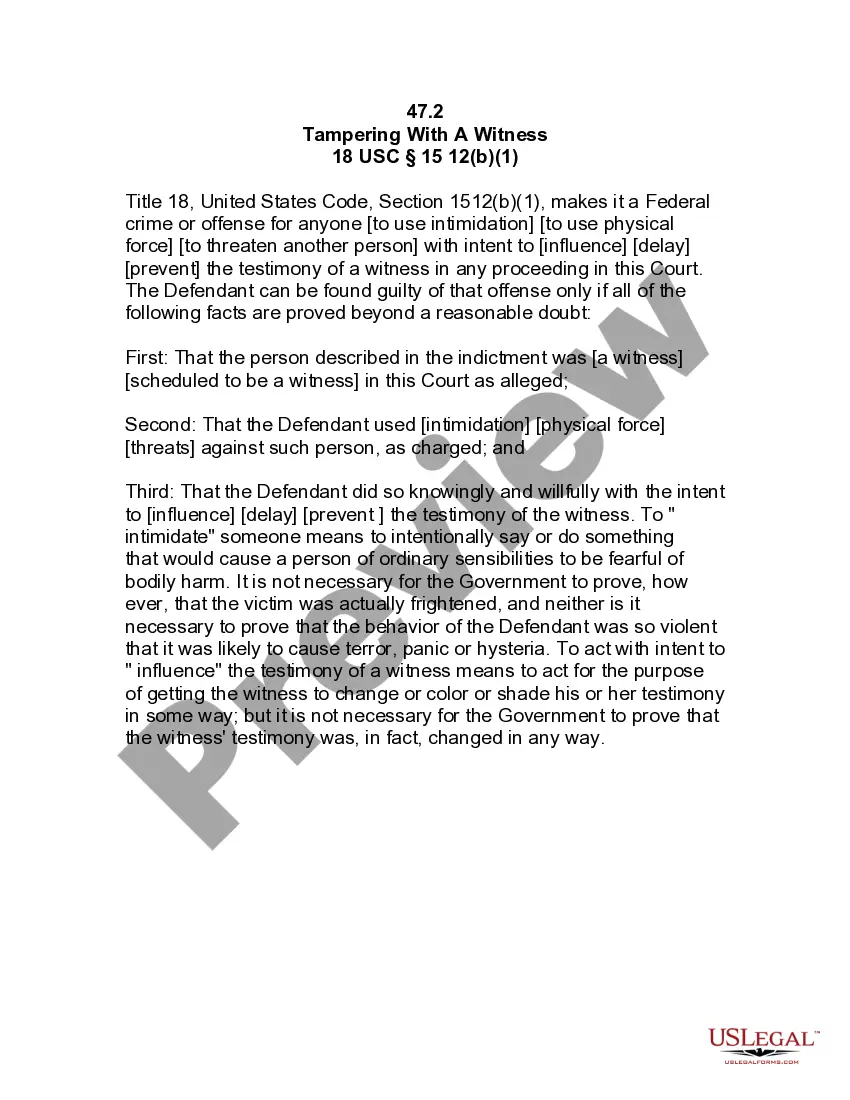
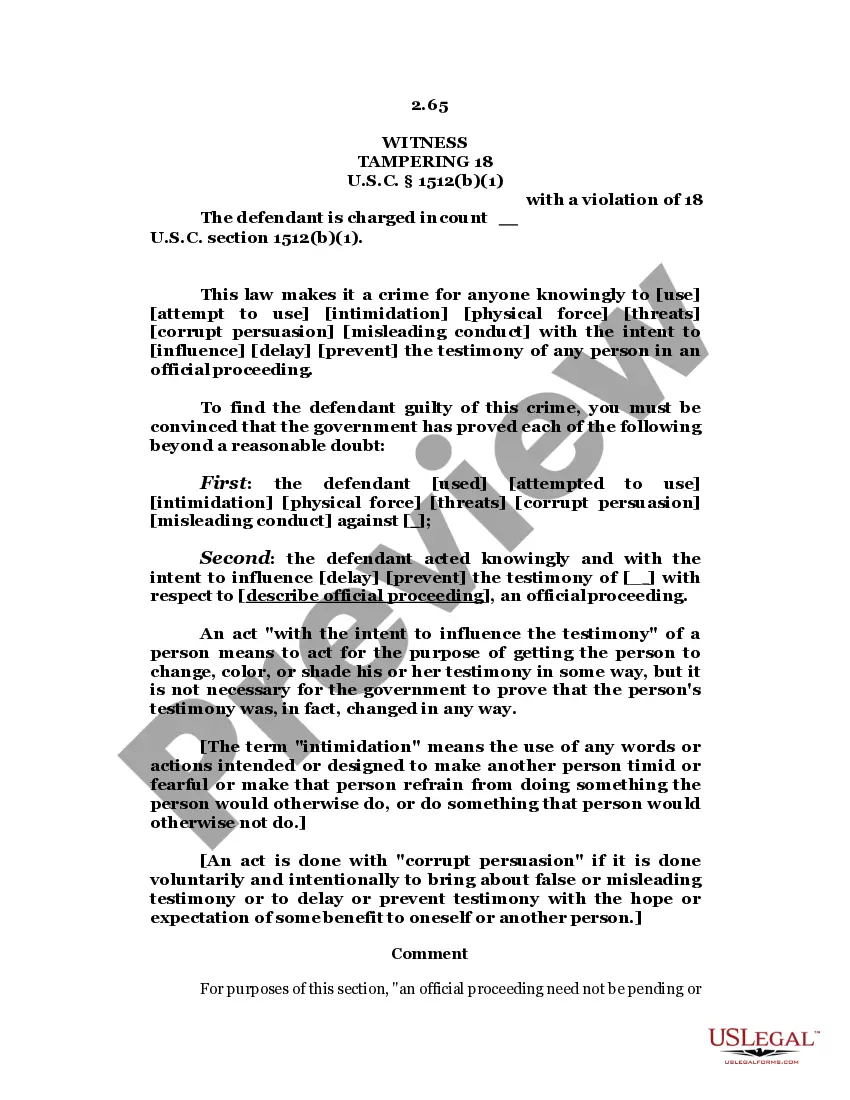
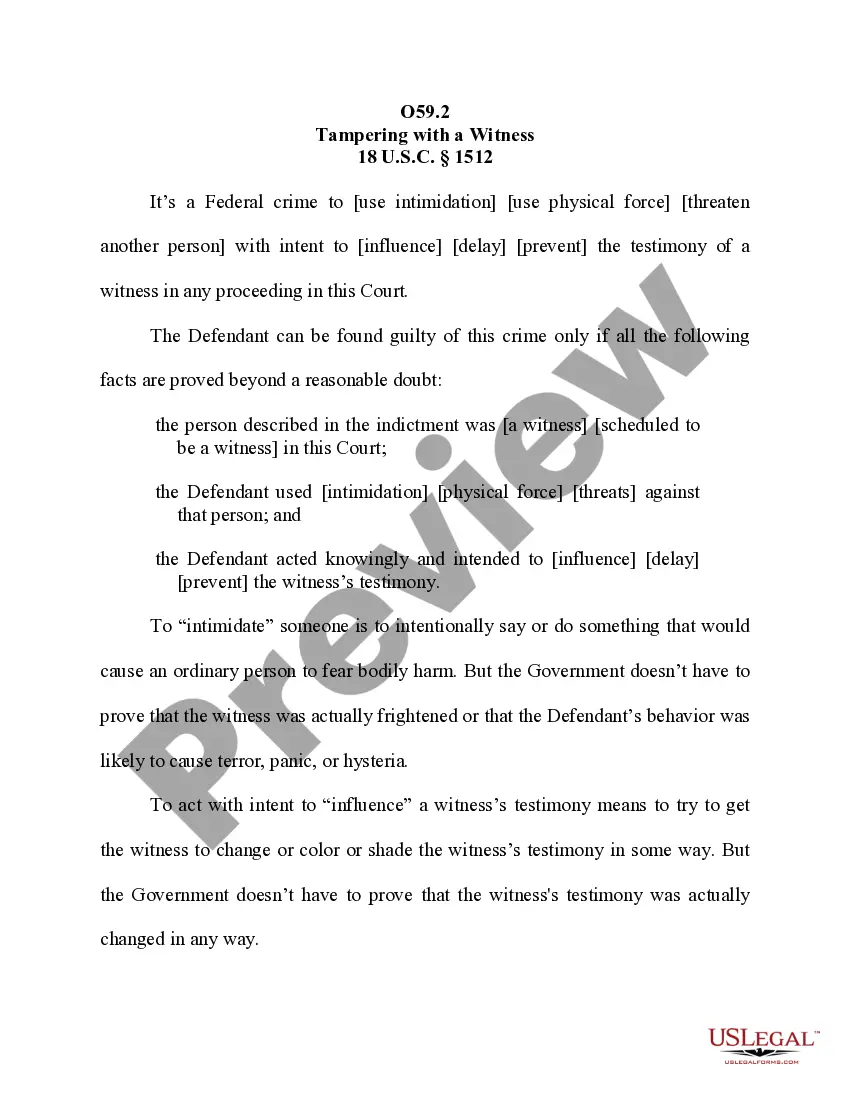
The Jury Instruction - Tampering With A Witness form contains model jury instructions tailored to the offense of witness tampering under Title 18, United States Code, Section 1512(b)(1). This form serves to guide juries in evaluating whether intimidation or physical force was used to influence or prevent a witness's testimony. Unlike generic jury instructions, this form specifically addresses the legal standards and elements of the crime of tampering with a witness in federal court, ensuring that the jury understands how to weigh the evidence in such cases.
Key components of this form
- Definition of witness tampering under federal law.
- Criteria for proving the defendant's intent and actions.
- Clarification of what constitutes intimidation or physical force.
- Guidelines for the jury to evaluate witness credibility and testimony.
- Conditions required for a guilty verdict based on federal guidelines.
Common use cases
This form is utilized during a criminal trial to instruct the jury on the legal concepts and elements concerning the crime of tampering with a witness. It is essential when the prosecution alleges that a defendant attempted to influence a witness's testimony through intimidation or threats. Use this form in cases where witness tampering is a key issue, ensuring that jurors understand their responsibilities in evaluating the evidence presented.
Who should use this form
- Judges presiding over criminal trials involving witness tampering.
- Attorneys prosecuting or defending cases related to witness interference.
- Legal teams preparing jury instructions for federal cases.
- Jurors, to understand the legal framework of the case they are considering.
Completing this form step by step
- Review the legal elements of witness tampering as outlined in the form.
- Customize the instructions to reflect the specific circumstances of the case.
- Ensure all necessary definitions of terms are included for juror clarity.
- Confer with legal counsel to ensure correctness and relevance of the instructions.
- Submit the finalized jury instructions to the court for approval before the trial.
Notarization guidance
This form usually doesn’t need to be notarized. However, local laws or specific transactions may require it. Our online notarization service, powered by Notarize, lets you complete it remotely through a secure video session, available 24/7.
Get your form ready online
Our built-in tools help you complete, sign, share, and store your documents in one place.
Make edits, fill in missing information, and update formatting in US Legal Forms—just like you would in MS Word.
Download a copy, print it, send it by email, or mail it via USPS—whatever works best for your next step.
Sign and collect signatures with our SignNow integration. Send to multiple recipients, set reminders, and more. Go Premium to unlock E-Sign.
If this form requires notarization, complete it online through a secure video call—no need to meet a notary in person or wait for an appointment.
We protect your documents and personal data by following strict security and privacy standards.

Make edits, fill in missing information, and update formatting in US Legal Forms—just like you would in MS Word.

Download a copy, print it, send it by email, or mail it via USPS—whatever works best for your next step.

Sign and collect signatures with our SignNow integration. Send to multiple recipients, set reminders, and more. Go Premium to unlock E-Sign.

If this form requires notarization, complete it online through a secure video call—no need to meet a notary in person or wait for an appointment.

We protect your documents and personal data by following strict security and privacy standards.
Mistakes to watch out for
- Failing to tailor the instructions to the specific case facts.
- Omitting critical legal definitions or elements of the offense.
- Overcomplicating the language instead of using plain terms for clarity.
- Not considering the jurisdictional nuances if applicable to state law.
Why use this form online
- Easy access to professionally drafted jury instructions.
- Quick customization options to suit case-specific details.
- Reliable formatting and legal compliance ensures accuracy.
- Downloadable format allows for immediate use in court proceedings.
Legal use & context
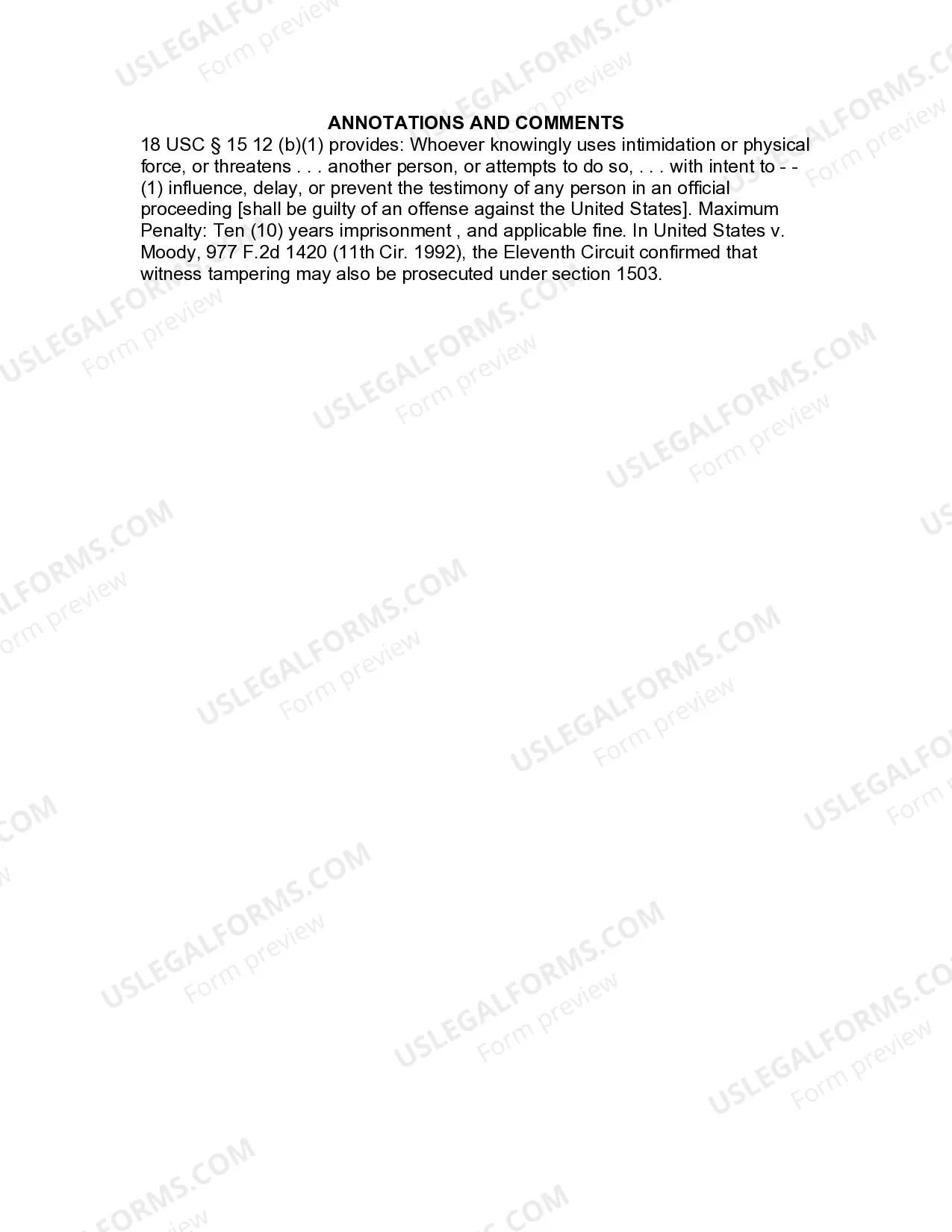
- This jury instruction is based on federal statutes, specifically 18 USC Section 1512(b)(1).
- It is designed to help jurors understand the legal consequences of tampering with a witness.
- The form emphasizes the necessity of proving the defendant's intent and actions beyond a reasonable doubt.
- Jurors must be guided on interpreting intimidation and its implications under the law.
Looking for another form?

Form popularity
FAQ
The offences are triable either way. In the magistrates' court, the maximum penalty is six months' imprisonment and/or a fine to the statutory maximum. In the Crown Court, the maximum penalty is five years' imprisonment and/or a fine. Such offences go to the heart of the administration of justice.
The offences are triable either way. In the magistrates' court, the maximum penalty is six months' imprisonment and/or a fine to the statutory maximum. In the Crown Court, the maximum penalty is five years' imprisonment and/or a fine. Such offences go to the heart of the administration of justice.
Witness tampering occurs when someone attempts to cause a person to testify falsely, withhold testimony or information, or be absent from any proceeding to which the witness has been summoned. You don't have to be a party to the criminal or civil action to be charged with witnesses tampering.
Witness tampering occurs when someone attempts to cause a person to testify falsely, withhold testimony or information, or be absent from any proceeding to which the witness has been summoned. You don't have to be a party to the criminal or civil action to be charged with witnesses tampering.
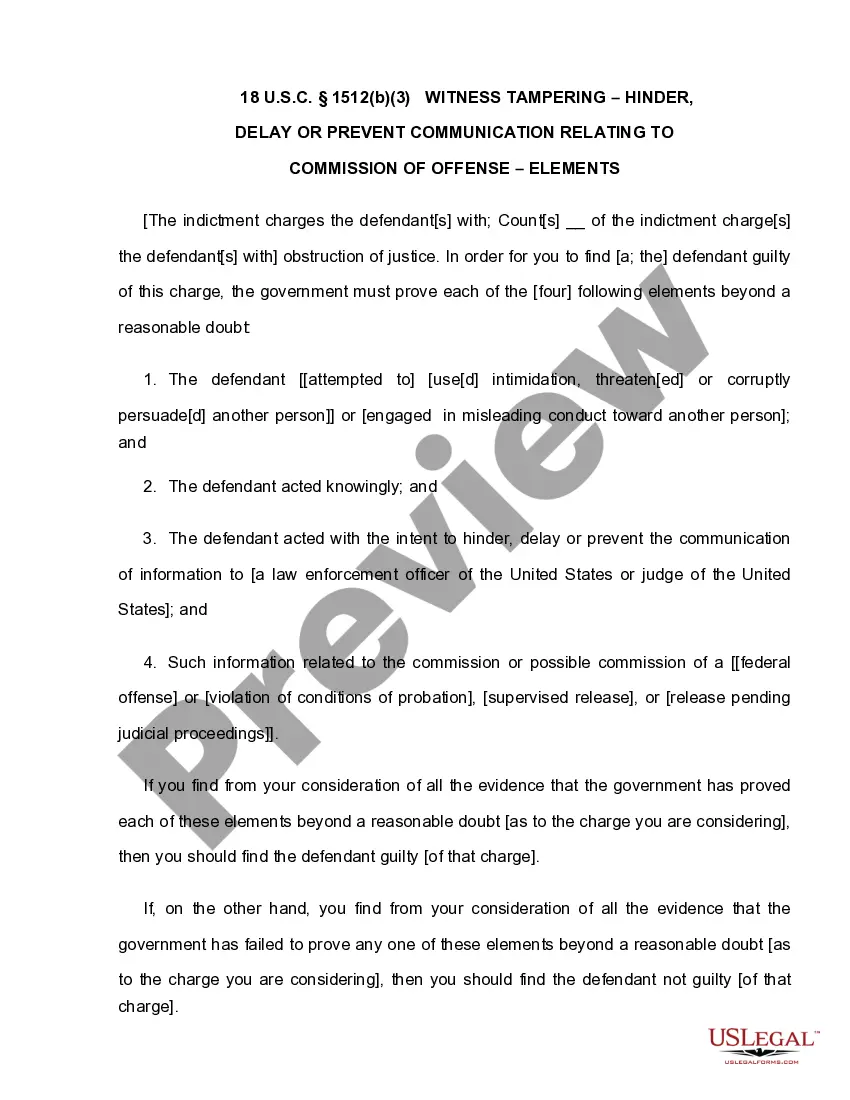
Witness intimidation is a form of obstruction of justice and under 18 U.S. Code § 1512, it's a federal crime to interfere with witness testimony or cooperation in a criminal case.
Tampering with evidence is the crime of altering, destroying, or concealing physical evidence with the intent to affect the outcome of a criminal investigation or court proceeding. Tampering with evidence is illegal under both federal and state law.
Under California Penal Code 136.1 PC, it is a crime for a person to intimidate, or discourage, a witness or victim from either: reporting a crime, or. testifying about a crime.
Witness tampering is a criminal offense even if the attempt to tamper is unsuccessful. The offense also covers the intimidation of not only a witness himself or herself, but also intimidation of "another person" (i.e., a third party, such as a witness's spouse) in order to intimidate the witness.