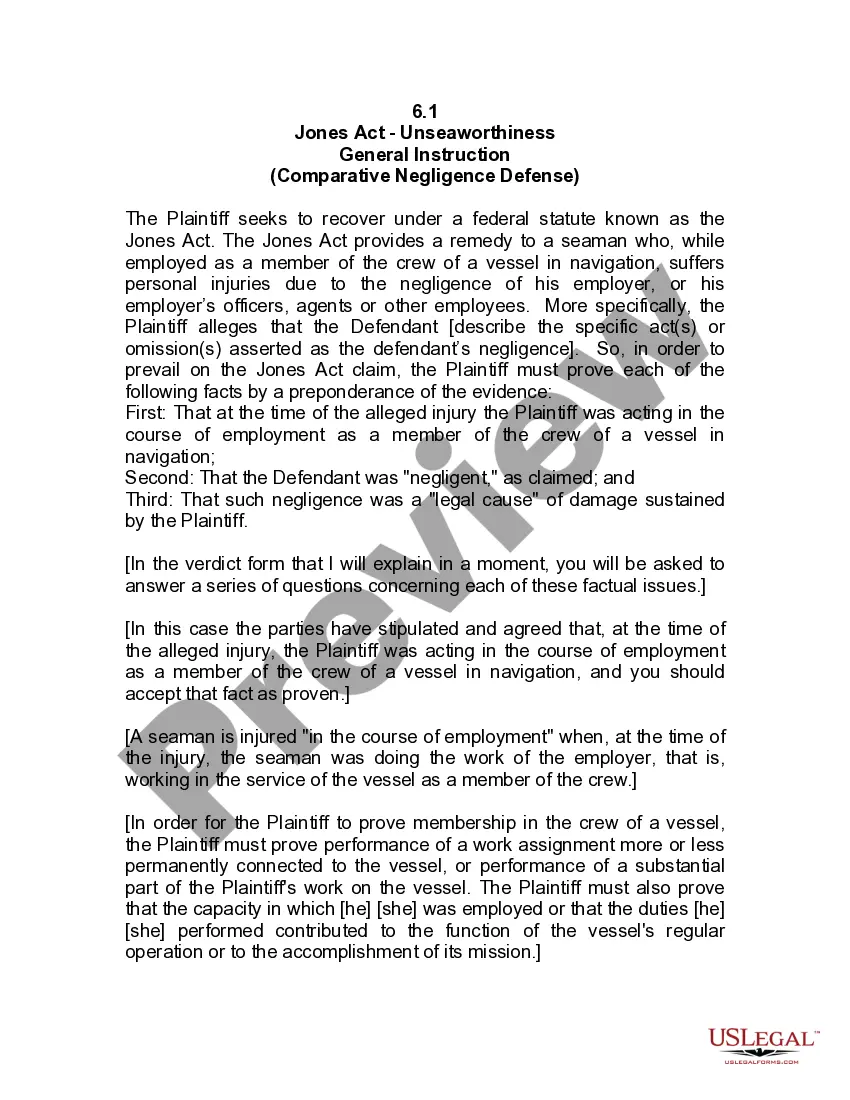
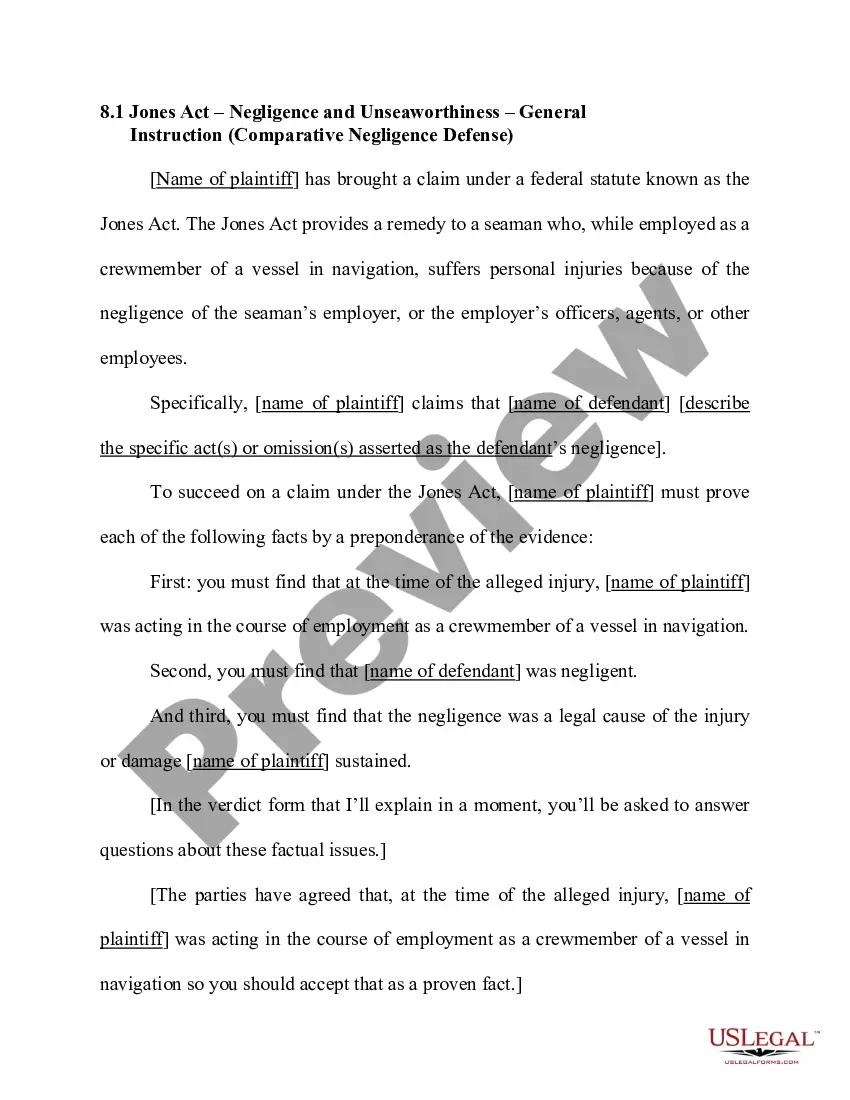
Jury Instruction - 7.7.1 General Instruction - Comparative Negligence Defense
About this form
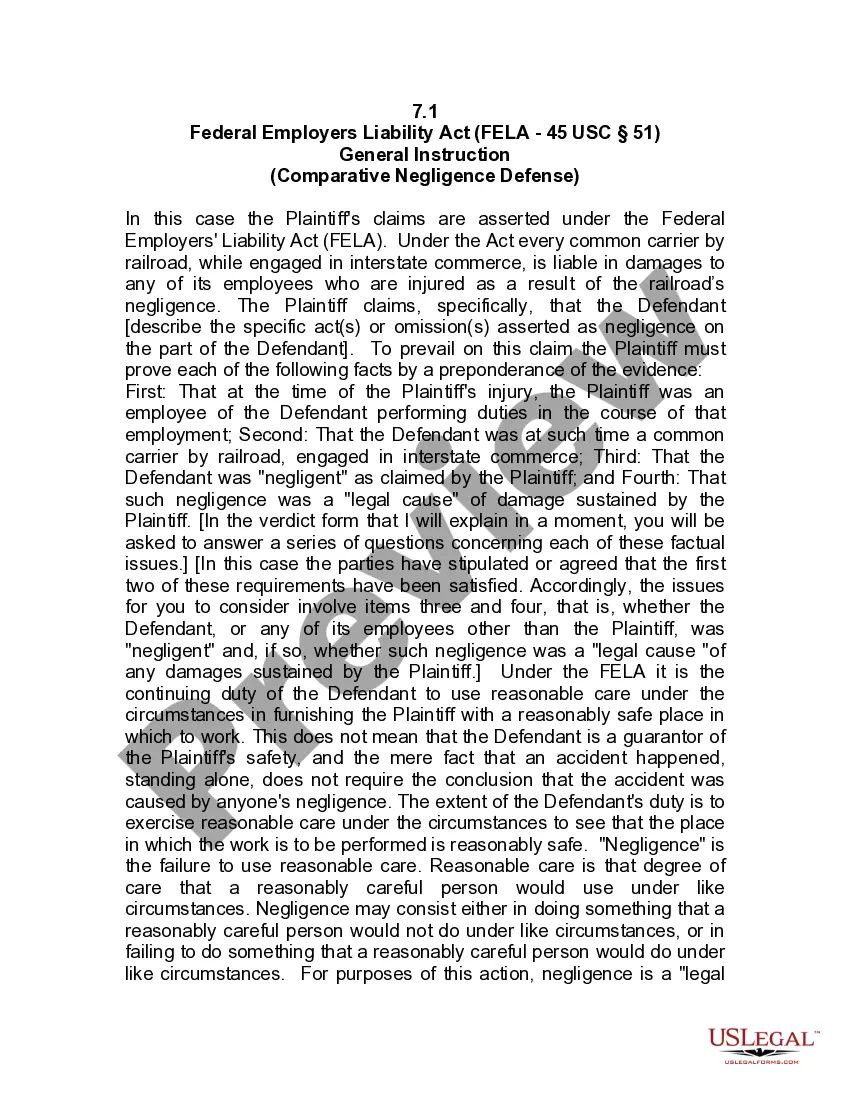
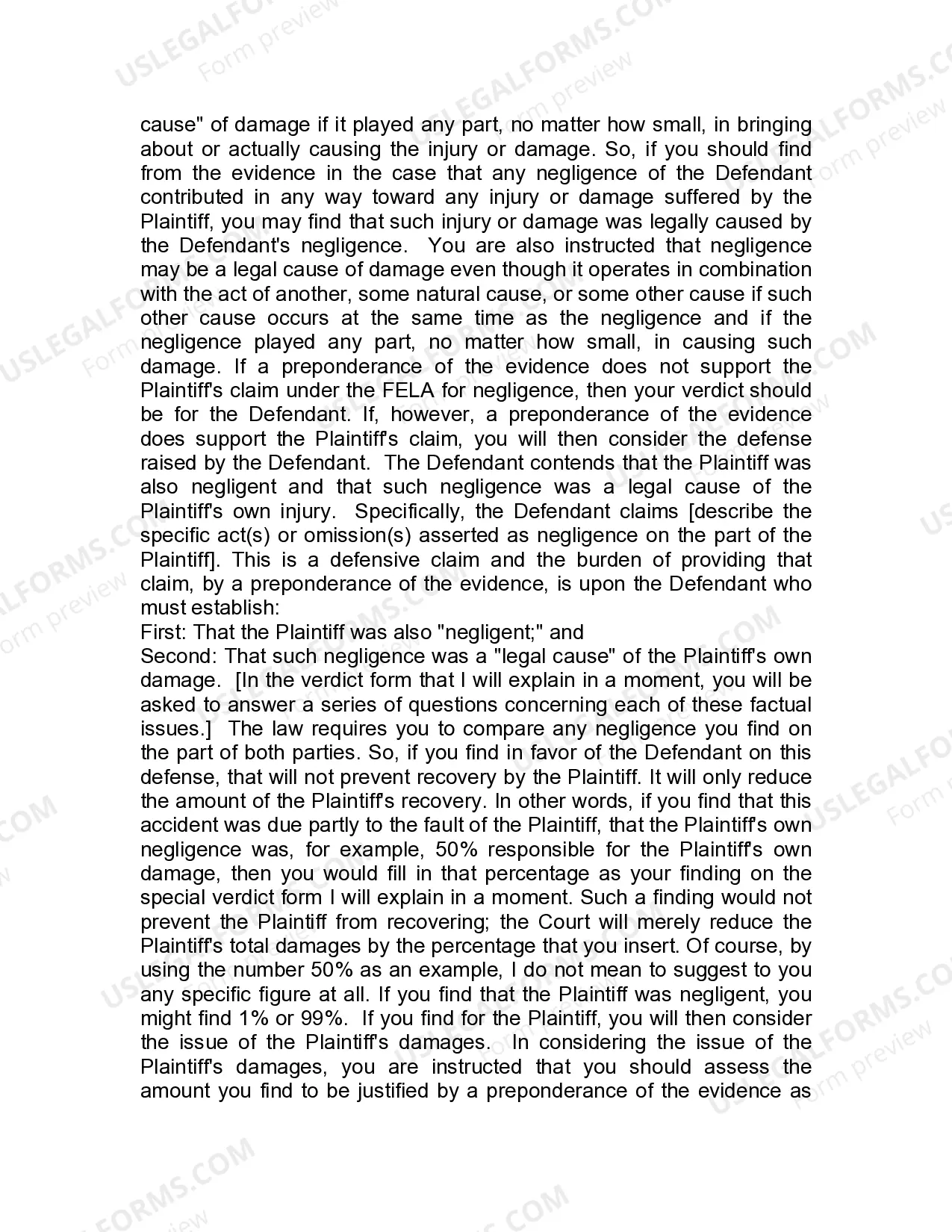
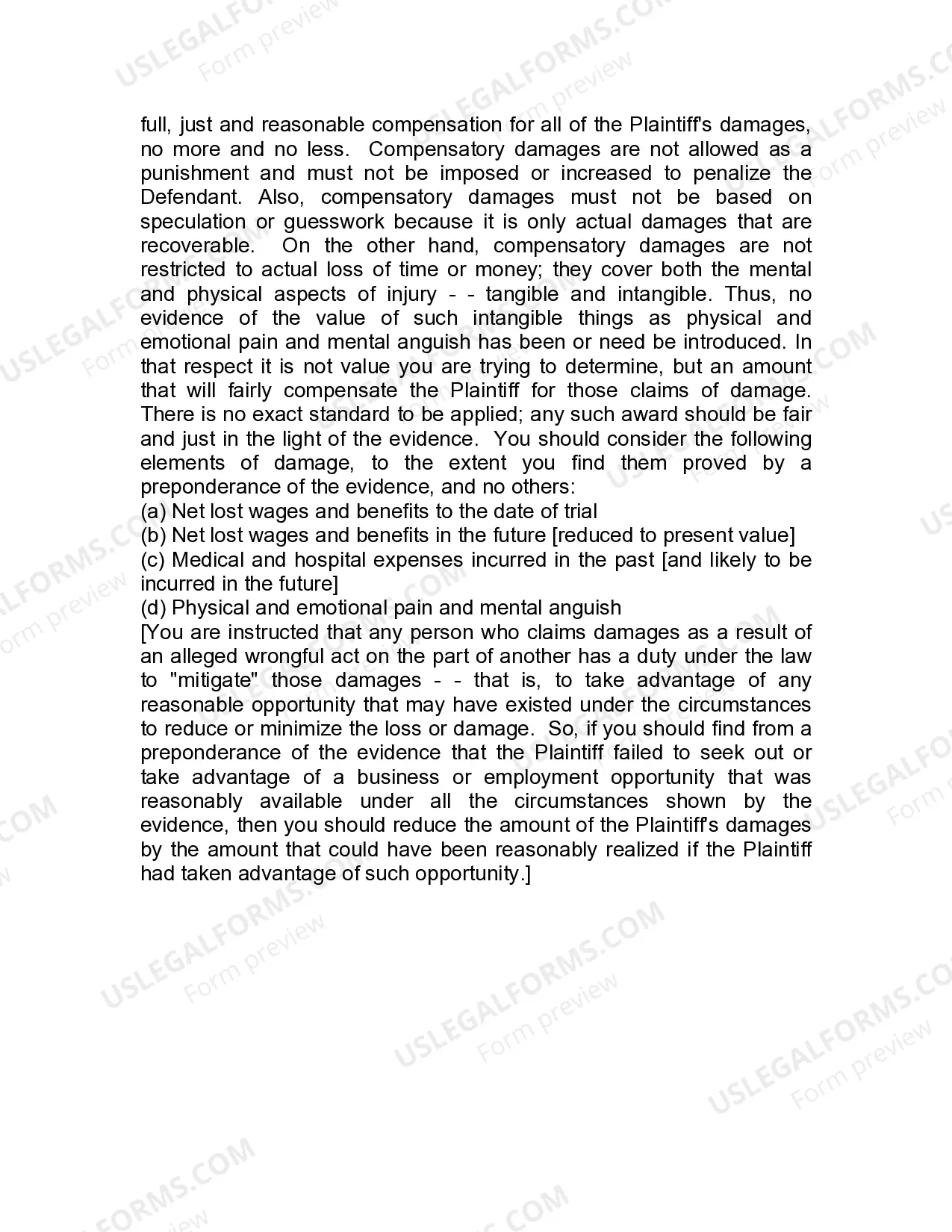
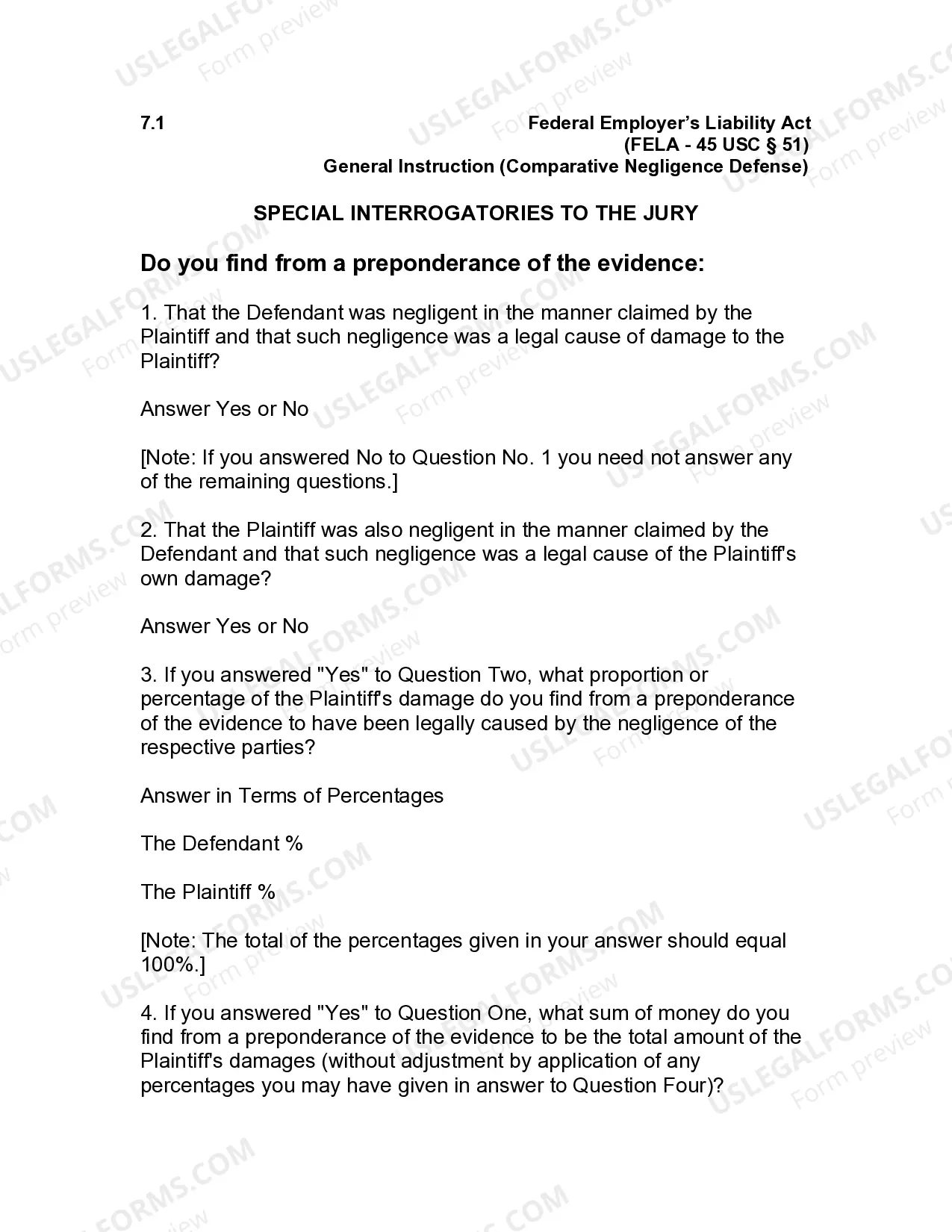
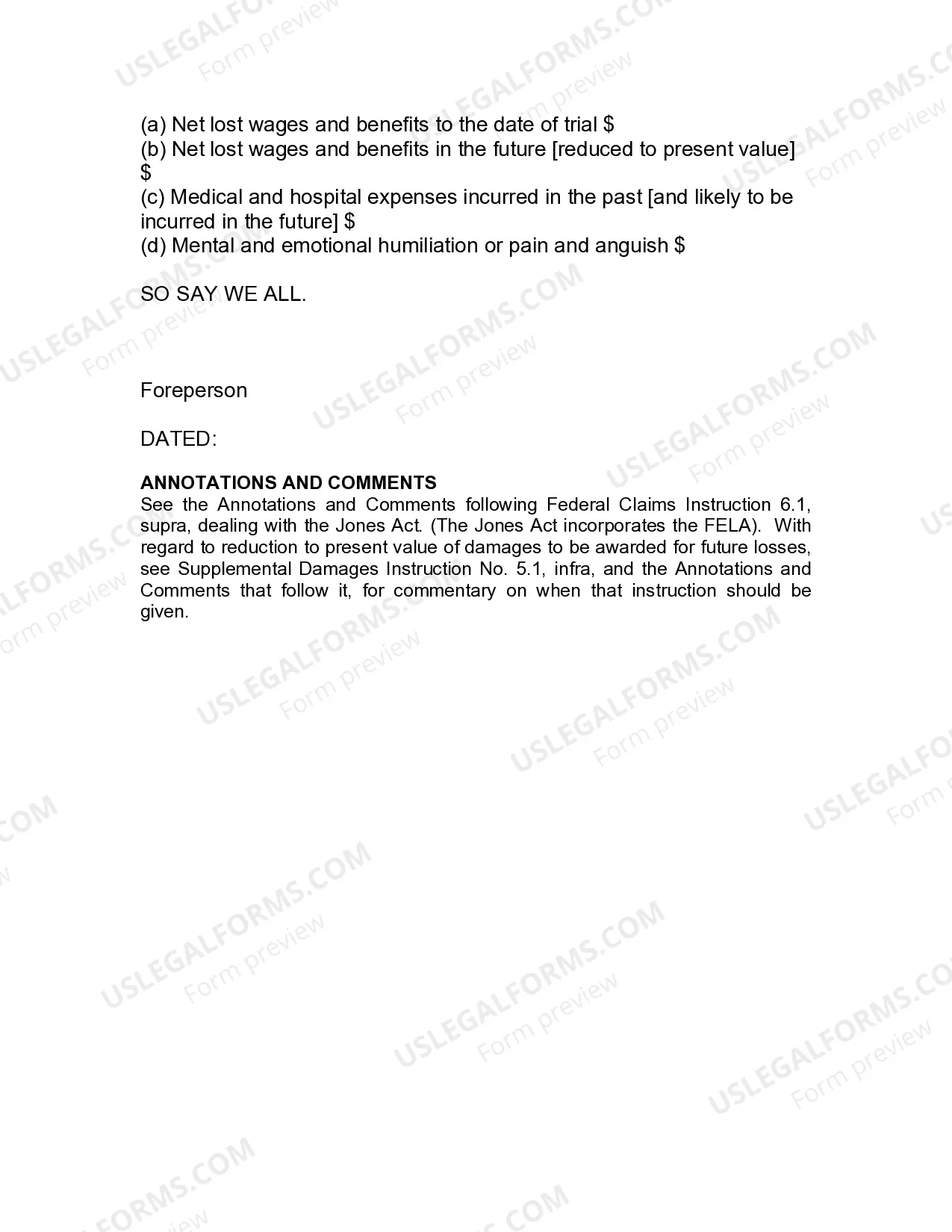
The Jury Instruction - 7.7.1 General Instruction - Comparative Negligence Defense is a legal template providing guidance for jury instructions in cases involving comparative negligence under the Federal Employers Liability Act (FELA). This form is specifically designed to assist juries in determining liability and damages in cases where both the plaintiff and defendant may share fault. Unlike other legal documents, this form uniquely focuses on the comparative negligence defense, outlining how to assess the negligence of both parties involved in the case.
What’s included in this form
- Introduction to FELA and its implications for railroad employees.
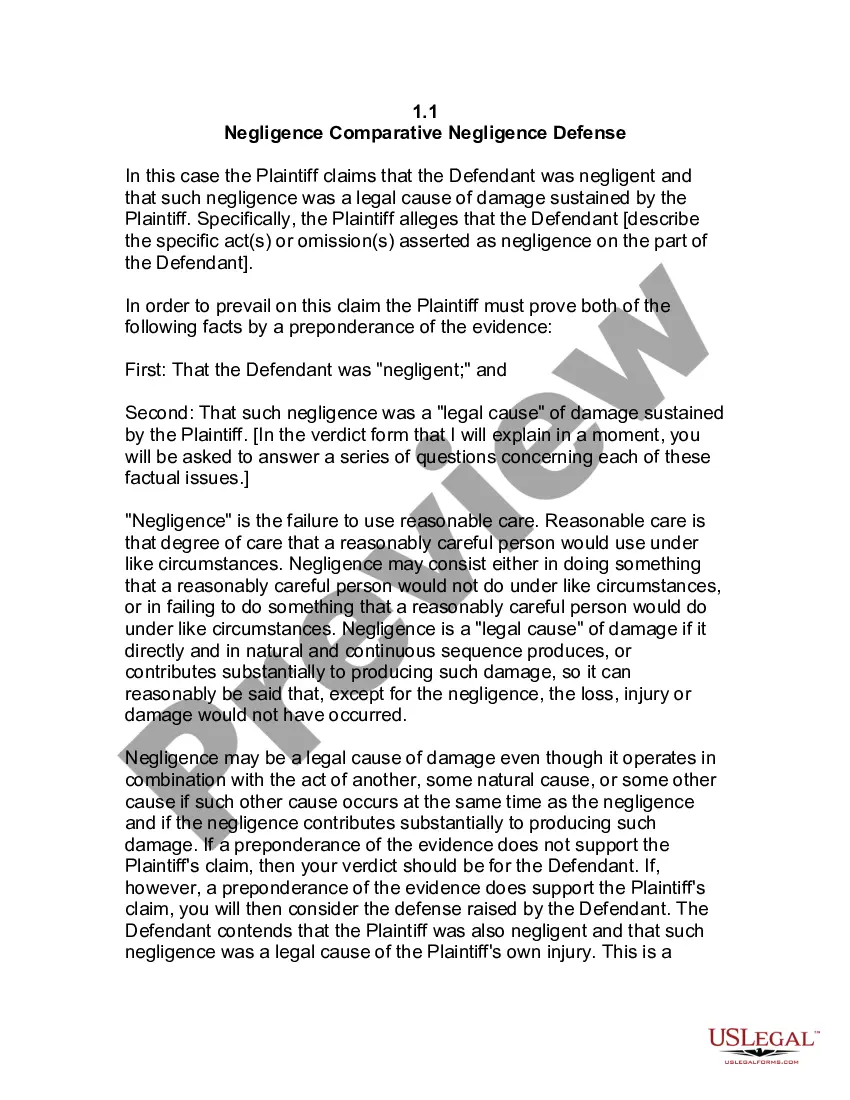
- Criteria for proving negligence of the defendant.
- Explanation of comparative negligence and how it affects damages awarded to the plaintiff.
- Guidance on the jury's decision-making process regarding the fault of both parties.
- Template for special interrogatories that jurors must answer during deliberation.
When this form is needed
This form should be used in legal proceedings involving claims made under the Federal Employers Liability Act (FELA). It is applicable when a railroad employee seeks damages for injuries claimed to result from the negligence of the employer. The jury will rely on this instruction to guide their deliberations in attributing fault and awarding damages, particularly in cases where both the plaintiff and the defendant may have contributed to the injury.
Who needs this form
- Judges overseeing FELA-related cases.
- Attorneys representing plaintiffs or defendants in comparative negligence claims.
- Legal professionals seeking a standardized template for jury instructions.
- Juries tasked with determining the outcomes of negligence cases under FELA.
How to prepare this document
- Start by clearly stating the names of the plaintiff and defendant involved in the case.
- Provide details of the specific negligent acts or omissions asserted against the defendant.
- Outline the plaintiff's claims, including the nature and extent of damages sought.
- Instruct the jury on the criteria for determining negligence based on the provided guidelines.
- Ensure all necessary special interrogatories are included for jurors to fill out during their deliberation process.
Is notarization required?
Notarization is generally not required for this form. However, certain states or situations might demand it. You can complete notarization online through US Legal Forms, powered by Notarize, using a verified video call available anytime.
Get your form ready online
Our built-in tools help you complete, sign, share, and store your documents in one place.
Make edits, fill in missing information, and update formatting in US Legal Forms—just like you would in MS Word.
Download a copy, print it, send it by email, or mail it via USPS—whatever works best for your next step.
Sign and collect signatures with our SignNow integration. Send to multiple recipients, set reminders, and more. Go Premium to unlock E-Sign.
If this form requires notarization, complete it online through a secure video call—no need to meet a notary in person or wait for an appointment.
We protect your documents and personal data by following strict security and privacy standards.

Make edits, fill in missing information, and update formatting in US Legal Forms—just like you would in MS Word.

Download a copy, print it, send it by email, or mail it via USPS—whatever works best for your next step.

Sign and collect signatures with our SignNow integration. Send to multiple recipients, set reminders, and more. Go Premium to unlock E-Sign.

If this form requires notarization, complete it online through a secure video call—no need to meet a notary in person or wait for an appointment.

We protect your documents and personal data by following strict security and privacy standards.
Common mistakes to avoid
- Failing to customize the template to accurately reflect the specific acts of negligence alleged.
- Overlooking to provide clear and concise instructions for jurors on how to answer interrogatories.
- Not including adequate details regarding the plaintiff's claim for damages.
- Neglecting to clarify the definition of legal terms and concepts related to negligence.
Benefits of using this form online
- Convenient access to a comprehensive, attorney-drafted jury instruction template.
- Editability allows users to tailor the content to their specific case needs.
- Reliable format ensures adherence to legal standards and practices related to FELA.
- Quick download and delivery enhance workflow efficiency for legal professionals.
Summary of main points
- This form provides essential jury instructions related to comparative negligence in FELA cases.
- It offers a structured approach to assessing fault and determining damages.
- Customization is key to accurately reflecting the specifics of the case at hand.
- This form can facilitate better understanding and application of legal standards among jurors.
Looking for another form?




Form popularity
FAQ
Contributory Negligence. The concept of contributory negligence revolves around a plaintiff's contribution to his or her own damages. Comparative Negligence. Vicarious Liability. Gross Negligence.
Three of the most common doctrines are contributory negligence, comparative fault, and assumption of risk.
Did the individual at fault owe a duty to the injured party? Was there a breach of said duty? Was the breach also the cause of the legal injury? What was the proximate cause? (could the harm caused be anticipated) What was the extent of the damage caused?
Contributory Negligence: Contributory negligence is one of the most commonly used negligence defenses. The defendant attempts to deny the plaintiff the right to action by claiming that the plaintiff's own negligence played a large role in his injuries.
Voluntary assumption of risk. Contributory negligence (no longer a defence). Delay under the statute of limitations.
Defenses to Strict Liability Standard Oil, 391 F.Comparative negligence is a valid defense. Most jurisdictions that have adopted comparative negligence will reduce the plaintiff's recovery in these cases to reflect the fact that plaintiff contributed to his own injuries.
The most common negligence defenses are contributory negligence, comparative negligence, and assumption of risk.
Which of the following is a defense to a negligence claim? Self defense.
Comparative negligence, called non-absolute contributory negligence outside the United States, is a partial legal defense that reduces the amount of damages that a plaintiff can recover in a negligence-based claim, based upon the degree to which the plaintiff's own negligence contributed to cause the injury.