Jury Instruction - 13.13.1 General Instruction
Understanding this form
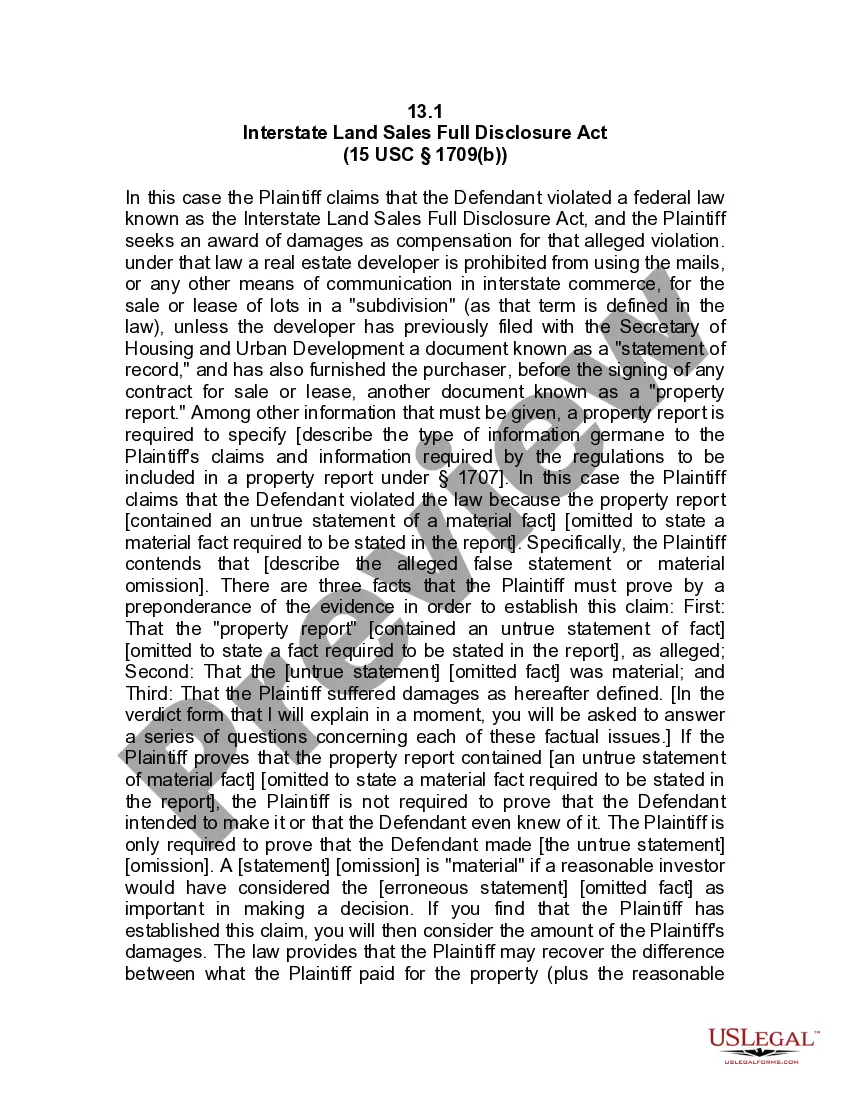
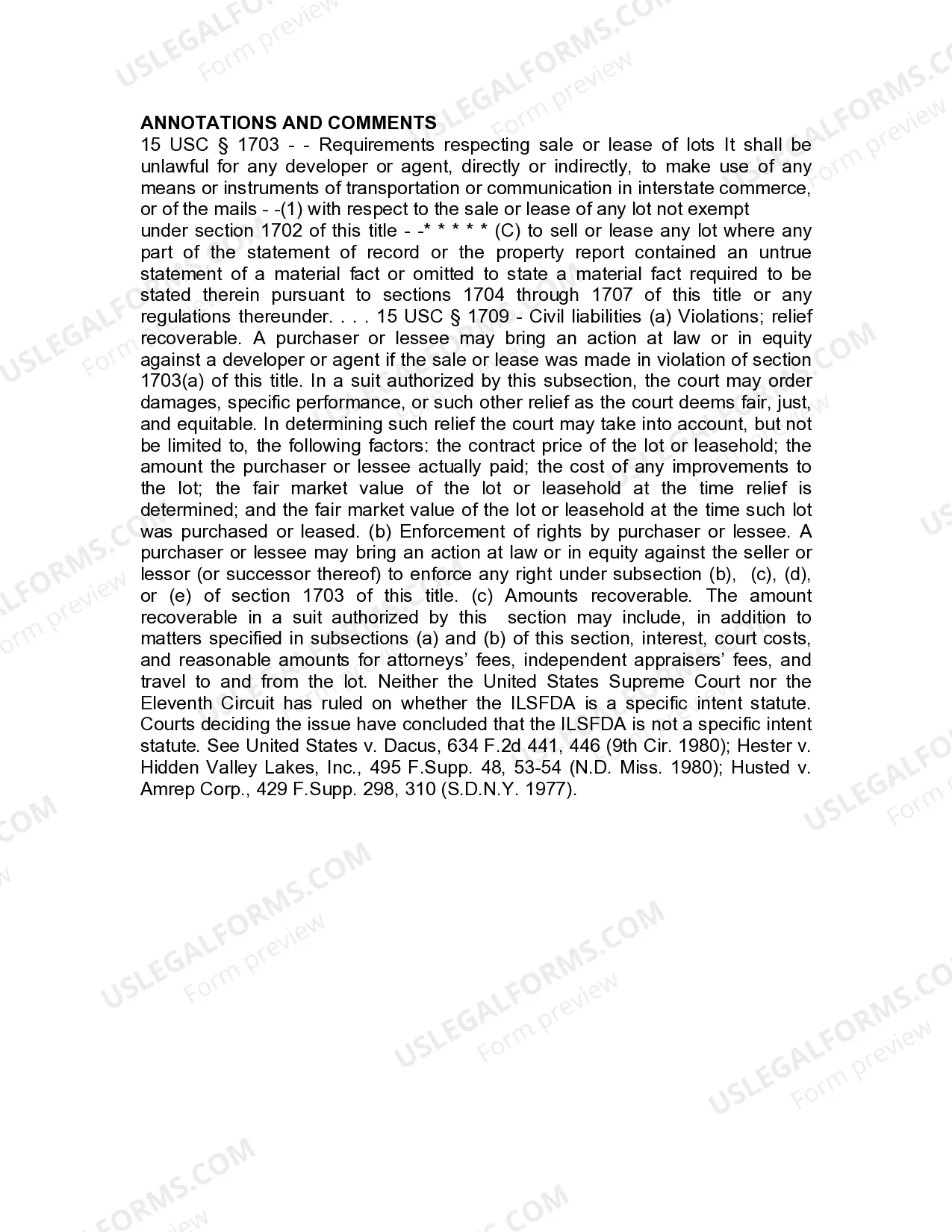
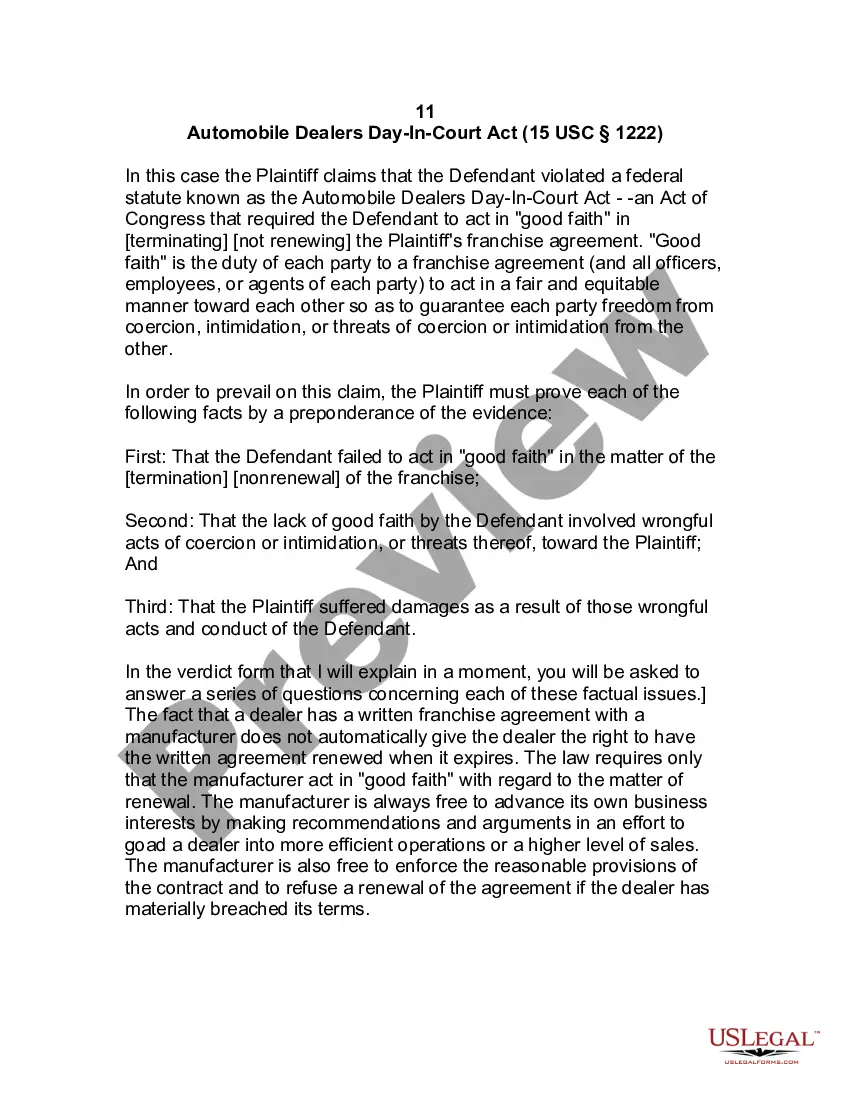
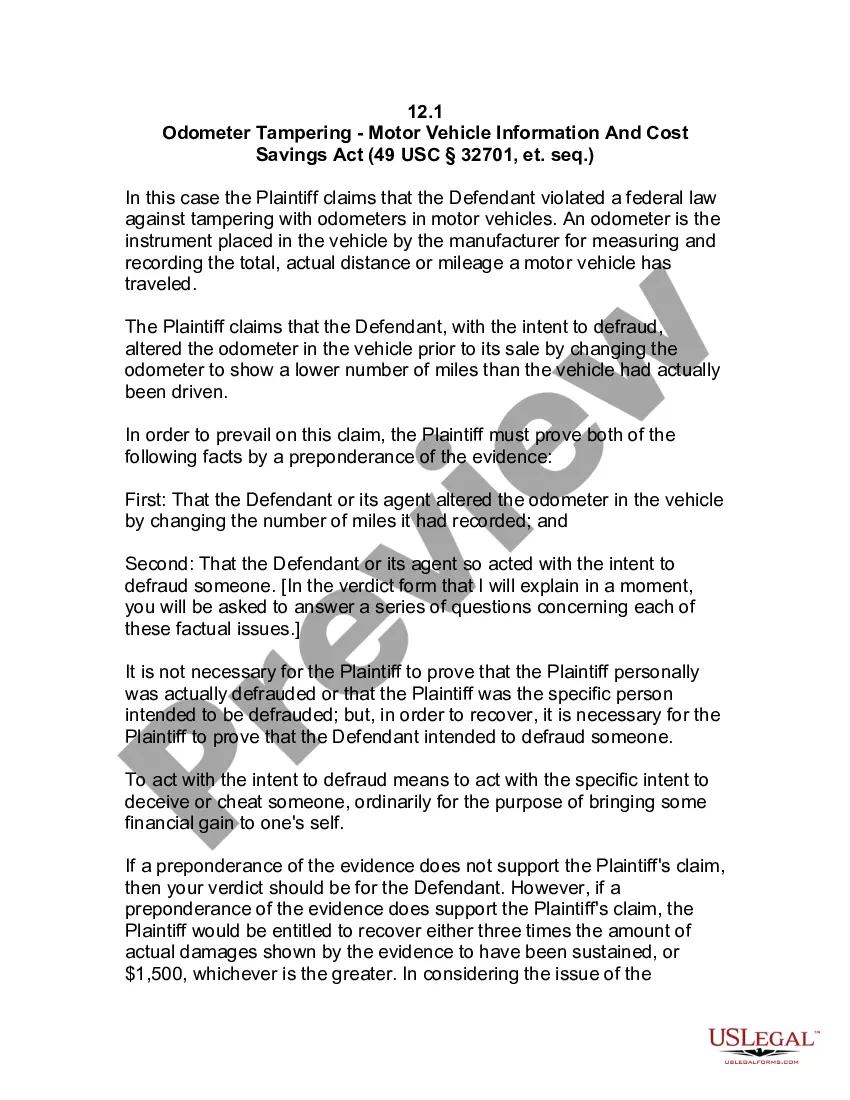
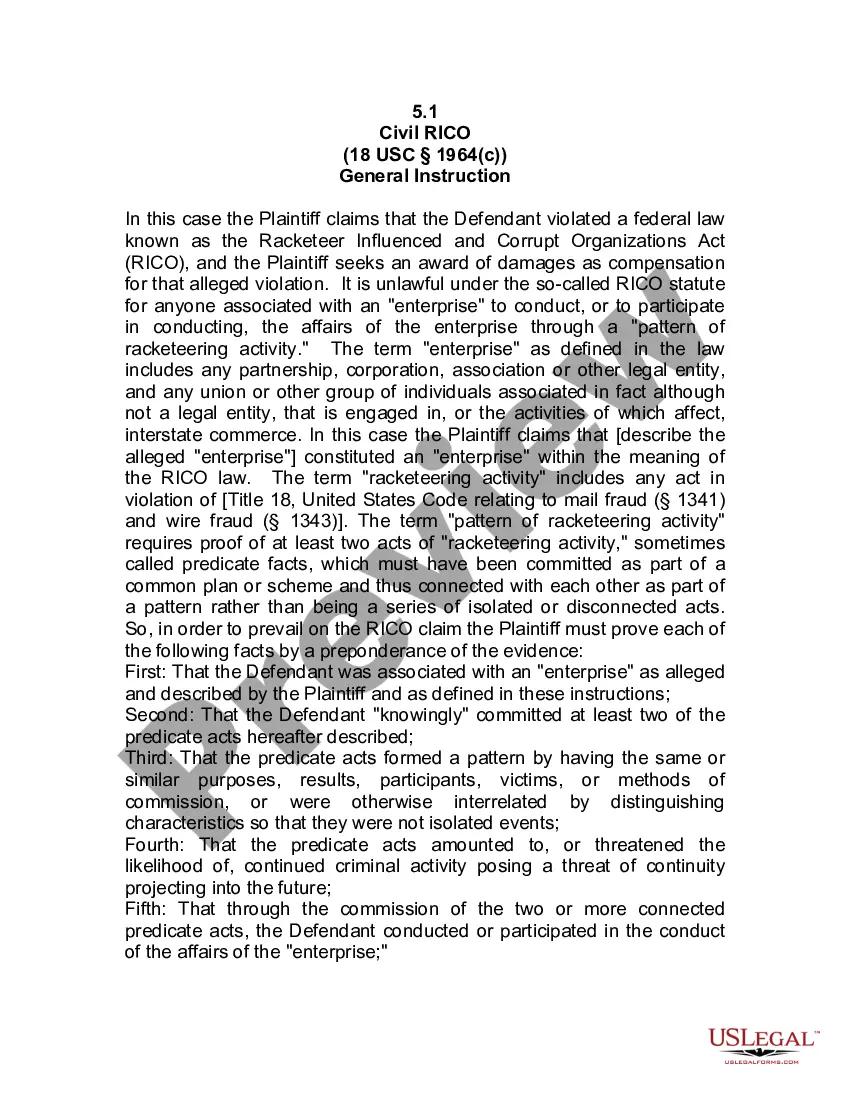
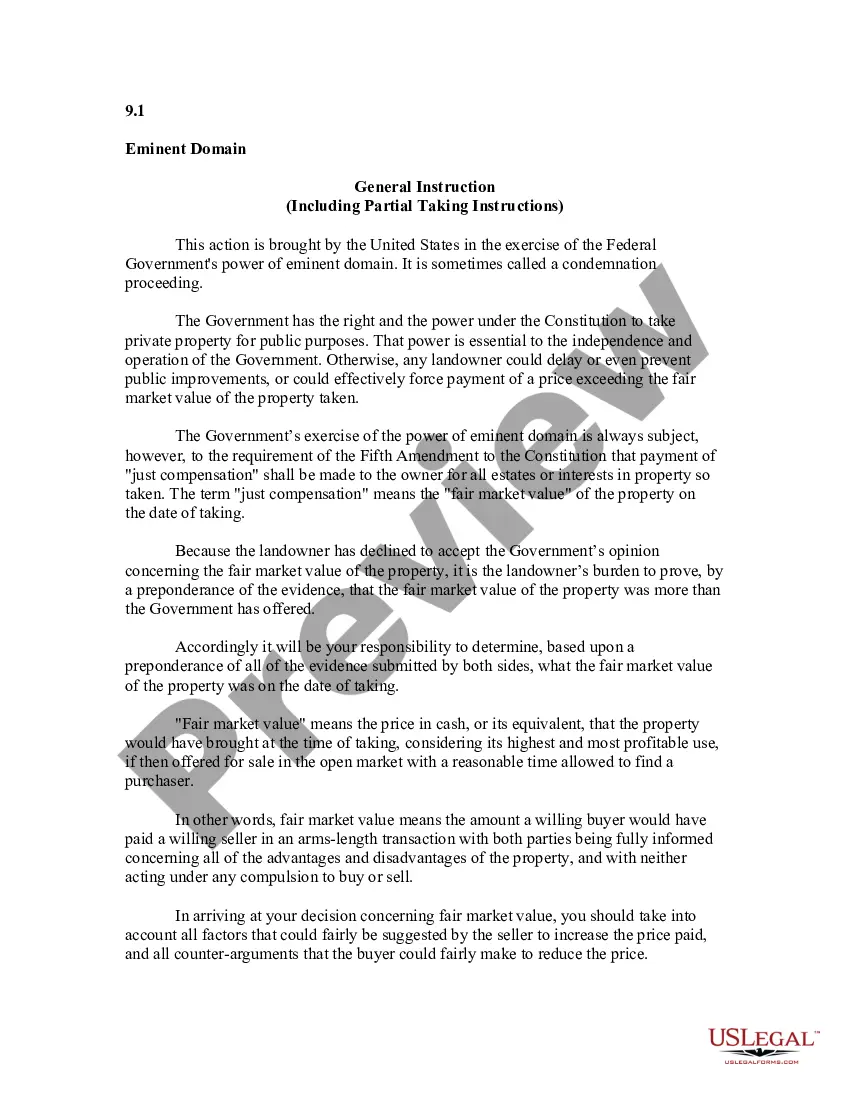
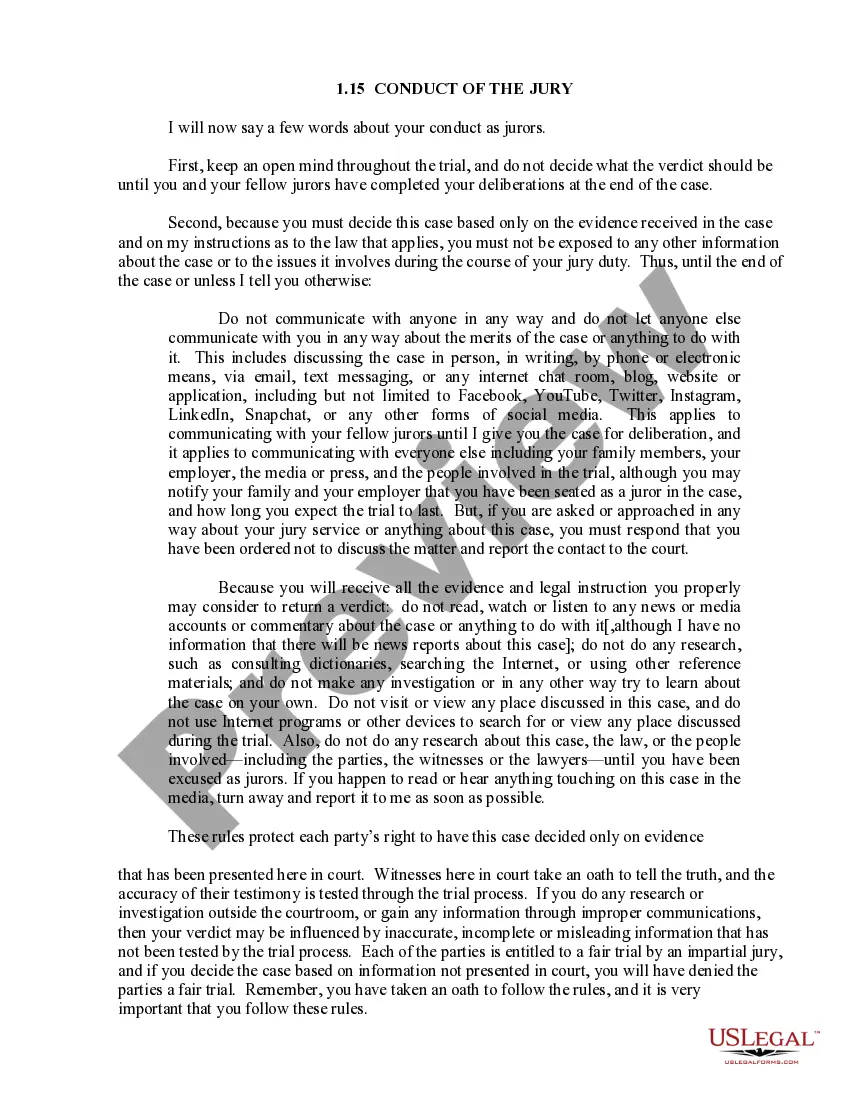
The Jury Instruction - 13.13.1 General Instruction form provides sample jury instructions regarding claims under the Interstate Land Sales Full Disclosure Act. It outlines what the jury should consider while deliberating on violations related to property reports and material misstatements. Unlike other forms that may focus on individual lawsuits, this form is specifically designed to guide jurors through the decision-making process in cases involving real estate transactions and disclosures.
Key components of this form
- Overview of the Interstate Land Sales Full Disclosure Act.
- Instructions for the jury regarding untrue statements and material omissions in property reports.
- Criteria for determining damages that the plaintiff may recover.
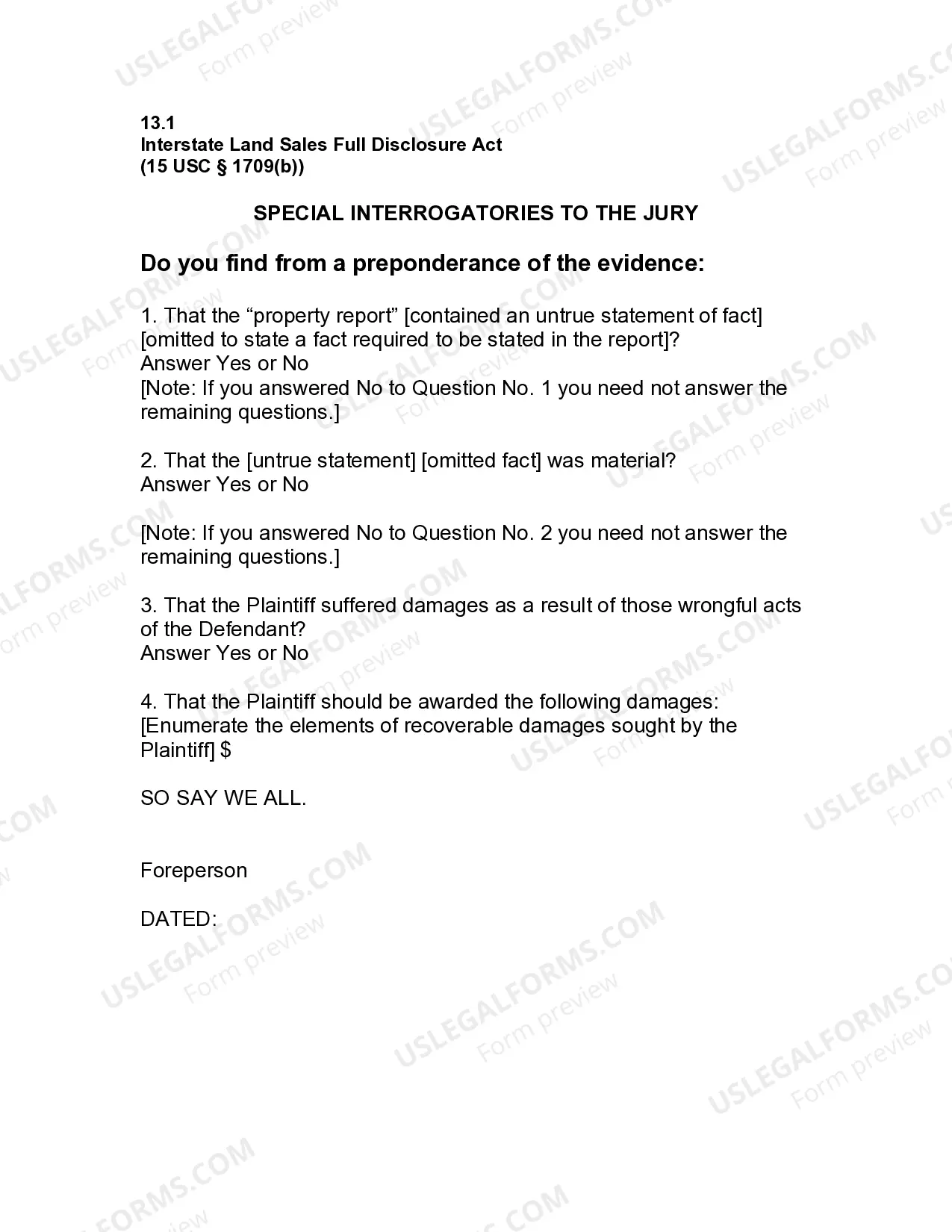
- Special interrogatories for the jury to answer regarding the plaintiff's claims.
- Requirements for establishing the materiality of a statement or omission.

When to use this form
This form is used in legal cases where a plaintiff alleges that a defendant, typically a real estate developer, has violated the Interstate Land Sales Full Disclosure Act. It is appropriate for jury trials that require instructions on how to assess claims of misstatements or omissions in property reports, particularly when determining the validity of the claims and the rightful compensation to the plaintiff.
Who this form is for
- Legal professionals overseeing jury trials concerning real estate transactions.
- Judges seeking to provide clear instructions to juries.
- Lawyers representing plaintiffs or defendants involved in claims under the Interstate Land Sales Full Disclosure Act.
- Individuals acting as jurors in cases where property report disclosures are in question.
How to complete this form
- Review the provided jury instructions to ensure understanding of the claims being presented.
- Assess the factual findings based on the special interrogatories outlined in the form.
- Ensure all essential elements such as untrue statements or omissions and their materiality are addressed.
- Determine appropriate damages if the plaintiff's claims are validated.
- Compile the jury's findings and conclusion based on the evidence presented during trial.
Notarization requirements for this form
In most cases, this form does not require notarization. However, some jurisdictions or signing circumstances might. US Legal Forms offers online notarization powered by Notarize, accessible 24/7 for a quick, remote process.
Get your form ready online
Our built-in tools help you complete, sign, share, and store your documents in one place.
Make edits, fill in missing information, and update formatting in US Legal Forms—just like you would in MS Word.
Download a copy, print it, send it by email, or mail it via USPS—whatever works best for your next step.
Sign and collect signatures with our SignNow integration. Send to multiple recipients, set reminders, and more. Go Premium to unlock E-Sign.
If this form requires notarization, complete it online through a secure video call—no need to meet a notary in person or wait for an appointment.
We protect your documents and personal data by following strict security and privacy standards.

Make edits, fill in missing information, and update formatting in US Legal Forms—just like you would in MS Word.

Download a copy, print it, send it by email, or mail it via USPS—whatever works best for your next step.

Sign and collect signatures with our SignNow integration. Send to multiple recipients, set reminders, and more. Go Premium to unlock E-Sign.

If this form requires notarization, complete it online through a secure video call—no need to meet a notary in person or wait for an appointment.

We protect your documents and personal data by following strict security and privacy standards.
Common mistakes to avoid
- Failing to consider all elements of the plaintiff's claims before reaching a verdict.
- Neglecting to address the materiality of the untrue statements or omissions clearly.
- Not understanding the difference between intent and the requirement for proving the defendant's statements were untrue.
Why use this form online
- Easy access to standardized jury instructions drafted by legal professionals.
- Convenient downloading options for immediate use in jury trials.
- Ability to modify the instructions to fit specific case needs, ensuring relevance.
Legal use & context
- This form is designed to guide jurors in accordance with federal law, ensuring appropriate legal standards are followed.
- The use of proper jury instructions can impact the outcome of trials involving property dealings significantly.
- Understanding the implications of misstatements is crucial for jurors to fulfill their duties effectively.
Looking for another form?
Form popularity
FAQ
These are civil or criminal jury instructions approved by a state court, bench committee, or bar association. They are commonly used by courts in the relevant jurisdiction, as they ease the process of drafting fair jury instructions and theoretically do not have errors.
Jury lists are compiled from voter registrations and driver license or ID renewals. From those lists, summonses are mailed. A panel of jurors is then assigned to a courtroom.
Jury Pool to Jury Box When a jury is needed for a trial, the group of qualified jurors is taken to the courtroom where the trial will take place. The judge and the attorneys then ask the potential jurors questions to determine their suitability to serve on the jury, a process called voir dire.
When the jury's verdict contradicts the great weight of the evidence, the trial judge is authorized to set aside that verdict and order a new trial. This power, sometimes called the thirteenth juror rule, dates back to the Blackstonian era. It exists in both civil and criminal cases, in both state and federal court.
They must reach a unanimous/majority verdict. They have split function. Discussions are conducted in secret.
Jury instructions, directions to the jury, or judge's charge are legal rules that jurors should follow when deciding a case.
Jury Instructions. instructions that are given by the trial judge that specifically state what the defendant can be found guilty of and what the prosecution or plaintiff has to prove in order for a guilty verdict.
A curative instruction is given to a jury by the judge in a case to negate the prejudicial effect of an erroneous instruction or tainted evidence.
Jury. a group of citizens who will decide the issues or questions of facts at trial.