Jury Instruction - 11.11.1 General Instruction
What this document covers
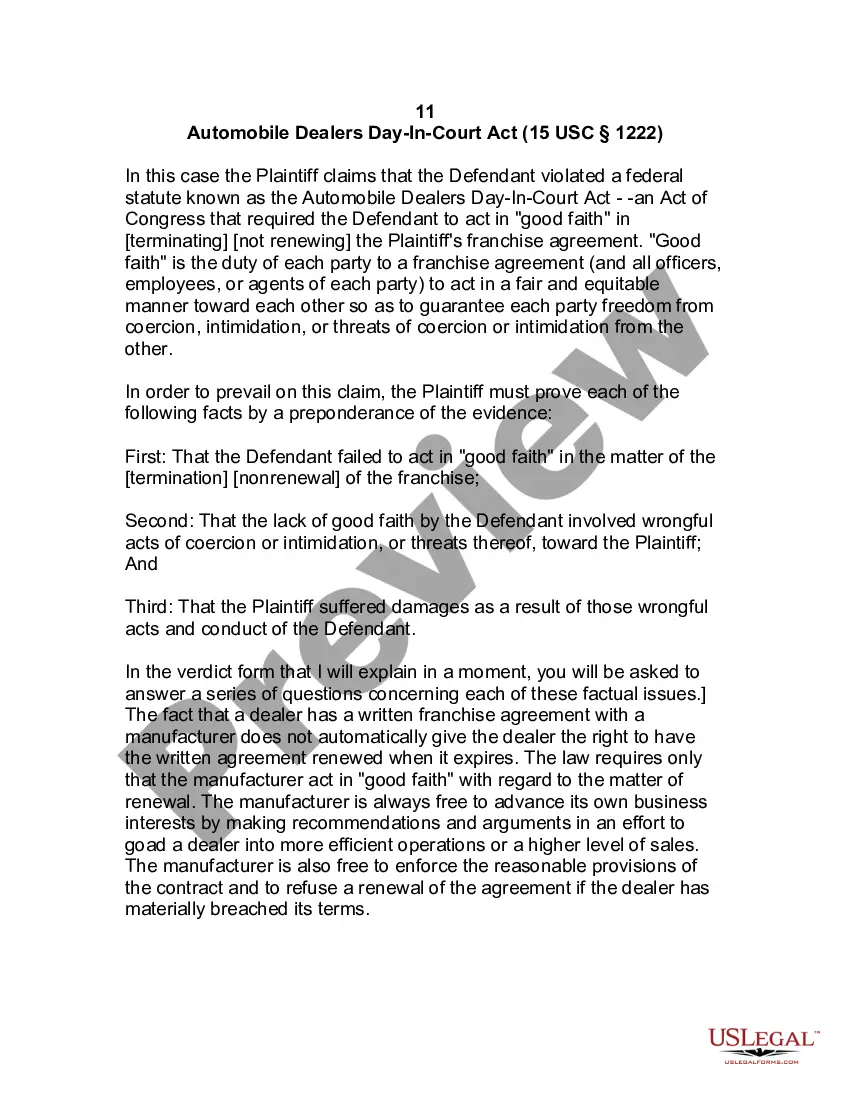
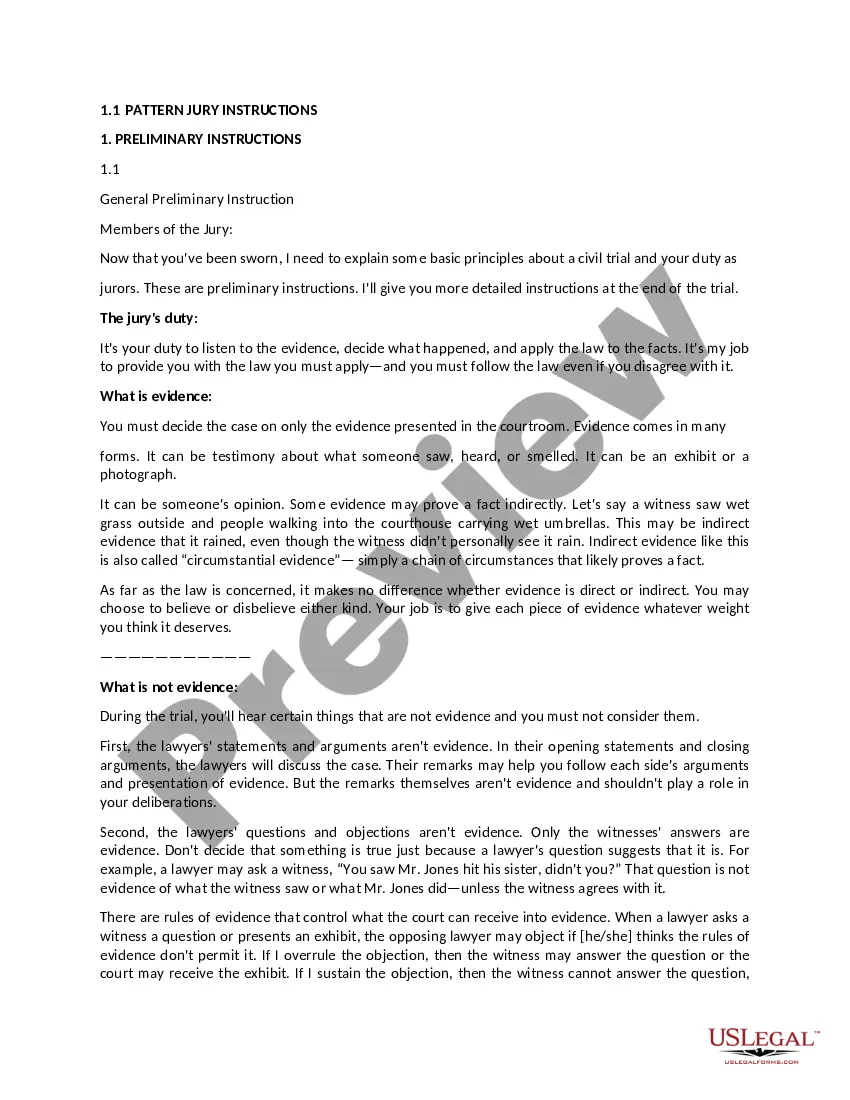
The Jury Instruction - 11.11.1 General Instruction form provides sample jury instructions specifically related to the Automobile Dealers Day-In-Court Act. This form is designed to guide jurors in understanding the specific legal obligations of parties involved in a franchise agreement, particularly regarding good faith actions in termination or non-renewal of agreements. Unlike other legal forms that may not address this specific statute, this form offers tailored instructions relevant across the United States, helping ensure clarity in legal proceedings involving automobile dealerships.
Form components explained
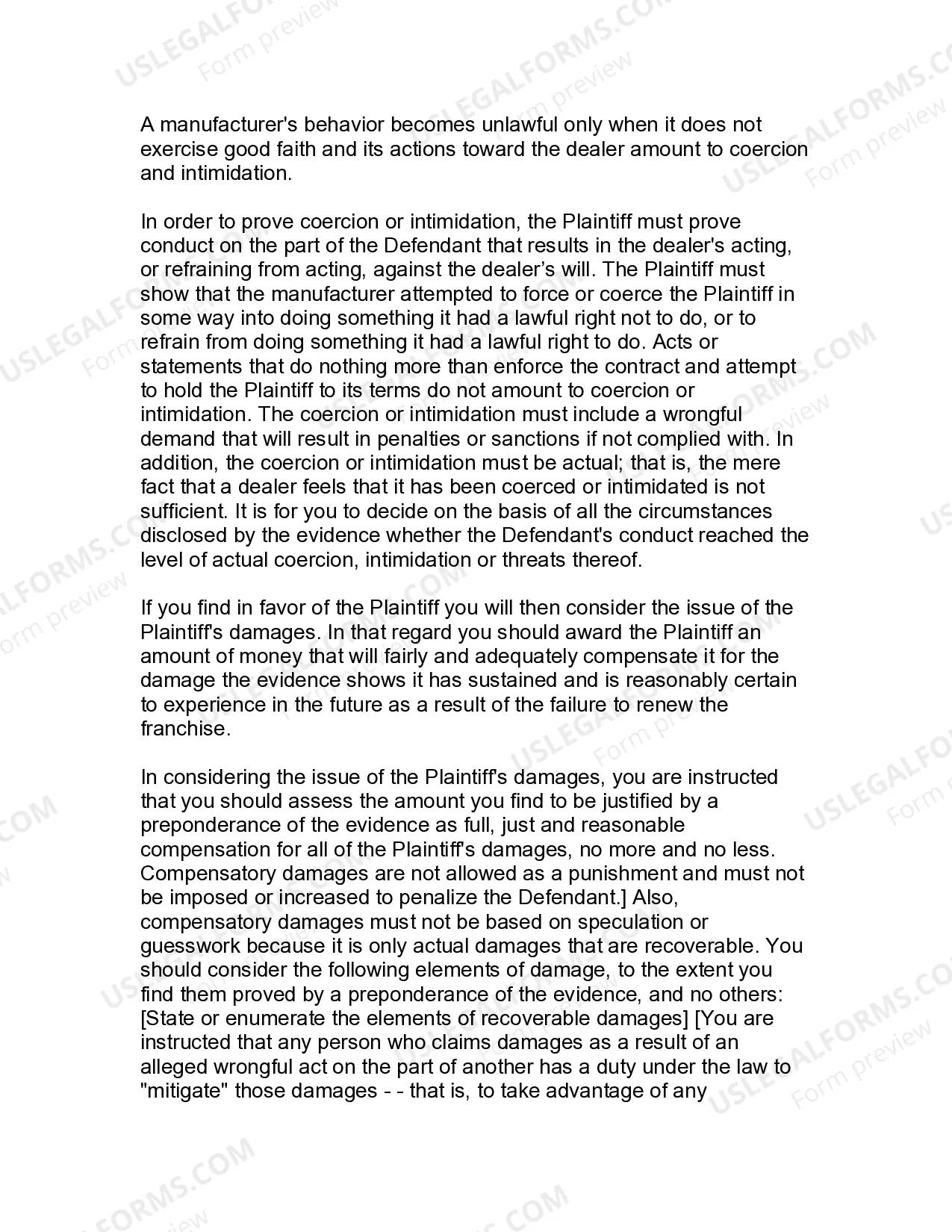
- Instructions on the definition of good faith between parties in a franchise agreement.
- Criteria for proving coercion or intimidation by the defendant.
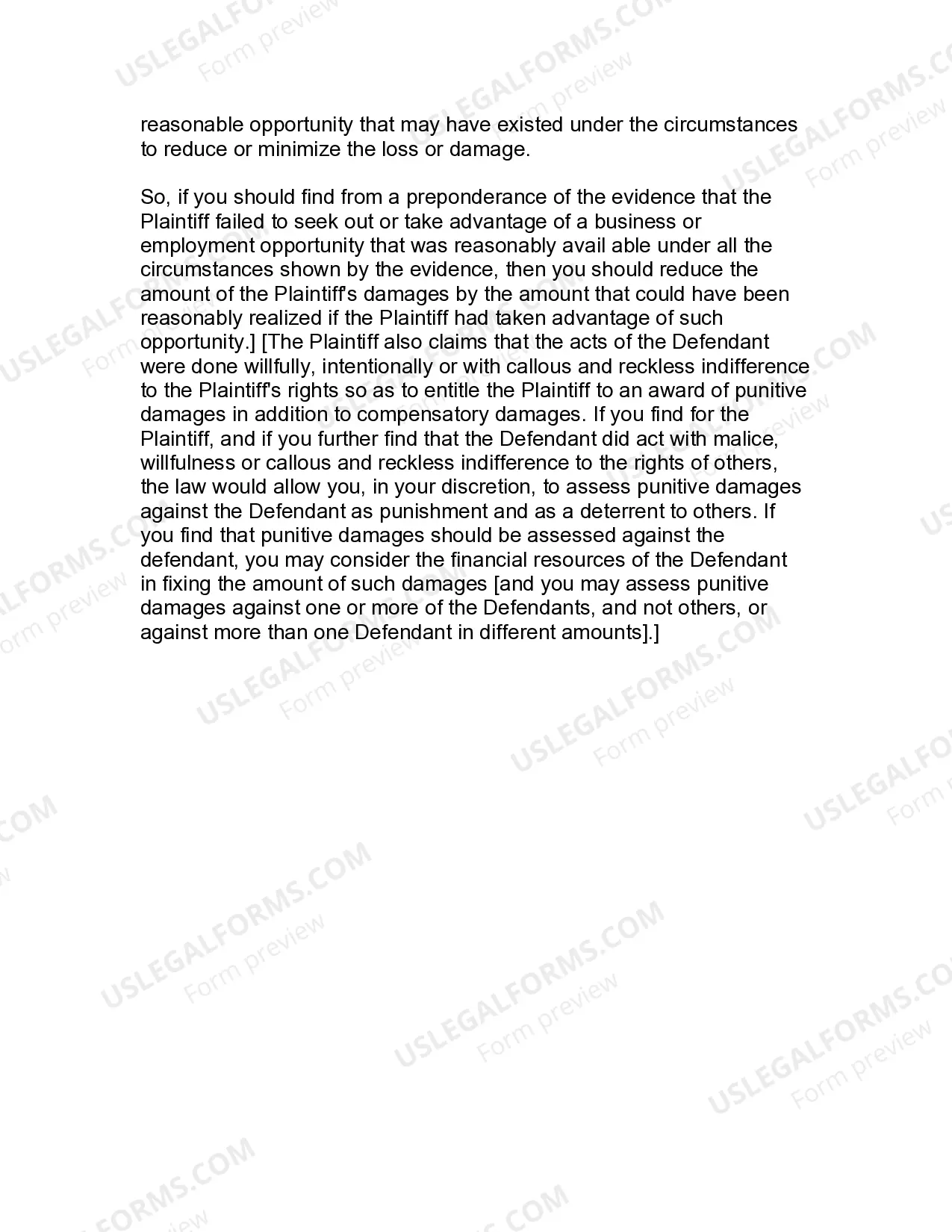
- Guidance on evaluating the plaintiff's damages.
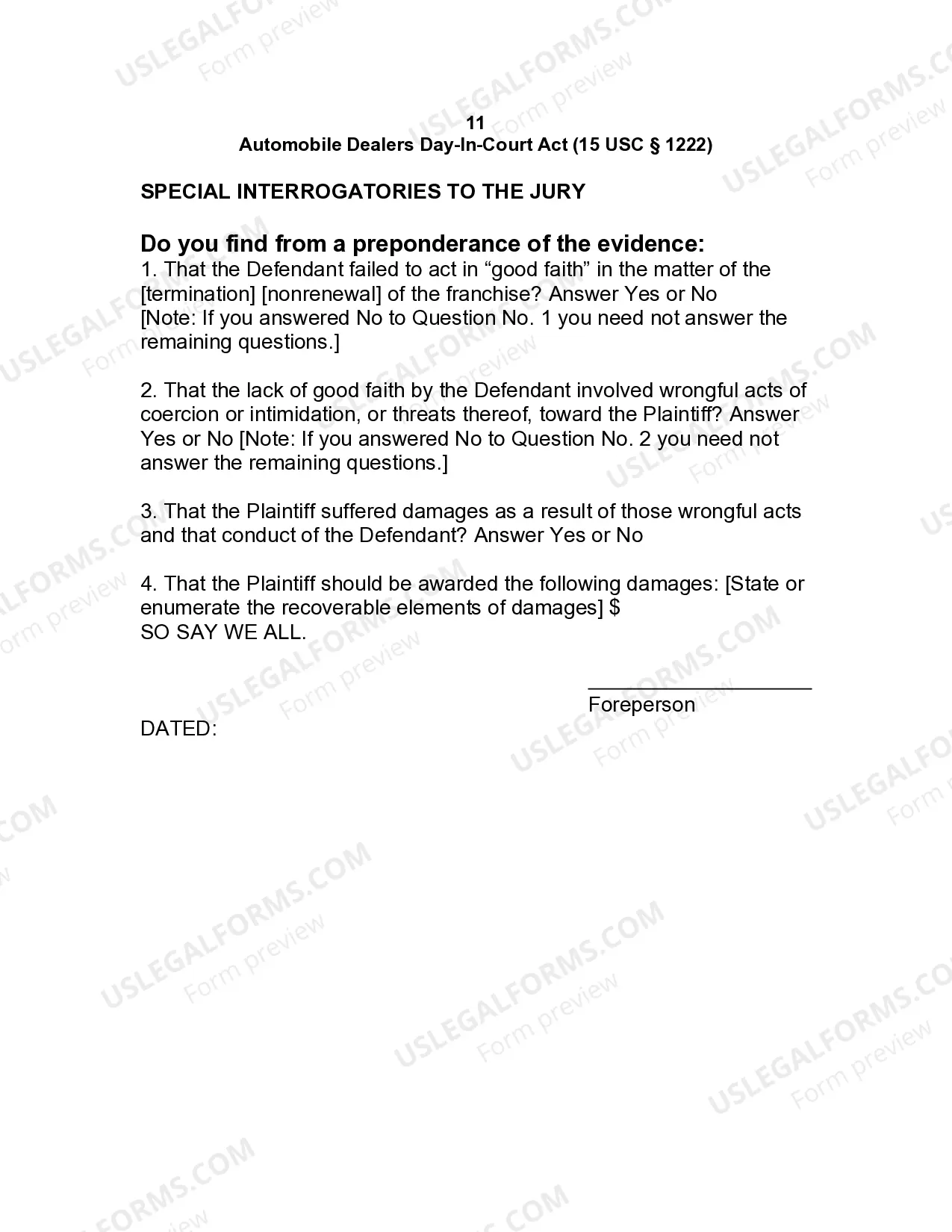
- Special interrogatories requiring jurors to determine the defendant's conduct.
- Clarification on the conditions under which punitive damages may be awarded.
Situations where this form applies
This form is used in court cases where a plaintiff alleges that a defendant, typically a manufacturer or franchisor, has not acted in good faith in terminating or failing to renew a franchise agreement. It is specifically applicable in disputes arising under the Automobile Dealers Day-In-Court Act, helping juries assess claims of wrongful termination, intimidation, or coercion in the context of business relationships.
Who this form is for
- Attorneys representing clients involved in franchise disputes.
- Judges seeking clear guidance for jury instructions in relevant cases.
- Legal professionals needing standardized jury instructions for educational purposes.
- Parties in a legal dispute regarding allegations of bad faith in a franchise agreement.
Instructions for completing this form
- Read the jury instruction carefully to understand your role and the legal standards involved.
- Identify the parties involved in the case and their respective responsibilities.
- Consider each element of good faith and whether coercion or intimidation occurred.
- Evaluate the evidence presented regarding the plaintiff's claims and the defendant's actions.
- Complete the special interrogatories, providing clear answers based on the evidence.
Does this document require notarization?
This form usually doesn’t need to be notarized. However, local laws or specific transactions may require it. Our online notarization service, powered by Notarize, lets you complete it remotely through a secure video session, available 24/7.
Get your form ready online
Our built-in tools help you complete, sign, share, and store your documents in one place.
Make edits, fill in missing information, and update formatting in US Legal Forms—just like you would in MS Word.
Download a copy, print it, send it by email, or mail it via USPS—whatever works best for your next step.
Sign and collect signatures with our SignNow integration. Send to multiple recipients, set reminders, and more. Go Premium to unlock E-Sign.
If this form requires notarization, complete it online through a secure video call—no need to meet a notary in person or wait for an appointment.
We protect your documents and personal data by following strict security and privacy standards.

Make edits, fill in missing information, and update formatting in US Legal Forms—just like you would in MS Word.

Download a copy, print it, send it by email, or mail it via USPS—whatever works best for your next step.

Sign and collect signatures with our SignNow integration. Send to multiple recipients, set reminders, and more. Go Premium to unlock E-Sign.

If this form requires notarization, complete it online through a secure video call—no need to meet a notary in person or wait for an appointment.

We protect your documents and personal data by following strict security and privacy standards.
Common mistakes to avoid
- Failing to understand the specific obligations of good faith in franchise agreements.
- Misinterpreting the criteria for what constitutes coercion or intimidation.
- Not accurately assessing the evidence related to damages sustained by the plaintiff.
- Overlooking the requirement to provide clear answers on the special interrogatories.
Benefits of completing this form online
- Convenience of accessing validated legal instructions at any time from any location.
- Editability allows for customization to fit specific case needs and local requirements.
- Reliability of using a form drafted by licensed legal professionals.
- Time-saving as the form can be downloaded and used immediately upon completion.
Legal use & context
- This form is enforceable in court and provides a standardized approach to jury instructions for cases involving franchise agreements.
- It highlights the legal requirements of good faith and outlines potential liability for breach of these obligations.
- Jurors are guided in evaluating facts specifically relevant to claims under the Automobile Dealers Day-In-Court Act.
Looking for another form?

Form popularity
FAQ
SEDAN. A sedan has four doors and a traditional trunk. COUPE. Mercedes-Benz. SPORTS CAR. These are the sportiest, hottest, coolest-looking coupes and convertibleslow to the ground, sleek, and often expensive. STATION WAGON. Volvo. HATCHBACK. CONVERTIBLE. SPORT-UTILITY VEHICLE (SUV) MINIVAN.
Automobile (or car) wheeled passenger vehicle that carries its own motor. Most definitions of the term specify that automobiles are designed to run primarily on roads, to have seating for one to six people, typically have four wheels, and be constructed principally for the transport of people rather than goods.
I'd say there is no difference in meaning. The two term came into use meaning "a motor vehicle with four wheels; usually propelled by an internal combustion engine; " about the same year (1895/1896). I agree with you that automobile may sound less colloquial, car is the more used expression.
Auto, bus, car, horseless carriage, machine, motor, motor vehicle, motorcar,