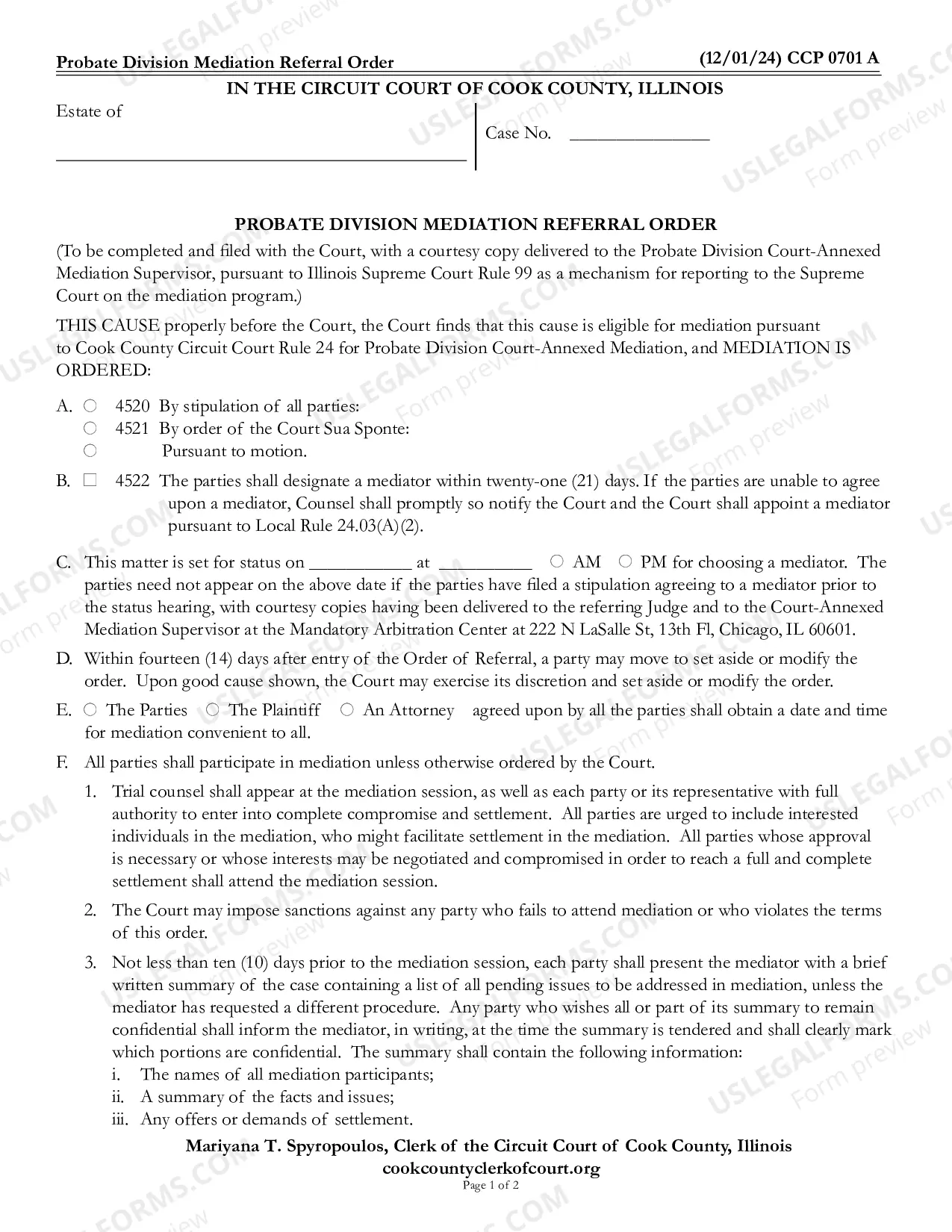
Jury Instruction - 1.8.1 Employee Claim Against Employer and Union - Vaca v. Sipes - General Instruction
What is this form?
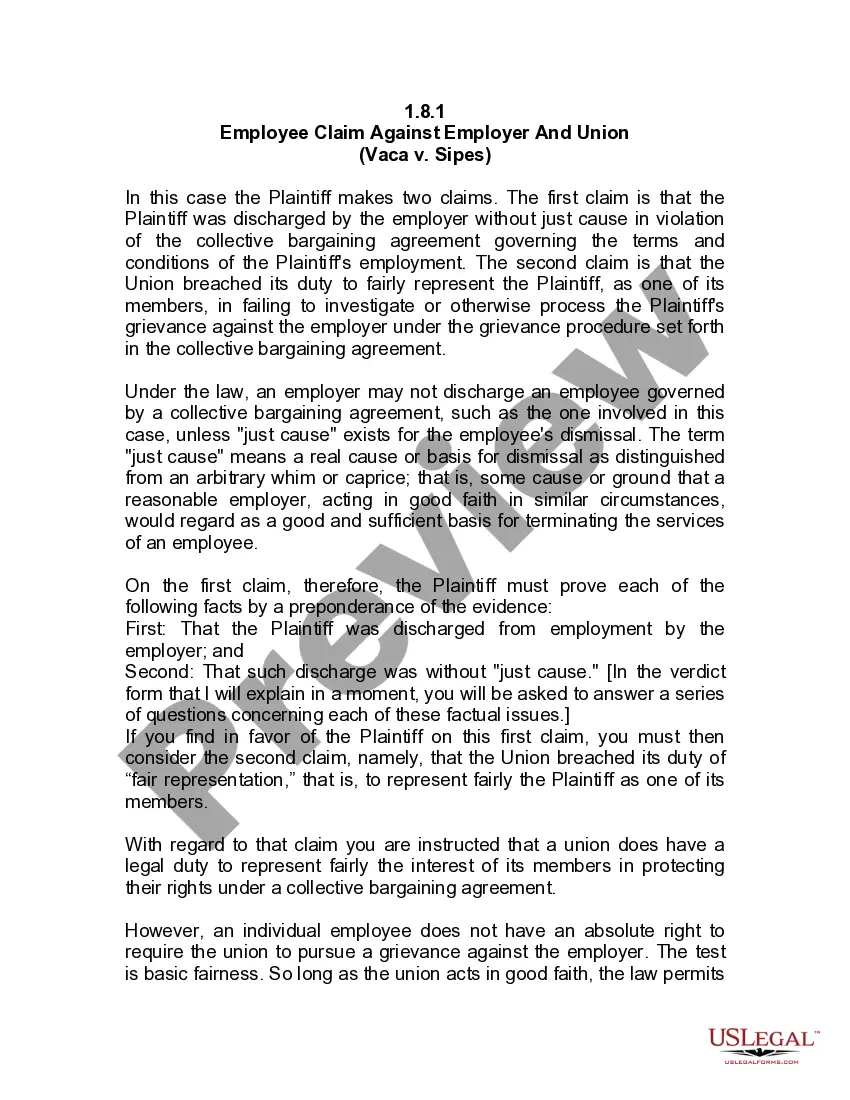
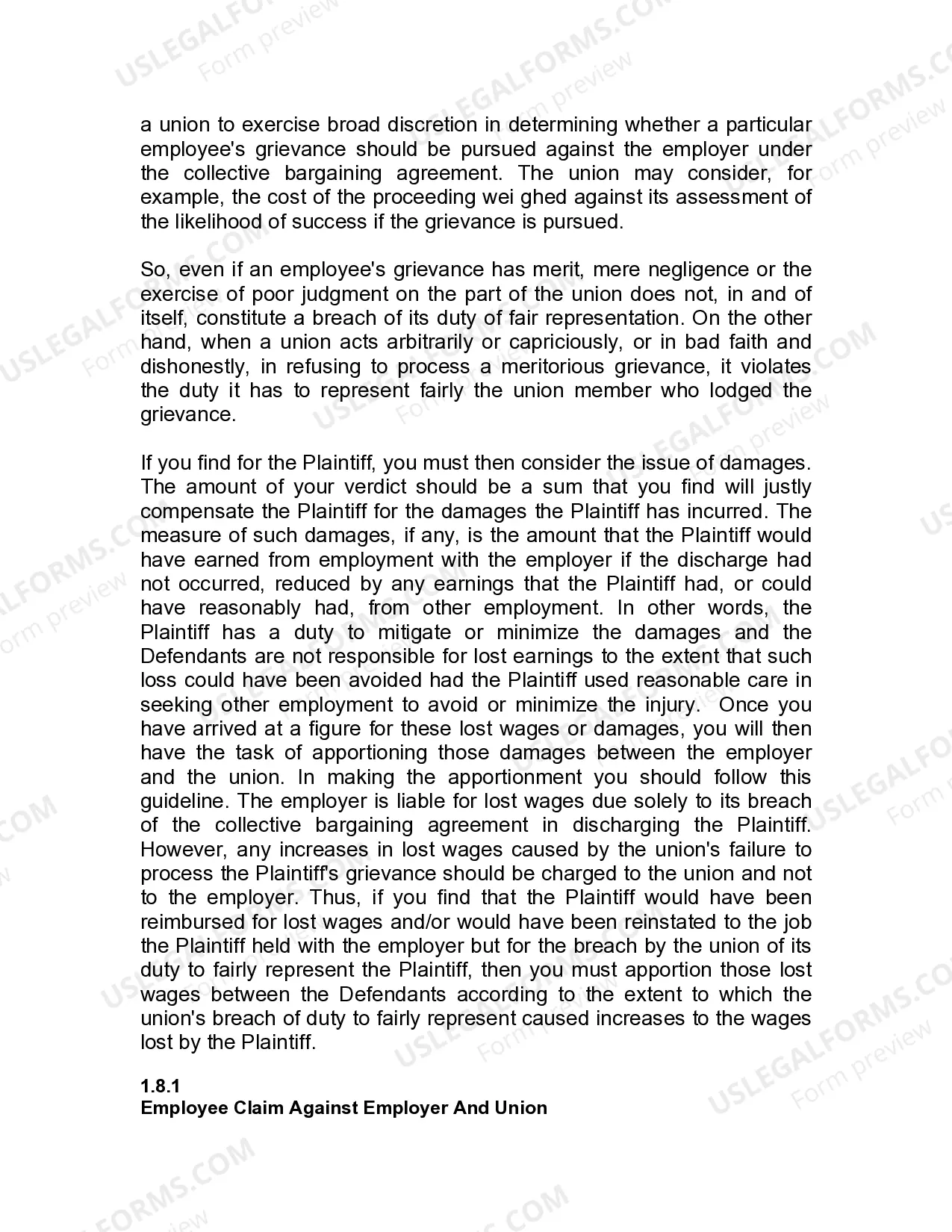
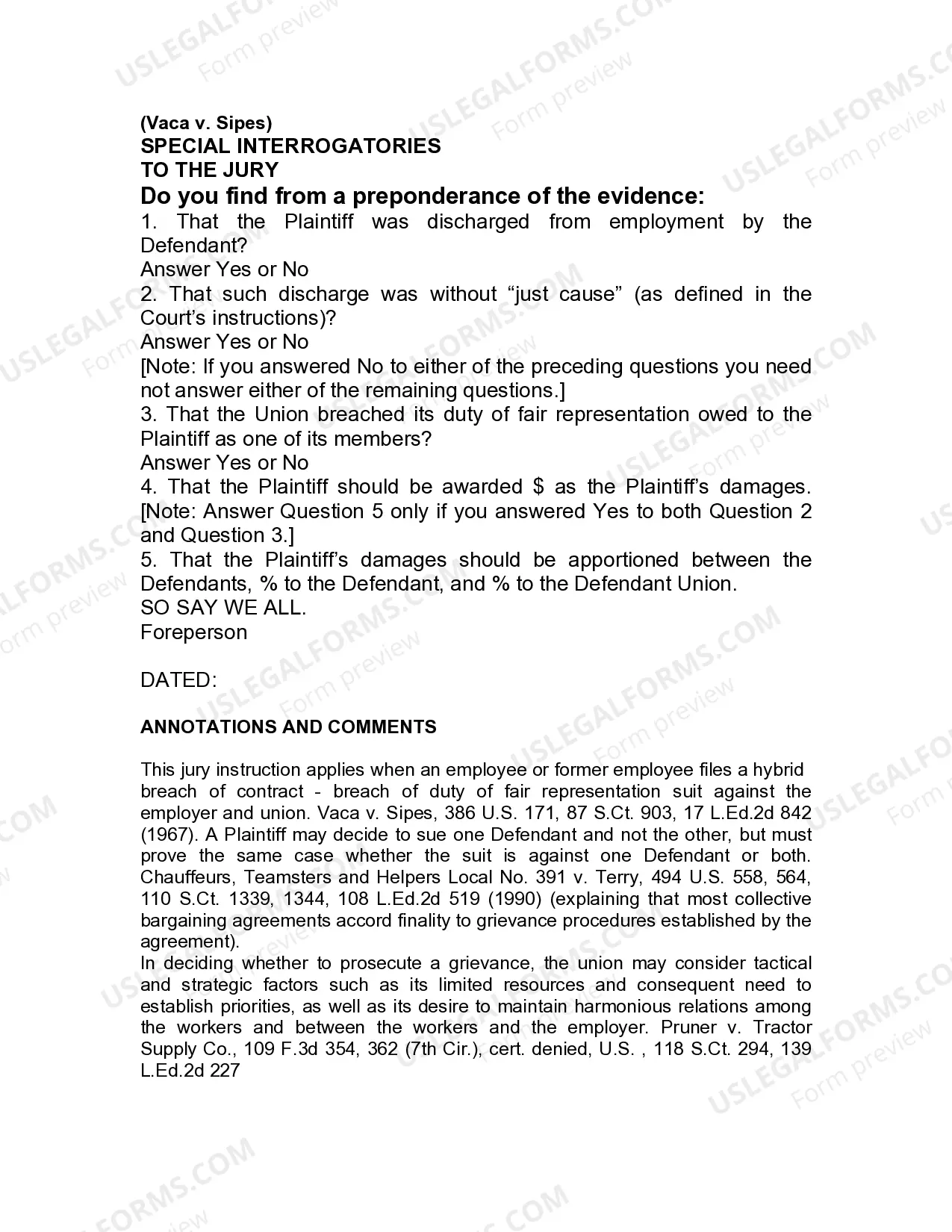
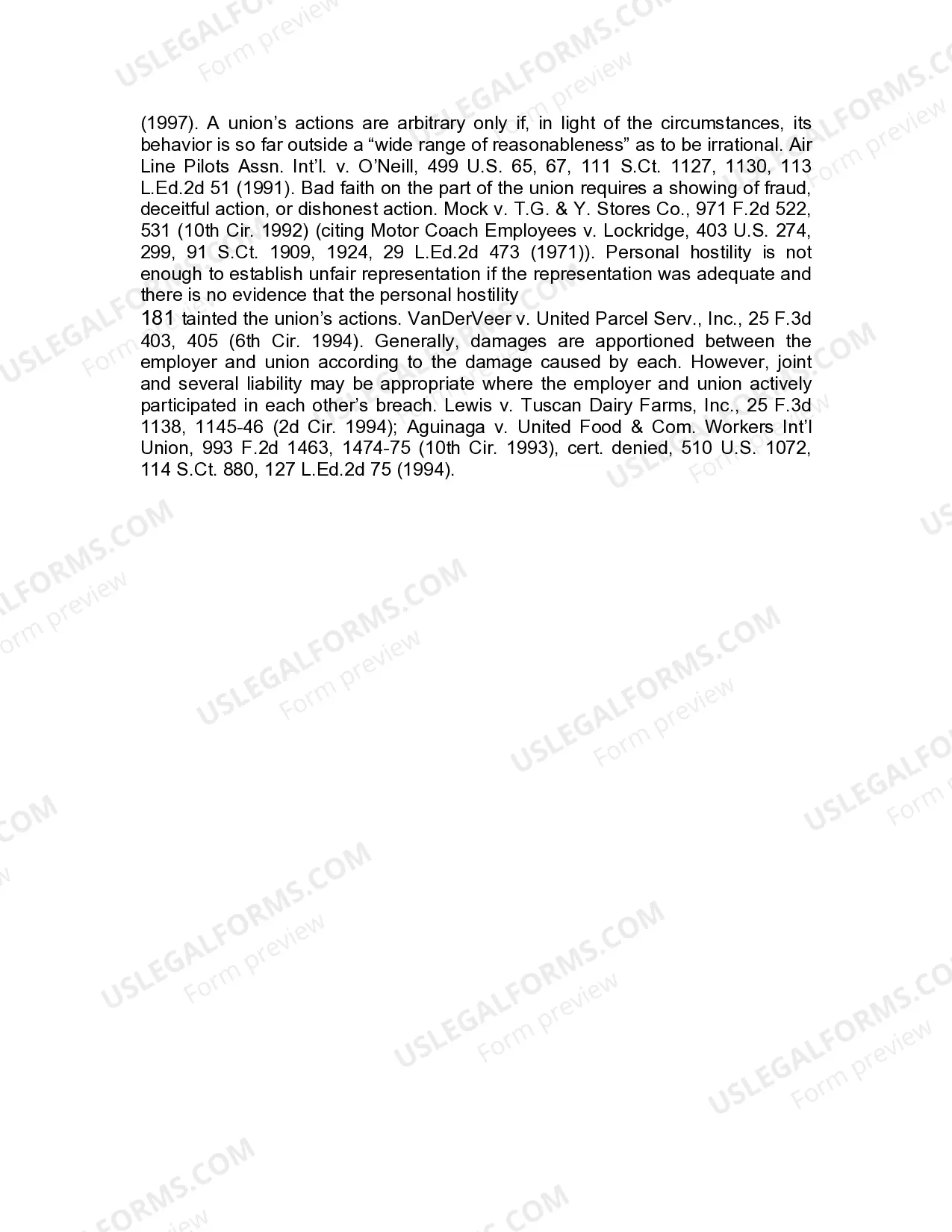
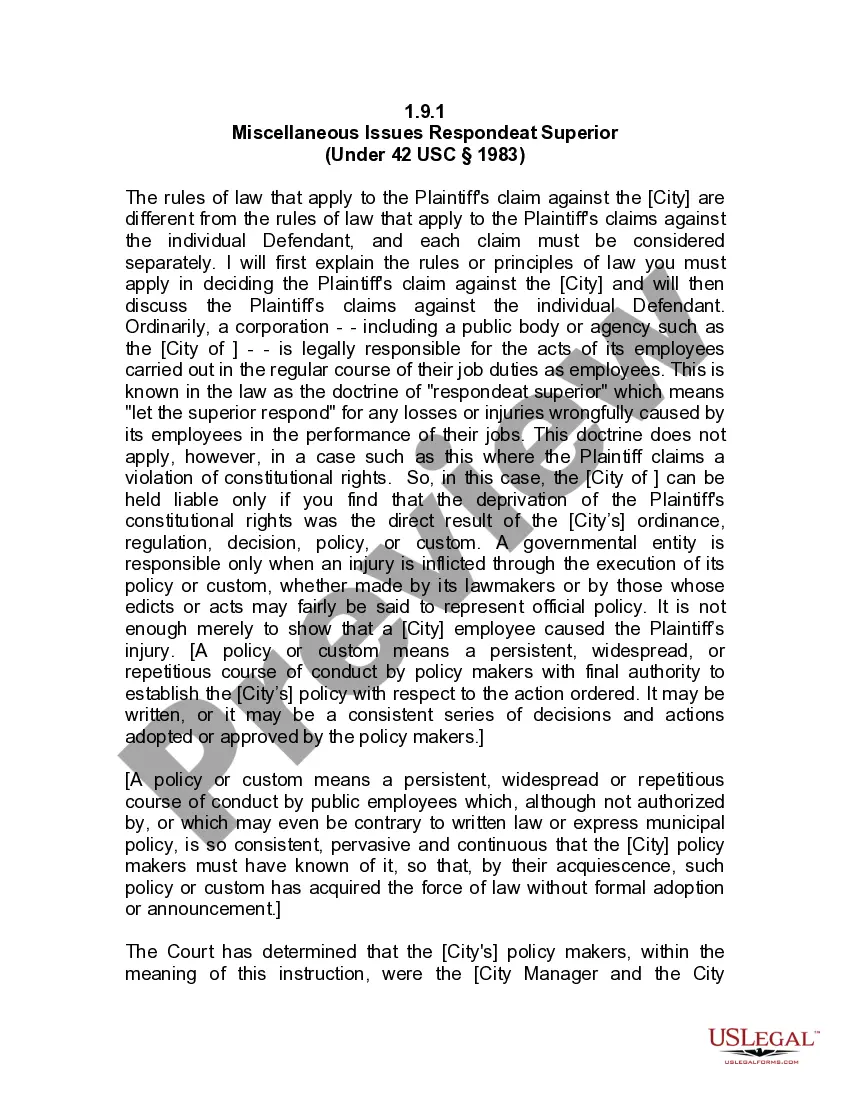
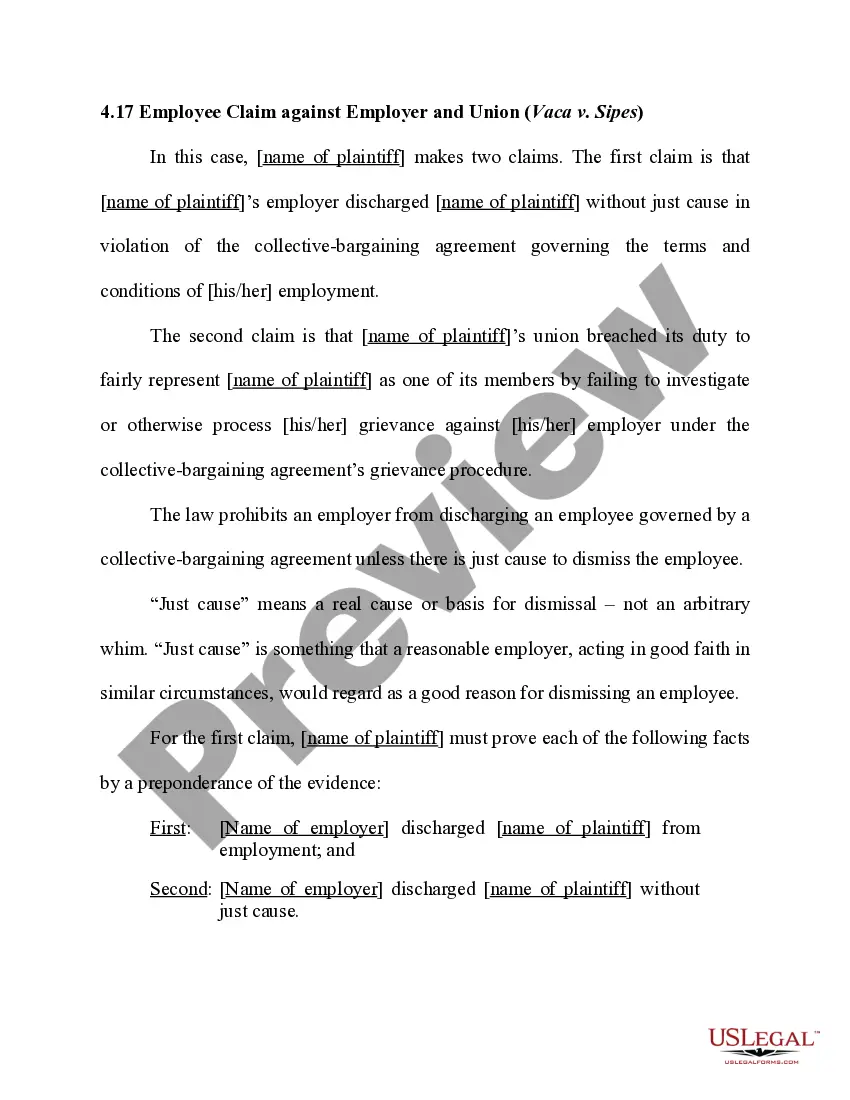
The Jury Instruction - Employee Claim Against Employer and Union - Vaca v. Sipes provides sample jury instructions for cases where an employee claims wrongful termination and breach of duty by a union. This form outlines the legal standards applicable to claims that an employer discharged an employee without just cause and that a union failed to represent the employee fairly. It serves as a model that can be adjusted to fit specific legal circumstances in various jurisdictions.
Main sections of this form
- Instructions for evaluating claims of wrongful termination and breach of duty.
- Definitions of "just cause" and the standards for discharge from employment.
- Guidelines for determining fair representation by the union.
- Questions that guide the jury in their verdict regarding liability and damages.
- Assessment criteria for apportioning damages between the employer and the union.
When this form is needed
This form should be used in situations where an employee believes they have been wrongfully terminated in violation of a collective bargaining agreement and that their union has failed to adequately represent them in the grievance process. It is particularly relevant in labor disputes involving both the employer and the union.
Who needs this form
- Employees seeking to file a claim against their employer for wrongful termination.
- Union members who believe their union acted inadequately regarding grievances.
- Legal representatives preparing jury instructions related to employment disputes.
- Judges or mediators in labor-related cases needing instructional guidance.
Steps to complete this form
- Review the legal definitions and standards provided in the instructions.
- Assess the circumstances of the employee's discharge from employment.
- Determine whether the union fulfilled its duty of fair representation.
- Answer the interrogatories based on the evidence presented in the case.
- Calculate the damages incurred by the employee due to wrongful termination.
Does this form need to be notarized?
In most cases, this form does not require notarization. However, some jurisdictions or signing circumstances might. US Legal Forms offers online notarization powered by Notarize, accessible 24/7 for a quick, remote process.
Get your form ready online
Our built-in tools help you complete, sign, share, and store your documents in one place.
Make edits, fill in missing information, and update formatting in US Legal Forms—just like you would in MS Word.
Download a copy, print it, send it by email, or mail it via USPS—whatever works best for your next step.
Sign and collect signatures with our SignNow integration. Send to multiple recipients, set reminders, and more. Go Premium to unlock E-Sign.
If this form requires notarization, complete it online through a secure video call—no need to meet a notary in person or wait for an appointment.
We protect your documents and personal data by following strict security and privacy standards.

Make edits, fill in missing information, and update formatting in US Legal Forms—just like you would in MS Word.

Download a copy, print it, send it by email, or mail it via USPS—whatever works best for your next step.

Sign and collect signatures with our SignNow integration. Send to multiple recipients, set reminders, and more. Go Premium to unlock E-Sign.

If this form requires notarization, complete it online through a secure video call—no need to meet a notary in person or wait for an appointment.

We protect your documents and personal data by following strict security and privacy standards.
Avoid these common issues
- Failing to present sufficient evidence that the employee was discharged without just cause.
- Not clearly establishing the union's duty of fair representation in the case.
- Misunderstanding how to calculate and apportion damages appropriately.
- Neglecting to tailor the jury instructions to the specific facts of the case.
Why use this form online
- Convenience of accessing and downloading legal forms from any location.
- Editable templates that allow for tailored jury instructions to meet specific case requirements.
- Reliability, as the forms are drafted by licensed attorneys ensuring legal compliance.
- Quick and easy navigation to the necessary forms without the need for in-person visits.
Legal use & context
- This form reflects legal standards established in Vaca v. Sipes, which outlines the interplay between wrongful termination claims and union duties.
- It is crucial for the legal process, as it helps jurors understand the specific obligations of employers and unions under collective bargaining agreements.
- The instructions serve as a crucial tool in assessing potential liability and damages in labor disputes.
Key takeaways
- The form outlines important jury instructions for employee claims against employers and unions.
- Clear definitions and criteria are crucial to understanding wrongful discharge and union obligations.
- Missteps in evidence or procedure can significantly impact the case's outcome.
Looking for another form?

Form popularity
FAQ
220e A "tangible employment action" means a significant change in employment status. Examples include hiring, firing, promotion, demotion, undesirable reassignment, a decision causing a significant change in benefits, compensation decisions, and work assignment.
Background. The United States Supreme Court has previously indicated that if harassment by a supervisor results in an "adverse employment action," it is irrelevant whether the employer had preventive measures in place (such as a harassment policy) or whether the plaintiff unreasonably failed to utilize those measures.
Non-selection. Firing. Failure to promote. Demotion. Suspension. Undesirable reassignment. Denial of a leave request.
An actual change that has an actual adverse effect on the job or working conditions, such as a firing, demotion, or suspension. When an employee claims to have been discriminated against or harassed by a supervisor, a tangible employment action supports the employee's case (and may be required to be proved).