Jury Instruction - 1.4.1 Age Discrimination In Employment Act 29 USC Sect.621 - 634 General Instruction
Understanding this form
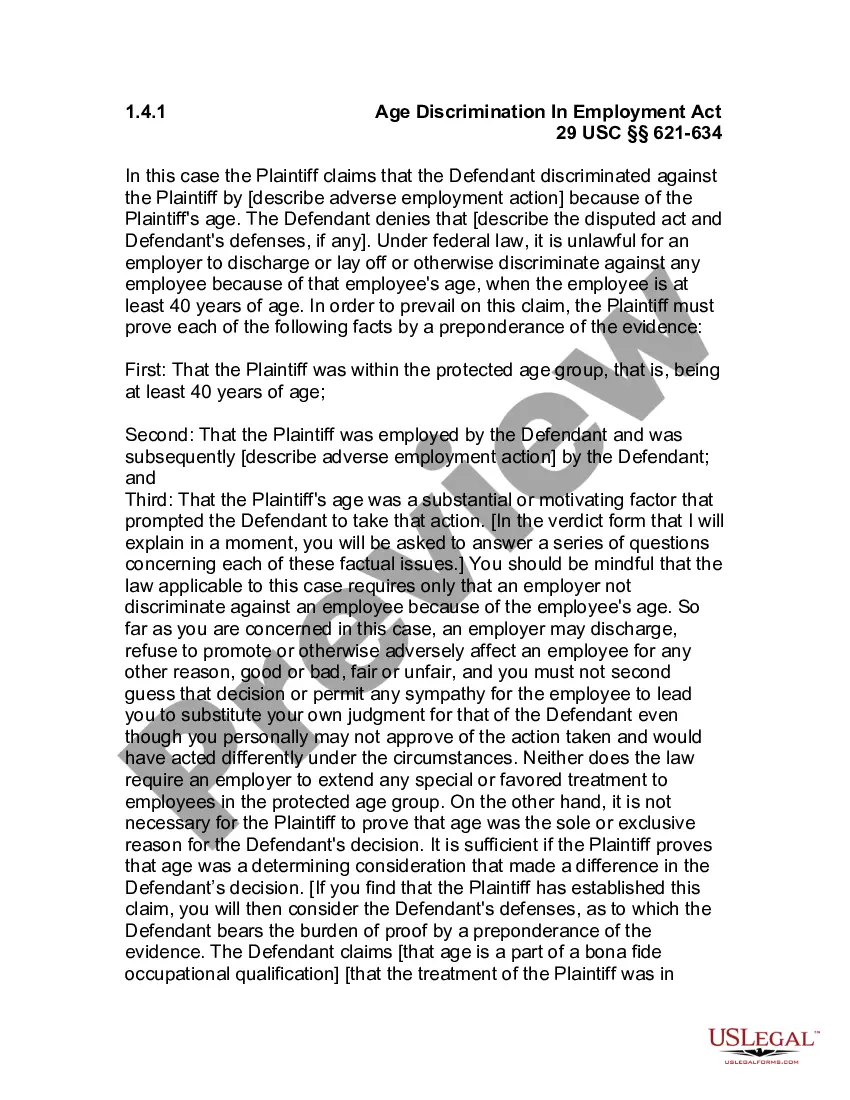
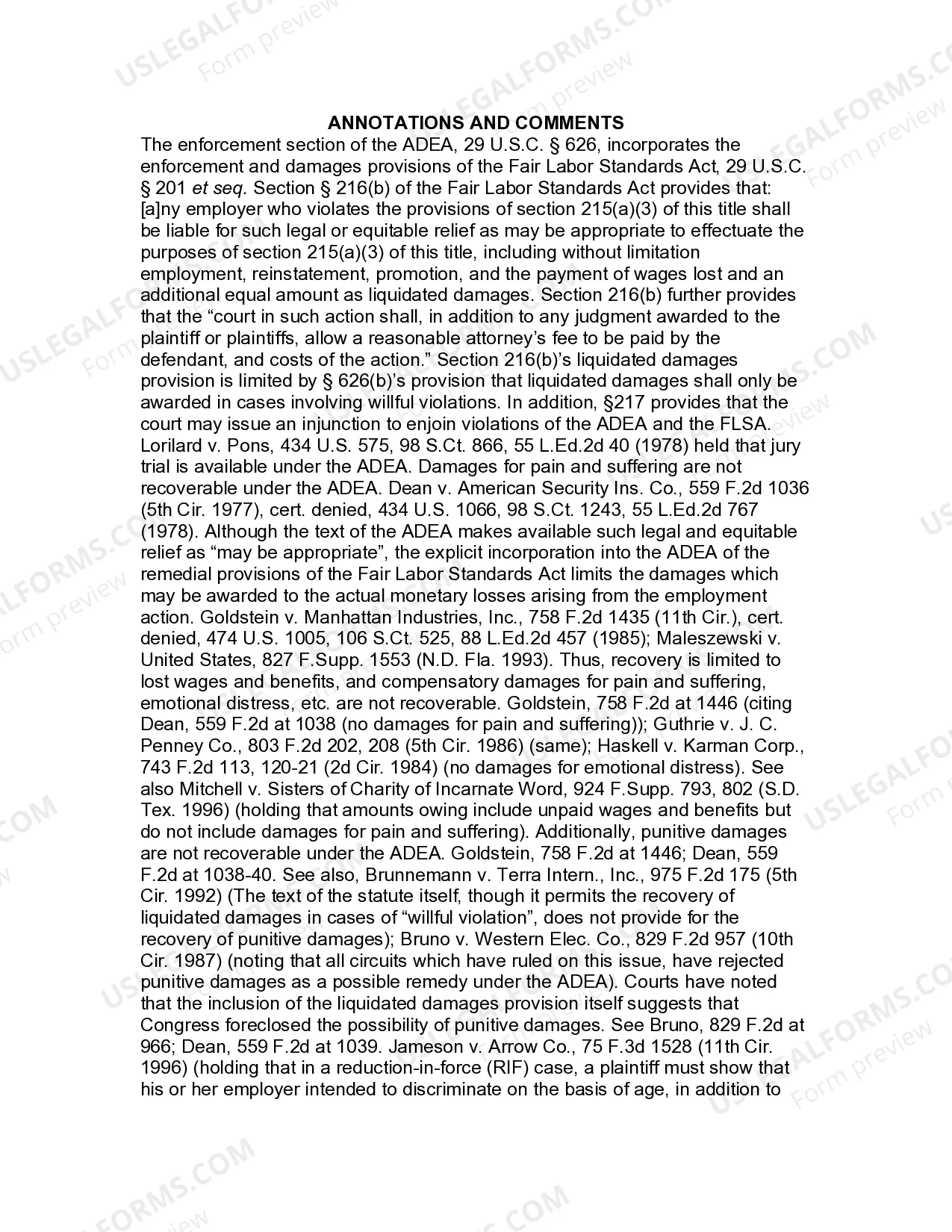
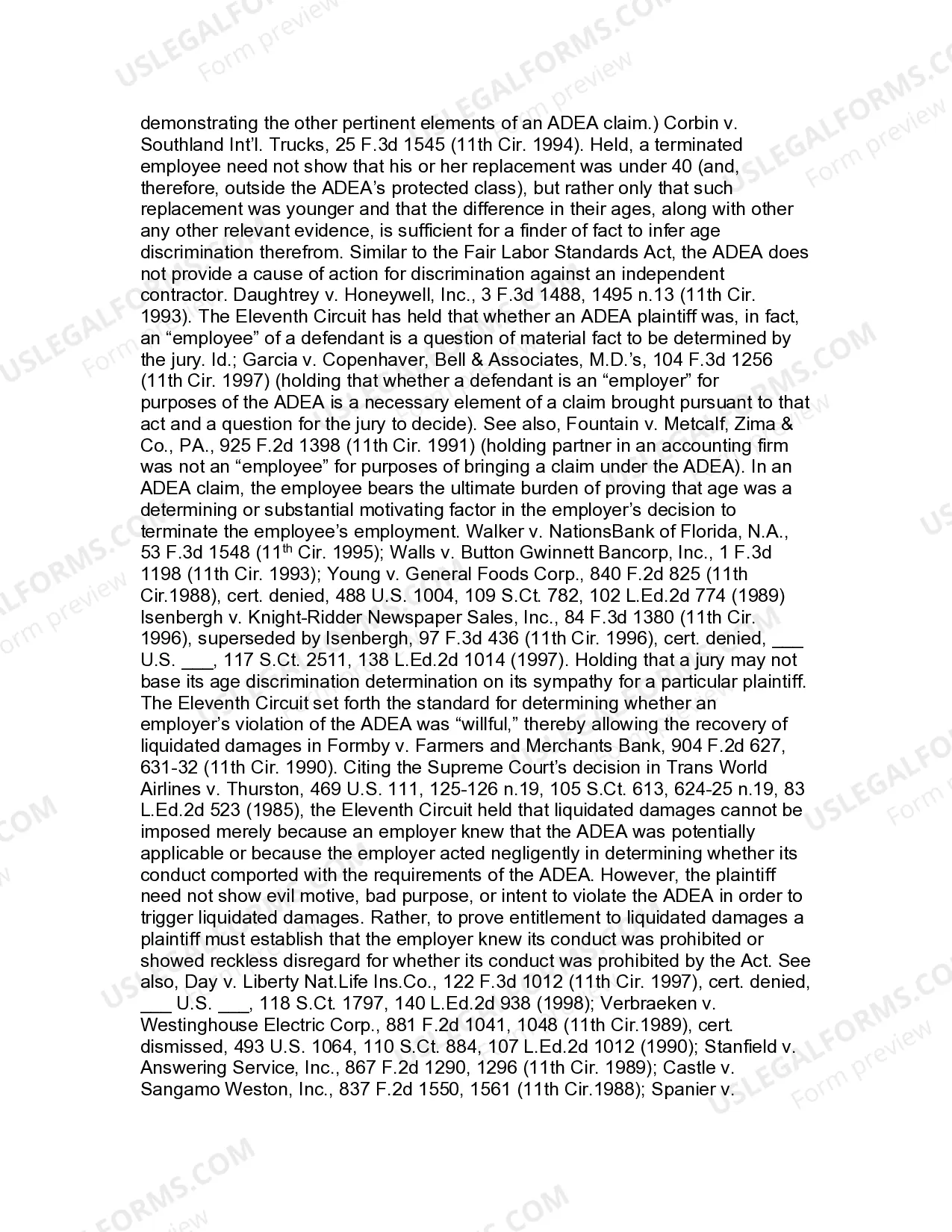
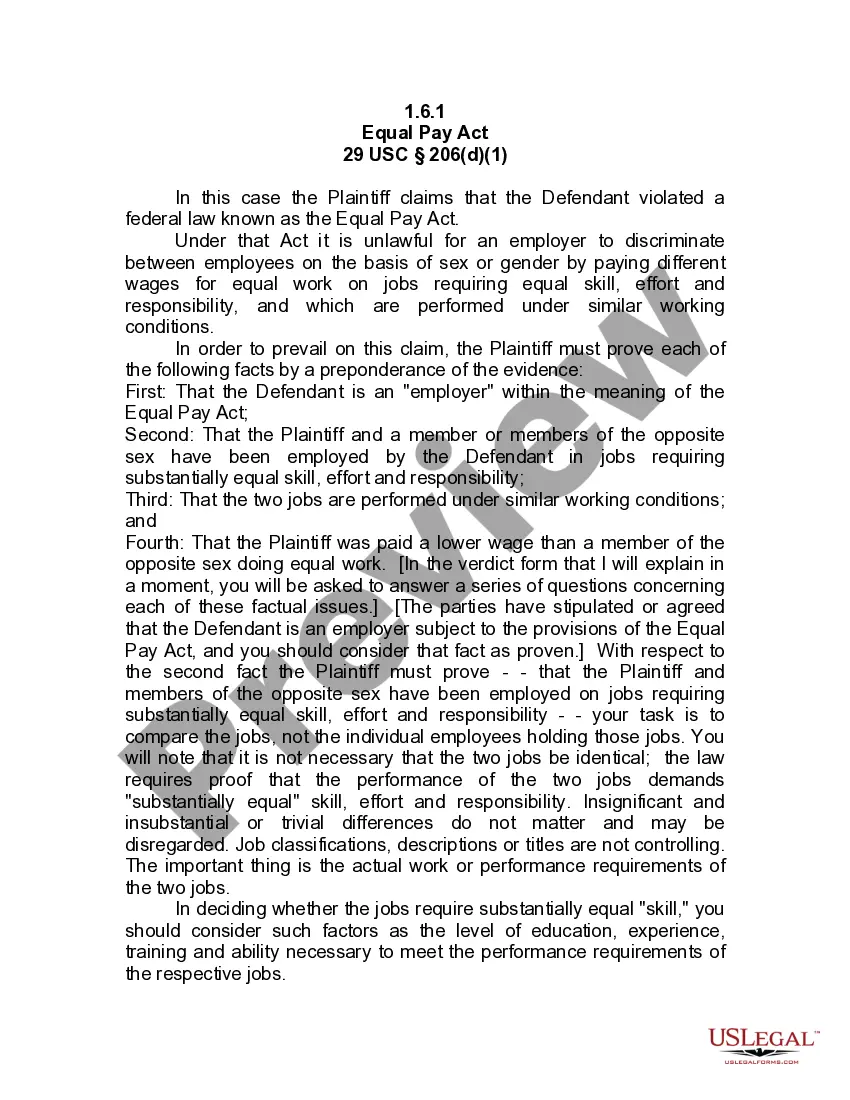
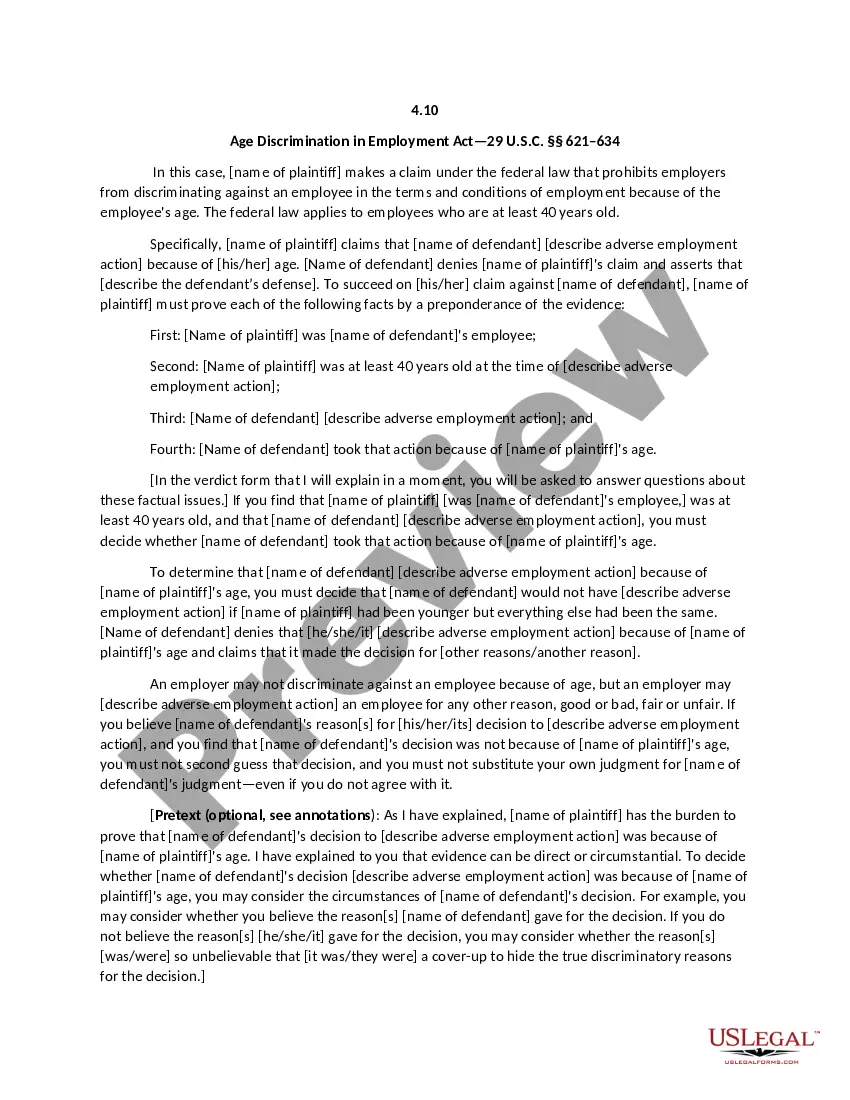
The Jury Instruction - 1.4.1 Age Discrimination In Employment Act is a legal document that provides standard jury instructions for cases related to age discrimination in employment, specifically under the Age Discrimination in Employment Act (ADEA). This form helps jurors understand the law and the necessary considerations when evaluating cases of alleged discrimination based on age, ensuring a fair trial for both plaintiffs and defendants. Unlike similar forms, it offers a comprehensive set of instructions tailored for age discrimination claims, as outlined in 29 USC Sections 621-634.
Key parts of this document
- Federal legal standards regarding age discrimination and the ADEA.
- Criteria the plaintiff must prove for age discrimination claims.
- Guidance on defining adverse employment actions in relation to age.
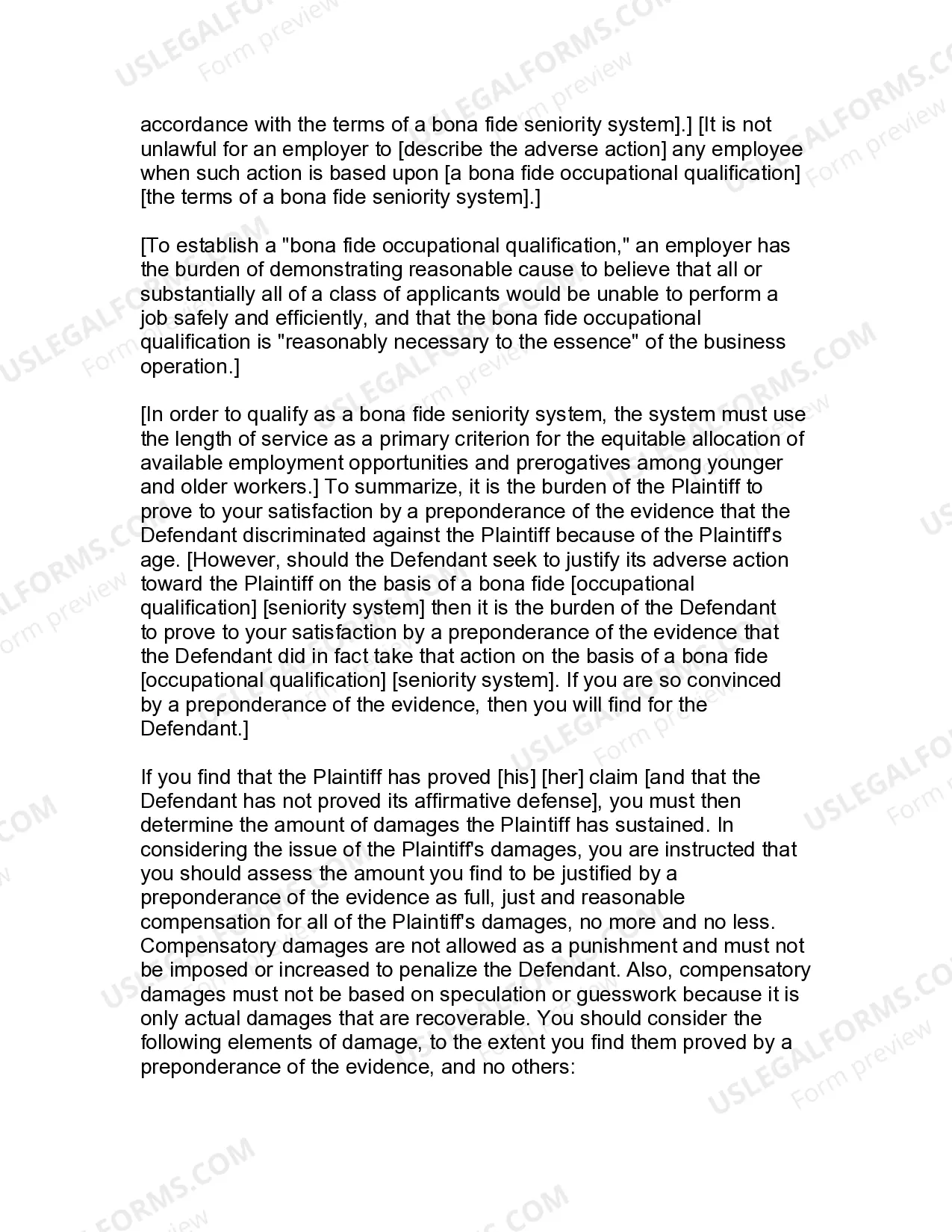
- Understanding the defendant's burden of proof for justifications.
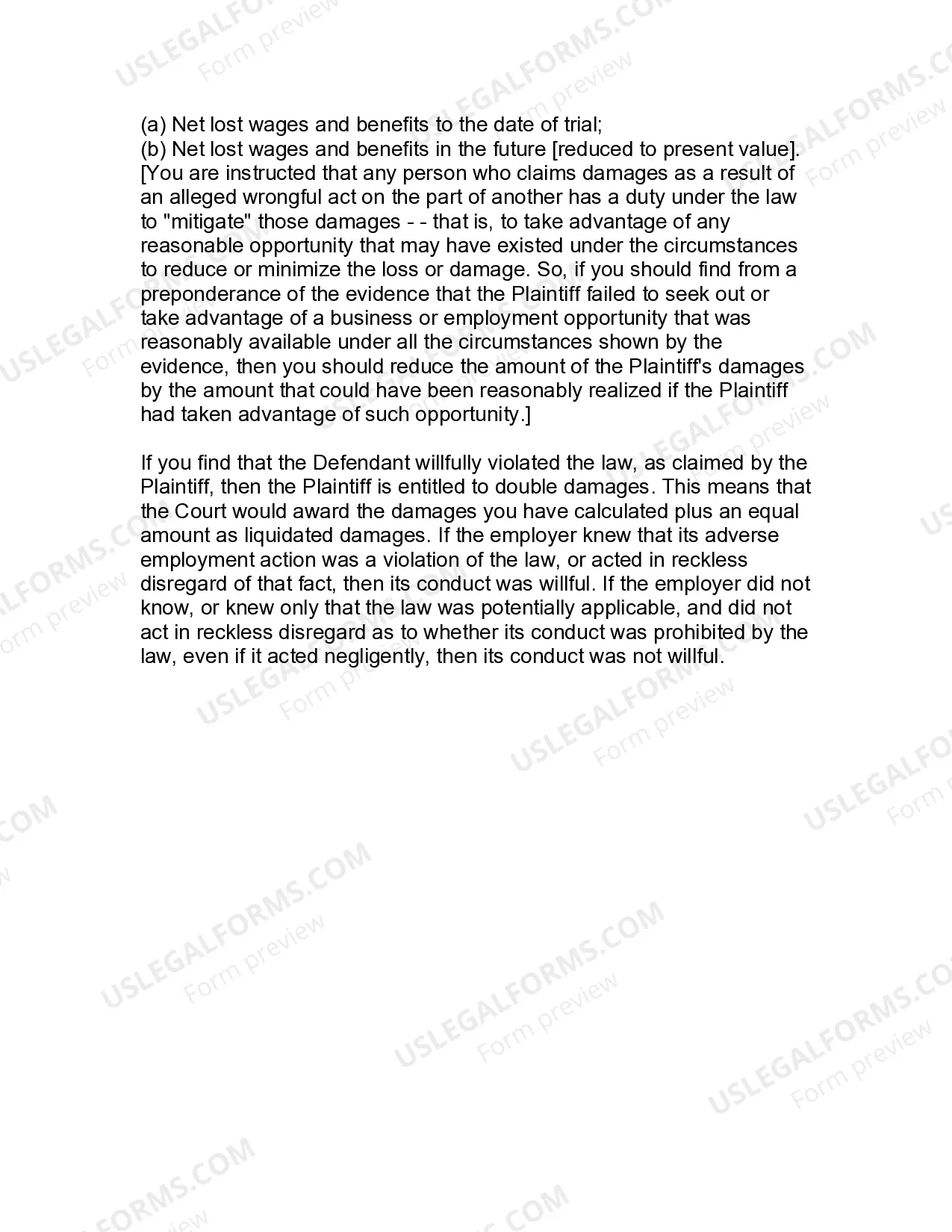
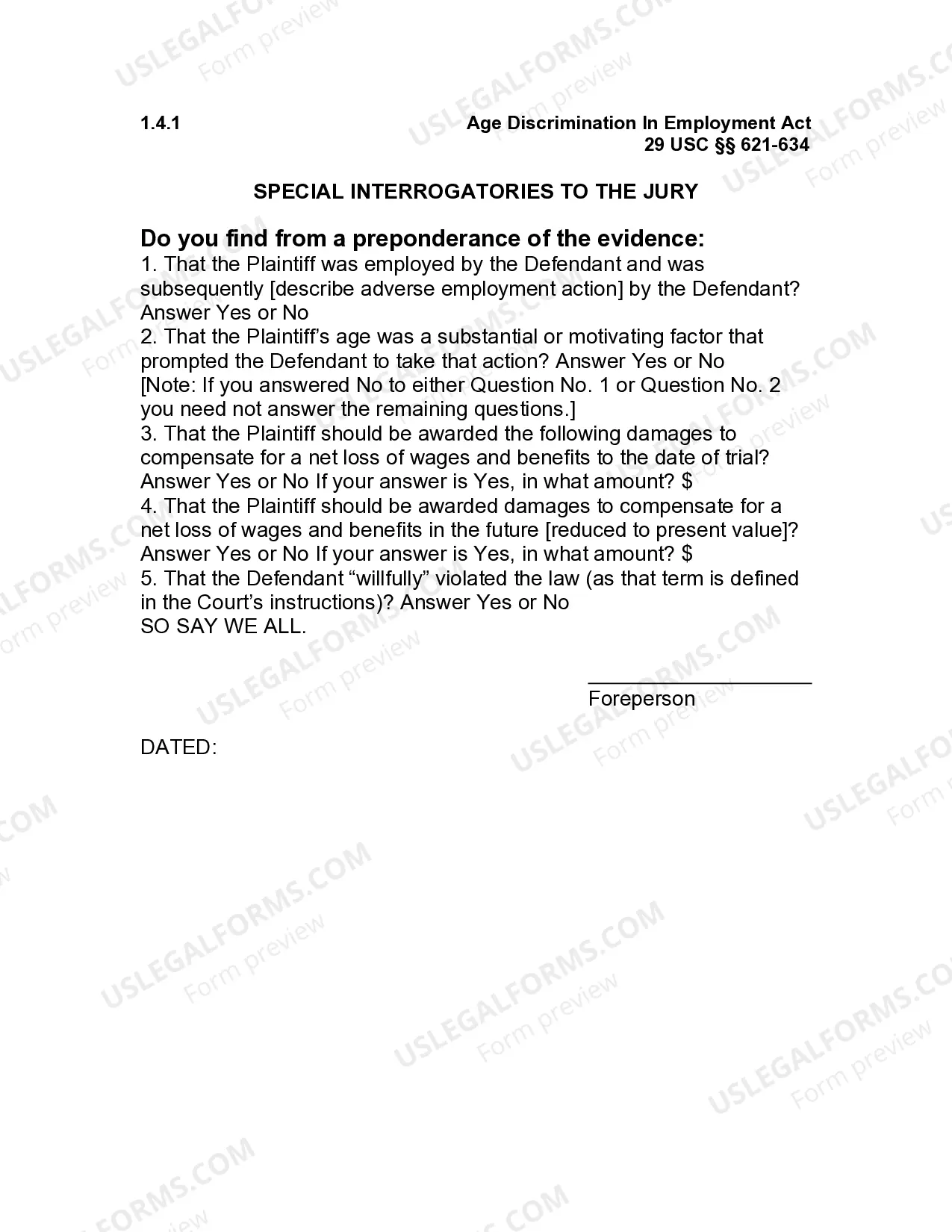
- Instructions on calculating damages, including liquidated damages in cases of willful violations.

When to use this document
This form should be used in cases where a plaintiff alleges that an employer has discriminated against them based on their age, particularly if the plaintiff is 40 years of age or older. It is relevant when evaluating jury instructions during legal proceedings concerning employment actions, such as termination or failure to promote, that may be motivated by a person's age.
Who this form is for
- Legal professionals involved in age discrimination cases.
- Juries tasked with evaluating claims of age-related employment discrimination.
- Employers and employees seeking to understand their rights and obligations under the ADEA.
Completing this form step by step
- Identify the age of the plaintiff and confirm they are a member of the protected age group (40 years or older).
- Establish the employment relationship between the plaintiff and the defendant, noting any adverse employment actions taken.
- Evaluate whether the plaintiff's age was a substantial factor in the adverse action.
- Consider the defendant's burden of proof regarding any defenses, such as bona fide occupational qualifications.
- Determine potential damages based on actual losses, ensuring the assessment is fair and based on evidence presented.
Notarization guidance
This form usually doesn’t need to be notarized. However, local laws or specific transactions may require it. Our online notarization service, powered by Notarize, lets you complete it remotely through a secure video session, available 24/7.
Get your form ready online
Our built-in tools help you complete, sign, share, and store your documents in one place.
Make edits, fill in missing information, and update formatting in US Legal Forms—just like you would in MS Word.
Download a copy, print it, send it by email, or mail it via USPS—whatever works best for your next step.
Sign and collect signatures with our SignNow integration. Send to multiple recipients, set reminders, and more. Go Premium to unlock E-Sign.
If this form requires notarization, complete it online through a secure video call—no need to meet a notary in person or wait for an appointment.
We protect your documents and personal data by following strict security and privacy standards.

Make edits, fill in missing information, and update formatting in US Legal Forms—just like you would in MS Word.

Download a copy, print it, send it by email, or mail it via USPS—whatever works best for your next step.

Sign and collect signatures with our SignNow integration. Send to multiple recipients, set reminders, and more. Go Premium to unlock E-Sign.

If this form requires notarization, complete it online through a secure video call—no need to meet a notary in person or wait for an appointment.

We protect your documents and personal data by following strict security and privacy standards.
Common mistakes to avoid
- Failing to correctly establish the age of the plaintiff in relation to the ADEA.
- Overlooking the defendant's responsibility to prove any affirmative defenses.
- Miscalculating damages by including non-recoverable elements like pain and suffering.
- Not adhering to the proper standard of proof required for age discrimination claims.
Why use this form online
- Convenient access to standard legal instructions tailored for age discrimination cases.
- Easy to download and customize to fit specific case needs.
- Reliability of professionally drafted content by licensed attorneys.
Legal use & context
- This form aligns with federal laws under the ADEA that prohibit employment discrimination based on age.
- It establishes clear standards for juries determining the legality of employer actions regarding age.
- Understanding the limitations of damage claims under the ADEA is essential for both plaintiffs and defendants.
Looking for another form?

Form popularity
FAQ
220e A "tangible employment action" means a significant change in employment status. Examples include hiring, firing, promotion, demotion, undesirable reassignment, a decision causing a significant change in benefits, compensation decisions, and work assignment.
Background. The United States Supreme Court has previously indicated that if harassment by a supervisor results in an "adverse employment action," it is irrelevant whether the employer had preventive measures in place (such as a harassment policy) or whether the plaintiff unreasonably failed to utilize those measures.
Non-selection. Firing. Failure to promote. Demotion. Suspension. Undesirable reassignment. Denial of a leave request.
An actual change that has an actual adverse effect on the job or working conditions, such as a firing, demotion, or suspension. When an employee claims to have been discriminated against or harassed by a supervisor, a tangible employment action supports the employee's case (and may be required to be proved).