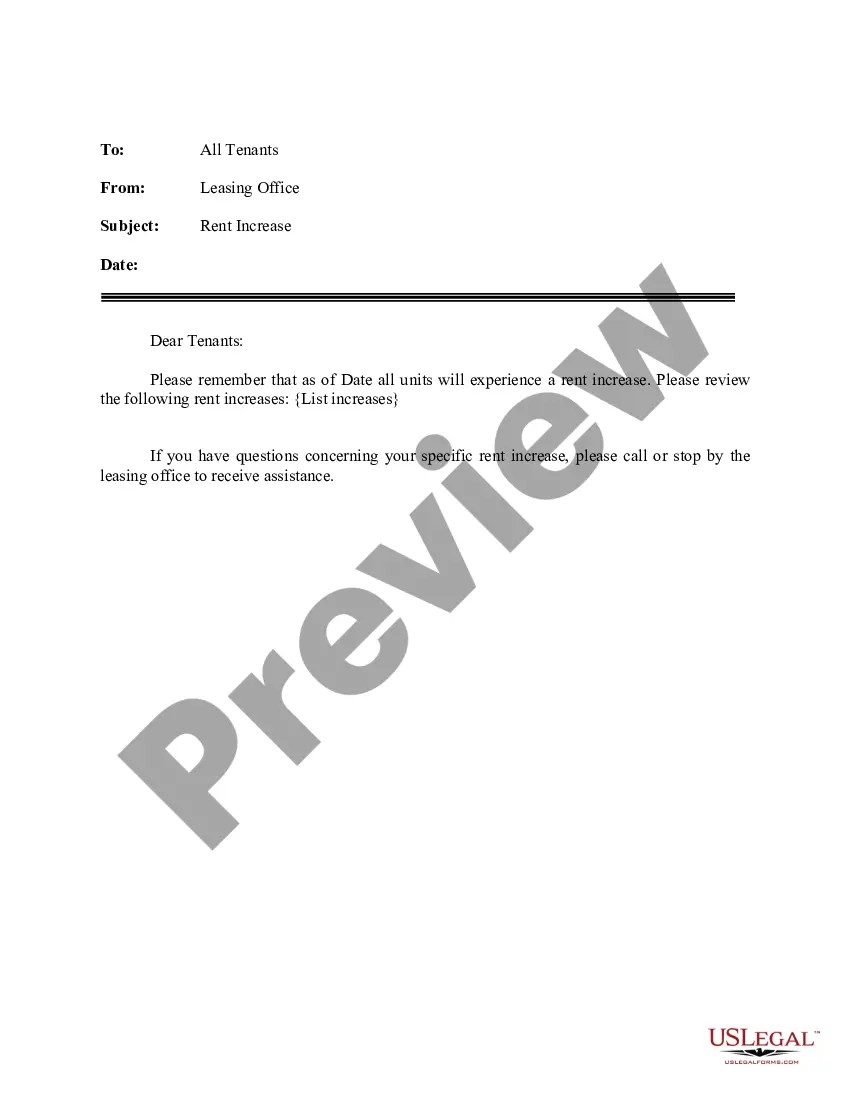
Letter - Notice To Tenants Announcing Rent Increase
Overview of this form
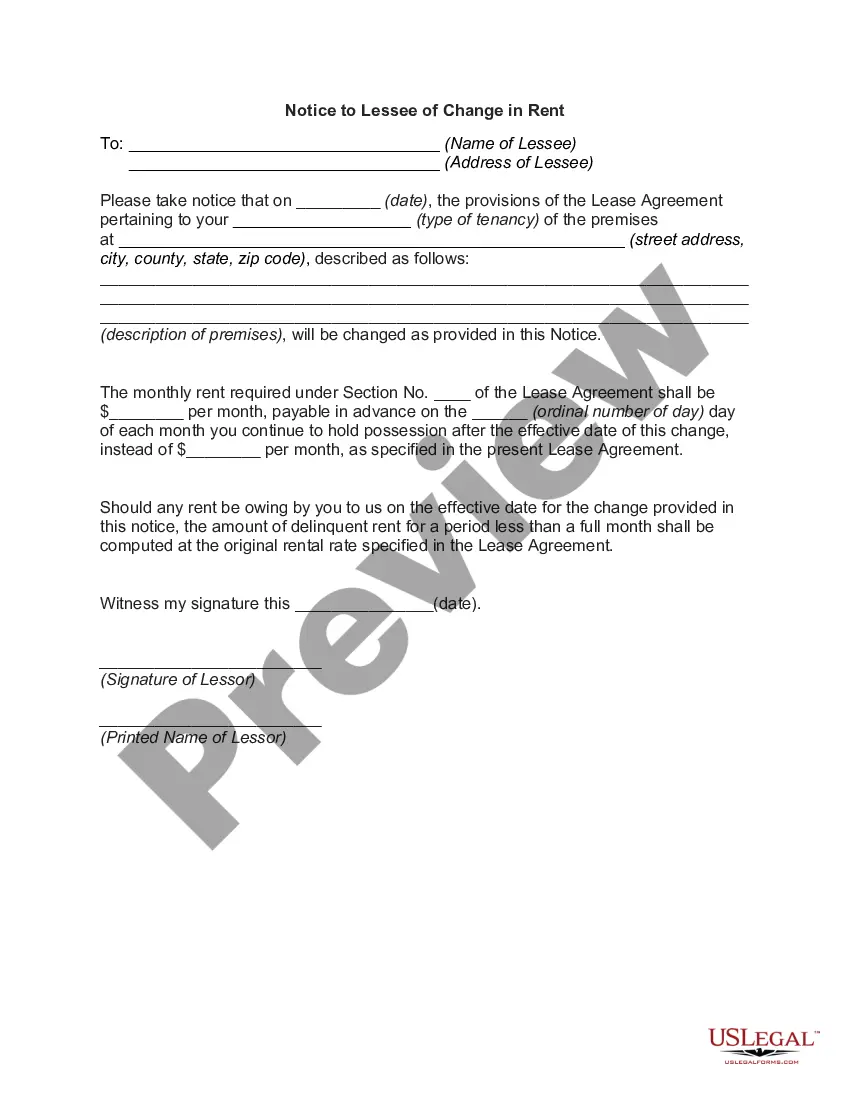
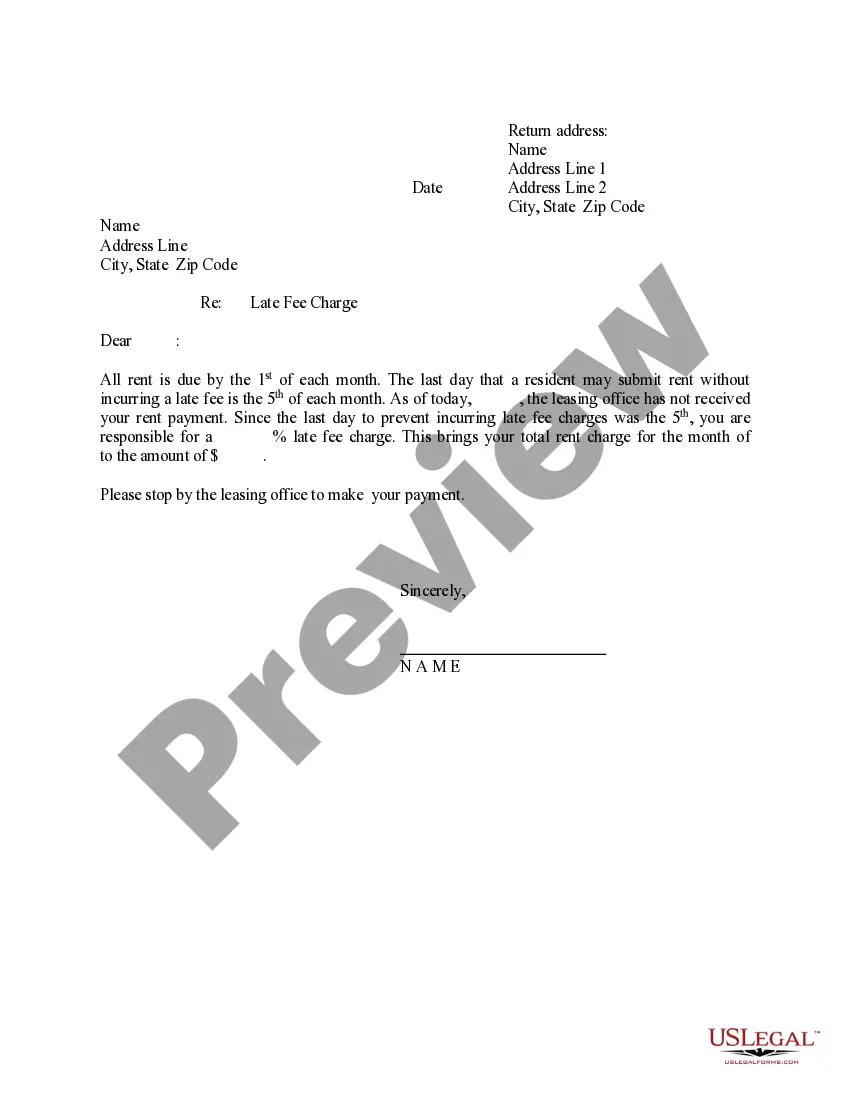
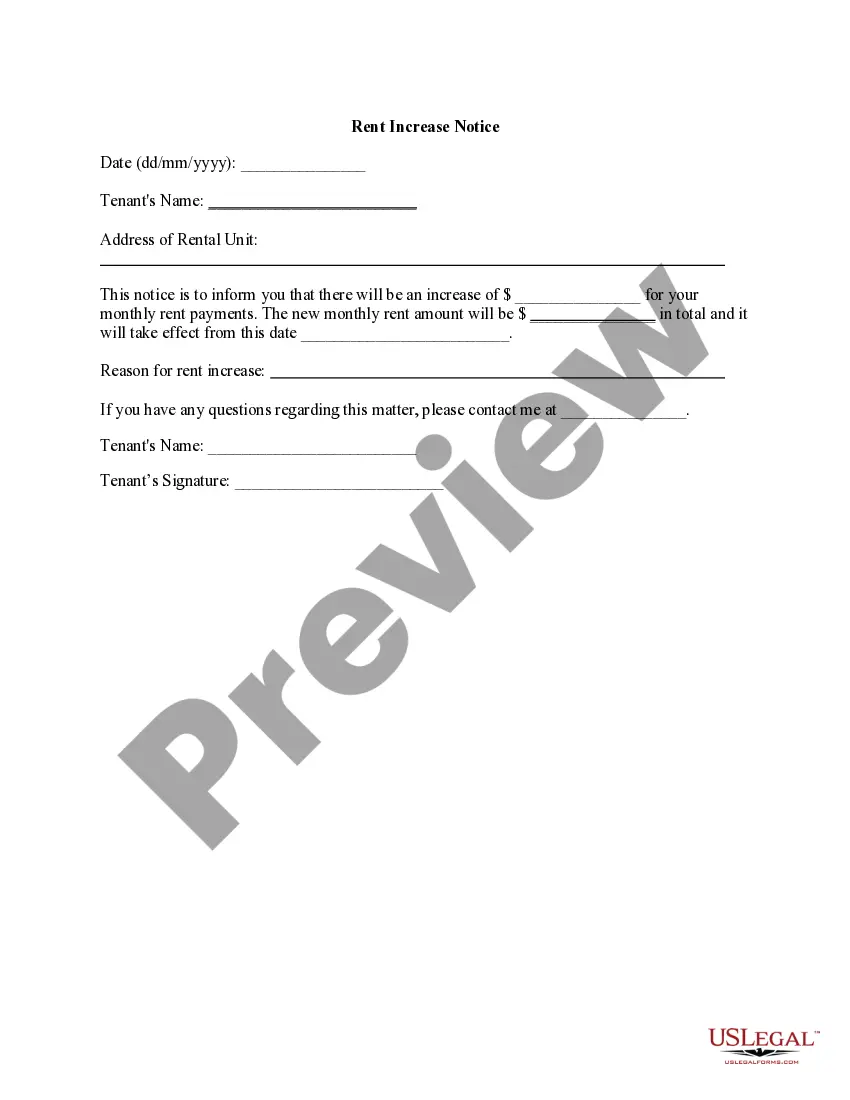
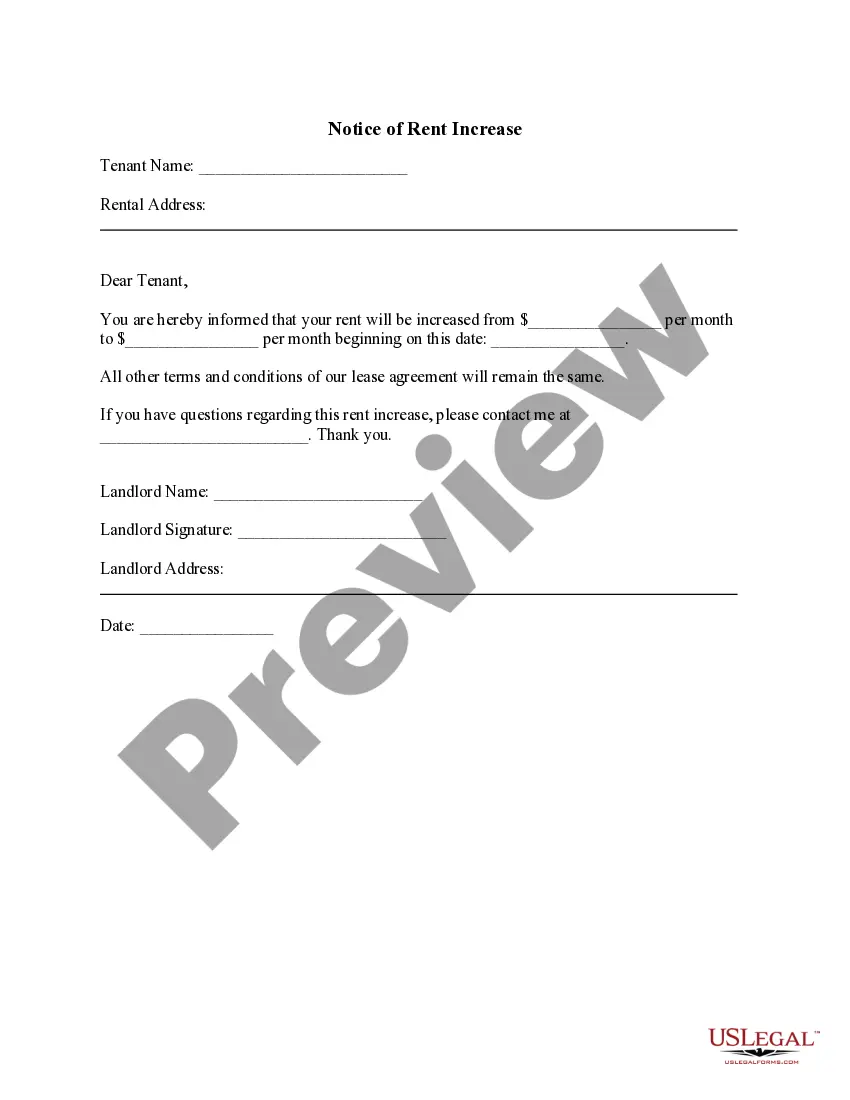
The Letter - Notice To Tenants Announcing Rent Increase is a formal communication from a landlord to tenants, informing them of an impending rent increase. This letter serves as an official notice, ensuring that tenants are aware of changes to their rental amount well in advance, in compliance with housing laws. Unlike other rental agreements or notices, this document specifically addresses the aspect of rent modification.
Key components of this form
- Landlord's contact information
- Tenant's information
- Date of the notification
- Current rental rate
- Increased rental rate and effective date
- Reason for the increase (if applicable)
- Signature line for the landlord

When to use this form
This form should be used when a landlord plans to increase the rent for a rental property. It is important to provide timely notification to tenants, usually in accordance with rental agreements or state laws, ensuring they have sufficient time to adjust their budget or discuss alternatives. Use this letter to ensure transparency and maintain good relationships with tenants.
Intended users of this form
- Residential landlords who rent properties to tenants
- Property management companies overseeing rental properties
- Individual property owners managing their own rental units
How to complete this form
- Identify the landlord and tenant information at the top of the letter.
- Specify the date you are sending the notice.
- Clearly state the current rental rate and the new rental rate.
- Indicate the effective date of the new rate.
- Include a brief explanation for the rent increase if required.
- Sign and date the letter before sending it to the tenants.
Notarization guidance
This form does not typically require notarization unless specified by local law. It is advisable to keep a record of the notice sent to tenants for your records.
Get your form ready online
Our built-in tools help you complete, sign, share, and store your documents in one place.
Make edits, fill in missing information, and update formatting in US Legal Forms—just like you would in MS Word.
Download a copy, print it, send it by email, or mail it via USPS—whatever works best for your next step.
Sign and collect signatures with our SignNow integration. Send to multiple recipients, set reminders, and more. Go Premium to unlock E-Sign.
If this form requires notarization, complete it online through a secure video call—no need to meet a notary in person or wait for an appointment.
We protect your documents and personal data by following strict security and privacy standards.

Make edits, fill in missing information, and update formatting in US Legal Forms—just like you would in MS Word.

Download a copy, print it, send it by email, or mail it via USPS—whatever works best for your next step.

Sign and collect signatures with our SignNow integration. Send to multiple recipients, set reminders, and more. Go Premium to unlock E-Sign.

If this form requires notarization, complete it online through a secure video call—no need to meet a notary in person or wait for an appointment.

We protect your documents and personal data by following strict security and privacy standards.
Common mistakes to avoid
- Failing to provide sufficient notice as required by law.
- Not including all relevant tenant information.
- Forgetting to explain the reason for the increase when necessary.
Advantages of online completion
- Quick and easy to download and customize for your needs.
- Eliminates the guesswork with professionally drafted language.
- Ensures compliance with legal standards through attorney-reviewed templates.
Quick recap
- The Letter - Notice To Tenants Announcing Rent Increase is essential for legally notifying tenants of rent changes.
- Timely notification and adherence to local regulations can prevent disputes.
- This form is crucial for maintaining clear communication between landlords and tenants.
Looking for another form?








Form popularity
FAQ
In the first paragraph of your letter, mention how you enjoy working with the company. It's also helpful to state your job title and how long you've worked for the company. Then explain the letter's general purpose which is to ask for an increase in your salary. Next up, explain why you deserve the raise.
Share your goals and ask for feedback. Proactively communicate wins. Demonstrate your accomplishments and added value. Focus on why you deserve it (not why you need it). Practice your pitch and anticipate questions. Do your research. Talk about the future. Be prepared to hear no.
Learn the rules. You cannot negotiate your salary without knowing the rules of the game. Play the game. Mind the score. Get current data. Know your boss. Know your professional self. Schedule the right time. Write the script.
Sample letter asking for a pay rise or salary review Adapt it or use it as is. I'd appreciate a review of my responsibilities/role and salary/remuneration. I'm very positive about my job and the organization, and would like to discuss how to increase my contribution, and the reward I receive.
A request for a meeting to discuss your compensation (in the subject line of the message) Why you deserve a salary increase. What additional responsibilities you have taken on in your role. Any skills or certifications you have acquired since being hired.
Do your salary research. You're not going to get very far if the amount you ask for is not in line with the realities of today's job market. Pick the right time. Make the request. Back it up. Offer appreciation for the consideration.
The letter's general purpose. In the first paragraph of your letter, mention how you enjoy working with the company. The reason for your request. The justification for your request. The amount you're requesting for. A statement about negotiation.
Share your goals and ask for feedback. Proactively communicate wins. Demonstrate your accomplishments and added value. Focus on why you deserve it (not why you need it). Practice your pitch and anticipate questions. Do your research. Talk about the future. Be prepared to hear no.