General Form of Civil Answer with Affirmative Defenses and Counterclaim
What is this form?
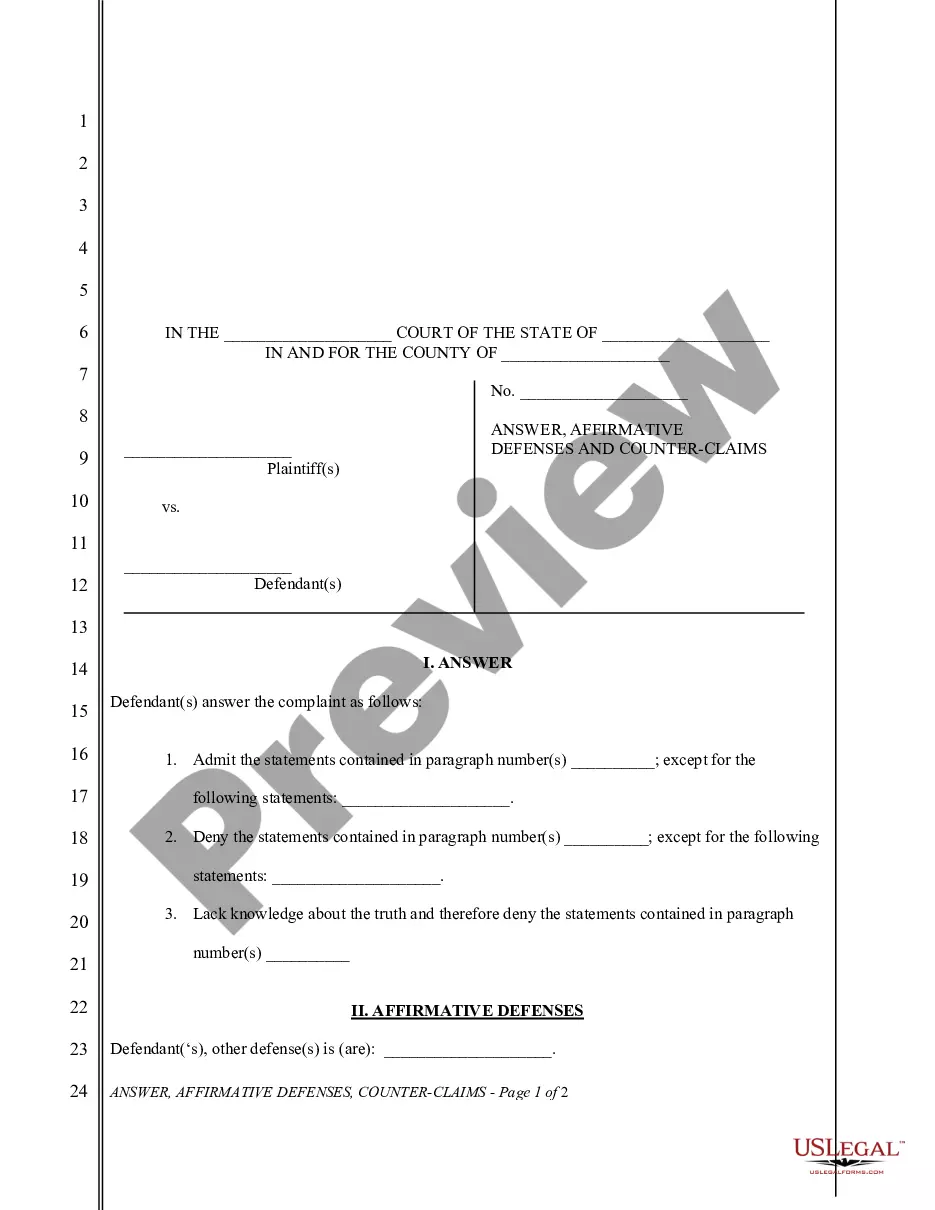
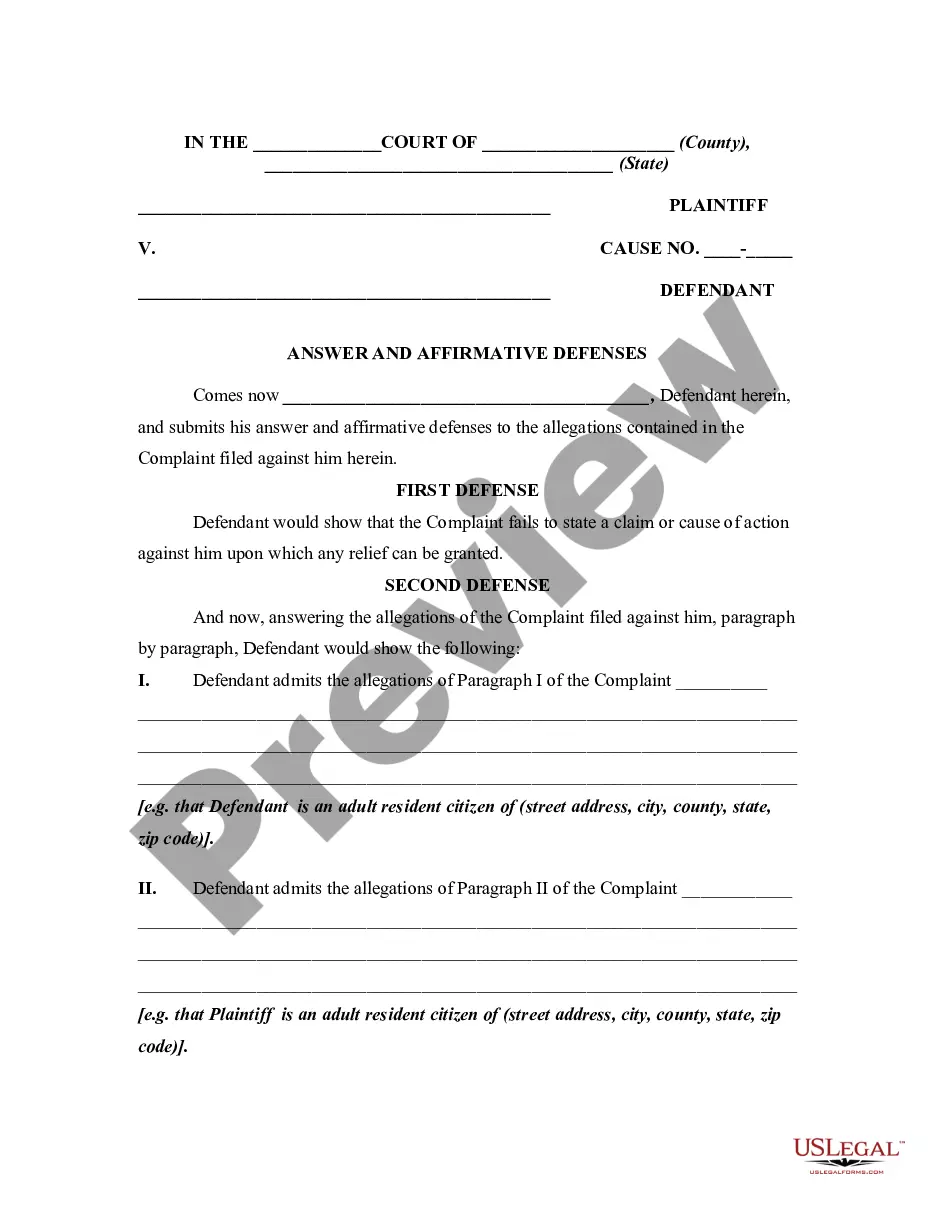
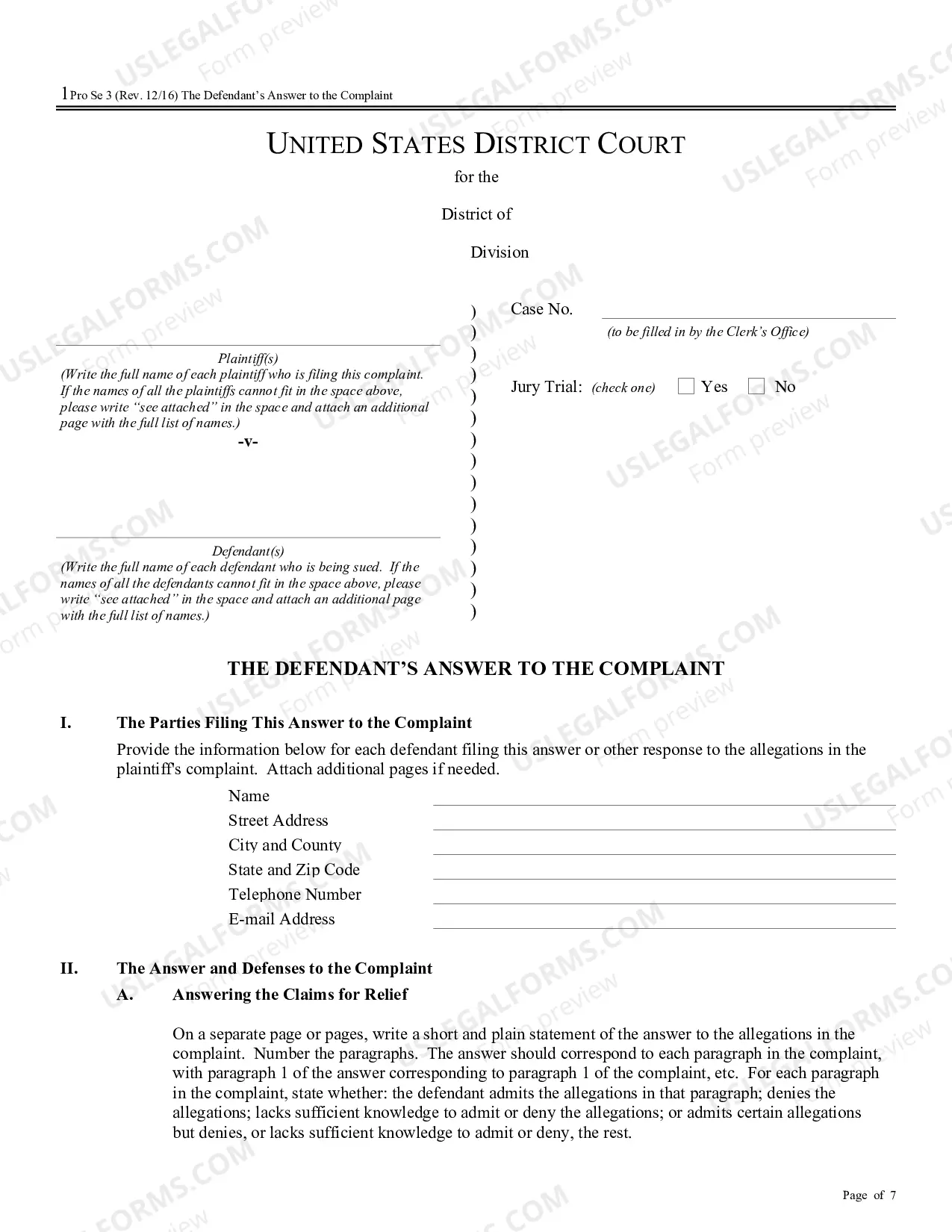
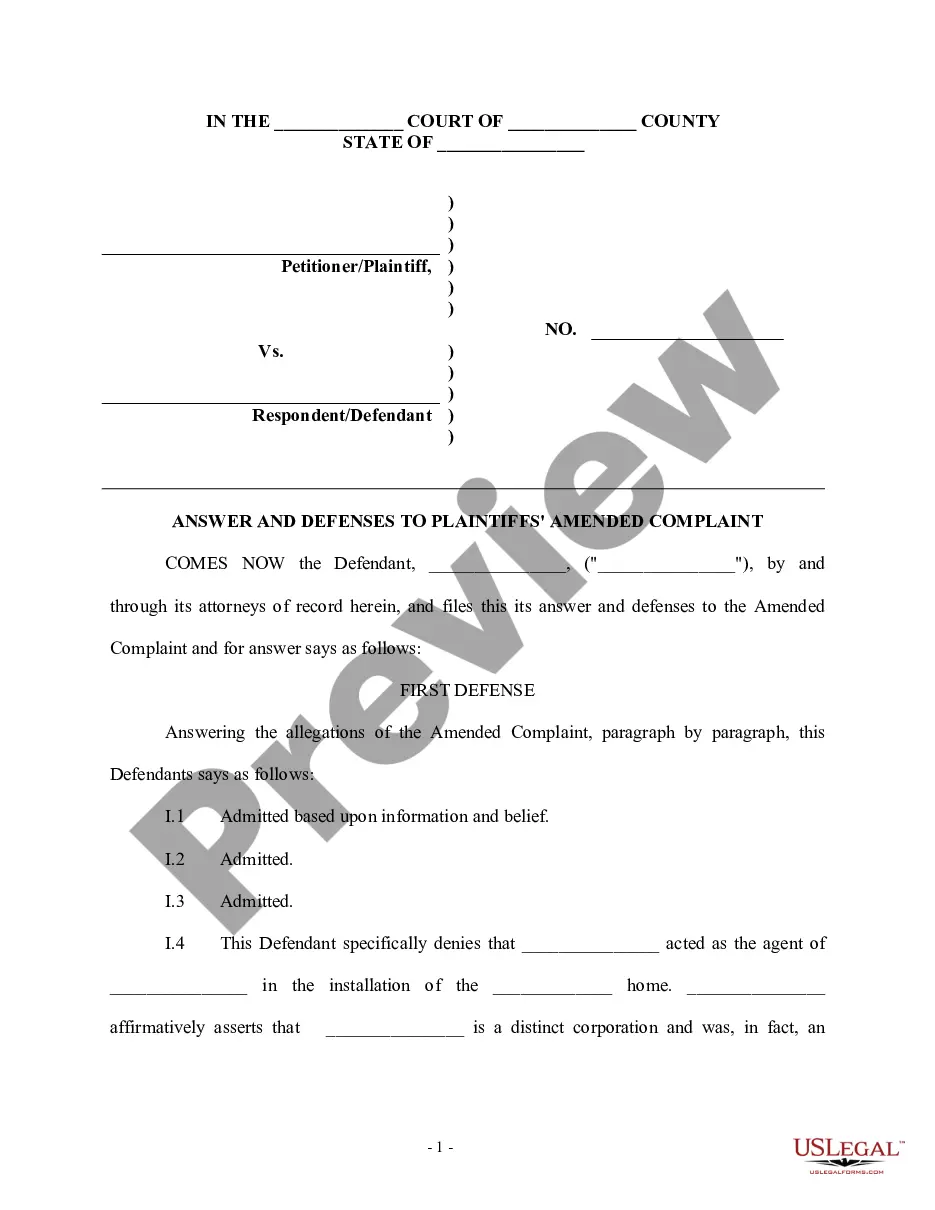
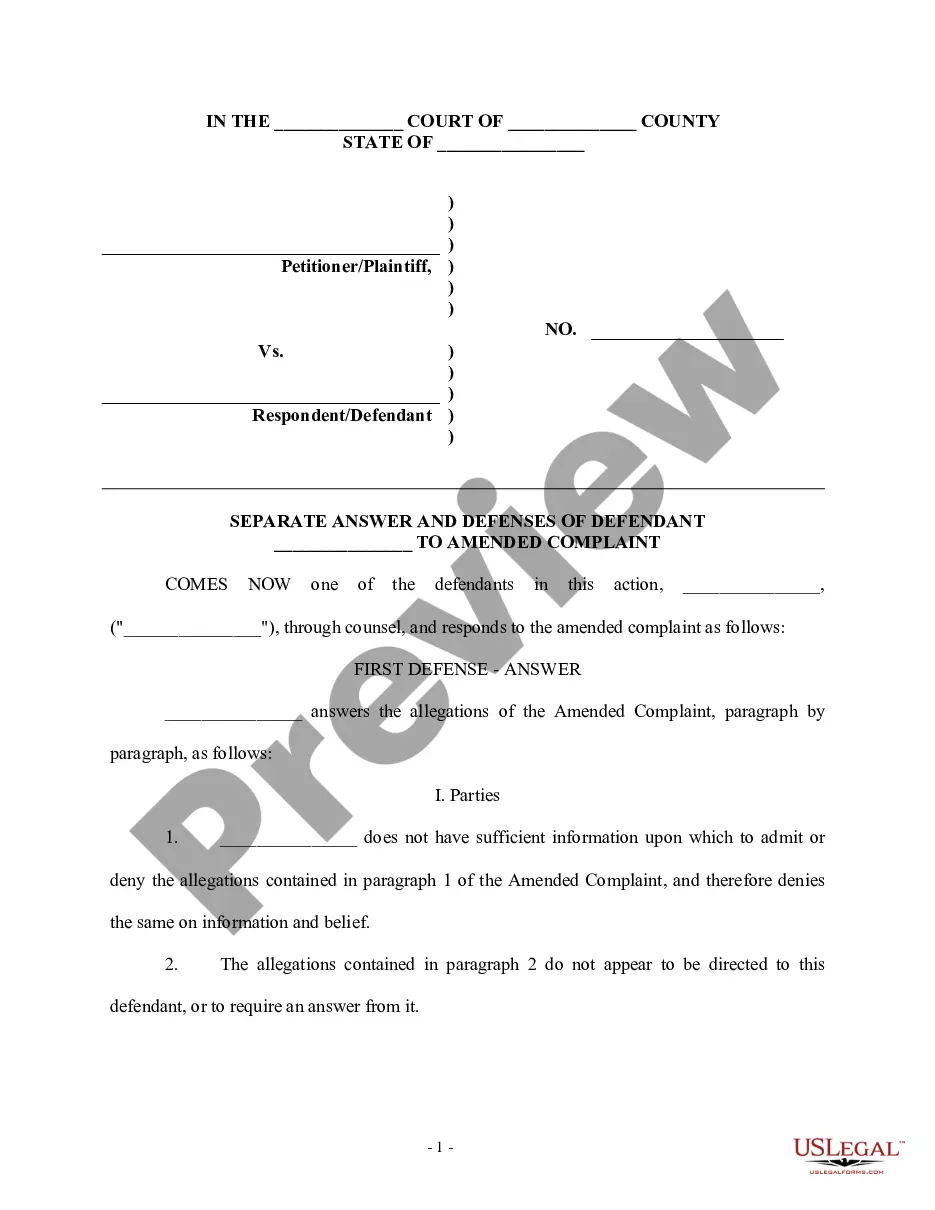
The General Form of Civil Answer with Affirmative Defenses and Counterclaim is a legal document used to respond to a civil complaint. This form allows the defendant to not only answer the claims made by the plaintiff but also to assert affirmative defenses and file a counterclaim. Unlike a standard answer, which merely responds to the allegations, this form provides a comprehensive way for defendants to introduce additional information and claims that may affect the outcome of the lawsuit.
Key components of this form
- Answer section: A section for the defendant to admit or deny the allegations made by the plaintiff.
- Affirmative defenses: Space to assert any defenses against the claims that include additional facts not mentioned in the complaint.
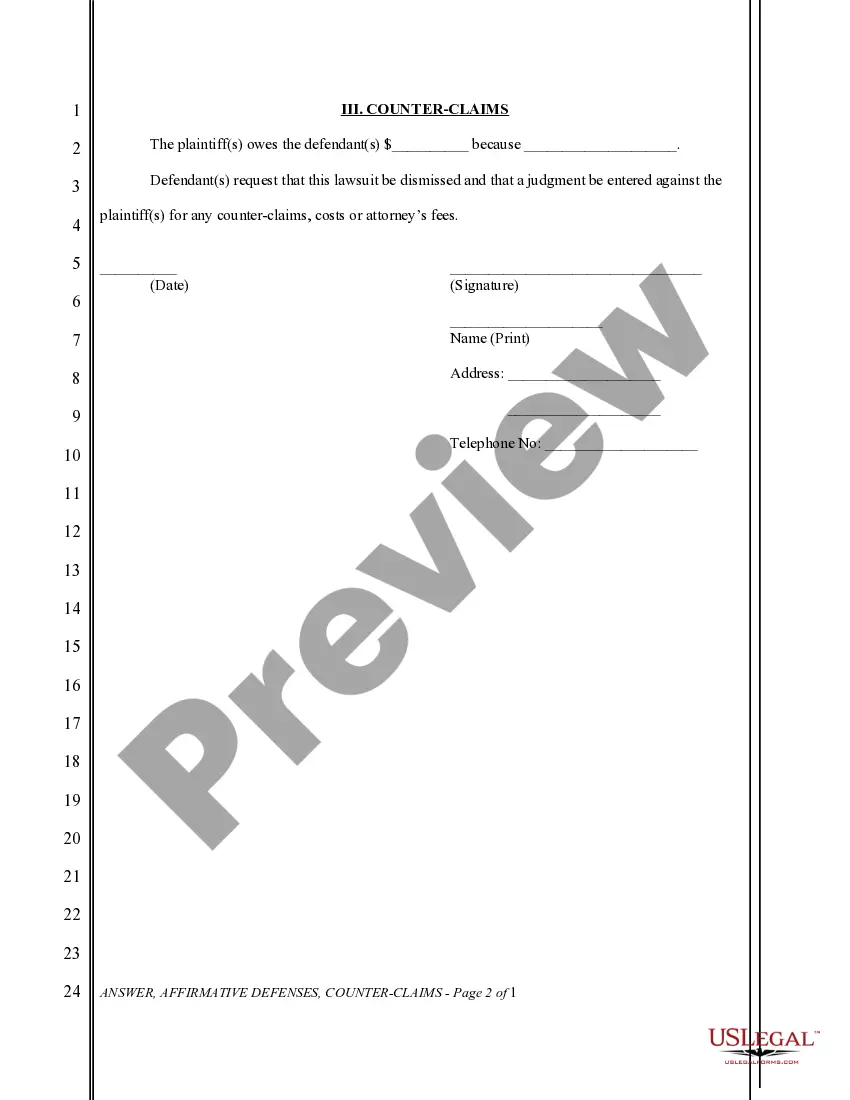
- Counterclaims: Allows the defendant to make claims against the plaintiff, possibly reducing the liability or seeking damages.
- Signature and date: Essential for the validity of the form, requiring the defendant's signature and the date of submission.
Common use cases
This form should be used when you need to respond to a civil complaint in a court case. It is applicable in scenarios where you wish to contest the plaintiff's allegations and wish to present your own claims (counterclaims) against them, or where you want to assert defenses that could potentially limit or eliminate your liability. It is essential in ensuring that all relevant claims are presented in the same proceeding.
Who can use this document
- Defendants in a civil lawsuit who have received a complaint.
- Individuals or entities who want to assert affirmative defenses in response to the claims made against them.
- Defendants intending to file a counterclaim against the plaintiff for damages or other relief.
Completing this form step by step
- Identify the court's name and jurisdiction where the case is filed.
- Fill in the names of the plaintiff(s) and defendant(s) as listed in the complaint.
- Provide the necessary admissions and denials regarding the allegations in the complaint.
- Articulate any affirmative defenses you wish to assert in response to the plaintiff's claims.
- Detail any counterclaims against the plaintiff, including the reasons for the claims and any amounts owed.
- Sign the document, print your name, provide your address, and include your contact information.
Notarization guidance
This form does not typically require notarization to be legally valid. However, some jurisdictions or document types may still require it. US Legal Forms provides secure online notarization powered by Notarize, available 24/7 for added convenience.
Get your form ready online
Our built-in tools help you complete, sign, share, and store your documents in one place.
Make edits, fill in missing information, and update formatting in US Legal Forms—just like you would in MS Word.
Download a copy, print it, send it by email, or mail it via USPS—whatever works best for your next step.
Sign and collect signatures with our SignNow integration. Send to multiple recipients, set reminders, and more. Go Premium to unlock E-Sign.
If this form requires notarization, complete it online through a secure video call—no need to meet a notary in person or wait for an appointment.
We protect your documents and personal data by following strict security and privacy standards.

Make edits, fill in missing information, and update formatting in US Legal Forms—just like you would in MS Word.

Download a copy, print it, send it by email, or mail it via USPS—whatever works best for your next step.

Sign and collect signatures with our SignNow integration. Send to multiple recipients, set reminders, and more. Go Premium to unlock E-Sign.

If this form requires notarization, complete it online through a secure video call—no need to meet a notary in person or wait for an appointment.

We protect your documents and personal data by following strict security and privacy standards.
Common mistakes to avoid
- Failing to respond to all allegations, which may result in them being deemed admitted.
- Not specifying affirmative defenses clearly, making them harder to assert later.
- Neglecting to file the form by the deadline set by the court.
- Omitting to include a counterclaim when it is necessary to preserve rights under the relevant civil procedure rules.
Benefits of completing this form online
- Convenience of completing the form from anywhere at any time.
- Editable format allows users to customize their responses easily.
- Access to professionally drafted templates ensures compliance with legal standards.
What to keep in mind
- The General Form of Civil Answer with Affirmative Defenses and Counterclaim is vital for defendants to present their case effectively.
- This form combines responses to claims and defenses with the ability to file counterclaims, making it comprehensive.
- Ensure all sections are completed accurately and all required parties are identified.
- Stay aware of local laws and specific filing requirements to avoid common mistakes.
Looking for another form?
Form popularity
FAQ
The General Form of Civil Answer with Affirmative Defenses and Counterclaim is a multi-purpose legal document used to respond to a civil complaint. It lets a defendant admit or deny plaintiff’s allegations, assert affirmative defenses with supporting facts, and file a counterclaim against the plaintiff. The form includes an answer section, defenses, counterclaims, and requires a signature and date.
No. An affirmative defense is a defense that acknowledges the plaintiff’s facts but argues a legal reason that defeats or limits liability, while a counterclaim is a new claim brought by the defendant against the plaintiff for relief. This form provides separate sections for both, highlighting their distinct roles.
No. They are not the same. Affirmative defenses are defenses to the plaintiff’s claims, explaining why those claims fail or are not fully actionable, and they are not separate claims. Counterclaims are new claims the defendant makes against the plaintiff. This form provides separate sections for both.
Counterclaims are claims by the defendant against the plaintiff within the same proceeding. Common examples vary by case but can include claims for damages, breach of contract, or related relief arising from the same facts. This form provides a dedicated 'Counterclaims' section to present those claims against the plaintiff.
Affirmative defenses raise reasons why the plaintiff’s claims should fail despite the facts. Examples depend on the case but can include statute of limitations, failure to state a claim, or other legal grounds supported by facts. This form offers an affirmative defenses section to list such defenses with supporting facts.
It differs by including explicit sections for affirmative defenses and a counterclaim in addition to the standard answer. Unlike a plain 'standard' answer, this form lets the defendant present defenses and bring counterclaims within the same filing, and it requires signature and date to be valid.