Sample Letter for Foreclosed Home of Estate
What this document covers
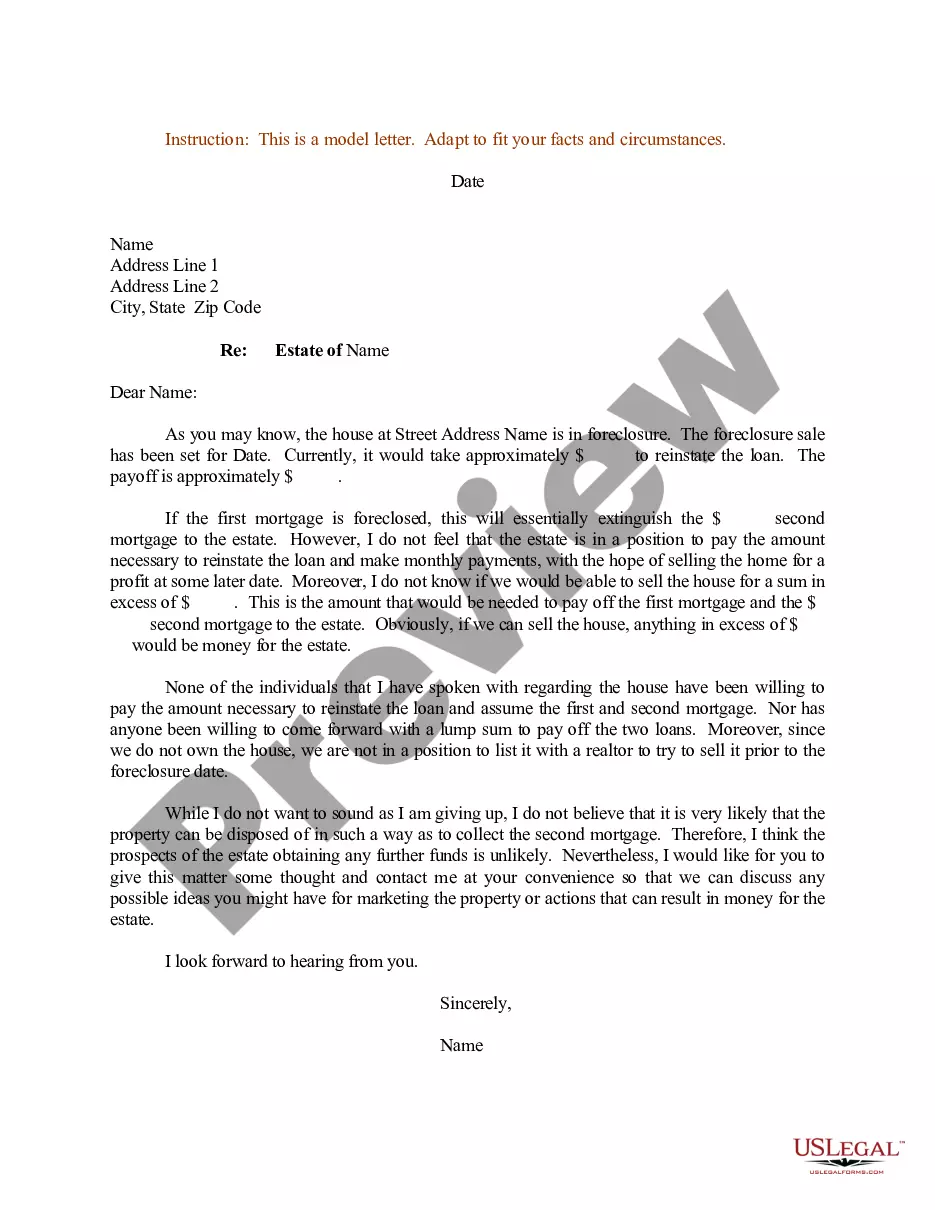
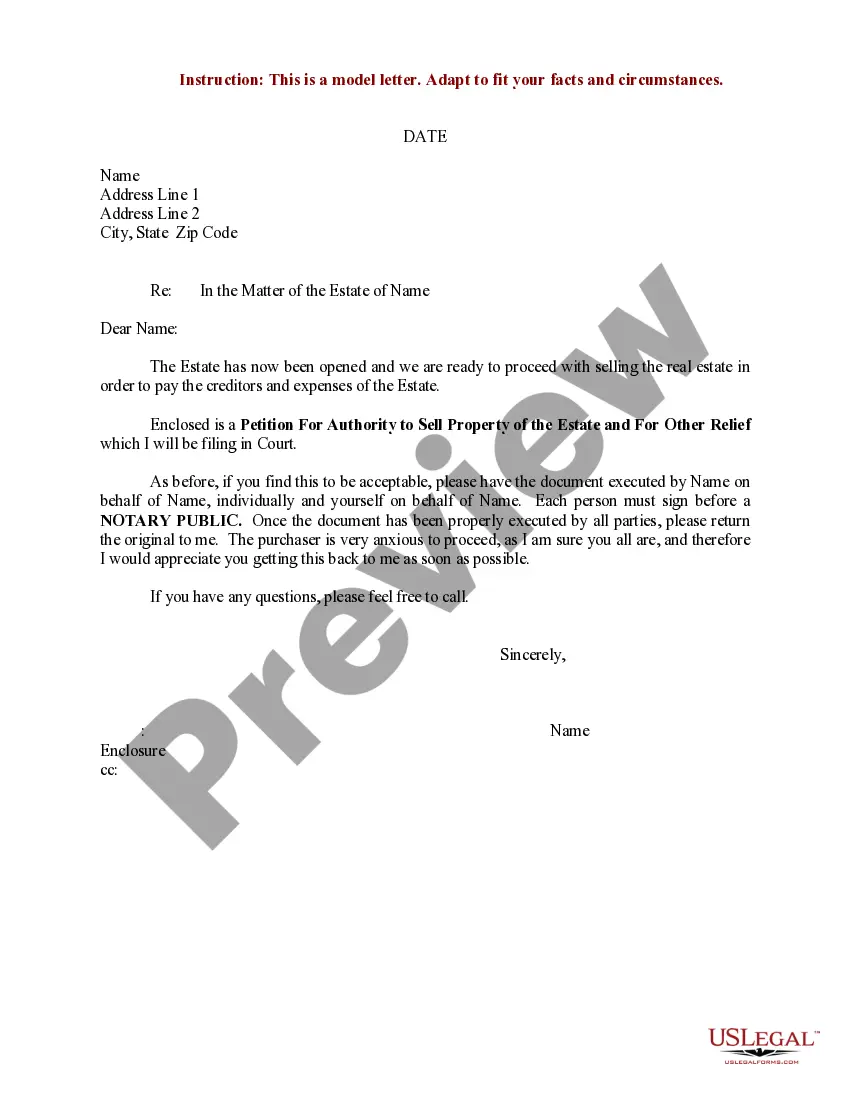
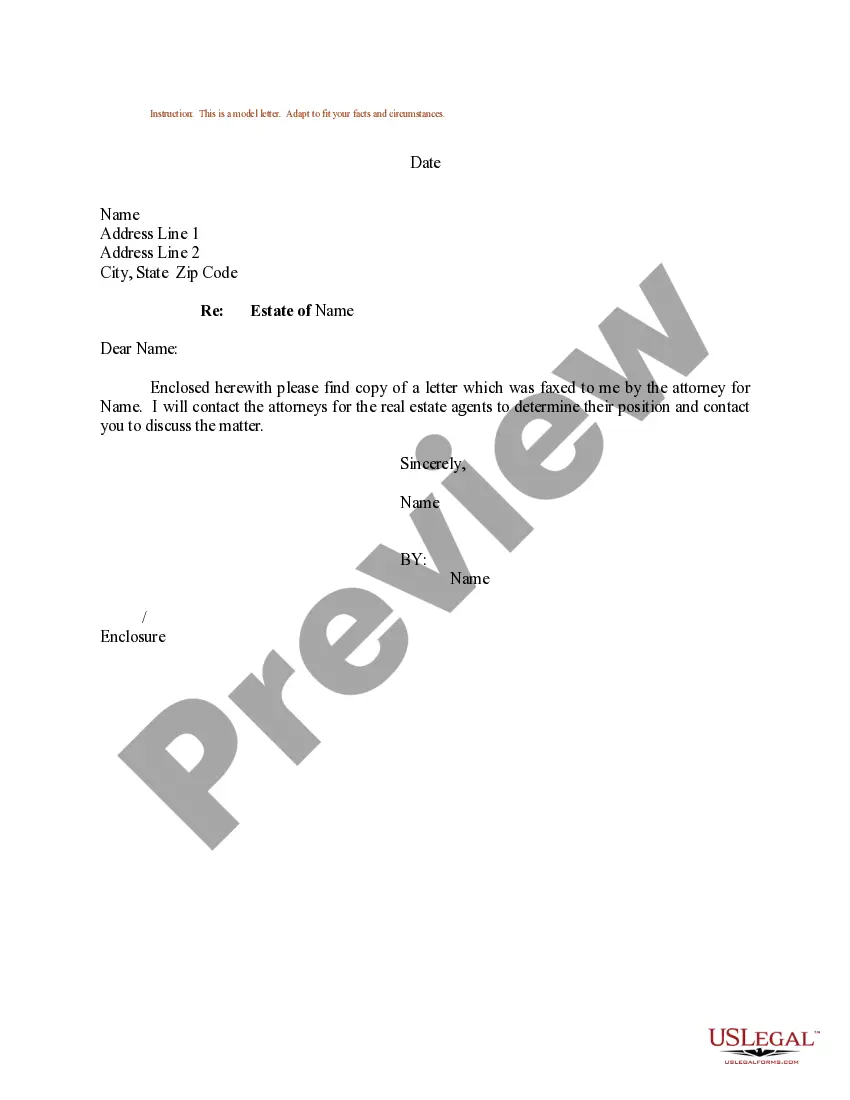
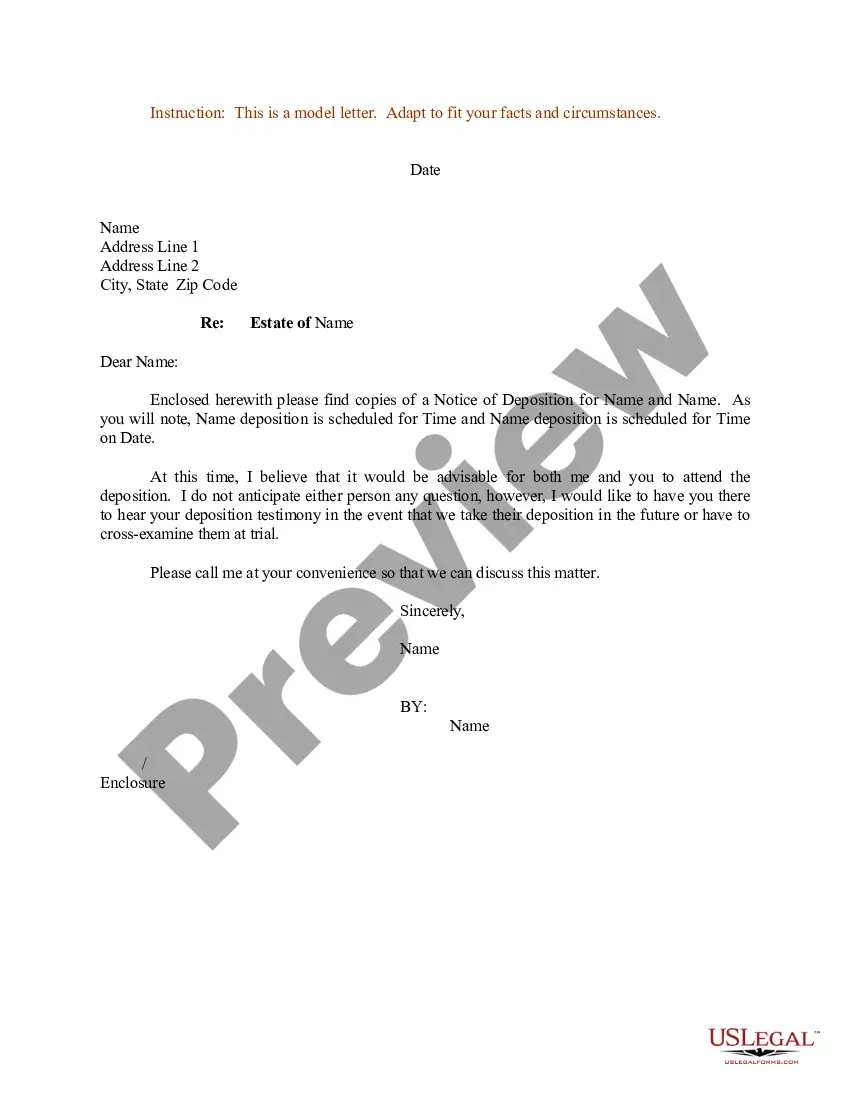
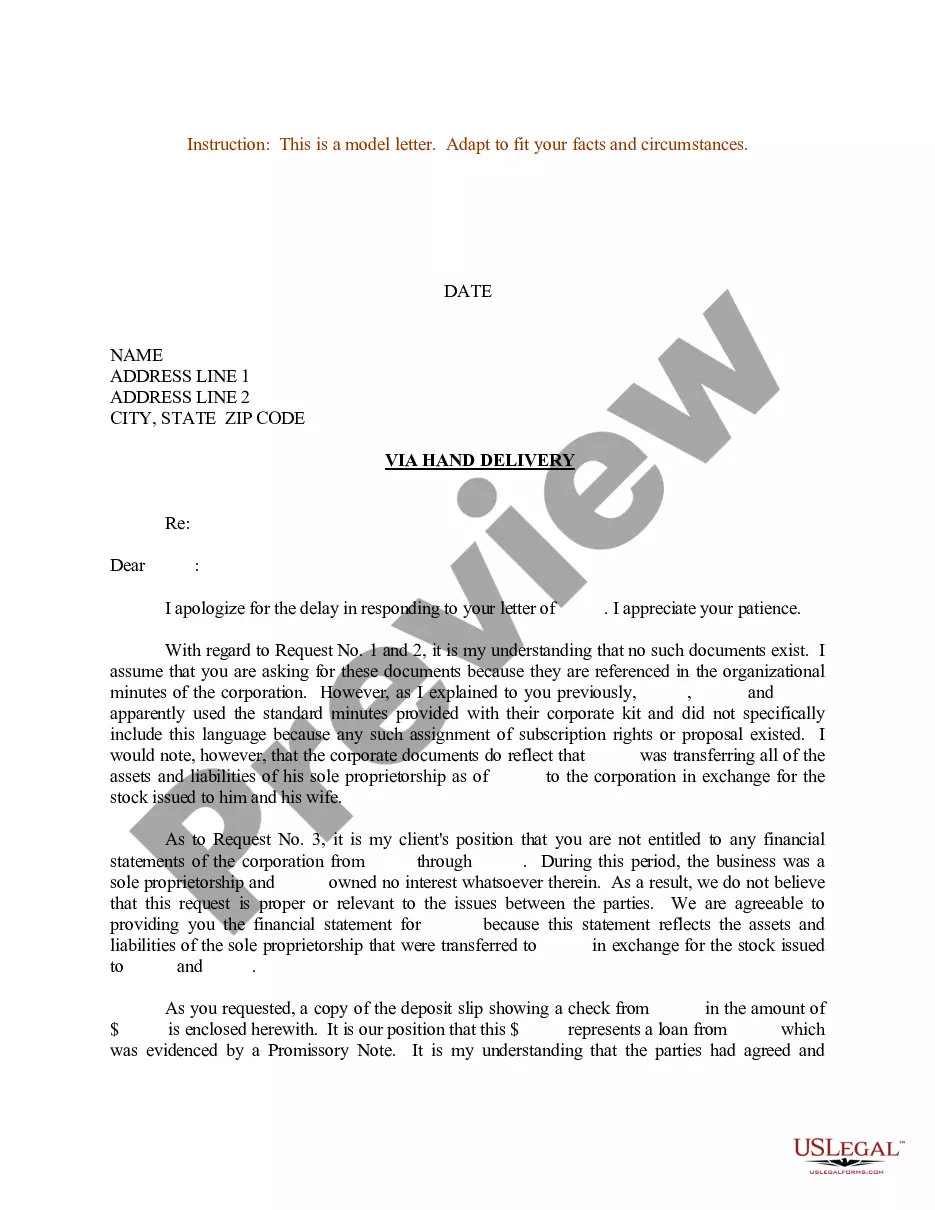
This Sample Letter for Foreclosed Home of Estate is a legal document intended to assist individuals in communicating important information regarding the foreclosure of a property that is part of an estate. This form is specifically structured to help estate representatives effectively convey their intentions regarding a foreclosed home to relevant parties. By using this form, individuals ensure their message adheres to legal expectations while addressing sensitive estate matters.
Key parts of this document
- Date of the letter
- Sender's name and address
- Recipient's name and address
- Subject line mentioning the estate involved
- Salutation addressing the recipient
- Body of the letter explaining the situation regarding the foreclosure
Situations where this form applies
You should use this form when you need to inform a party about the foreclosure status of a home that is part of an estate. Common situations include notifying creditors, potential buyers, or family members about the foreclosure proceedings and the implications for the estate. This ensures transparency and helps in managing the estate's assets properly.
Intended users of this form
This letter is suitable for:
- Executors or administrators of an estate
- Heirs involved in managing an estate
- Legal representatives handling foreclosure matters related to an estate
Steps to complete this form
- Enter the current date at the top of the letter.
- Fill in the sender's name and complete address.
- Specify the recipient's name and address.
- Clearly state the subject, identifying the estate involved.
- Compose the main body of the letter to explain the foreclosure situation.
- Sign the letter to indicate its authenticity and intent.
Is notarization required?
This form does not typically require notarization unless specified by local law. Always check your stateâs specific regulations to ensure compliance.
Get your form ready online
Our built-in tools help you complete, sign, share, and store your documents in one place.
Make edits, fill in missing information, and update formatting in US Legal Forms—just like you would in MS Word.
Download a copy, print it, send it by email, or mail it via USPS—whatever works best for your next step.
Sign and collect signatures with our SignNow integration. Send to multiple recipients, set reminders, and more. Go Premium to unlock E-Sign.
If this form requires notarization, complete it online through a secure video call—no need to meet a notary in person or wait for an appointment.
We protect your documents and personal data by following strict security and privacy standards.

Make edits, fill in missing information, and update formatting in US Legal Forms—just like you would in MS Word.

Download a copy, print it, send it by email, or mail it via USPS—whatever works best for your next step.

Sign and collect signatures with our SignNow integration. Send to multiple recipients, set reminders, and more. Go Premium to unlock E-Sign.

If this form requires notarization, complete it online through a secure video call—no need to meet a notary in person or wait for an appointment.

We protect your documents and personal data by following strict security and privacy standards.
Typical mistakes to avoid
- Failing to include the correct details about the estate.
- Using vague language that may lead to misunderstandings.
- Not signing the letter, rendering it invalid.
- Omitting contact information for follow-up questions.
Why use this form online
- Convenient access to a professionally drafted legal document.
- Editable format allows for personalization according to specific needs.
- Instant download eliminates wait times for obtaining legal forms.
Looking for another form?

Form popularity
FAQ
Send a postcard Mailing is the most popular method for an investor to contact a distressed homeowner. It's an efficient, non-threatening, and unassuming way of communicating interest in their property. In addition, it also gives the homeowner time to consider their options without too much pressure.
Job title Telephone number Email address Website Date Dear Mr./Ms./Mrs. After recently reading an specify article about company name's successes in the field of specify, I felt motivated to send a formal letter of interest for a job opportunity in the specify department.
Realize what a letter offering to purchase real estate is designed to do. Call them by name. Speak to their good taste and flatter them. Look for similarities between them and you. Be descriptive about how you and your family would live in the home. Don't tell them you're going to change things in the home.
Begin the hunt. One of the trickiest aspects to buying during this stage of foreclosure is finding properties. Drive by. Get a status update. Learn the values. Do some math. Reach out. Walk through. Negotiate.
Address the Seller By Name. Highlight What You Like Most About the Home. Share Something About Yourself. Throw in a Personal Picture. Discuss What You Have in Common. Keep it Short. Close the Letter Appropriately. The Bottom Line.
Use the seller's full personal or company name, main address, and contact information, and date the letter. Indicate that you are interested in buying the house. Include the property address and any details about what will be included in the purchase, including furnishings, land, or other items.
There are many options available for buyers to strengthen their offer. One, writing a personal letter to the seller, can help establish a more personal connection and make your offer stand out.Buyer letters are most common in competitive markets, but can be included in any offer.
Make your opener as personal as possible. Tell them about yourself. Point out the home's attributes. Find a connection. Explain your bid, even if it's low. Close with lots of thanks.
Your letter of interest should contain information on why the company interests you and why your skills and experience would be valuable to the company. Use the letter to sell yourself, explaining how you would add value to the company.