Idaho Living Trust for Individual, Who is Single, Divorced or Widow or Widower with Children
Overview of this form
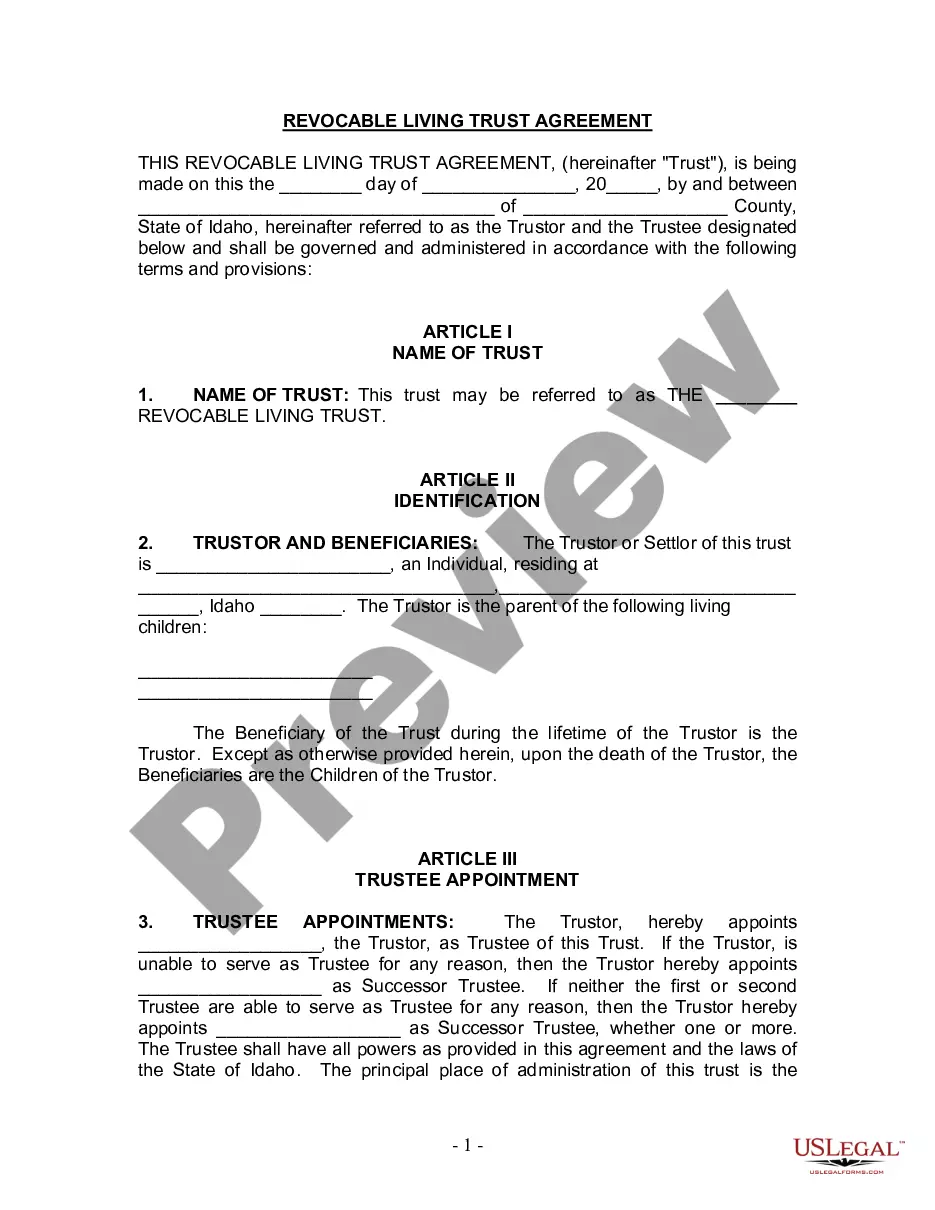
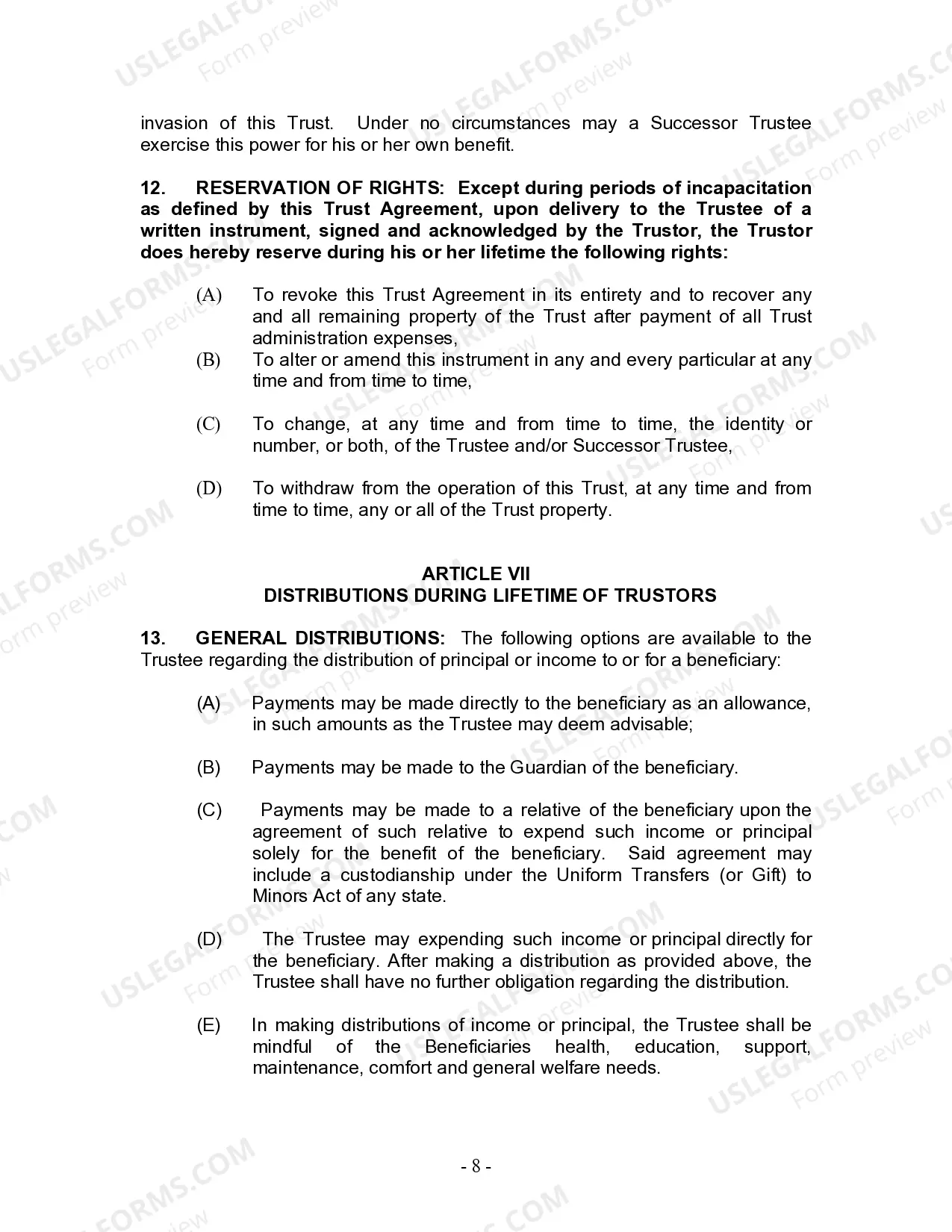
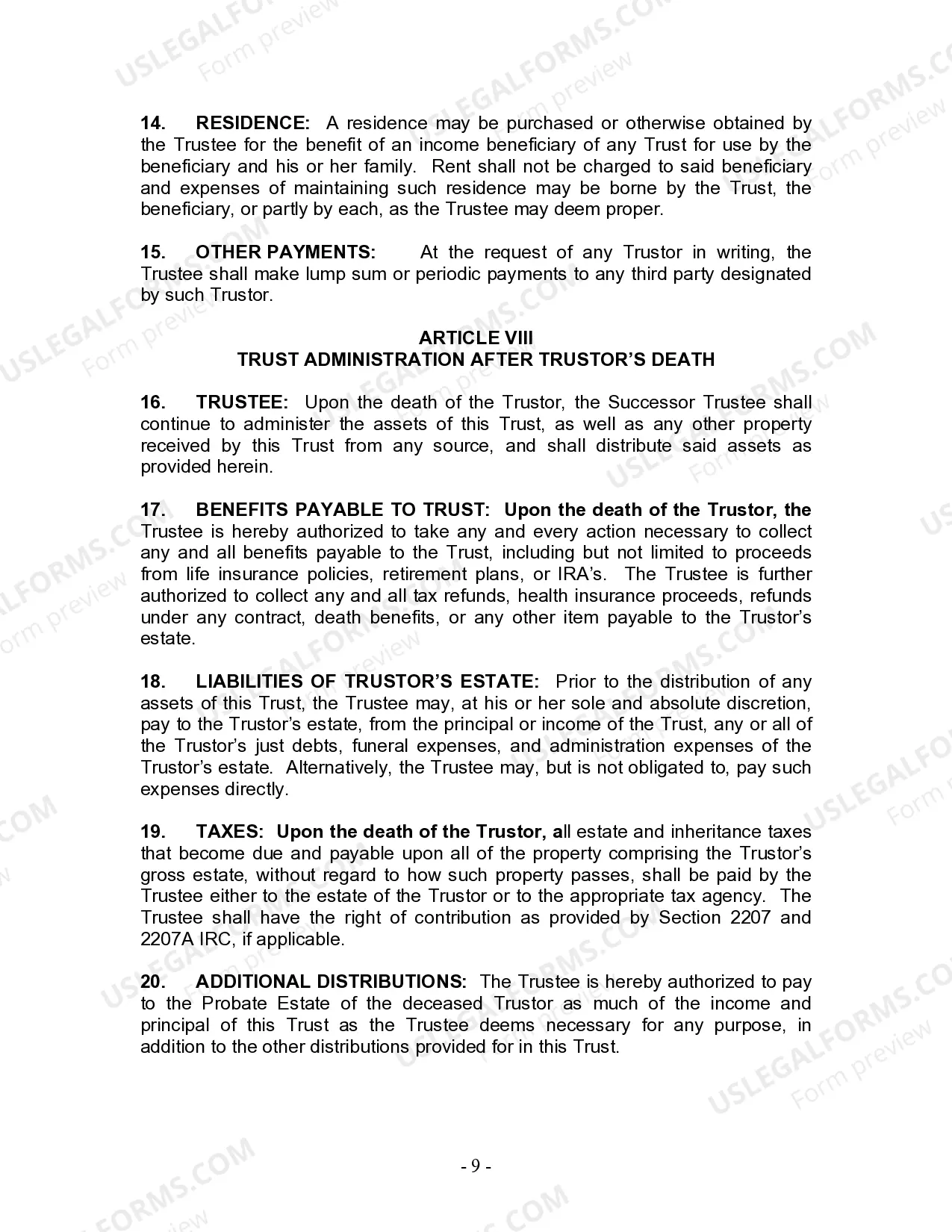
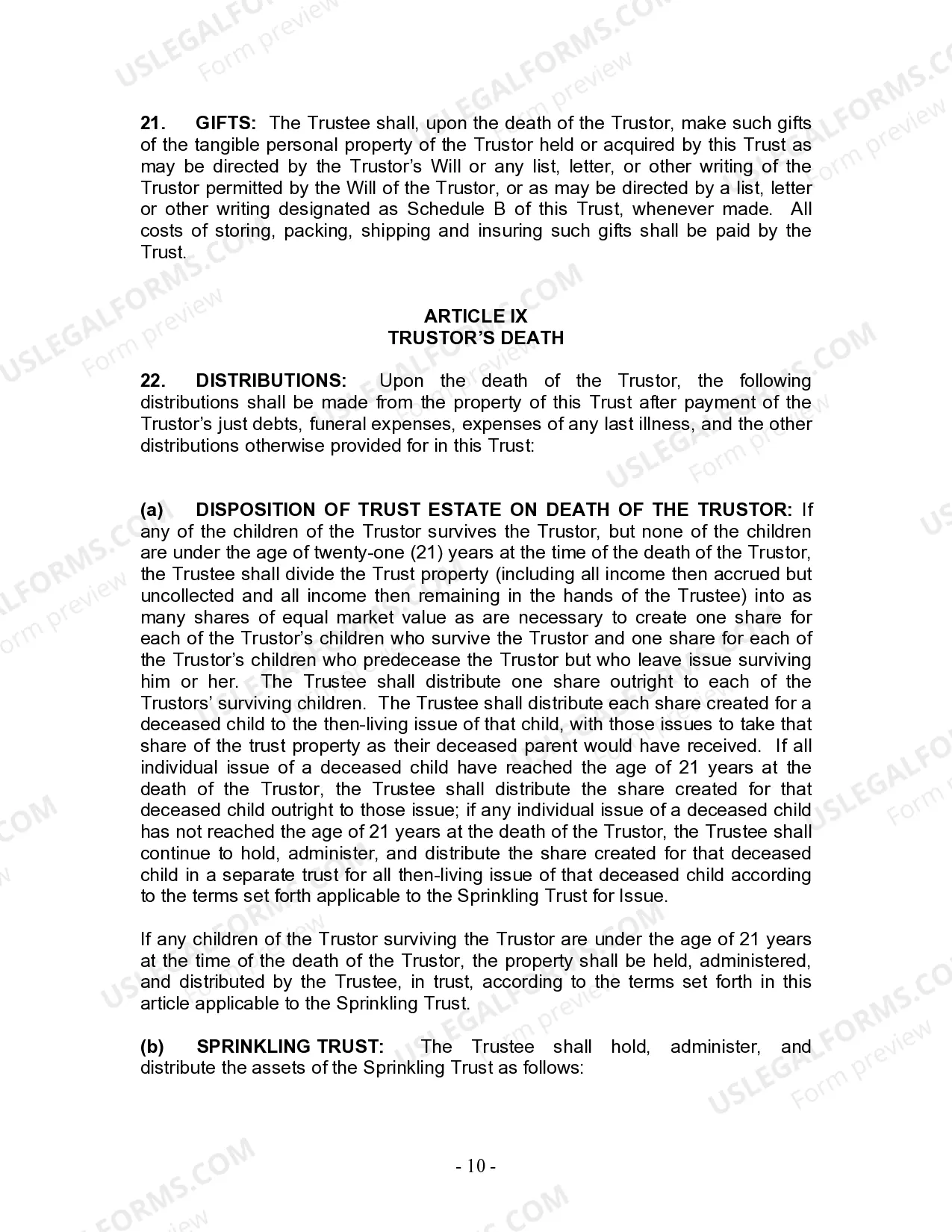
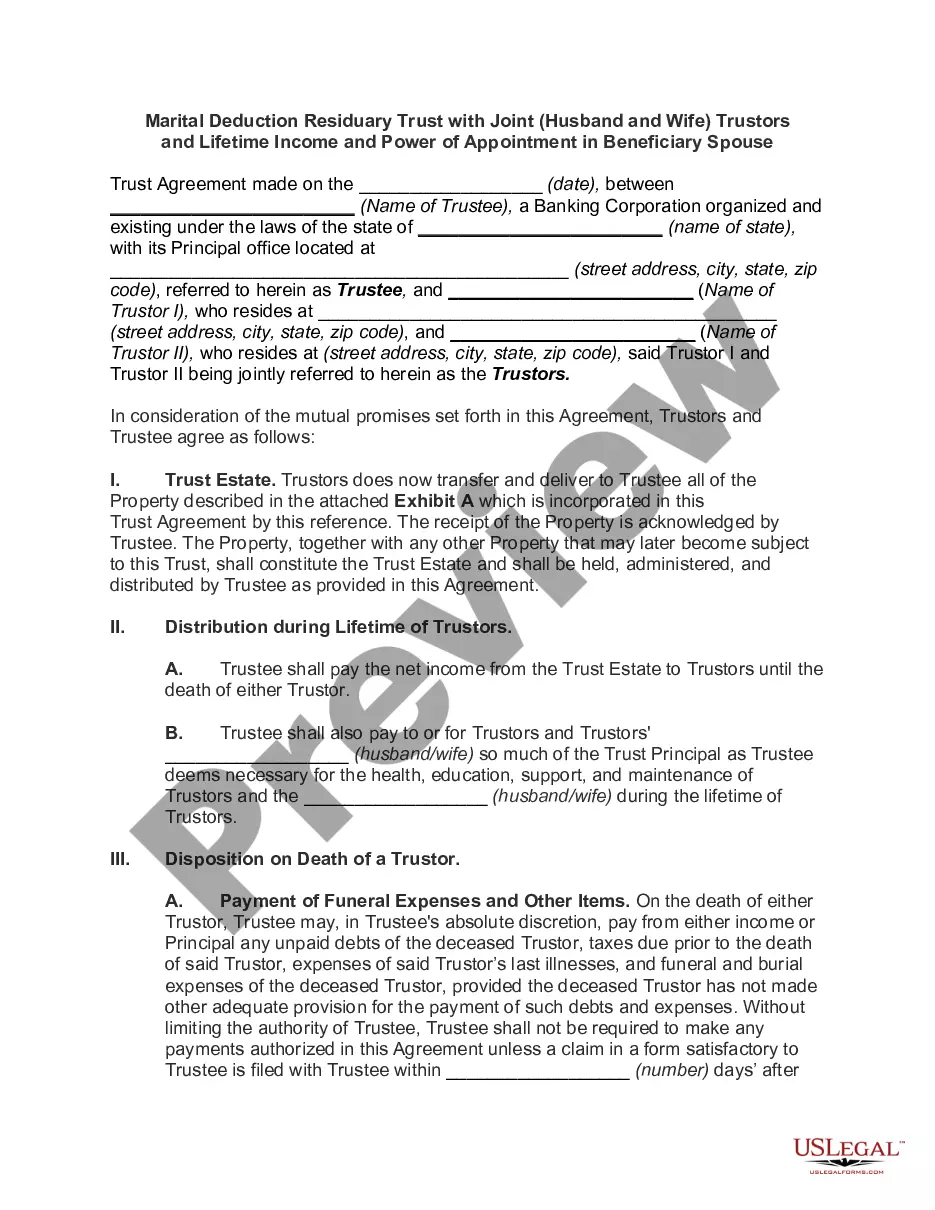
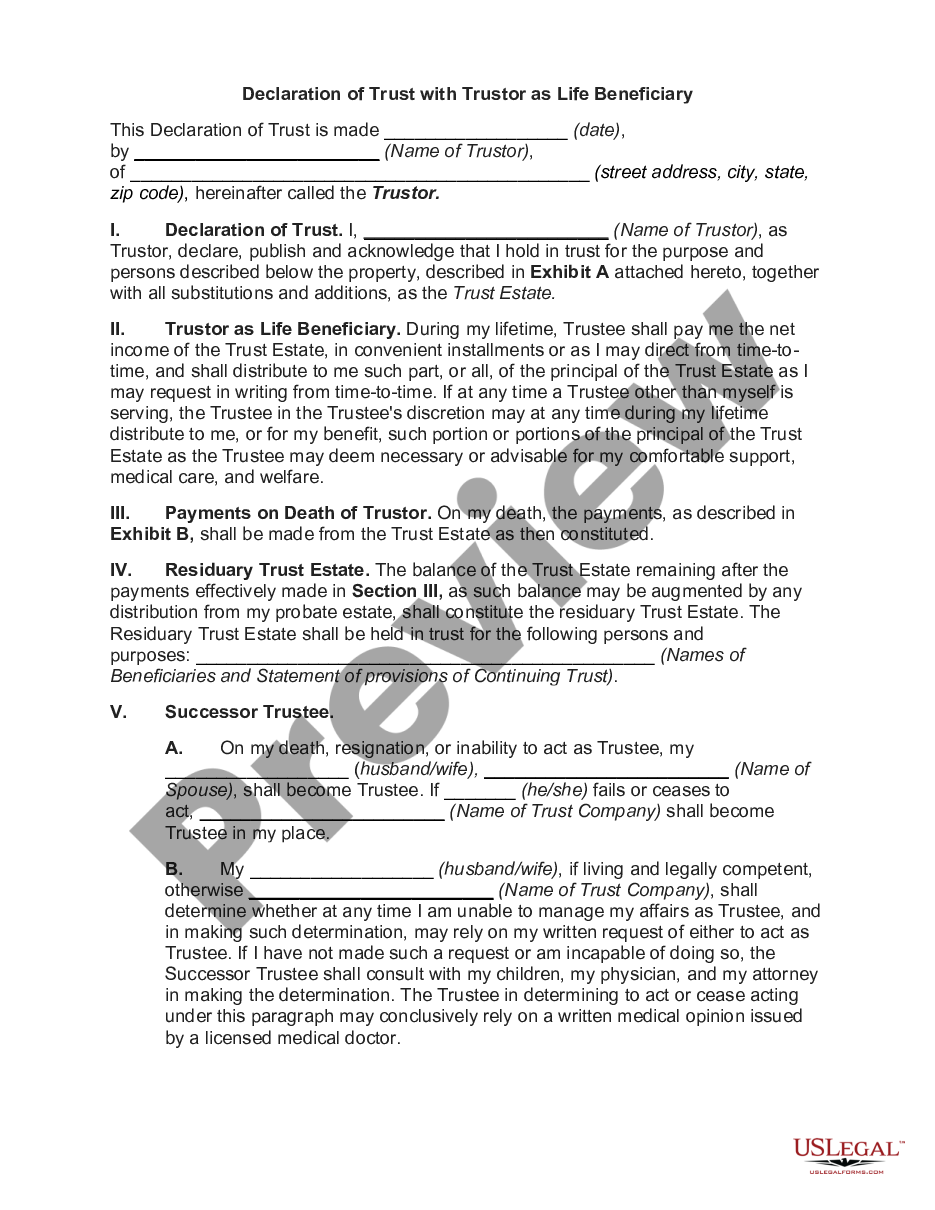
This form is a Living Trust for an individual who is single, divorced, or widowed with children. A living trust is a legal arrangement created during a person's lifetime to manage assets and property. Unlike a will, a living trust allows assets to bypass the probate process upon the death of the creator. This document ensures that your property is managed according to your wishes while providing benefits for your children. It offers flexibility and control, as the creator can be the trustee, managing assets during their lifetime and designating how assets are to be distributed after death.
Main sections of this form
- Identification of the Trustor and beneficiaries, including children of the Trustor.
- Appointment of the Trustee and provisions for successor trustees.
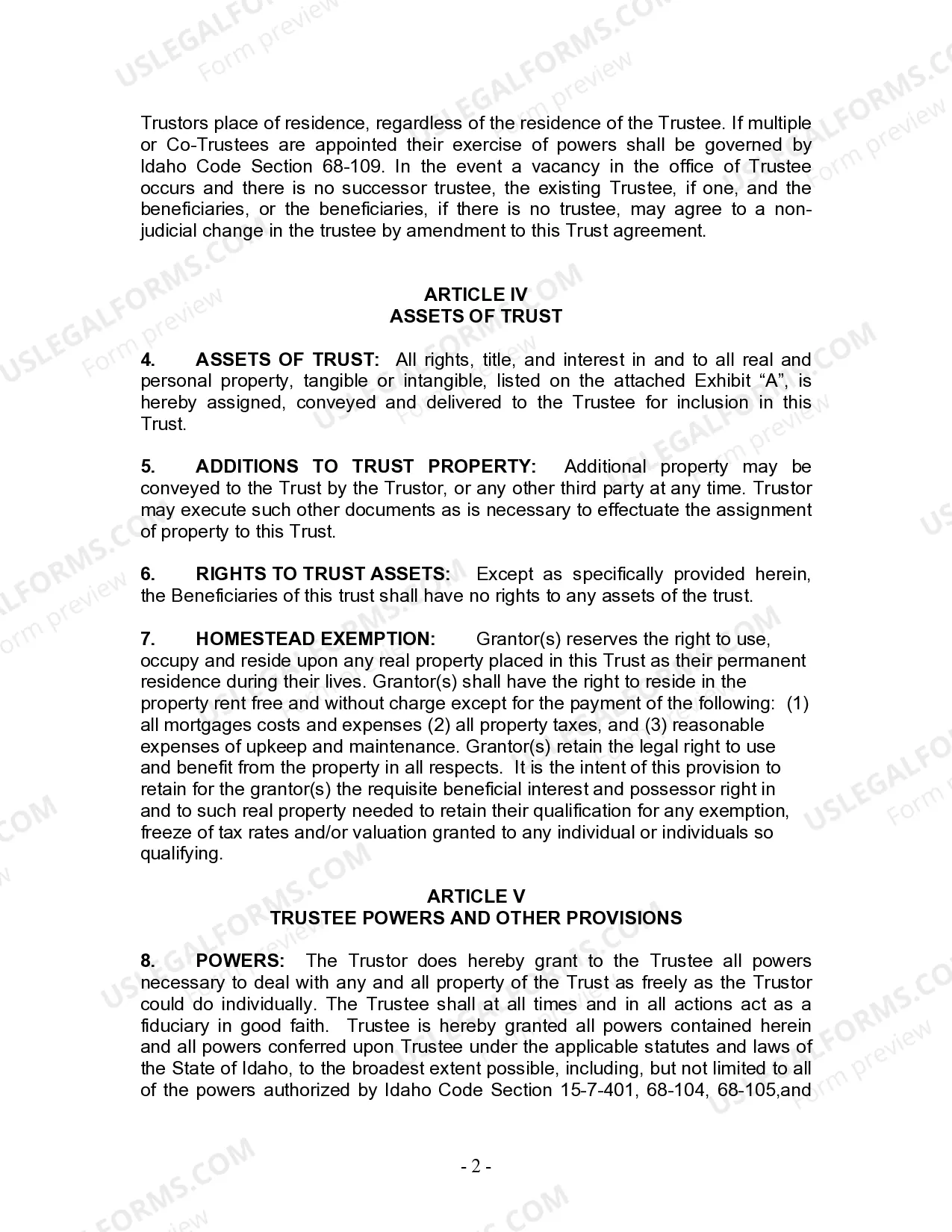
- Detailed description of the trust assets and their management.
- Distribution guidelines for beneficiaries upon the death of the Trustor.
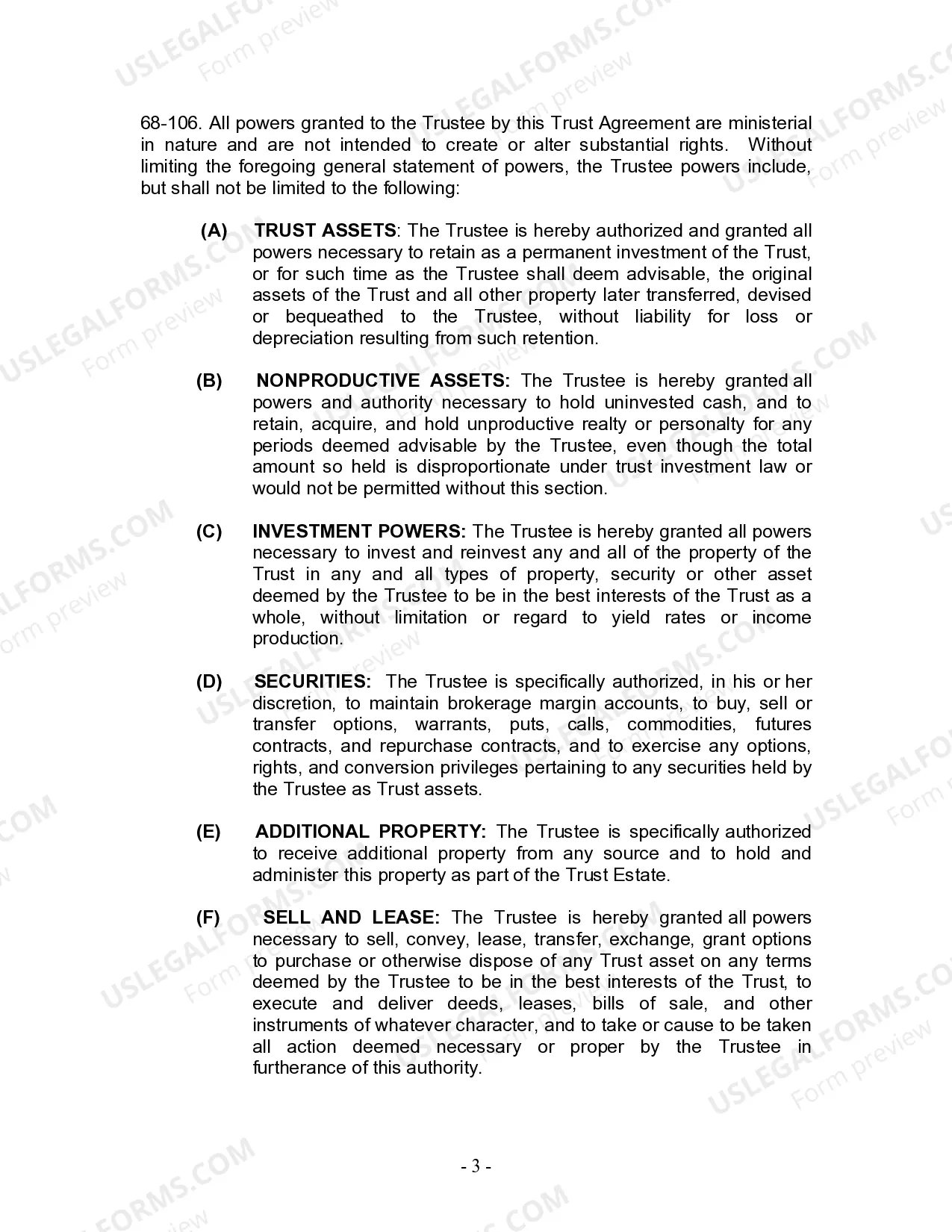
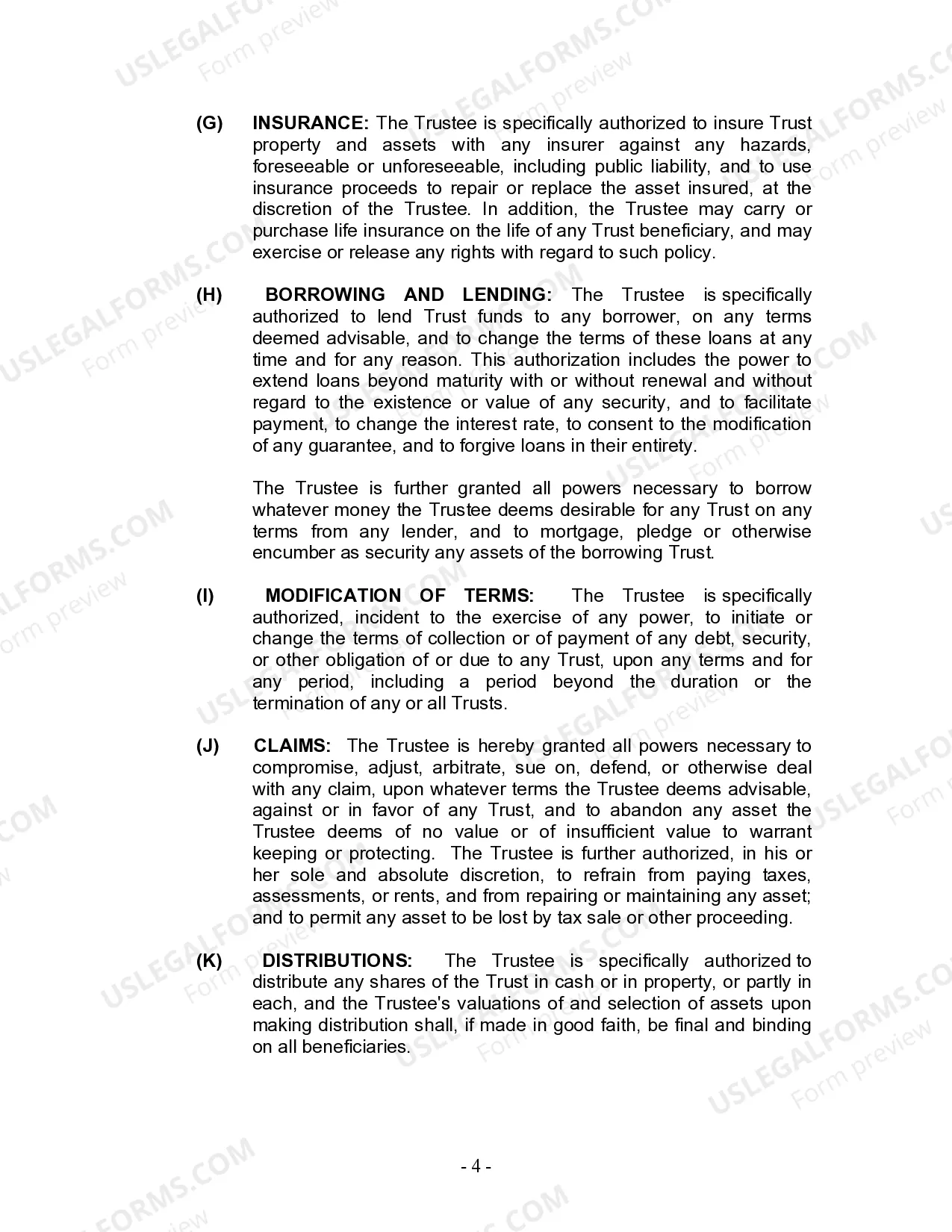
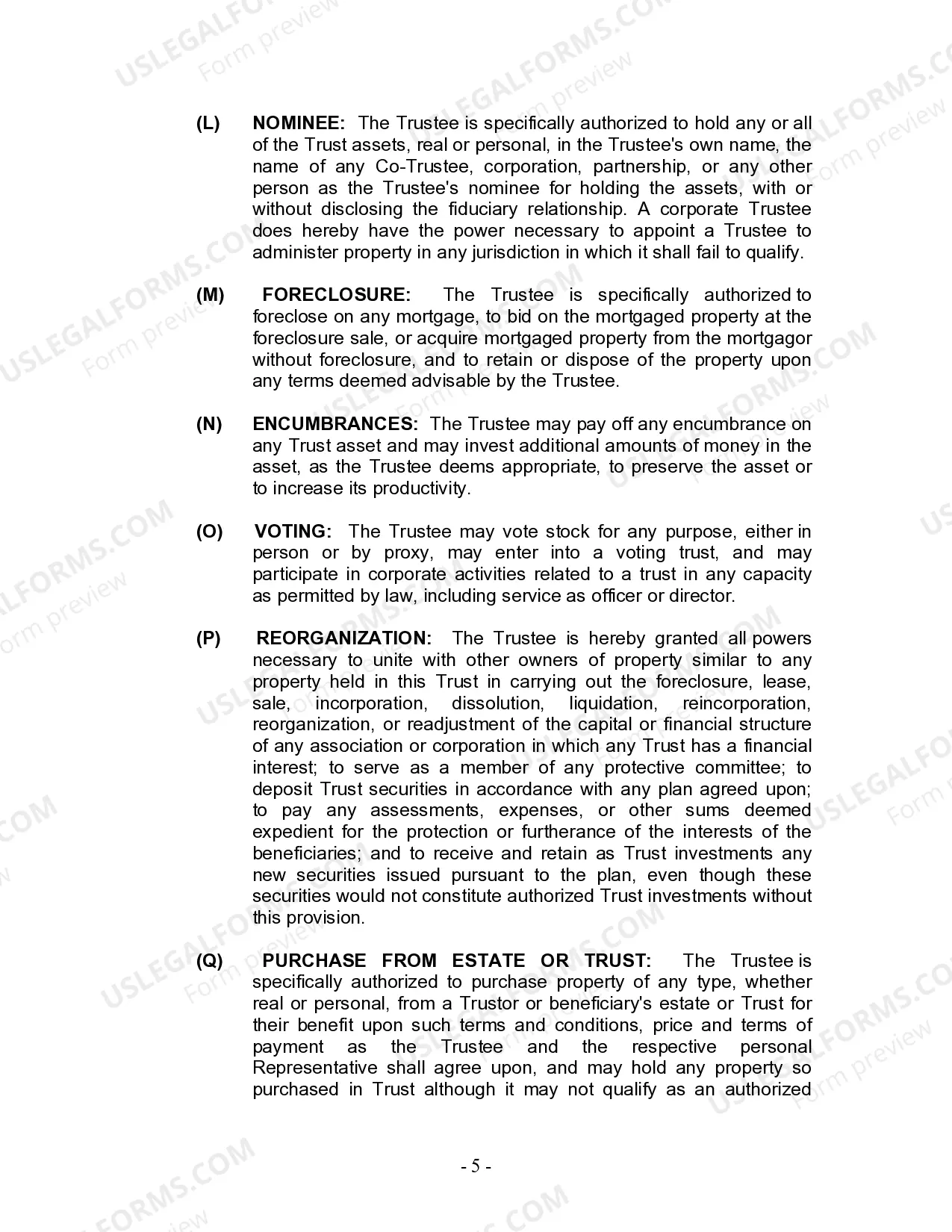
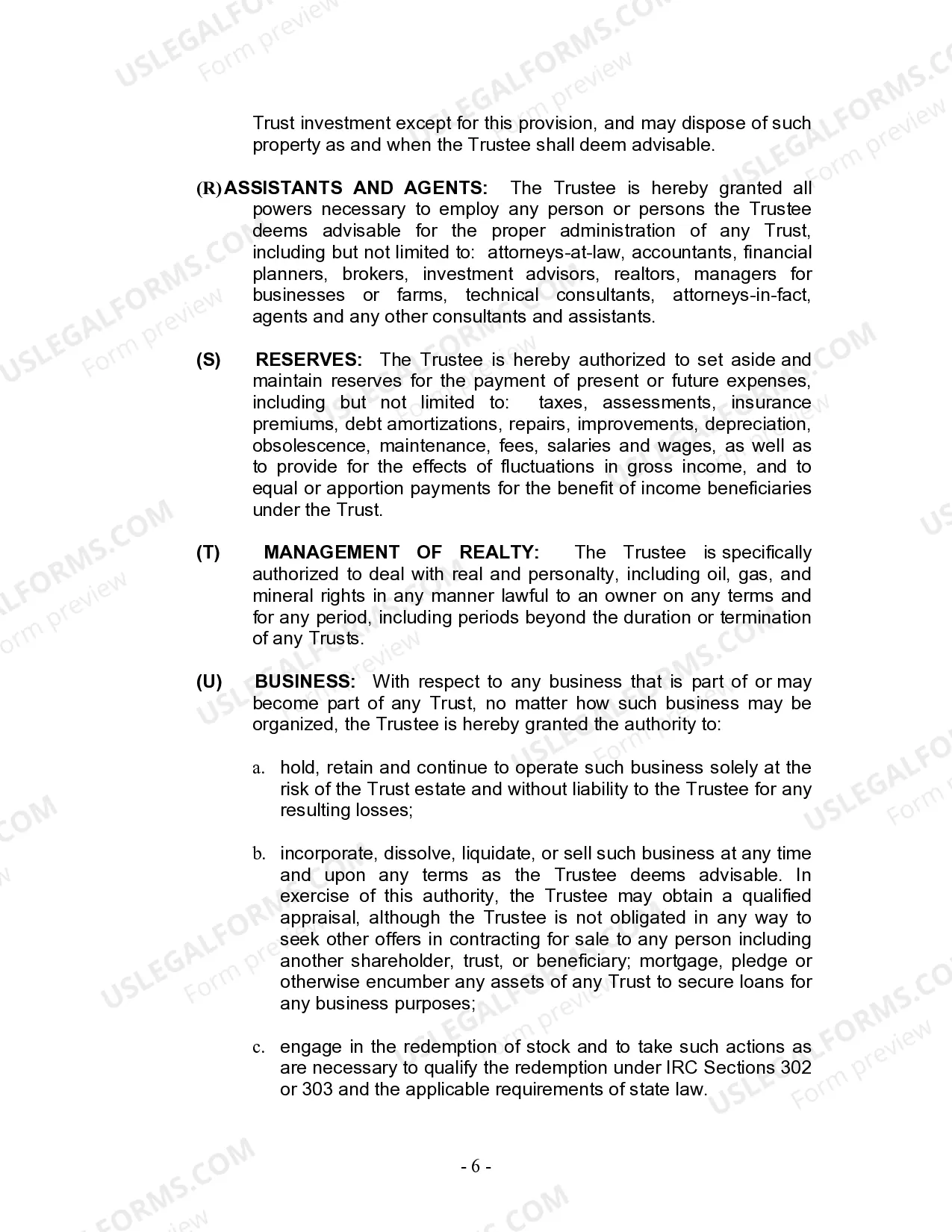
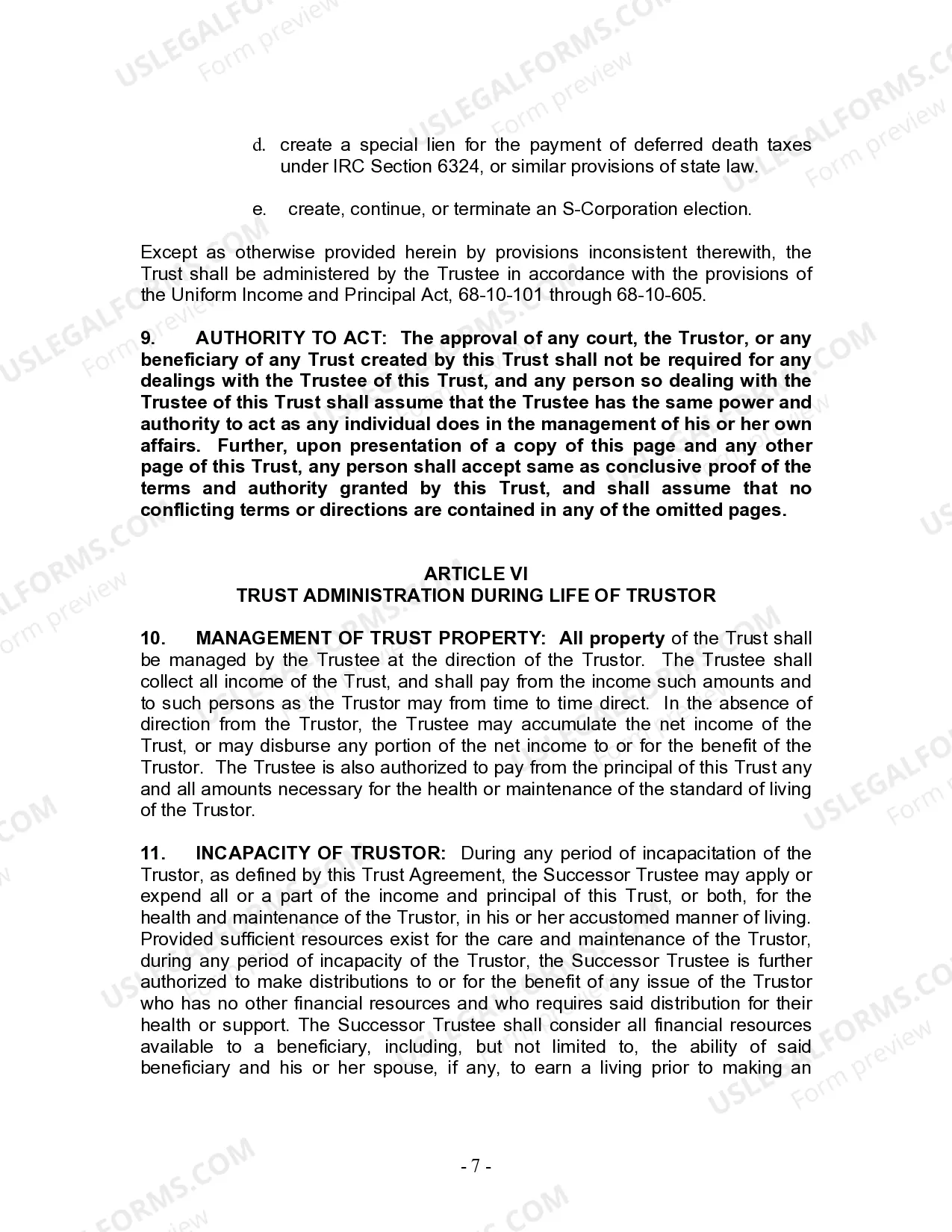
- Legal powers granted to the Trustee concerning the management and investment of trust assets.



When to use this document
This form is ideal for individuals who are single, divorced, or widowed and have children. You should consider using this living trust if you want to manage your assets during your lifetime and ensure a seamless distribution of your estate without the delays of probate after your passing. It is especially beneficial if you own significant property, wish to minimize estate taxes, or want to provide for your children's future while maintaining control over your assets.
Who should use this form
- Individuals who are single, divorced, or widowed.
- Parents with one or more children who wish to manage their estate effectively.
- Those looking for an estate planning tool that avoids probate complications.
- Individuals wanting to maintain control over their assets during their lifetime.
- Anyone seeking to provide for minor children or dependents after their death.
Completing this form step by step
- Identify all parties involved: the Trustor (you), the Trustee, and the beneficiaries (your children).
- Name the trust and include any relevant details that describe the trust's assets.
- Clearly outline how the assets will be distributed upon your death.
- Review and sign the document in the presence of a notary if required.
- Keep a copy of the trust document in a secure location and inform the Trustee of its whereabouts.
Does this form need to be notarized?
This form must be notarized to be legally valid. US Legal Forms provides secure online notarization powered by Notarize, allowing you to complete the process through a verified video call.
Get your form ready online
Our built-in tools help you complete, sign, share, and store your documents in one place.
Make edits, fill in missing information, and update formatting in US Legal Forms—just like you would in MS Word.
Download a copy, print it, send it by email, or mail it via USPS—whatever works best for your next step.
Sign and collect signatures with our SignNow integration. Send to multiple recipients, set reminders, and more. Go Premium to unlock E-Sign.
If this form requires notarization, complete it online through a secure video call—no need to meet a notary in person or wait for an appointment.
We protect your documents and personal data by following strict security and privacy standards.

Make edits, fill in missing information, and update formatting in US Legal Forms—just like you would in MS Word.

Download a copy, print it, send it by email, or mail it via USPS—whatever works best for your next step.

Sign and collect signatures with our SignNow integration. Send to multiple recipients, set reminders, and more. Go Premium to unlock E-Sign.

If this form requires notarization, complete it online through a secure video call—no need to meet a notary in person or wait for an appointment.

We protect your documents and personal data by following strict security and privacy standards.
Typical mistakes to avoid
- Failing to properly identify assets included in the trust.
- Not updating the trust after significant life changes, such as divorce or the birth of additional children.
- Neglecting to communicate with the Trustee about the trust's location and details.
- Overlooking a notary requirement which may invalidate the trust if not fulfilled.
Benefits of using this form online
- Convenience of downloading and completing the form at your own pace.
- Access to templates that comply with state laws, reducing the risk of errors.
- Editable document that allows for revisions to meet your specific needs.
- Secure storage and access to your document through a trusted platform.
Looking for another form?

Form popularity
FAQ
After one spouse passes away, the Idaho Living Trust for Individual, Who is Single, Divorced or Widow or Widower with Children automatically transfers the deceased spouse's assets to the surviving spouse or into a separate trust, depending on setup. The trust's terms dictate how assets are managed and distributed, allowing for continued care for any children involved. This process avoids the lengthy probate court system and ensures that asset distribution aligns with your wishes. It's beneficial to revisit the trust after any major life event to keep it updated.
First, a probate is required in Idaho anytime an estate has a value of $100,000 or more regardless of the property that is contained in the estate.Second, a probate is required in Idaho anytime an estate holds any real property, regardless of the value of the real property. (Idaho Code § 15-3-711.)
If someone dies without a will, the money in his or her bank account will still pass to the named beneficiary or POD for the account.The executor has to use the funds in the account to pay any of the estate's creditors and then distributes the money according to local inheritance laws.
If you die without a will in Idaho, your children will receive an intestate share of your property.For children to inherit from you under the laws of intestacy, the state of Idaho must consider them your children, legally.
Who Gets What: The Basic Rules of Intestate Succession.Generally, only spouses, registered domestic partners, and blood relatives inherit under intestate succession laws; unmarried partners, friends, and charities get nothing. If the deceased person was married, the surviving spouse usually gets the largest share.
In Idaho, you can make a living trust to avoid probate for virtually any asset you ownreal estate, bank accounts, vehicles, and so on. You need to create a trust document (it's similar to a will), naming someone to take over as trustee after your death (called a successor trustee).
Children - if there is no surviving married or civil partner If there is no surviving partner, the children of a person who has died without leaving a will inherit the whole estate. This applies however much the estate is worth. If there are two or more children, the estate will be divided equally between them.
The decision to draft your own will should be made hesitantly and only after careful consideration. Idaho law recognizes handwritten wills, referred to as holographic wills. Material provisions of the will and the signature must be in the handwriting of the person making the will.