Sample Letter regarding Cover Sheet to Accompany Complaint and Affidavit
What is this form?
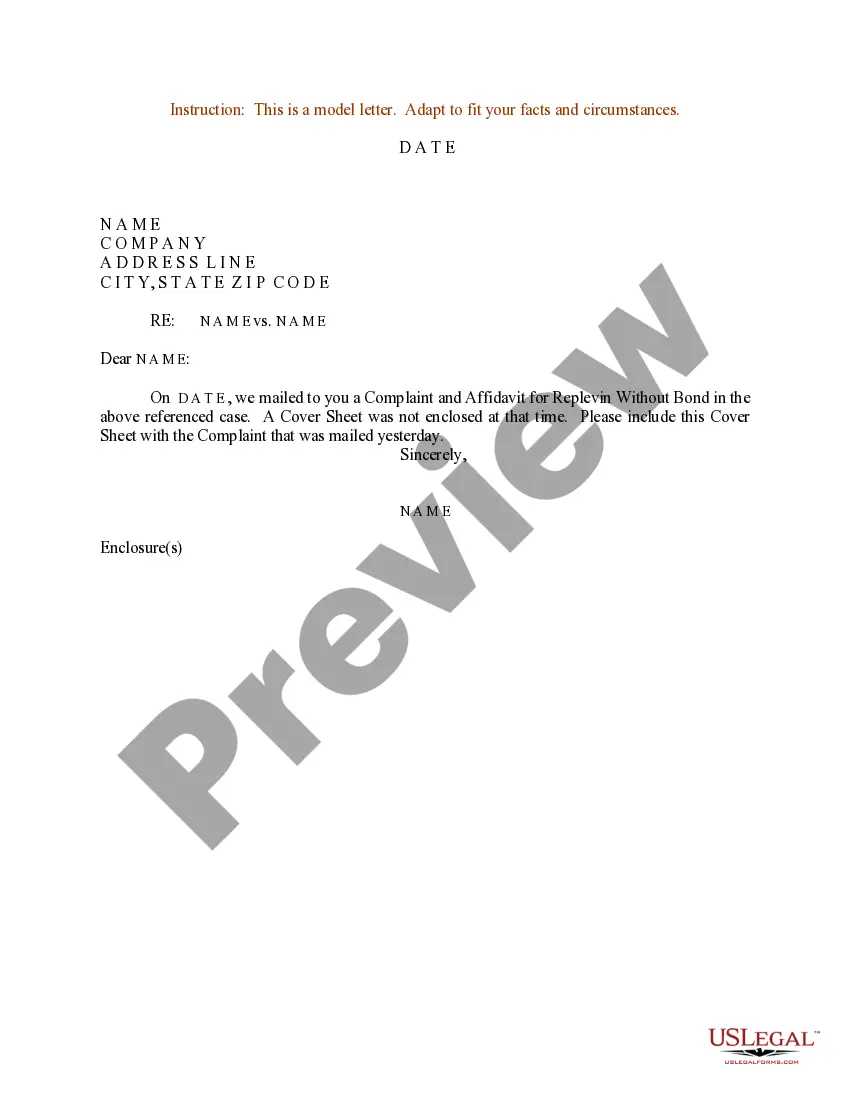
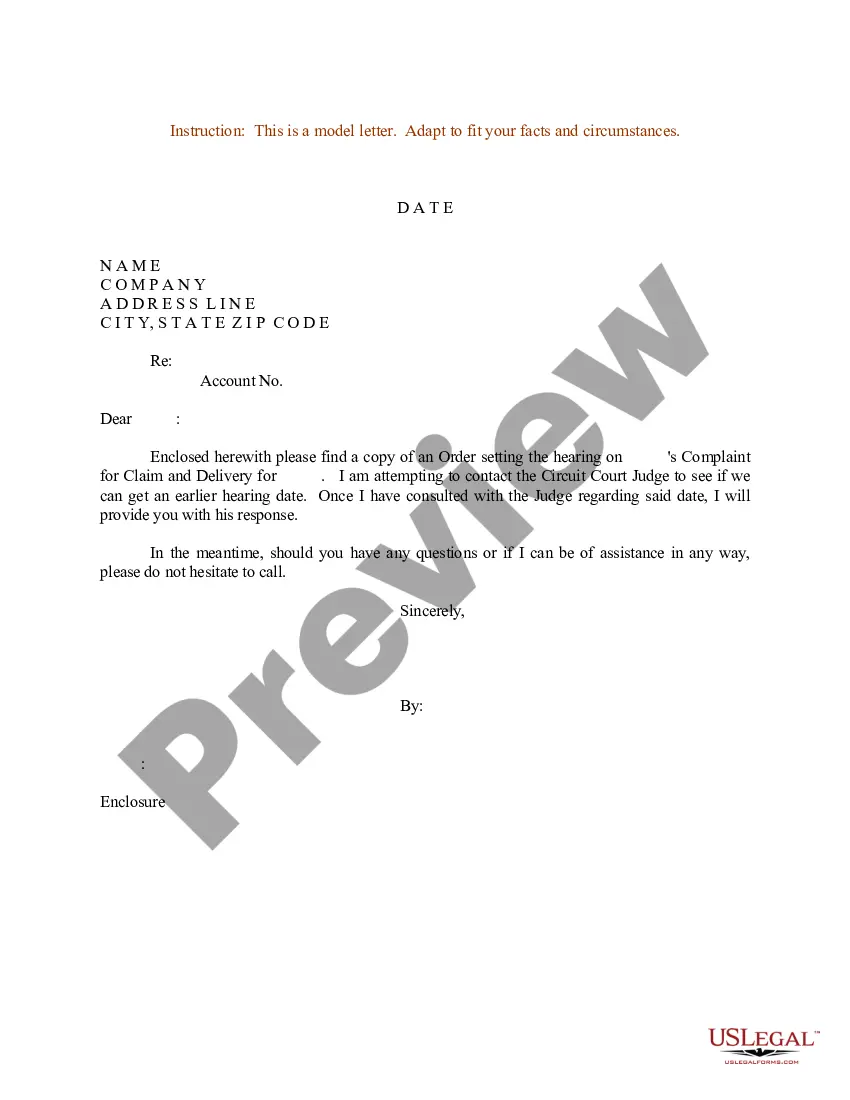
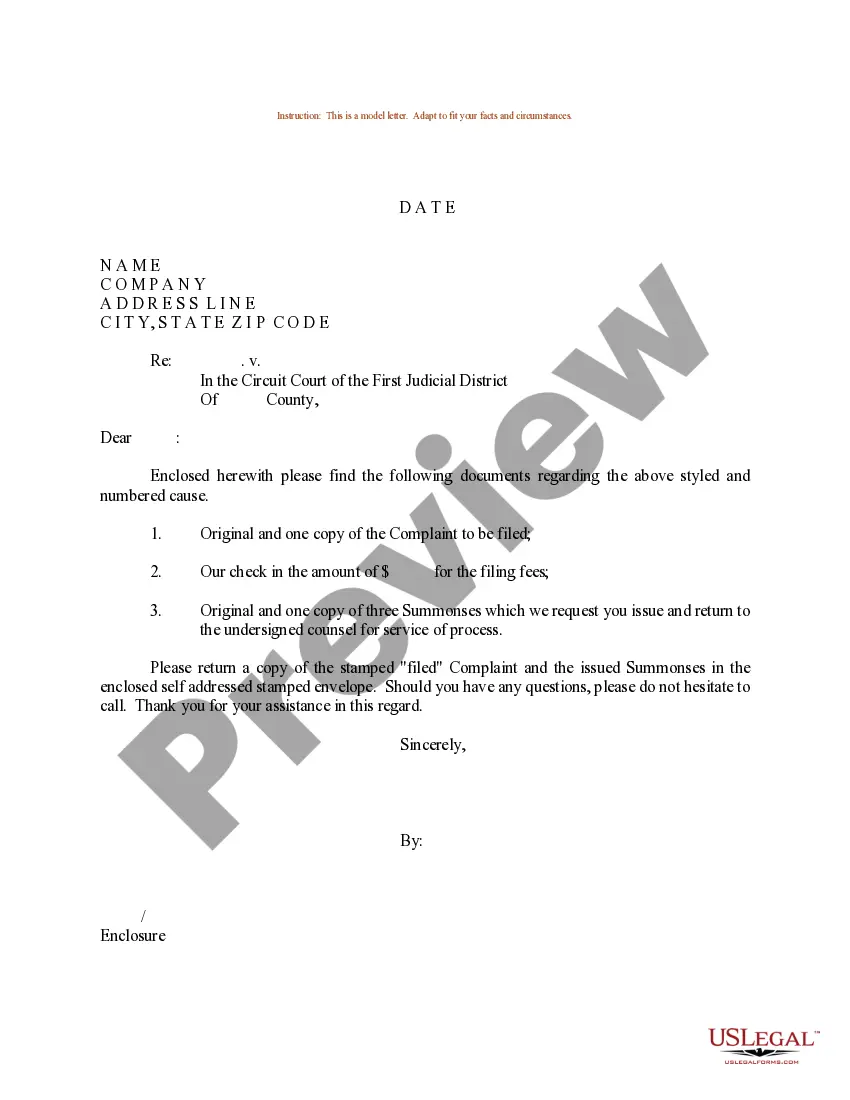
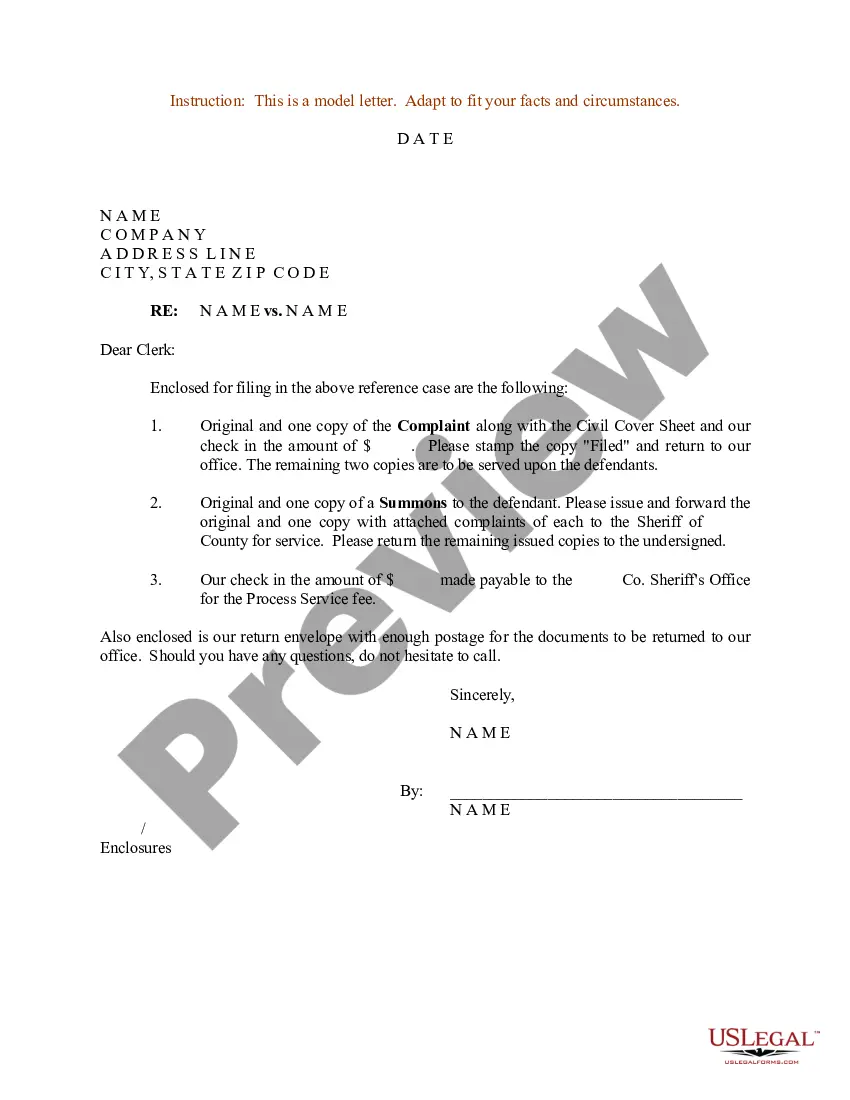
The Sample Letter Regarding Cover Sheet to Accompany Complaint and Affidavit is a legal document used to provide a formal notice that a Cover Sheet is to accompany a previously mailed Complaint and Affidavit. This letter ensures that the recipient is informed about the missing document, which is essential for processing the legal complaint effectively. Unlike other general letters, this form specifically addresses the inclusion of a Cover Sheet in legal proceedings, making it crucial for proper legal documentation.
Main sections of this form
- Date of the letter
- Sender's name and address
- Recipient's name and case reference
- Information about the Complaint and Affidavit
- Instruction to include the Cover Sheet
- Signature line for the sender
Common use cases
This form is necessary when you have previously sent a Complaint and Affidavit in a legal case but failed to include the Cover Sheet. It serves as a follow-up to ensure that all required documents are present in the legal filing. Using this letter helps to maintain clear communication and compliance with court requirements.
Who should use this form
- Individuals filing a complaint in a legal matter
- Legal representatives assisting clients with court documents
- Anyone needing to formally notify the recipient of missing legal documentation
Instructions for completing this form
- Enter the date on which you are sending the letter.
- Fill in your name and address at the top.
- Include the recipient's name and the details of the case.
- State the date when you mailed the Complaint and Affidavit.
- Clearly instruct the recipient to include the Cover Sheet.
- Sign the letter and indicate any enclosures.
Notarization requirements for this form
Notarization is generally not required for this form. However, certain states or situations might demand it. You can complete notarization online through US Legal Forms, powered by Notarize, using a verified video call available anytime.
Get your form ready online
Our built-in tools help you complete, sign, share, and store your documents in one place.
Make edits, fill in missing information, and update formatting in US Legal Forms—just like you would in MS Word.
Download a copy, print it, send it by email, or mail it via USPS—whatever works best for your next step.
Sign and collect signatures with our SignNow integration. Send to multiple recipients, set reminders, and more. Go Premium to unlock E-Sign.
If this form requires notarization, complete it online through a secure video call—no need to meet a notary in person or wait for an appointment.
We protect your documents and personal data by following strict security and privacy standards.

Make edits, fill in missing information, and update formatting in US Legal Forms—just like you would in MS Word.

Download a copy, print it, send it by email, or mail it via USPS—whatever works best for your next step.

Sign and collect signatures with our SignNow integration. Send to multiple recipients, set reminders, and more. Go Premium to unlock E-Sign.

If this form requires notarization, complete it online through a secure video call—no need to meet a notary in person or wait for an appointment.

We protect your documents and personal data by following strict security and privacy standards.
Common mistakes to avoid
- Forgetting to include the date of the letter.
- Omitting the case reference or recipient's name.
- Not clearly stating the request to attach the Cover Sheet.
- Failing to sign the letter before sending.
Benefits of completing this form online
- Easy to download and edit as needed.
- Instant access to professionally drafted legal language.
- Ensures compliance with legal standards.
- Flexible to adapt to different legal circumstances.
Legal use & context
- This letter serves as a formal communication tool in legal proceedings.
- Ensures all documents are properly structured and attached for court requirements.
- Helps maintain a clear record of correspondence related to the case.
Summary of main points
- The letter is crucial for accompanying legal documents and ensuring proper filing.
- Accurate and complete information is essential to avoid delays in legal proceedings.
- This template is designed to be user-friendly, even for those with little legal experience.
Looking for another form?
Form popularity
FAQ
The three primary factors that are contained in complain are:1: the facts showing that the court has subject-matter and personal jurisdiction. 2: The facts establishing the plaintiff's basis for relief. 3: The remedy the plaintiff is seeking. 2.
Provide the name of the court at the top of the Answer. You can find the information on the summons. List the name of the plaintiff on the left side. Write the case number on the right side of the Answer. Address the Judge and discuss your side of the case. Ask the judge to dismiss the case.
You can file an answer to respond to the plaintiff's Complaint. An answer is a formal statement, in writing, of your defense to the lawsuit. You can say that what the plaintiff claims is not true. Or you can say it is true but give more information and reasons to defend your actions or explain the situation.
Contact the clerk's office of the court where the lawsuit was filed. You'll find a phone number and address for the clerk's office on your summons. The clerk will be able to tell you exactly what documents you should file with your answer and whether any filing fee is required.
Be brief. Answer the allegations in the complaint with one or two sentences. Again remember that the statements you make in your answer can be used as admissions against you. Your response to the allegations in the complaint may admit part of the statement in the specific paragraph and deny part.
You can file an answer or a general denial. Filing an answer. You can file a motion In certain situations, you can respond to the lawsuit by filing a motion (a request) that usually tells the court that the plaintiff made a mistake in the lawsuit. Talk to a lawyer!
Under FRCP 4, an individual within the U.S. may be served by delivering a copy of the summons and complaint to the individual personally; leaving a copy at the individual's dwelling or usual place of abode with someone of suitable age and discretion who resides there; or delivering a copy to an agent authorized or
Your complaint must contain a caption (or heading) that includes the name of the court and county, the parties to the case (and their designation, like plaintiff or defendant), the case number (if you have one), and the title of the document.
The plaintiff must serve the papers on the defendant in person, directly to the defendant, rather than by mail or by simply leaving it at the defendant's home or work. You must serve each defendant if you are suing more than one, even if the defendants each live or work at the same address.