Sample Letter for Instructions to Execute Complaint to Probate Will
Understanding this form
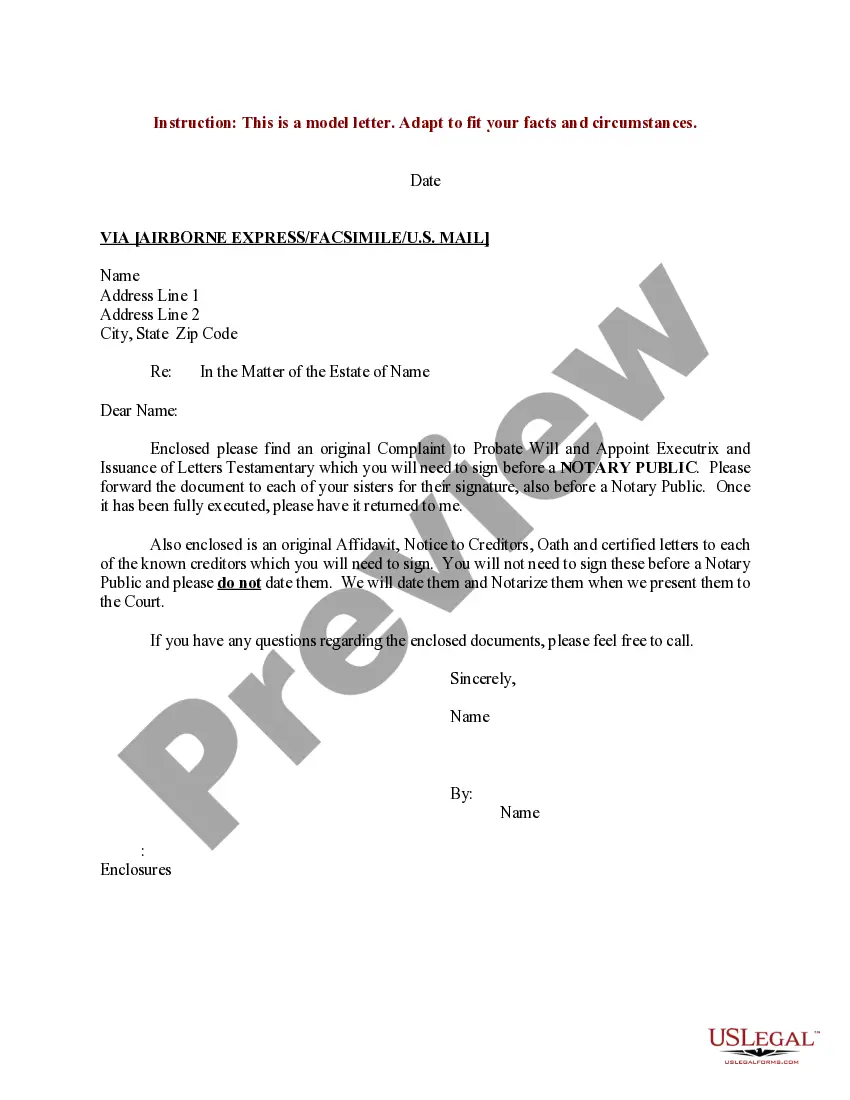
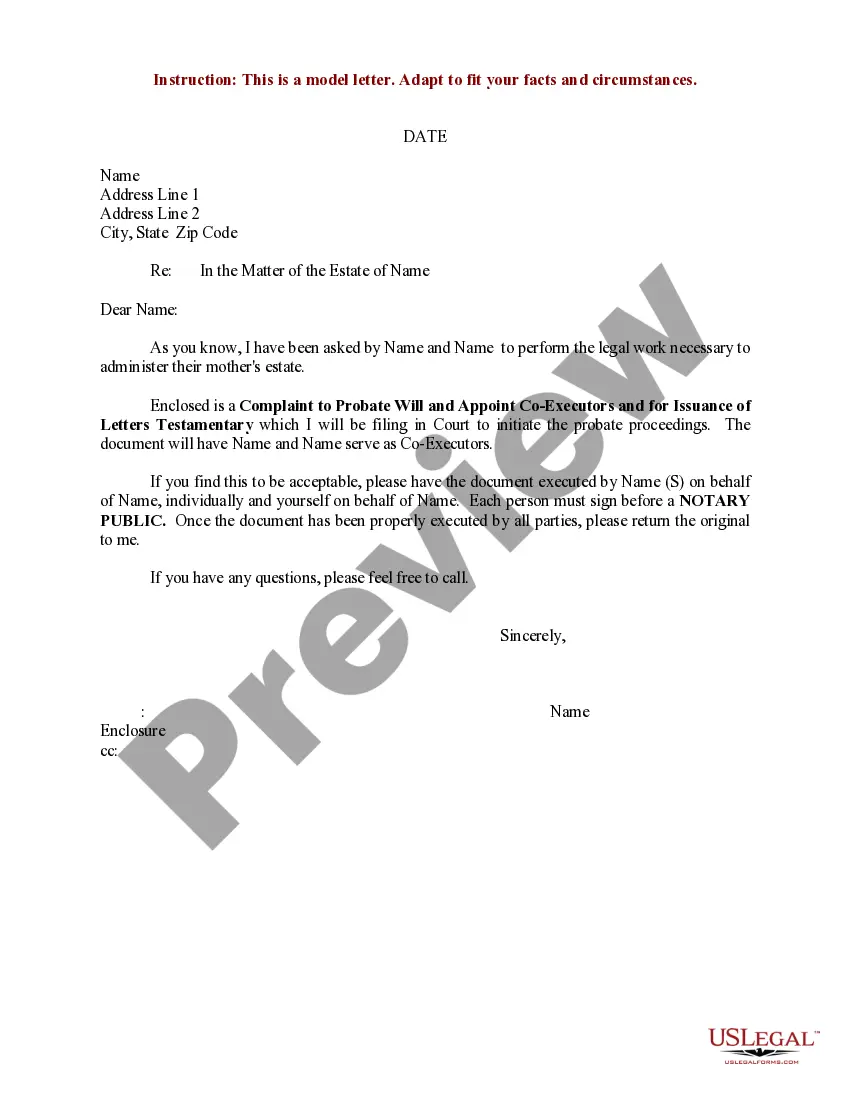
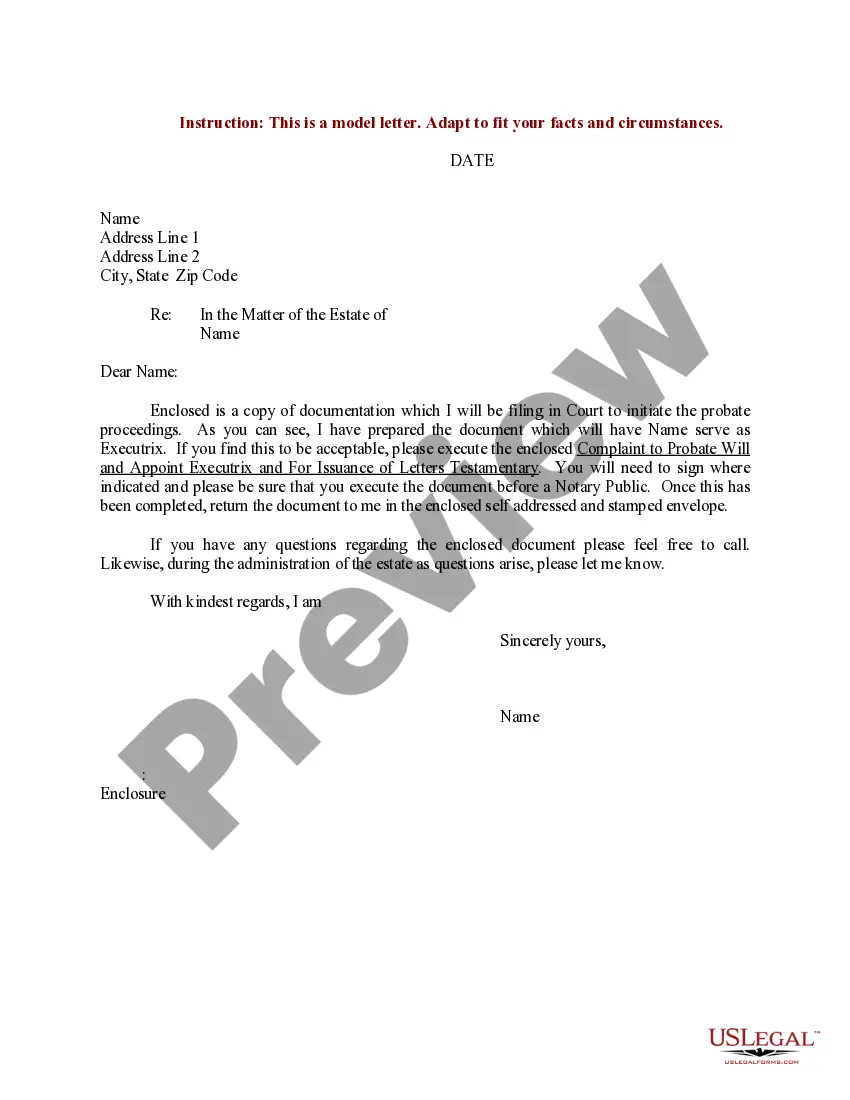
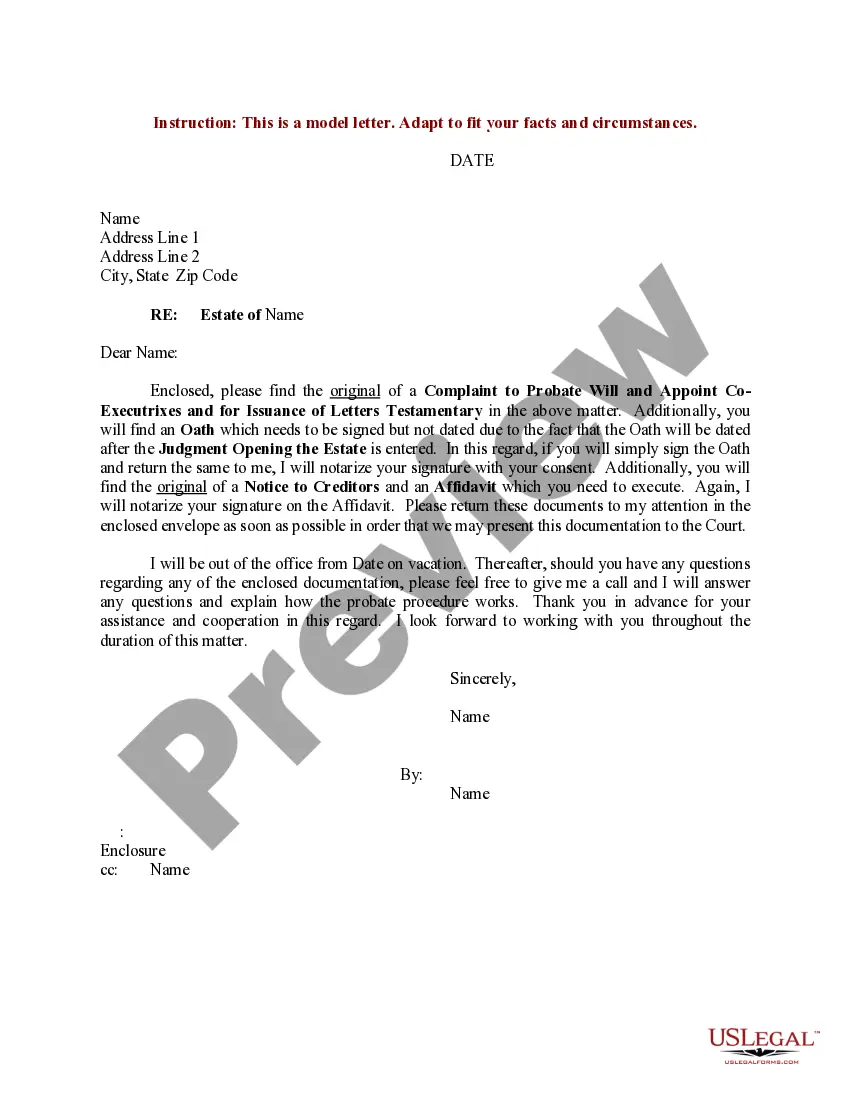
The Sample Letter for Instructions to Execute Complaint to Probate Will is a legal document that serves as a template for notifying relevant parties about the initiation of probate proceedings. This form is designed to guide you in providing necessary instructions related to the execution of a will. Unlike other legal forms, this letter specifically addresses the procedural steps involved in executing a complaint for probating a will, making it a crucial resource for those facing this legal process.
Form components explained
- Date: The date when the letter is drafted.
- Sender's Information: Includes the name and address of the individual sending the letter.
- Recipient's Information: Addressing the relevant party involved in the probate process.
- Subject Matter: Clearly states the purpose of the correspondence regarding the estate of the deceased.
- Closing: Provides space for the sender's signature and any additional comments or instructions.
When to use this document
This letter is used when an executor or interested party is ready to formally initiate the probate process of a deceased person's will. You would typically use this form to inform beneficiaries and relevant individuals about the proceedings and to provide guidance on how they should proceed with their claims or duties concerning the estate.
Who this form is for
- Executors of a will looking to formally initiate probate proceedings.
- Beneficiaries who need clarity on their rights and responsibilities regarding the estate.
- Legal representatives assisting clients with estate matters.
Steps to complete this form
- Begin by entering the date you are writing the letter.
- Fill in your name and address as the sender of the letter.
- Address the letter to the relevant individual or party involved in the probate process with their name and address.
- Clearly specify the subject line, indicating it concerns the estate of the deceased.
- Add any additional instructions or comments that the recipient needs to know.
- Sign the letter before sending it out to ensure authenticity.
Does this document require notarization?
This form usually doesn’t need to be notarized. However, local laws or specific transactions may require it. Our online notarization service, powered by Notarize, lets you complete it remotely through a secure video session, available 24/7.
Get your form ready online
Our built-in tools help you complete, sign, share, and store your documents in one place.
Make edits, fill in missing information, and update formatting in US Legal Forms—just like you would in MS Word.
Download a copy, print it, send it by email, or mail it via USPS—whatever works best for your next step.
Sign and collect signatures with our SignNow integration. Send to multiple recipients, set reminders, and more. Go Premium to unlock E-Sign.
If this form requires notarization, complete it online through a secure video call—no need to meet a notary in person or wait for an appointment.
We protect your documents and personal data by following strict security and privacy standards.

Make edits, fill in missing information, and update formatting in US Legal Forms—just like you would in MS Word.

Download a copy, print it, send it by email, or mail it via USPS—whatever works best for your next step.

Sign and collect signatures with our SignNow integration. Send to multiple recipients, set reminders, and more. Go Premium to unlock E-Sign.

If this form requires notarization, complete it online through a secure video call—no need to meet a notary in person or wait for an appointment.

We protect your documents and personal data by following strict security and privacy standards.
Common mistakes to avoid
- Failing to include all necessary recipient information.
- Using vague language that can lead to misunderstandings.
- Not providing clear instructions regarding next steps for the recipients.
Benefits of using this form online
- Convenient access to a professionally drafted template that can be easily customized.
- Editable format allows for quick modifications to suit your specific needs.
- Reliable legal framework devised by licensed attorneys to ensure compliance with applicable laws.
Looking for another form?
Form popularity
FAQ
This is a template letter used to notify relevant parties about starting probate proceedings and to give instructions related to the execution of a complaint to probate a will. It is intended for executors or interested parties about initiating probate and informing beneficiaries. The form provides fields for Date, Sender's Information, Recipient's Information, Subject Matter, and Closing.
To write a letter of instruction for probate using this form, fill in the Date, then provide the Sender's Information and Recipient's Information. Craft a clear Subject Matter that references the estate, and finish with a formal Closing including your signature. This template guides you to initiate probate and inform involved parties using standard fields.
To start probate with this form, complete the Date, identify the Sender and Recipient, and state the estate in the Subject Matter. Use the Closing for signature and any final instructions. The letter should clearly indicate the intention to initiate probate and guide beneficiaries or other parties on next steps.
Common mistakes include omitting the date, leaving Sender's or Recipient's Information blank, using vague Subject Matter, failing to state the purpose to initiate probate, not signing the letter, or sending it to the wrong party. Ensure all form components are accurately filled and aligned with the when_to_use guidance.
To address heirs and beneficiaries, fill the Recipient's Information with the intended recipients and craft a Subject Matter that clearly references their rights and duties regarding the estate. The letter should convey probate initiation and outline the actions beneficiaries should take, using the form's Date, Sender's Information, Recipient's Information, Subject Matter, and Closing fields.
This form is specifically a template for instructions to execute a complaint to probate a will. It emphasizes initiating probate and providing actionable steps through defined fields (Date, Sender's Information, Recipient's Information, Subject Matter, Closing), whereas a general probate letter may not include procedural initiation language.