Sample Letter for Renunciation of Executorship
Overview of this form
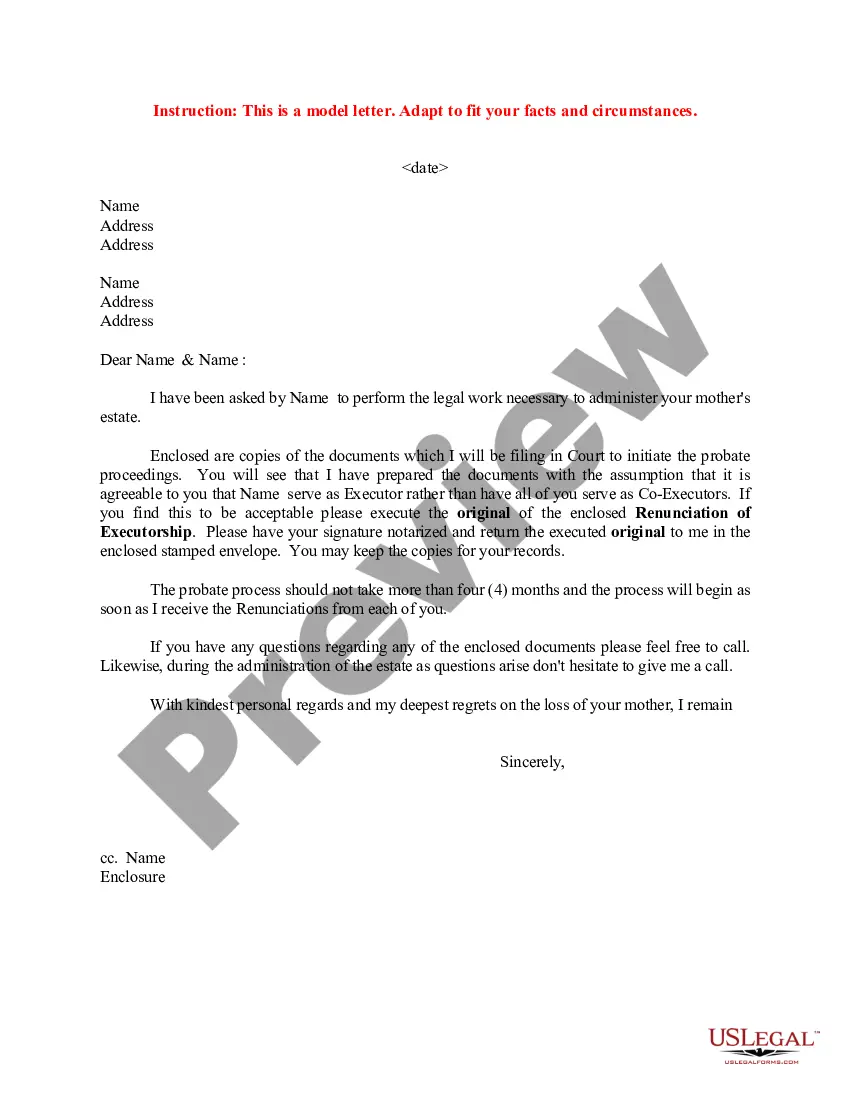
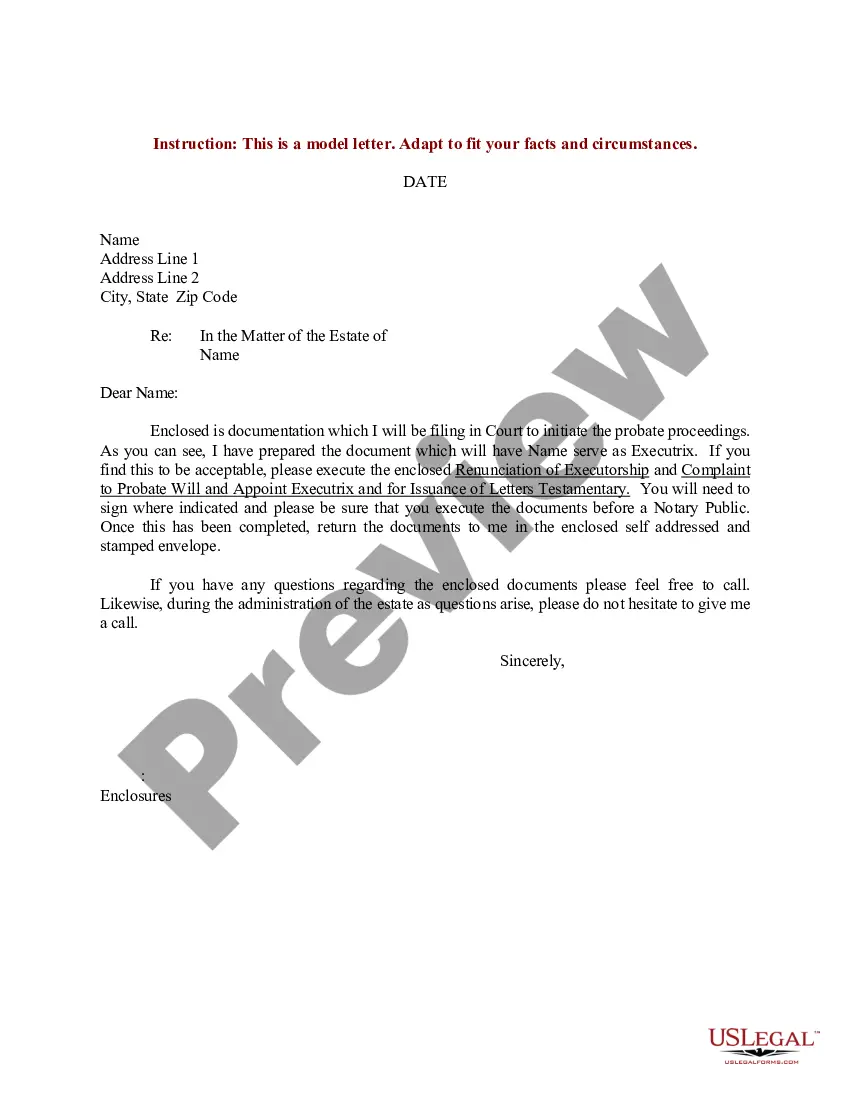
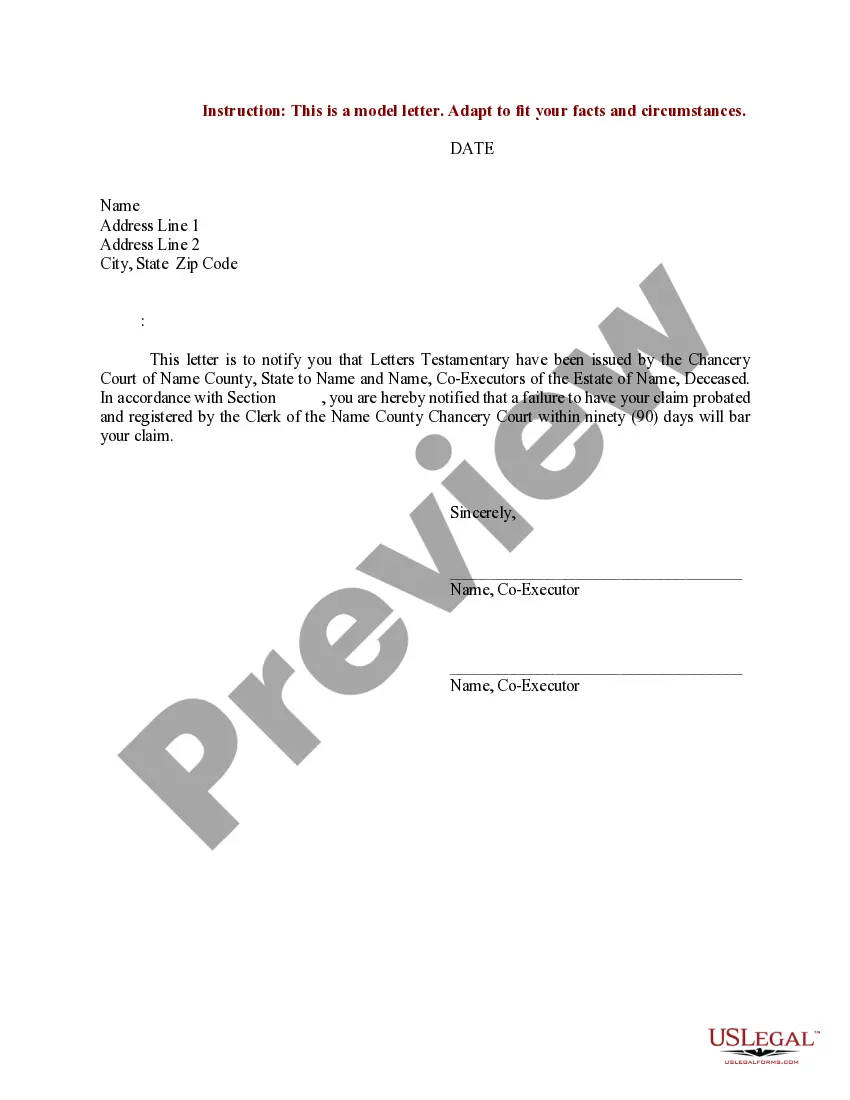
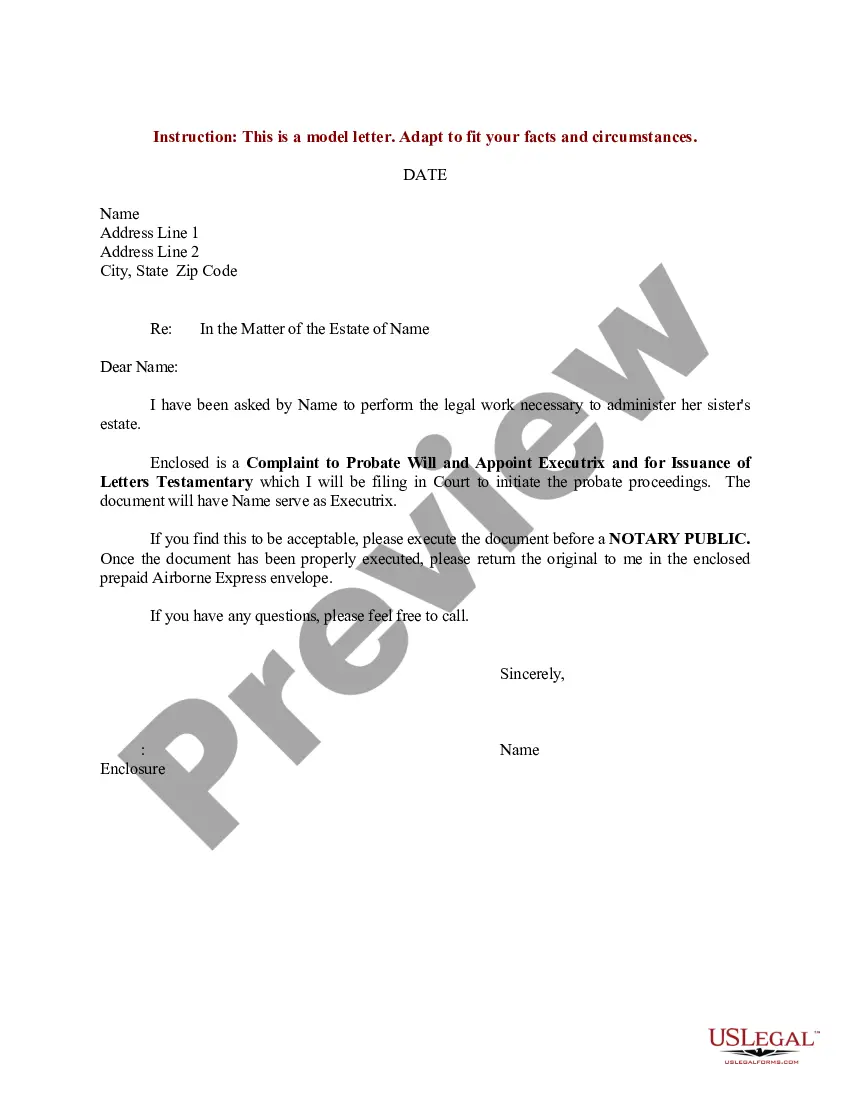
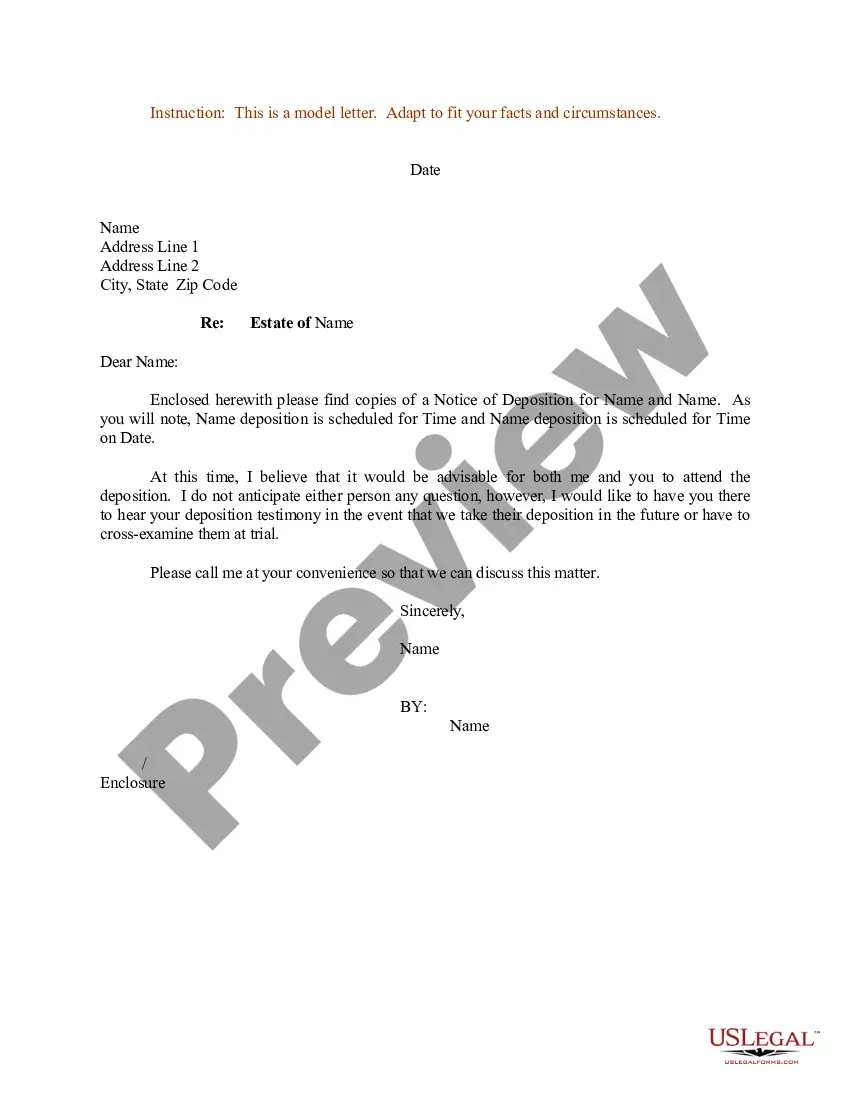
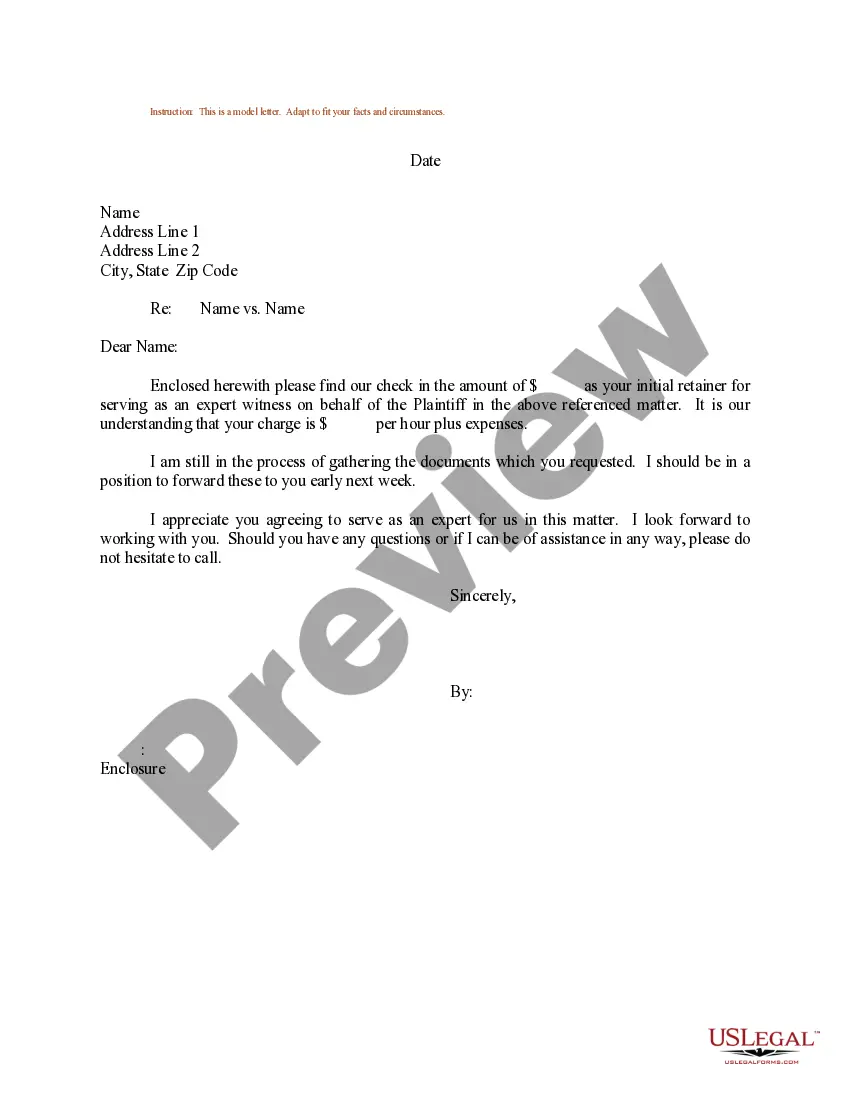
The Sample Letter for Renunciation of Executorship is a legal document used by an individual to formally decline the role of executor for a deceased person's estate. This letter facilitates the probate process by allowing another party to assume the responsibilities of administration. Unlike other forms related to probate, this document specifically addresses the renunciation of the executorship role.
Key parts of this document
- Date of the letter
- Names and addresses of the parties involved
- Salutation addressing the recipient
- Details regarding the administration of the estate
- Instructions for executing the Renunciation of Executorship
- Signature line for the renouncing party
Common use cases
This form should be used when an individual has been appointed as an executor of an estate but wishes to renounce this responsibility. Situations may include when the appointed executor feels unable to handle the duties, or when another individual is better suited for the role. It helps streamline the probate process by ensuring that the preferred executor can take over without delay.
Who this form is for
- Individuals appointed as executors who wish to renounce the position
- Heirs or beneficiaries of an estate involved in the probate process
- Legal representatives assisting clients in estate administration
How to prepare this document
- Enter the date at the top of the letter.
- Provide the names and addresses of all relevant parties.
- Address the letter to the appropriate individual or entity.
- Clearly state your intention to renounce your role as executor.
- Sign the letter and have your signature notarized if required by your state.
- Return the executed letter via the provided method.
Is notarization required?
This form does not typically require notarization unless specified by local law. It is advisable to check your jurisdiction's requirements to ensure compliance with any legal obligations related to notarization.
Get your form ready online
Our built-in tools help you complete, sign, share, and store your documents in one place.
Make edits, fill in missing information, and update formatting in US Legal Forms—just like you would in MS Word.
Download a copy, print it, send it by email, or mail it via USPS—whatever works best for your next step.
Sign and collect signatures with our SignNow integration. Send to multiple recipients, set reminders, and more. Go Premium to unlock E-Sign.
If this form requires notarization, complete it online through a secure video call—no need to meet a notary in person or wait for an appointment.
We protect your documents and personal data by following strict security and privacy standards.

Make edits, fill in missing information, and update formatting in US Legal Forms—just like you would in MS Word.

Download a copy, print it, send it by email, or mail it via USPS—whatever works best for your next step.

Sign and collect signatures with our SignNow integration. Send to multiple recipients, set reminders, and more. Go Premium to unlock E-Sign.

If this form requires notarization, complete it online through a secure video call—no need to meet a notary in person or wait for an appointment.

We protect your documents and personal data by following strict security and privacy standards.
Common mistakes to avoid
- Failing to include all necessary names and addresses.
- Neglecting to sign or notarize the document when required.
- Using outdated or incorrect legal terminology.
- Not providing clear instructions for what should happen next.
Benefits of using this form online
- Convenient access to a professionally drafted document.
- Customizable format allows for easy editing to meet individual needs.
- Reliable source ensures legal compliance and accuracy.
Main things to remember
- The Sample Letter for Renunciation of Executorship is essential for formally declining the role of executor.
- It is important to notarize the document to make it legally binding.
- This form should be used in situations where the nominated executor cannot or does not wish to serve.
Looking for another form?




Form popularity
FAQ
If an executor fails to carry out what the will asks for, a beneficiary or other interested person, such as a creditor, may petition the probate court to have the executor removed.
Just because you are nominated as executor of a Will does not mean that you must serve. You can renounce your rights as executor and decline to act by simply signing and having notarized a Renunciation of Nominated Executor form and filing it with the Surrogate's Court in the county in which your aunt resided.
Anyone named as an executor in a will may abandon the role by signing a renunciation witnessed by a disinterested witness, ie the witness must not be mentioned in the will, and should not be a family member. It is only possible to renounce if you have not intermeddled in the deceased's estate.
In most states, all you need to complete is a Renunciation of Executor form, which is a legal document that states the person named in the will as executor will not act as executor for the estate. This form can be filled out in your local probate court. Some states offer this form online as well.
You can't force an Executor or Administrator to renounce their appointment, but you can still take action if they haven't renounced, but haven't taken any positive steps.
Definitions of letter of renunciation a form sent with new shares that can be completed and returned as written notification that the person who has been allotted shares resulting from a rights issue refuses to accept them. The shares can then be sold or transferred to someone else.
You can resign as an executor if you can no longer handle the duties or feel uncomfortable with the level of responsibility. The executor of an estate has various legal responsibilities, including disposing of estate assets, transferring shares to heirs, paying the deceased's final bills and filing tax returns.