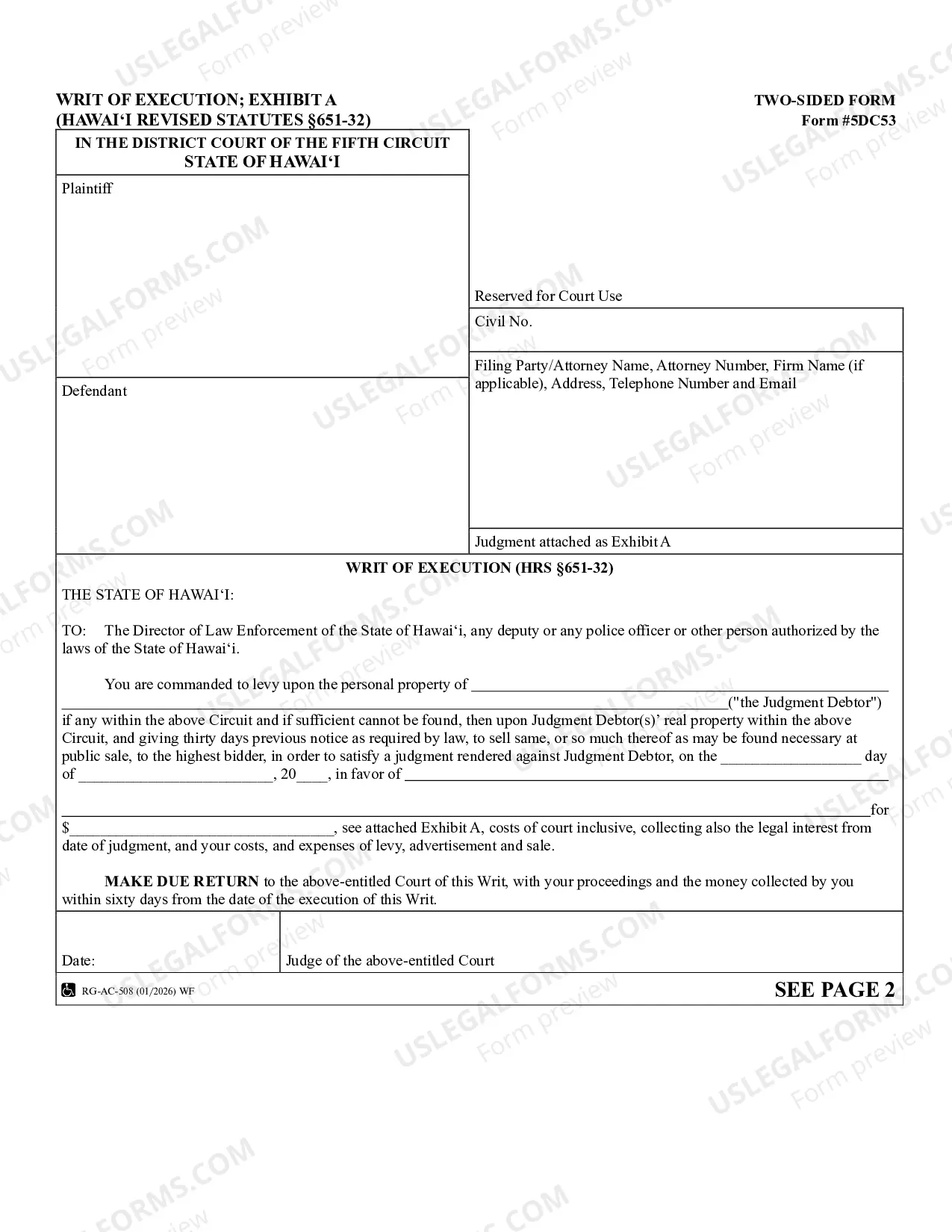
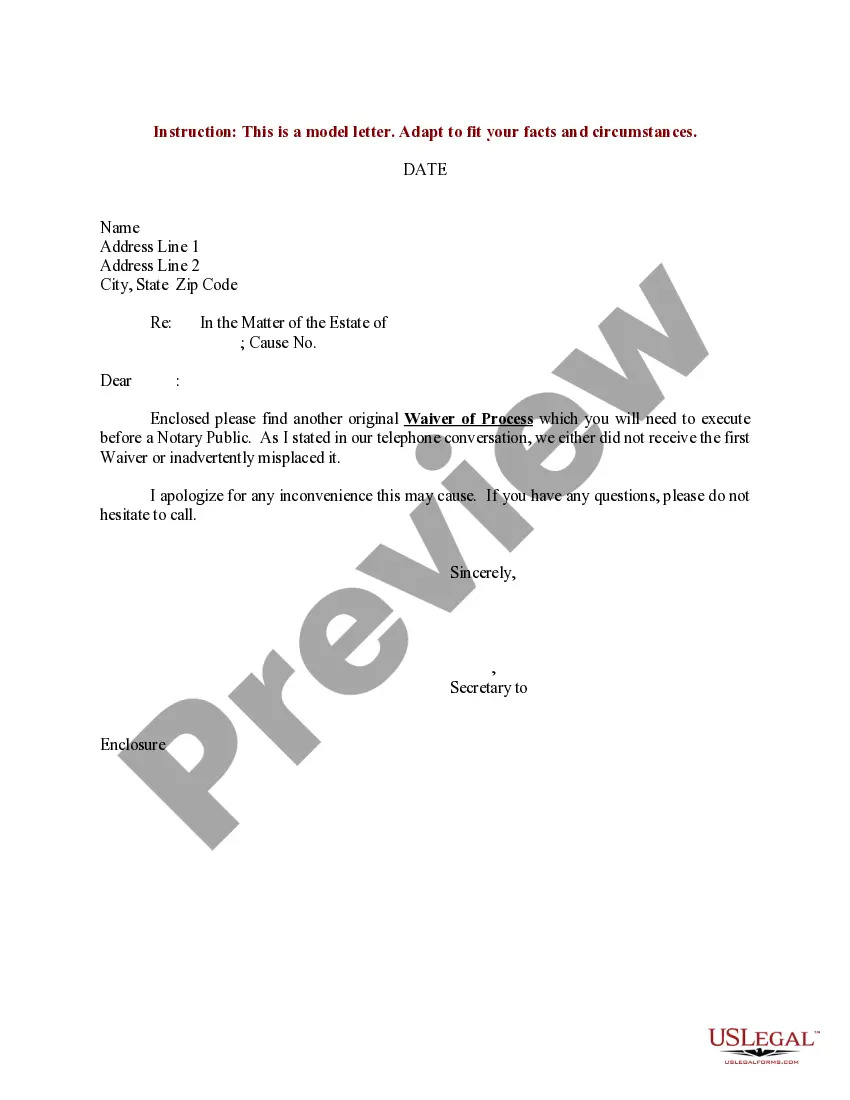
Sample Letter for Waiver of Process (Non-Receipt of First Waiver and Duplicate Waiver)
Understanding this form
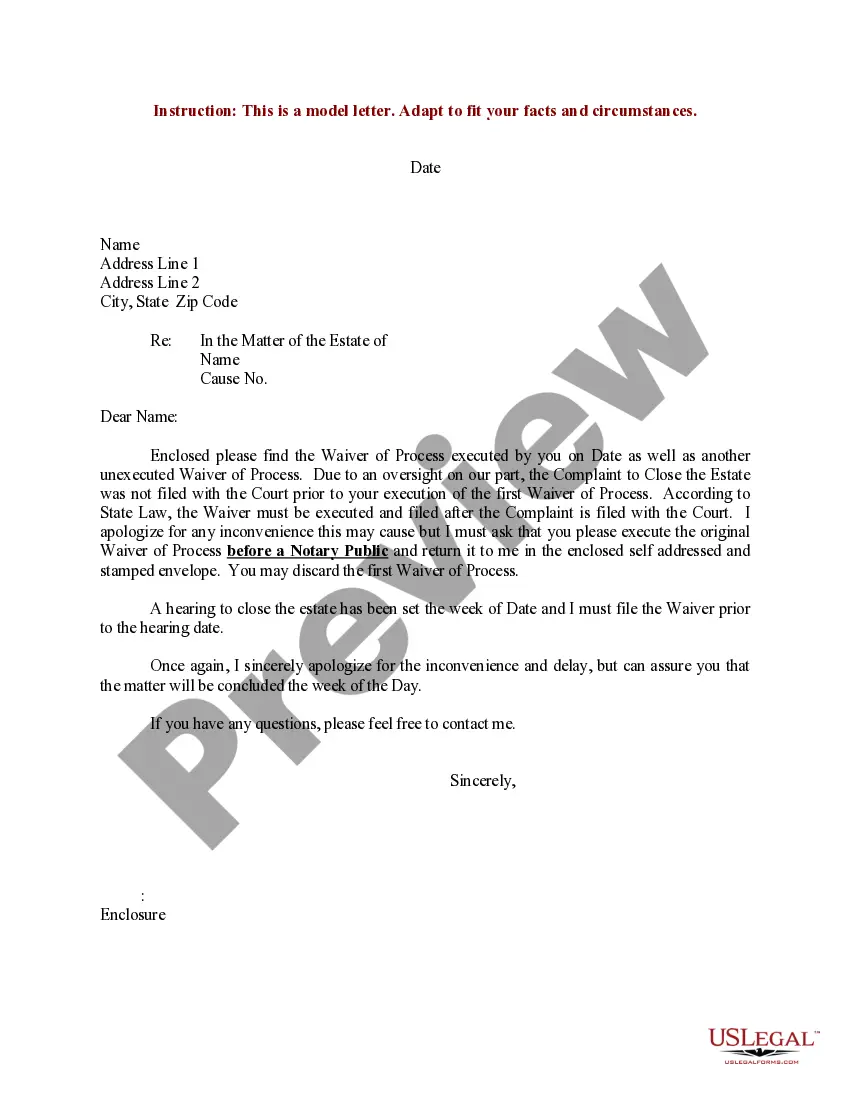
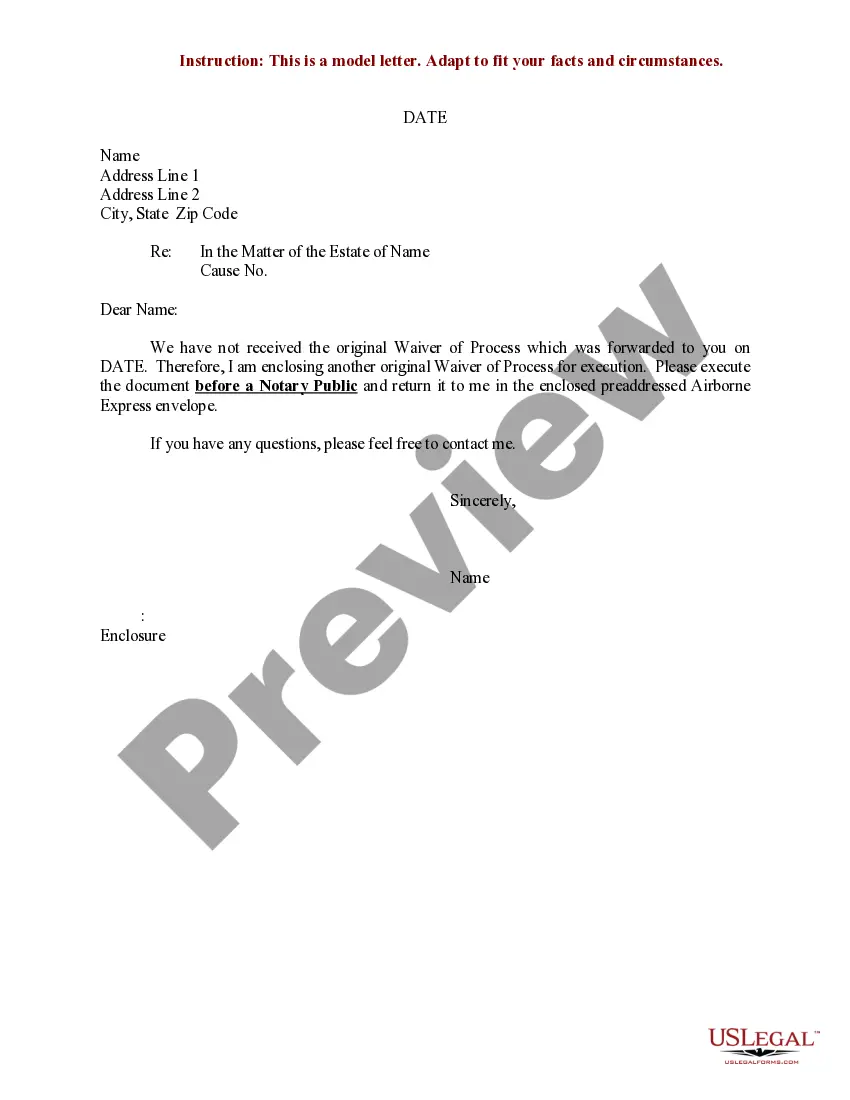
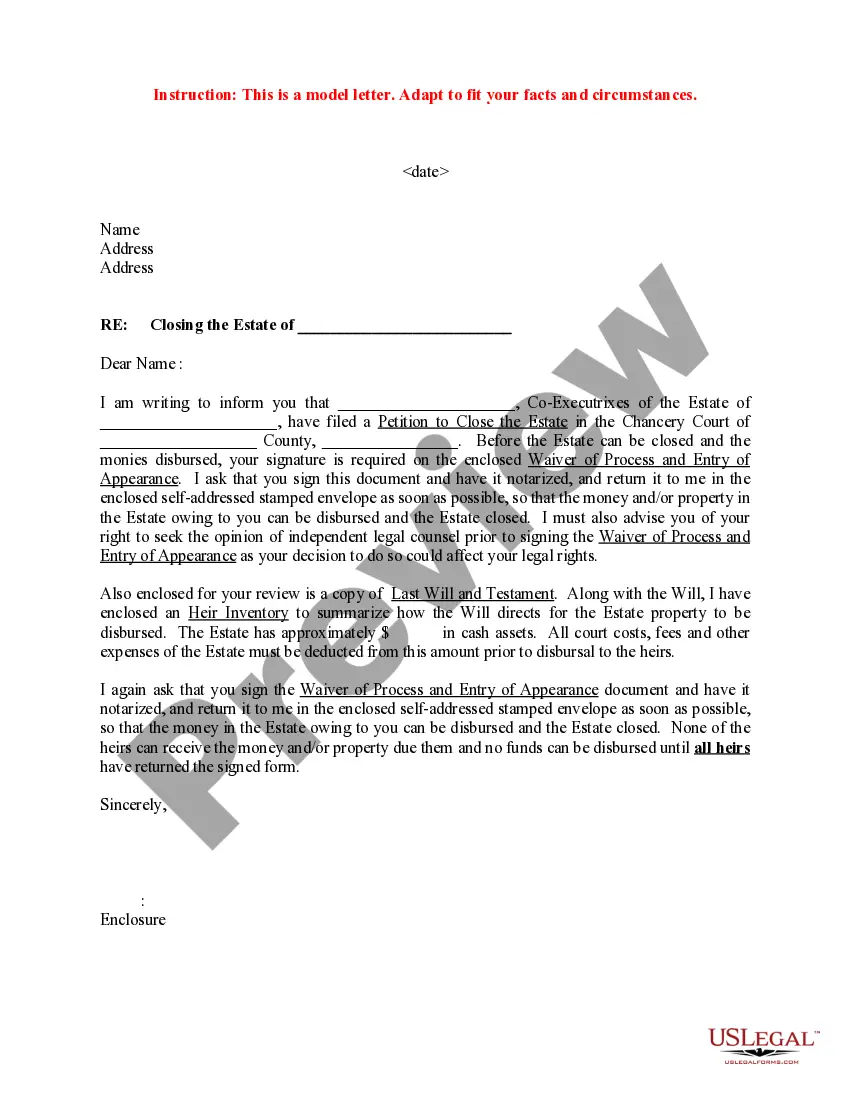
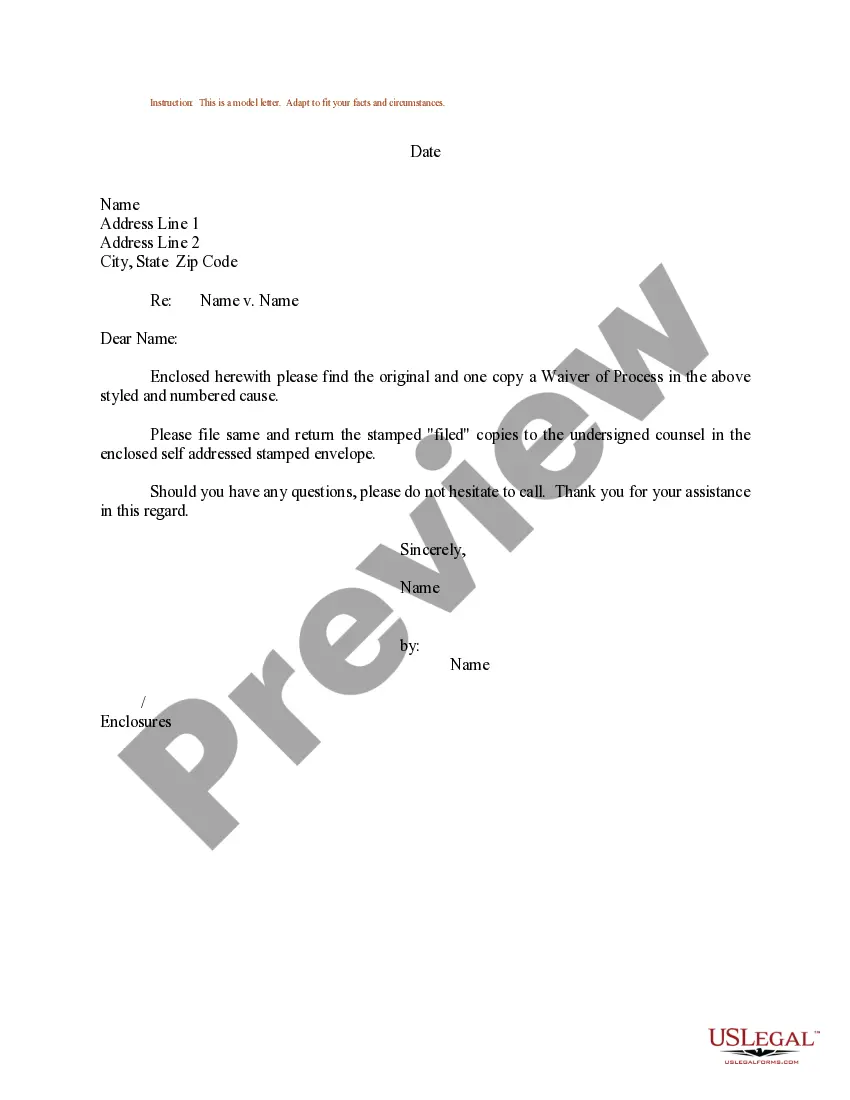
The Sample Letter for Waiver of Process is a document that serves as a formal communication when a party does not receive a first waiver and needs to submit a duplicate waiver in legal proceedings. This form is distinct as it provides a standardized template for articulating the non-receipt of initial waivers, ensuring that the legal process continues smoothly without unnecessary delays. Using this sample letter helps maintain clarity and legality in estate matters.
Key components of this form
- Date: The date on which the letter is written.
- Recipient's address: The name and address of the individual to whom the letter is being sent.
- Subject line: A concise statement about the matter concerning the estate.
- Estate identification: A clear reference to the specific estate involved.
When to use this document
This form is needed when the party expected to receive a waiver of process has not received it and needs to notify the court or relevant parties. It is particularly useful in estate cases where timely communication is essential to prevent delays in legal proceedings.
Intended users of this form
- Individuals involved in estate proceedings who haven't received their initial waiver.
- Heirs or beneficiaries who need to follow legal procedures in estate management.
- Executors or administrators of estates addressing issues of process waivers.
How to complete this form
- Enter the current date at the top of the letter.
- Fill in the recipient's full name and address accurately.
- Specify the subject concerning the estate clearly.
- Identify the estate referenced in the letter.
- Review the content for accuracy before sending.
Is notarization required?
This form does not typically require notarization unless specified by local law. For added assurance, check with local requirements or consult legal counsel.
Get your form ready online
Our built-in tools help you complete, sign, share, and store your documents in one place.
Make edits, fill in missing information, and update formatting in US Legal Forms—just like you would in MS Word.
Download a copy, print it, send it by email, or mail it via USPS—whatever works best for your next step.
Sign and collect signatures with our SignNow integration. Send to multiple recipients, set reminders, and more. Go Premium to unlock E-Sign.
If this form requires notarization, complete it online through a secure video call—no need to meet a notary in person or wait for an appointment.
We protect your documents and personal data by following strict security and privacy standards.

Make edits, fill in missing information, and update formatting in US Legal Forms—just like you would in MS Word.

Download a copy, print it, send it by email, or mail it via USPS—whatever works best for your next step.

Sign and collect signatures with our SignNow integration. Send to multiple recipients, set reminders, and more. Go Premium to unlock E-Sign.

If this form requires notarization, complete it online through a secure video call—no need to meet a notary in person or wait for an appointment.

We protect your documents and personal data by following strict security and privacy standards.
Common mistakes to avoid
- Not including the date or using an incorrect date.
- Forgetting to accurately label the estate involved.
- Missing or incorrect recipient details.
Why use this form online
- Convenience of downloading and printing from anywhere.
- Editability allows for quick personalization.
- Access to templates drafted by licensed attorneys increases reliability.
Looking for another form?

Form popularity
FAQ
Call the admissions office of the college or university you plan on applying to and ask what their fee waiver policy is. Many schools have very simple processes in place for fee waivers, and might just request you send in a letter from your guidance counselor or mentor that explains your financial situation.
1 : the act of intentionally relinquishing or abandoning a known right, claim, or privilege also : the legal instrument evidencing such an act.
Get help. Writing a waiver should not be complicated. Use the correct structure. Proper formatting. Include a subject line. Include a caution! Talk about the activity risks. Do not forget an assumption of risk. Hold harmless.
A waiver is an essential document that informs participants of the risks involved in certain activities and also protects you from liability. In some cases, you may limit your liability as a business by asking participants to sign a hold- harmless agreement.
A waiver is basically a formal statement giving up a right. For example, if you go on a school trip, a parent will be asked to sign a waiver saying that the school is not responsible if you get hurt on the trip. Whenever you sign a waiver, you're voluntarily giving up a privilege or legal right.
200bStart the letter off with a clear explanation regarding your request. For instance, explain that you're requesting certain fees or charges to be waived or to be released from a previous engagement. Communicate any supporting or relative dates, names of parties, monetary figures, or venues as facts.
A waiver is not complete until it includes the signatures of both the event host and business owner and that of the participant. The date should also be included alongside the signatures. You may also include a signature line for a witness if necessary.
1 : the act of intentionally relinquishing or abandoning a known right, claim, or privilege also : the legal instrument evidencing such an act.