Sample Letter for Anticipated Exhibits to be Offered at Trial
What is this form?
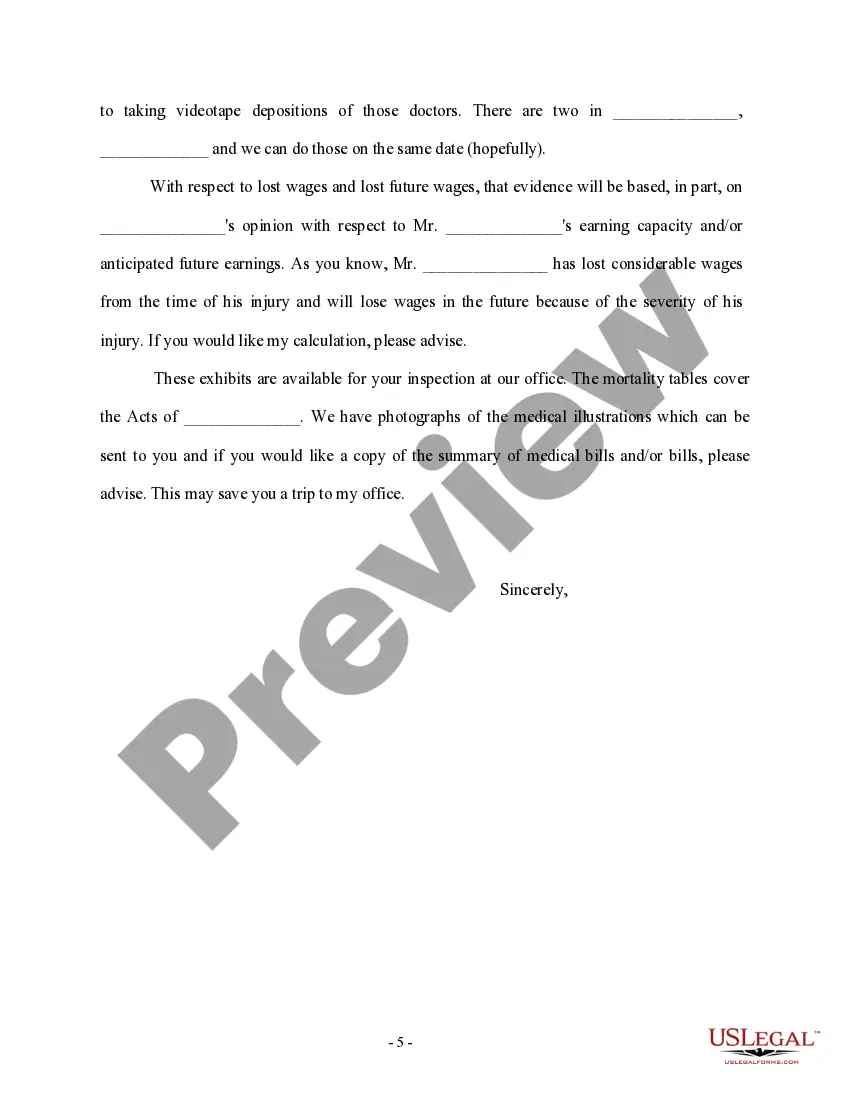
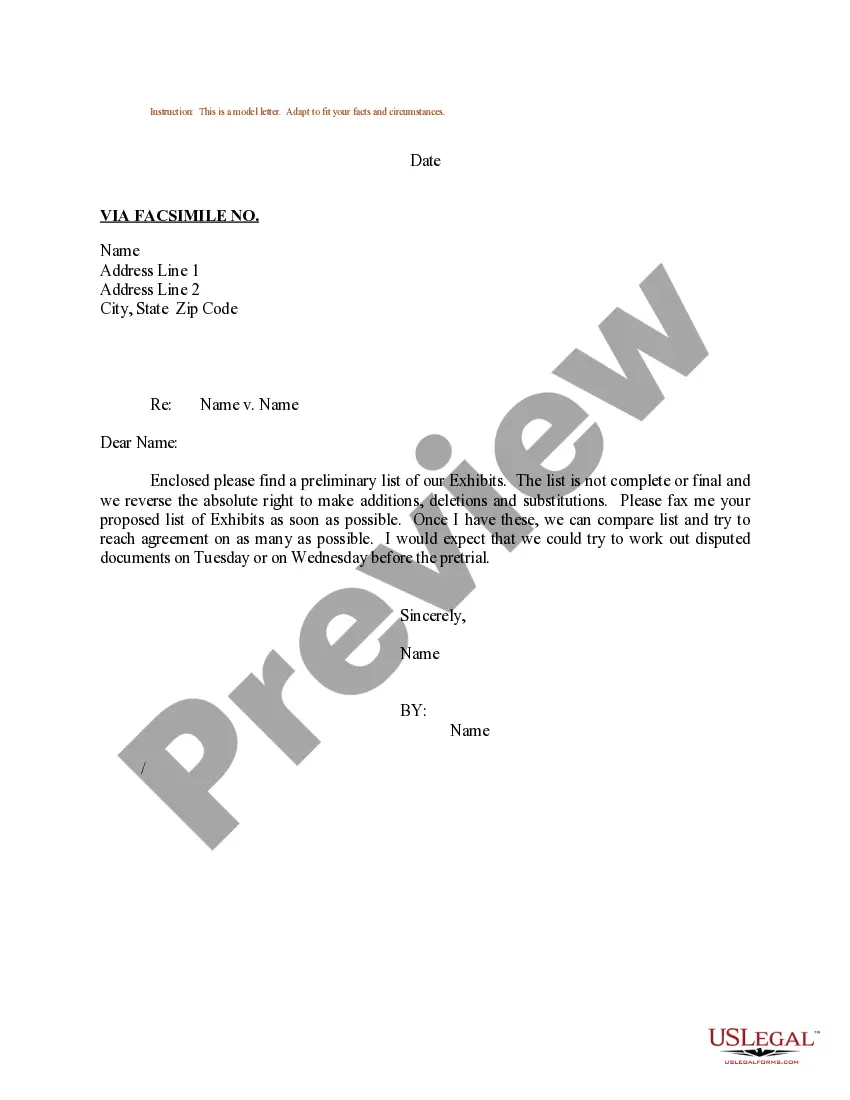
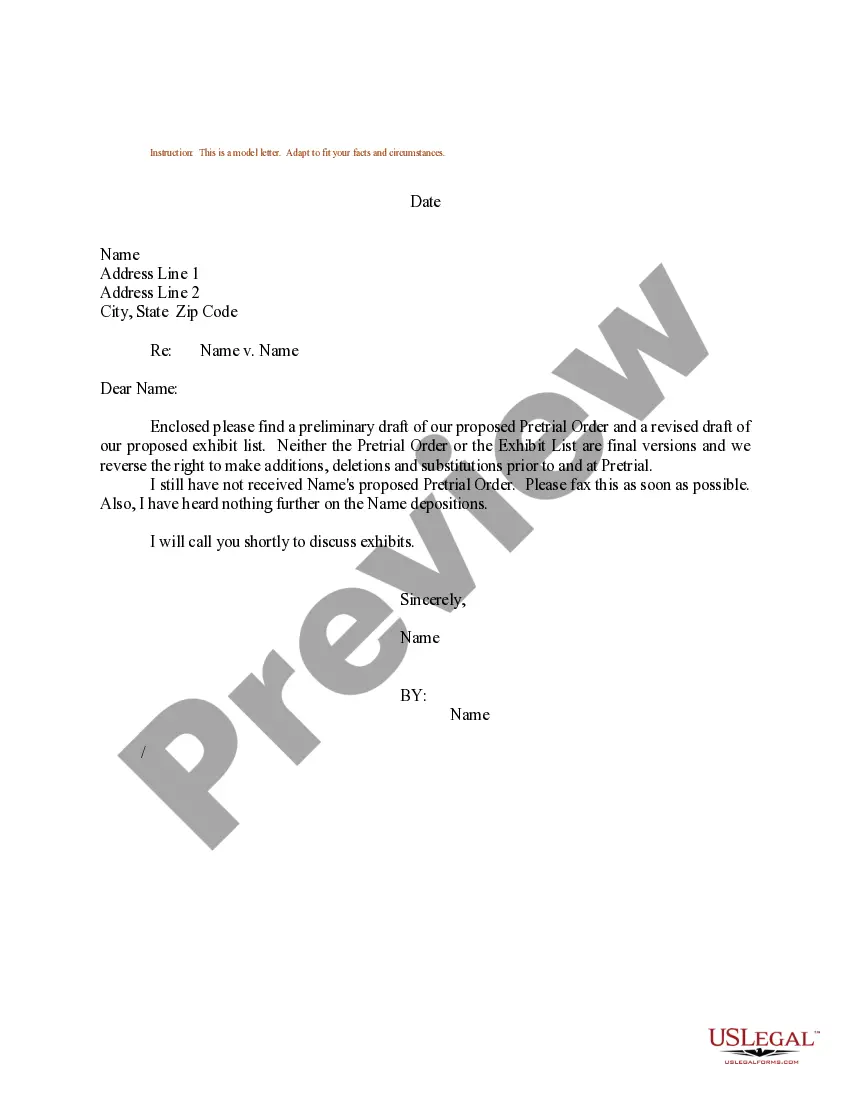
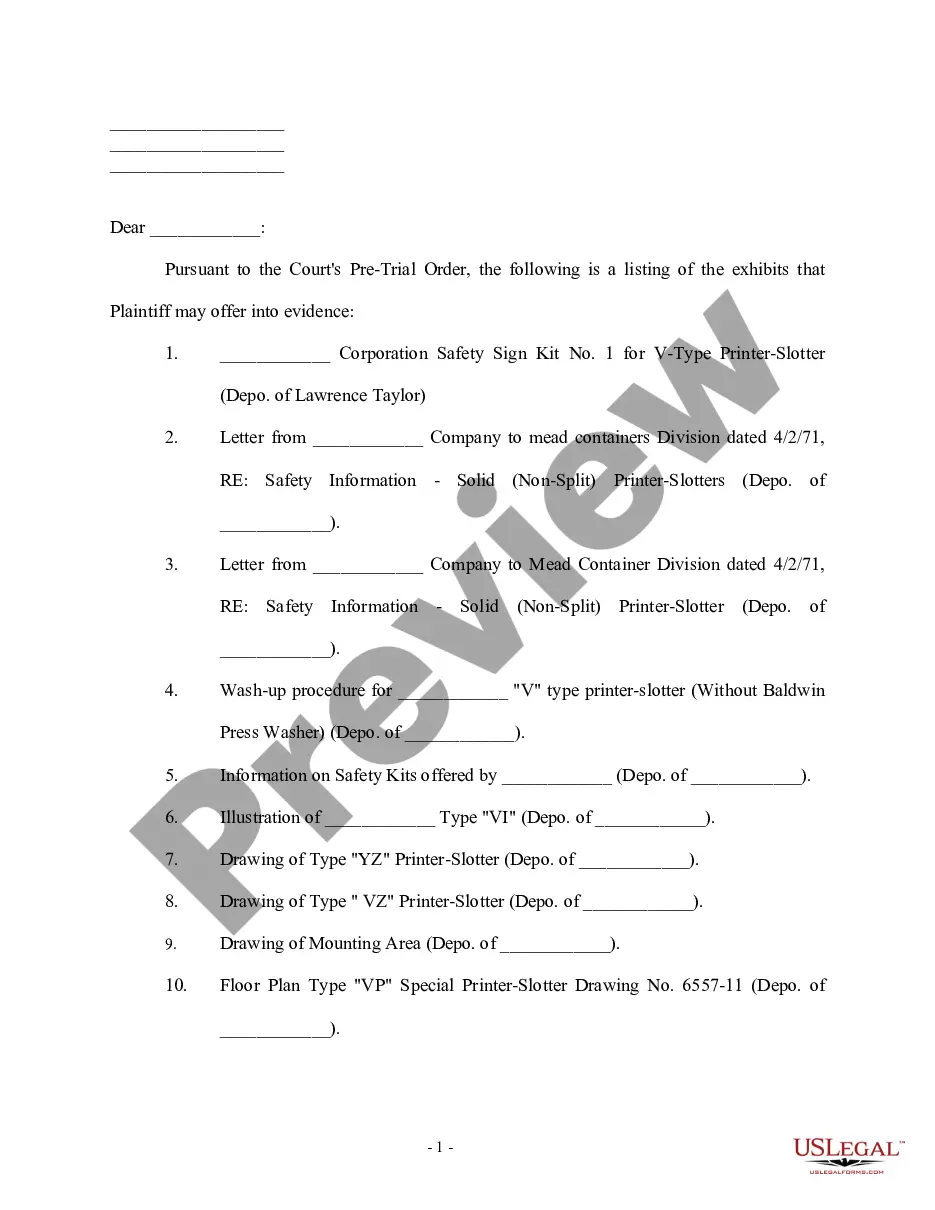
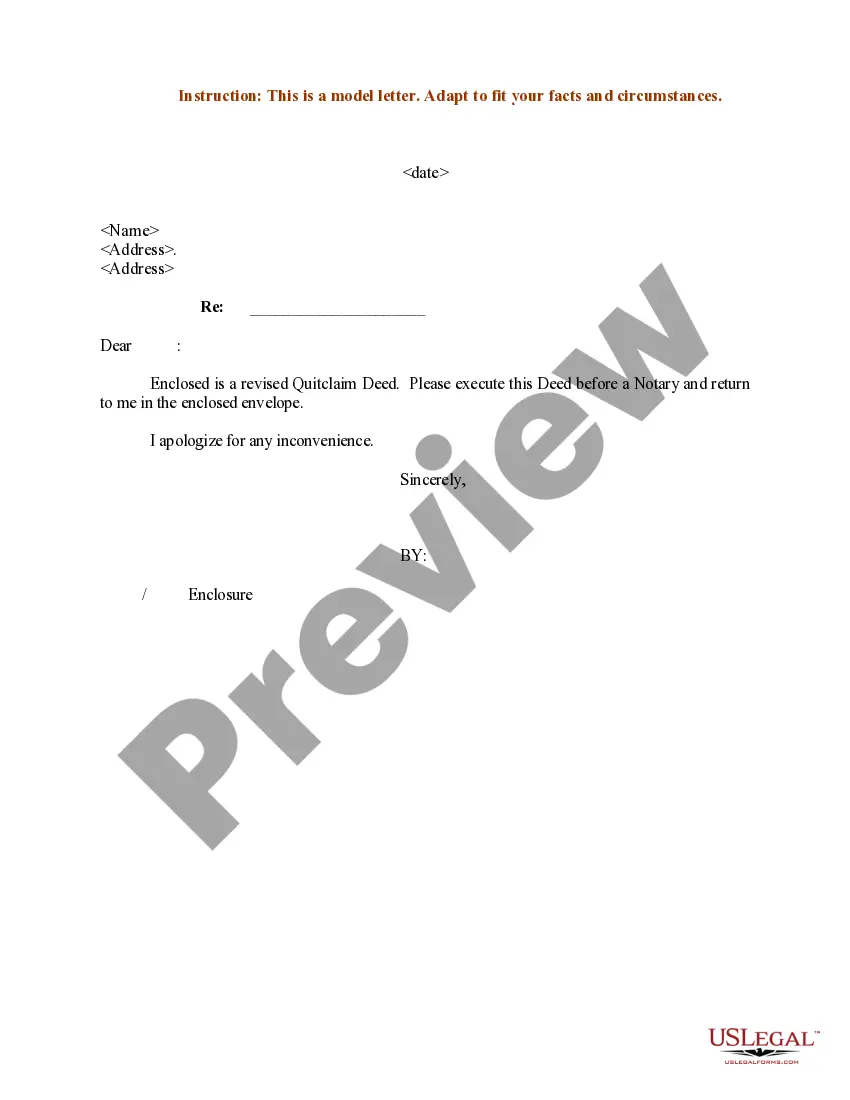
This Sample Letter for Anticipated Exhibits to be Offered at Trial is a legal document used to notify opposing counsel about the exhibits the plaintiff plans to present during a court trial. This form provides a structured format for listing these anticipated exhibits, ensuring clarity and compliance with the court's pre-trial order. It differs from similar forms by being specifically tailored for trial preparation, allowing attorneys to efficiently organize and communicate exhibit information.
Key parts of this document
- Date of the letter.
- Name and address of the opposing attorney.
- Style of the case referenced.
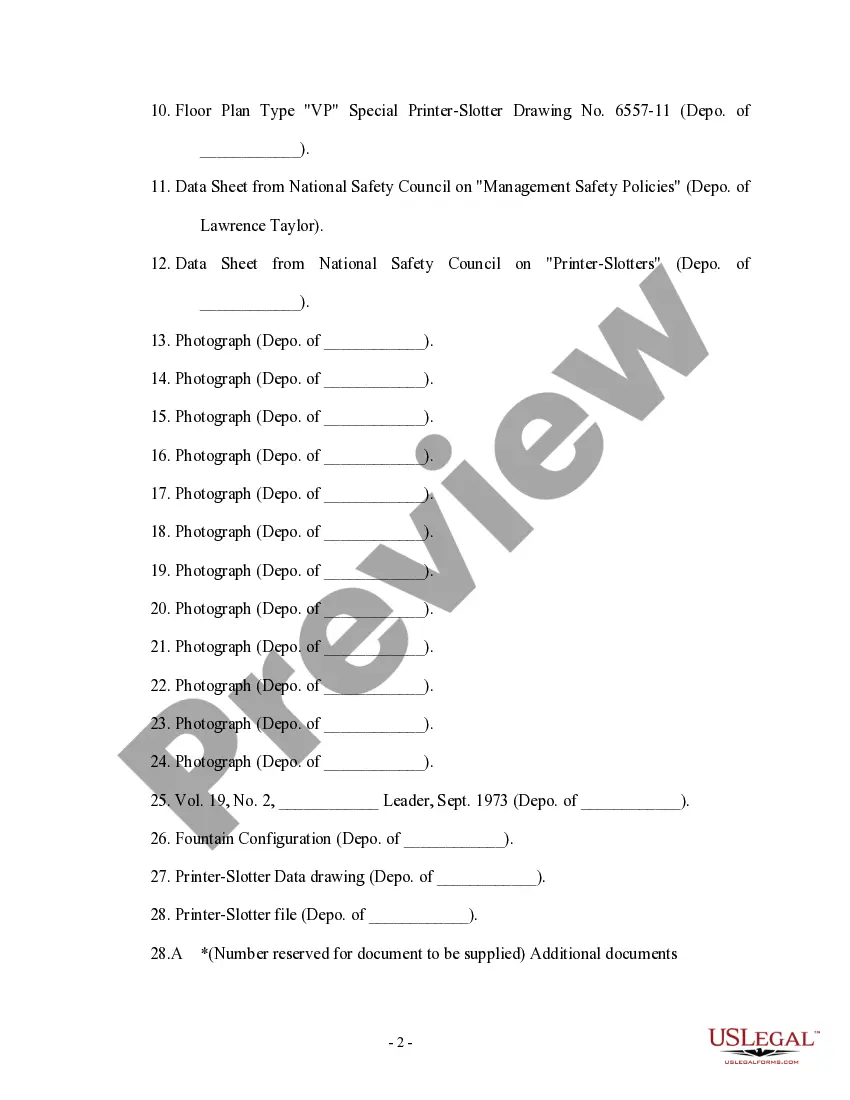
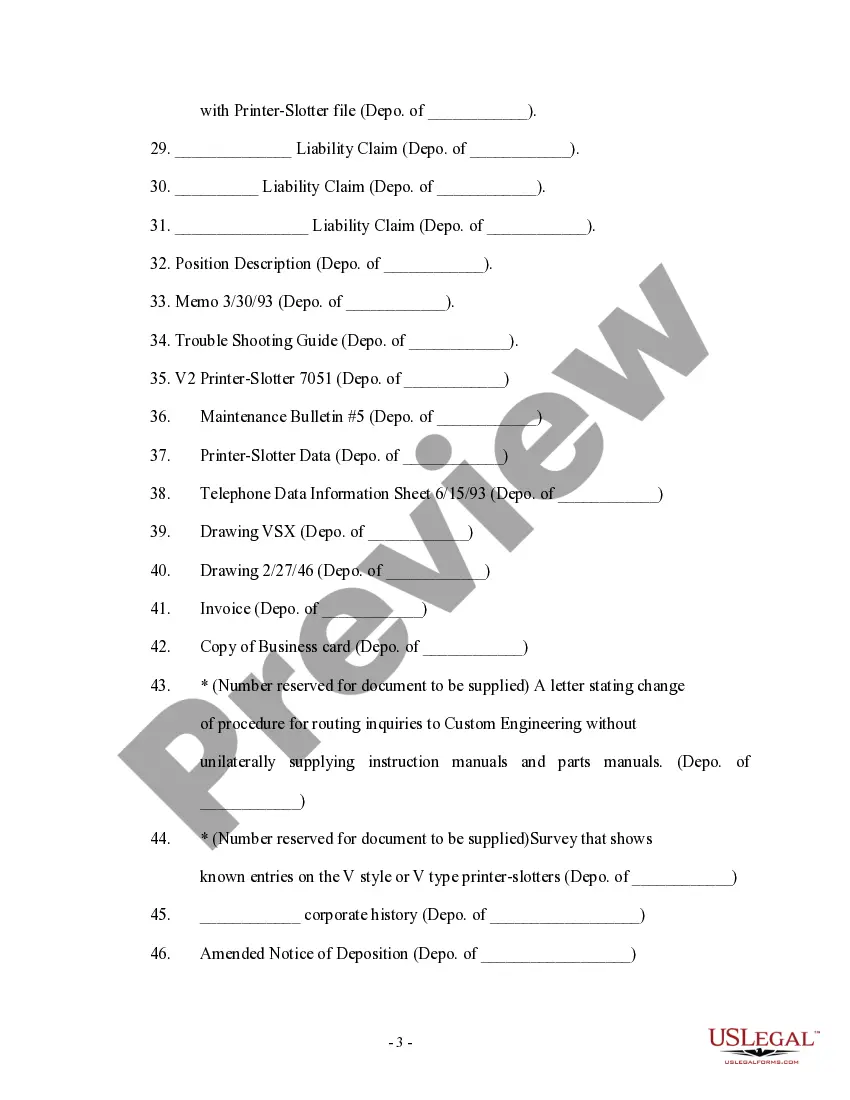
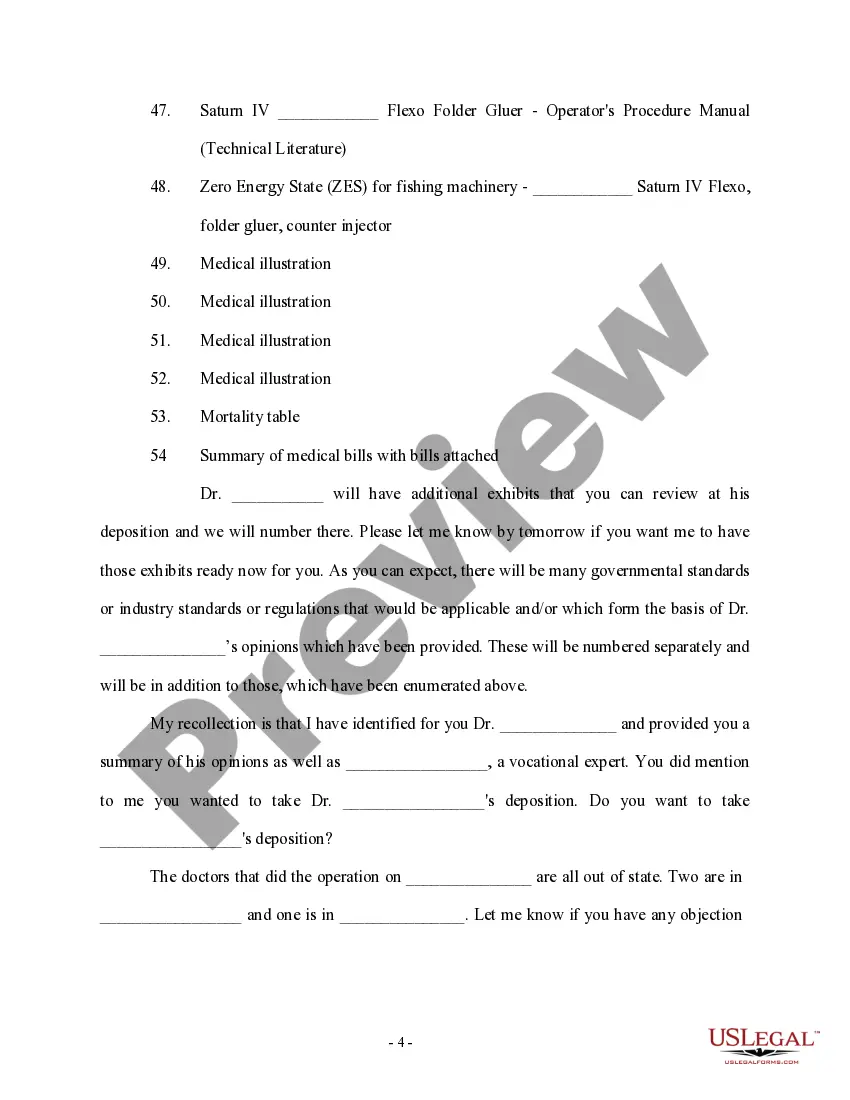
- List of anticipated exhibits, including descriptions and deposition references.
- Additional information regarding expert witnesses and expected testimonies.
- A section for discussing the process for reviewing exhibits and additional documentation.

When to use this form
This form should be used in preparation for trial when a plaintiff needs to inform the opposing party of the evidence they plan to present. It is particularly useful after a court has issued a pre-trial order requiring such a disclosure. Using this letter helps ensure that both parties have the necessary information for trial preparation, fostering a smoother courtroom process.
Who can use this document
This form is intended for:
- Attorneys representing plaintiffs in a trial.
- Law firms involved in civil lawsuits requiring exhibit disclosure.
- Legal professionals preparing for court proceedings that involve the presentation of evidence.
Completing this form step by step
- Enter the date at the top of the letter.
- Fill in the name and address of the opposing attorney.
- Specify the case style in the designated area.
- List all anticipated exhibits, providing brief descriptions and referencing corresponding depositions.
- Include any additional expert witness information relevant to the exhibits.
- Sign the letter to officially communicate with the opposing counsel.
Is notarization required?
This form does not typically require notarization unless specified by local law. It serves as a formal communication tool rather than a notarized legal document.
Get your form ready online
Our built-in tools help you complete, sign, share, and store your documents in one place.
Make edits, fill in missing information, and update formatting in US Legal Forms—just like you would in MS Word.
Download a copy, print it, send it by email, or mail it via USPS—whatever works best for your next step.
Sign and collect signatures with our SignNow integration. Send to multiple recipients, set reminders, and more. Go Premium to unlock E-Sign.
If this form requires notarization, complete it online through a secure video call—no need to meet a notary in person or wait for an appointment.
We protect your documents and personal data by following strict security and privacy standards.

Make edits, fill in missing information, and update formatting in US Legal Forms—just like you would in MS Word.

Download a copy, print it, send it by email, or mail it via USPS—whatever works best for your next step.

Sign and collect signatures with our SignNow integration. Send to multiple recipients, set reminders, and more. Go Premium to unlock E-Sign.

If this form requires notarization, complete it online through a secure video call—no need to meet a notary in person or wait for an appointment.

We protect your documents and personal data by following strict security and privacy standards.
Common mistakes to avoid
- Failing to include the date, which can lead to confusion about the timeline.
- Omitting necessary descriptions of exhibits, making it unclear what evidence is being referenced.
- Not properly addressing the opposing counsel, which can affect the professionalism of the communication.
- Missing the signature, which is essential for confirming the sender's authority.
Benefits of completing this form online
- Convenient download and editing options to suit specific case details.
- Access to forms drafted by licensed attorneys, ensuring legality and relevance.
- Time-saving format that allows attorneys to focus on case substance rather than document structure.
- Ensure all exhibits listed are relevant and admissible in court.
- This letter should comply with applicable court rules to avoid issues with evidence submission.
- Consult with legal counsel if any doubts arise regarding the contents of the letter.
Main things to remember
- This form is essential for notifying opposing counsel of expected trial exhibits.
- Complete the form carefully to avoid missing any crucial information.
- Understanding local court rules is vital for proper usage of the form.
Looking for another form?
Form popularity
FAQ
Have the exhibit marked. Show the exhibit to opposing advocate. Ask permission to approach the witness. Show the exhibit to the witness. Lay the foundation for the exhibit. Move for admission of the exhibit in evidence.
Before you ever go to court, think about the evidence you want to use to prove your case. Mark each piece of evidence with an exhibit number (attach a sticker labeled Exhibit 1, Exhibit 2, etc.). Bring these marked Exhibits with you to court.
Exhibits should be numbered (1, 2, 3) or lettered (A, B, C) consecutively in the order they are first encountered in the body of the contract.
Place one sticker on the bottom right corner of the first page of each exhibit. 2713 If you are the plaintiff, use a yellow sticker.Once you have them in the order you like, you need to write a number or letter on each sticker.
You should place Exhibit stickers on each exhibit so that the court reporter does not need to take time to do this at trial. Create a master index of each exhibit including the author/source, date, type and short description to identify the exhibit. You should have a minimum of three copies of each exhibit.
If you want to introduce an exhibit at trial, here are six common steps for introducing exhibits (remember to follow your jurisdiction's laws and court rules): Mark the exhibit for identification. Show the exhibit to the opposing attorney.Ask the judge to enter the exhibit into evidence.
Exhibits should be numbered (1, 2, 3) or lettered (A, B, C) consecutively in the order they are first encountered in the body of the contract.
Every exhibit should be labeled with exhibit stickers so that a court reporter doesn't need to do this at trial. Generally, exhibits are labeled in alphabetical or numerical order to provide clear guideposts for the progression of exhibits.