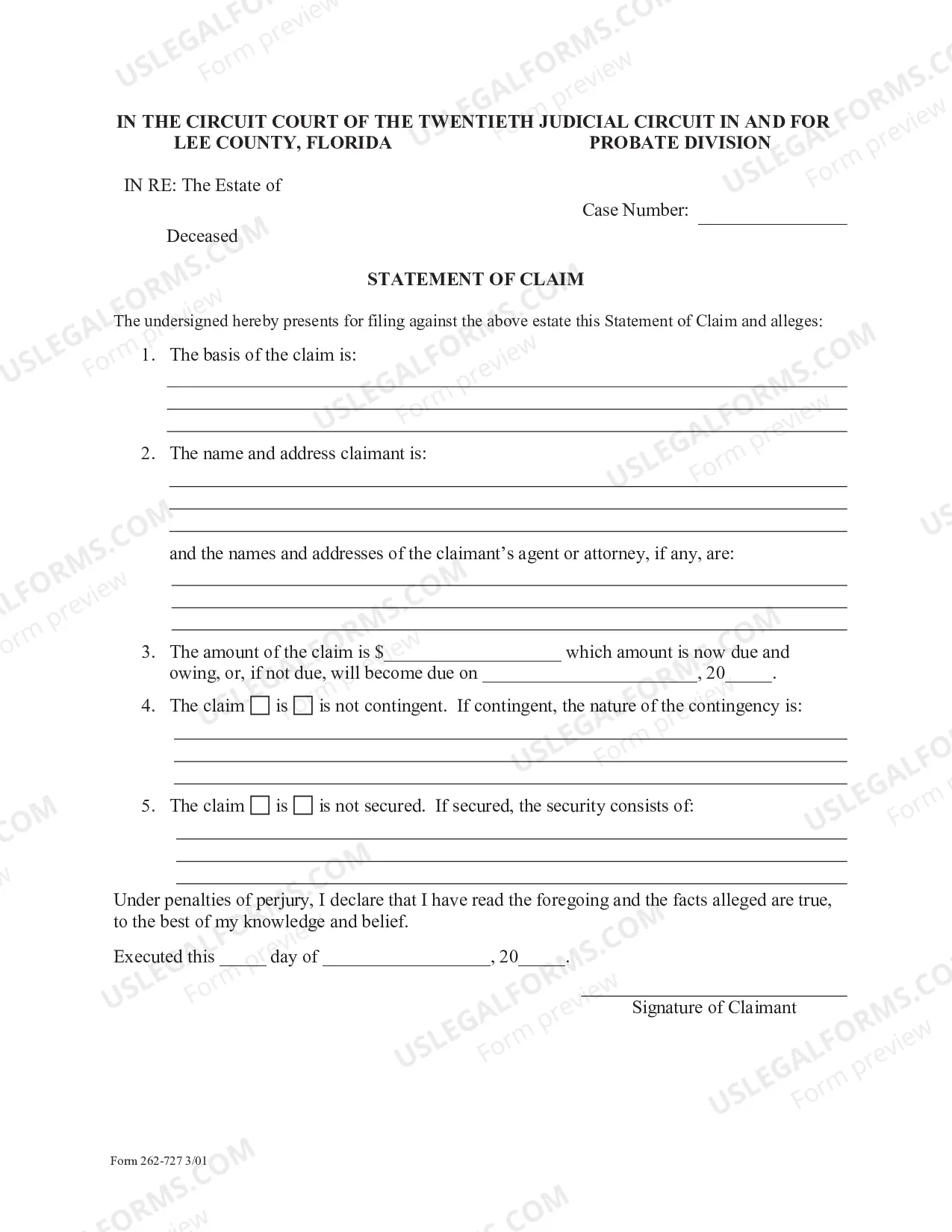
Sample Letter regarding Findings of Law for Judgment and Decree
What is this form?
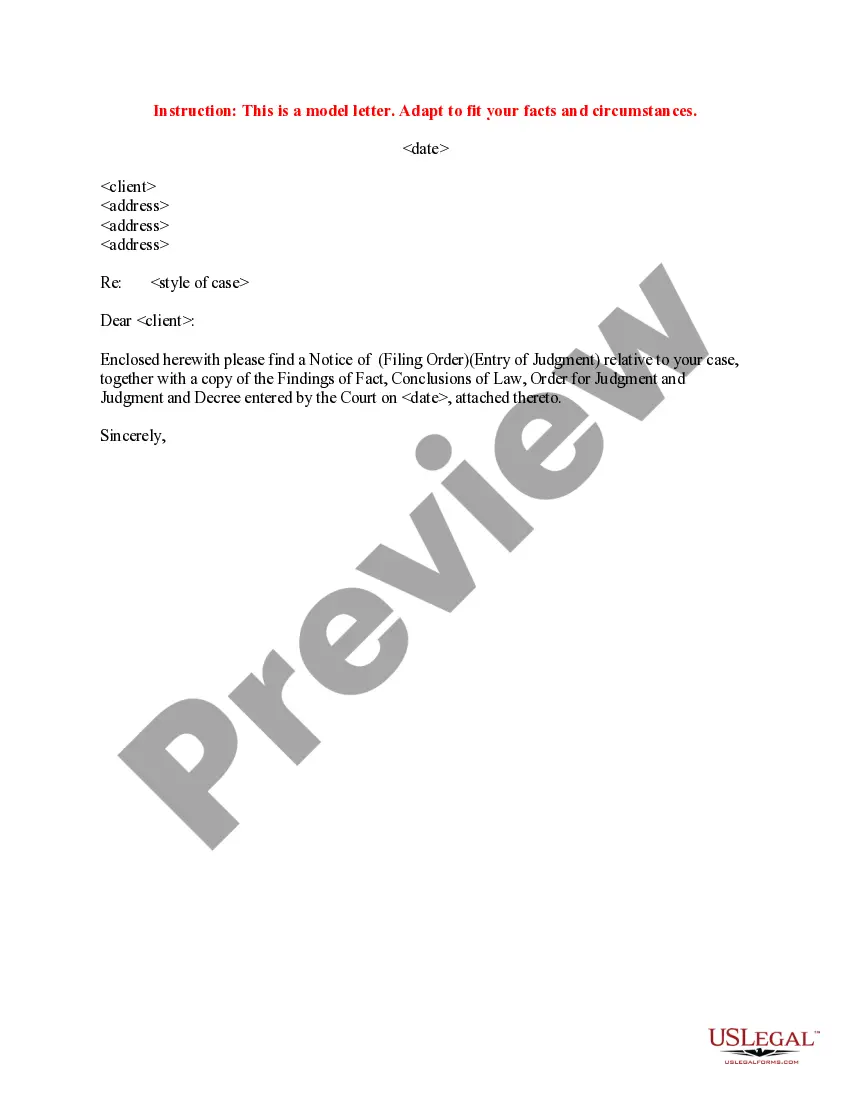
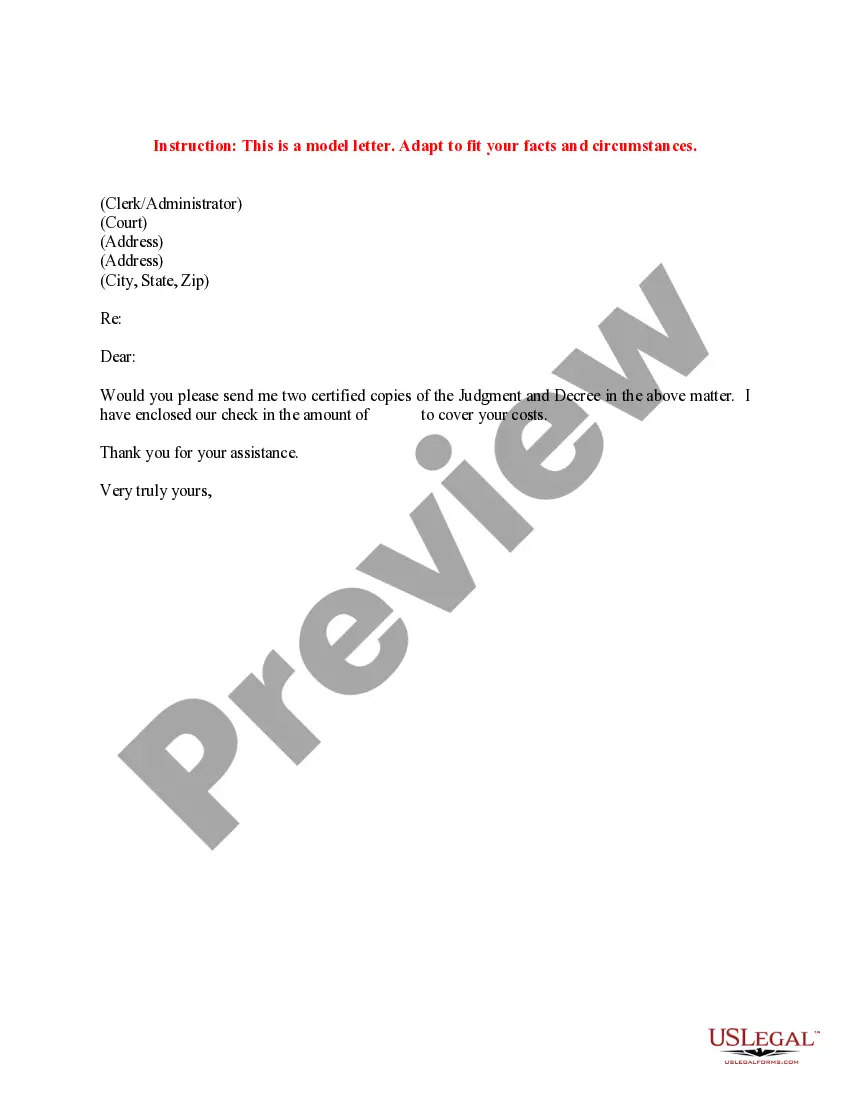
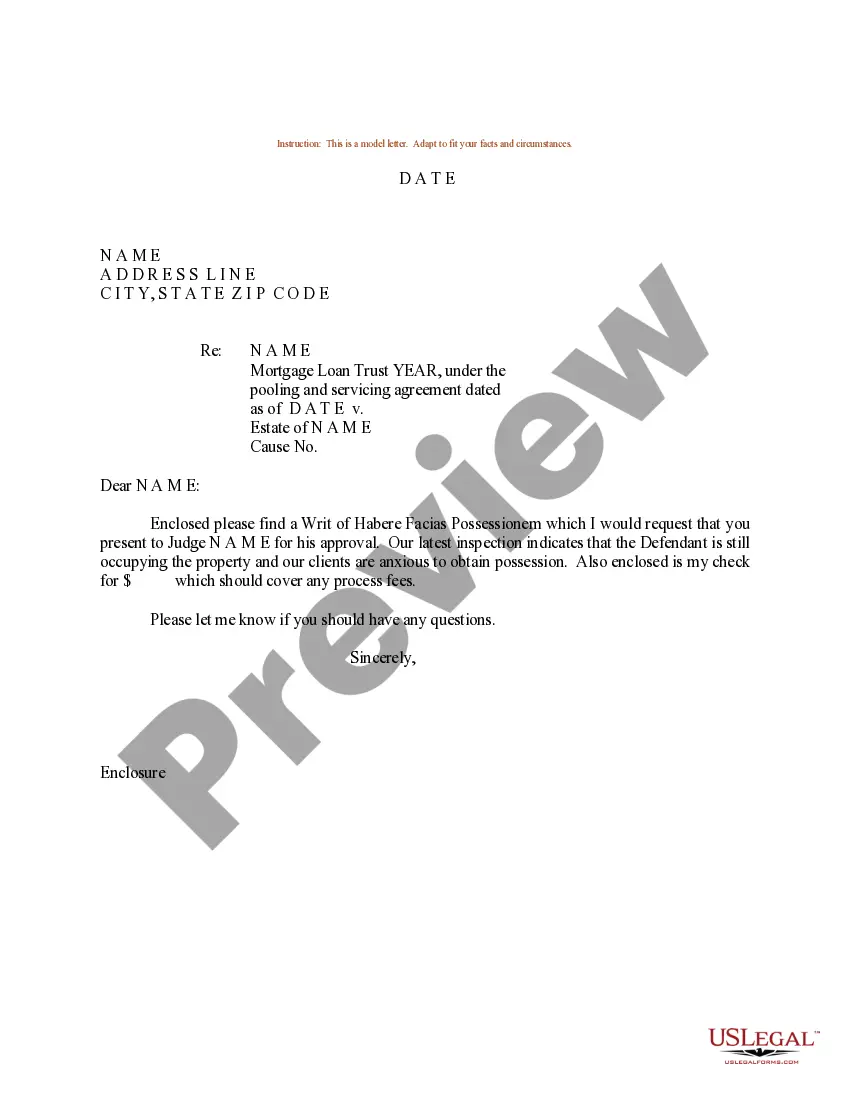
The Sample Letter regarding Findings of Law for Judgment and Decree is a formal document used to communicate the court's findings related to a specific case. This letter typically accompanies important legal documents, such as a Notice of Filing Order or a Judgment and Decree. It serves to inform the client about the judicial decisions made, outlining the findings of fact and conclusions of law relevant to their case. Unlike standard legal templates, this sample letter is tailored to effectively convey court outcomes to clients, ensuring they understand the legal context of their case.
What’s included in this form
- Date: The date the letter is prepared.
- Client Information: The name and address of the client.
- Case Reference: A reference line indicating the style of the case.
- Enclosures: Mentioned documents, such as the Notice of Filing Order and the Judgment and Decree.
- Closing Signature: The formal conclusion and signature line for the sender.

Situations where this form applies
This letter should be used when a court issues a judgment or decree in a case, and there is a need to inform the involved parties. It is appropriate to send this letter to clients after the court has made its ruling, particularly to explain the implications of findings of law and outline any further actions required by the client.
Intended users of this form
- Attorneys representing clients in legal proceedings.
- Legal professionals needing to draft formal notices for court findings.
- Clients who wish to understand the court's decisions made on their behalf.
How to prepare this document
- Fill in the date of the letter in the designated space.
- Enter the client's name and complete address.
- Specify the style of the case in the case reference line.
- Attach relevant documents as mentioned (Notice of Filing and Judgment).
- Sign the letter appropriately to finalize it.
Notarization guidance
This form does not typically require notarization unless specified by local law. It is crucial to verify any additional legal requirements that may apply based on jurisdiction.
Get your form ready online
Our built-in tools help you complete, sign, share, and store your documents in one place.
Make edits, fill in missing information, and update formatting in US Legal Forms—just like you would in MS Word.
Download a copy, print it, send it by email, or mail it via USPS—whatever works best for your next step.
Sign and collect signatures with our SignNow integration. Send to multiple recipients, set reminders, and more. Go Premium to unlock E-Sign.
If this form requires notarization, complete it online through a secure video call—no need to meet a notary in person or wait for an appointment.
We protect your documents and personal data by following strict security and privacy standards.

Make edits, fill in missing information, and update formatting in US Legal Forms—just like you would in MS Word.

Download a copy, print it, send it by email, or mail it via USPS—whatever works best for your next step.

Sign and collect signatures with our SignNow integration. Send to multiple recipients, set reminders, and more. Go Premium to unlock E-Sign.

If this form requires notarization, complete it online through a secure video call—no need to meet a notary in person or wait for an appointment.

We protect your documents and personal data by following strict security and privacy standards.
Typical mistakes to avoid
- Failing to include all necessary enclosures with the letter.
- Missing or incorrect client information, such as name or address.
- Not referencing the correct case style, which could lead to confusion.
- Neglecting to sign the letter before sending.
Why use this form online
- Convenient access to a professionally drafted legal document.
- Edit and customize the letter to fit specific case details.
- Reliable template that ensures compliance with legal standards.
Legal use & context
The Sample Letter regarding Findings of Law for Judgment and Decree is an essential document in legal practice, providing a formal way to communicate court findings and promote transparency with clients. Using this form helps maintain proper legal protocols and ensures clients are informed accurately about their cases.
Quick recap
- The form facilitates clear communication of court findings to clients.
- Correctly completing the form helps avoid common legal mistakes.
- Adapting the form to comply with state-specific requirements is essential.
Looking for another form?
Form popularity
FAQ
A legal letter is a powerful document. It can be sent to someone by an attorney on behalf of their clients. The language used in these letters need to be formal and accurate, and thus it is very important to write them very carefully.
First line: Full name. Second line: Company name. Third line: Street address. Fourth line: City or town, followed by the state name and zip code. The address should appear under the sender's name and should be aligned to the left.
Maintain focus throughout the process. Both intended and unintended audiences can read legal letters. Come up with coherent and consistent arguments. Use short sentences and paragraphs in your letter. Make sure your language has precision.
Address or greet the concerned person properly like Dear Sir/Madam. Always mention the subject of writing the letter. Be concise in your letter. The tone of the letter should be very polite and not harsh. Write in a proper format and take care of the presentation of a letter. Mention the address and date correctly.
It can begin with the word Dear followed by the person's name or the word To. Include a date at the top of the letter. Begin the letter with a brief introduction. Keep the introduction pleasant and conversational. Thank the client for using your firm and indicate the reason for the letter.
Type your letter. Concisely review the main facts. Be polite. Write with your goal in mind. Ask for exactly what you want. Set a deadline. End the letter by stating you will promptly pursue legal remedies if the other party does not meet your demand. Make and keep copies.
Write out the body of the letter. Lead with the main purpose of your letter and then explain the reasons for your question or request. Be specific when referencing relevant information including names, dates and places. The more information you include, the better your attorney will be able to assist you.
The opening paragraph states the legal issue the letter is addressing followed by the facts, a discussion of the law as it applies to the facts and a conclusion which is essentially the advice to the client. Often attorneys include headings to lead the client through this process to arrive at the same conclusion.
The general greetings used in formal letters are Sir or Madam. If you know the name of the person the salutation may also be Mr. XYZ or Ms. ABC.