Annotated Model Pro-Employer Physician Employment Agreement
Overview of this form
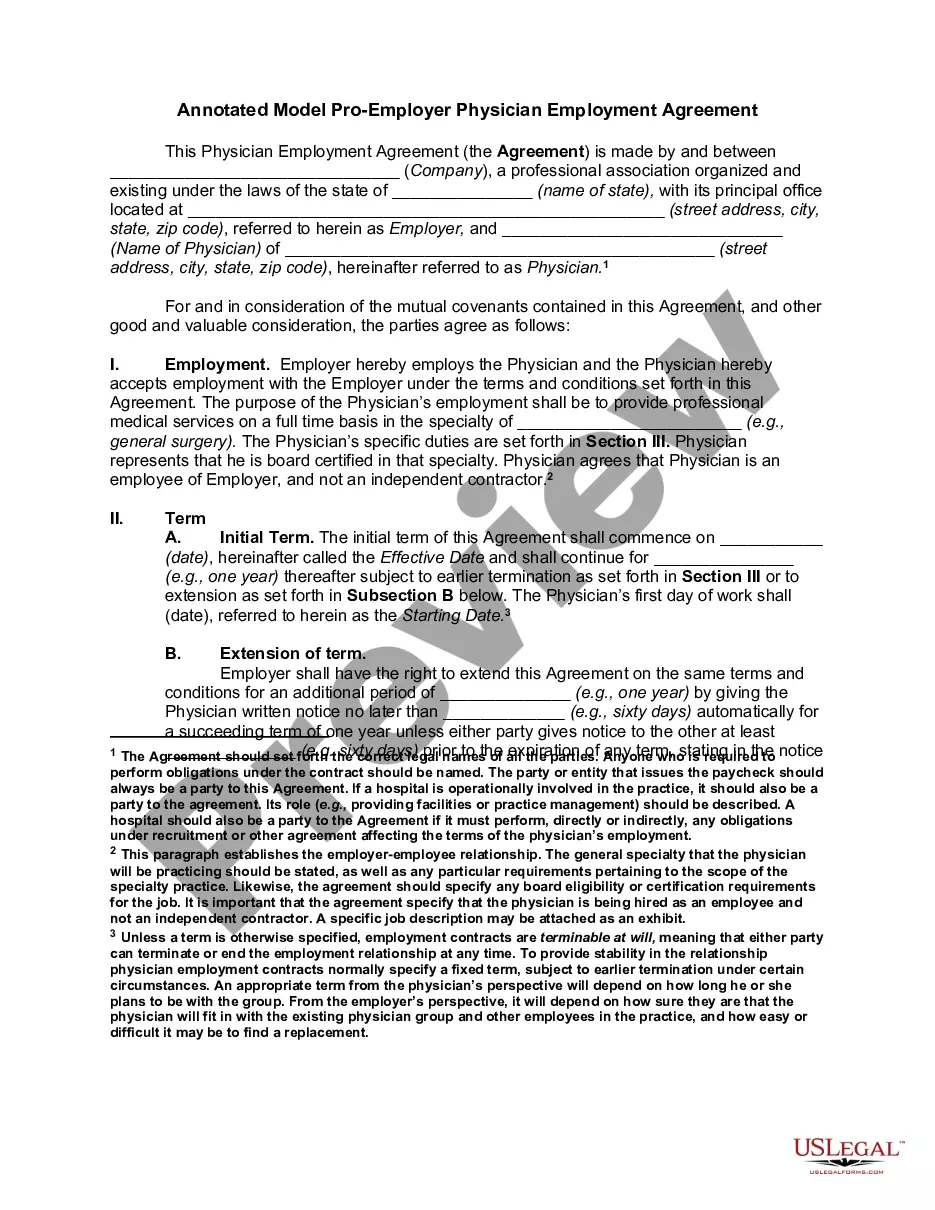
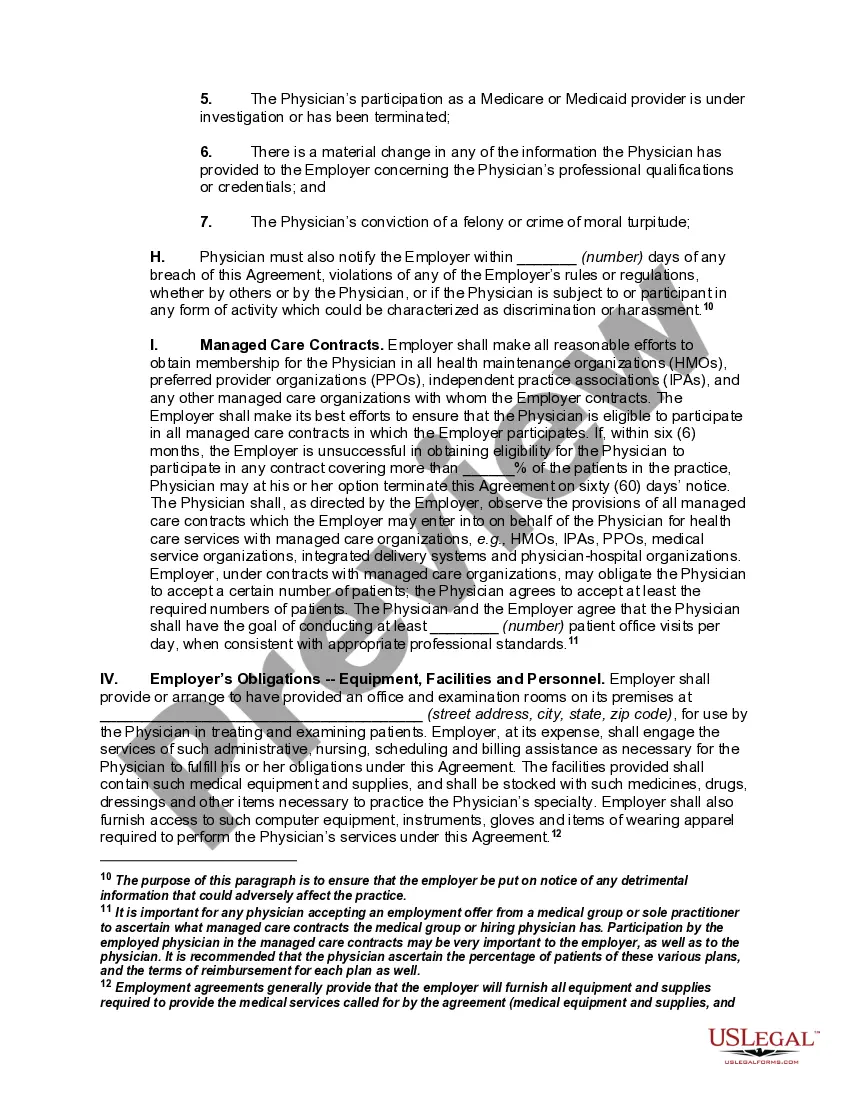
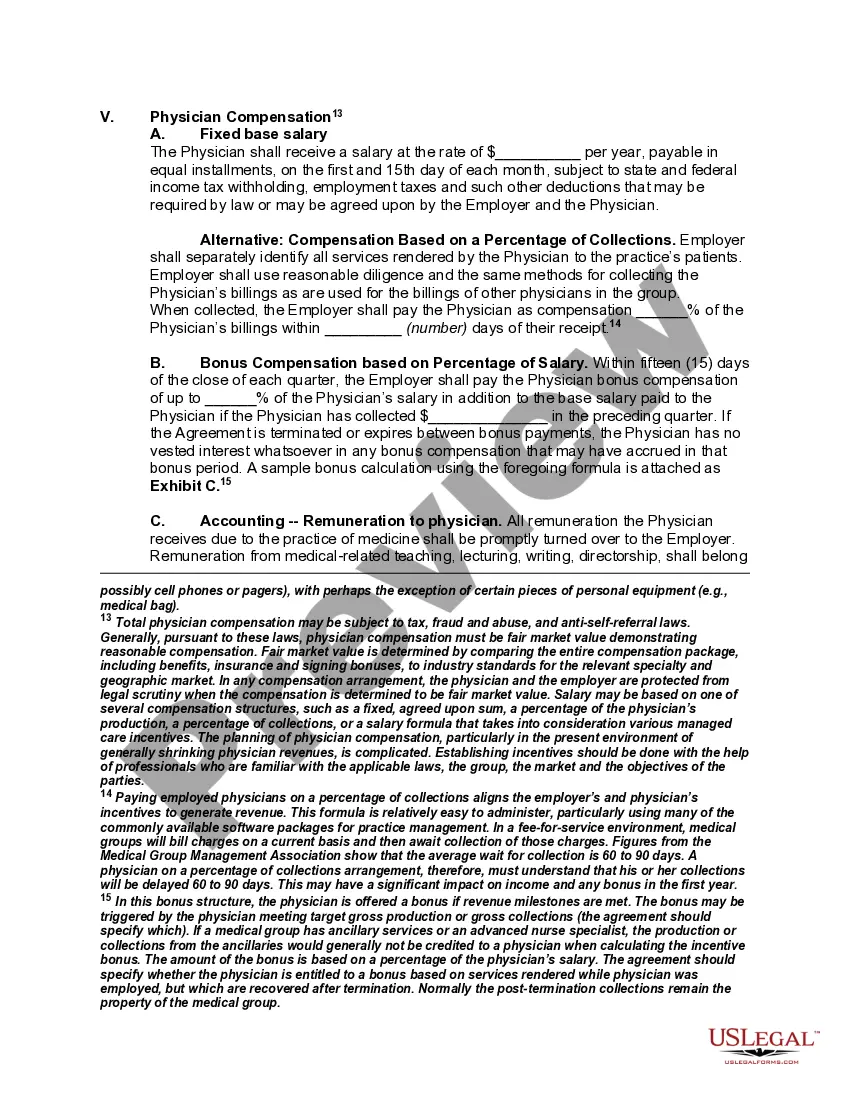
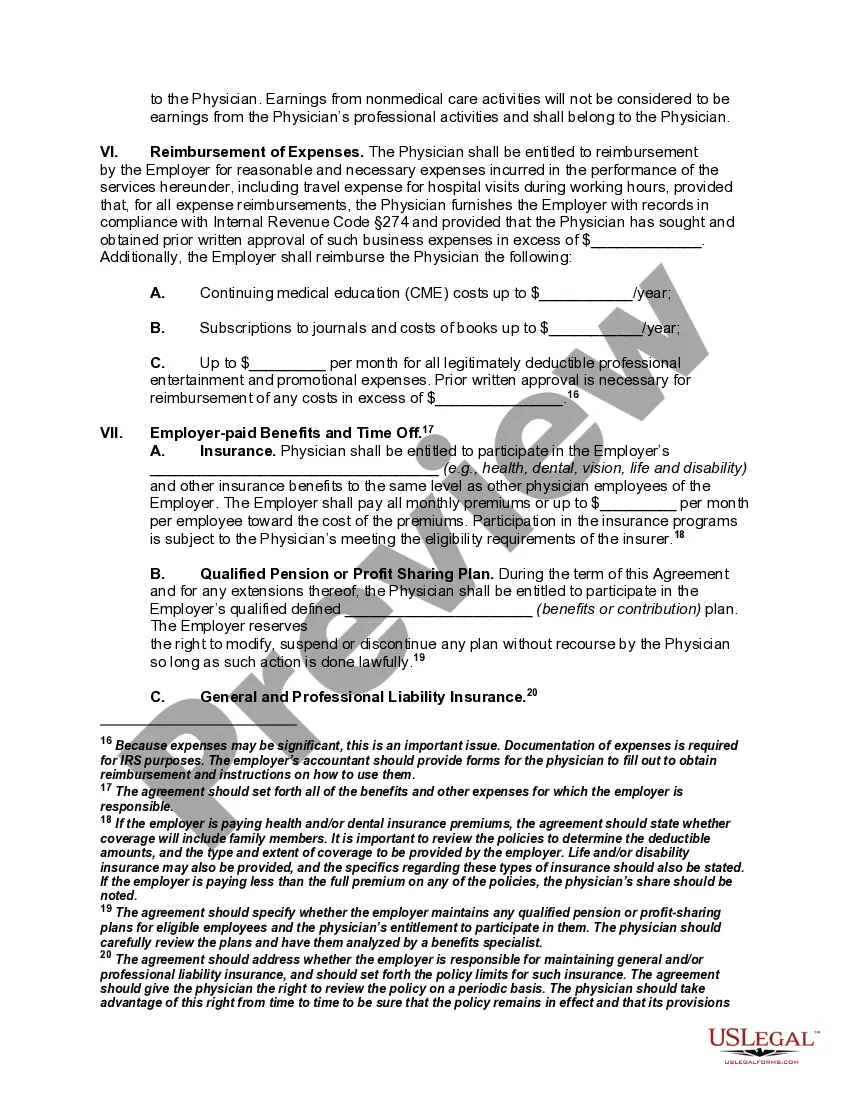
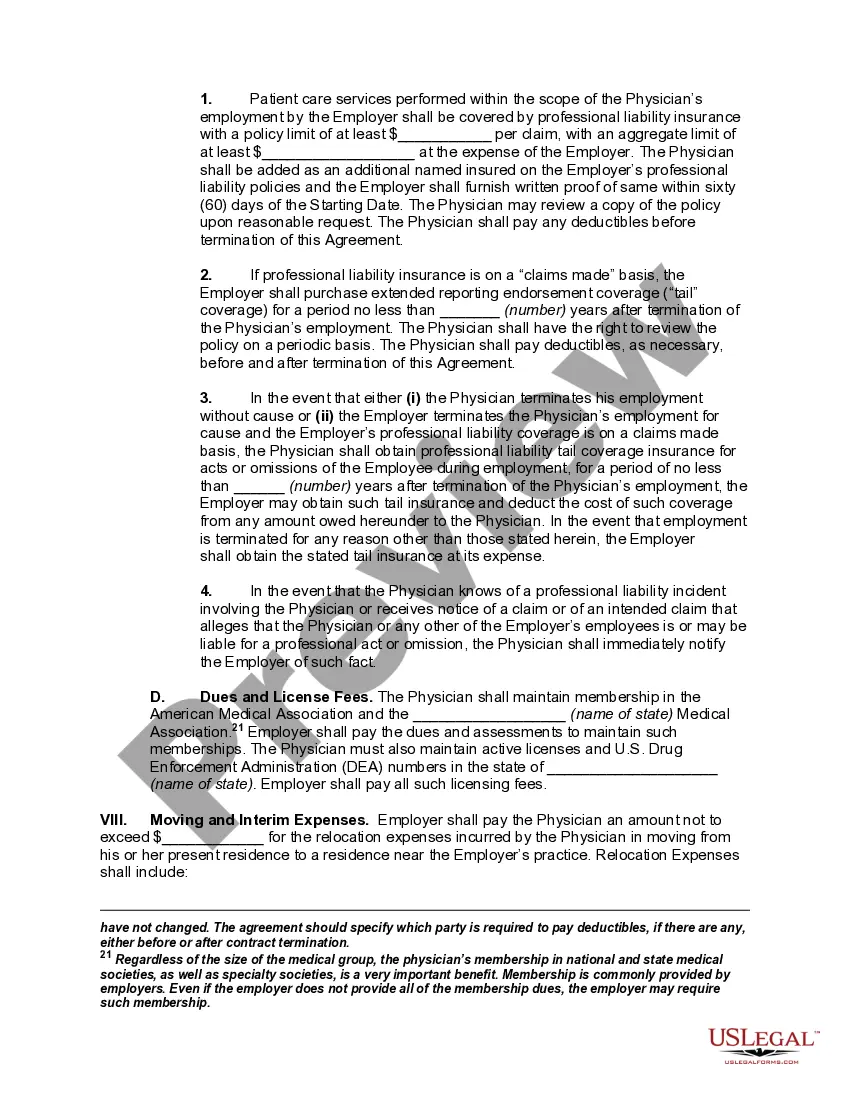
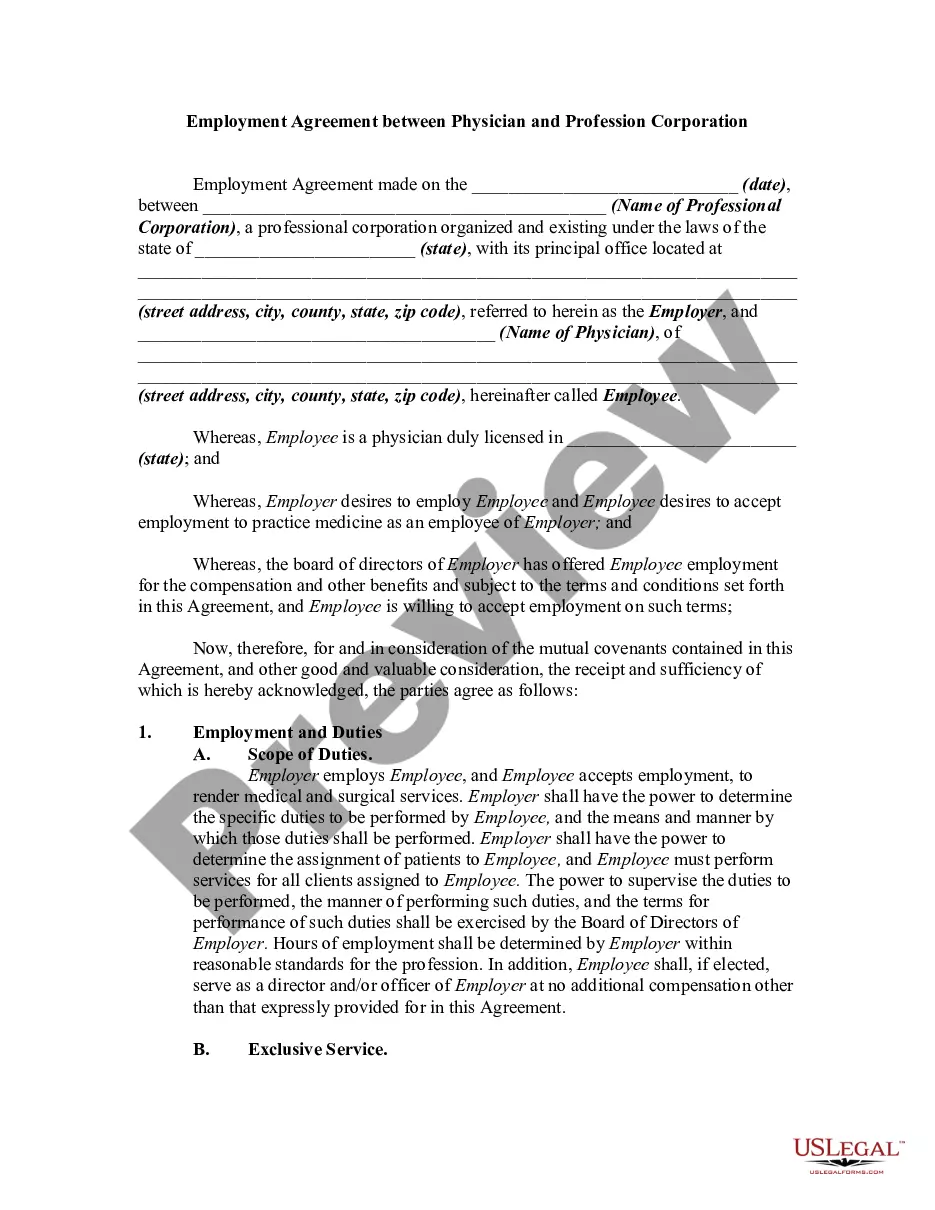
The Annotated Model Pro-Employer Physician Employment Agreement is a customizable legal form designed to adapt a physician's employment contract according to specific practice needs and state regulations. Unlike standard agreements, this model includes detailed explanations of each section, ensuring clarity and comprehension for both medical employers and physicians. It serves as a solid reference point for negotiating agreements that reflect the unique circumstances of the employment relationship.
Form components explained
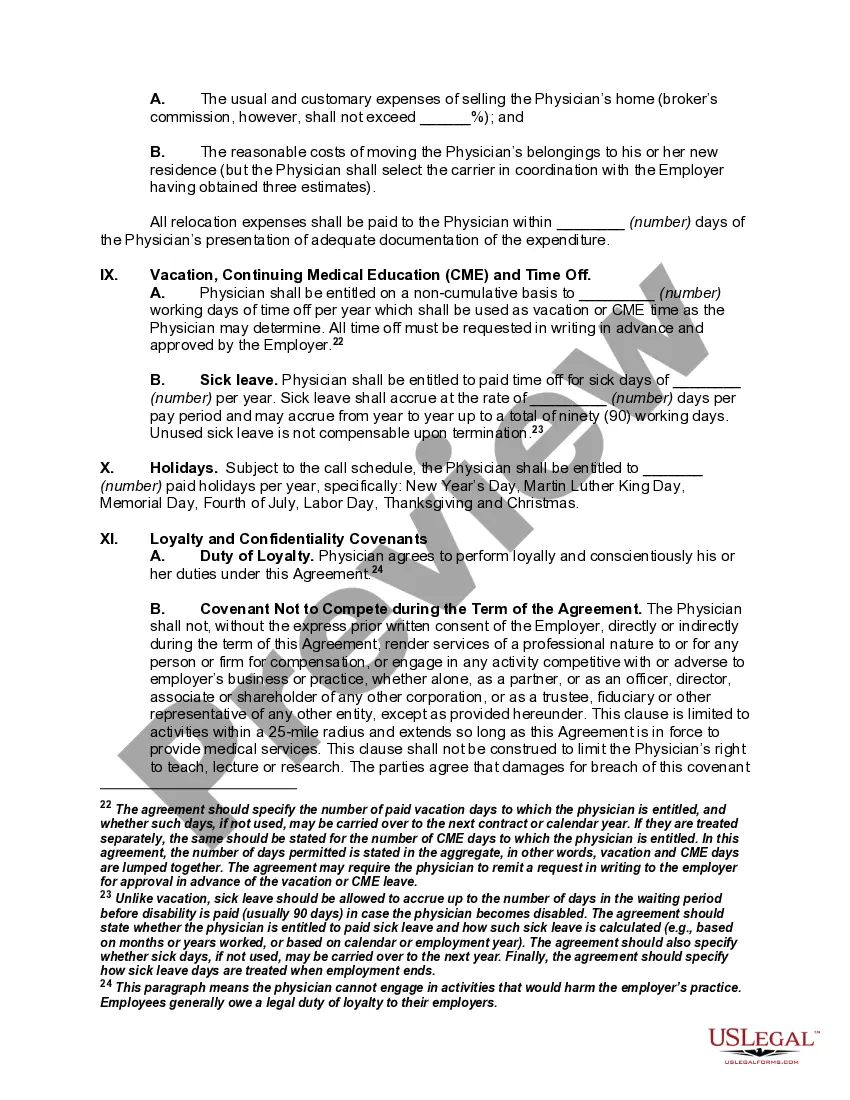
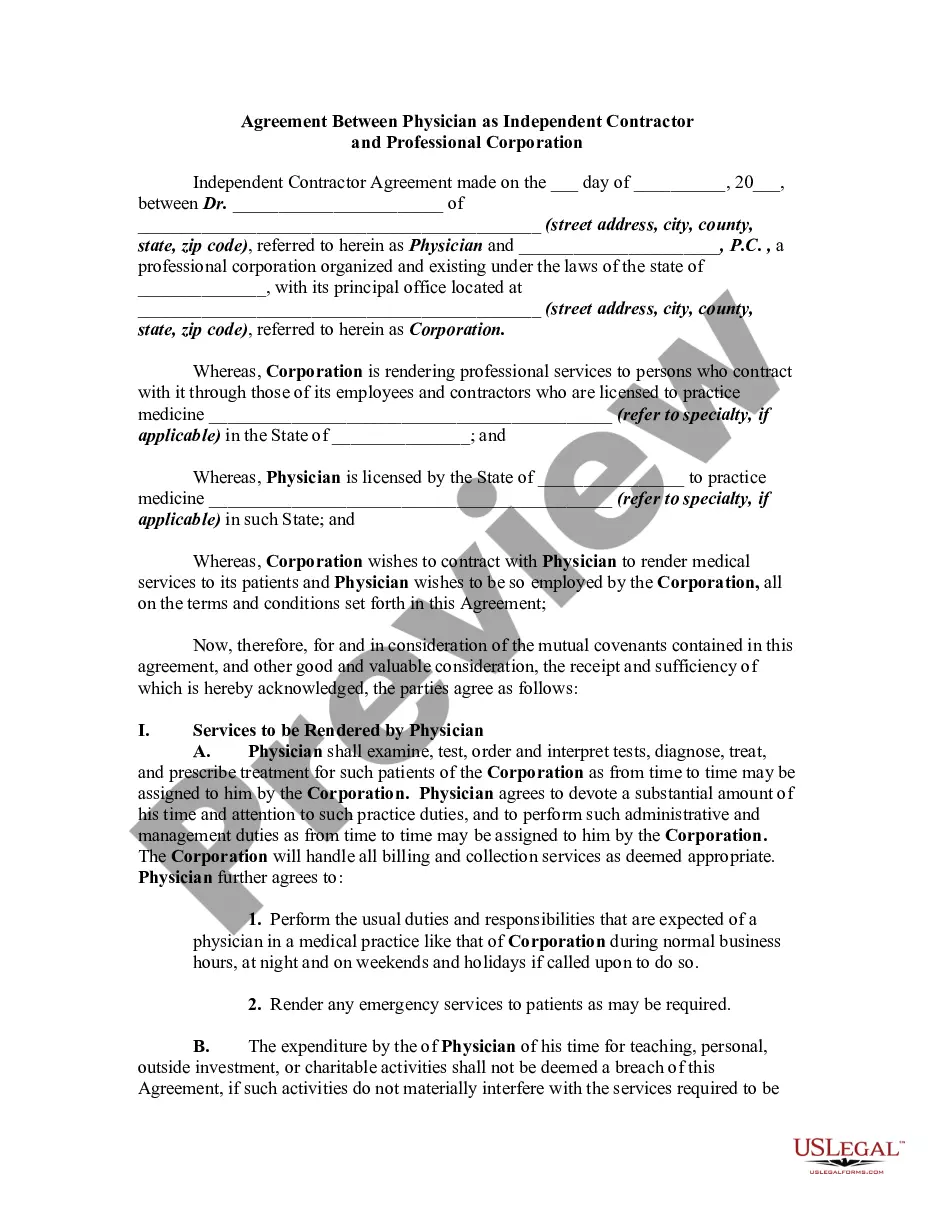
- Employment Clause: Defines the employer-employee relationship and the scope of medical services to be provided.
- Term of Agreement: Outlines the initial employment term, renewal options, and the starting date.
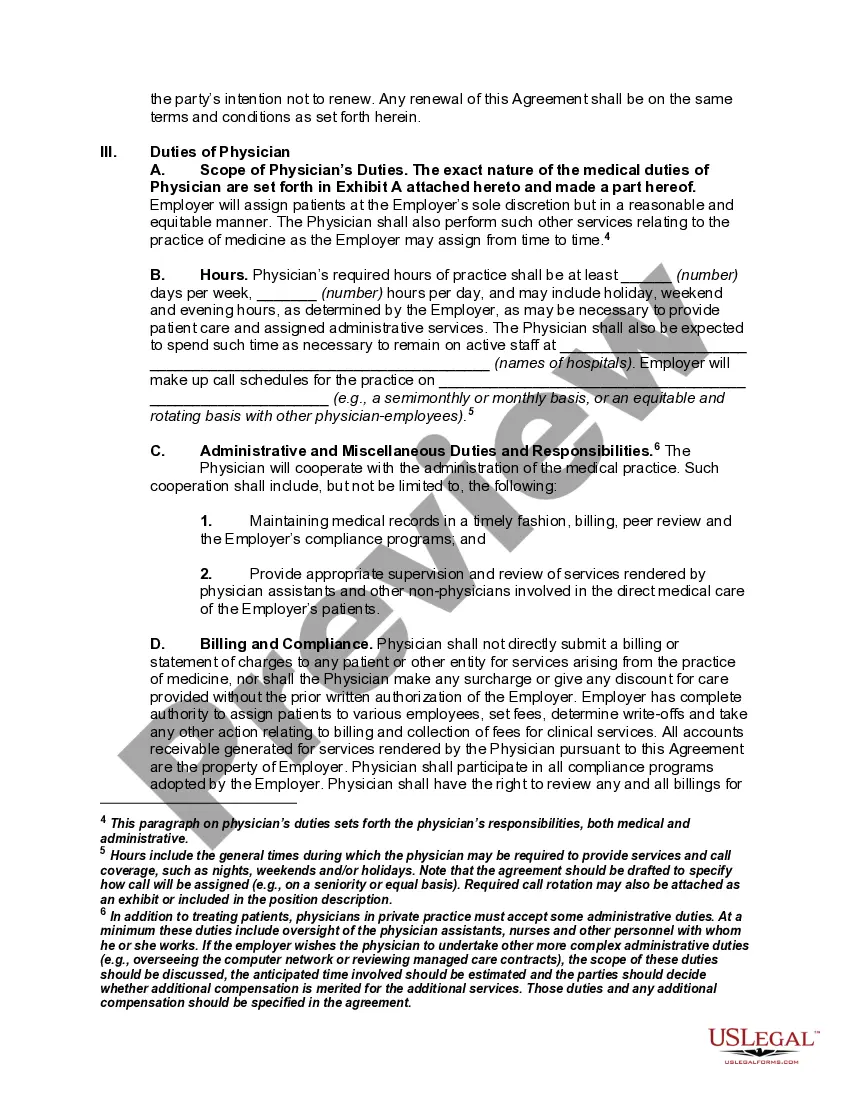
- Duties of Physician: Specifies the physician's responsibilities, including hours, administrative tasks, and compliance obligations.
- Compensation Structure: Details the physician's salary, bonuses, and reimbursement for expenses.
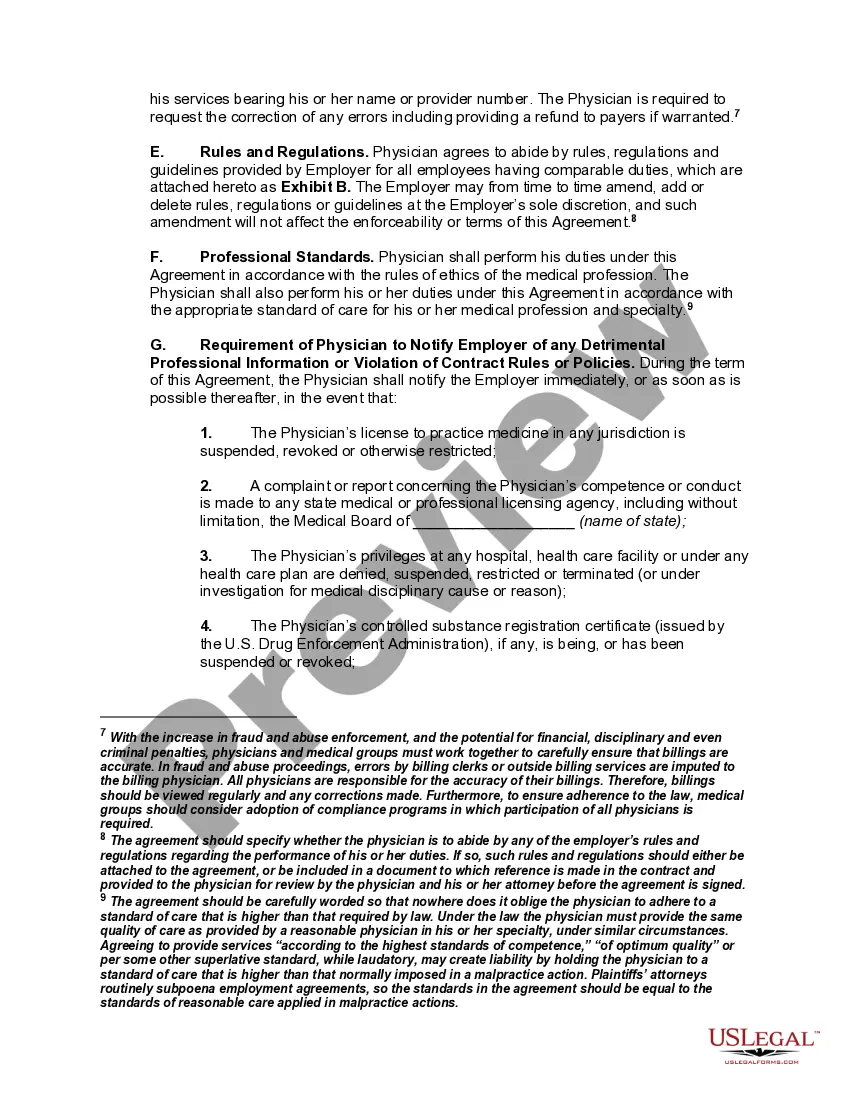
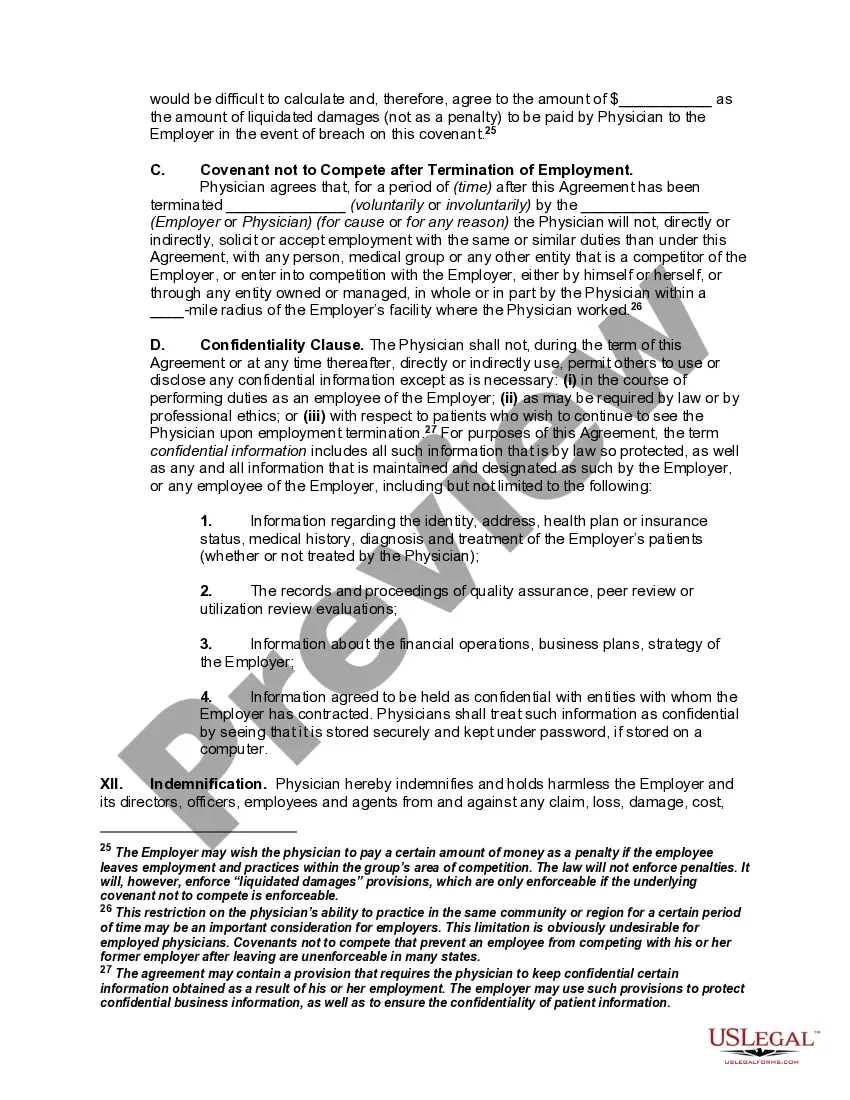
- Loyalty and Confidentiality Covenants: Sets expectations for ethical conduct and confidentiality regarding patient information and business practices.
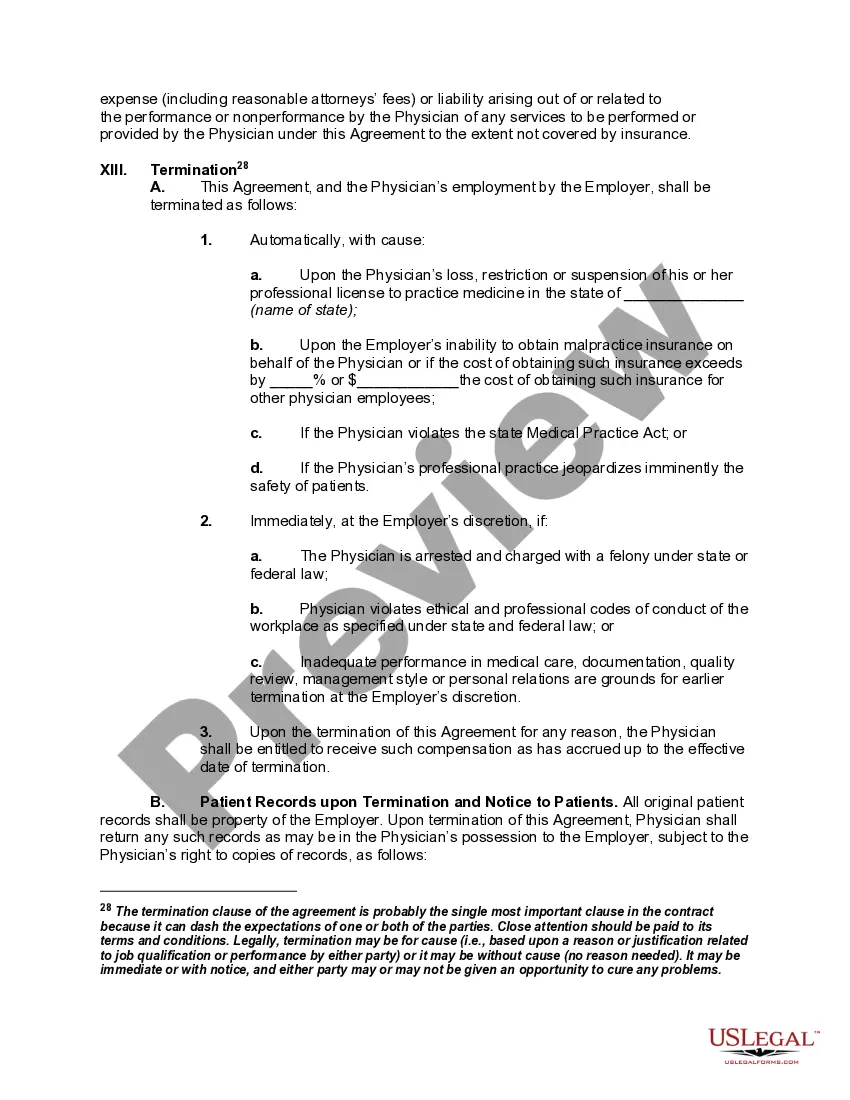
- Termination Conditions: Explains conditions under which the agreement can be terminated, including notice requirements and rights upon termination.

When to use this form
This form is essential when a medical practice is hiring a new physician, as it ensures both parties clearly understand their rights, responsibilities, and compensation. It is also relevant for existing physicians seeking contract renewal or those involved in negotiations for job changes within different medical settings.
Who can use this document
Eligible users of this form include:
- Physicians entering employment contracts with healthcare organizations.
- Healthcare administrators drafting legally sound agreements.
- Legal professionals assisting medical clients in employment negotiations.
How to complete this form
To complete the Annotated Model Pro-Employer Physician Employment Agreement, follow these steps:
- Identify the parties involved, including the employer's name and physician details.
- Specify the term of employment, including the start date and options for renewal.
- Detail the physician's specific duties, including hours and any administrative responsibilities.
- Outline compensation and benefits, including any performance bonuses or reimbursement policies.
- Review and finalize the termination clause, ensuring both parties understand their rights.
Does this document require notarization?
This form does not typically require notarization unless specified by local law. Users should verify state-specific requirements for notarization to ensure compliance.
Get your form ready online
Our built-in tools help you complete, sign, share, and store your documents in one place.
Make edits, fill in missing information, and update formatting in US Legal Forms—just like you would in MS Word.
Download a copy, print it, send it by email, or mail it via USPS—whatever works best for your next step.
Sign and collect signatures with our SignNow integration. Send to multiple recipients, set reminders, and more. Go Premium to unlock E-Sign.
If this form requires notarization, complete it online through a secure video call—no need to meet a notary in person or wait for an appointment.
We protect your documents and personal data by following strict security and privacy standards.

Make edits, fill in missing information, and update formatting in US Legal Forms—just like you would in MS Word.

Download a copy, print it, send it by email, or mail it via USPS—whatever works best for your next step.

Sign and collect signatures with our SignNow integration. Send to multiple recipients, set reminders, and more. Go Premium to unlock E-Sign.

If this form requires notarization, complete it online through a secure video call—no need to meet a notary in person or wait for an appointment.

We protect your documents and personal data by following strict security and privacy standards.
Avoid these common issues
- Failing to customize the terms adequately to reflect specific negotiations and state laws.
- Not clearly defining job responsibilities and expectations for the physician.
- Overlooking the inclusion of a comprehensive termination clause.
- Neglecting to update the agreement when any changes to employment terms occur.
Benefits of using this form online
- Convenience of downloading the form instantly saves time compared to drafting from scratch.
- Editability allows users to customize the agreement per specific needs easily.
- Prepared by licensed attorneys, ensuring reliability and adherence to legal standards.
- The agreement is legally binding when properly completed and signed by both parties.
- Local laws govern specific clauses and procedures; thus, it is advisable to consult legal counsel for state-specific provisions.
- Non-compliance with the agreement terms can lead to legal disputes, highlighting the importance of clear and fair agreements.
What to keep in mind
- The Annotated Model Pro-Employer Physician Employment Agreement is a valuable resource for medical employment arrangements.
- Customization is essential to ensure the agreement meets the specific needs of both the physician and the employer.
- Understanding the key components allows for better negotiation and comprehension of employment terms.
Looking for another form?






Form popularity
FAQ
Contact information for both parties. Location/state whose laws apply to the agreement. Terms and conditions of the business relationship. Terms of payment. Start date of the agreement. End date of the agreement.
Get it in writing. Keep it simple. Deal with the right person. Identify each party correctly. Spell out all of the details. Specify payment obligations. Agree on circumstances that terminate the contract. Agree on a way to resolve disputes.
Company Name. Nature of Work: Your duty hours will be 40 hours a week. Salary & Benefits: You will be drawing a salary of $8000 per month. Rules & Regulations: The company expects you to stick to all the rules and regulations effective at the time of your employment.
Write the company's information. Include a statement verifying that the employee does indeed work at this place of employment, as well as the date he or she began working. Sign the document. Current Employee. Past Employee. Best Practices.
An employment verification letter, also called a letter of employment or proof of employment letter, is used to confirm a person's employment dates, salary, and job title. Similar letters are also used by lenders and other entities.
Names of the Parties. The employer's organisation details and the employee's full name and address. Start Date. Job Title and Description. Place of Work. Hours of Work. Probationary Period. Salary. Assessments.
Add employment details. Agreement to employers policies, rules & regulations. Mention position related responsibilities. Compensation package. Vacation contract. Employee benefits contract. Add probation period details. Performance reviews. Termination.
If you didn't use a job description, take an hour to sit down and write out the duties you want your employee to perform. Be as specific as possible. The job description also should have included the target wage. You should consider whether or not you are paying a fair rate.
When you write a contract letter, you should include the following: the position title, company name, starting date, employee's status as full-time or part-time, their status as exempt or non-exempt (relating to overtime pay), salary amount, timing of payment, a summary of company benefits, details about paid time off,