Residential Interior Design Services Agreement
Overview of this form
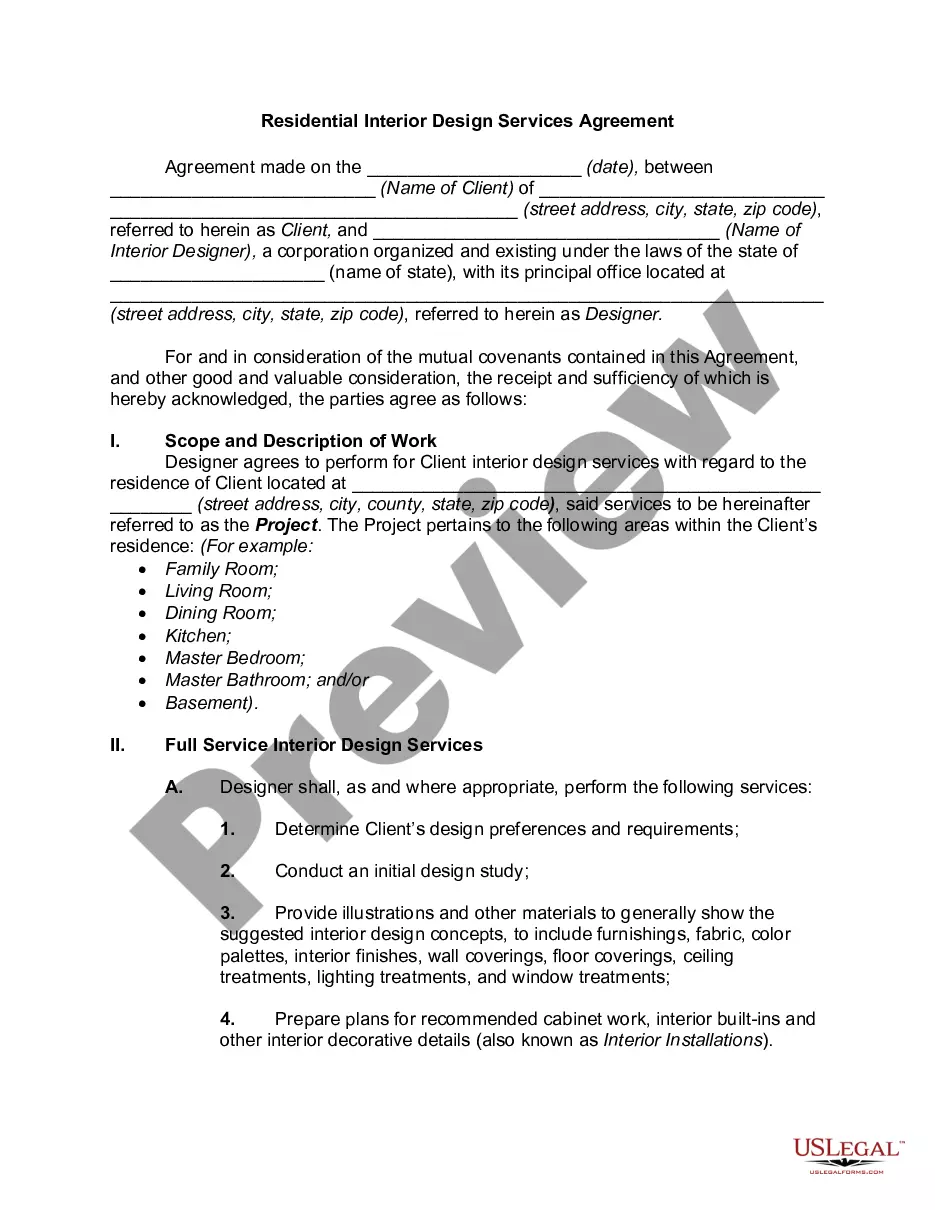
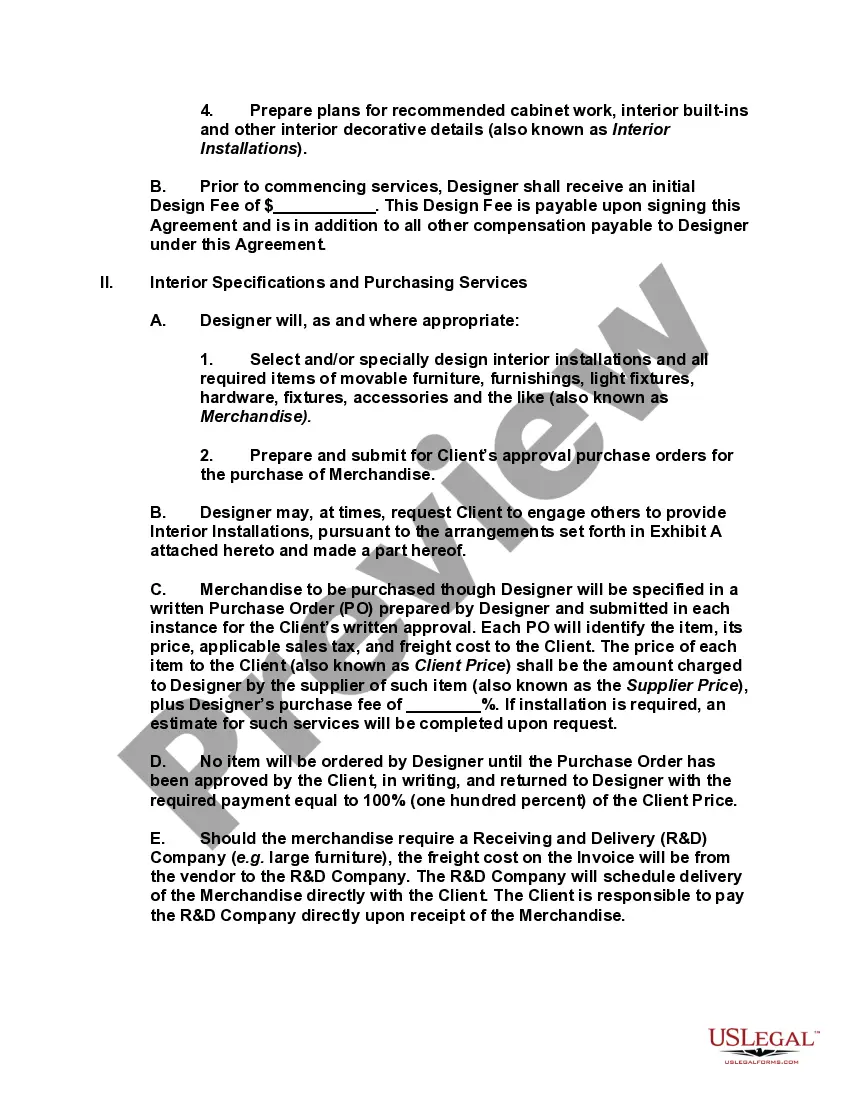
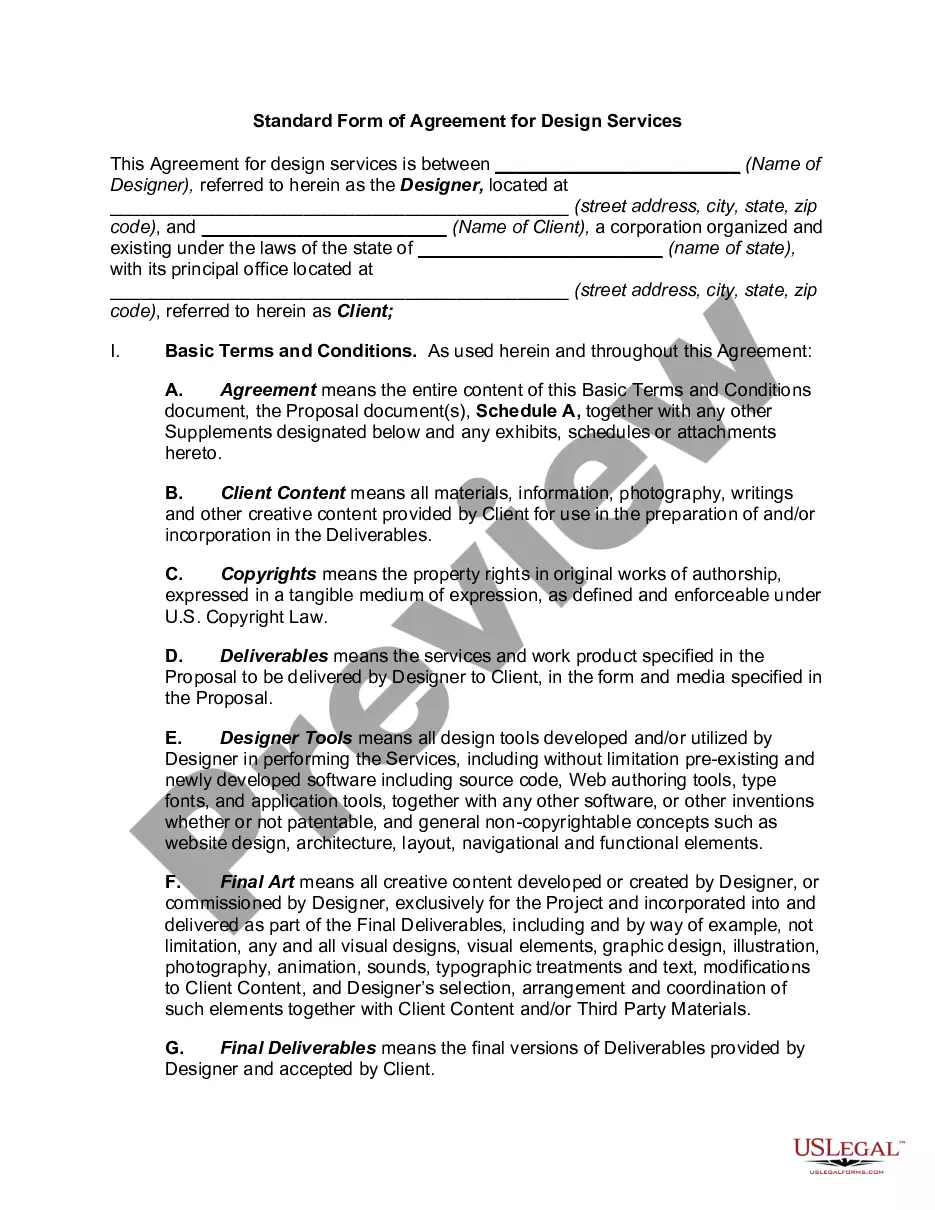
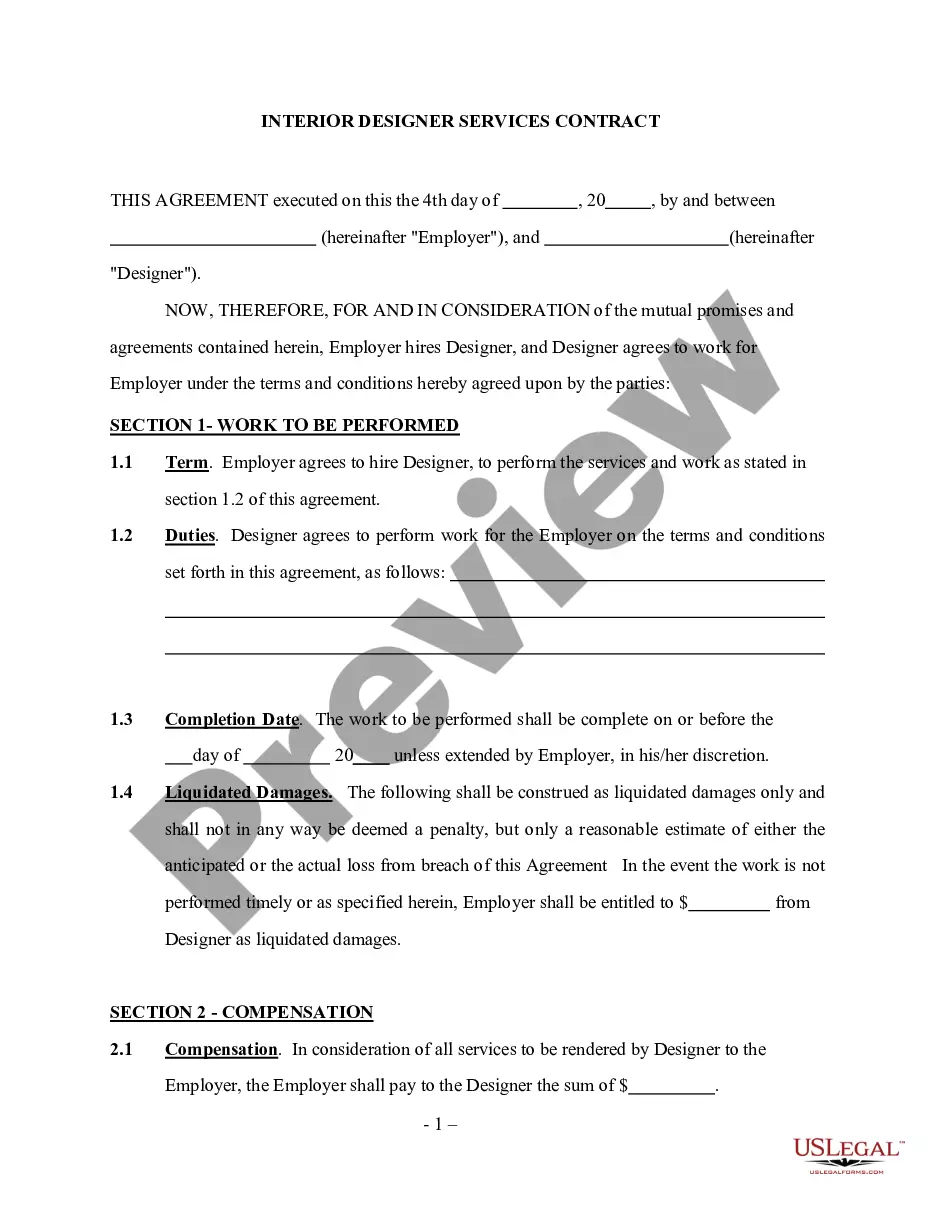
The Residential Interior Design Services Agreement is a legal document used to outline the terms and conditions under which an interior designer will provide services to a client. This form sets forth the scope of work, payment details, and responsibilities for both parties. Unlike other agreements, this specific form addresses the complexities involved in interior design projects, ensuring clarity and mutual understanding between clients and designers.
What’s included in this form
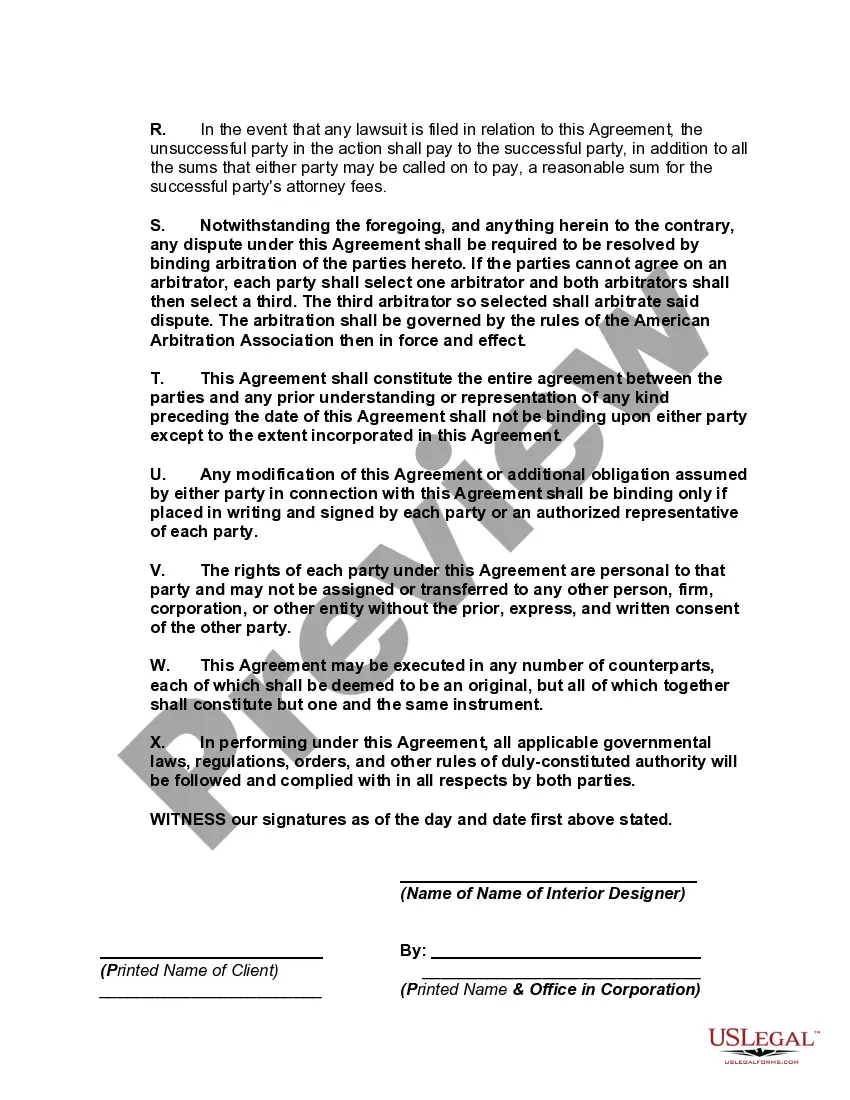
- Identification of the parties involved: Client and Designer.
- Detailed scope and description of the work to be performed.
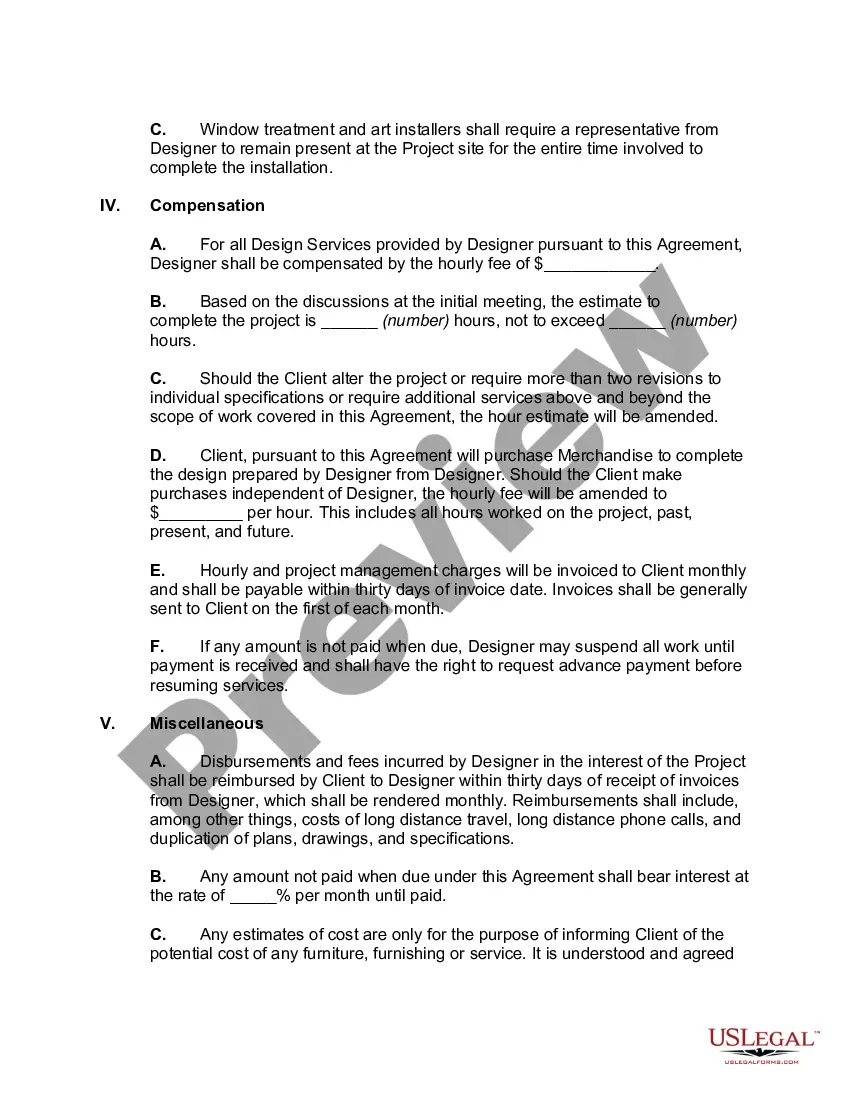
- Payment terms, including the design fee and reimbursement clauses.
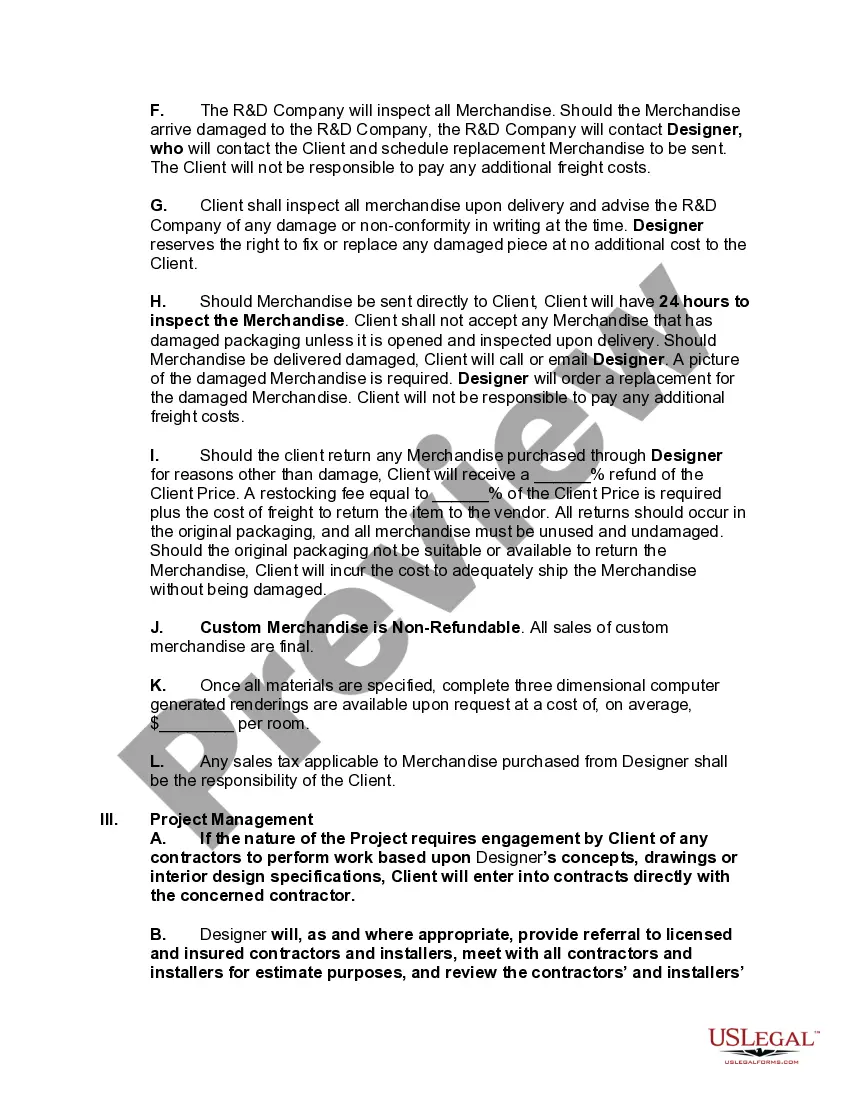
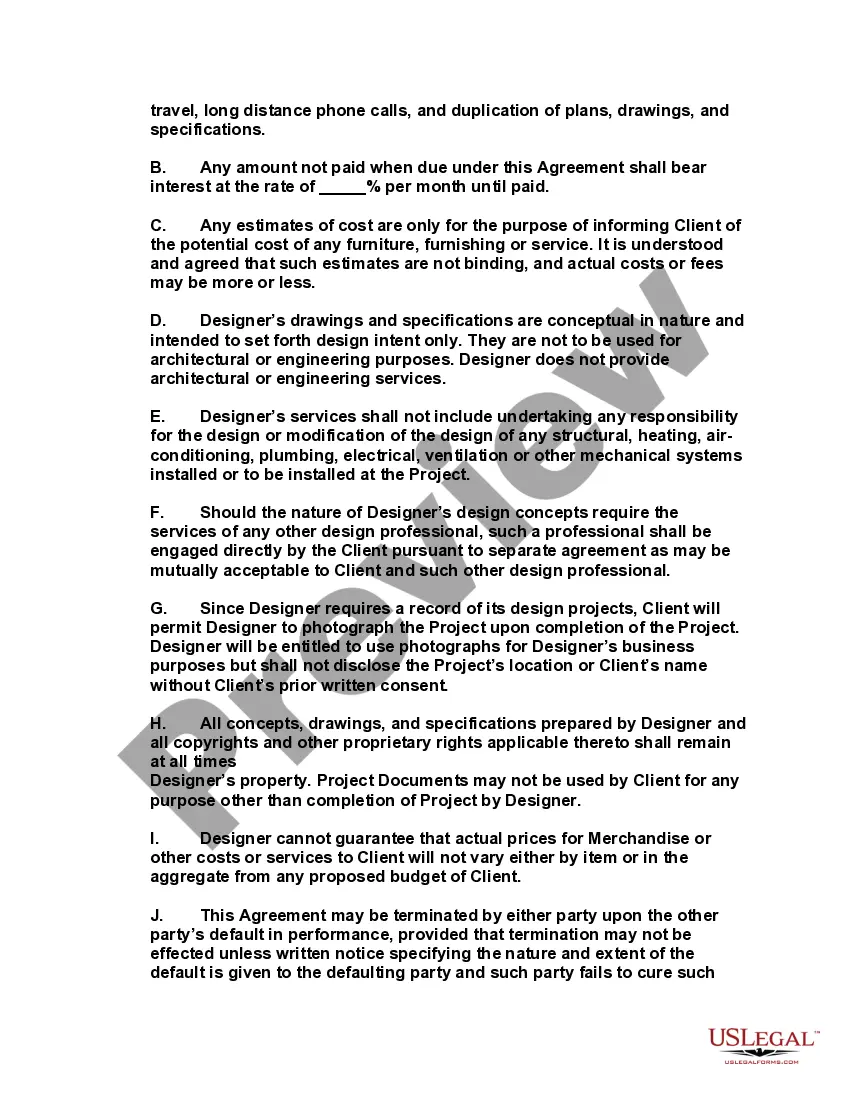
- Specifications related to purchasing merchandise and installation services.
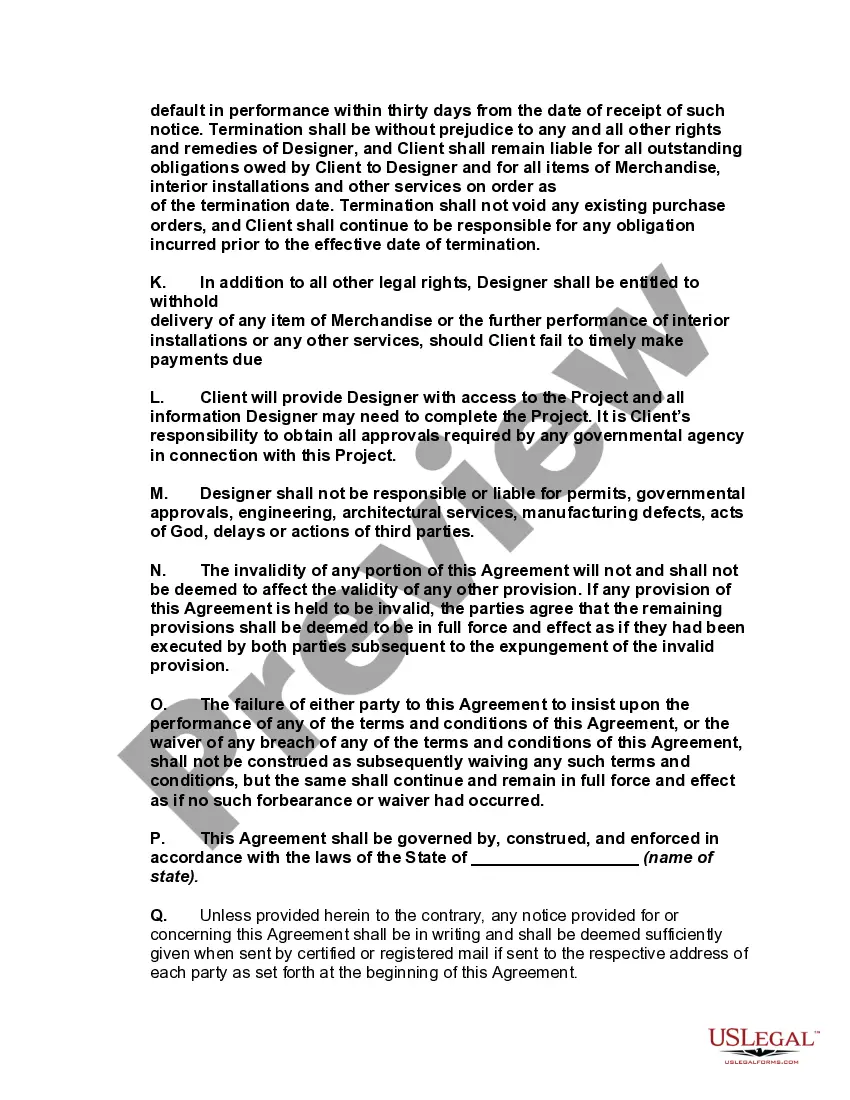
- Provisions for project management and contractor engagement.
- Conditions for termination and dispute resolution through arbitration.
Common use cases
This form is necessary when engaging an interior designer for residential projects. It should be used when a homeowner wants to clearly define the expectations, limitations, and responsibilities regarding interior design services, including design concepts, contractor relationships, and product purchases. It is especially useful for large or complex interior design projects requiring formal agreements to avoid misunderstandings.
Who can use this document
This agreement is intended for:
- Homeowners seeking interior design services.
- Interior designers and firms offering residential design services.
- Contractors who may be involved in the implementation of the design.
Completing this form step by step
- Identify the parties involved by entering the names and addresses of both the client and the interior designer.
- Clearly specify the scope and description of the interior design services to be provided.
- Include the initial design fee and any additional compensation details applicable to the services.
- Outline the process for purchasing merchandise, including approval procedures and payment obligations.
- Review termination clauses and ensure both parties understand the conditions for ending the agreement.
Notarization guidance
This form does not typically require notarization unless specified by local law.
Get your form ready online
Our built-in tools help you complete, sign, share, and store your documents in one place.
Make edits, fill in missing information, and update formatting in US Legal Forms—just like you would in MS Word.
Download a copy, print it, send it by email, or mail it via USPS—whatever works best for your next step.
Sign and collect signatures with our SignNow integration. Send to multiple recipients, set reminders, and more. Go Premium to unlock E-Sign.
If this form requires notarization, complete it online through a secure video call—no need to meet a notary in person or wait for an appointment.
We protect your documents and personal data by following strict security and privacy standards.

Make edits, fill in missing information, and update formatting in US Legal Forms—just like you would in MS Word.

Download a copy, print it, send it by email, or mail it via USPS—whatever works best for your next step.

Sign and collect signatures with our SignNow integration. Send to multiple recipients, set reminders, and more. Go Premium to unlock E-Sign.

If this form requires notarization, complete it online through a secure video call—no need to meet a notary in person or wait for an appointment.

We protect your documents and personal data by following strict security and privacy standards.
Common mistakes
- Failing to clearly define the scope of work, leading to misunderstandings.
- Not including detailed payment terms, which can cause disputes later.
- Neglecting to specify approval processes for purchases or design changes.
Benefits of using this form online
- Easy access and convenience to download and fill out the form at your own pace.
- Editable format to tailor the agreement to specific project needs.
- Reliability of having a legally vetted document crafted by licensed attorneys.
Legal use & context
- This agreement is enforceable as it outlines the expectations between the designer and the client.
- Both parties should adhere to the terms designated in the contract to limit liability.
- In case of disputes, arbitration as outlined in the agreement can legally resolve conflicts.
Main things to remember
- The Residential Interior Design Services Agreement formalizes the provision of design services.
- Clearly defined responsibilities help prevent disputes during the project.
- Use this adaptability in various states while ensuring compliance with local laws.
- Ensure all terms are updated and reflect the project specifics before signing.
Looking for another form?
Form popularity
FAQ
The Residential Interior Design Services Agreement is a written contract that defines the relationship between a Client and an Interior Designer for a residential project, outlining the scope of work, payment terms, responsibilities, and protections. It should be used whenever homeowners hire an interior designer for room renovations, redesigns, or coordinated furniture purchases to clarify expectations.
The scope of services describes the design work to be performed and sets clear expectations for the project. It should include a description of the design tasks, project milestones, and boundaries for what is included and excluded, ensuring both parties agree on the work to be completed.
The agreement states the design fee and payment structure, including how much is due, when payments are due, and any milestones tied to deliverables. It may also cover reimbursable expenses and conditions for late payments, helping both parties manage cash flow during the project.
It provides specifications for purchasing furniture and merchandise, clarifying who selects items, how approvals are obtained, budgeting expectations, and how costs are allocated or billed within the project, ensuring purchases align with the design plan.
The agreement sets project management responsibilities and governs how the designer coordinates with contractors, vendors, and trades. It clarifies scheduling, approvals, on-site decisions, and communication expectations to keep the residential project on track and reduce miscommunication.
This agreement is tailored for residential projects and specifically covers furniture and merchandise purchasing, contractor coordination, and termination rights, whereas a generic interior design services contract may not include these residential-focused provisions.