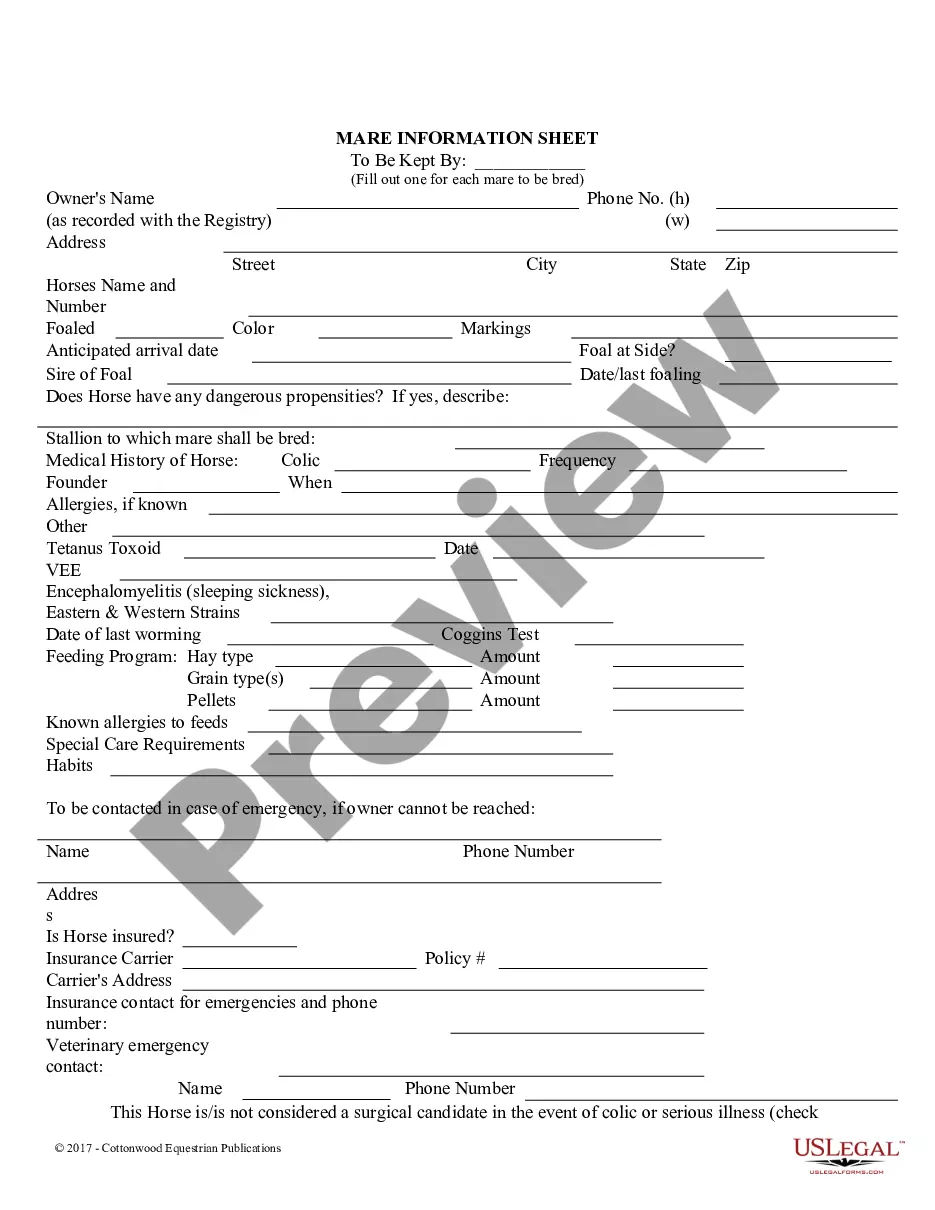
Contract with Veterinarian Assistant as Independent Contractor with Provisions for Termination with or without Cause
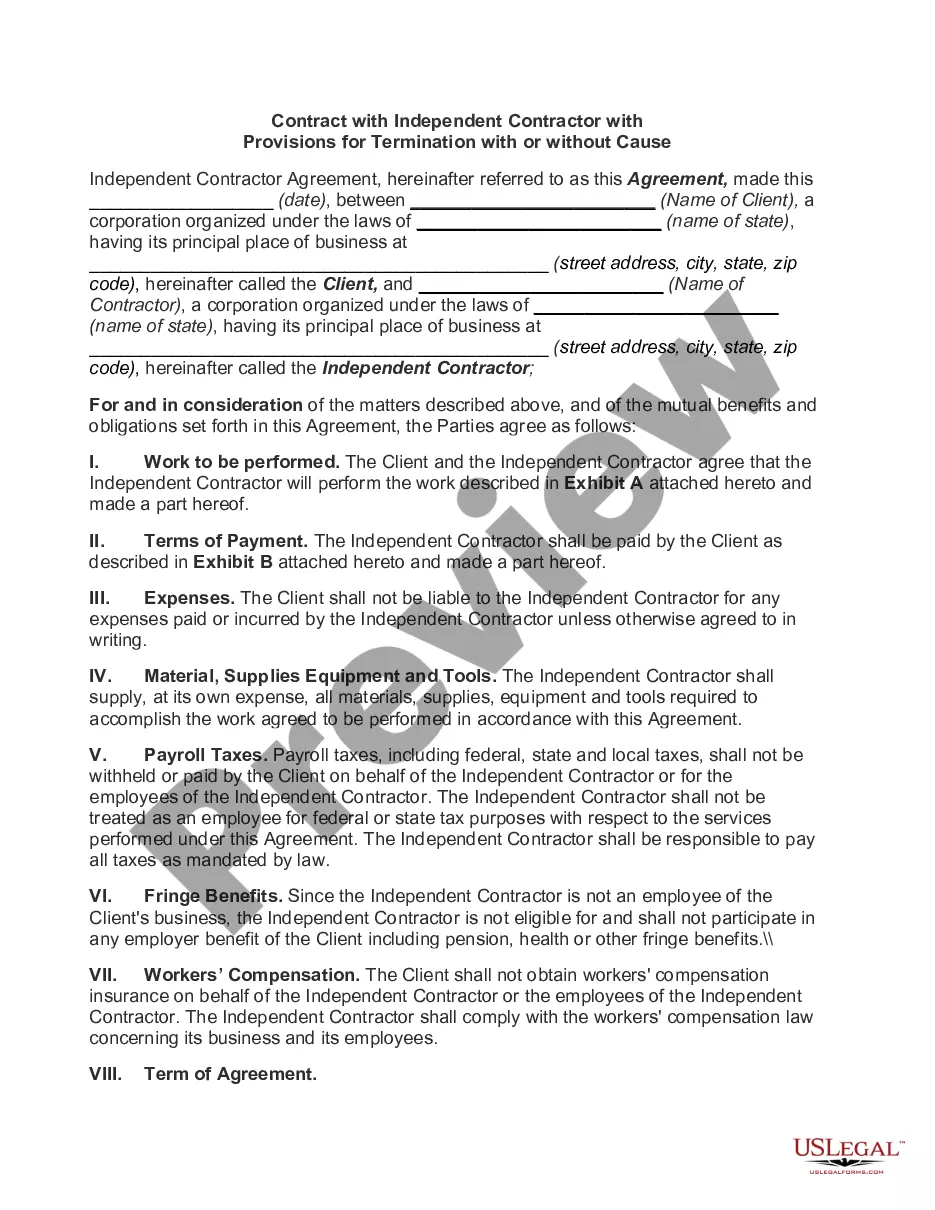
Overview of this form
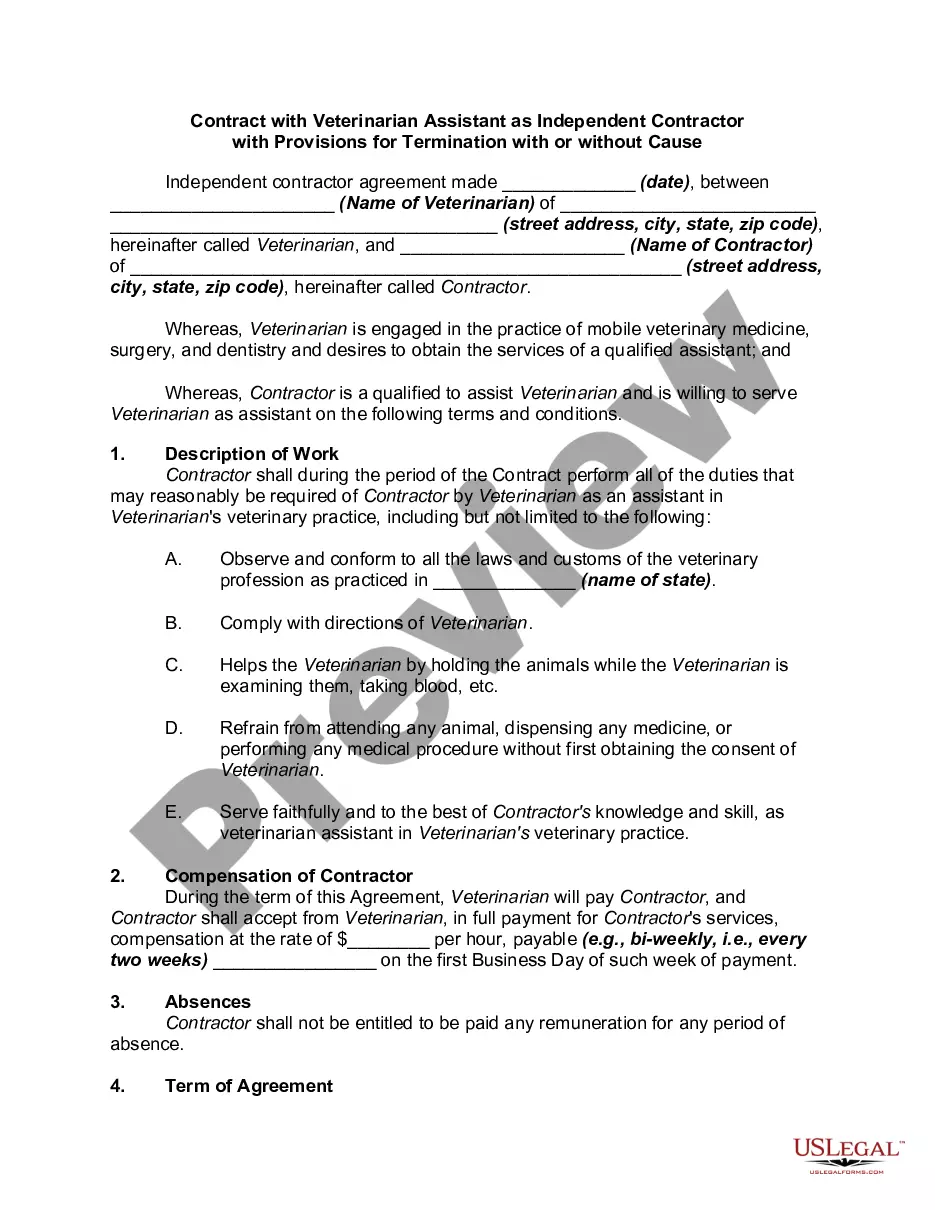
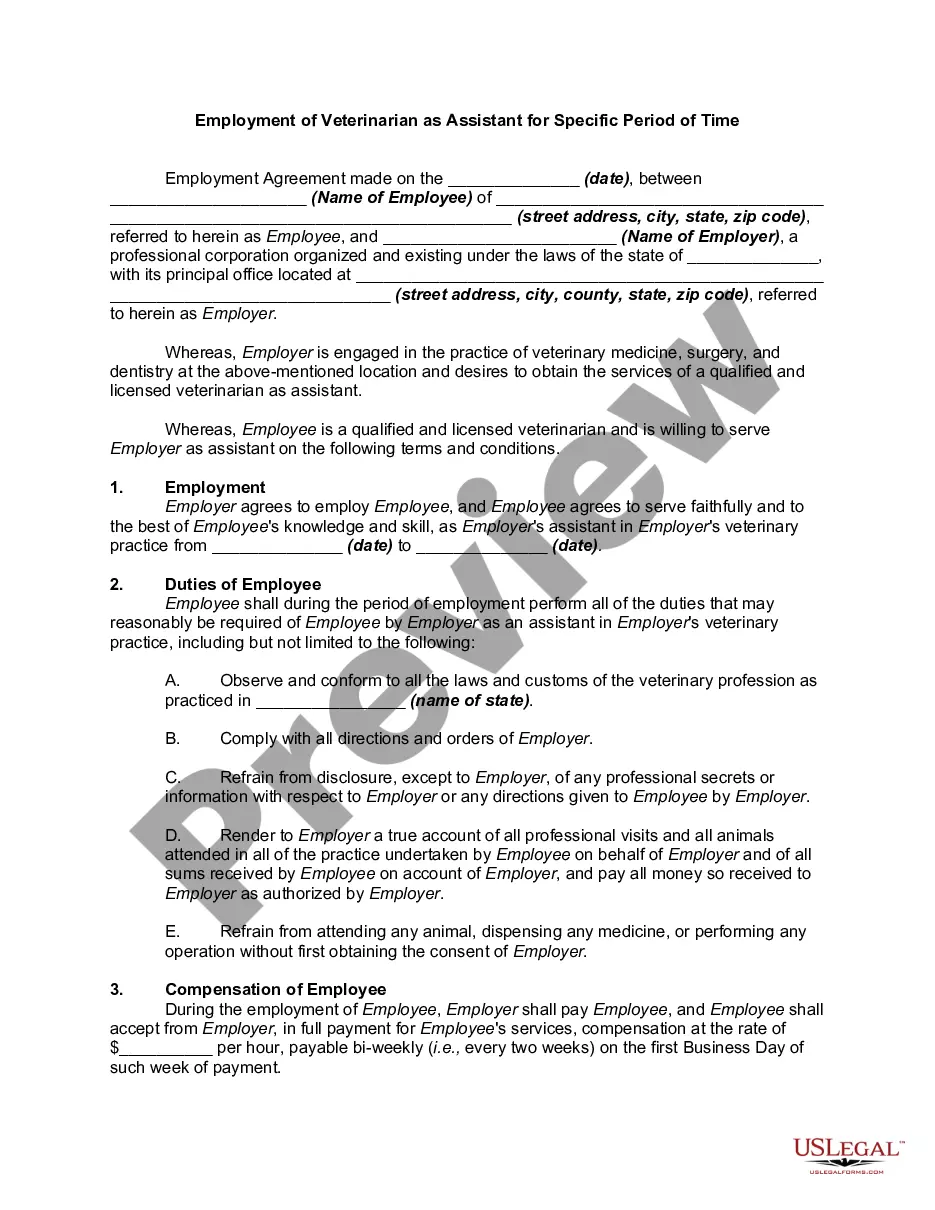
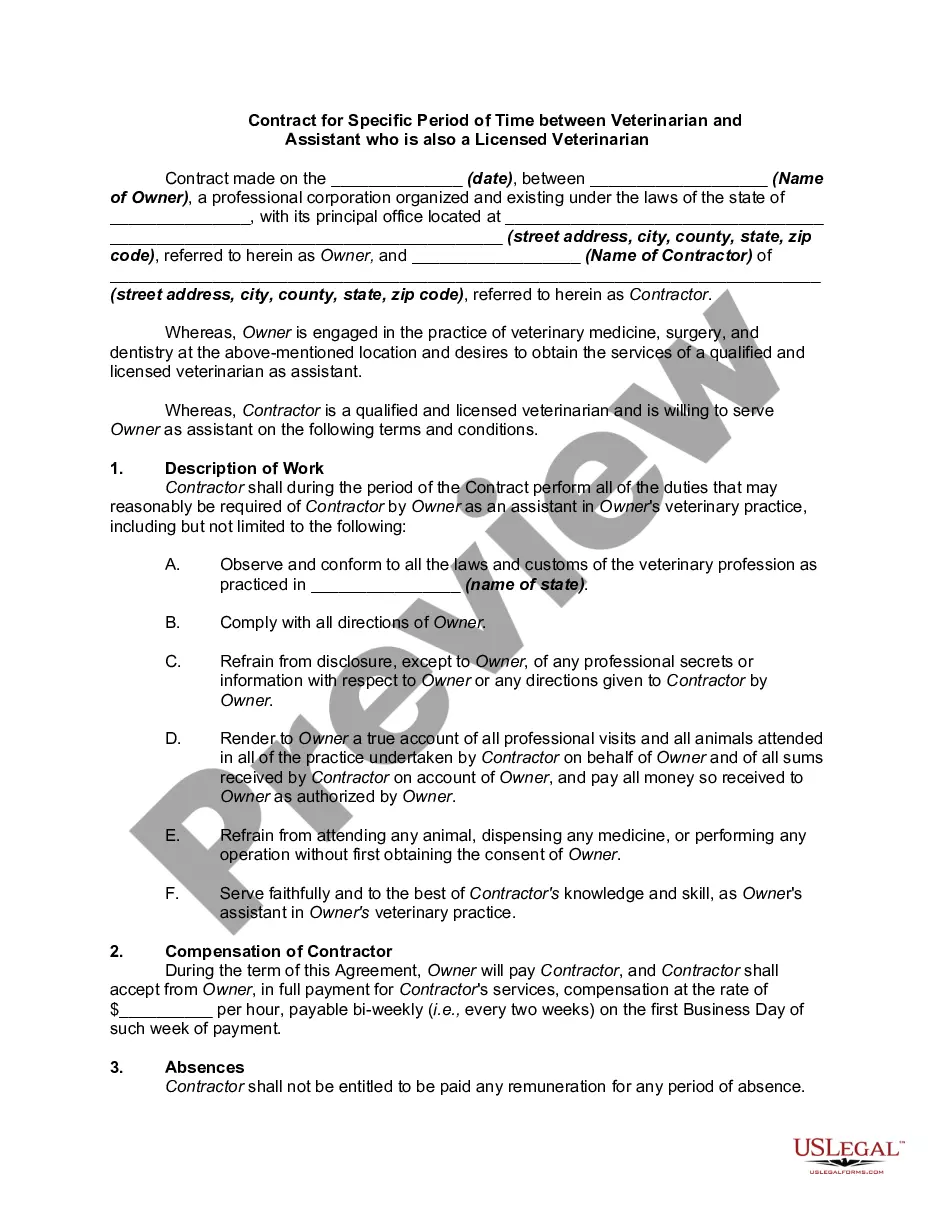
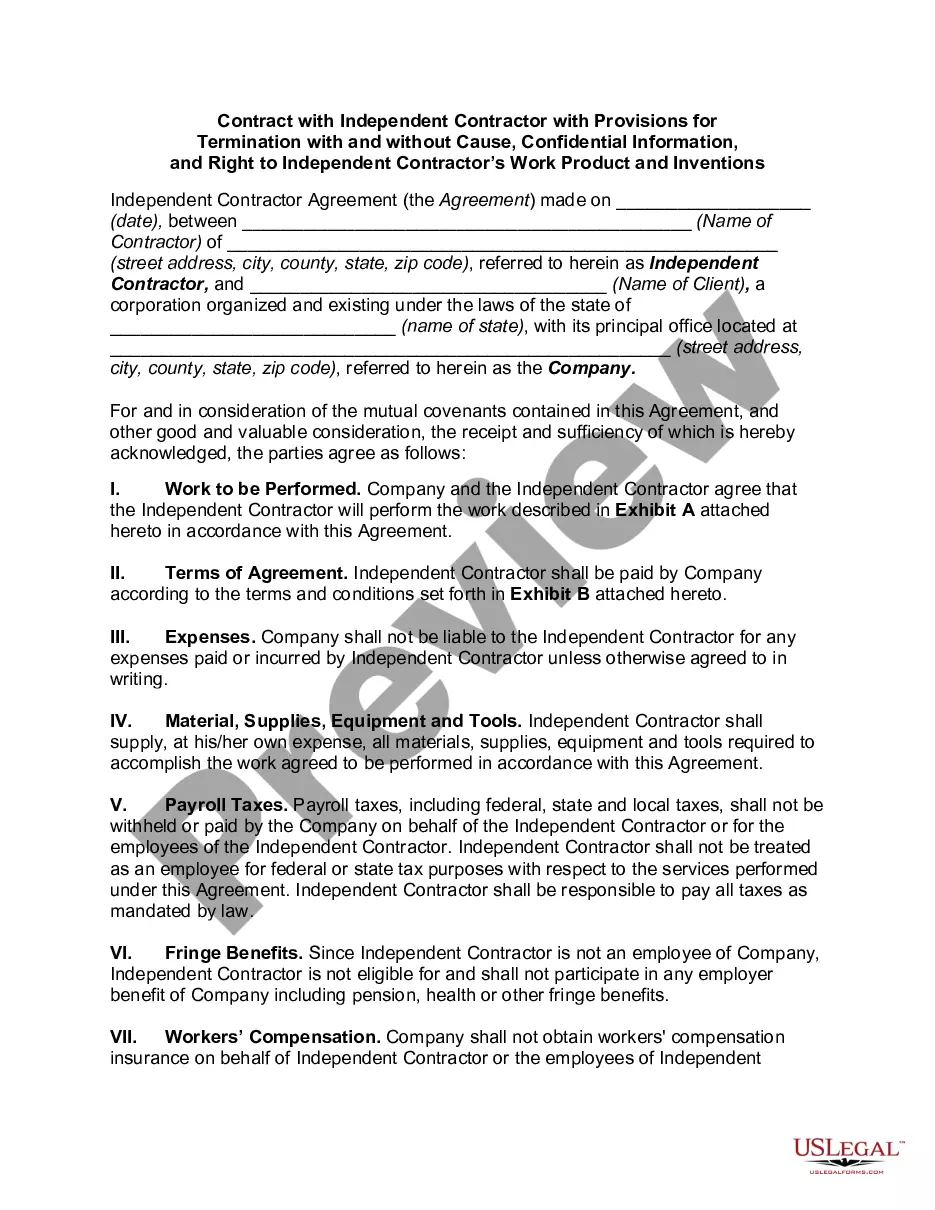
This Contract with Veterinarian Assistant as Independent Contractor is a legal document that outlines the relationship between a veterinarian and an independent contractor who will provide assistance in a veterinary practice. This form distinguishes between contractors and employees, ensuring that both parties understand their rights and responsibilities. By defining the terms of engagement, including work expectations and compensation, this contract helps protect both the veterinarianâs business interests and the contractor's independence.
Key parts of this document
- Identification of parties involved, including the veterinarian and the contractor.
- A description of the work to be performed by the contractor.
- Compensation rates and payment schedule.
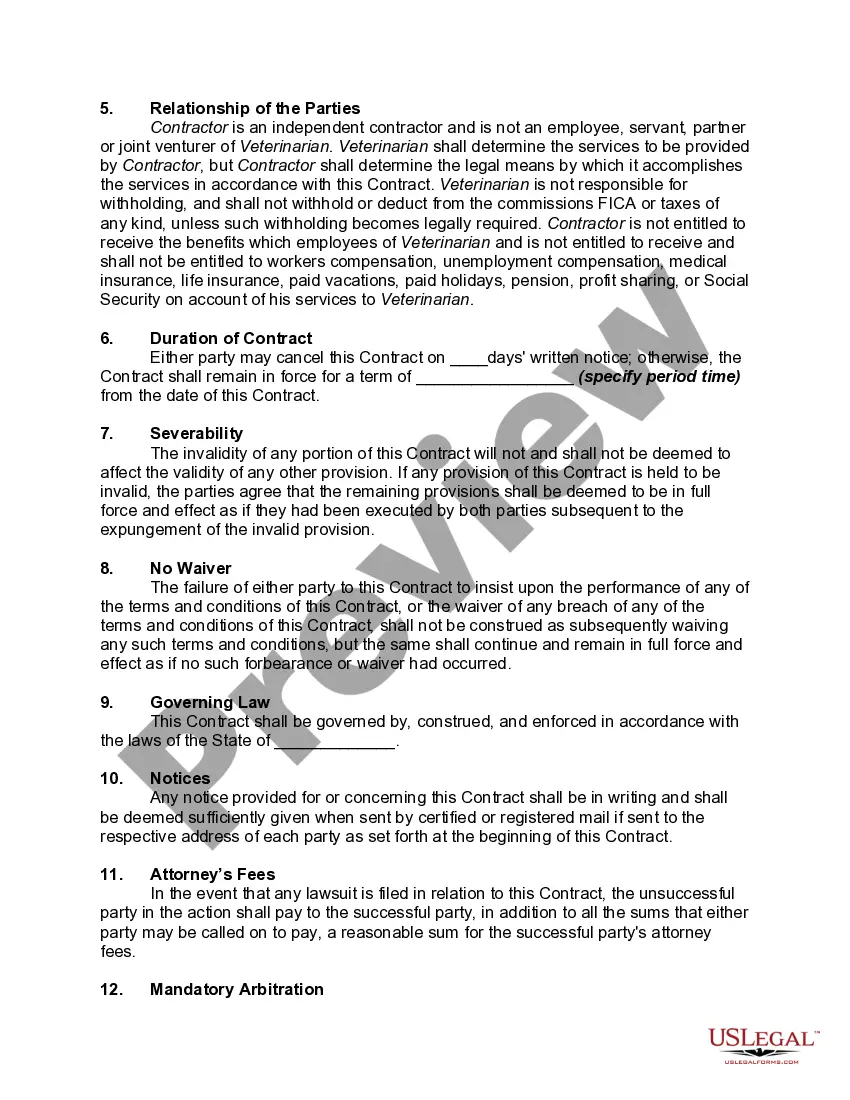
- Terms regarding termination of the contract with or without cause.
- Clauses outlining the independent contractor relationship and disallowance of employee benefits.
- Legal provisions for governing law and dispute resolution through arbitration.
Situations where this form applies
This form is essential when a veterinarian wishes to hire an assistant as an independent contractor rather than an employee. It is particularly useful in scenarios where the veterinarian needs specialized support for tasks such as animal examinations and procedures, while maintaining the contractor's autonomy in how they perform those tasks. Utilizing this contract helps clarify the nature of the working relationship, which is vital for compliance with tax regulations.
Intended users of this form
- Veterinarians seeking to hire assistants without establishing an employee-employer relationship.
- Veterinarian practices looking to clarify the terms and conditions of hiring independent contractors.
- Independent contractors with veterinary knowledge seeking to formalize their working arrangements with veterinarians.
How to complete this form
- Identify the parties by entering the names and addresses of both the veterinarian and the contractor.
- Clearly describe the work responsibilities expected of the contractor.
- Specify the compensation rate and the payment schedule.
- Determine the notice period for contract termination and fill in the required number of days.
- Have both parties sign and date the contract to make it legally binding.
Does this form need to be notarized?
This form does not typically require notarization unless specified by local law. However, having the signatures notarized can offer an additional layer of protection and verification of identity for both parties.
Get your form ready online
Our built-in tools help you complete, sign, share, and store your documents in one place.
Make edits, fill in missing information, and update formatting in US Legal Forms—just like you would in MS Word.
Download a copy, print it, send it by email, or mail it via USPS—whatever works best for your next step.
Sign and collect signatures with our SignNow integration. Send to multiple recipients, set reminders, and more. Go Premium to unlock E-Sign.
If this form requires notarization, complete it online through a secure video call—no need to meet a notary in person or wait for an appointment.
We protect your documents and personal data by following strict security and privacy standards.

Make edits, fill in missing information, and update formatting in US Legal Forms—just like you would in MS Word.

Download a copy, print it, send it by email, or mail it via USPS—whatever works best for your next step.

Sign and collect signatures with our SignNow integration. Send to multiple recipients, set reminders, and more. Go Premium to unlock E-Sign.

If this form requires notarization, complete it online through a secure video call—no need to meet a notary in person or wait for an appointment.

We protect your documents and personal data by following strict security and privacy standards.
Common mistakes to avoid
- Failing to accurately describe the work responsibilities, leading to confusion later.
- Not specifying the compensation or payment terms clearly.
- Overlooking state-specific legal requirements or provisions.
- Neglecting to have both parties sign the contract, making it unenforceable.
Why complete this form online
- Quick and easy download of a customizable legal form drafted by licensed attorneys.
- Convenient access to the form from any device at any time.
- Editable fields allow users to tailor the contract to specific needs without starting from scratch.
- Affordability compared to hiring a lawyer for a custom contract.
Legal use & context
- Establishes a clear understanding between the veterinarian and the contractor regarding their roles.
- Protects both parties in case of disputes over payment or services rendered.
- Ensures compliance with IRS guidelines on independent contractors versus employees.
Summary of main points
- This form formalizes the working relationship between a veterinarian and an independent contractor.
- Clear definitions and terms help protect both parties legally and financially.
- Proper documentation can mitigate potential tax liabilities and clarify the nature of the relationship.
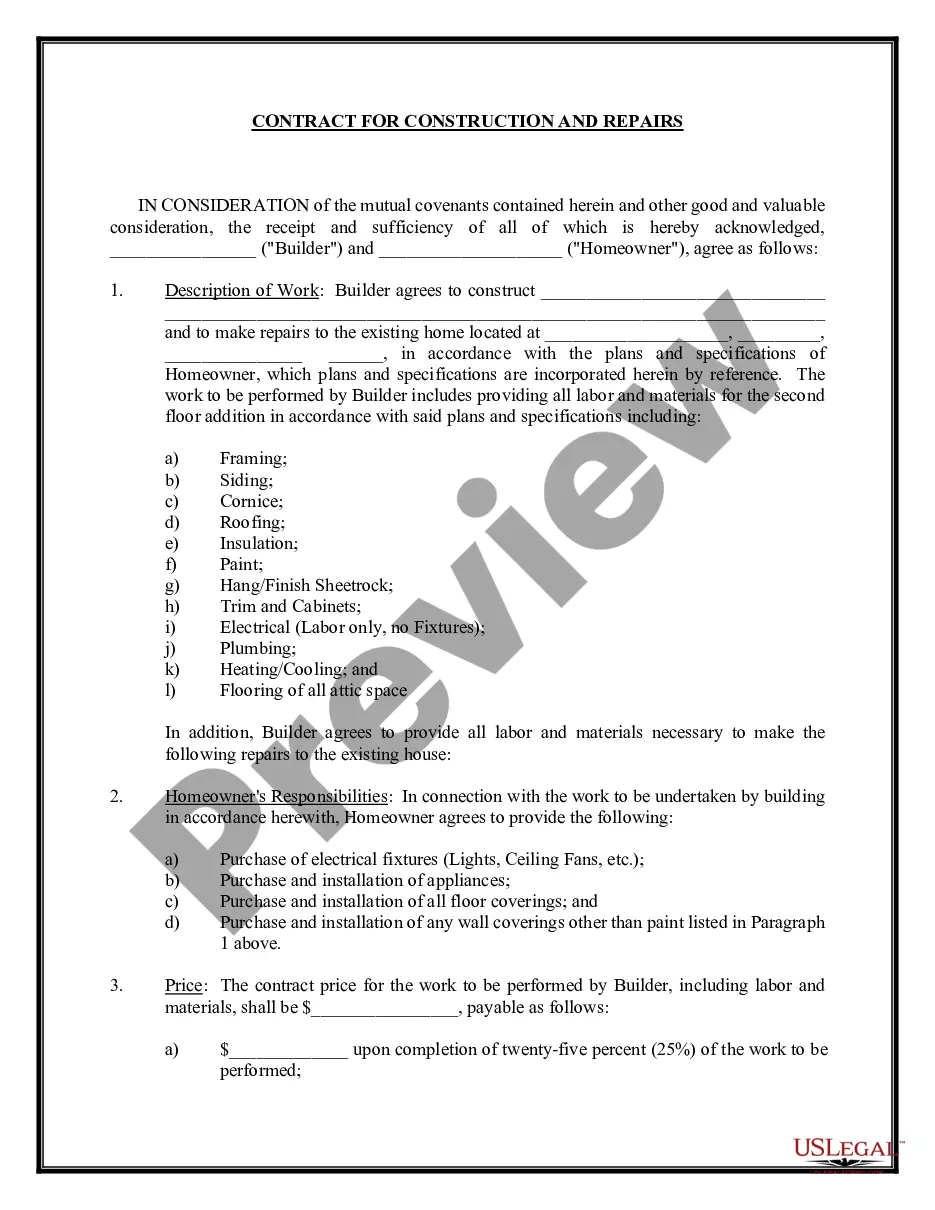
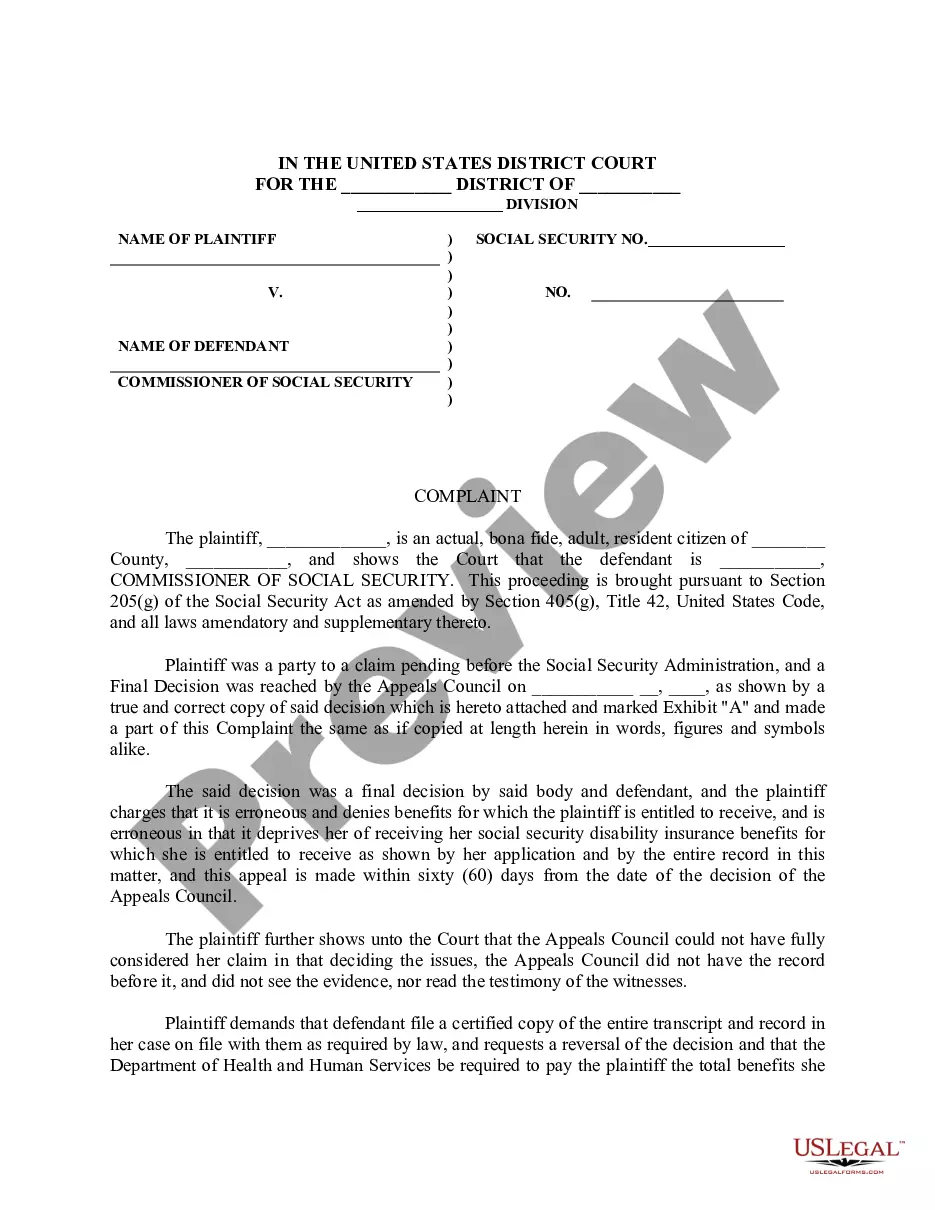
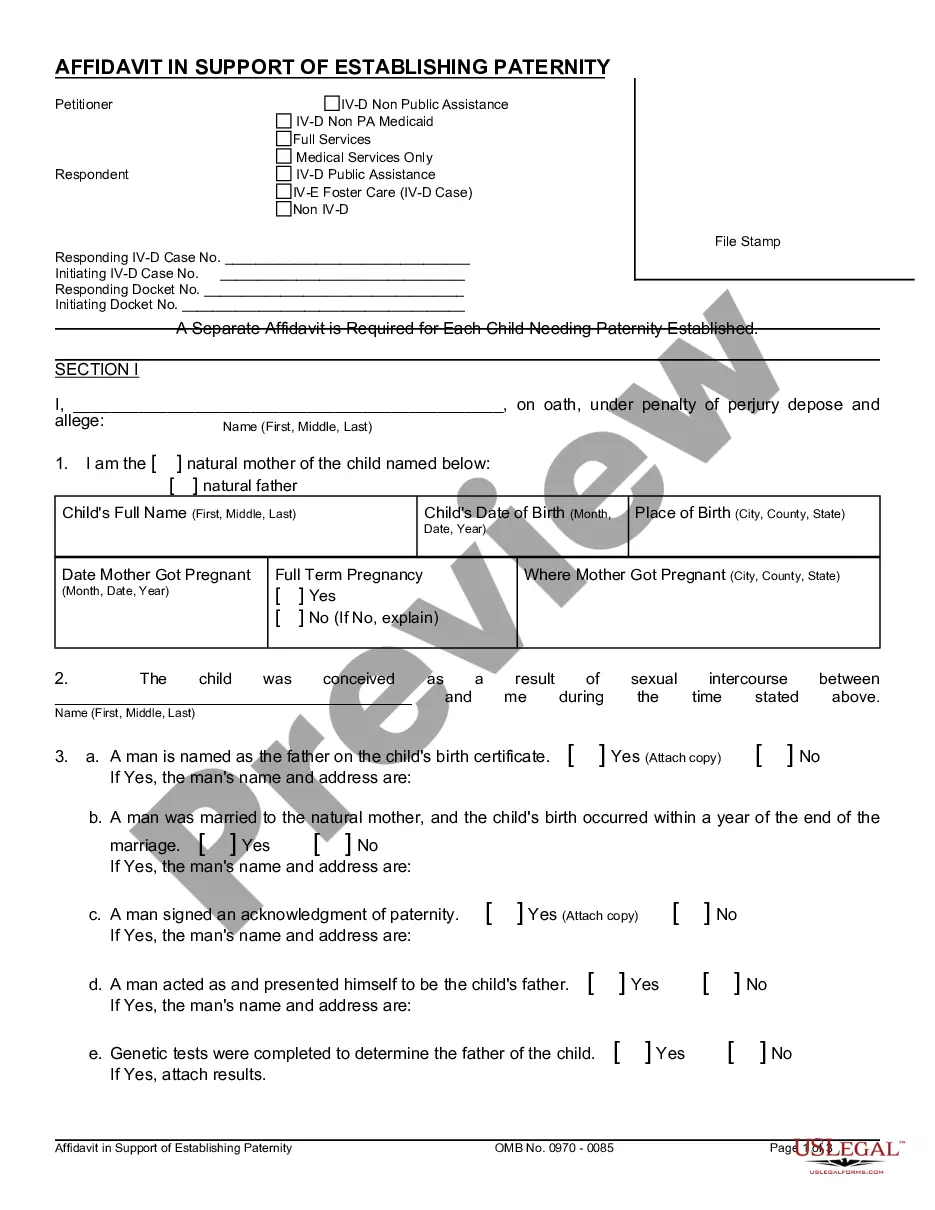
Looking for another form?




Form popularity
FAQ
Terms. This is the first section of any agreement or contract and states the names and locations of the parties involved. Responsibilities & Deliverables. Payment-Related Details. Confidentiality Clause. Contract Termination. Choice of Law.
A contractor or subcontractor can abandon a contract upon breach by the owner or general contractor, but cannot terminate the contract.Termination for convenience allows the owner/general contractor to stop the work for just about any reason without having to pay for anticipated profit or unperformed work.
If your independent contractor agreement contains a provision that allows the parties to terminate the relationship at any time, revise the agreement to include a notice provision with at least some kind of a notice period required for termination of the contract.
Terms. This is the first section of any agreement or contract and states the names and locations of the parties involved. Responsibilities & Deliverables. Payment-Related Details. Confidentiality Clause. Contract Termination. Choice of Law.
In order to cancel the transaction, the consumer must send the notice of cancellation form, or some other written statement indicating the intent to cancel the contract, to the creditor at the address stated on the notice. This notice need only state the consumer's intention to cancel the transaction.
Always terminate the contractor in writing, rather than orally. Even if the contractor doesn't show up for work, you have to document the termination by sending a written notice specifying the reason for termination without defaming the contractor.
The IRS requires contractors to fill out a Form W-9, request for Taxpayer Identification Number and Certification, which you should keep on file for at least four years after the hiring. This form is used to request the correct name and Taxpayer Identification Number, or TIN, of the worker or their entity.
For most types of projects you hire an independent contractor (IC) to do, the law does not require you to put anything in writing. You can meet with the IC, agree on the terms of your arrangement, and have an oral contract or agreement that is legally binding. Just because you can doesn't mean you should, however.