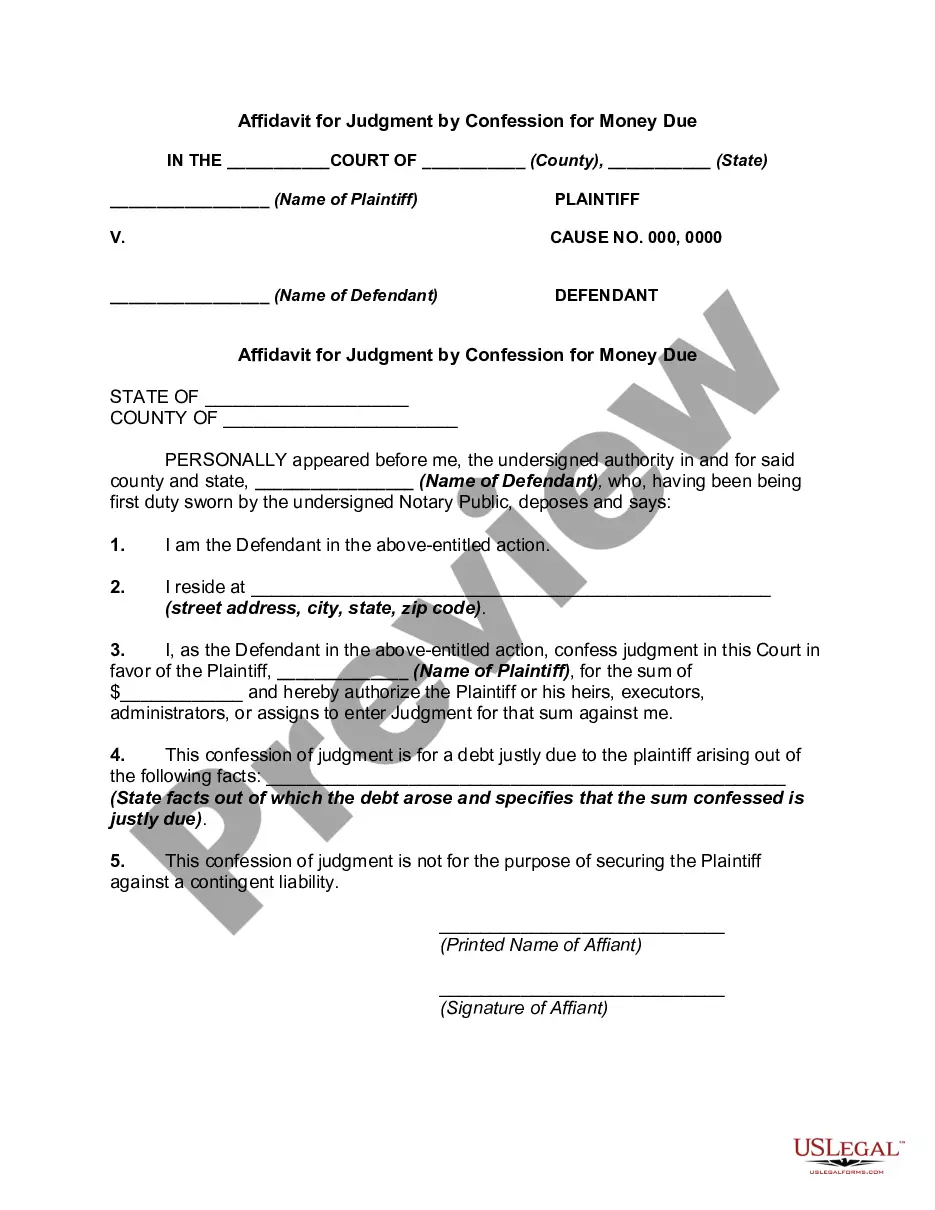
Affidavit for Judgment by Confession for Money Due
What this document covers
The Affidavit for Judgment by Confession for Money Due is a legal document used when a defendant admits liability in a lawsuit and agrees to pay a specified sum to the plaintiff. This form allows the plaintiff to secure a judgment against the defendant, minimizing the need for extensive legal proceedings. Unlike other legal forms, a confession of judgment waives the defendant's right to contest the claim in future disputes, so it is vital to understand the implications before signing.
What’s included in this form
- Title and court information: Includes the names of the plaintiff and defendant, court details, and cause number.
- Defendant's personal information: Requires the defendant's name and residence address.
- Statements of confession: The section where the defendant admits to the debt and specifies the amount owed.
- Details of the debt: Explanation of the circumstances that led to the debt being owed to the plaintiff.
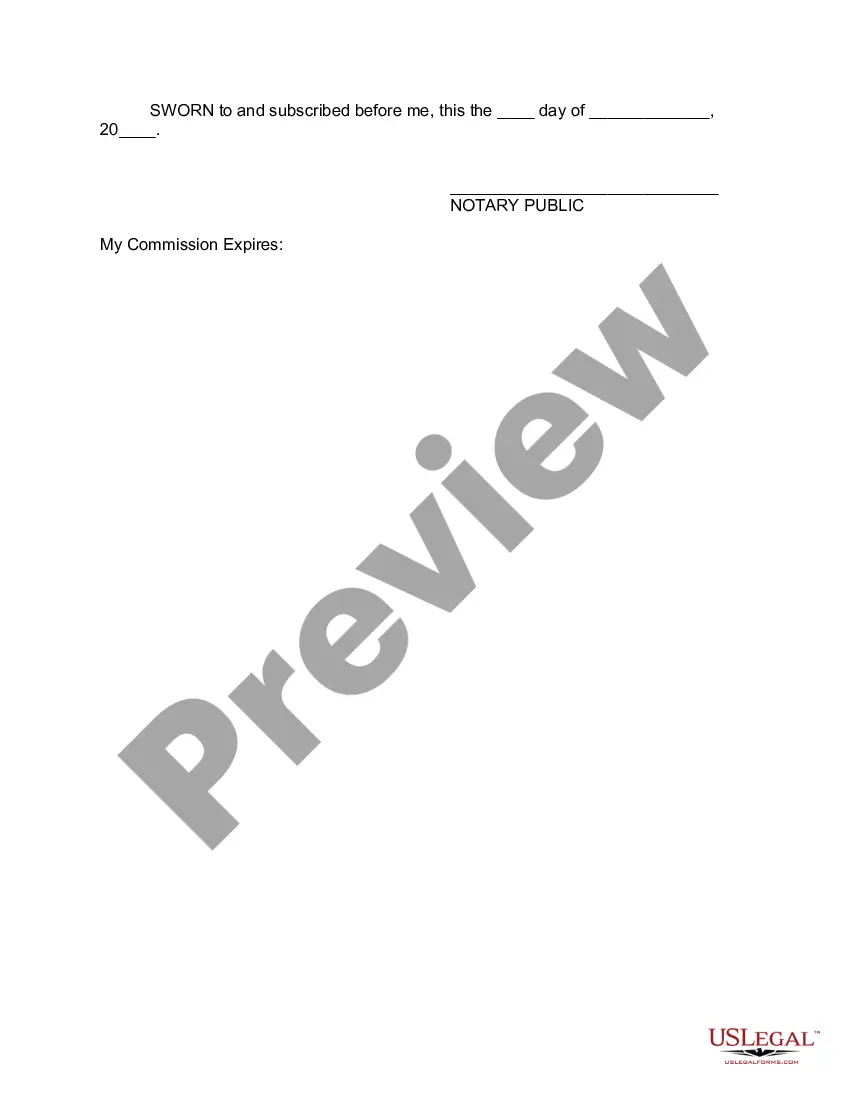
- Signature block: Area for the defendant's signature and the notary public's verification.
When this form is needed
This form is necessary when a defendant acknowledges their liability for a debt in a legal dispute and wishes to formalize this acknowledgment in court. It is commonly used in cases where parties prefer to settle outstanding debts without lengthy litigation. If you are in a situation where you owe money and have reached an agreement with the creditor, this form allows you to document that agreement legally.
Who should use this form
- Defendants in a legal dispute who admit to owing an amount to a plaintiff.
- Creditors who seek to formalize an agreement with a debtor regarding unpaid debts.
- Individuals who want to avoid drawn-out court proceedings and create a clear record of payment obligations.
How to complete this form
- Identify the court and fill in the title with the names of the plaintiff and defendant.
- Enter the defendant's personal details, including their residence address.
- Clearly state the sum of money owed and confirm the admission of liability.
- Provide specific details on the circumstances that led to this debt.
- Sign the affidavit in the presence of a notary public, ensuring to date the document.
Is notarization required?
To make this form legally binding, it must be notarized. Our online notarization service, powered by Notarize, lets you verify and sign documents remotely through an encrypted video session.
Get your form ready online
Our built-in tools help you complete, sign, share, and store your documents in one place.
Make edits, fill in missing information, and update formatting in US Legal Forms—just like you would in MS Word.
Download a copy, print it, send it by email, or mail it via USPS—whatever works best for your next step.
Sign and collect signatures with our SignNow integration. Send to multiple recipients, set reminders, and more. Go Premium to unlock E-Sign.
If this form requires notarization, complete it online through a secure video call—no need to meet a notary in person or wait for an appointment.
We protect your documents and personal data by following strict security and privacy standards.

Make edits, fill in missing information, and update formatting in US Legal Forms—just like you would in MS Word.

Download a copy, print it, send it by email, or mail it via USPS—whatever works best for your next step.

Sign and collect signatures with our SignNow integration. Send to multiple recipients, set reminders, and more. Go Premium to unlock E-Sign.

If this form requires notarization, complete it online through a secure video call—no need to meet a notary in person or wait for an appointment.

We protect your documents and personal data by following strict security and privacy standards.
Typical mistakes to avoid
- Failing to include complete and accurate personal information of all parties.
- Not specifying the reason for the debt clearly, which can lead to future disputes.
- Neglecting to sign the affidavit in front of a notary public.
- Omitting important details that validate the confession of judgment.
Advantages of online completion
- Convenient access: Download the form at any time from anywhere.
- Easily editable: Fill out the form digitally, reducing errors and saving time.
- Reliable: The templates are drafted by licensed attorneys, ensuring they meet legal standards.
Looking for another form?


Form popularity
FAQ
Notarized Affidavit of Defendant. Stating Sum for Which Judgment May be Entered. State County of Residence or Where Entry Authorized. State Facts Out of Which Debt Arose. Contingent liability. Entry of judgment.
United StatesConfessions of judgment are permitted in many states. New Jersey and Pennsylvania permit them, among others. Some states, including Michigan, require they be specially labelled or have other procedural requirements.
In particular, confessions of judgment are only valid for three years after they are signed. Given how quickly a confession of judgment can be turned into an actual judgment, and the potential for abuse, the New York legislature has recently amended CPLR § 3218 further to restrict the use of confessions of judgment.
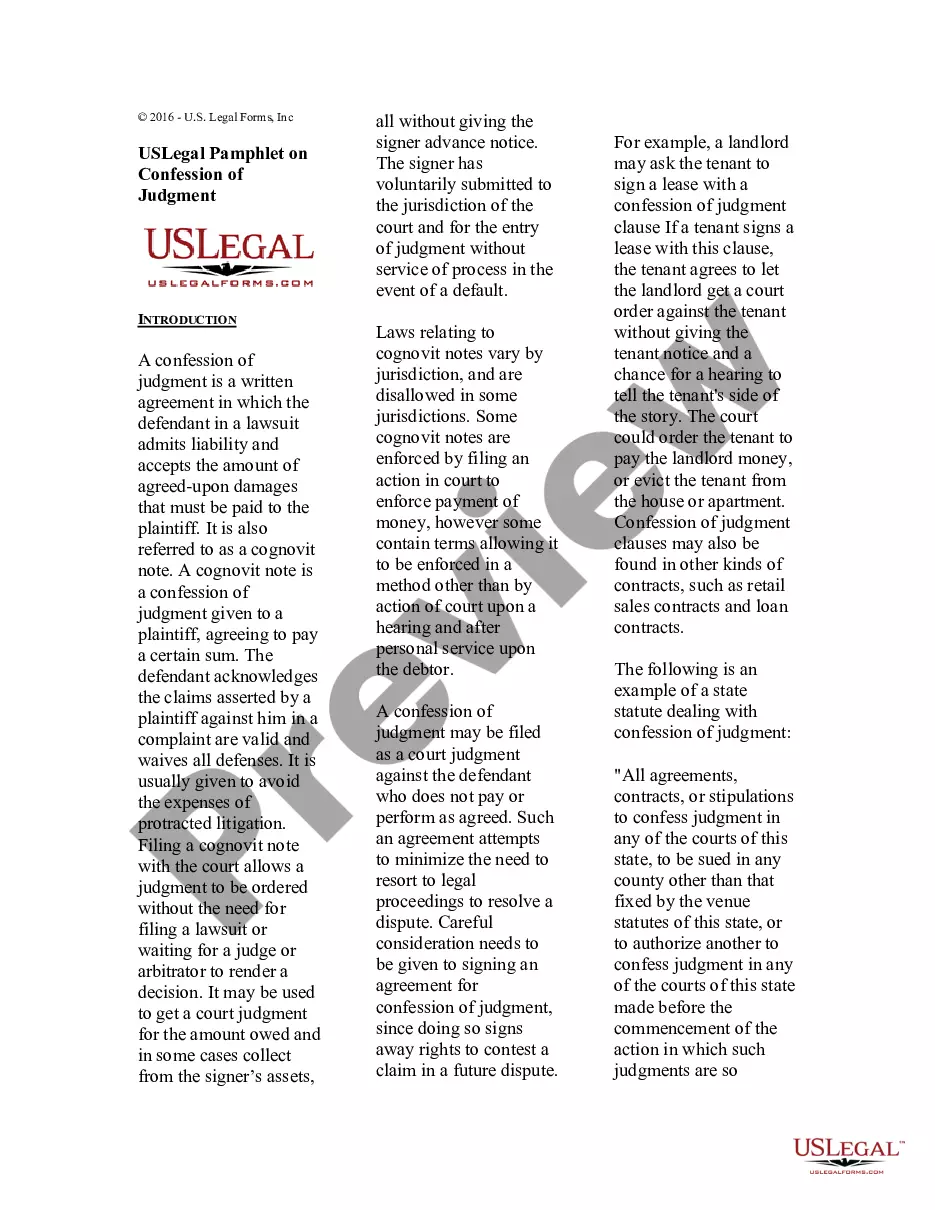
A confession of judgment (COJ) in New York is a way for a party to obtain a judgment without the need to bring a lawsuit. It is a document in the form of an affidavit by the party confessing judgment. Both individuals and entities (i.e., such as corporations and LLCs) can confess judgment.
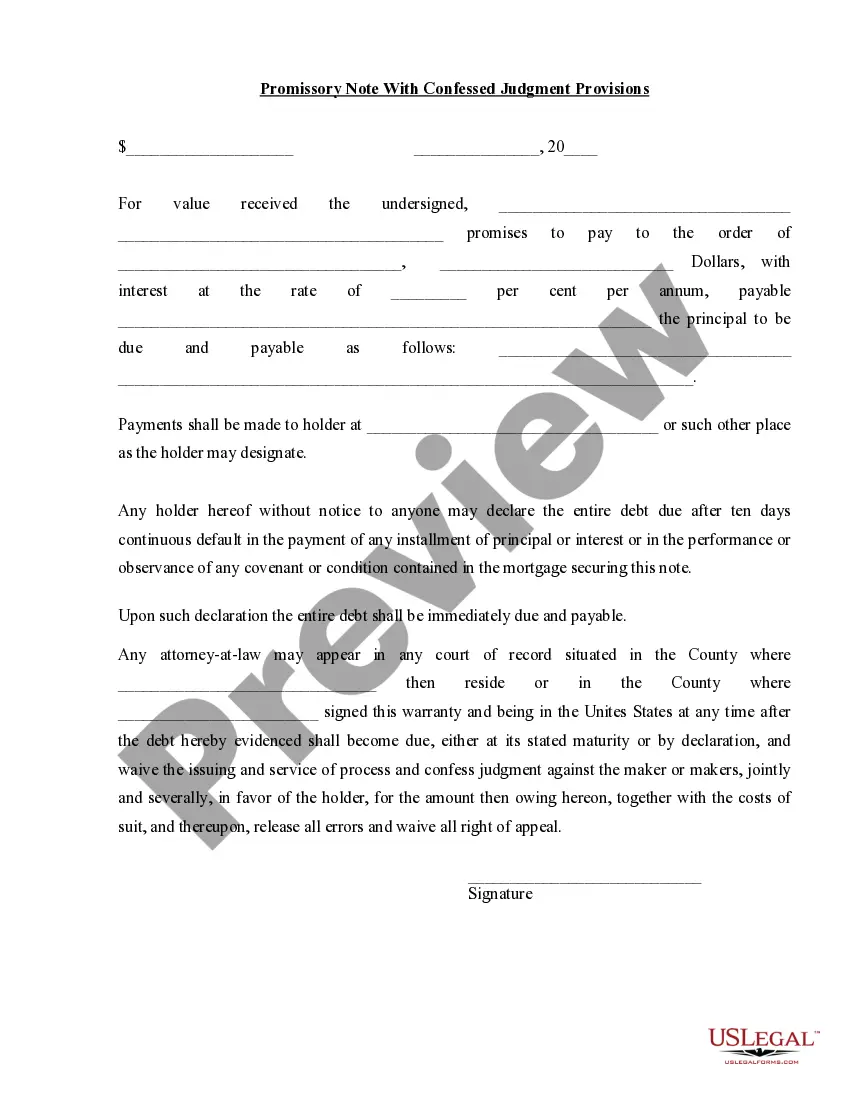
A confession of judgment is a written agreement, signed by the defendant, that accepts the liability and amount of damages that was agreed on.Signing such a confession of forfeits any of the rights the defendant has to dispute the claim in the future.