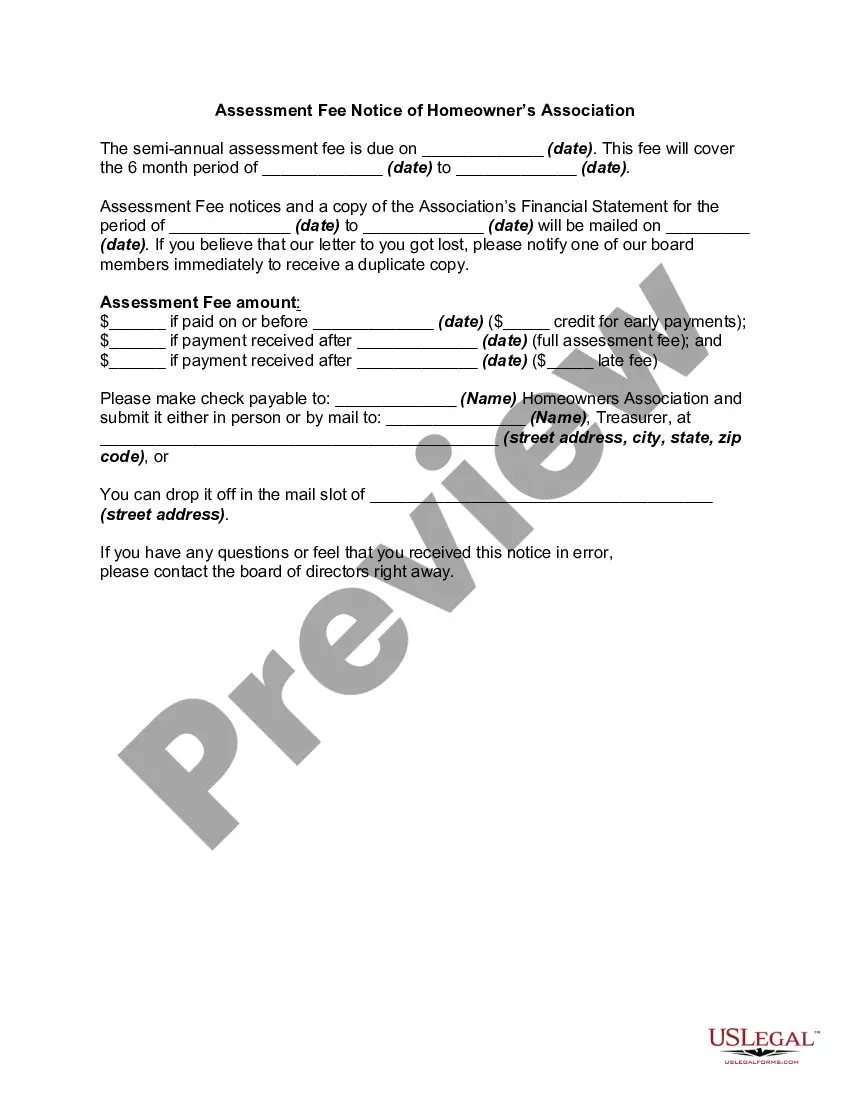
Assessment Fee Notice of Homeowner's Association
Understanding this form
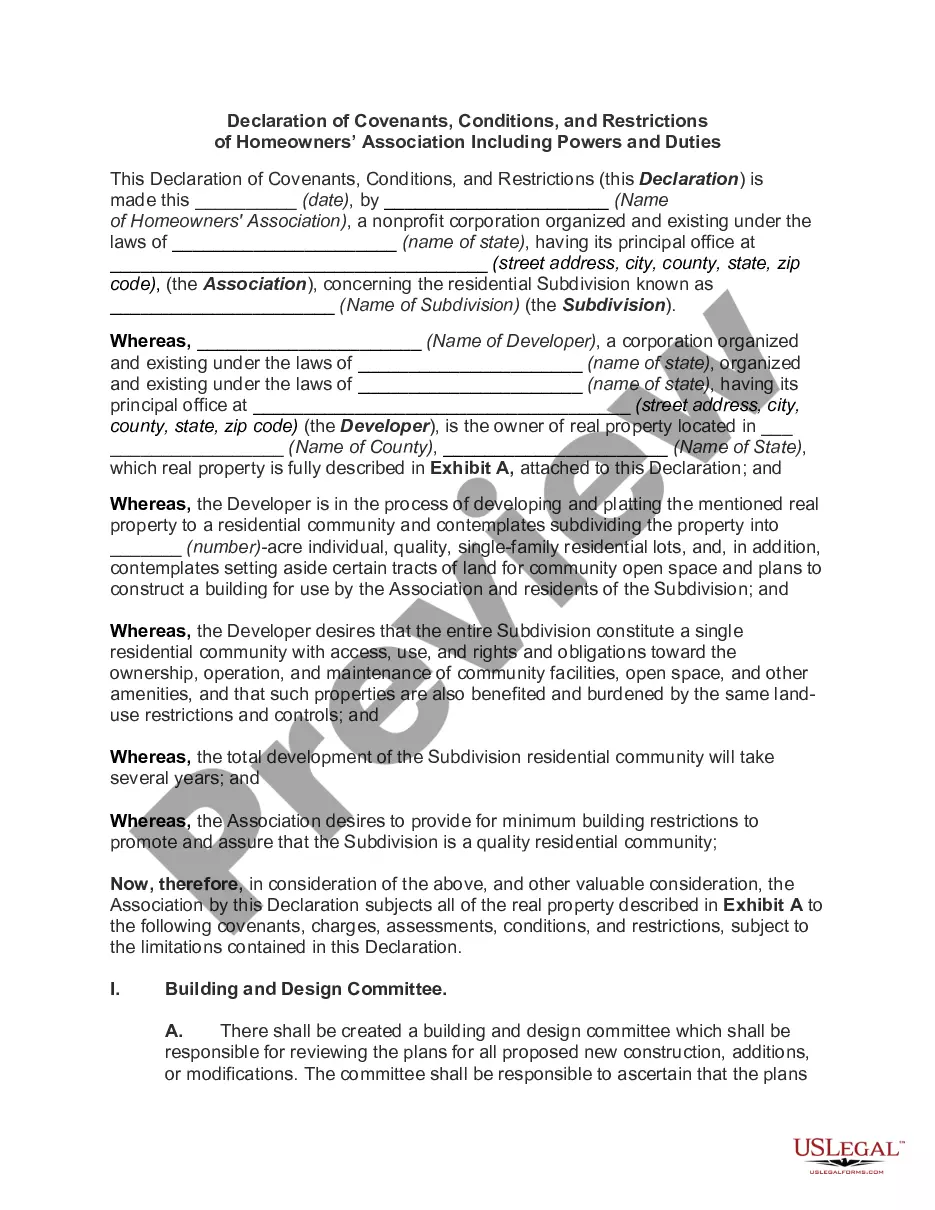
The Assessment Fee Notice of Homeowner's Association is a document used by homeowner associations (HOAs) to inform members about upcoming assessment fees. These fees are collected to cover expenses related to the maintenance and management of common properties shared within the community. This notice is distinct from other notifications because it specifies the exact amounts due, payment deadlines, and any potential penalties for late payments.
Form components explained
- Due date for the semi-annual assessment fee
- Coverage period for the assessment fees
- Mailing date for notices and financial statements
- Amount of the assessment fee with early payment incentives
- Instructions for payment submission
- Contact information for inquiries and concerns
When to use this document
This form should be used when a homeowner's association is notifying its members about their assessment fees. It is typically issued twice a year and is important for members to receive so they can plan for payments, avoid penalties, and ensure the association has sufficient funds for shared community expenses.
Who should use this form
This form is intended for:
- Homeowner associations needing to communicate financial obligations to members
- Board members or treasurers responsible for managing community finances
- Homeowners who are members of an HOA and require clarity about their assessment fees
How to prepare this document
- Indicate the due date for the semi-annual assessment fee.
- Specify the coverage period for the assessment fees.
- Enter the mailing date for notices and the financial statement.
- Fill in the assessment fee amounts based on payment deadlines.
- Provide payment submission details, including the name and address of the association's treasurer.
- Include contact information for questions or concerns regarding the notice.
Is notarization required?
This form usually doesn’t need to be notarized. However, local laws or specific transactions may require it. Our online notarization service, powered by Notarize, lets you complete it remotely through a secure video session, available 24/7.
Get your form ready online
Our built-in tools help you complete, sign, share, and store your documents in one place.
Make edits, fill in missing information, and update formatting in US Legal Forms—just like you would in MS Word.
Download a copy, print it, send it by email, or mail it via USPS—whatever works best for your next step.
Sign and collect signatures with our SignNow integration. Send to multiple recipients, set reminders, and more. Go Premium to unlock E-Sign.
If this form requires notarization, complete it online through a secure video call—no need to meet a notary in person or wait for an appointment.
We protect your documents and personal data by following strict security and privacy standards.

Make edits, fill in missing information, and update formatting in US Legal Forms—just like you would in MS Word.

Download a copy, print it, send it by email, or mail it via USPS—whatever works best for your next step.

Sign and collect signatures with our SignNow integration. Send to multiple recipients, set reminders, and more. Go Premium to unlock E-Sign.

If this form requires notarization, complete it online through a secure video call—no need to meet a notary in person or wait for an appointment.

We protect your documents and personal data by following strict security and privacy standards.
Avoid these common issues
- Failing to specify the correct due date, leading to confusion among homeowners.
- Omitting the late fee or payment incentives, which may discourage timely payments.
- Incorrectly stating the coverage period for the assessments.
Why use this form online
- Convenience of downloading and customizing the form from any location.
- Editability allows associations to update details as necessary.
- Reliability of having a standardized format reviewed by licensed attorneys.
Quick recap
- The Assessment Fee Notice is crucial for keeping homeowners informed about their financial obligations.
- Completing this form accurately helps avoid payment issues and community management problems.
- Utilizing this form online enhances efficiency and effectiveness for homeowner associations.
Looking for another form?








Form popularity
FAQ
Examine the landscaping and outdoor maintenance. Check out the condition of amenities and common indoor space. Ask to see the association's budget and reserve study. Contact the community's property management company.
It is a letter stating the amount of the monthly assessment for your unit or home, that this assessment is paid and up to date, when the last payment was made, and any amounts due at closing.
A special assessment tax is a surtax levied on property owners to pay for specific local infrastructure projects such as the construction or maintenance of roads or sewer lines.Special assessments may be levied for a pre-set number of years, and they are often not tax-deductible.
It is up to the board of directors to set annual HOA fees. They look at the overall operating expenses of the community things like utilities, vendor services, overhead costs, maintenance, insurance, etc. as well as contributions to the reserve fund.
Set Dues Based on Unit Value HOA dues are usually charged one of three ways: Equal share If there are 100 units, the total budget is divided by 100. Square footage Units pay a pro rata share based on their size.Note: Some states specifically prevent HOA dues from being divided this way.
Open the Lines of Communication. Negotiations can't take place if the HOA board and the management company are unable to communicate with delinquent homeowners. Work on a Payment Plan. Offer to Eliminate Fines. Terminate Privileges. Bring in Your Legal Team.
Condominium developers are required to assign each unit a percentage of ownership, and the total of the percentages must equal 100. Common expenses are divided among the owners according to their percentages. Those with higher percentages pay more, and those with lower percentages pay less.