Federal Court Summons or Service of Process
What this document covers
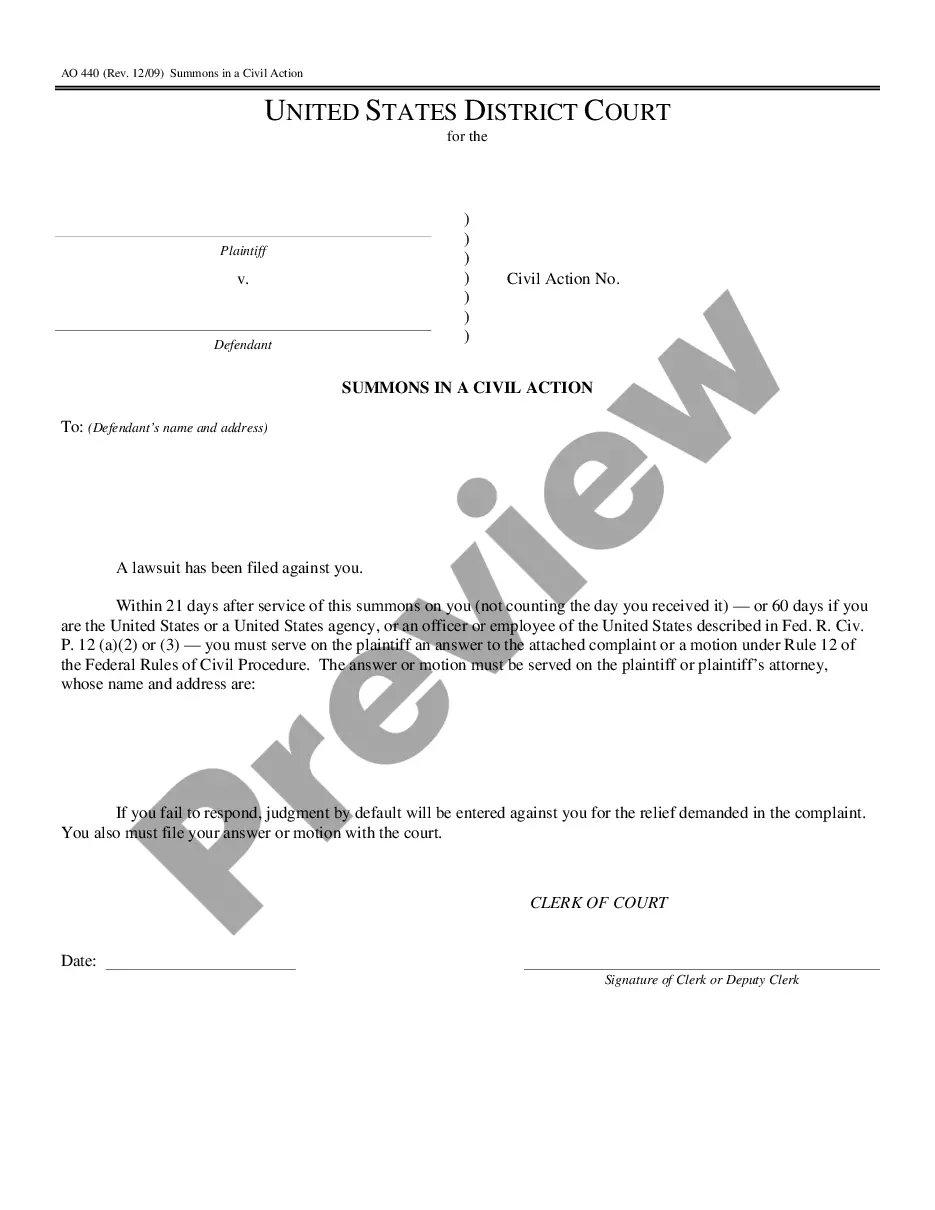
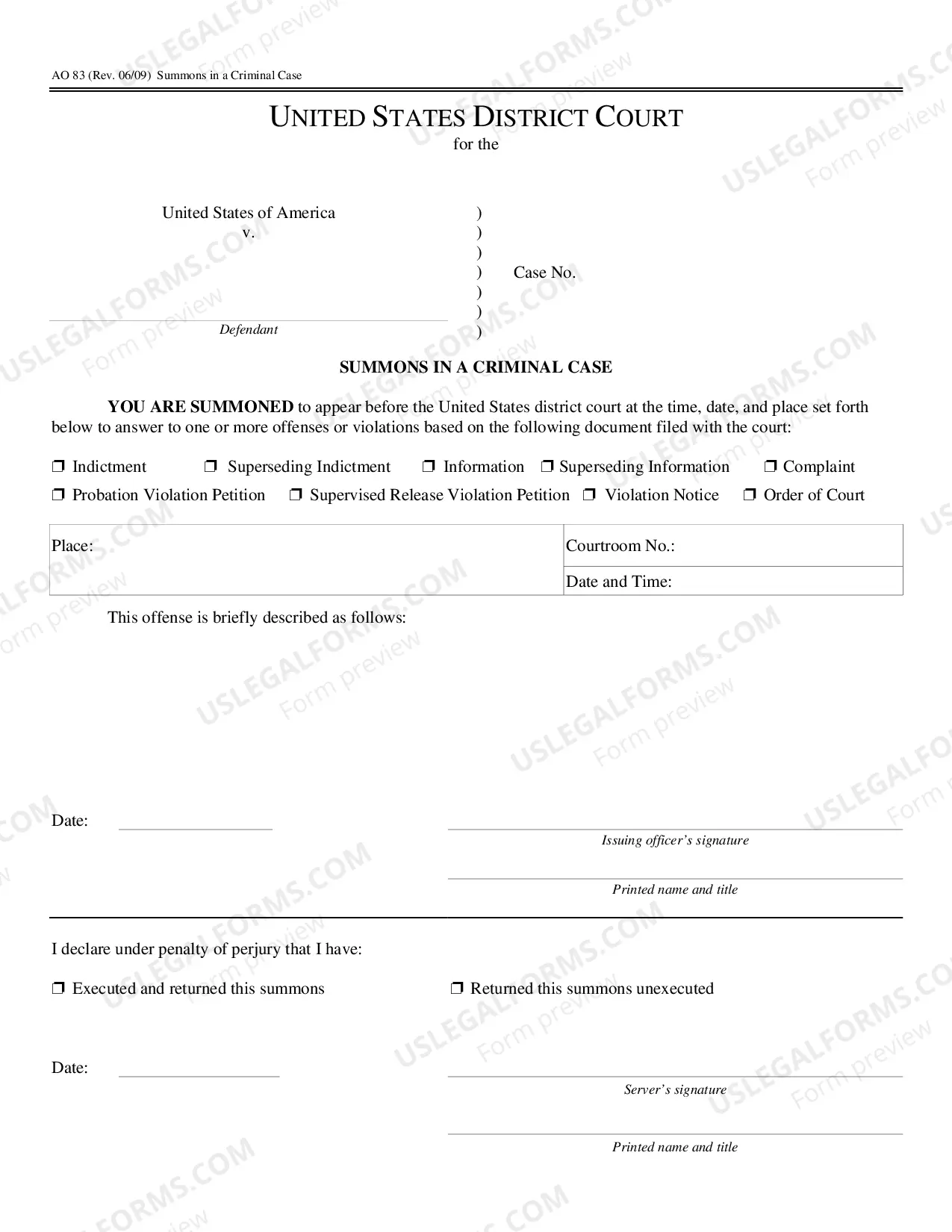
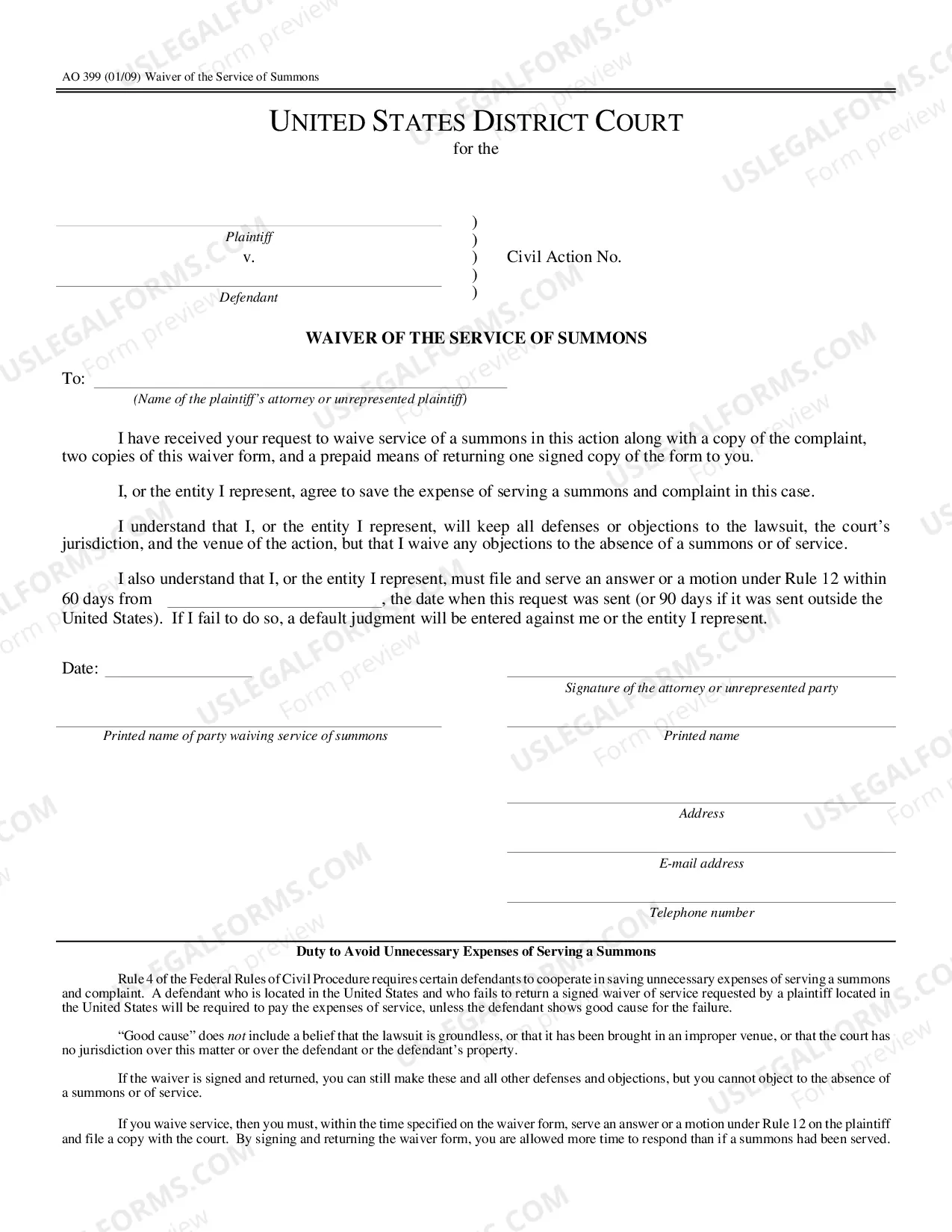
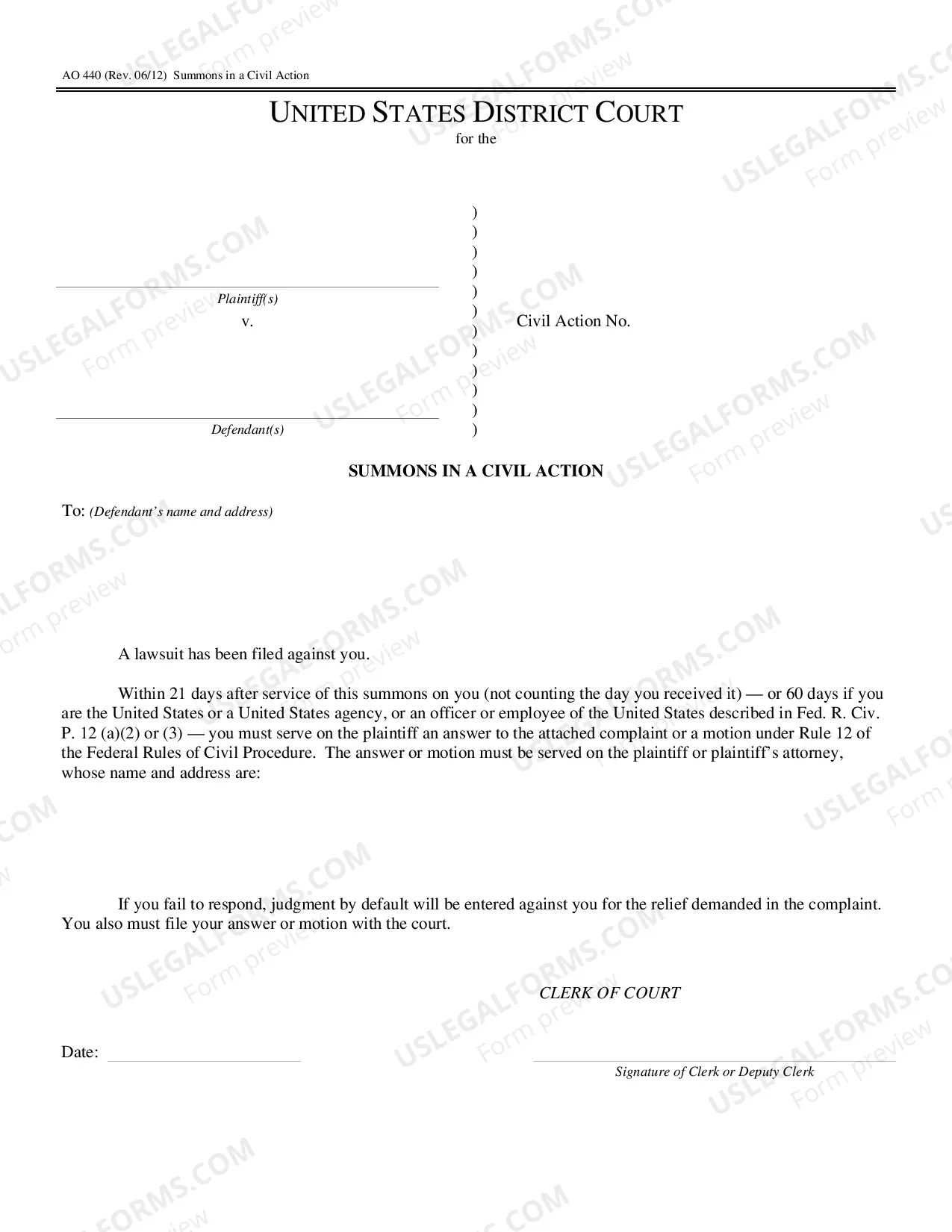
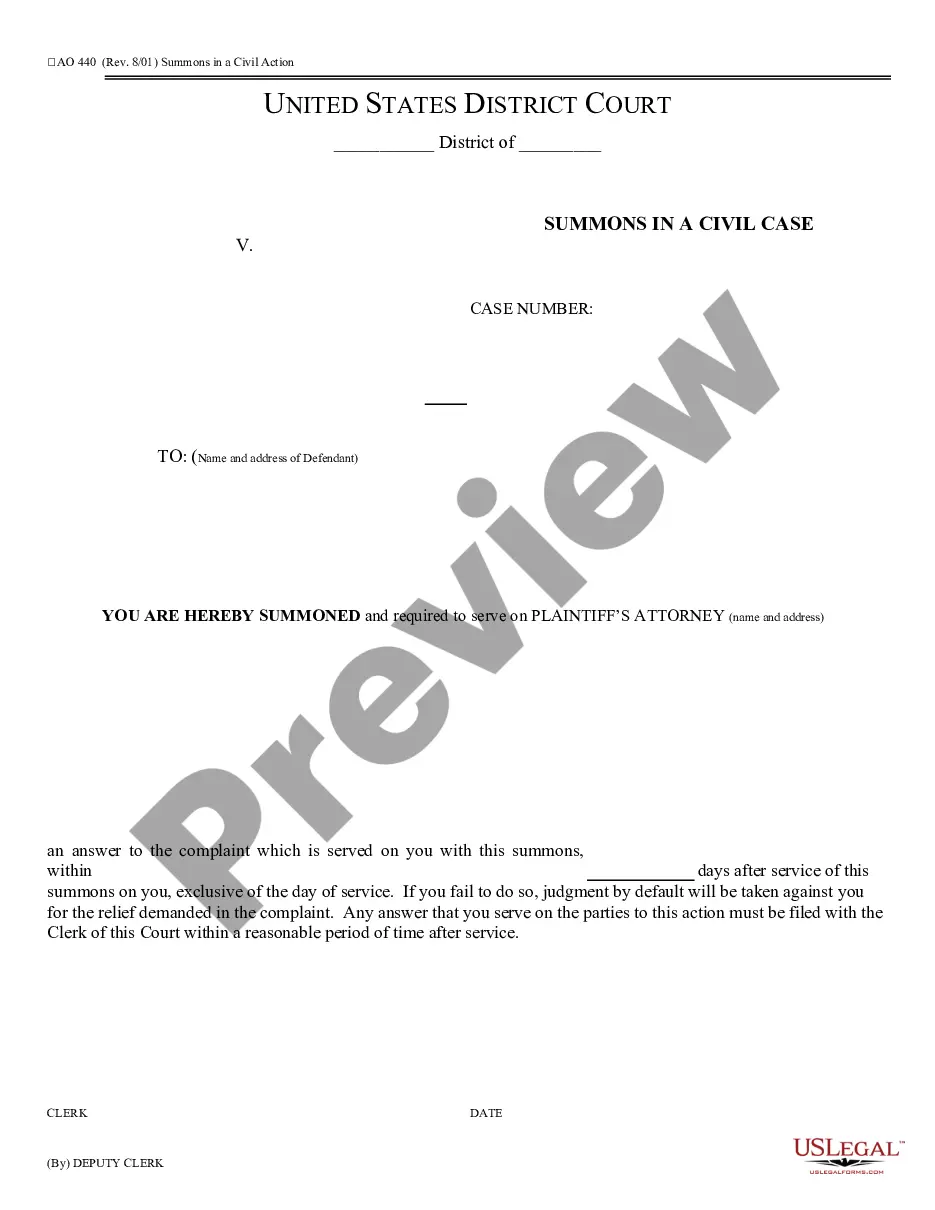
The Federal Court Summons is a crucial legal document that notifies a defendant of a lawsuit filed against them. It differs from other legal forms by providing essential information about the case, including the court where it is filed and the deadline for responding. The summons ensures that defendants understand their rights and the consequences of failing to respond, such as the possibility of a default judgment. This form is necessary for initiating an action in federal court and is typically served alongside a complaint to the defendant.
Main sections of this form
- A notice that a lawsuit has been initiated against the defendant.
- The name and address of the court where the case is filed.
- The deadline for the defendant to file an answer or motion, usually 21 or 60 days depending on the situation.
- Consequences of failing to respond, including the possibility of a default judgment.
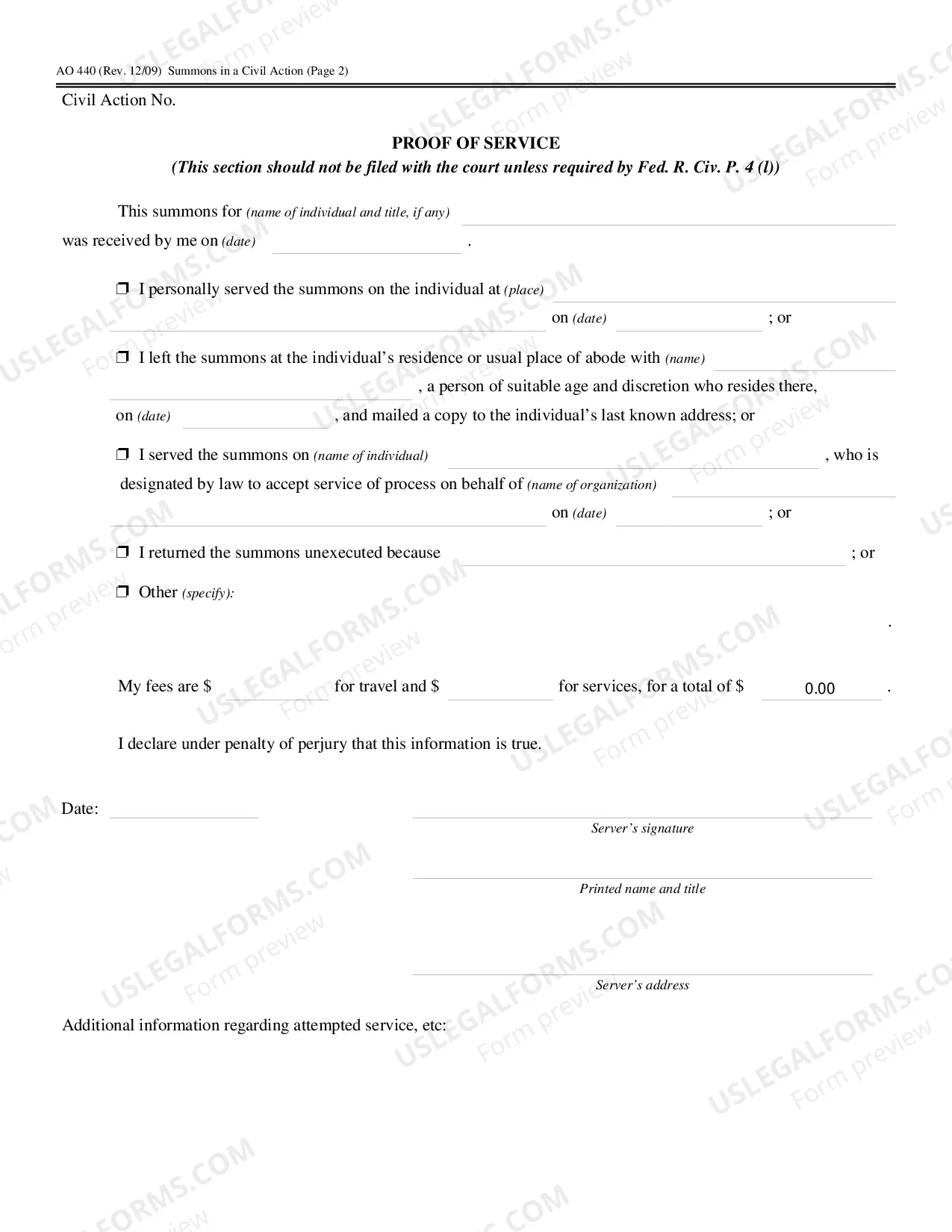
- A proof of service section to confirm how the summons was delivered.
When this form is needed
You need to use the Federal Court Summons when you are initiating a civil lawsuit in federal court. This form is essential for formally notifying the defendant of the legal action and their obligation to respond. Use it when all procedural requirements are met, including the preparation of a relevant complaint that accompanies the summons. It is particularly important in situations where a ruling may be affecting the rights or obligations of parties involved in the case.
Who needs this form
- Individuals or businesses filing a lawsuit in federal court.
- Attorneys acting on behalf of plaintiffs in civil actions.
- Anyone needing to ensure that defendants are formally notified of legal proceedings against them.
Instructions for completing this form
- Identify the parties involved, including the plaintiff and defendant's names and addresses.
- Enter the civil action number assigned by the court.
- Specify the district in which the court is located.
- Determine and insert the date by which the defendant must respond.
- Complete the proof of service section based on how the summons was delivered to the defendant.
Does this document require notarization?
This form does not typically require notarization unless specified by local law. It is important to check local courthouse requirements to confirm specific legal procedures.
Get your form ready online
Our built-in tools help you complete, sign, share, and store your documents in one place.
Make edits, fill in missing information, and update formatting in US Legal Forms—just like you would in MS Word.
Download a copy, print it, send it by email, or mail it via USPS—whatever works best for your next step.
Sign and collect signatures with our SignNow integration. Send to multiple recipients, set reminders, and more. Go Premium to unlock E-Sign.
If this form requires notarization, complete it online through a secure video call—no need to meet a notary in person or wait for an appointment.
We protect your documents and personal data by following strict security and privacy standards.
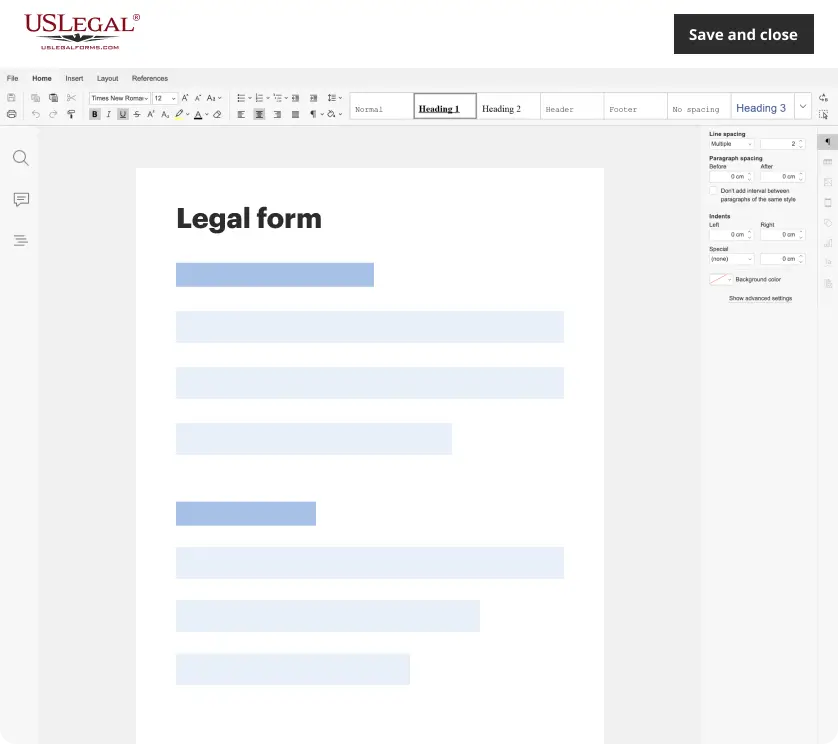
Make edits, fill in missing information, and update formatting in US Legal Forms—just like you would in MS Word.
Download a copy, print it, send it by email, or mail it via USPS—whatever works best for your next step.
Sign and collect signatures with our SignNow integration. Send to multiple recipients, set reminders, and more. Go Premium to unlock E-Sign.
If this form requires notarization, complete it online through a secure video call—no need to meet a notary in person or wait for an appointment.
We protect your documents and personal data by following strict security and privacy standards.
Typical mistakes to avoid
- Failing to include the correct court district or civil action number.
- Not providing clear information on the deadline for the defendant's response.
- Neglecting to complete the proof of service section properly.
- Using the summons without accompanying it with a filed complaint.
Why use this form online
- Immediate access to the latest legal templates drafted by licensed attorneys.
- Convenience of downloading the form in a format that is easy to fill in and file.
- Editability allows for customization to suit your specific case requirements.
- Reliability and assurance that the form meets legal standards for federal court filings.
Quick recap
- The Federal Court Summons is crucial for informing a defendant about a lawsuit.
- Timely completion and service of the summons are essential to avoid delays in court proceedings.
- Each district may have specific rules, so it's important to consult local regulations when using this form.
Looking for another form?
Form popularity
FAQ
Content of summons Every summons should provide its purpose i.e. either it issued for settlement of issue or for final decision of the suit. The summons must stating intended date fixed by the court for appearance and such date should not be unreasonable to the defendant for appearance and answer to the suit.
A summons may contain additional information in itself or with accompanying documents. For example, it may contain information about the subject matter of the lawsuit. It may include a complaint that sets out certain factual allegations against the defendant that support the plaintiff's case.
A summons is a written notice, which usually is accompanied by the complaint, notifying the defendant and the court that the complaint has been served on all relevant parties and listing the date of the first court appearance for the lawsuit.
A summons is a writ, a formal command from the court, that accompanies the complaint and notifies the defendant(s) that a civil proceeding has been filed and that a response is required within a certain time limit. The clerk's office issues summons to a plaintiff or plaintiff's attorney when a paid complaint is filed.
Summons: Civil summons is a written notification to a party named in a lawsuit directing the party to appear and defend or answer before the issuing court prior to a specified time.Issued By: Upon presentation by the plaintiff, the summons is signed by the clerk of the court and issued to the plaintiff.
Under FRCP 4, an individual within the U.S. may be served by delivering a copy of the summons and complaint to the individual personally; leaving a copy at the individual's dwelling or usual place of abode with someone of suitable age and discretion who resides there; or delivering a copy to an agent authorized or
Service of process is the formal name for giving a defendant a Summons to come to court. Each defendant must get individual service. You cannot serve the defendant yourself. You must serve a Summons in one of three ways: Service by the Sheriff.
Any person who is at least 18 years old and not a party may serve a summons and complaint. (3) By a Marshal or Someone Specially Appointed. At the plaintiff's request, the court may order that service be made by a United States marshal or deputy marshal or by a person specially appointed by the court.