Sample Letter for Introduction of Teacher to Parents - Pre-K or Kindergarten
About this form
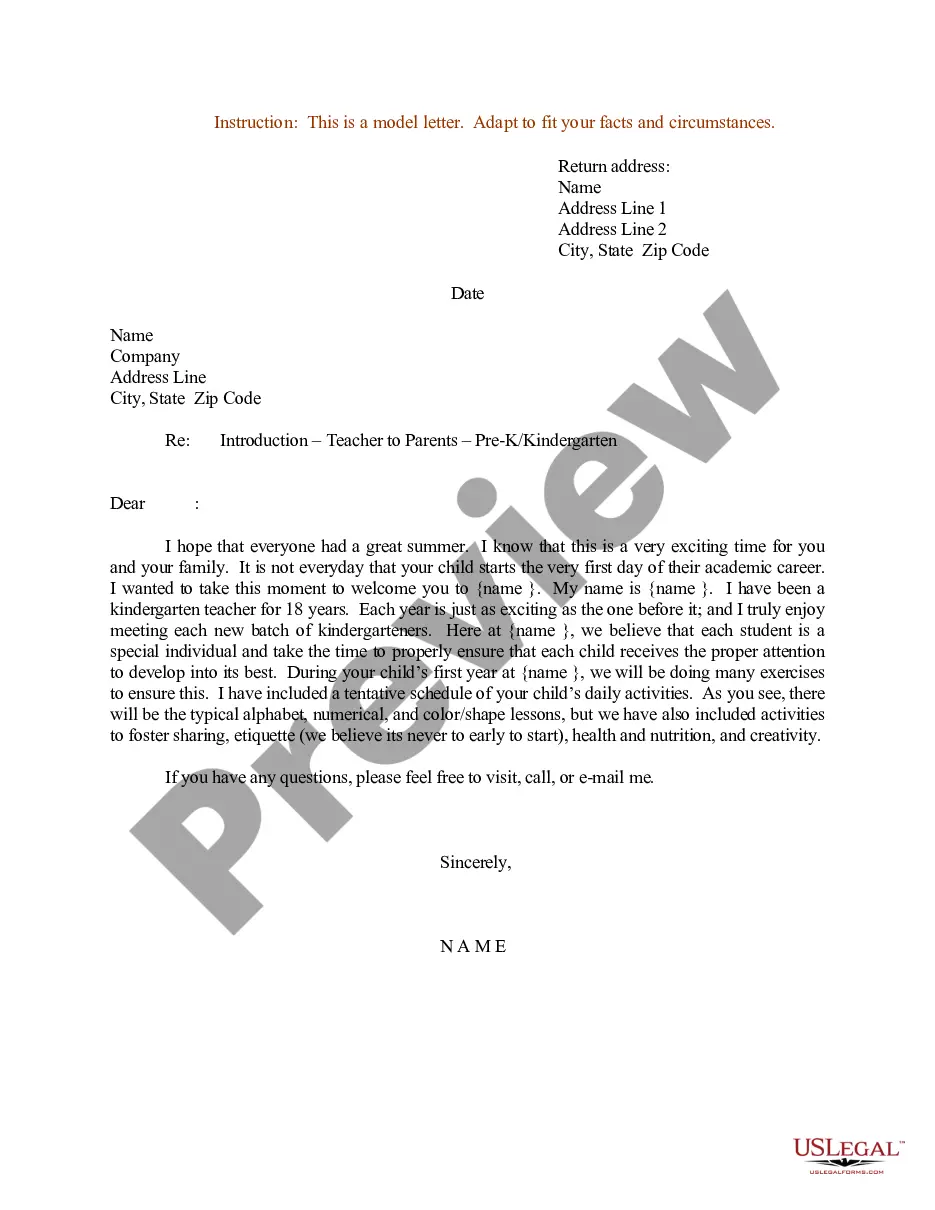
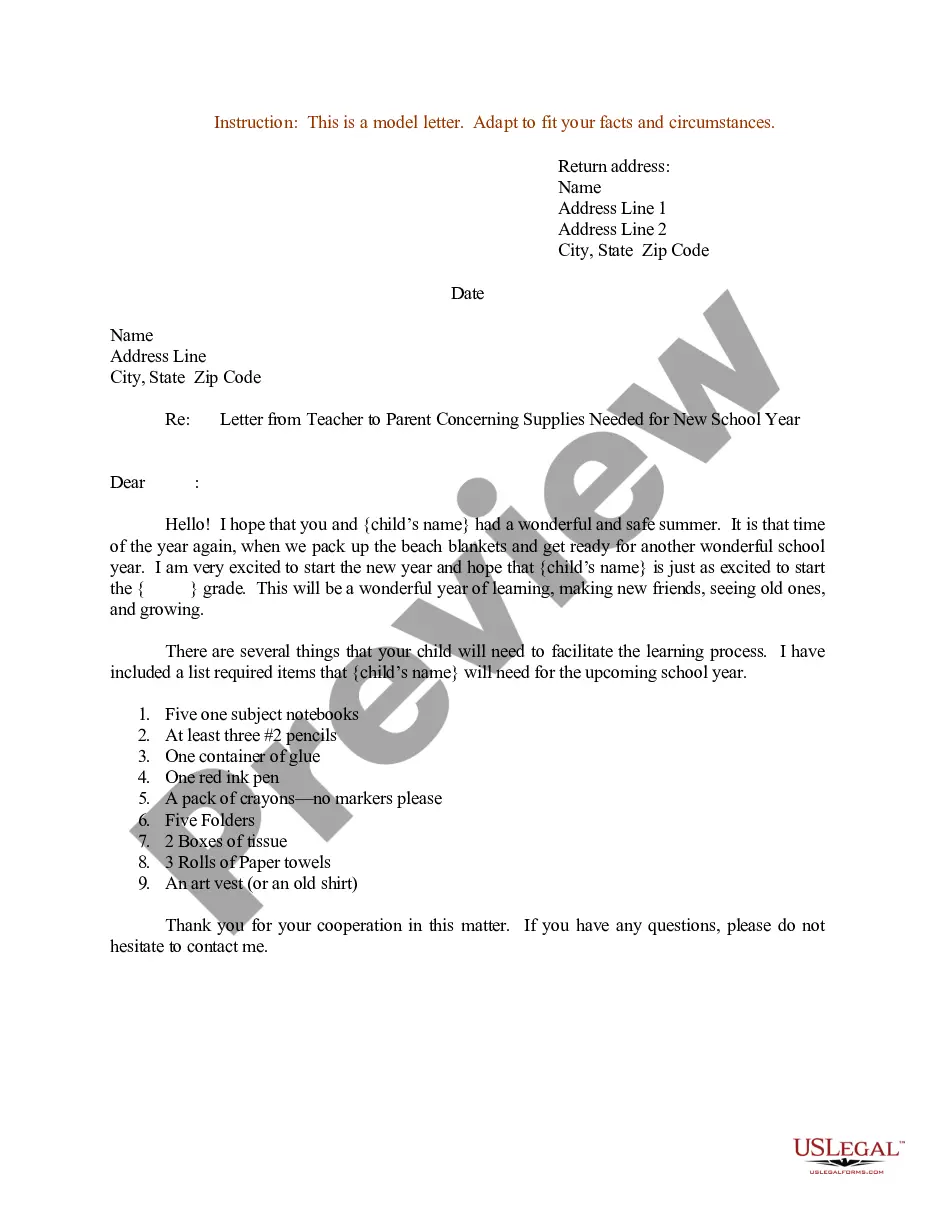
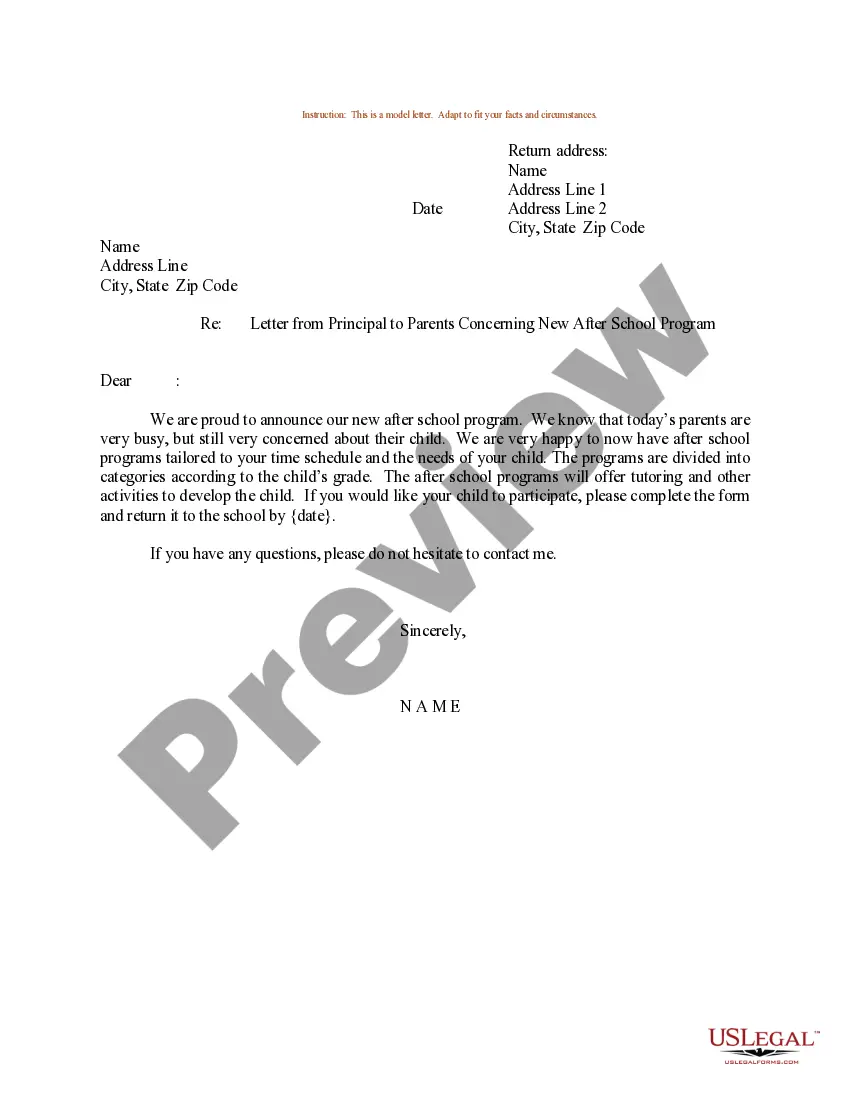
This form is a Sample Letter for the Introduction of Teacher to Parents for Pre-K or Kindergarten. It serves as a template for educators to communicate important information to parents about their childâs teacher. This letter helps establish a connection between the school and home, ensuring parents feel informed and engaged. Unlike generic communication templates, this specific letter addresses the unique aspects of early childhood education and sets a professional tone for teacher-parent communication.
What’s included in this form
- Return address of the sender (teacher).
- Date of the letter.
- Recipient's address (parents or guardians).
- Subject line clearly stating the purpose: Introduction of Teacher to Parents.
- Body of the letter inviting questions and encouraging communication.
- Closing line with the teacher's name and signature line.
Situations where this form applies
This form should be used at the beginning of the school year or when introducing a new teacher to the parents. It is particularly useful in Pre-K and Kindergarten settings where building a positive relationship with parents is essential for student success. Additionally, this letter can be used when a teacher changes in a classroom or for special events that require parent involvement.
Who this form is for
- Teachers in Pre-K and Kindergarten settings.
- School administrators seeking to facilitate teacher introductions to parents.
- Educational organizations that support early childhood education.
How to prepare this document
- Fill in your return address at the top of the letter.
- Add the date the letter is being sent.
- Enter the parents' address below the date.
- Write a clear subject heading, indicating it as an introduction letter.
- In the body, introduce yourself, your role, and encourage parents to reach out with any questions.
- Sign the letter with your name at the bottom to personalize it.
Does this document require notarization?
This form does not typically require notarization unless specified by local law.
Get your form ready online
Our built-in tools help you complete, sign, share, and store your documents in one place.
Make edits, fill in missing information, and update formatting in US Legal Forms—just like you would in MS Word.
Download a copy, print it, send it by email, or mail it via USPS—whatever works best for your next step.
Sign and collect signatures with our SignNow integration. Send to multiple recipients, set reminders, and more. Go Premium to unlock E-Sign.
If this form requires notarization, complete it online through a secure video call—no need to meet a notary in person or wait for an appointment.
We protect your documents and personal data by following strict security and privacy standards.

Make edits, fill in missing information, and update formatting in US Legal Forms—just like you would in MS Word.

Download a copy, print it, send it by email, or mail it via USPS—whatever works best for your next step.

Sign and collect signatures with our SignNow integration. Send to multiple recipients, set reminders, and more. Go Premium to unlock E-Sign.

If this form requires notarization, complete it online through a secure video call—no need to meet a notary in person or wait for an appointment.

We protect your documents and personal data by following strict security and privacy standards.
Typical mistakes to avoid
- Not personalizing the letter for each family.
- Forgetting to include the return address or date.
- Using overly formal or complicated language that may confuse parents.
Benefits of using this form online
- Conveniently downloadable and editable to fit your specific needs.
- Crafted by licensed attorneys to ensure clarity and professionalism.
- Immediate access allows for timely communication with parents.
Legal use & context
This letter serves as an introduction and does not have specific legal enforceability beyond establishing communication protocols. It is used to foster connections between parents and educators, contributing to a positive educational environment.
Quick recap
- This form is essential for introducing teachers to parents in early childhood settings.
- Clear communication helps build trust and engagement with families.
- The form is adaptable and can be personalized for specific classrooms or situations.
Looking for another form?
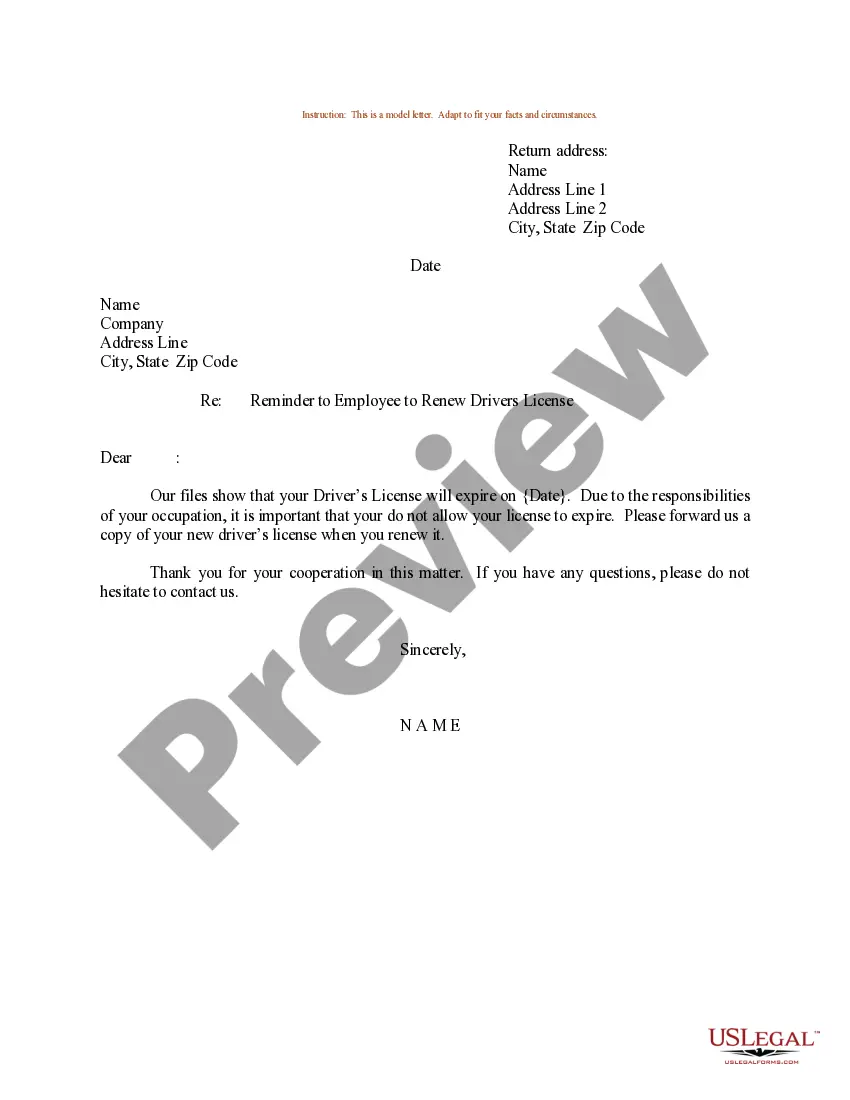
Form popularity
FAQ
Give your students a little glimpse into your personality by sharing a couple of details about yourself, like your hobbies, favorite sports or other interests. Your 30-second introduction should be positive and upbeat and followed by a smooth transition onto other creative introductory activities.
Avoid sharing too much. Lay off the eggnog. Have an open mind and an open mouth. Keep snuggling to a minimum.
Be particular in writing what the classroom will entail. Mention throughout that the letter that the parents need to get involved with the child's studies as it will help the child grow. Mention your contact number as well as email address.
1 Your kids are not your mates. 2 Data levels aren't everything. 3 Let them go a little bit. 4 Video games carry certificates for a reason. 5 John Terry is no role model. 6 Boyfriends can wait. 7 Yes, I would like help in the classroom but not from you. 8 Sorry your kid's just lazy.
Follow School Policy. Include Your Teaching History. Put Yourself in Their Shoes. Advertise Your Unique Qualities and Skills. Supply Some Personal Information. Extend an Invitation. Provide Contact Information.
Start your letter with Dear followed by your teacher's name. This is a polite form of greeting known as a salutation. Include the title you use for your teacher, such as Mr., Mrs., Miss, Ms., or Coach. Use the name your teacher prefers.
Avoid sharing too much. You're reading The Daily, so you're obviously a smart gingersnap. Lay off the eggnog. Have an open mind and an open mouth. Keep snuggling to a minimum. Bring a trinket of gratitude.
An introduction and opening to introduce yourself to the parents. A section with your teaching philosophy and what you think is important as an educator. A closing paragraph that wraps up your introduction and encourages parents to have an active role in their child's education.