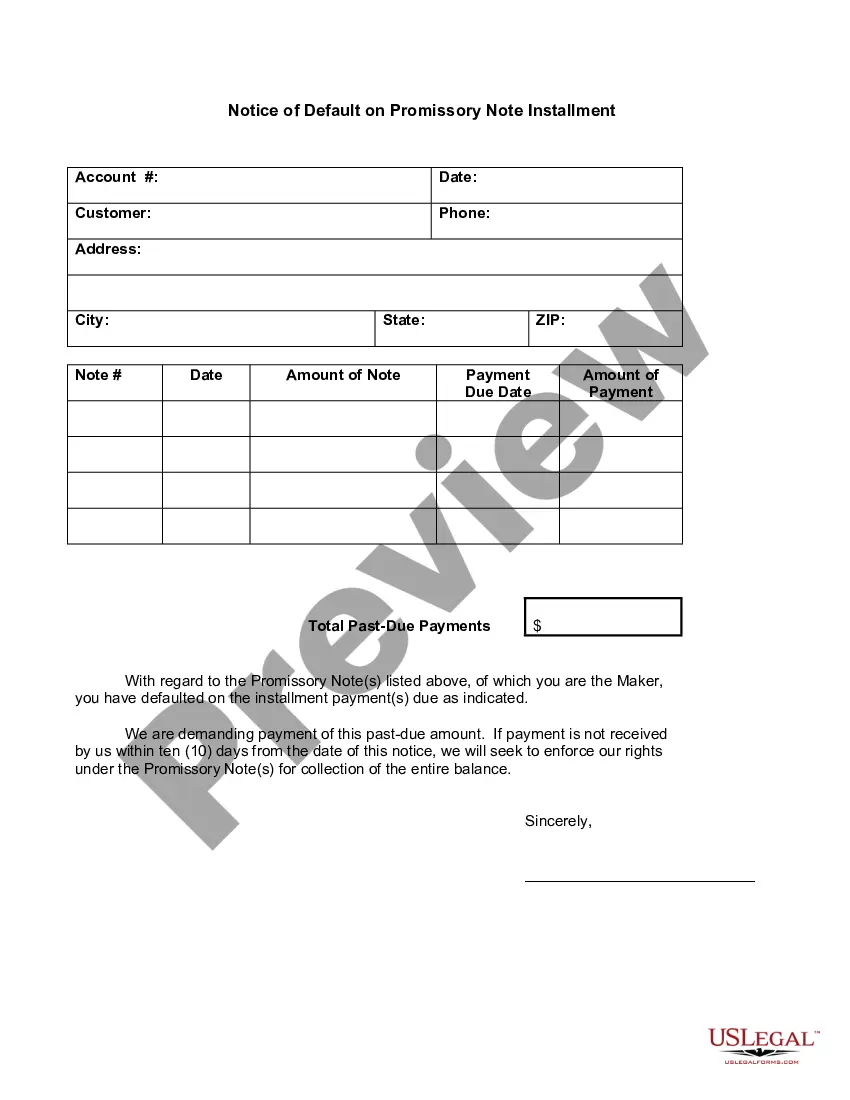
Notice of Default on Promissory Note Installment
What is this form?
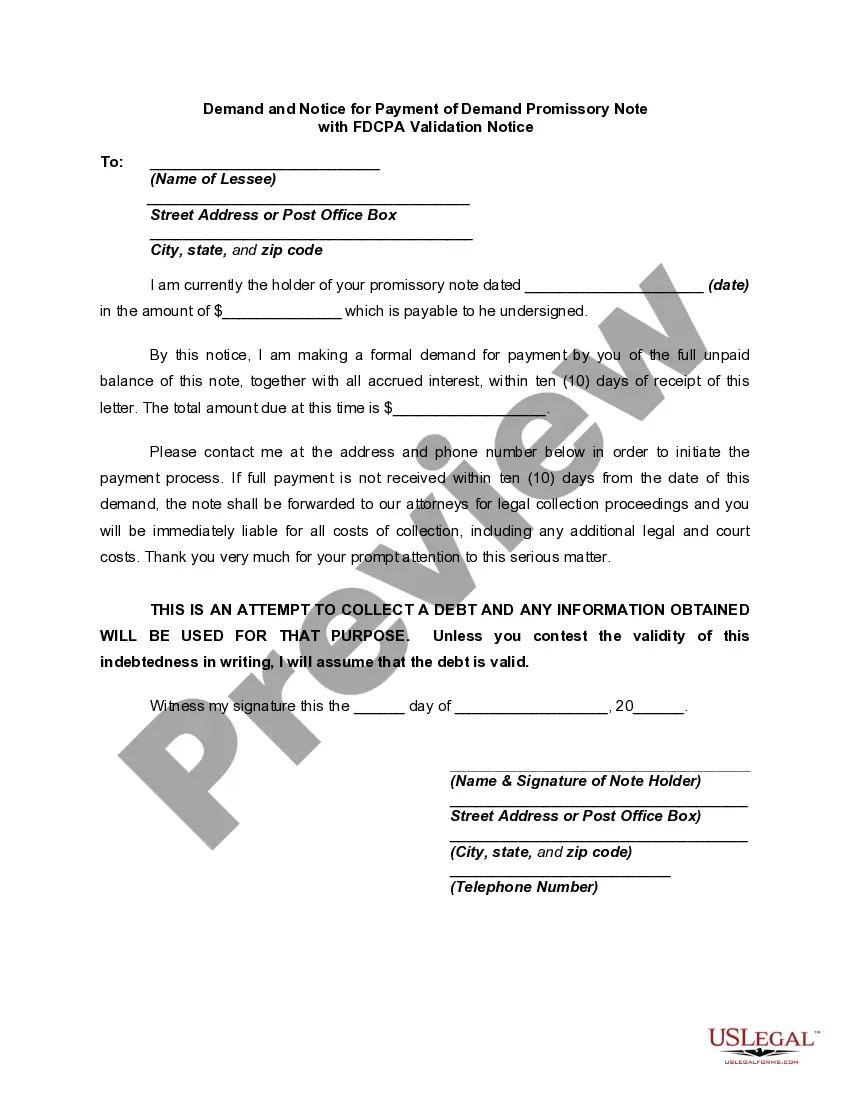
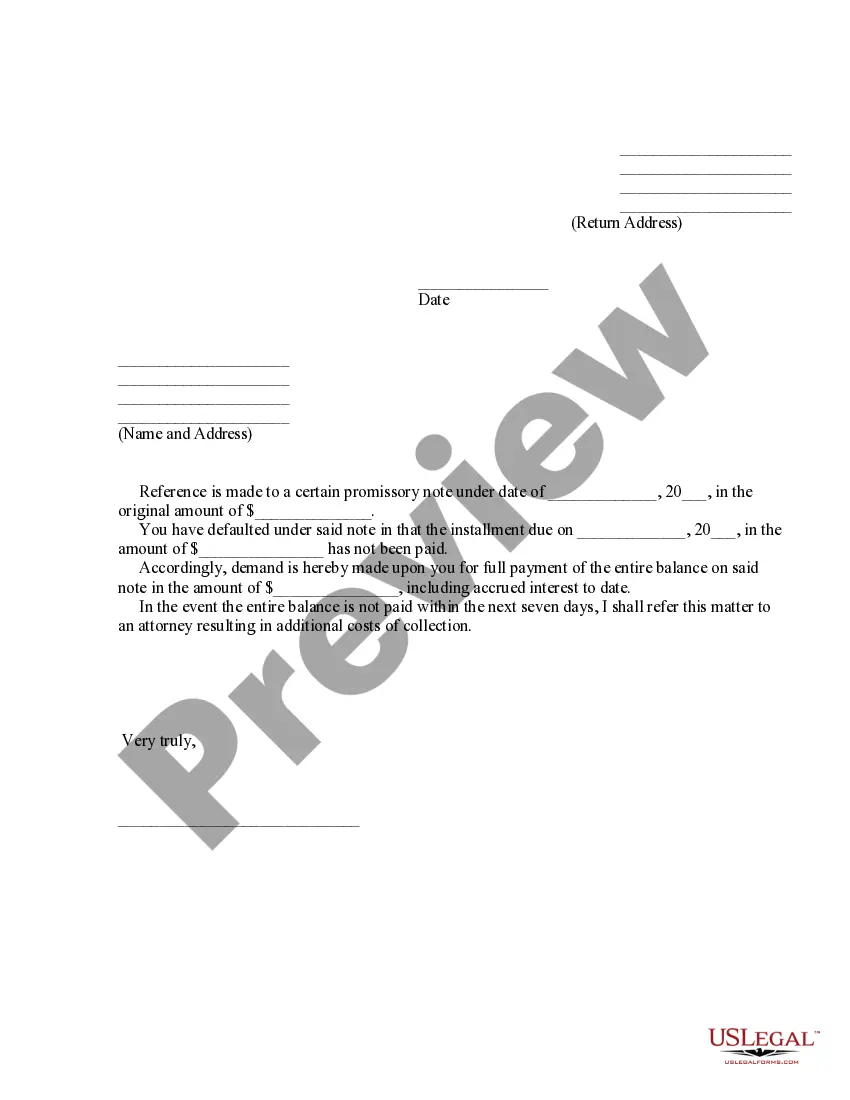
The Notice of Default on Promissory Note Installment is a legal document used to formally notify a borrower that they have defaulted on their installment payments as outlined in a promissory note. This form serves as a demand for the borrower to rectify the missed payments and communicates the potential consequences of failing to do so. Unlike other notices, this form specifically focuses on defaulting borrowers regarding installment obligations.S
Form components explained
- Account information: Includes the account number and relevant customer details.
- Date of the notice: Indicates when the notice is issued.
- Details of the promissory note: Specifies the original note date, total amount, and payment due dates.
- Total past-due payments: Clearly states the total amount that is overdue.
- Demand for payment: Communicates the necessity to pay the overdue amount within the specified time.
Common use cases
This form should be used when a borrower has not made the required installment payments on a promissory note. It is essential for lenders who wish to formally document the default and request payment before taking further legal action for collection. Utilizing this form can help maintain a clear record of communication regarding loan obligations and borrower responsibilities.
Intended users of this form
- Lenders: Individuals or organizations that have issued a promissory note.
- Borrowers: Those who have defaulted on their promissory note installments and need to understand their obligations.
- Attorneys: Legal representatives assisting lenders in enforcing payment.
Steps to complete this form
- Identify the parties: Fill in the lender's and borrower's details, including names and addresses.
- Enter the date: Specify the date on which the notice is being issued.
- Document the promissory note details: Include the note date, total amount, and specific payment due dates.
- Calculate total past-due payments: Add up all missed payments to ensure accuracy in the total due.
- State the payment demand: Clearly indicate that payment is required within ten days to avoid further action.
Is notarization required?
This form does not typically require notarization to be legally valid. However, some jurisdictions or document types may still require it. US Legal Forms provides secure online notarization powered by Notarize, available 24/7 for added convenience.
Get your form ready online
Our built-in tools help you complete, sign, share, and store your documents in one place.
Make edits, fill in missing information, and update formatting in US Legal Forms—just like you would in MS Word.
Download a copy, print it, send it by email, or mail it via USPS—whatever works best for your next step.
Sign and collect signatures with our SignNow integration. Send to multiple recipients, set reminders, and more. Go Premium to unlock E-Sign.
If this form requires notarization, complete it online through a secure video call—no need to meet a notary in person or wait for an appointment.
We protect your documents and personal data by following strict security and privacy standards.

Make edits, fill in missing information, and update formatting in US Legal Forms—just like you would in MS Word.

Download a copy, print it, send it by email, or mail it via USPS—whatever works best for your next step.

Sign and collect signatures with our SignNow integration. Send to multiple recipients, set reminders, and more. Go Premium to unlock E-Sign.

If this form requires notarization, complete it online through a secure video call—no need to meet a notary in person or wait for an appointment.

We protect your documents and personal data by following strict security and privacy standards.
Avoid these common issues
- Failing to provide accurate borrower information, which can delay communication.
- Not clearly specifying the total past-due amount, leading to confusion.
- Omitting the deadline for payment, which is critical for legal enforcement.
Why complete this form online
- Convenience: Easily download and complete the form from your home or office.
- Editability: Modify details as needed before finalizing the document.
- Reliability: Access templates drafted by licensed attorneys to ensure legal compliance.
Legal use & context
- This notice serves as an official record of the borrower's default, which may be essential for future legal actions.
- It is crucial for lenders to follow proper procedures in issuing such notices to uphold enforceability in court if necessary.
Looking for another form?


Form popularity
FAQ
Before a promissory note can be canceled, the lender must agree to the terms of canceling it. A well-drafted and detailed promissory note can help the parties involved avoid future disputes, misunderstandings, and confusion. When canceling the promissory note, the process is referred to as a release of the note.
The owner of the promissory note can file a civil lawsuit against the signer of the note if the signer refuses to pay. The purpose of the lawsuit is to obtain a judgment against the note's signer, which will give the owner of the note the ability to pursue the signer's assets.
However, in California, the lender is not required to produce a Promissory Note to conduct a non-judicial foreclosure (also known as a Trustee's Sale).The Promissory Note is the debt instrument, just like an IOU. The person holding the original is the one the borrower has to pay.
Keep the original promissory note. Once a lender executes a promissory note, he keeps the original of the promissory note. Accept full payment of the loan. Mark paid in full on the promissory note. Place a signature beside the paid in full notation. Mail the original promissory note to the borrower.
A promissory note is a contract, a binding agreement that someone will pay your business a sum of money. However under some circumstances if the note has been altered, it wasn't correctly written, or if you don't have the right to claim the debt then, the contract becomes null and void.
Whatever the scope of the promissory note, the basic tenet is that once it is signed by the involved parties, it becomes a legal instrument that can be enforced via legal remedy if one of the parties does not uphold their end of the bargain.
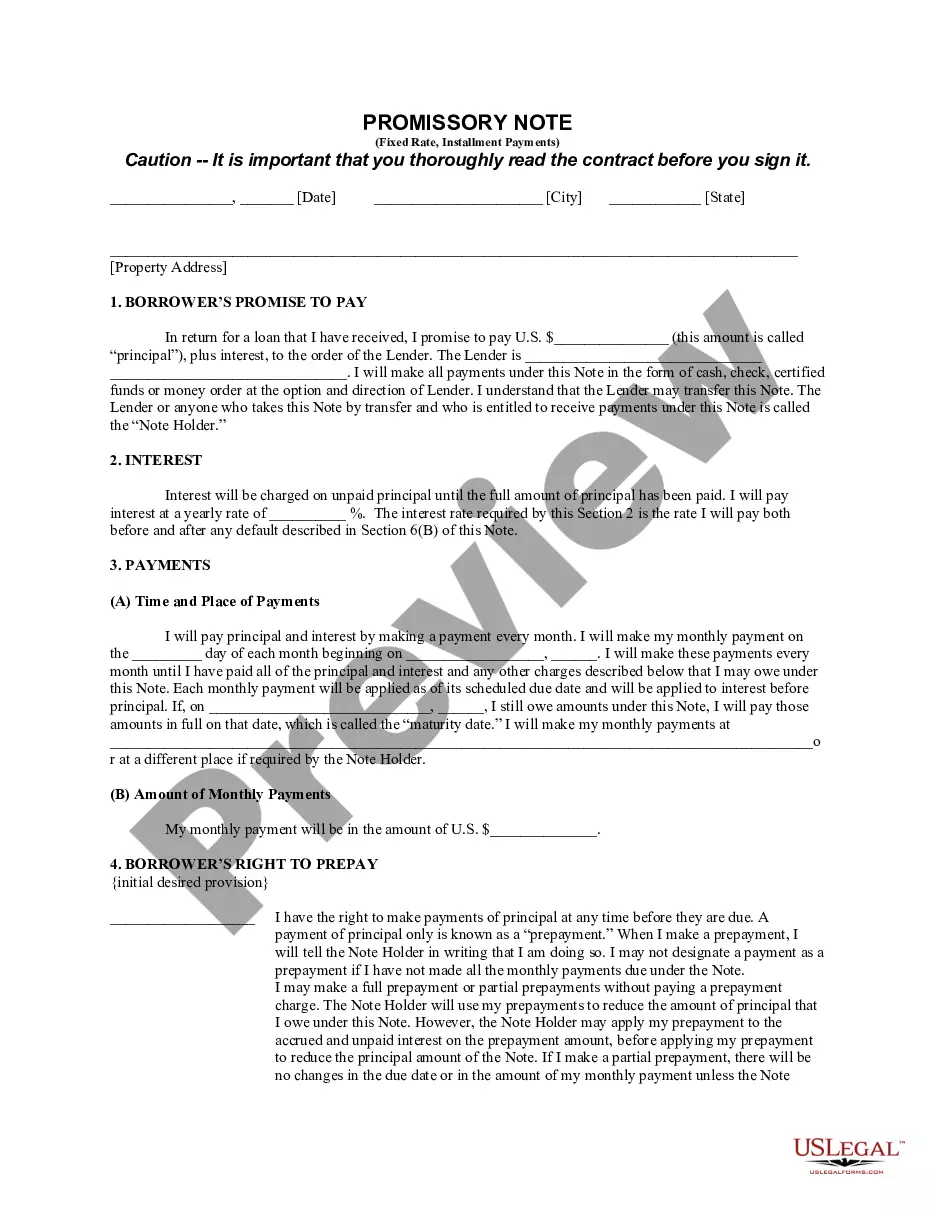
Full names of parties (borrower and lender) Repayment amount (principal and interest) Payment plan. Consequences of non-payment (default and collection) Notarization (if necessary) Other common details.
Full names of parties (borrower and lender) Repayment amount (principal and interest) Payment plan. Consequences of non-payment (default and collection) Notarization (if necessary) Other common details.
In the unlikely event a borrower defaults on a promissory note, it is the lender's responsibility to execute the collection action necessary to claim the item(s) used as collateral. These actions may include: Foreclosure (for real estate investments) Repossession.