Mutual Confidential Information Exchange Agreement
About this form
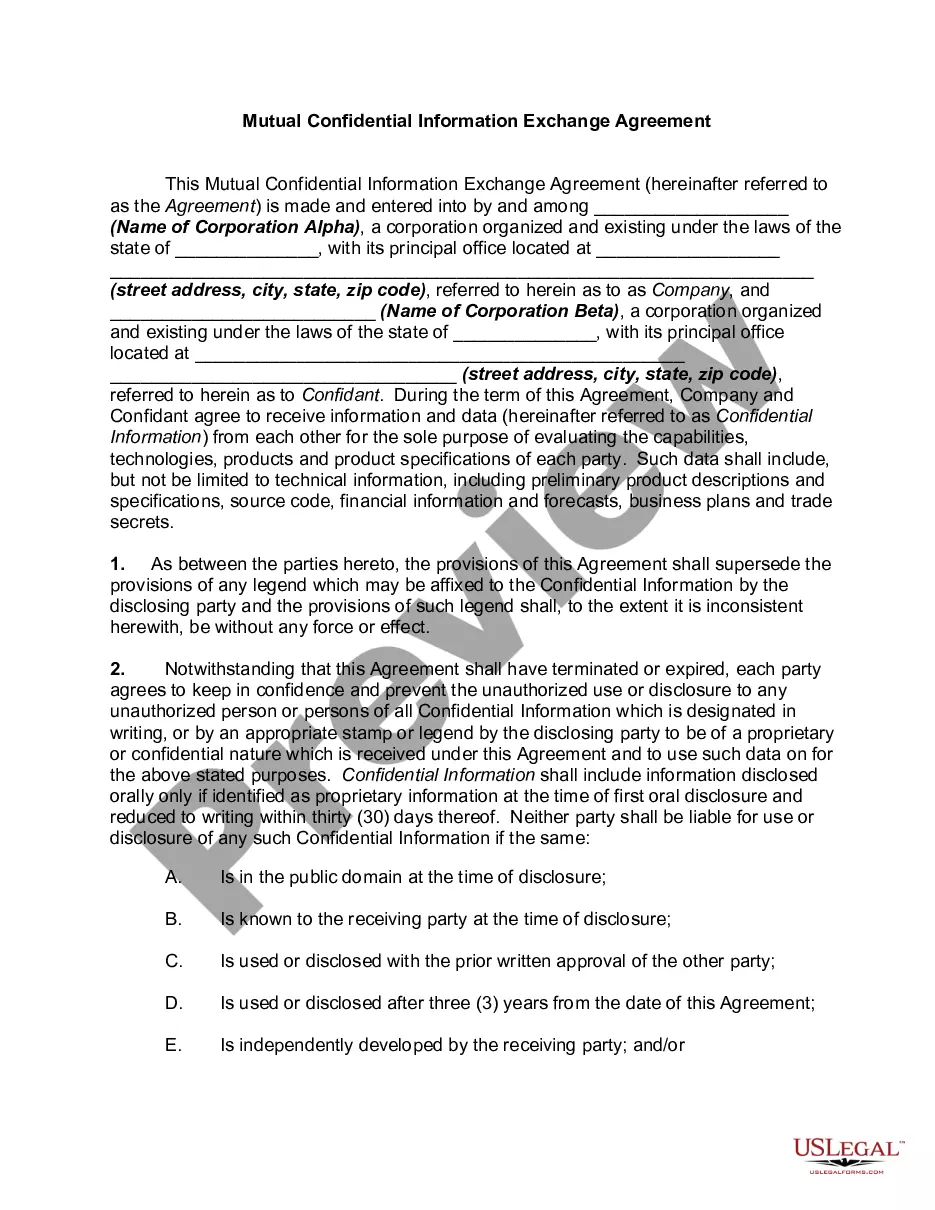
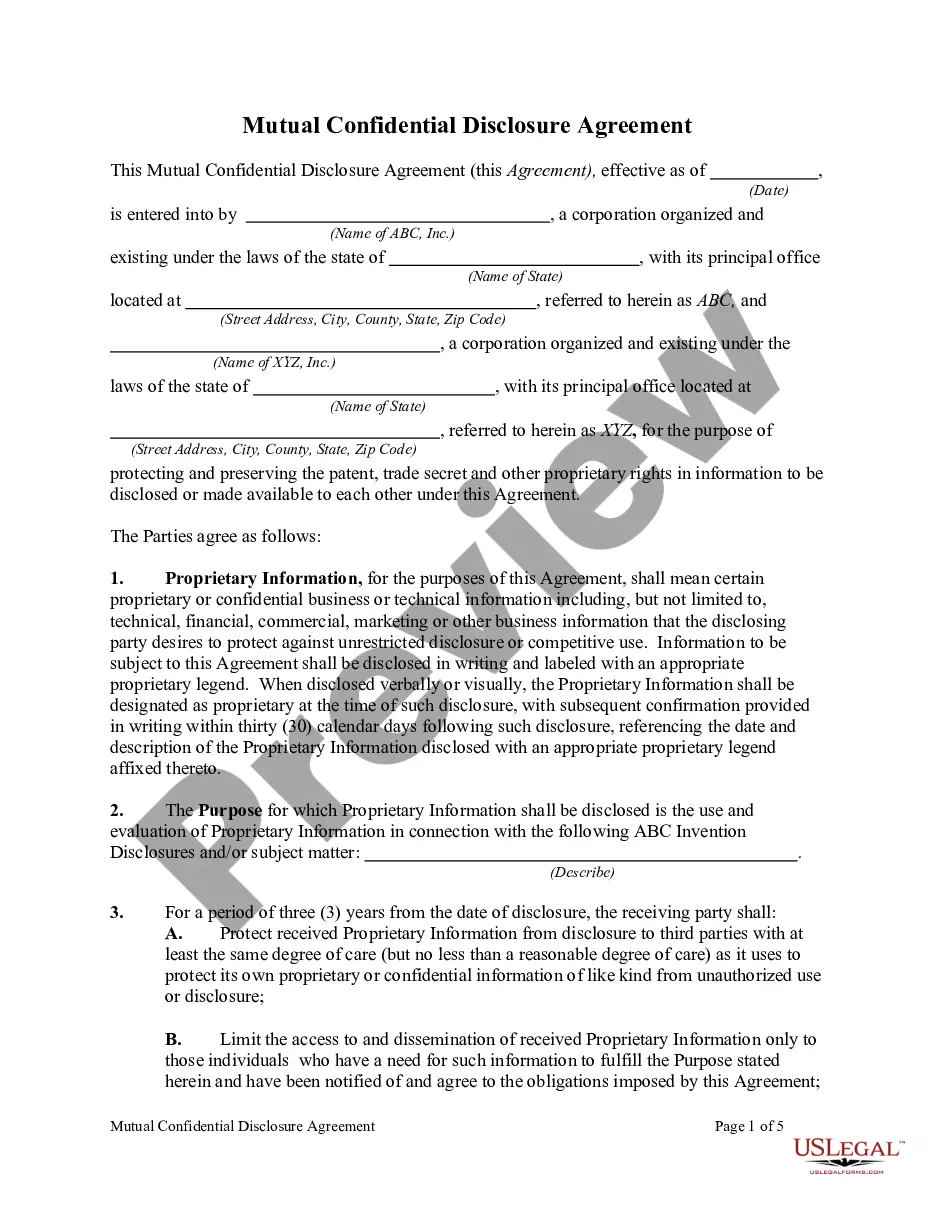
The Mutual Confidential Information Exchange Agreement is a legal document that establishes a framework for two parties to share confidential information safely and securely. This agreement is essential when organizations plan to collaborate on a project or share sensitive information, ensuring that trade secrets and proprietary data are not disclosed to unauthorized third parties. Unlike standard non-disclosure agreements, this form specifically addresses mutual exchanges of information between two entities, thereby protecting both parties involved in the arrangement.
Key components of this form
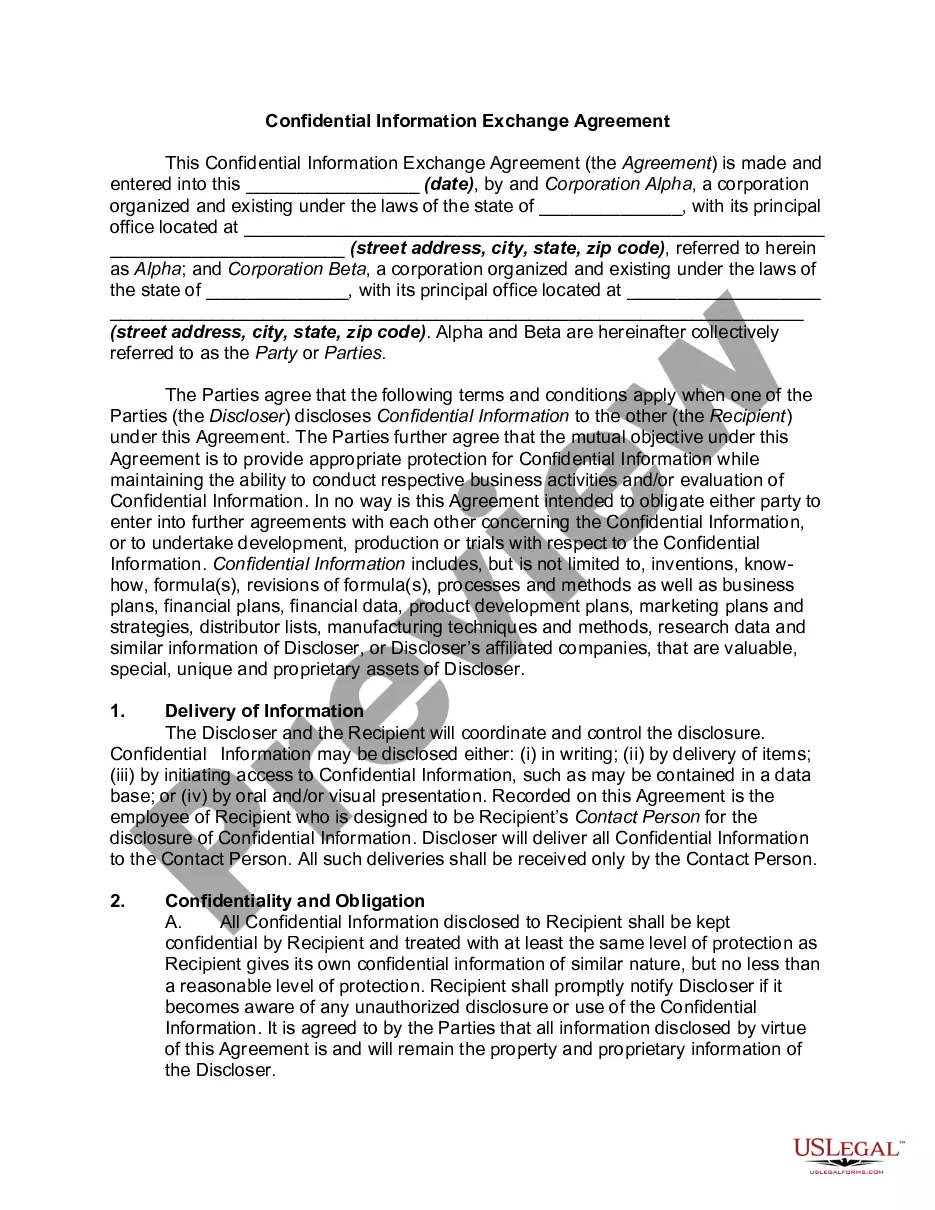
- Parties Involved: Identifies the entities entering into the agreement and their respective addresses.
- Definition of Confidential Information: Specifies what constitutes confidential information, including technical data, financial forecasts, and trade secrets.
- Confidentiality Obligations: Outlines the responsibilities of each party to maintain confidentiality even after the agreement ends.
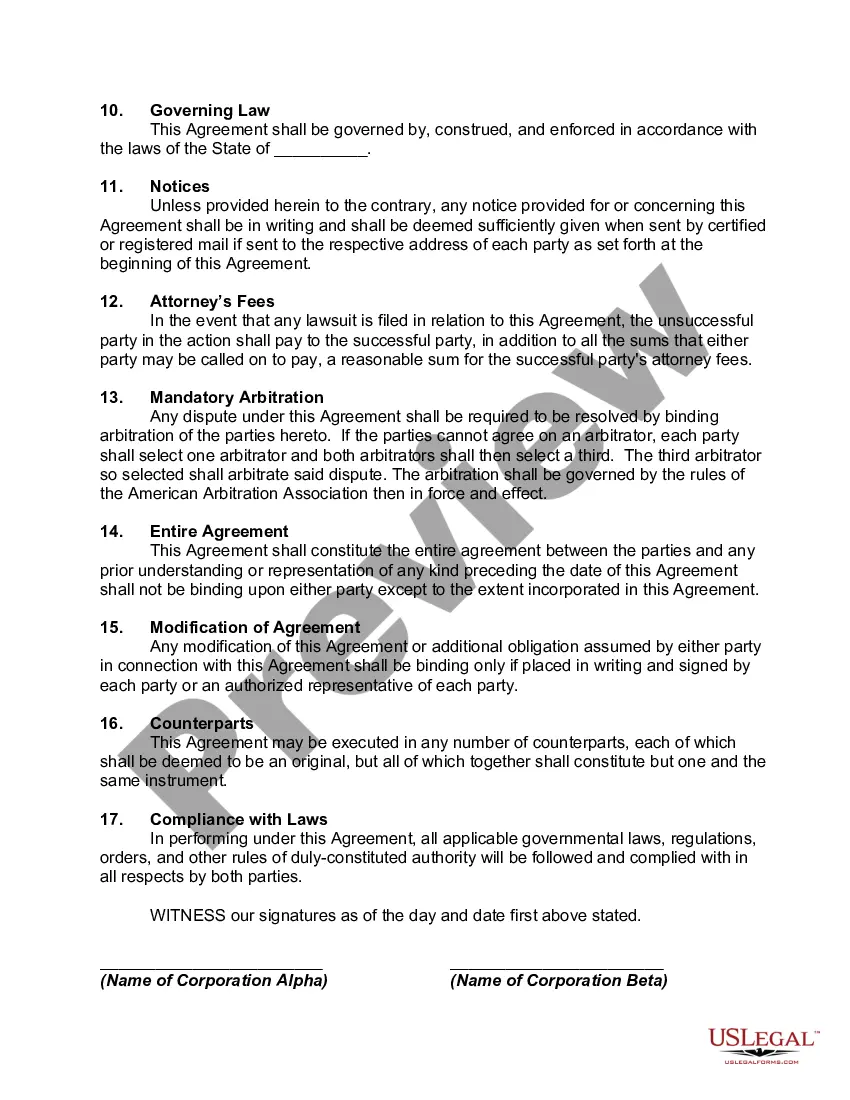
- Exclusions: Lists scenarios where confidentiality obligations do not apply, such as public domain information.
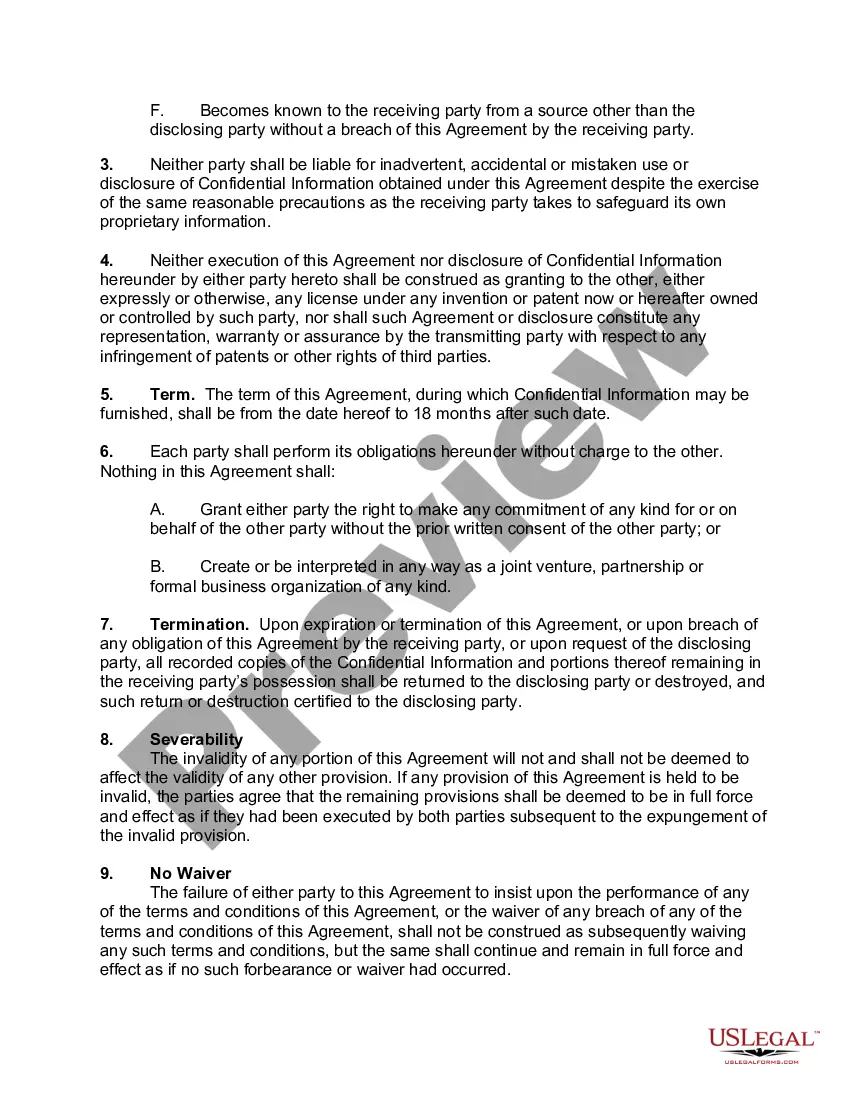
- Term of Agreement: States the duration during which confidential information may be exchanged, typically 18 months.
- Termination Clause: Describes the process for ending the agreement and handling confidential information thereafter.
When to use this document
This form is especially useful in situations where two companies or organizations are exploring a partnership, joint venture, or other collaborative projects that require sharing sensitive information. It is commonly used in sectors like technology, finance, and pharmaceuticals, where trade secrets and proprietary processes are crucial. Utilizing this agreement ensures that both parties are legally protected when exchanging information that could potentially impact their competitive standing.
Who this form is for
- Businesses entering into partnerships that necessitate sharing proprietary information.
- Corporations involved in research and development collaborations.
- Consultants and contractors who require access to a client's confidential data.
- Companies that aim to protect their intellectual property during negotiations.
Steps to complete this form
- Identify the parties: Enter the names and addresses of the two corporations involved.
- Define confidential information: Clearly specify what types of information will be shared and treated as confidential.
- Set the term: Indicate the duration of the agreement, typically 18 months.
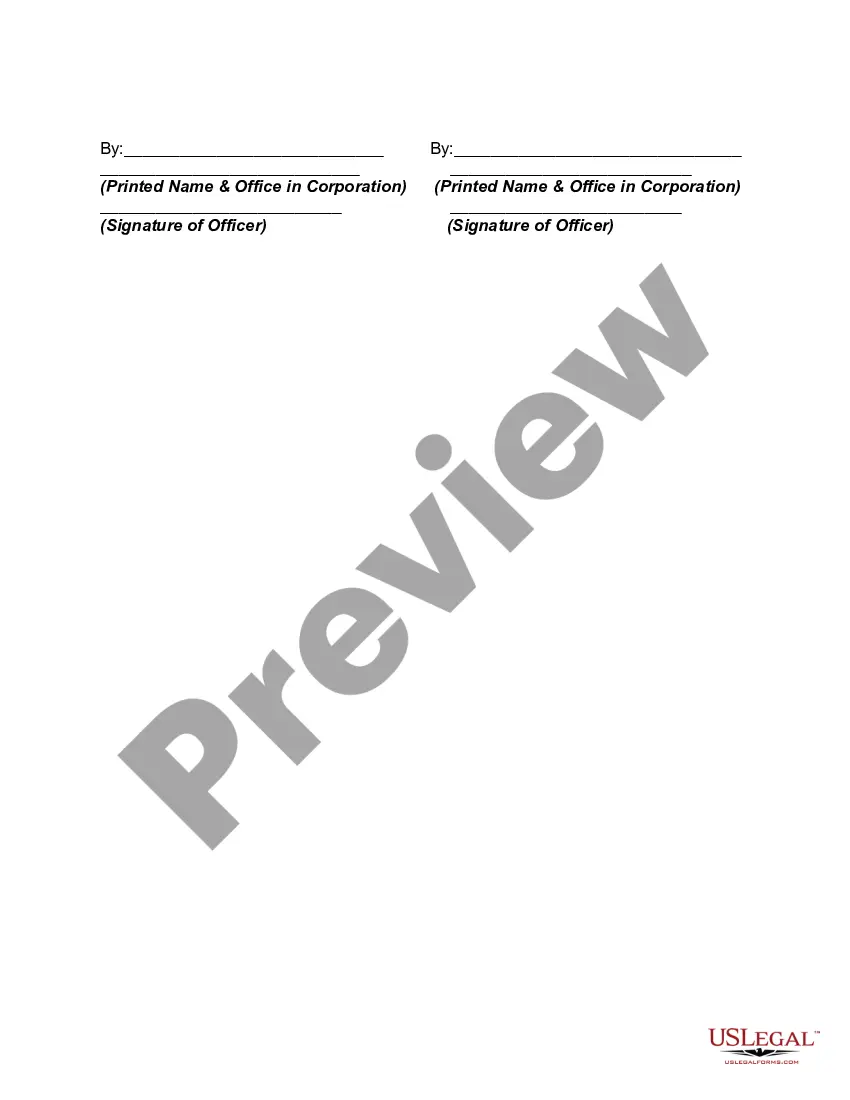
- Include signatures: Obtain signatures from authorized representatives of both parties to validate the agreement.
- Complete any necessary certification: Ensure any destruction or return of confidential information is documented after termination of the agreement.
Notarization requirements for this form
This form does not typically require notarization unless specified by local law. However, it is advisable to check with a legal professional to confirm the requirements specific to your jurisdiction.
Get your form ready online
Our built-in tools help you complete, sign, share, and store your documents in one place.
Make edits, fill in missing information, and update formatting in US Legal Forms—just like you would in MS Word.
Download a copy, print it, send it by email, or mail it via USPS—whatever works best for your next step.
Sign and collect signatures with our SignNow integration. Send to multiple recipients, set reminders, and more. Go Premium to unlock E-Sign.
If this form requires notarization, complete it online through a secure video call—no need to meet a notary in person or wait for an appointment.
We protect your documents and personal data by following strict security and privacy standards.

Make edits, fill in missing information, and update formatting in US Legal Forms—just like you would in MS Word.

Download a copy, print it, send it by email, or mail it via USPS—whatever works best for your next step.

Sign and collect signatures with our SignNow integration. Send to multiple recipients, set reminders, and more. Go Premium to unlock E-Sign.

If this form requires notarization, complete it online through a secure video call—no need to meet a notary in person or wait for an appointment.

We protect your documents and personal data by following strict security and privacy standards.
Mistakes to watch out for
- Failing to clearly define what constitutes confidential information.
- Not specifying the duration of confidentiality obligations.
- Omitting signatures from authorized representatives.
- Neglecting to include provisions for returning or destroying confidential information upon termination.
Why complete this form online
- Convenience: Download and complete the form at any time without the need for in-person meetings.
- Editability: Easily customize the form to fit the specific needs of your agreement.
- Reliability: Access templates that have been drafted by licensed attorneys, ensuring legal compliance.
Legal use & context
- This agreement is legally binding and enforceable in court if properly executed.
- It establishes clear obligations regarding the treatment of confidential information.
- Understanding the terms of the agreement can help prevent legal disputes.
Quick recap
- The Mutual Confidential Information Exchange Agreement protects sensitive data exchanged between businesses.
- It ensures both parties are legally bound to confidentiality.
- Users should clearly define the nature of "Confidential Information."
- The form is applicable across multiple states and does not typically require notarization.
Looking for another form?

Form popularity
FAQ
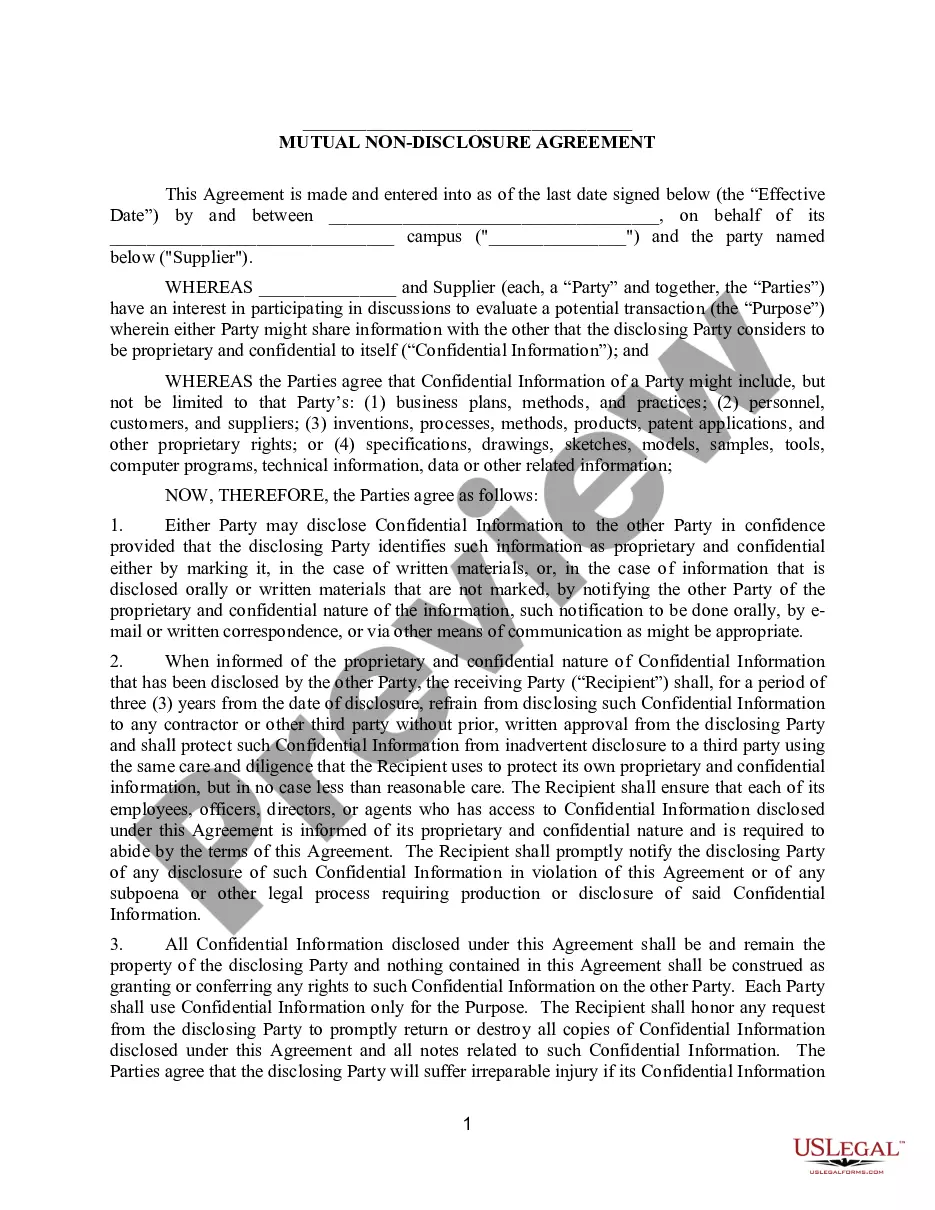
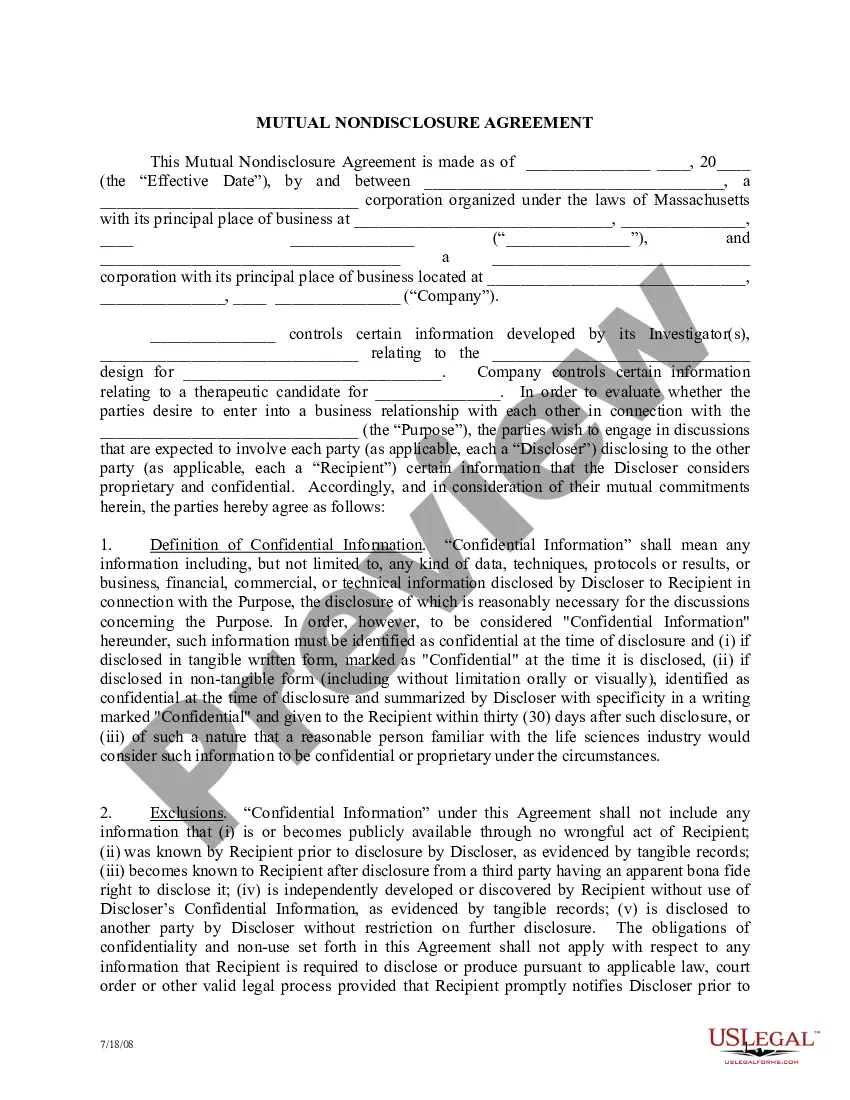
A mutual confidentiality agreement is also sometimes called a mutual non-disclosure agreement. It is a legal document and contract that requires both parties that sign the agreement to not disclose any information protected by the agreement.
Set the date of the agreement. Describe the two parties, sometimes called the Disclosing Party and the Receiving Party.7feff Include names and identification, so there can be no misunderstanding about who signed the agreement.
Identify each party in the first section of the form. The NDA form will start by declaring it to be an agreement and identifying who the agreement is between. Whoever is disclosing the information to be protected is the "disclosing party"; write his or her name on this space.
It is a contract through which the parties agree not to disclose information covered by the agreement. An NDA creates a confidential relationship between the parties, typically to protect any type of confidential and proprietary information or trade secrets. As such, an NDA protects non-public business information.
Know who you are disclosing information to. Clearly label all confidential information as confidential. Use passwords and encrypted files for electronic documents. Provide initial and ongoing advice to individuals.
Identify each party in the first section of the form. The NDA form will start by declaring it to be an agreement and identifying who the agreement is between. Whoever is disclosing the information to be protected is the "disclosing party"; write his or her name on this space.
Depending on the complexity of what you need protected and the number of parties involved, the cost of having an NDA drafted can vary significantly. When you hire a lawyer in the Priori network, drafting an NDA typically costs anywhere from $175-$1,500.
A confidentiality agreement (also called a nondisclosure agreement or NDA) is a legally binding contract in which a person or business promises to treat specific information as a trade secret and promises not to disclose the secret to others without proper authorization.
A definition of confidential information. Who is involved. Why the recipient knows the information. Exclusions or limits on confidential information. Receiving party's obligations. Time frame or term. Discloser to the recipient.