General Form of Agreement between Carrier and Shipper - Transportation Agreement
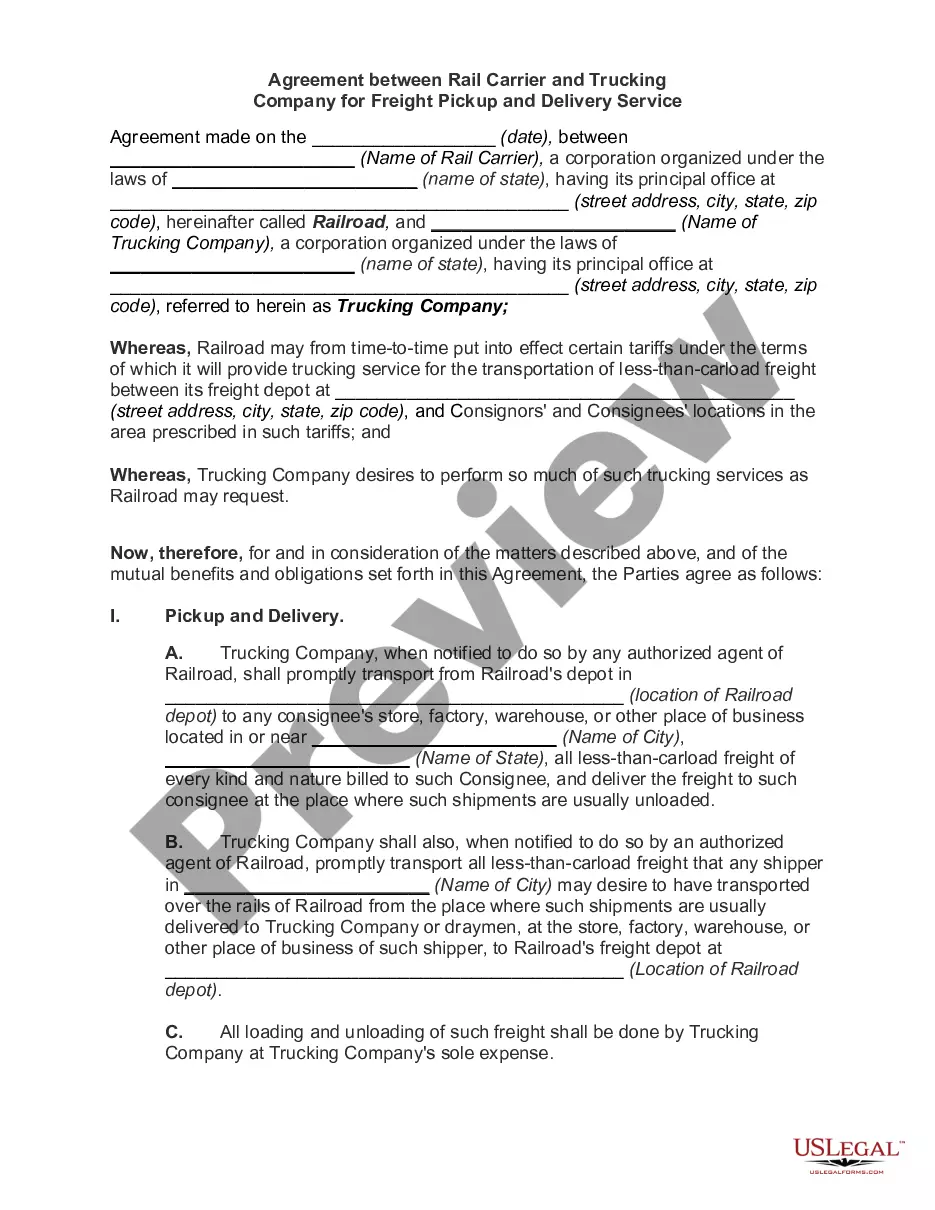
What is this form?
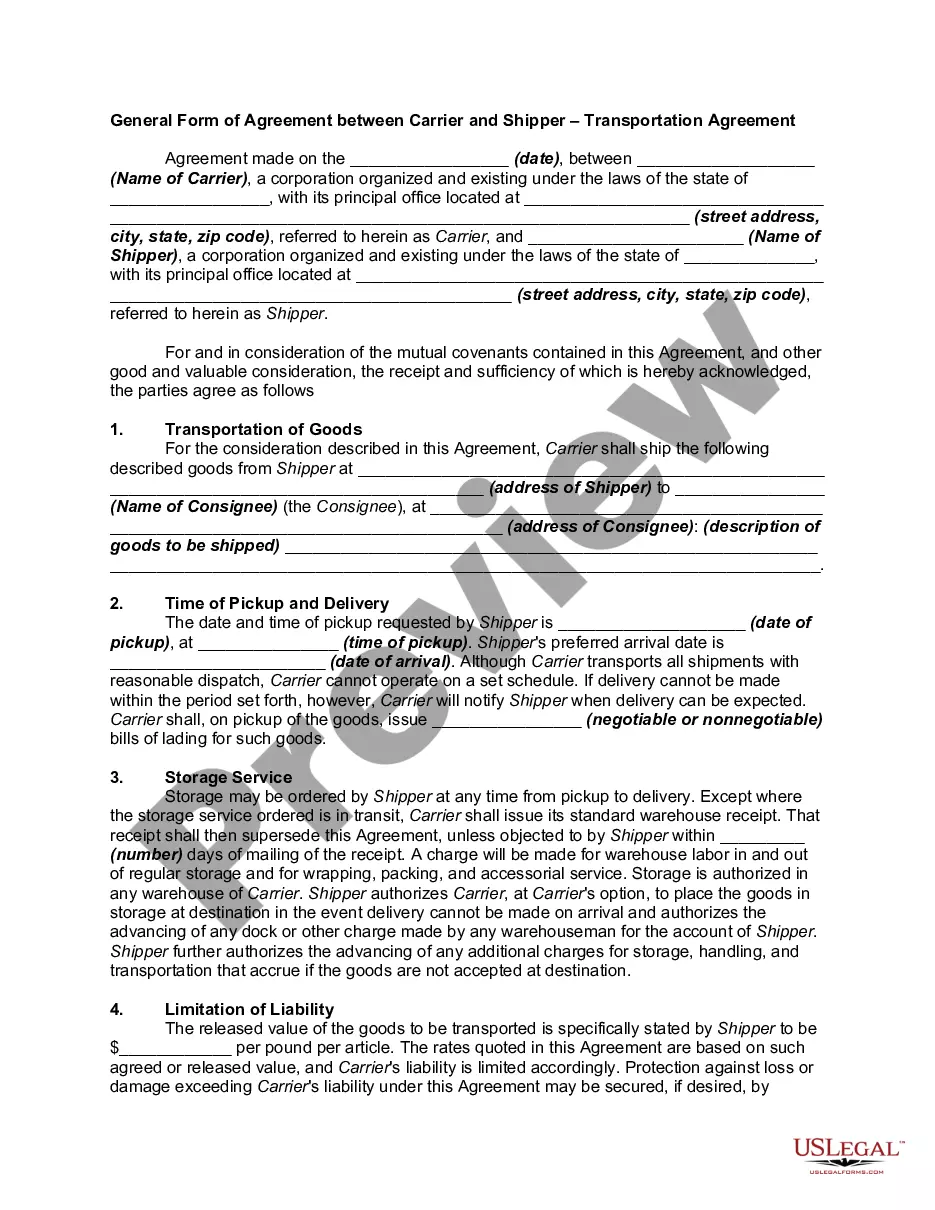
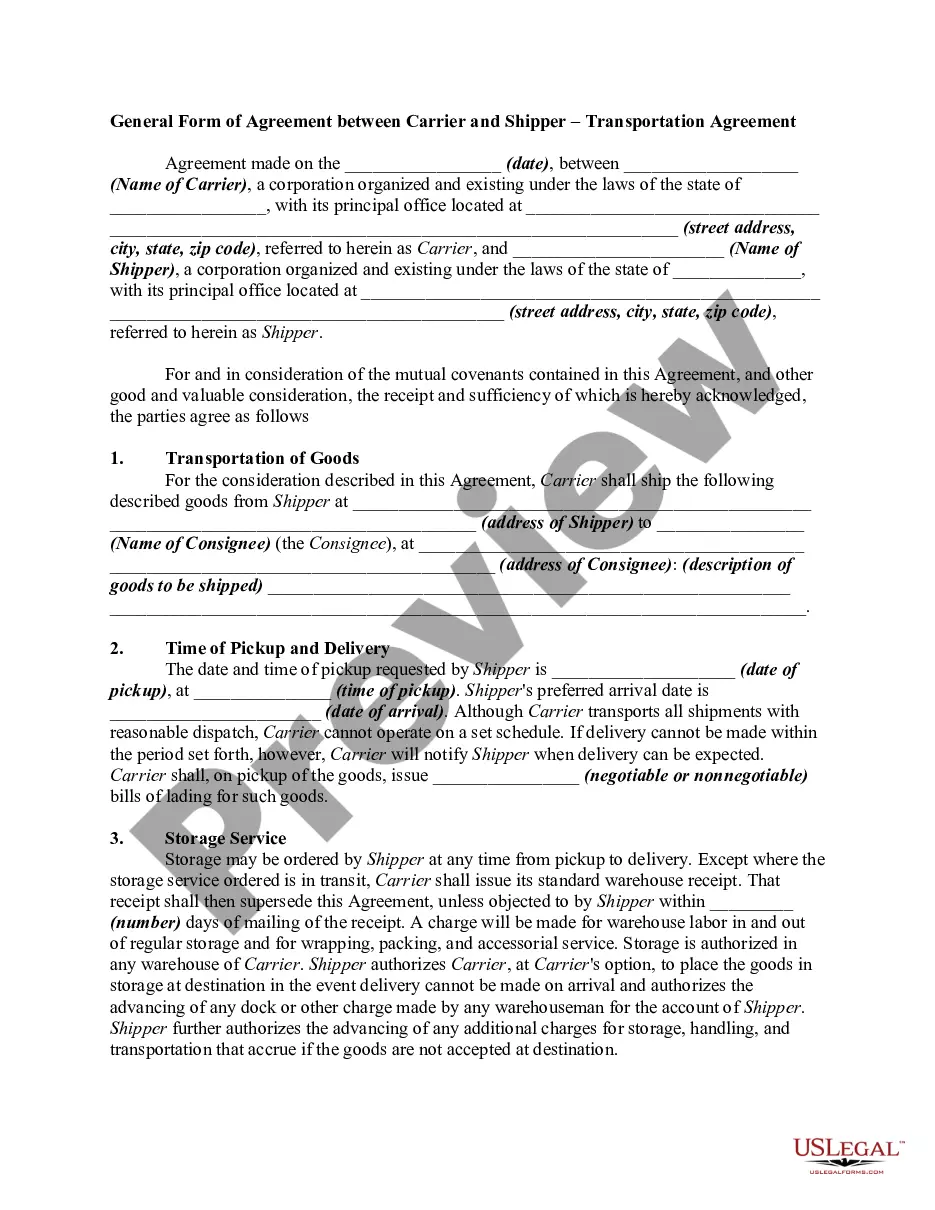
The General Form of Agreement between Carrier and Shipper, commonly known as a Transportation Agreement, is a legal document that outlines the responsibilities and obligations of both the carrier and shipper during the transportation of goods. This form serves to clarify terms such as pickup and delivery times, charges, liability, and insurance coverage. It is crucial for formalizing the relationship between the two parties and protecting their interests during the shipping process. Unlike specific agreements tailored for particular states, this general form provides a template suitable for use across various jurisdictions, ensuring clarity and legal compliance.
Key components of this form
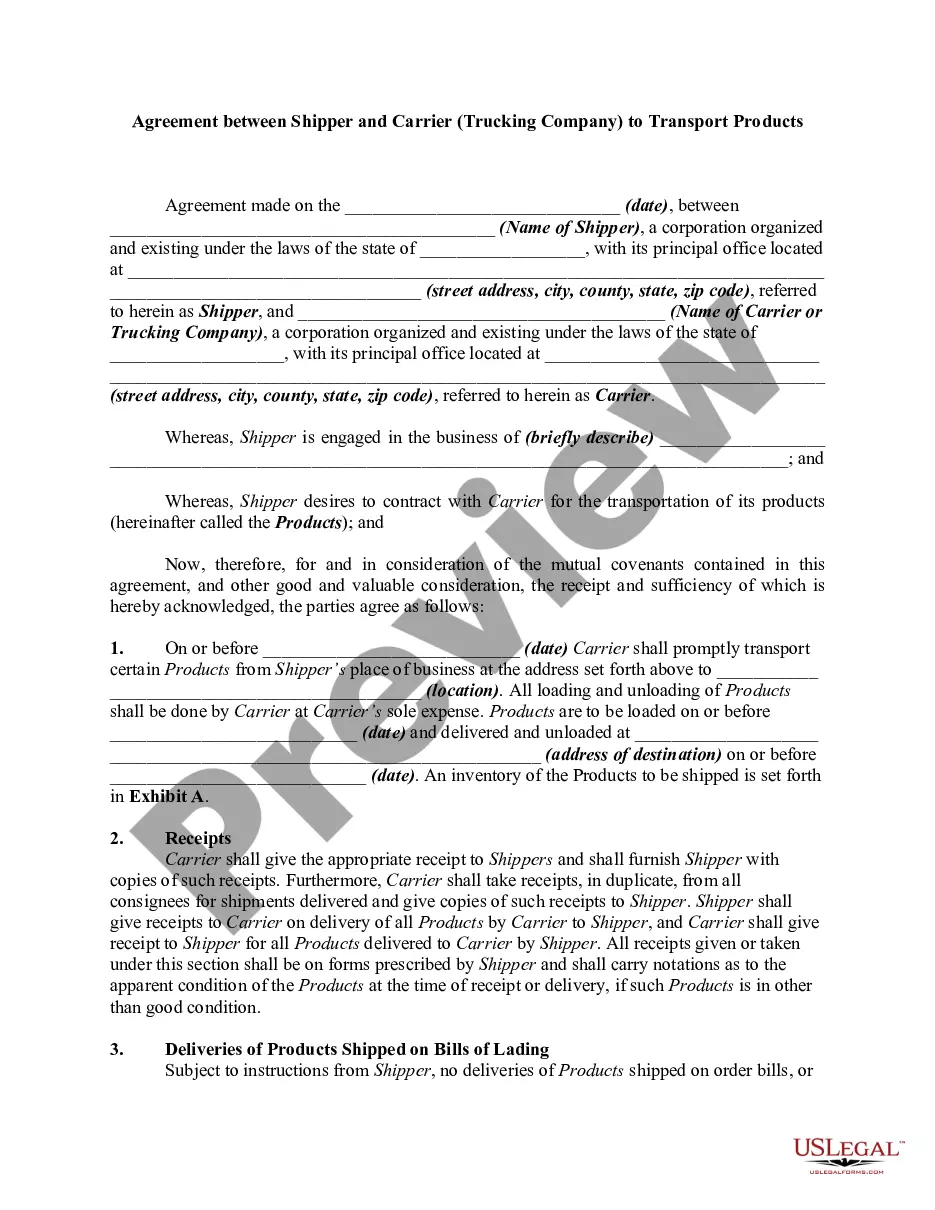
- Identification of the parties involved: names and addresses of the Carrier and Shipper.
- Details regarding the transportation of goods: description and destination of the items being shipped.
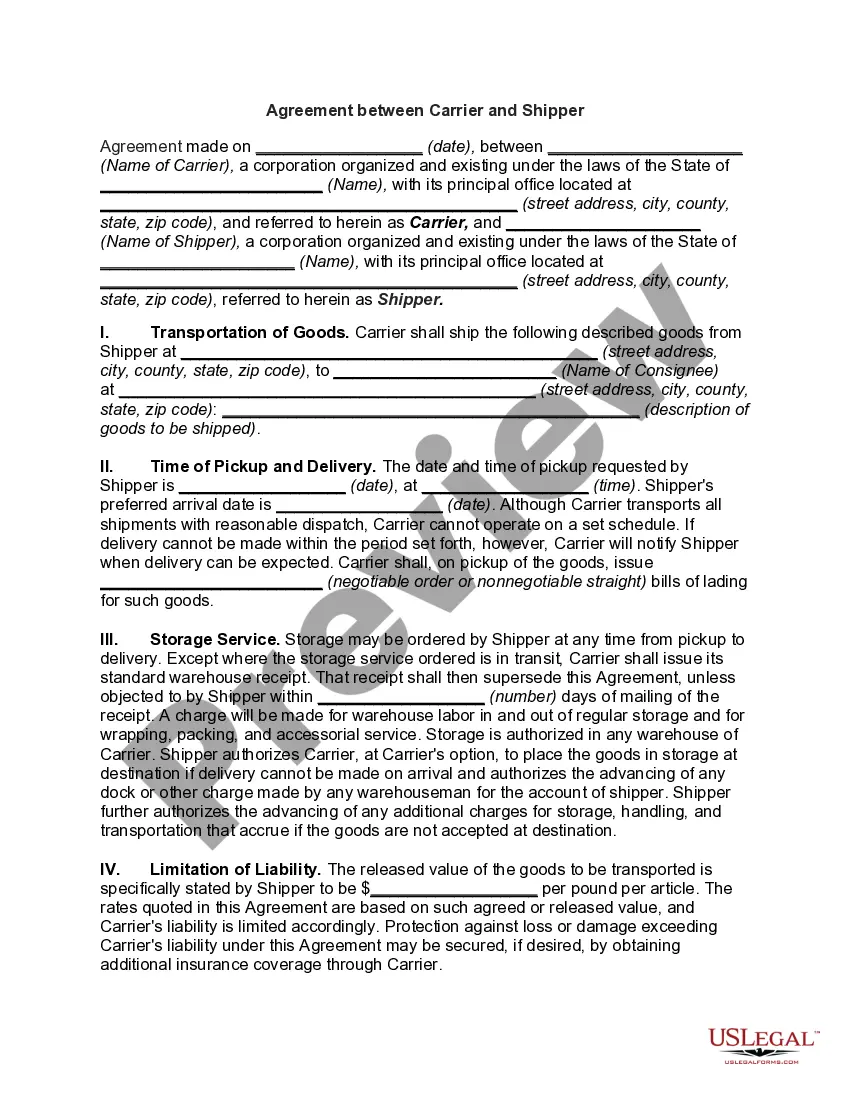
- Pickup and delivery schedule: timeframes for both the pickup of goods and their expected arrival.
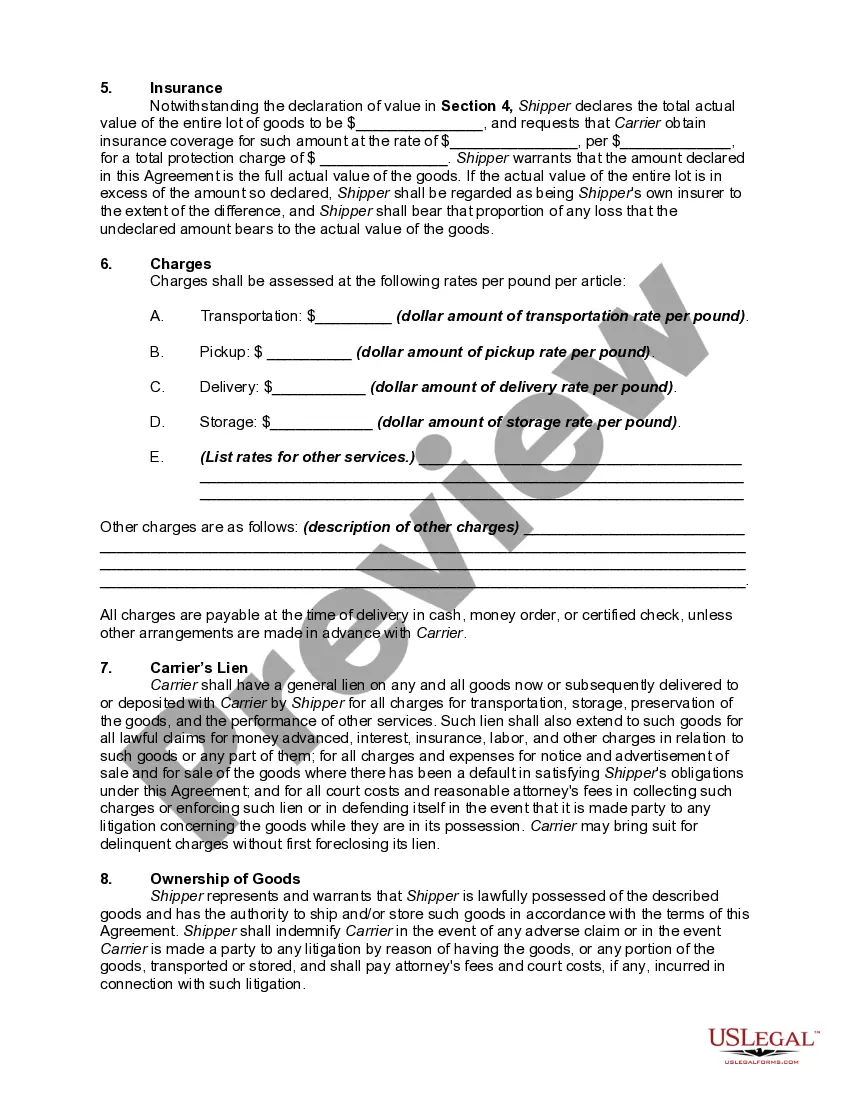
- Charges: clear breakdown of pricing for transportation, pickup, delivery, and storage services.
- Limitation of liability: stipulation of the value of goods being transported and applicable insurance options.
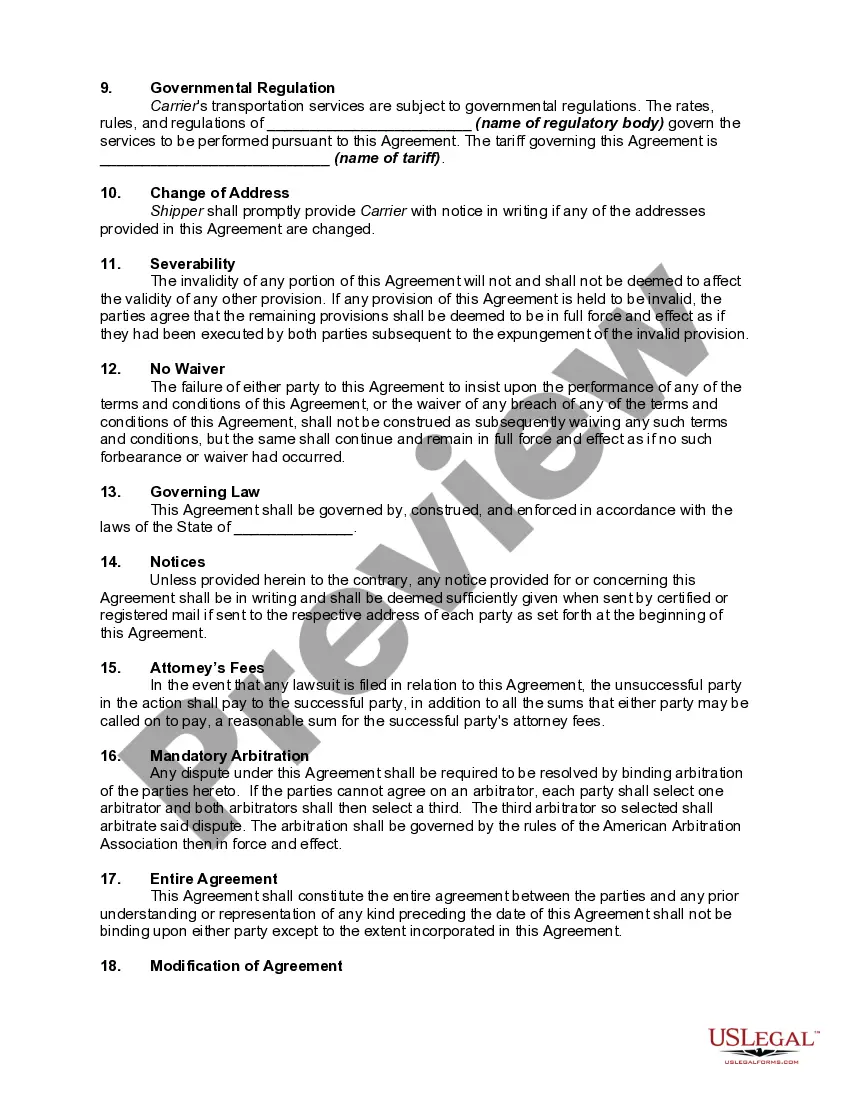
- Governing law: jurisdiction governing the agreement to ensure legal conformity.
When this form is needed
This form should be used whenever a shipper intends to contract a carrier for the transportation of goods. It is essential for logistics companies, freight forwarders, and businesses that rely on transporting products to customers. Use this agreement to establish a clear understanding of expectations, responsibilities, and legal protections for both parties involved. Typical scenarios include shipping goods across state lines, long-distance freight transport, and local deliveries where formal agreements are beneficial.
Who needs this form
- Businesses and individuals hiring carriers to transport goods.
- Logistics companies coordinating shipping services on behalf of clients.
- Shippers looking to establish clear legal terms with carriers to protect their interests.
- Carriers needing a standardized form to formalize agreements with shippers during transportation operations.
Instructions for completing this form
- Identify the parties involved by entering the names and addresses of the Carrier and Shipper.
- Specify the goods being transported, including a detailed description and destination.
- Enter the pickup and delivery dates and times requested, ensuring clarity on schedules.
- Outline charges for the transportation, including rates for any additional services such as storage.
- Include insurance information by declaring the value of the goods and selecting coverage options.
- Ensure signatures from authorized representatives of both parties to finalize the agreement.
Notarization guidance
This form does not typically require notarization unless specified by local law. It is essential to check any applicable regulations to confirm whether notarization may be necessary for enforceability in your jurisdiction.
Get your form ready online
Our built-in tools help you complete, sign, share, and store your documents in one place.
Make edits, fill in missing information, and update formatting in US Legal Forms—just like you would in MS Word.
Download a copy, print it, send it by email, or mail it via USPS—whatever works best for your next step.
Sign and collect signatures with our SignNow integration. Send to multiple recipients, set reminders, and more. Go Premium to unlock E-Sign.
If this form requires notarization, complete it online through a secure video call—no need to meet a notary in person or wait for an appointment.
We protect your documents and personal data by following strict security and privacy standards.

Make edits, fill in missing information, and update formatting in US Legal Forms—just like you would in MS Word.

Download a copy, print it, send it by email, or mail it via USPS—whatever works best for your next step.

Sign and collect signatures with our SignNow integration. Send to multiple recipients, set reminders, and more. Go Premium to unlock E-Sign.

If this form requires notarization, complete it online through a secure video call—no need to meet a notary in person or wait for an appointment.

We protect your documents and personal data by following strict security and privacy standards.
Avoid these common issues
- Neglecting to include detailed descriptions of the goods being shipped, which can lead to disputes.
- Failing to specify pickup and delivery times clearly, resulting in scheduling confusion.
- Overlooking insurance options, potentially exposing the shipper to unprotected losses.
- Not having both parties sign the agreement, which may invalidate the contract.
- Forgetting to review and comply with local regulations, which may affect enforceability.
Why complete this form online
- Convenience: Easily download and complete the form anytime, anywhere.
- Editability: Make updates and adjustments as necessary to fit specific needs.
- Reliability: Access professionally drafted templates that comply with legal standards.
- Cost-effective: Save on attorney fees by using ready-made legal forms designed by experts.
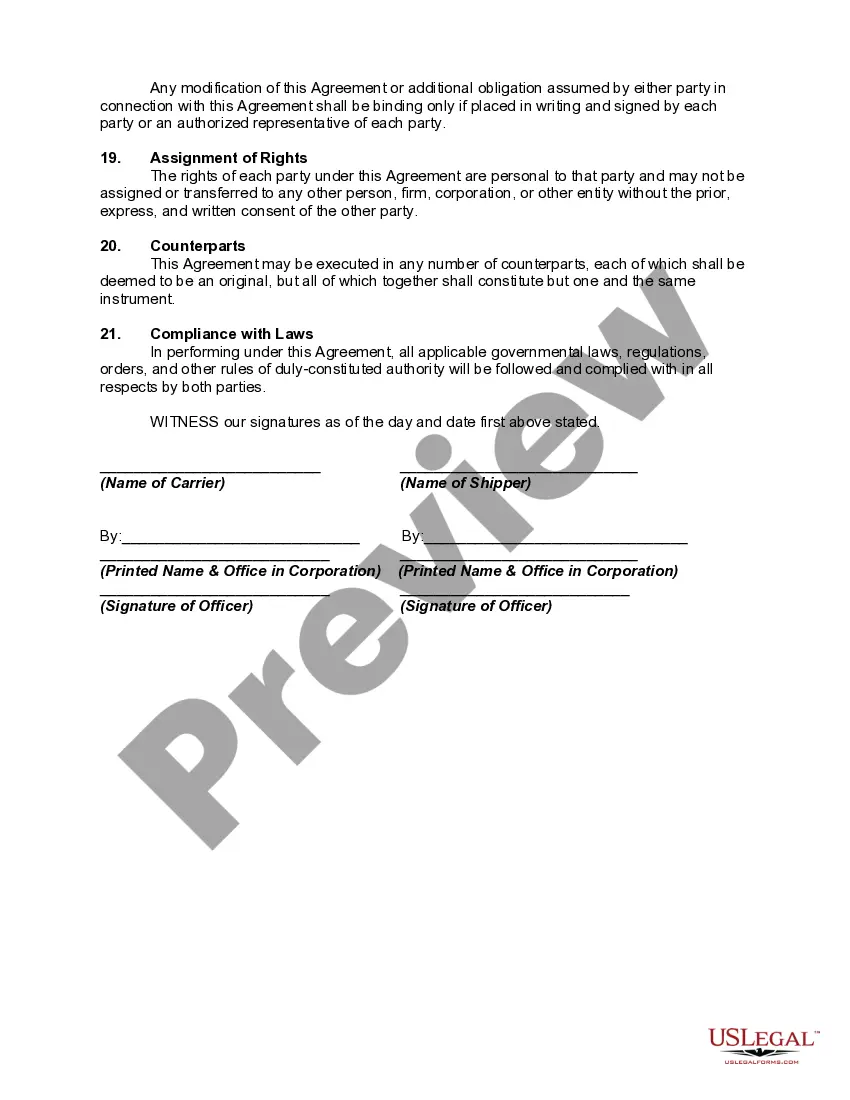
- This agreement outlines the legal responsibilities of both the Carrier and the Shipper, helping to enforce obligations in case of disputes.
- Limitation of liability clauses protect the Carrier from excessive claims, while the Shipper is urged to secure adequate insurance for full coverage.
- The terms of arbitration included in the agreement provide a method for resolving disputes without lengthy litigation.
Key takeaways
- The General Form of Agreement between Carrier and Shipper is essential for formalizing transportation agreements.
- Clear communication and agreement on terms can significantly reduce potential conflicts.
- It is important to adapt the form for specific jurisdictional requirements to ensure enforceability.
Looking for another form?
Form popularity
FAQ
This document is a standard transportation agreement that defines the responsibilities of both the carrier and the shipper throughout the freight process. It covers pickup and delivery times, charges, liability, and insurance. It is a general, multi‑jurisdiction template intended for use across various states whenever a shipper contracts a carrier for goods.
The General Form of Agreement Between Carrier and Shipper – Transportation Agreement is a written contract that formalizes the carrier–shipper relationship. It sets out each party’s responsibilities, including the transport of goods, pickup and delivery, and terms for charges, liability limits, and insurance. It serves as a cross‑jurisdictional template for consistent, enforceable shipping arrangements.
In this Transportation Agreement, the four core elements reflected are: 1) identification of the parties (names and addresses), 2) description and destination of the goods, 3) pickup and delivery schedule, and 4) a clear charges section for transportation and related services. Liability limits and governing law provide additional protections.
The initial goals include establishing a clear, itemized charges structure within the agreement, covering transportation, pickup, delivery, and storage services. This Transportation Agreement provides a single, standard framework to align pricing expectations, while also setting the basis for applying liability limits and governing law across multiple jurisdictions.
Four guiding terms for this contract are: 1) identification of the parties, 2) description and destination of the goods, 3) pickup and delivery schedule, and 4) a clearly itemized charges section for transportation and related services. Additional protections include limits on liability and governing law provisions.
This form is a multi-state, general template designed to be used across jurisdictions, rather than a state-specific contract. It provides core terms—parties, goods description, schedule, charges, liability, and governing law—in a single, flexible framework, simplifying use across different states.