Motion to Compel Arbitration - No Waiver of Right
Understanding this form
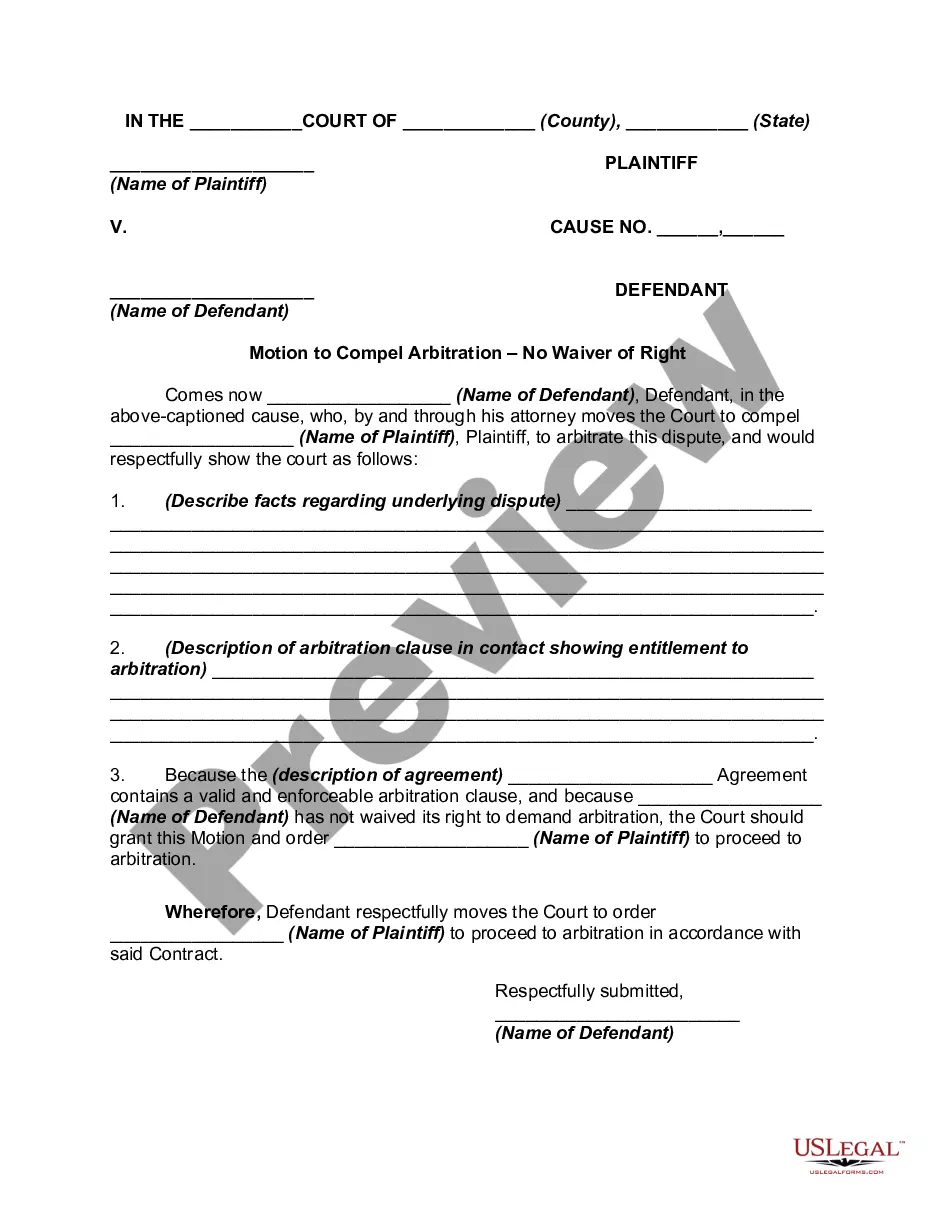
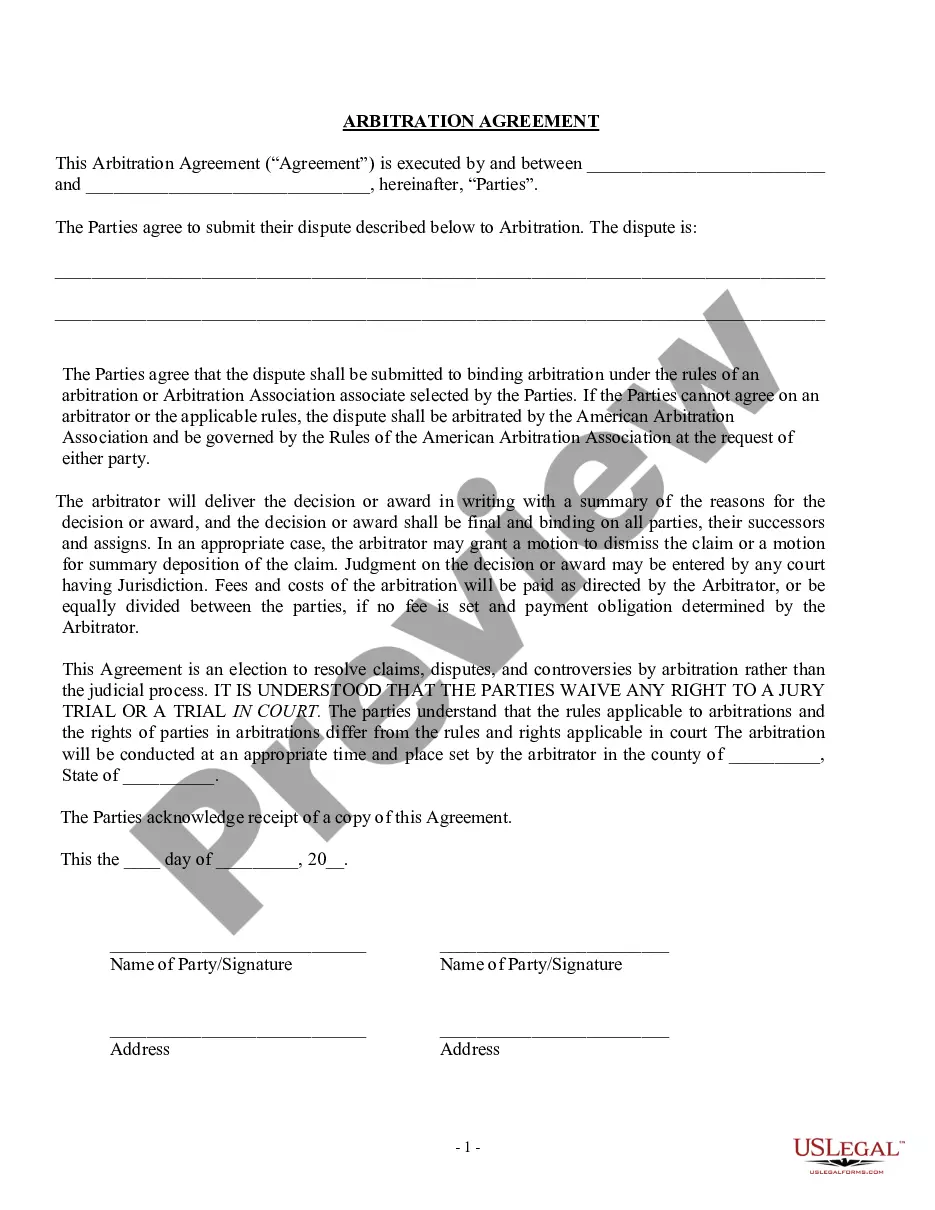
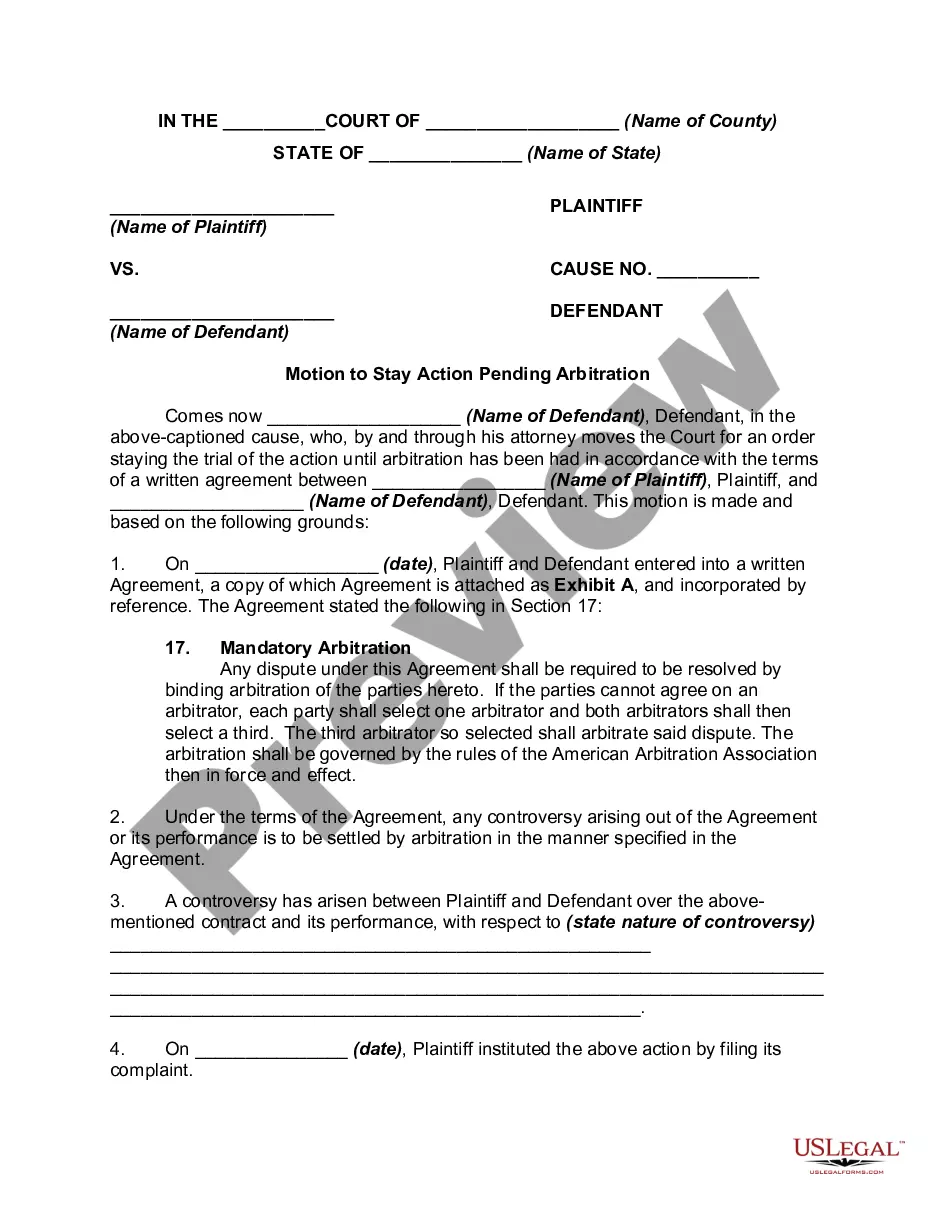
The Motion to Compel Arbitration - No Waiver of Right is a legal document used to request a court order compelling a party to arbitrate a dispute rather than pursue litigation. This form includes an arbitration clause, which outlines the obligation to resolve disputes through arbitration, helping to avoid the costs and time associated with court trials. Unlike a typical complaint, this form specifically addresses the enforcement of arbitration agreements and the assertion of rights to arbitration without any waiver claims.
Key parts of this document
- Caption with case details, including names of the plaintiff and defendant.
- Clearly defined facts regarding the underlying dispute that necessitate arbitration.
- Information detailing the arbitration clause from the contract, establishing the right to arbitration.
- Assertions that the defendant has not waived their right to arbitration.
- A request for the court to compel the plaintiff to proceed to arbitration.
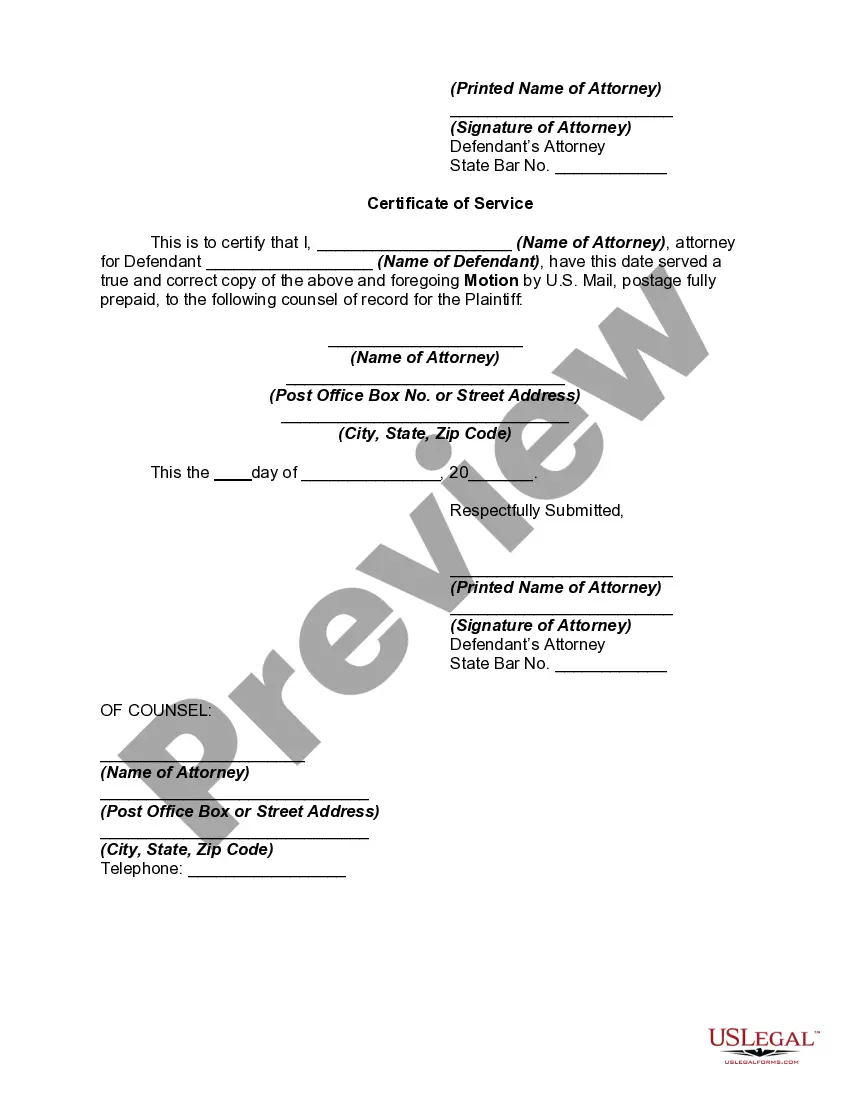
- Certificate of service for notifying opposing counsel regarding the motion.

When this form is needed
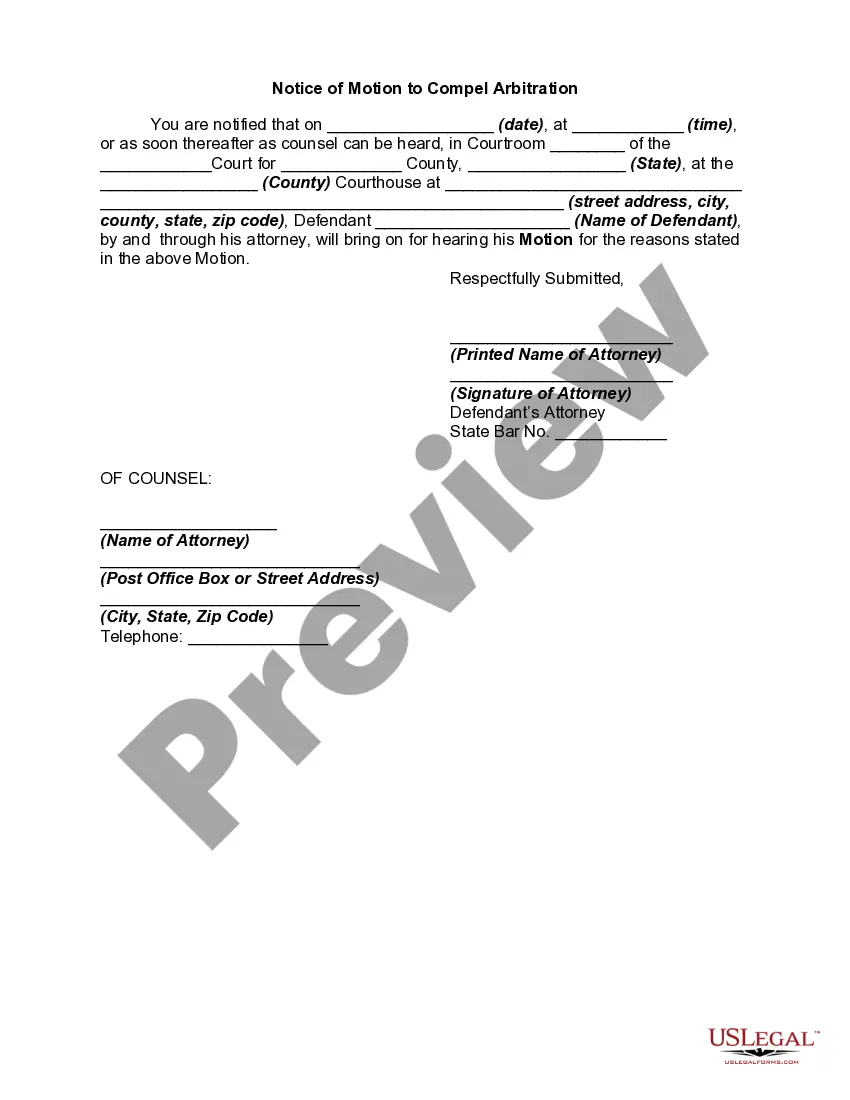
This form should be used when one party in a contract believes that a dispute falls under an arbitration agreement and wants to ensure that the other party is compelled to resolve the matter through arbitration. Common scenarios include commercial contracts, employment agreements, or consumer contracts that contain arbitration clauses, especially when the other party refuses to participate in arbitration or seeks litigation instead.
Intended users of this form
- Defendants in legal disputes who want to invoke arbitration rights.
- Parties involved in contracts with binding arbitration clauses.
- Attorneys representing clients who seek to enforce arbitration agreements.
How to complete this form
- Identify and enter the names of the plaintiff and defendant in the case caption.
- Describe the facts of the underlying dispute clearly and concisely.
- Reference the arbitration clause from the relevant agreement, demonstrating the entitlement to arbitration.
- Assert that the right to arbitration has not been waived by the defendant.
- Sign the form by the attorney representing the defendant, including printed name and state bar number.
Does this document require notarization?
This form usually doesn’t need to be notarized. However, local laws or specific transactions may require it. Our online notarization service, powered by Notarize, lets you complete it remotely through a secure video session, available 24/7.
Get your form ready online
Our built-in tools help you complete, sign, share, and store your documents in one place.
Make edits, fill in missing information, and update formatting in US Legal Forms—just like you would in MS Word.
Download a copy, print it, send it by email, or mail it via USPS—whatever works best for your next step.
Sign and collect signatures with our SignNow integration. Send to multiple recipients, set reminders, and more. Go Premium to unlock E-Sign.
If this form requires notarization, complete it online through a secure video call—no need to meet a notary in person or wait for an appointment.
We protect your documents and personal data by following strict security and privacy standards.

Make edits, fill in missing information, and update formatting in US Legal Forms—just like you would in MS Word.

Download a copy, print it, send it by email, or mail it via USPS—whatever works best for your next step.

Sign and collect signatures with our SignNow integration. Send to multiple recipients, set reminders, and more. Go Premium to unlock E-Sign.

If this form requires notarization, complete it online through a secure video call—no need to meet a notary in person or wait for an appointment.

We protect your documents and personal data by following strict security and privacy standards.
Common mistakes to avoid
- Failing to include all necessary details in the facts section, which may weaken the motion.
- Not properly referencing or including the arbitration clause, leading to confusion over entitlement.
- Omitting the certificate of service, which is essential for notifying the opposing party.
- Not ensuring that the motion is filed within any relevant deadlines for motion filings.
Why complete this form online
- Convenient access to a pre-drafted legal form that can save time.
- Editable fields allow for personalized input relevant to your specific case.
- Provides reliability as the form is drafted by licensed attorneys, ensuring legal validity.
Quick recap
- The Motion to Compel Arbitration is crucial for enforcing arbitration agreements.
- Understanding the requirements and components of the form can streamline the arbitration process.
- Ensuring proper completion of this form can prevent delay and confusion in court proceedings.
Looking for another form?
Form popularity
FAQ
Dispositive or non-dispositive motion for purposes of § 636. Lee v.The First and Third Circuits, along with a district court in this circuit, however, have concluded that a motion to compel arbitration is a non-dispositive motion within the jurisdiction of a magistrate judge.
The plaintiff can arbitrate and challenge the decision to compel arbitration by appeal after the merits of the case are decided by the arbitrator and confirmed as a judgment.
In most cases, arbitration is a voluntary process. In other words, both parties must agree to arbitrate their dispute one party cannot be forced into it.Most states have statutes governing arbitration, and there is a federal arbitration act that may also apply to your case.
Definition. A motion to compel arbitration is a request made to a court in a pending litigation matter to force a party to submit the dispute to arbitration.
In the event that a party fails to appear at the arbitration, the arbitration must still proceed.Unless the law provides to the contrary, the arbitration may proceed in the absence of any party or representative who, after due notice, fails to be present or fails to obtain a postponement.
Sufficient background facts so that the judge understands the outlines of the dispute. Text of the arbitration agreement. Identities of the parties to the lawsuityou and the other person or company. Explanation of how the court has jurisdiction over the lawsuit.
Sufficient background facts so that the judge understands the outlines of the dispute. Text of the arbitration agreement. Identities of the parties to the lawsuityou and the other person or company. Explanation of how the court has jurisdiction over the lawsuit.