Media Rights Agreement between High School Athletic Association and Radio of Television Station
What this document covers
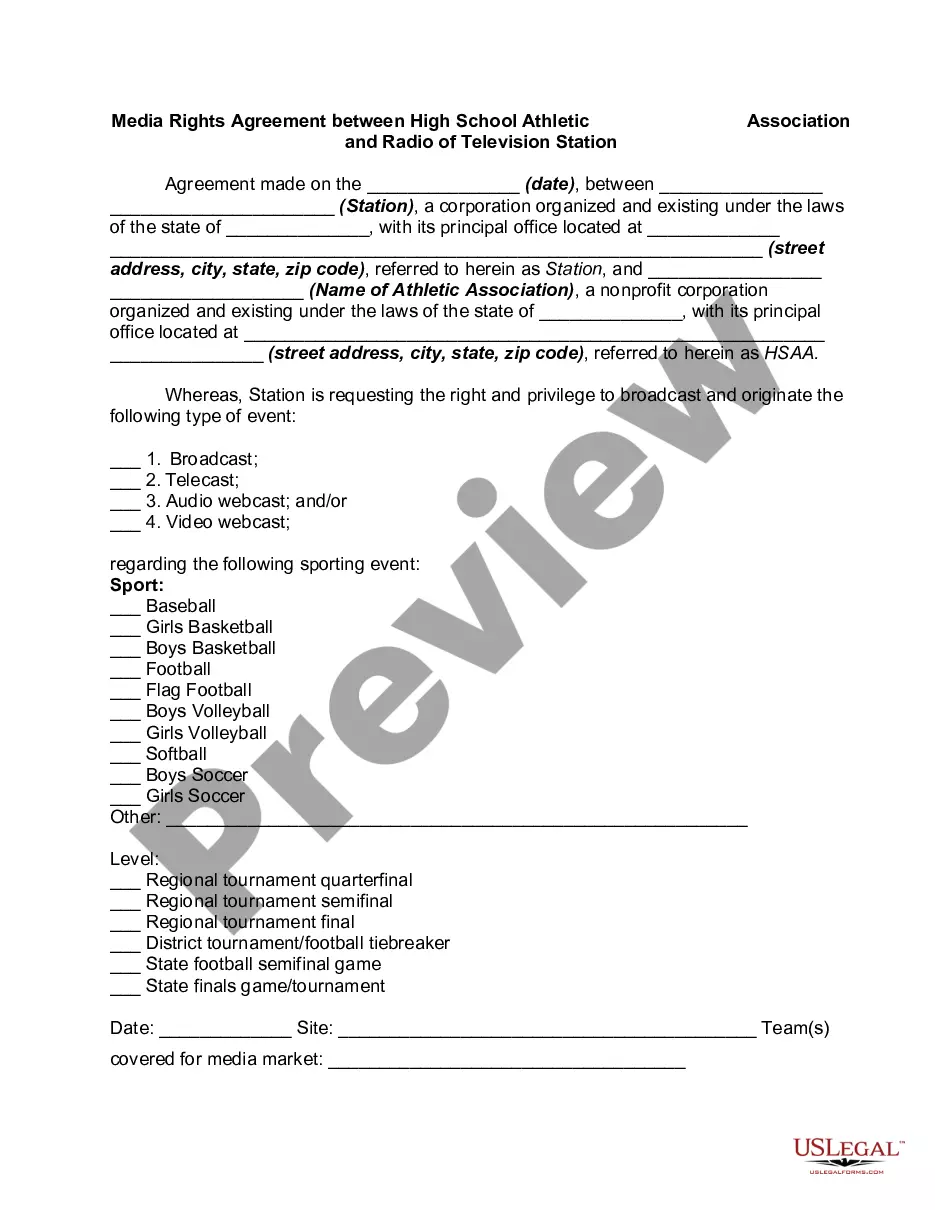
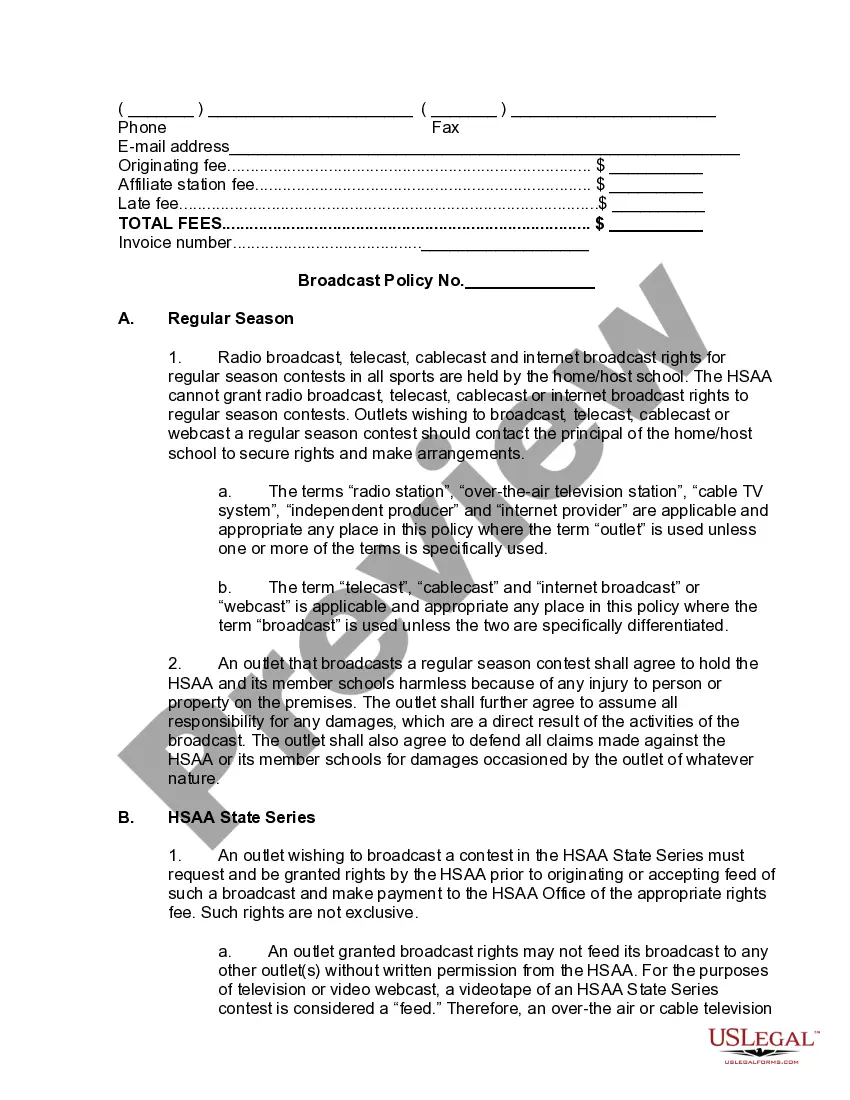
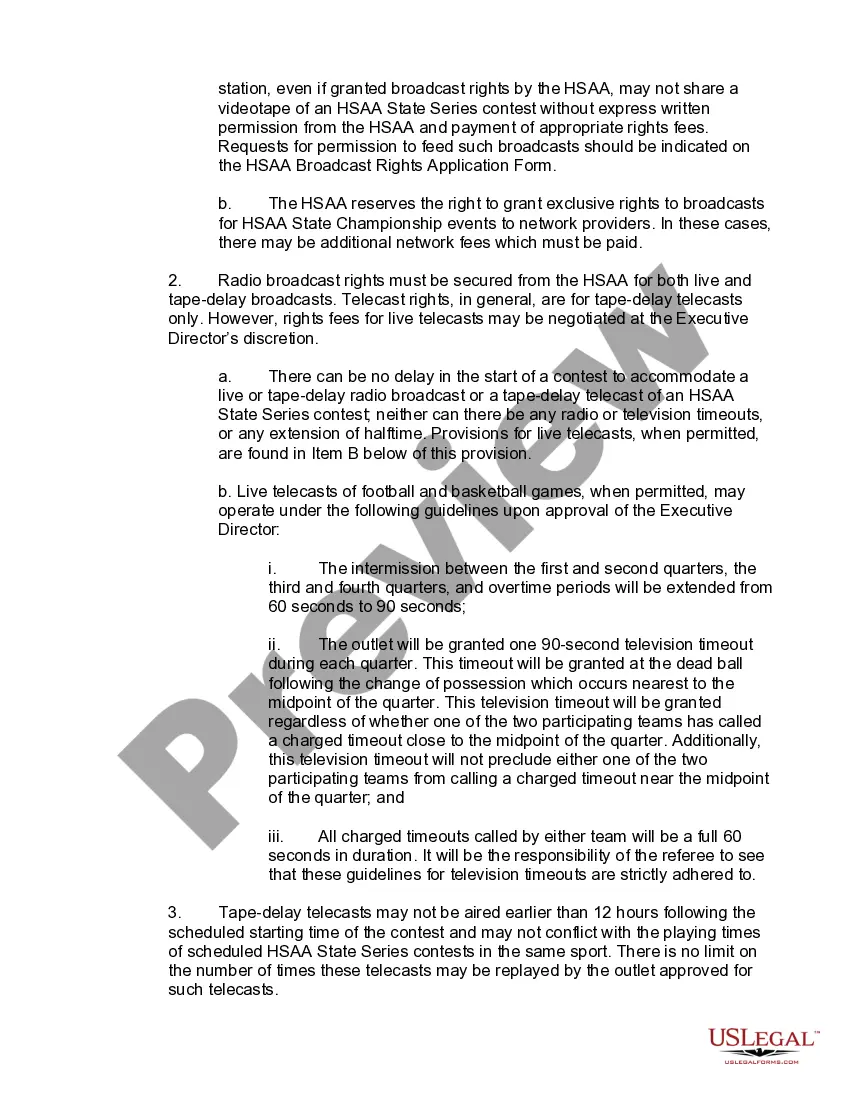
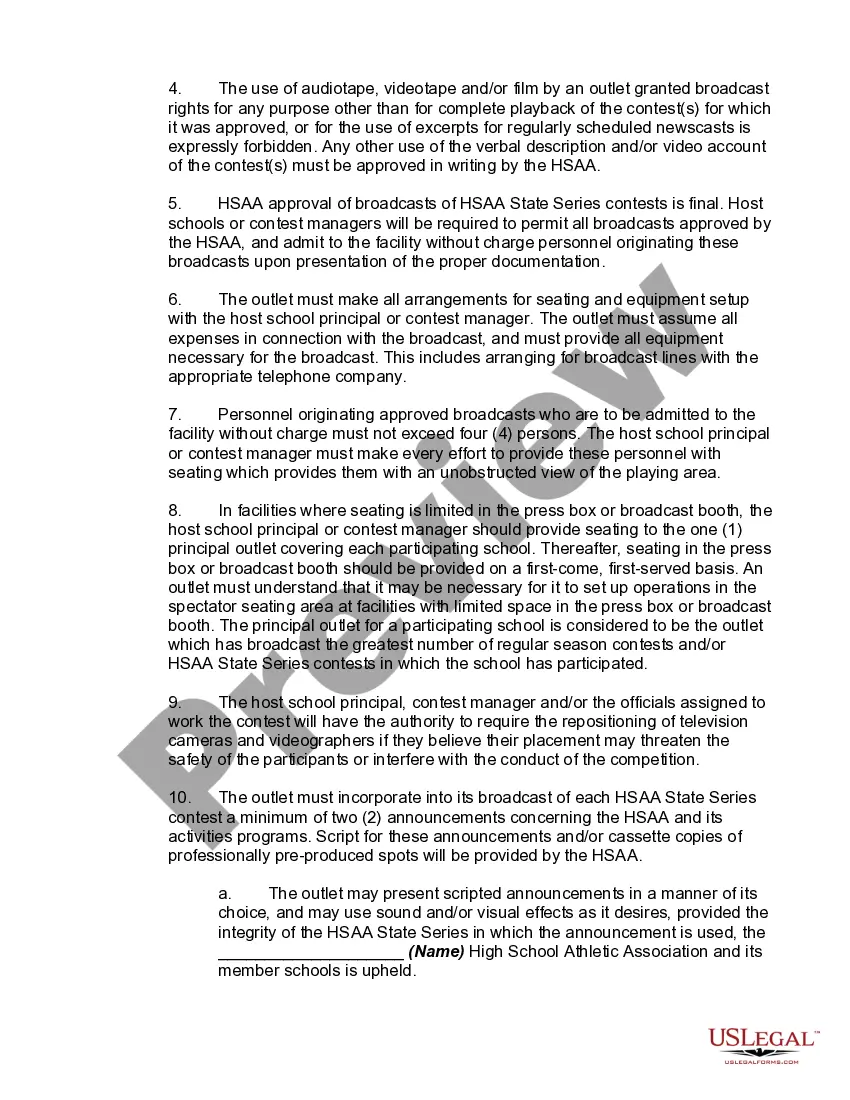
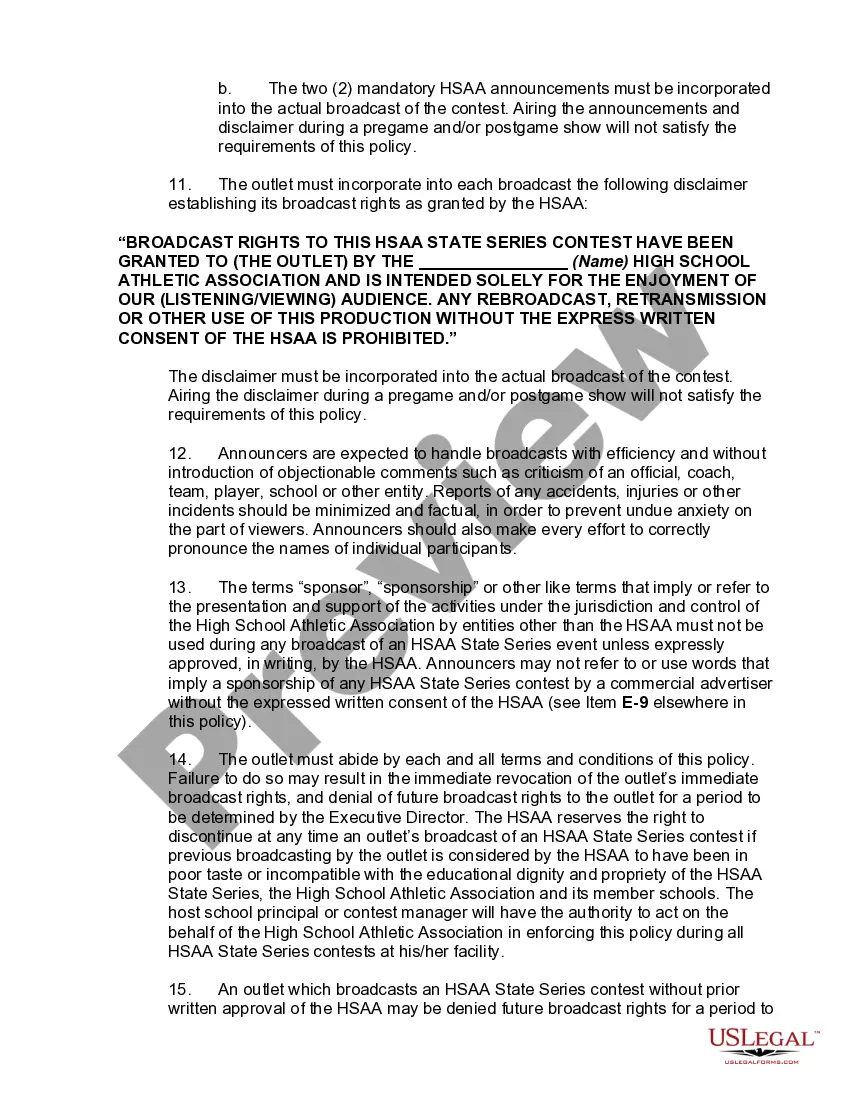
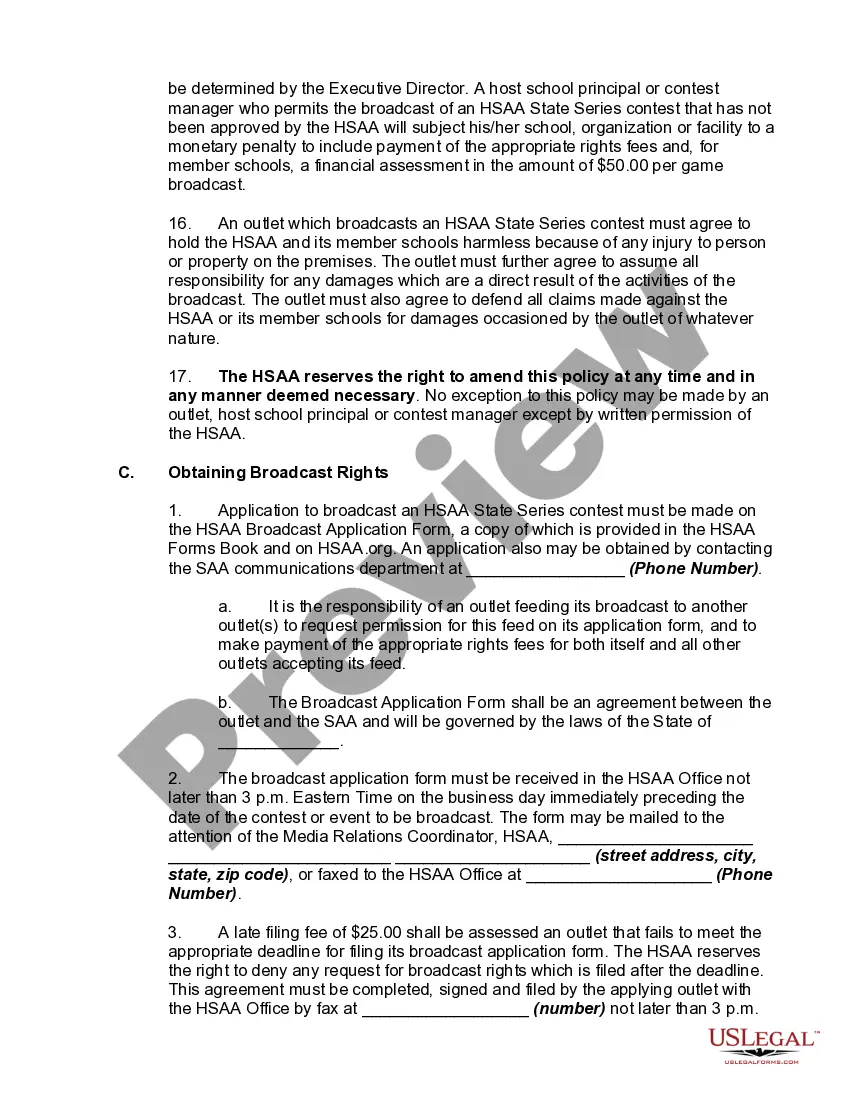
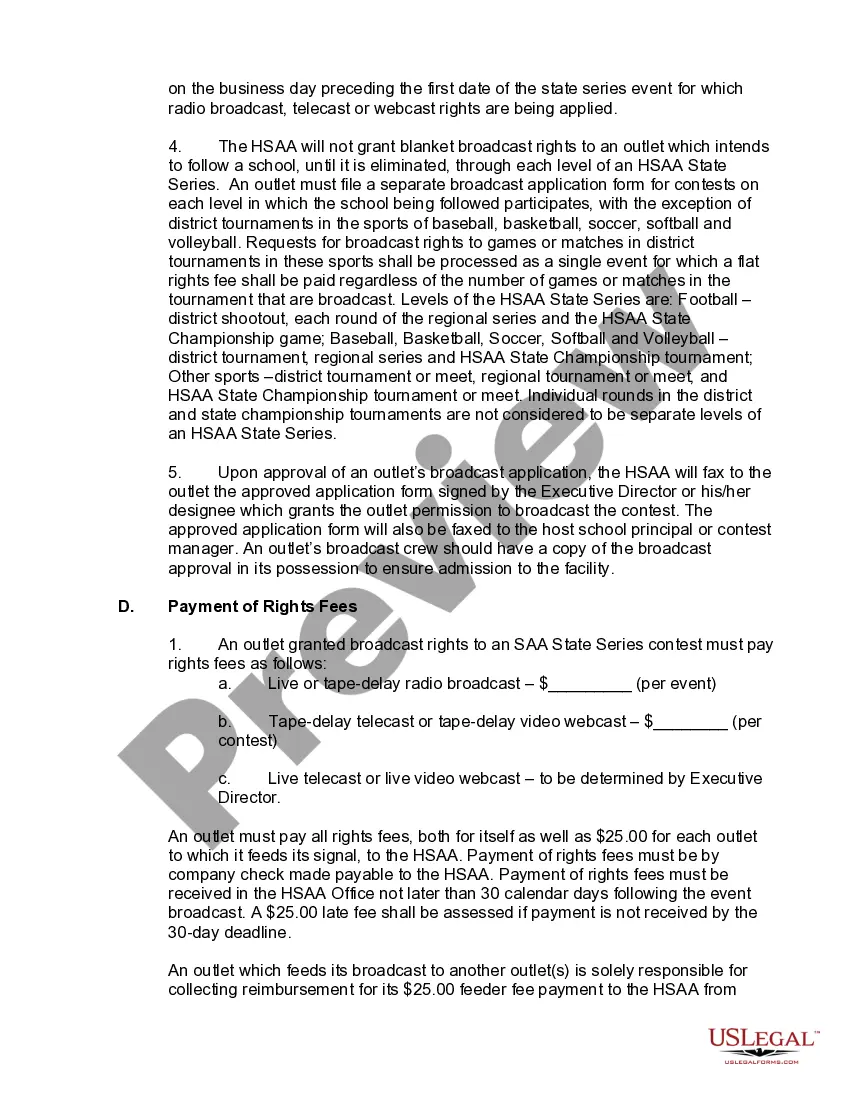
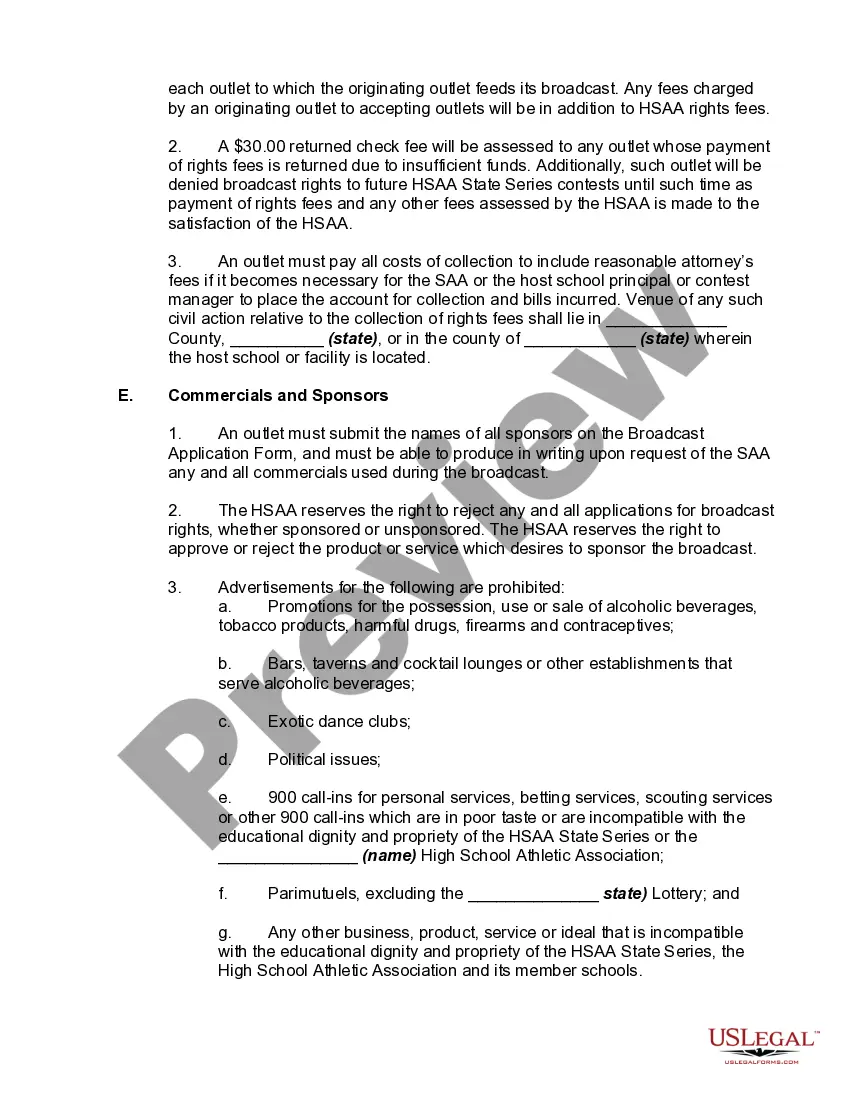
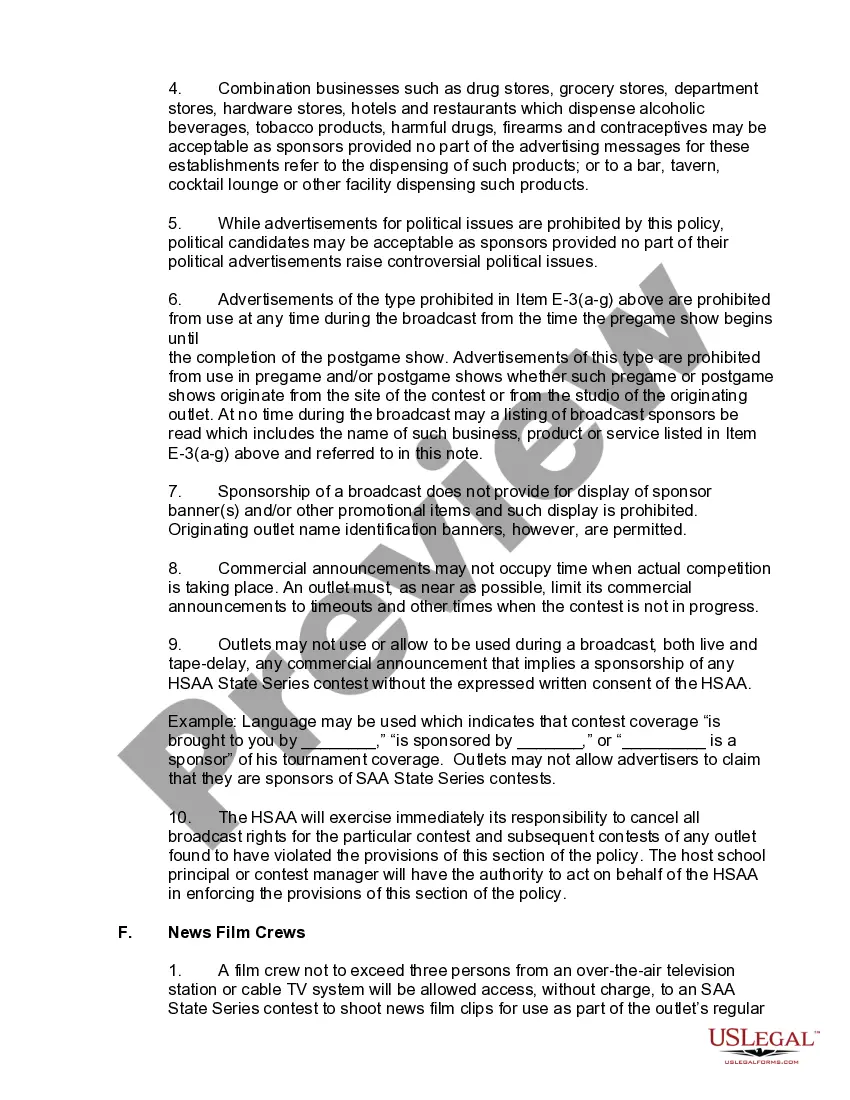
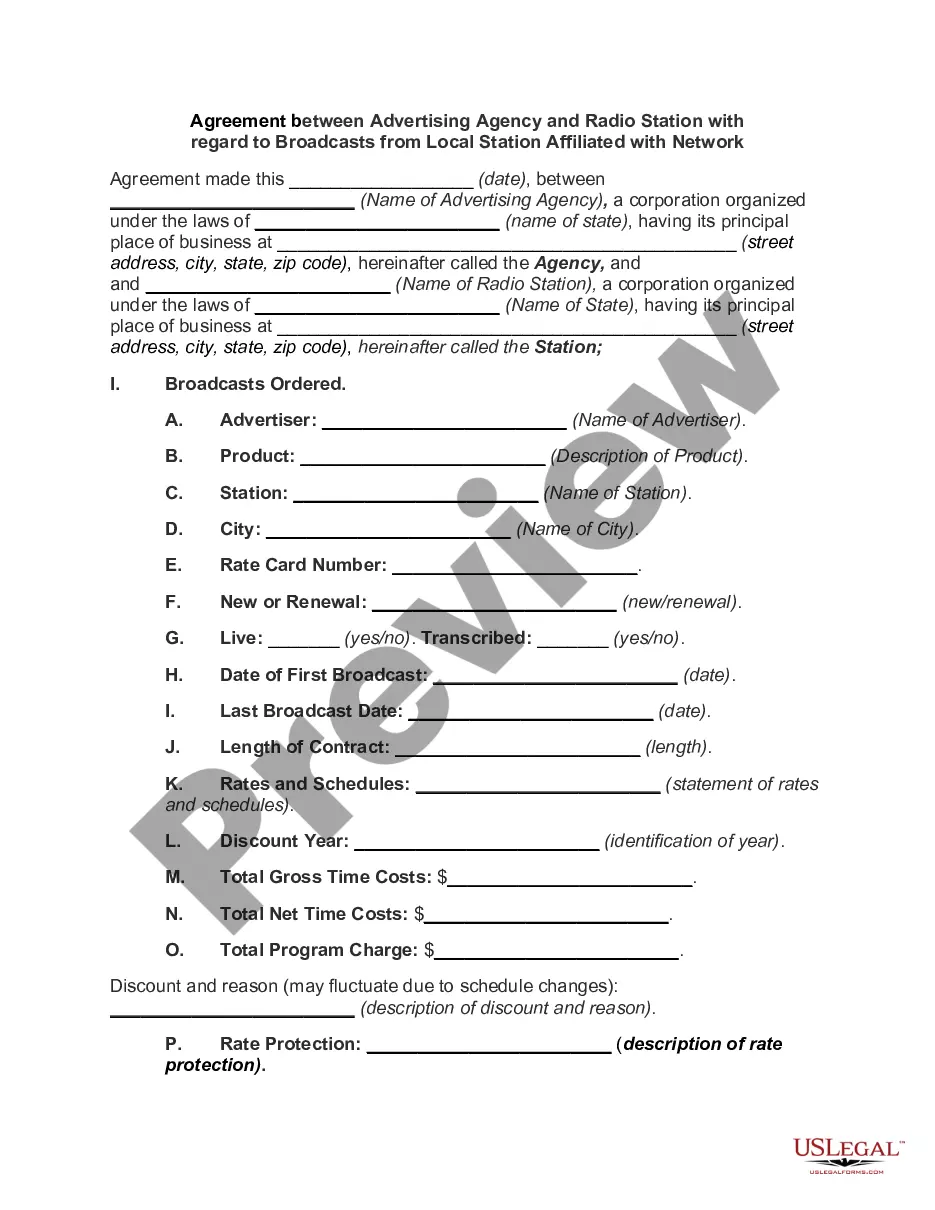
The Media Rights Agreement between High School Athletic Association and Radio or Television Station is a legal document that grants rights to a media station for broadcasting high school sporting events. This form outlines the terms and conditions for the media station's use of broadcast rights, including audio and video webcasts. Unlike other broadcasting agreements, this form is tailored specifically for high school athletics and is designed to comply with the regulations of the respective high school athletic association.
Key parts of this document
- Date of the agreement and identification of the media station and athletic association.
- Types of broadcasts covered: radio, television, audio webcast, and video webcast.
- Details of the sporting events being covered, including sport type, level, and date.
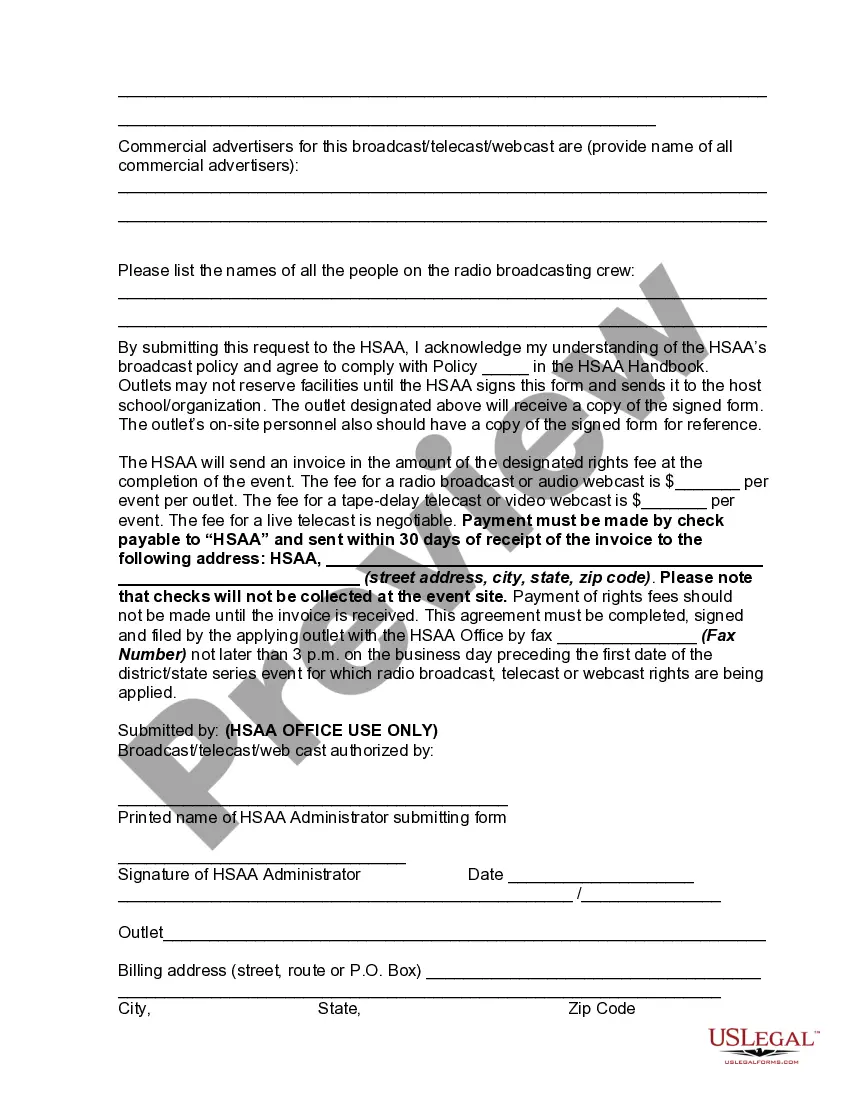
- Commercial advertisers involved in the broadcast and crew members listed.
- Rights fee structure and payment details, including deadlines and addresses for invoice submission.

Situations where this form applies
This form should be used when a media station wishes to obtain broadcasting rights for high school athletic events organized by the respective high school athletic association. It is essential to secure this agreement to ensure compliance with the association's policies and to avoid any legal implications arising from unauthorized broadcasting.
Who needs this form
This form is intended for:
- Radio stations or television stations seeking to broadcast high school sporting events.
- High school athletic associations that need a formal agreement with media outlets.
- Media production companies intending to live stream or record high school events.
How to prepare this document
- Identify and enter the date and parties involved: the media station and the athletic association.
- Select the type of broadcast (radio, television, audio webcast, or video webcast) and specify the sporting events with relevant details.
- List the commercial advertisers supporting the broadcast and the members of the broadcasting crew.
- Fill in the rights fee amount and any payment instructions as outlined in the agreement.
- Ensure all parties sign the agreement and submit it to the athletic association by the specified deadline.
Notarization requirements for this form
This form does not typically require notarization unless specified by local law. However, it is advisable to confirm with the applicable high school athletic associationâs guidelines to ensure compliance with any jurisdictional requirements.
Get your form ready online
Our built-in tools help you complete, sign, share, and store your documents in one place.
Make edits, fill in missing information, and update formatting in US Legal Forms—just like you would in MS Word.
Download a copy, print it, send it by email, or mail it via USPS—whatever works best for your next step.
Sign and collect signatures with our SignNow integration. Send to multiple recipients, set reminders, and more. Go Premium to unlock E-Sign.
If this form requires notarization, complete it online through a secure video call—no need to meet a notary in person or wait for an appointment.
We protect your documents and personal data by following strict security and privacy standards.

Make edits, fill in missing information, and update formatting in US Legal Forms—just like you would in MS Word.

Download a copy, print it, send it by email, or mail it via USPS—whatever works best for your next step.

Sign and collect signatures with our SignNow integration. Send to multiple recipients, set reminders, and more. Go Premium to unlock E-Sign.

If this form requires notarization, complete it online through a secure video call—no need to meet a notary in person or wait for an appointment.

We protect your documents and personal data by following strict security and privacy standards.
Mistakes to watch out for
- Failing to submit the agreement by the deadline set by the athletic association.
- Omitting essential details such as the broadcast type or sporting events covered.
- Not including all required signatures or entering incorrect information in any fields.
Advantages of online completion
- Convenient access allows for quick downloading and filling of the agreement.
- Easy editing ensures all parties can customize the agreement as needed.
- Form reliability is assured, as it is drafted by licensed attorneys to meet legal standards.
Legal use & context
- This agreement is legally binding and outlines the rights and responsibilities of both the media station and the athletic association.
- Both parties must adhere to the HSAA policies detailed in the agreement.
- Failure to comply with the terms may result in revocation of broadcasting rights.
Quick recap
- The form establishes clear communication and expectations between media outlets and high school athletic associations.
- Submitting this agreement accurately and on time is crucial for securing broadcast rights.
- Always consult local laws and HSAA policies when completing this form to ensure compliance.
Looking for another form?







Form popularity
FAQ
These include such things as the right to free speech and association, to due process, equality, autonomy, safety and privacy, and accountability in contracts and advertising, which regulate the treatment of students by teachers and administrators.
Students have the right to learn and to be free to express their opinions, feelings and ideas. They also have the responsibility to work hard, to do their best, to complete assignments and to respect others' opinions, feelings and ideas.Students have the right to be safe and secure in school.
The U.S. Supreme Court has said that students do not shed their constitutional rights to freedom of speech and expression at the schoolhouse gate.Though public school students do possess First Amendment freedoms, the courts allow school officials to regulate certain types of student expression.
People have the right to be free from intrusion into personal matters, even in a school setting. The right to student privacy extends to education records, admissions, and conduct, for example.
Be in a safe and supportive learning environment free from discrimination, harassment, bullying, and bigotry; Receive a written copy of the school's policies and procedures,including the Disciplinary Code and the school district's Bill of Student Rights;Have your school records kept confidential; and.
The court declared that students and teachers do not shed their constitutional rights to freedom of speech or expression at the schoolhouse gate. The First Amendment ensures that students cannot be punished for exercising free speech rights, even if school administrators don't approve of what they are saying.
Students and youth shall have the right to healthy, high quality food regardless of wealth, poverty, or place of residence. Students and youth shall have the right to employment, to support themselves while they are in school and college.
A student shall have the right to participate in a free exchange of ideas, and there shall be no University rule or administrative rule that in any way abridges the rights of freedom of speech, expression, petition and peaceful assembly as set forth in the U.S. Constitution.
The court declared that students and teachers do not shed their constitutional rights to freedom of speech or expression at the schoolhouse gate. The First Amendment ensures that students cannot be punished for exercising free speech rights, even if school administrators don't approve of what they are saying.