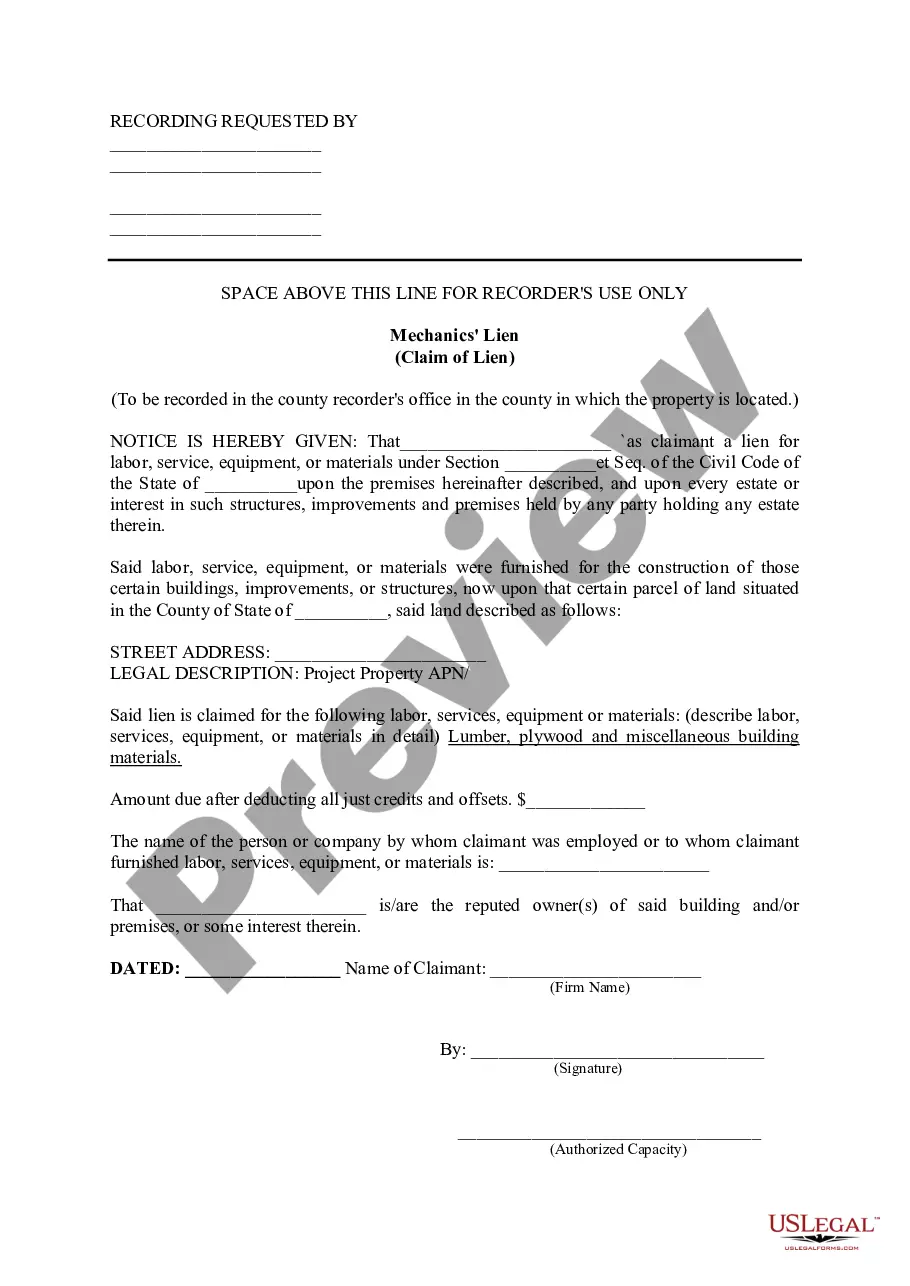
Employment of Consultant or Consulting Agreement with Clauses as to Confidentiality, Covenants not to Compete and Ownership of Inventions
Understanding this form
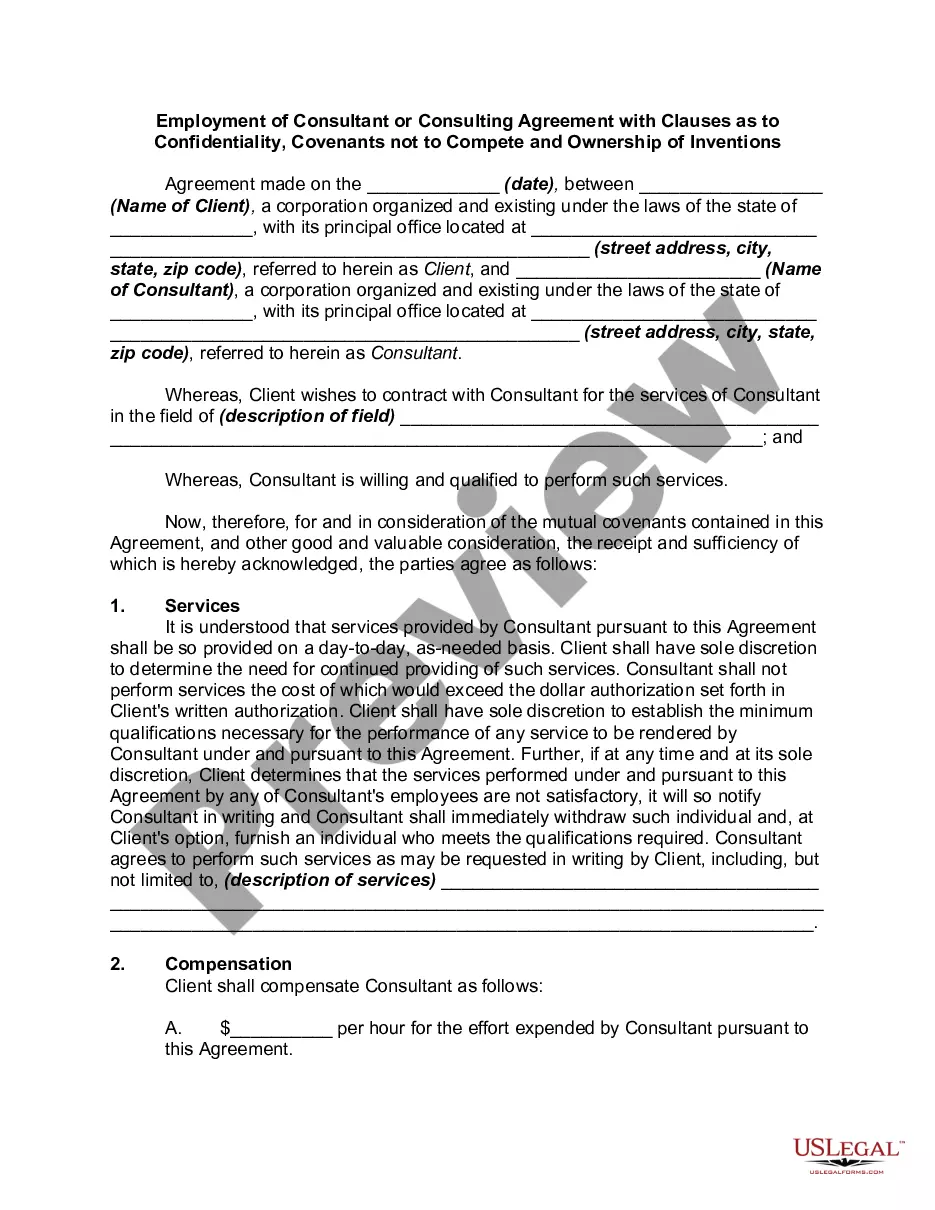
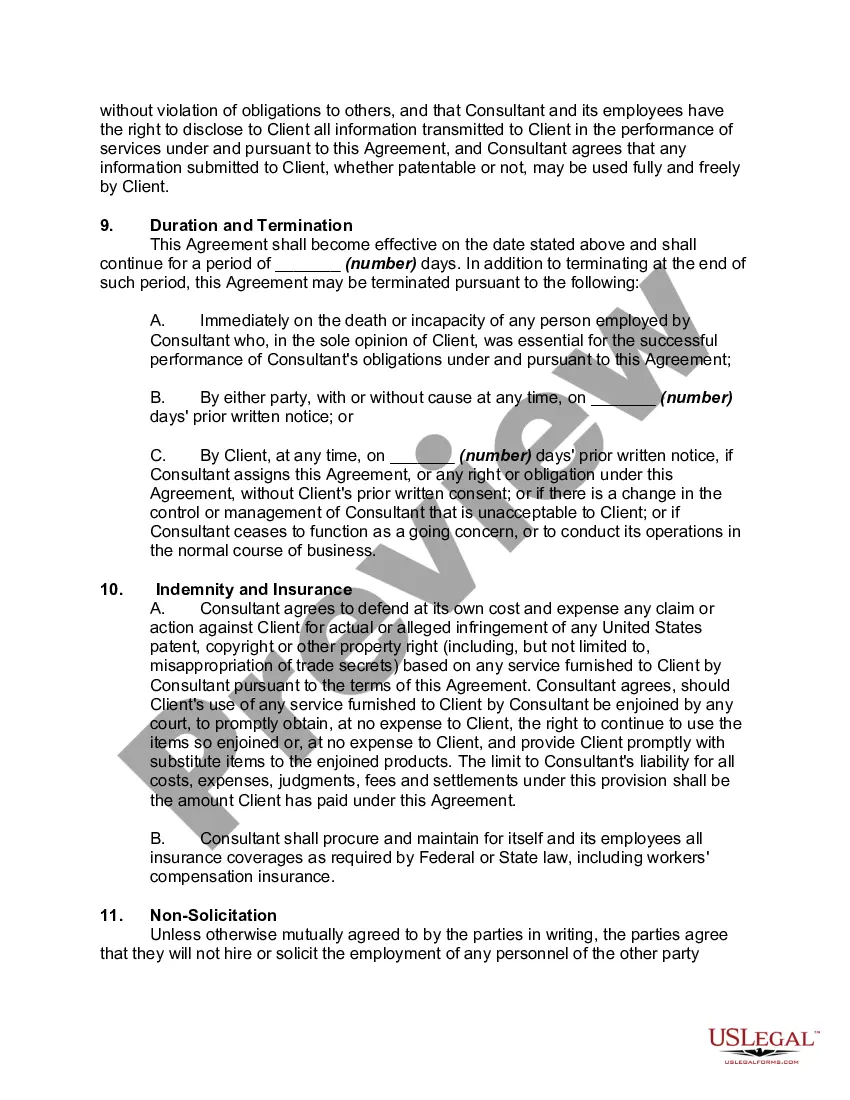
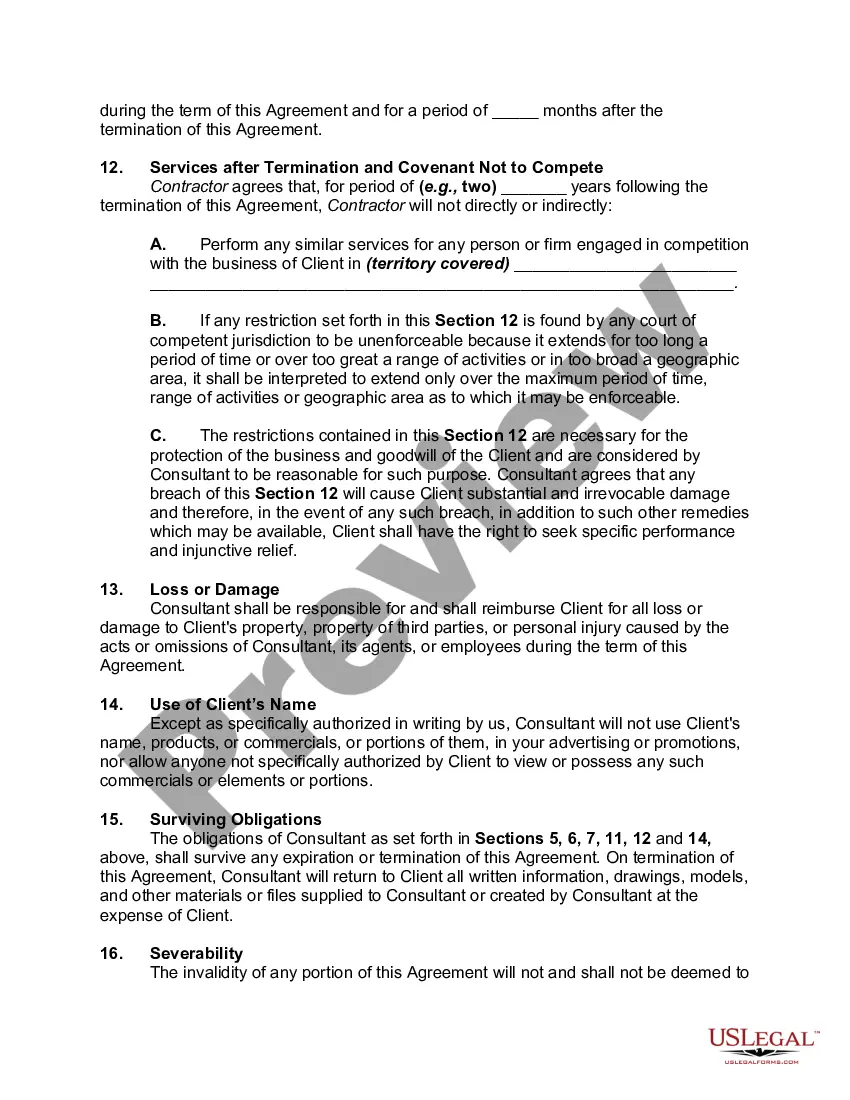
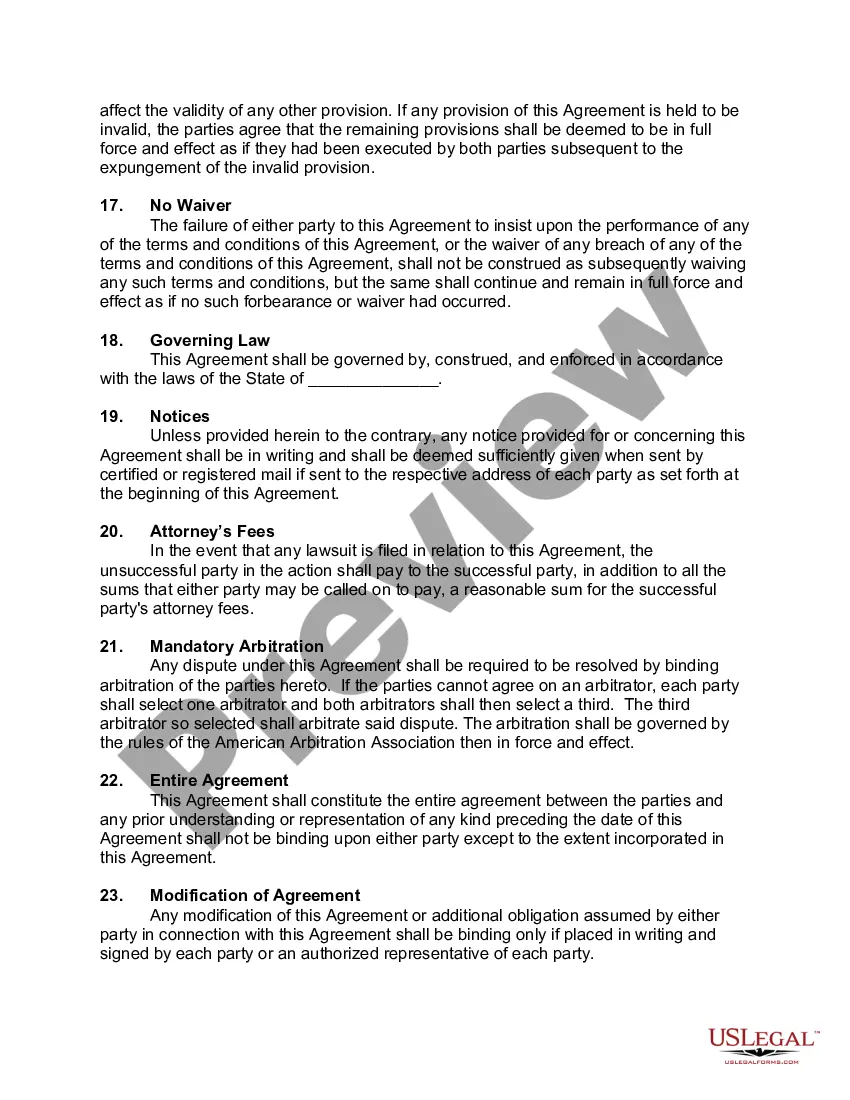
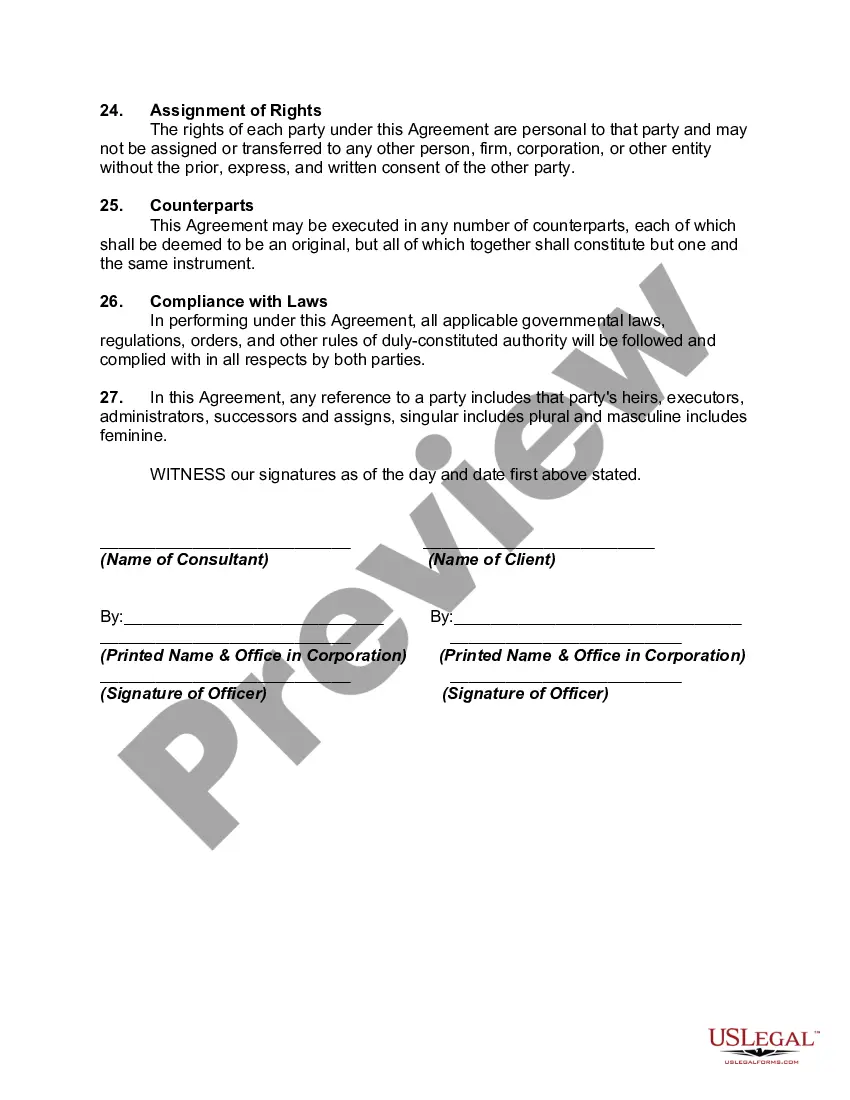
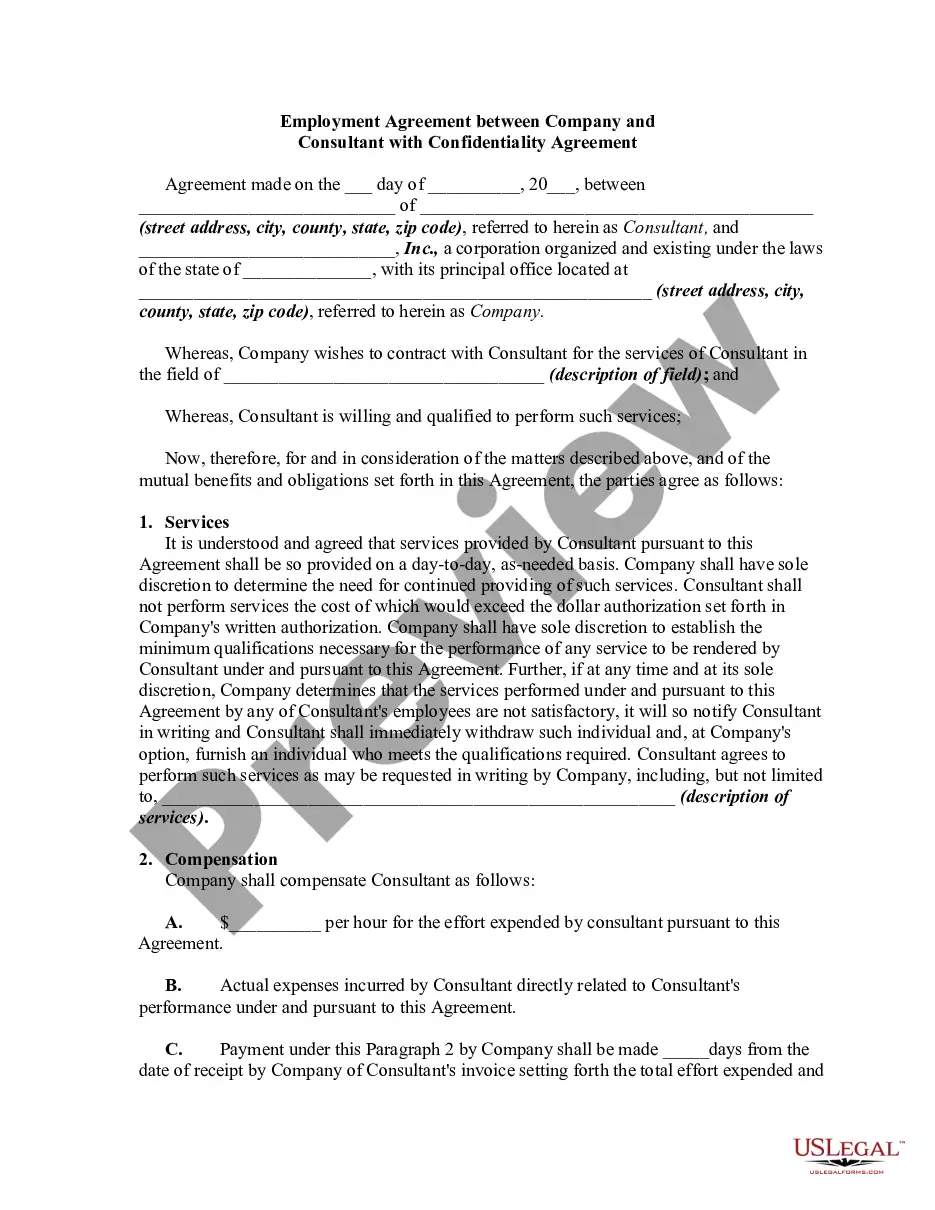
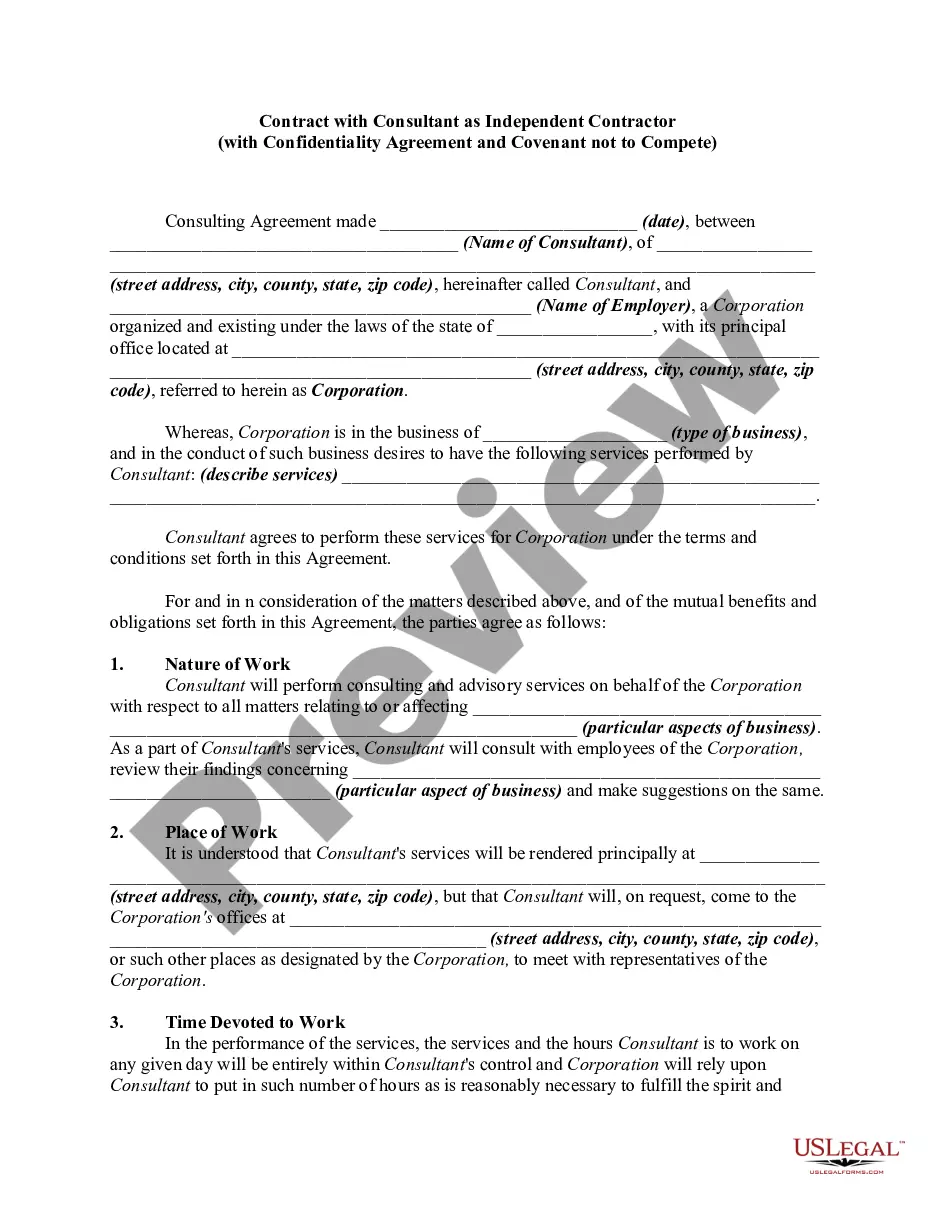
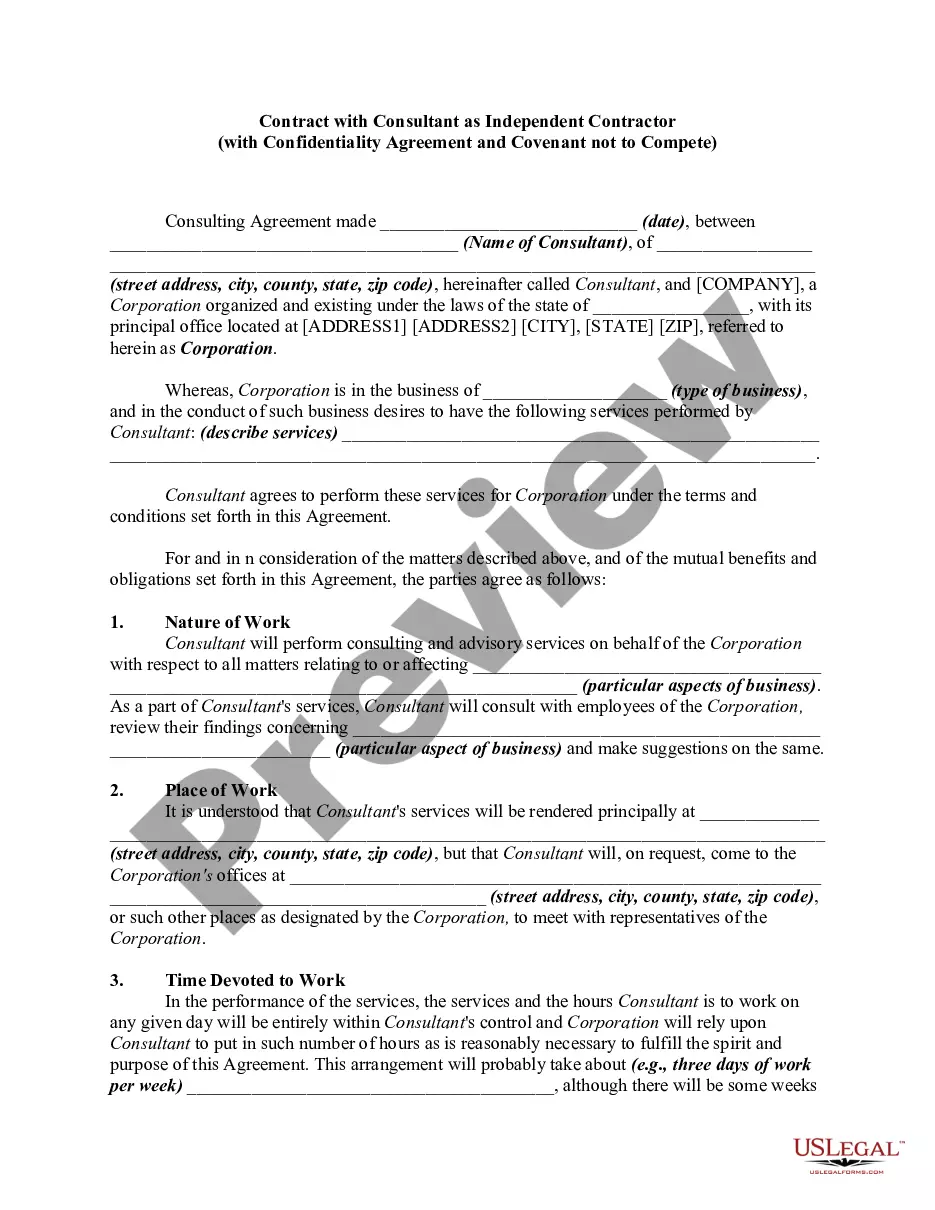
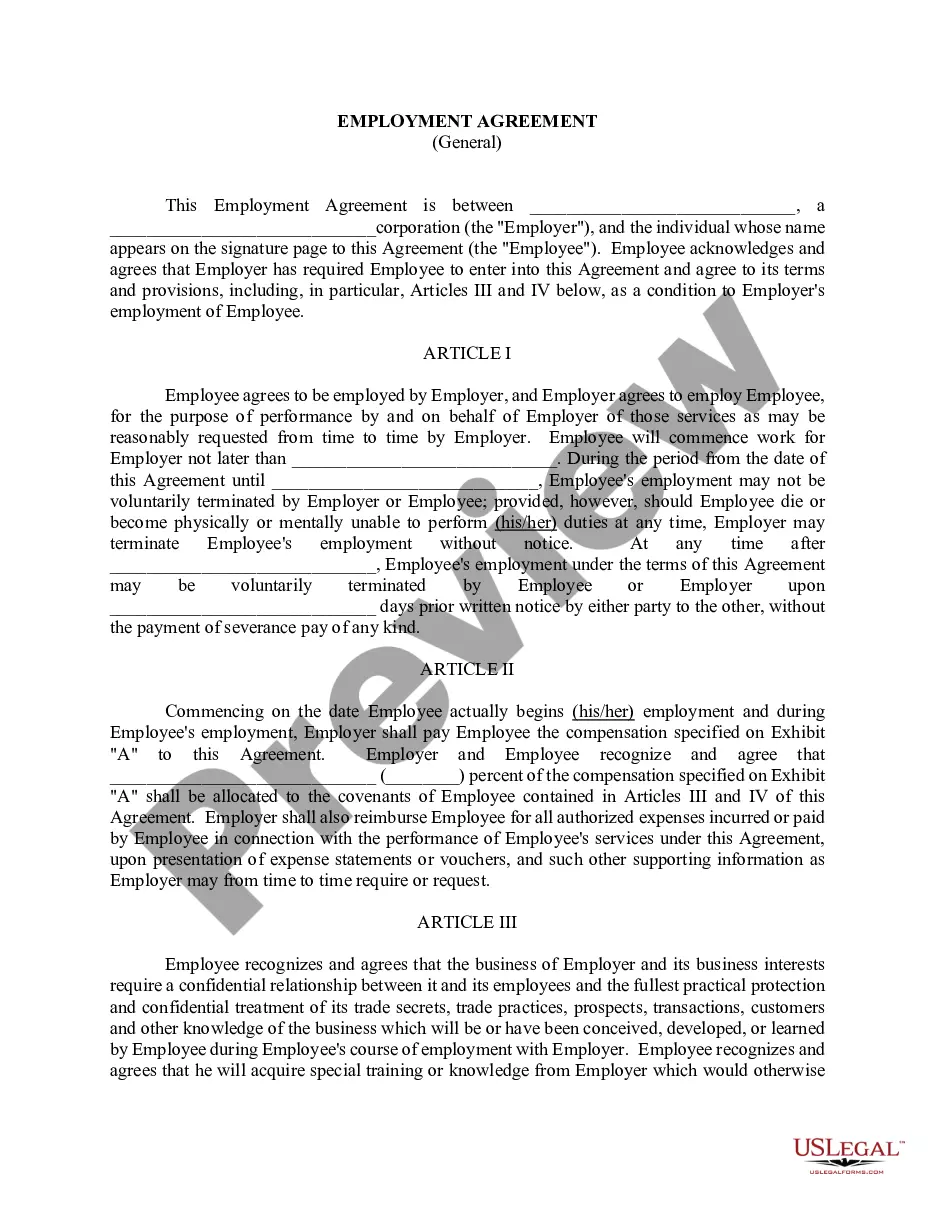
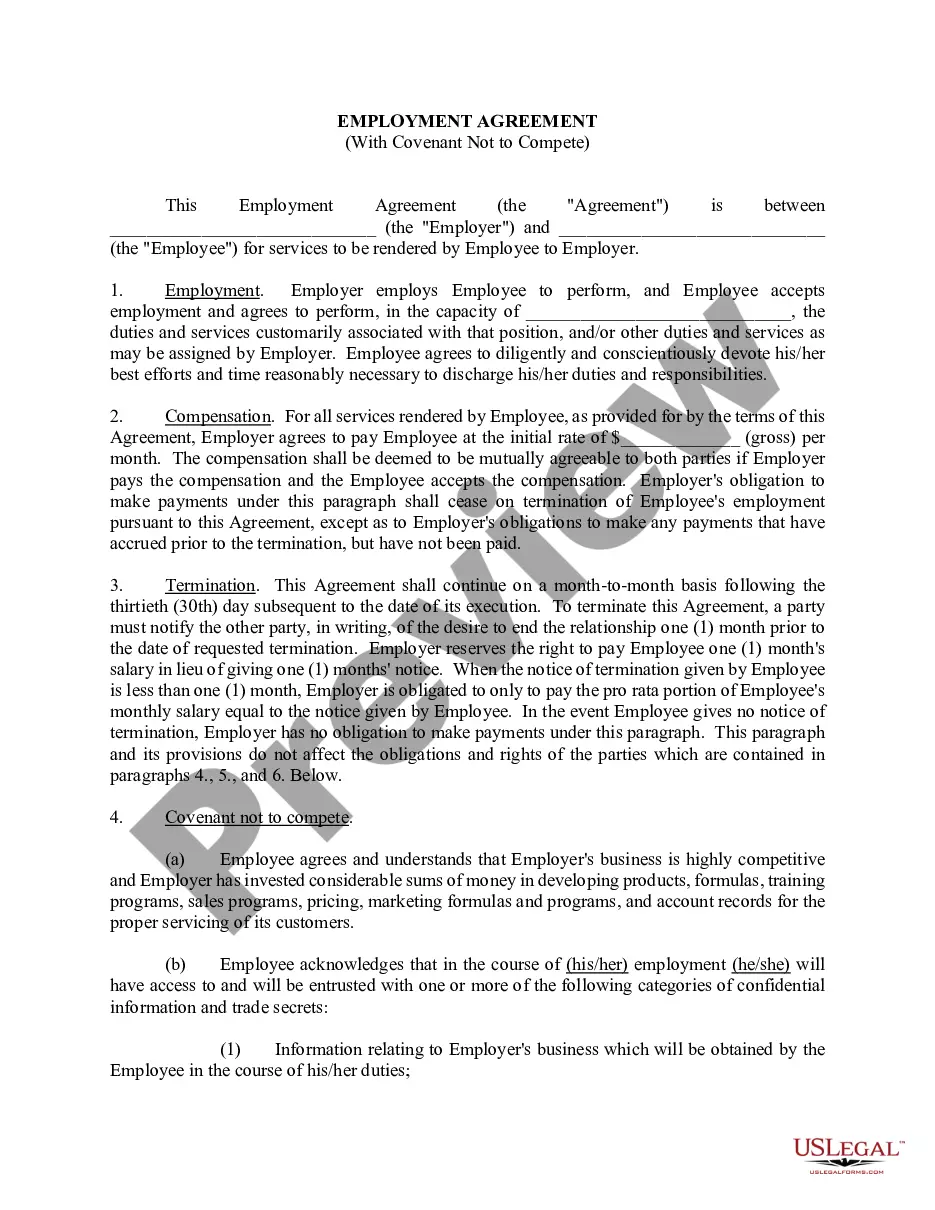
The Employment of Consultant or Consulting Agreement is a legal document that formalizes a relationship between a client and a consultant who provides services on an independent contractor basis. This form is distinct from employment contracts, as it outlines the terms under which the consultant works without being under the direct control of the client. It includes crucial elements such as confidentiality, non-compete clauses, and ownership rights regarding inventions and intellectual property developed during the consulting period.
Key parts of this document
- Identification of both parties involved: the client and the consultant.
- Clear definition of the services to be provided and how they will be compensated.
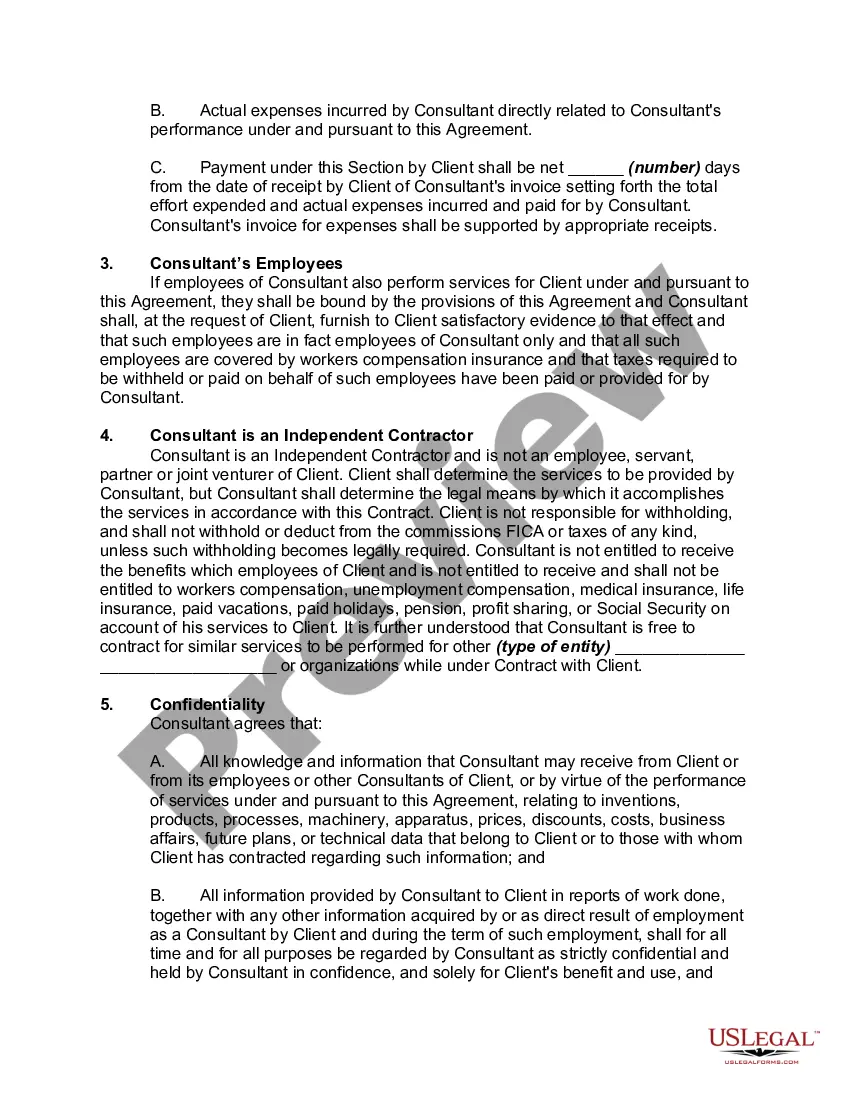
- Confidentiality provisions that protect sensitive information exchanged between parties.
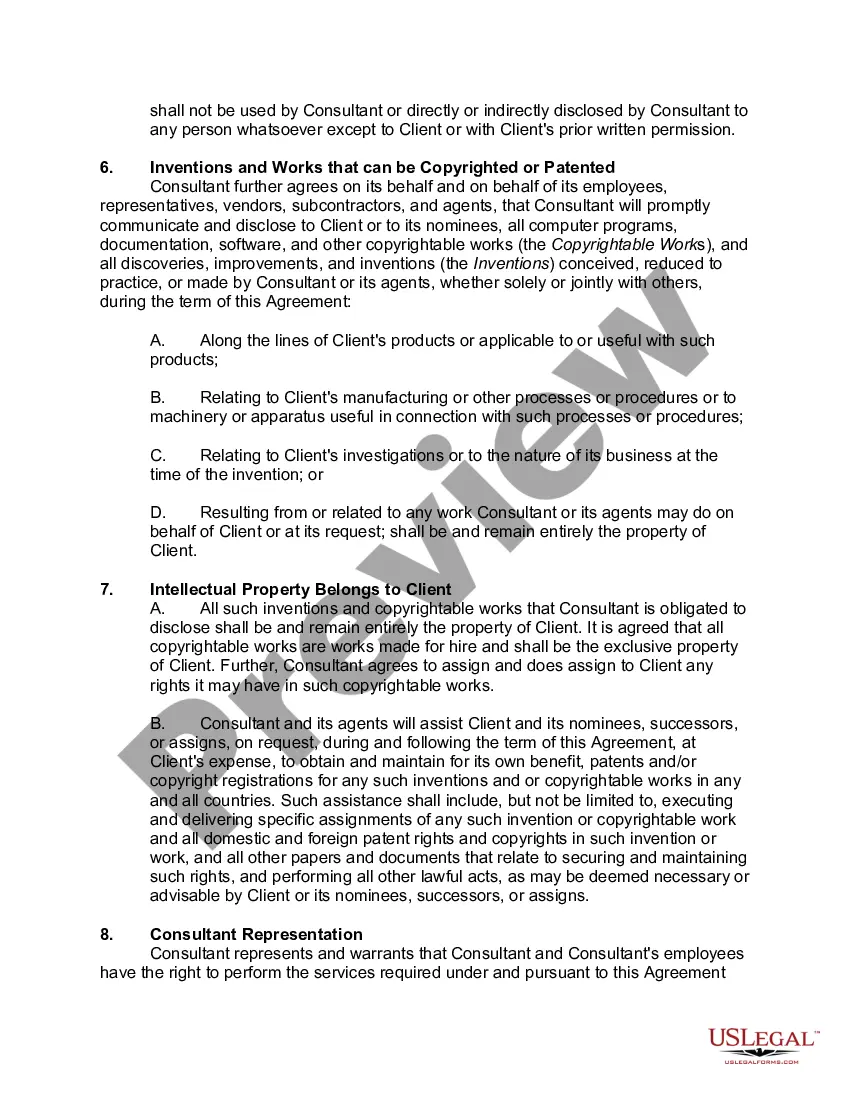
- Clauses regarding ownership of inventions and copyrightable works created during the engagement.
- Terms related to termination, indemnity, and restrictions on solicitation and competition.
When this form is needed
This form should be used when a business wishes to hire an independent contractor for specific services, particularly when the engagement requires the sharing of confidential information or when the business needs to protect its proprietary inventions and works. It is beneficial in situations where the consultant will be developing ideas, products, or services that will belong to the client and when it's necessary to establish clear parameters for the working relationship.
Intended users of this form
- Businesses looking to engage contractors for specialized projects.
- Consultants who want to formalize their services with legal protection.
- Legal professionals drafting agreements for clients involved in consultancy arrangements.
- Companies that need to ensure confidentiality and ownership of developed work.
Completing this form step by step
- Identify and enter the date of the agreement.
- Provide the full names and addresses of both the client and the consultant.
- Clearly describe the services being provided by the consultant.
- Specify the terms of compensation, including payment rates and expense reimbursements.
- Review and sign the agreement to finalize the legal relationship.
Notarization requirements for this form
This form does not typically require notarization unless specified by local law. However, having the agreement notarized can add an additional layer of verification and may be beneficial in some cases.
Get your form ready online
Our built-in tools help you complete, sign, share, and store your documents in one place.
Make edits, fill in missing information, and update formatting in US Legal Forms—just like you would in MS Word.
Download a copy, print it, send it by email, or mail it via USPS—whatever works best for your next step.
Sign and collect signatures with our SignNow integration. Send to multiple recipients, set reminders, and more. Go Premium to unlock E-Sign.
If this form requires notarization, complete it online through a secure video call—no need to meet a notary in person or wait for an appointment.
We protect your documents and personal data by following strict security and privacy standards.

Make edits, fill in missing information, and update formatting in US Legal Forms—just like you would in MS Word.

Download a copy, print it, send it by email, or mail it via USPS—whatever works best for your next step.

Sign and collect signatures with our SignNow integration. Send to multiple recipients, set reminders, and more. Go Premium to unlock E-Sign.

If this form requires notarization, complete it online through a secure video call—no need to meet a notary in person or wait for an appointment.

We protect your documents and personal data by following strict security and privacy standards.
Typical mistakes to avoid
- Failing to specify the exact services to be provided, leading to ambiguity.
- Not adequately defining the terms of confidentiality, which can lead to breaches.
- Neglecting to clarify ownership of intellectual property created during the consultation.
- Using vague language that may not enforce the non-compete or non-solicitation clauses effectively.
Benefits of completing this form online
- Convenient access to professionally drafted templates, saving time and effort.
- Editability allows customization to fit specific business needs and situations.
- Reliable legal language formulated by licensed attorneys to protect both parties.
- Immediate download options ensure you can use the form right away.
Legal use & context
- Ensures mutual understanding and agreement on the consulting services.
- Helps protect trade secrets and sensitive client information.
- Establishes ownership of inventions and creations, safeguarding the clientâs intellectual property.
- Defines the legal rights and obligations, decreasing the risk of disputes.
Summary of main points
- The consulting agreement clarifies the relationship between the client and the consultant.
- Key elements include confidentiality, payment details, and intellectual property ownership.
- This form is essential for legal protection and to foster trust between parties.
- Proper completion and understanding of this form help prevent legal disputes.
Key terms explained
- Independent Contractor: A person or business that provides services under a contract but is not under the control of the client.
- Confidentiality: The obligation to keep certain information private and not disclose it to third parties.
- Intellectual Property: Creations of the mind, like inventions and designs, that are legally protected.
- Covenant Not to Compete: A clause preventing one party from engaging in competing services in a specified area.
Looking for another form?



Form popularity
FAQ
A confidentiality agreement (also called a nondisclosure agreement or NDA) is a legally binding contract in which a person or business promises to treat specific information as a trade secret and promises not to disclose the secret to others without proper authorization.
Well, if you are fortunate enough to be employed in California, the answer is NO, your current employer cannot stop you from going to work for a competitor.Although non-compete agreements are unenforceable in California, confidentiality agreements are enforceable.
Depending on the complexity of what you need protected and the number of parties involved, the cost of having an NDA drafted can vary significantly. When you hire a lawyer in the Priori network, drafting an NDA typically costs anywhere from $175-$1,500.
It is a contract through which the parties agree not to disclose information covered by the agreement. An NDA creates a confidential relationship between the parties, typically to protect any type of confidential and proprietary information or trade secrets. As such, an NDA protects non-public business information.
A definition of confidential information. Who is involved. Why the recipient knows the information. Exclusions or limits on confidential information. Receiving party's obligations. Time frame or term. Discloser to the recipient.
While an employer has the right to demand its employees sign a NDA when those employees have access to valuable company data (e.g. product formulas, private customer lists, financial reports, etc.), the employer should not ask an employee to sign a confidentiality agreement if the purpose is to protect information that
Set the date of the agreement. Describe the two parties, sometimes called the Disclosing Party and the Receiving Party.7feff Include names and identification, so there can be no misunderstanding about who signed the agreement.
Yes, and no! When drafting the employment agreement, it is wise to include a clause requiring the employee to execute such further documents and agreements as the employer deems reasonably necessary - and then, when they sign those documents, remember to give some fresh consideration with the agreement.
To prevent employees from revealing sensitive information that could jeopardize your business, you might have them sign an employee confidentiality agreement. Businesses use employee confidentiality agreements to protect their innovative ideas, effective processes, unique products, or customer information.