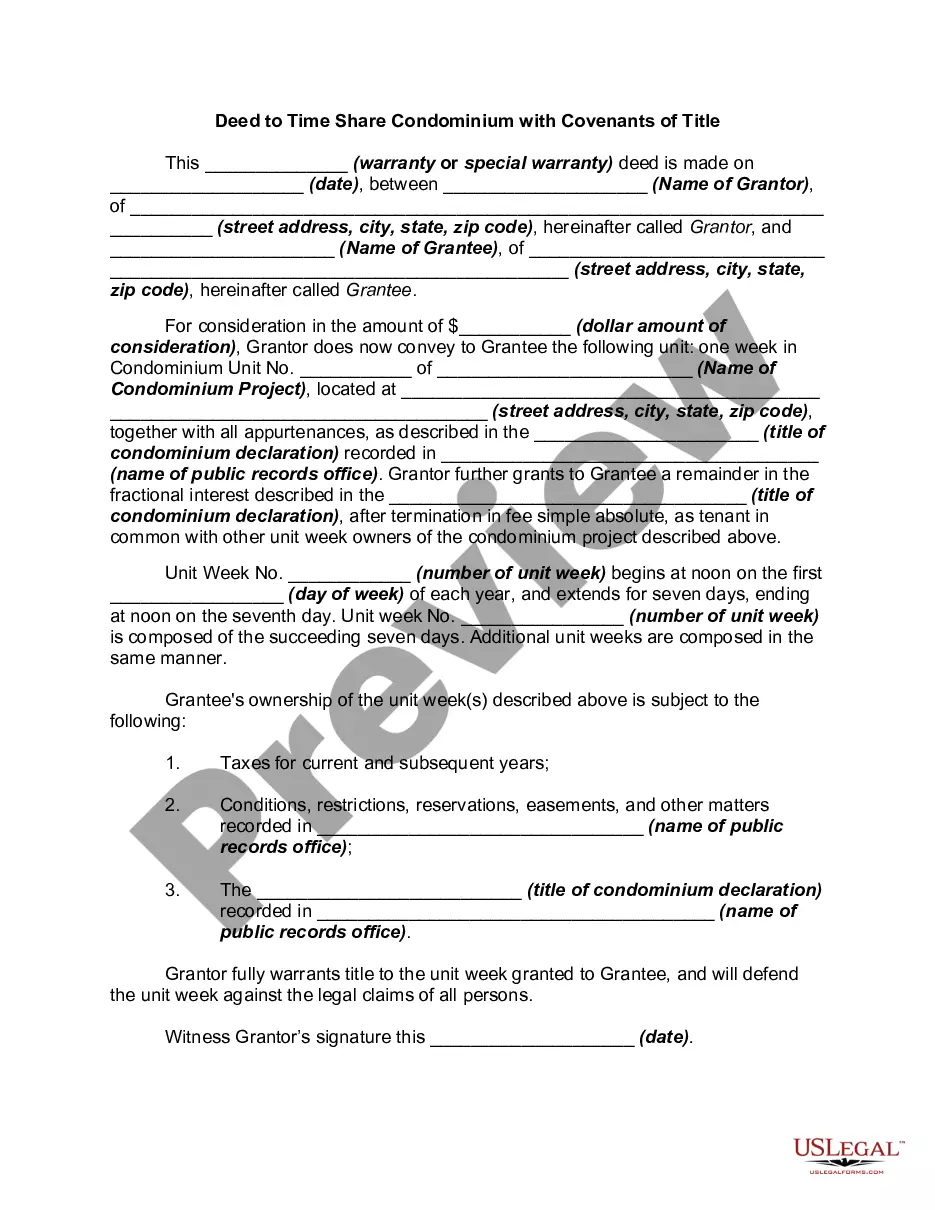
Deed to Time Share Condominium with Covenants of Title
What this document covers
The Deed to Time Share Condominium with Covenants of Title is a legal document that facilitates the transfer of ownership of a time share unit in a condominium. This type of deed provides assurances about the title, protecting the buyer from potential defects. Unlike a regular deed, this specific form includes covenants that guarantee the seller's rights to sell the property and protects the buyer's possession from third-party claims. Understanding this form is crucial for anyone involved in time share ownership or transactions.
Key parts of this document
- Identification of the Grantor (seller) and Grantee (buyer)
- Date of the deed execution
- Description of the condominium unit and the specific week included in the time share
- Consideration amount (the price paid for the time share)
- Conditions, restrictions, and reservations affecting the unit week
- Grantor's warranty of title and the ability to defend against claims
Situations where this form applies
This form should be used when a time share in a condominium is being sold or transferred between parties. It is particularly relevant for those who have purchased a week in a timeshare condominium and wish to formalize their ownership legally. Situations may include selling the time share to another individual or transferring it as a gift.
Who this form is for
- Individuals looking to sell their time share in a condominium.
- Buyers interested in acquiring a time share within a condominium project.
- Real estate professionals involved in time share transactions.
- Attorneys assisting clients with time share ownership transfers.
Instructions for completing this form
- Identify the parties involved: clearly print the names of the Grantor and Grantee.
- Specify the date on which the deed is executed.
- Enter the description of the condominium unit and week being conveyed.
- Fill in the monetary consideration being exchanged for the time share.
- Note any existing conditions or restrictions related to the property.
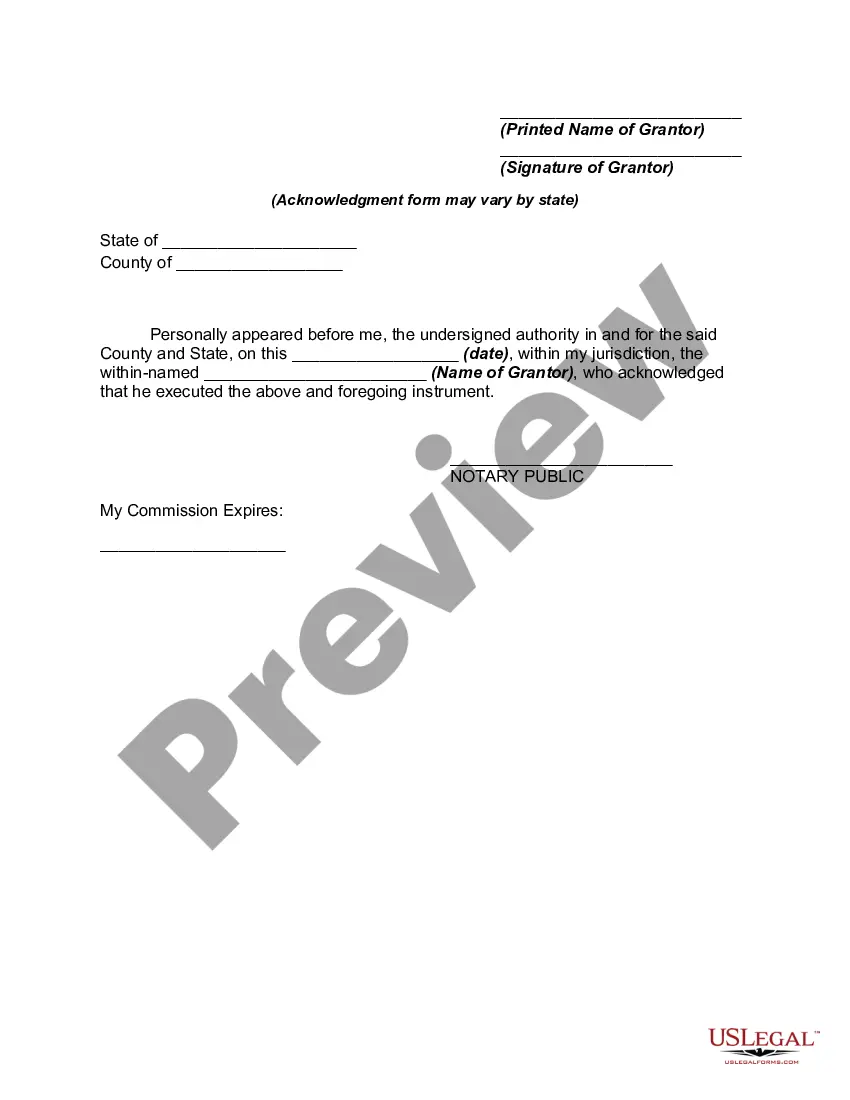
- Ensure both parties sign the document and have it notarized, if required.
Does this form need to be notarized?
Yes, this form must be notarized to be legally valid. Notarization helps confirm the identities of the signers and provides an official record of the transaction. US Legal Forms offers integrated online notarization options, allowing you to complete this process securely via video call without the need for travel.
Get your form ready online
Our built-in tools help you complete, sign, share, and store your documents in one place.
Make edits, fill in missing information, and update formatting in US Legal Forms—just like you would in MS Word.
Download a copy, print it, send it by email, or mail it via USPS—whatever works best for your next step.
Sign and collect signatures with our SignNow integration. Send to multiple recipients, set reminders, and more. Go Premium to unlock E-Sign.
If this form requires notarization, complete it online through a secure video call—no need to meet a notary in person or wait for an appointment.
We protect your documents and personal data by following strict security and privacy standards.

Make edits, fill in missing information, and update formatting in US Legal Forms—just like you would in MS Word.

Download a copy, print it, send it by email, or mail it via USPS—whatever works best for your next step.

Sign and collect signatures with our SignNow integration. Send to multiple recipients, set reminders, and more. Go Premium to unlock E-Sign.

If this form requires notarization, complete it online through a secure video call—no need to meet a notary in person or wait for an appointment.

We protect your documents and personal data by following strict security and privacy standards.
Avoid these common issues
- Not filling in the correct unit week number.
- Failing to provide the full legal name of the Grantor or Grantee.
- Leaving out the description of the property or any covenants affecting the ownership.
- Not having the document notarized when required by state law.
Why use this form online
- Convenience of downloading and completing the form at your own pace.
- Editability to ensure all information is accurate before finalizing.
- Access to templates prepared by licensed attorneys, ensuring legal compliance.
- Easy storage and retrieval of important legal documents.
Looking for another form?

Form popularity
FAQ
Although you can give your timeshare away as a gift, you will have to gift it with the understanding that the new owner will take over the fees, insurance, and taxesincluding any unpaid items.Additionally, the management company may require you to pay a transfer fee or other fees if you give away your timeshare.
With a deeded timeshare, you own an actual fraction of the property through a deed. Right To Use (RTU) gives you the right to vacation at the property. An RTU contract typically has an end date, where a deeded contract is for life.
1Step 1Be careful. Before you even begin, make sure the other party is legitimate and trustworthy, especially if you're the seller.2Step 2Create a buy sell agreement, known as an earnest money contract.3Step 3Create a deed.4Step 4Record your deed with the county.5Step 5Notify the resort.
The only way to forcibly change the ownership status is through a legal action and the resultant court order. However, if an owner chooses to be removed from the deed, it is simply a matter of preparing a new deed transferring that owner's interest in the property.
A deed back clause or program allows you to give your timeshare back to the resort. Until then, you remain responsible for paying the maintenance and special assessment fees along with your mortgage payments.
Sell it or give it back. A site like ARDA's Responsibleexit.com can connect you with timeshare developers who have free or low-cost exit options or professional licensed real estate brokers that specialize in timeshares. Negotiate your way out. Most timeshare companies don't want unhappy owners. Hire an attorney.
It will depend what state the property is in. For example, the minimum fee payable when changing the title to have someone removed from a property title in NSW is $133.48. This fee must be paid to the NSW Government Land & Property Information Department.
Contact Your Timeshare Company. First, contact your timeshare company or HOA and ask for help. Contact a Lawyer. Contact an attorney familiar with title laws in the state where you bought your timeshare. When All Else Fails: Surrender.
Step 1Be careful. Before you even begin, make sure the other party is legitimate and trustworthy, especially if you're the seller. Step 2Create a buy sell agreement, known as an earnest money contract. Step 3Create a deed. Step 4Record your deed with the county. Step 5Notify the resort.