Affidavit in Support of Motion for Order that Deposition be taken at a Designated Place other than that Stated in Notice
What is this form?
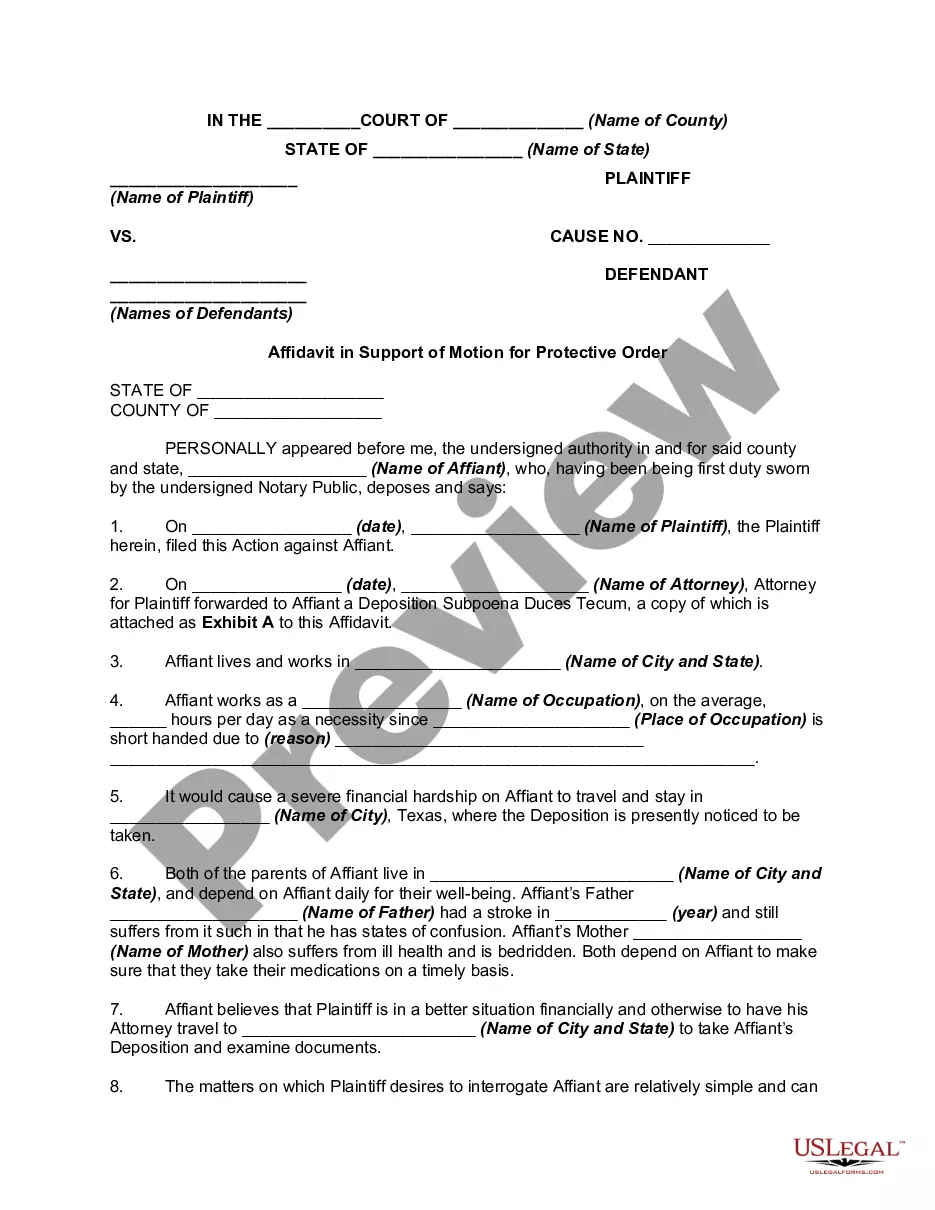
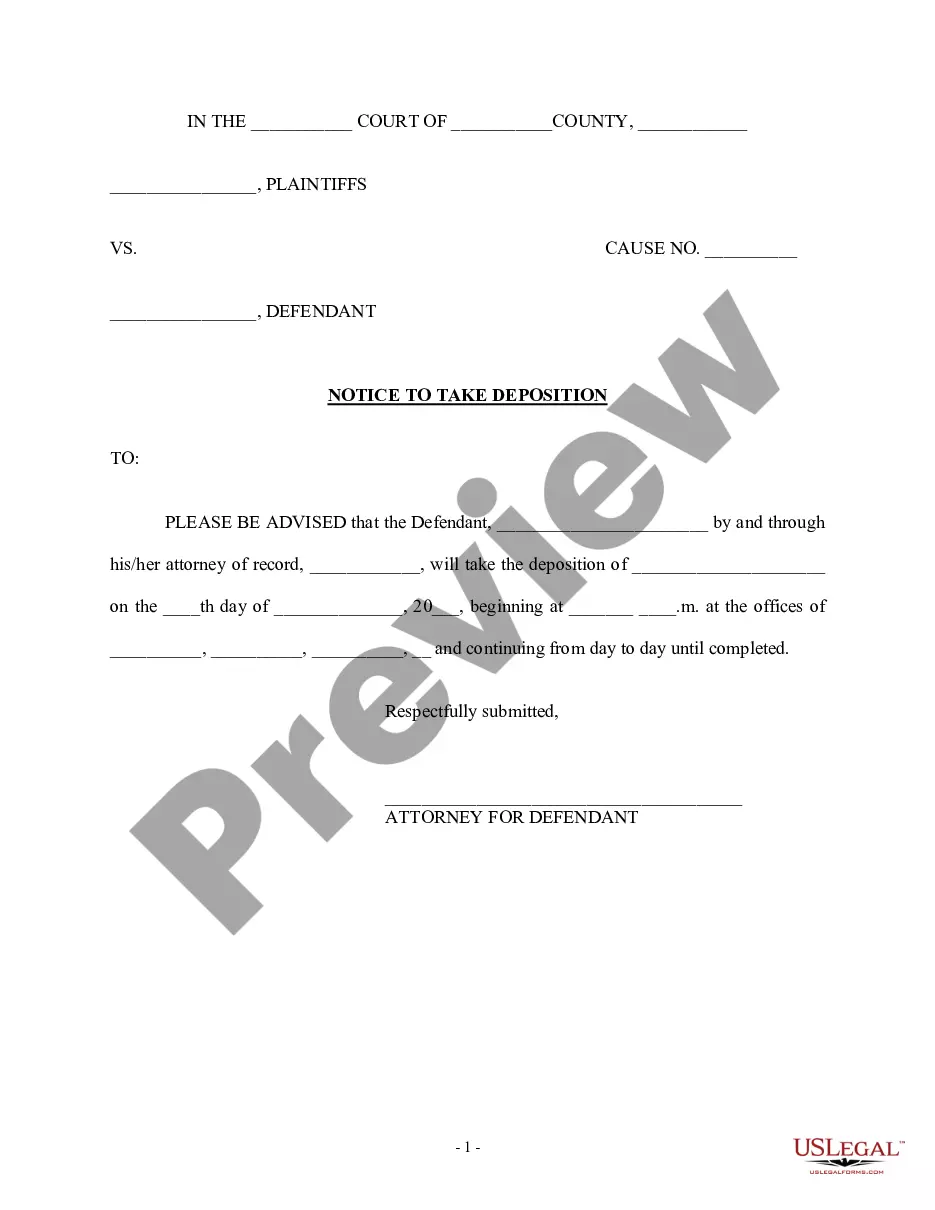
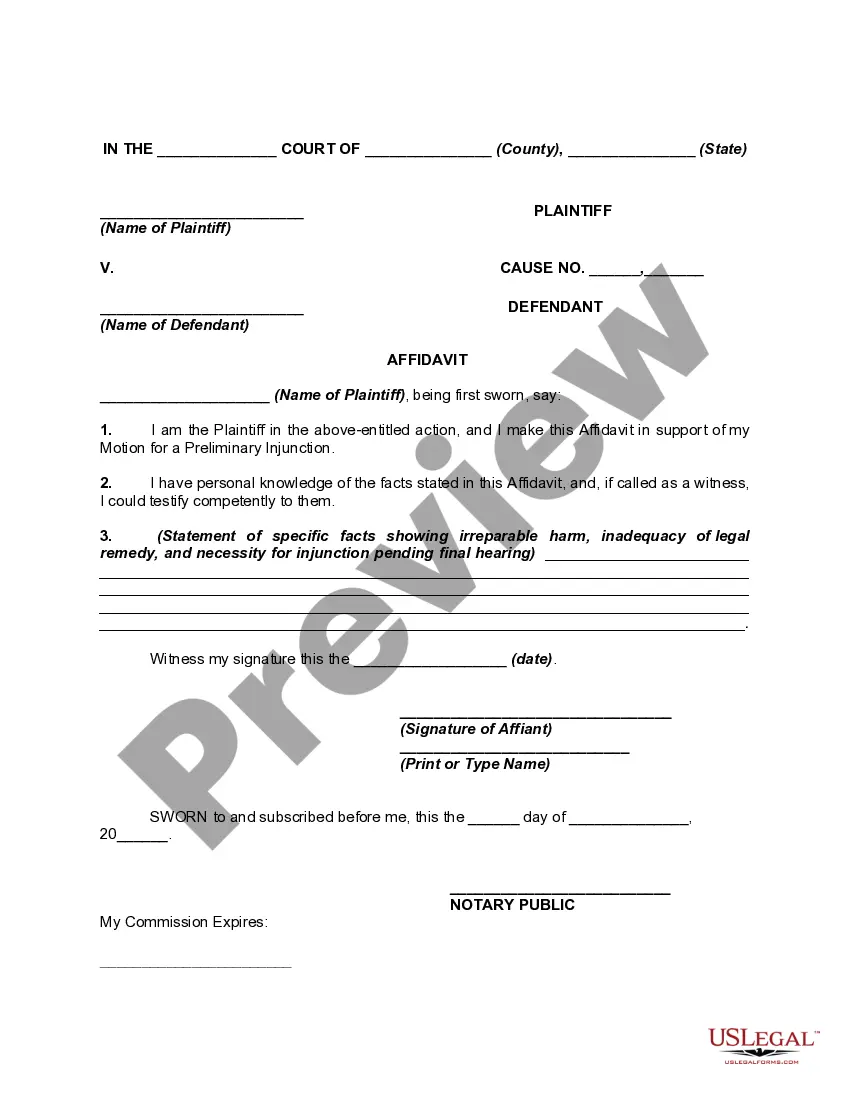
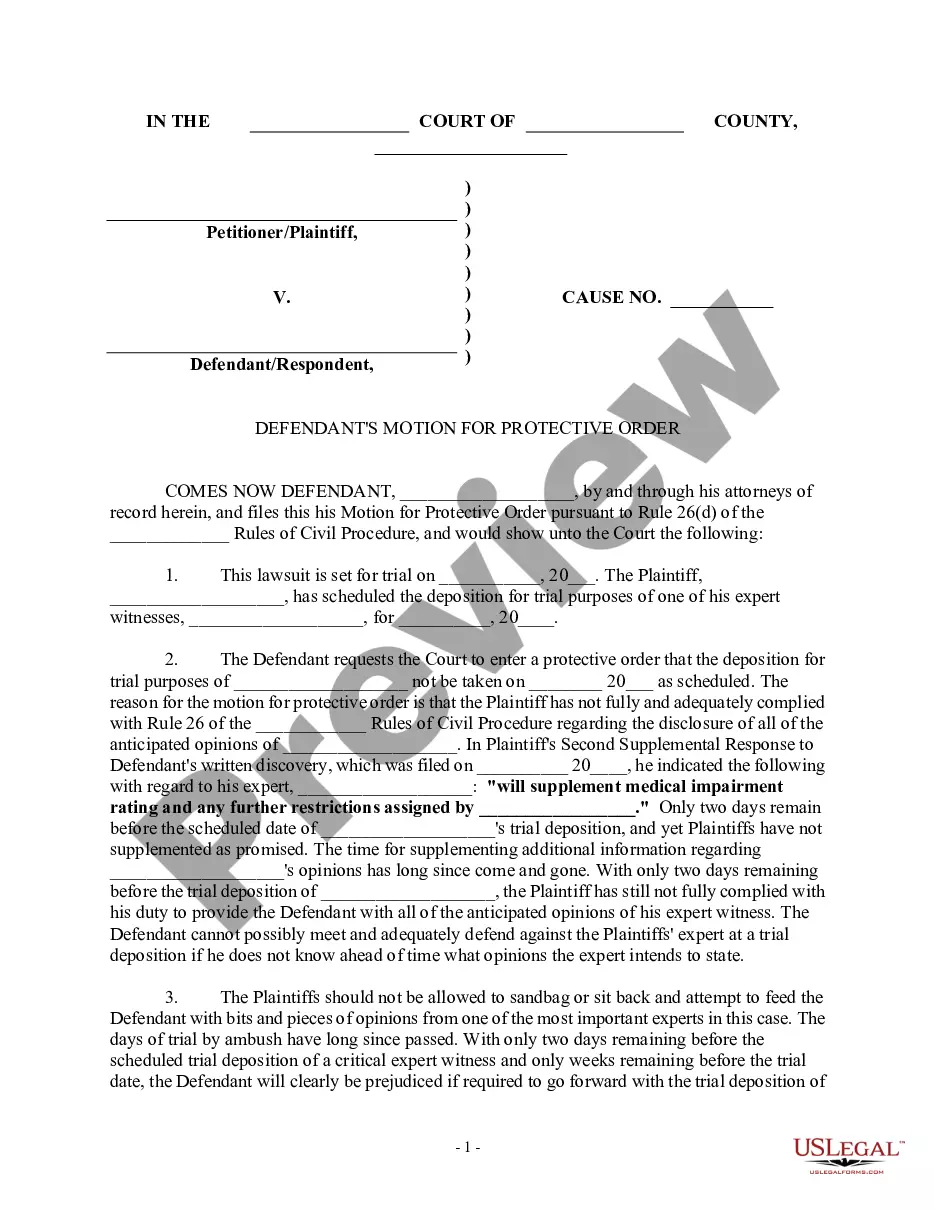
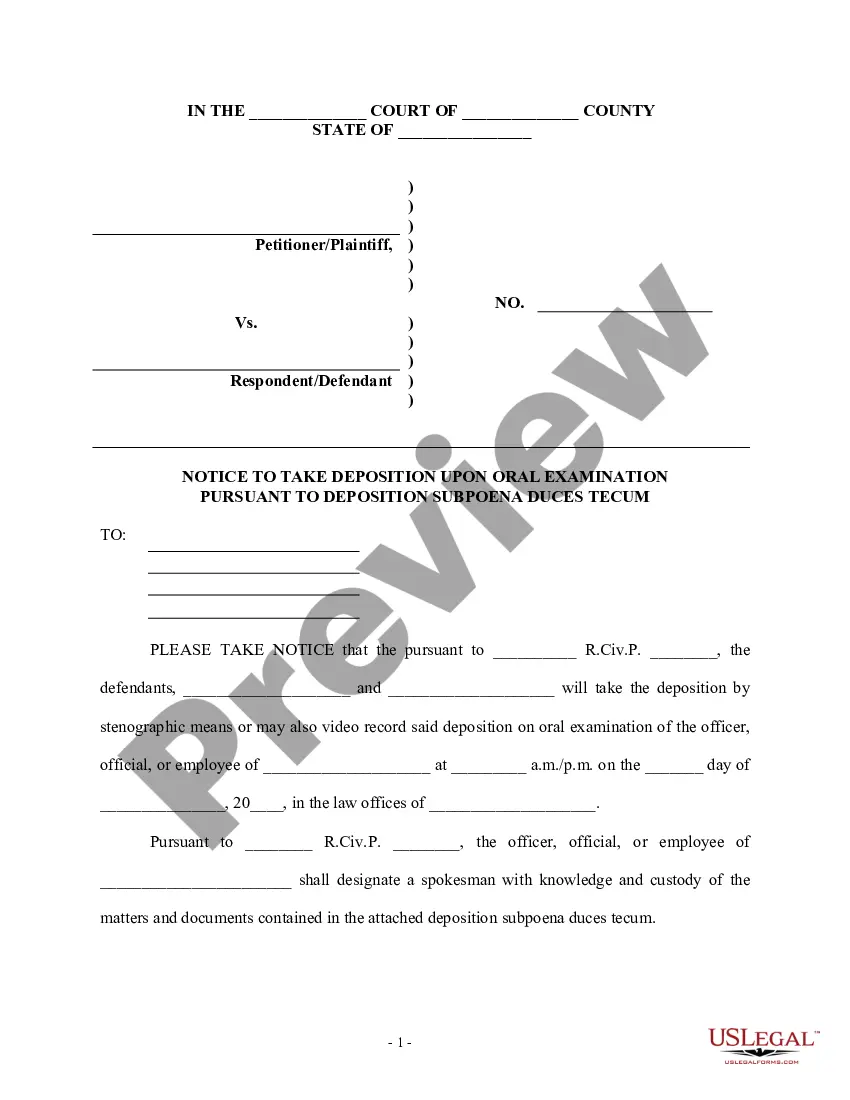
The Affidavit in Support of Motion for Order that Deposition be taken at a Designated Place other than that Stated in Notice is a legal document used in civil litigation. This affidavit supports a motion for a protective order, allowing a deponent to request that their deposition be conducted at a different location than originally specified. It is essential for parties aiming to avoid undue hardship associated with traveling to a predetermined deposition site, thus ensuring fair access to the legal process in accordance with the Federal Rules of Civil Procedure.
Key components of this form
- Introduction section detailing the case, parties involved, and relevant dates.
- Affiant's personal information providing their background and position.
- Statement of financial hardship due to travel requirements.
- Personal circumstances affecting the affiant's ability to attend the deposition.
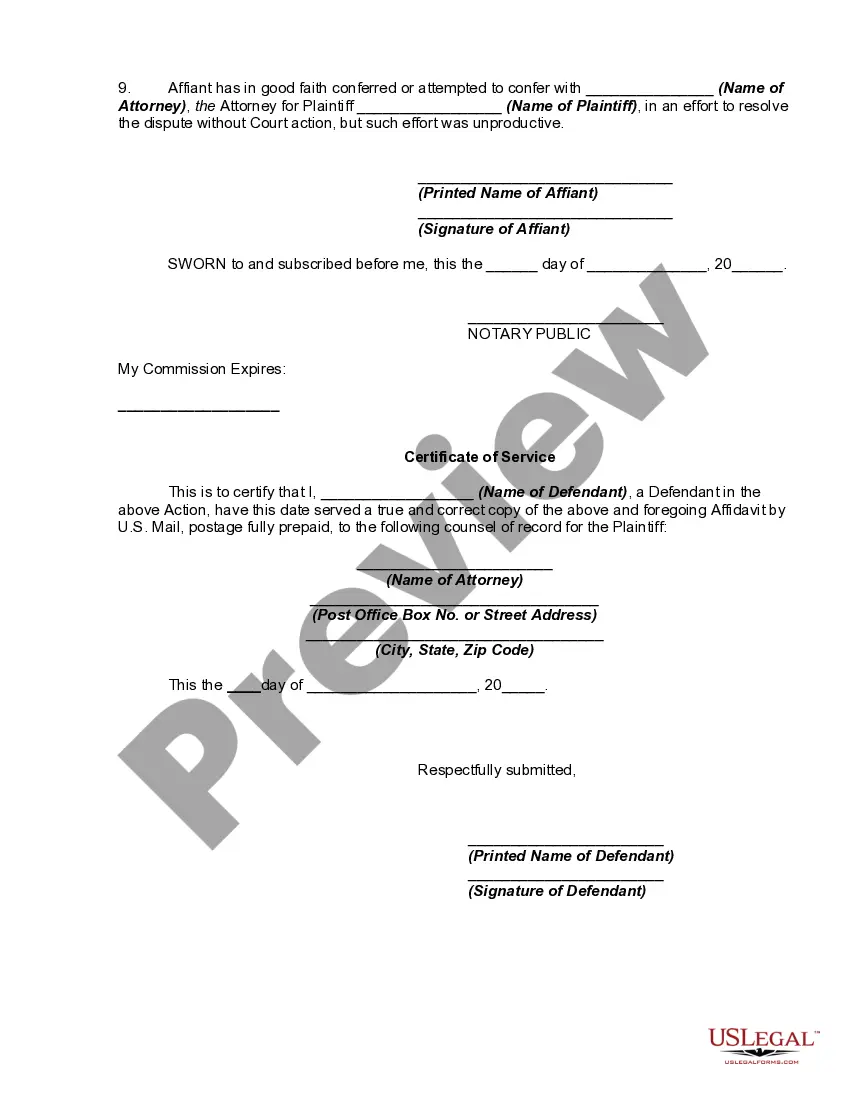
- Certification indicating efforts to resolve the dispute amicably.
- Signature and notarization section to validate the affidavit.
Common use cases
This affidavit is typically used when a party is unable to attend a deposition at the specified location due to financial or personal hardships. Reasons may include caring for dependents, work obligations, or health issues that make travel unreasonable. It can also be utilized when the requesting party believes that the deposition can be effectively conducted through written questions, thus negating the need for an in-person appearance.
Intended users of this form
- Affiants involved in civil litigation seeking a change of deposition location.
- Attorneys representing clients in situations of undue hardship related to depositions.
- Parties who have attempted to negotiate a better deposition arrangement but have been unsuccessful.
How to complete this form
- Fill in the header with the state, names of the plaintiff and defendants, and the cause number.
- Provide detailed information about the affiant, including their occupation and location.
- Document the reasons for requesting a change in deposition location, including financial and personal considerations.
- Certify any good faith efforts to resolve the matter directly with the opposing counsel.
- Sign the affidavit in front of a notary public to ensure its legal validity.
Does this form need to be notarized?
To make this form legally binding, it must be notarized. Our online notarization service, powered by Notarize, lets you verify and sign documents remotely through an encrypted video session.
Get your form ready online
Our built-in tools help you complete, sign, share, and store your documents in one place.
Make edits, fill in missing information, and update formatting in US Legal Forms—just like you would in MS Word.
Download a copy, print it, send it by email, or mail it via USPS—whatever works best for your next step.
Sign and collect signatures with our SignNow integration. Send to multiple recipients, set reminders, and more. Go Premium to unlock E-Sign.
If this form requires notarization, complete it online through a secure video call—no need to meet a notary in person or wait for an appointment.
We protect your documents and personal data by following strict security and privacy standards.

Make edits, fill in missing information, and update formatting in US Legal Forms—just like you would in MS Word.

Download a copy, print it, send it by email, or mail it via USPS—whatever works best for your next step.

Sign and collect signatures with our SignNow integration. Send to multiple recipients, set reminders, and more. Go Premium to unlock E-Sign.

If this form requires notarization, complete it online through a secure video call—no need to meet a notary in person or wait for an appointment.

We protect your documents and personal data by following strict security and privacy standards.
Common mistakes
- Failing to provide sufficient detail about personal hardships.
- Not including the certification of good faith efforts to resolve the dispute.
- Overlooking the need for notarization before submitting the affidavit.
- Incorrectly filling in the names or details of the parties involved.
Benefits of completing this form online
- Convenient access from anywhere, allowing you to complete the form at your own pace.
- Editable templates to tailor the affidavit to your specific situation.
- Reliability of templates drafted by licensed attorneys, ensuring compliance with legal standards.
Legal use & context
- This affidavit is used in the context of legal depositions and can be important in ensuring a fair process.
- Judges consider the reasons outlined in the affidavit when determining whether to grant the requested changes.
- Improper use of the affidavit can lead to legal complications or sanctions if not completed correctly.
What to keep in mind
- The affidavit is crucial for requesting a relocation of a deposition to alleviate undue burden.
- Documenting attempts to confer with opposing counsel is important for the motion's success.
- Always ensure proper notarization to maintain the affidavit's legal integrity.
Looking for another form?



Form popularity
FAQ
An affidavit, by itself, is inadmissible. One cannot cross examine a piece of paper. It is hearsay without the person who signed it present in court and ready to testify about it as well as authenticate it if necessary. So, an affidavit by itself does not stand up in a court of law.
After your affidavit has been filed, the court clerk will give your case file to the judge for review.The judgment will state that it is a default judgment and it will be signed and dated by the judge. The court clerk will mail copies of the judgment to you and the defendant.
An affidavit is used for the purpose of proving in court that a claim is true, and is typically used in conjunction with witness statements and other corroborating evidence. Through an affidavit, an individual swears that the information contained within is true to the best of their knowledge.
Further, the law pertaining to affidavits is covered under Section 139 and Order XIX of Code of Civil Procedure, 1908 along with Order XI of Supreme Court Rules. Order XIX of Code of Civil Procedure, 1908 empowers the Court to order at any point of time, any particular fact or facts to be proved by affidavit.
CASES FILED IN FEDERAL COURT Under FRCP 30, the party who notices the deposition bears the recording costs but transcription is not automatic. Any party may arrange to have a deposition transcribed and pay the costs for the transcription of the O&1.
A motion is a short statement not under oath asking the court to grant the relief wanted and citing the legal authority that allow the court to take such action. The affidavit is a sworn statement that sets forth the facts that support your motion.
RULE 30(B)(6) SHOULD REQUIRE AT LEAST 30 DAYS' NOTICE IN ORDER TO ENSURE PROPER PREPARATION, AND THE DEPOSITION SHOULD BE SCHEDULED AT A TIME AND DATE AGREEABLE TO BOTH PARTIES. A. Reasonable Notice Is at Least 30 Days Prior to Deposition.
Rule 30 governs depositions in federal court. Unlike in state court, where the Code of Civil Procedure provides timing requirements, a deposition notice in federal court need only give reasonable written notice. (Rule 30(b)(1).)
Affidavits are mainly used in Court proceedings. They are a written alternative to a person attending Court to give oral evidence in the witness box. Affidavits can be used to evidence, or prove, a number of things. For example, they are often used for people to tell their 'story' to the Court.