Motion to Dismiss Foreclosure Action and Notice of Motion
Understanding this form
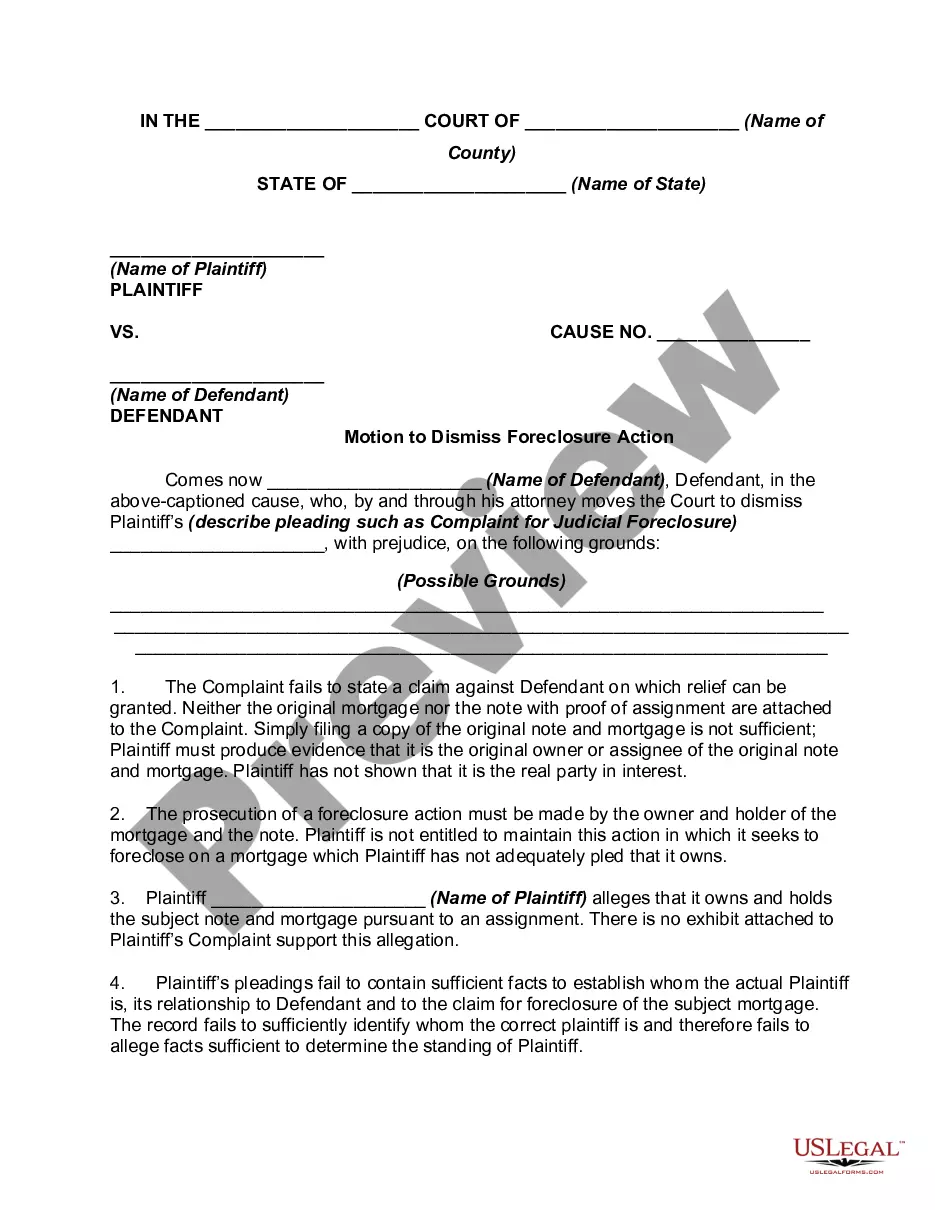
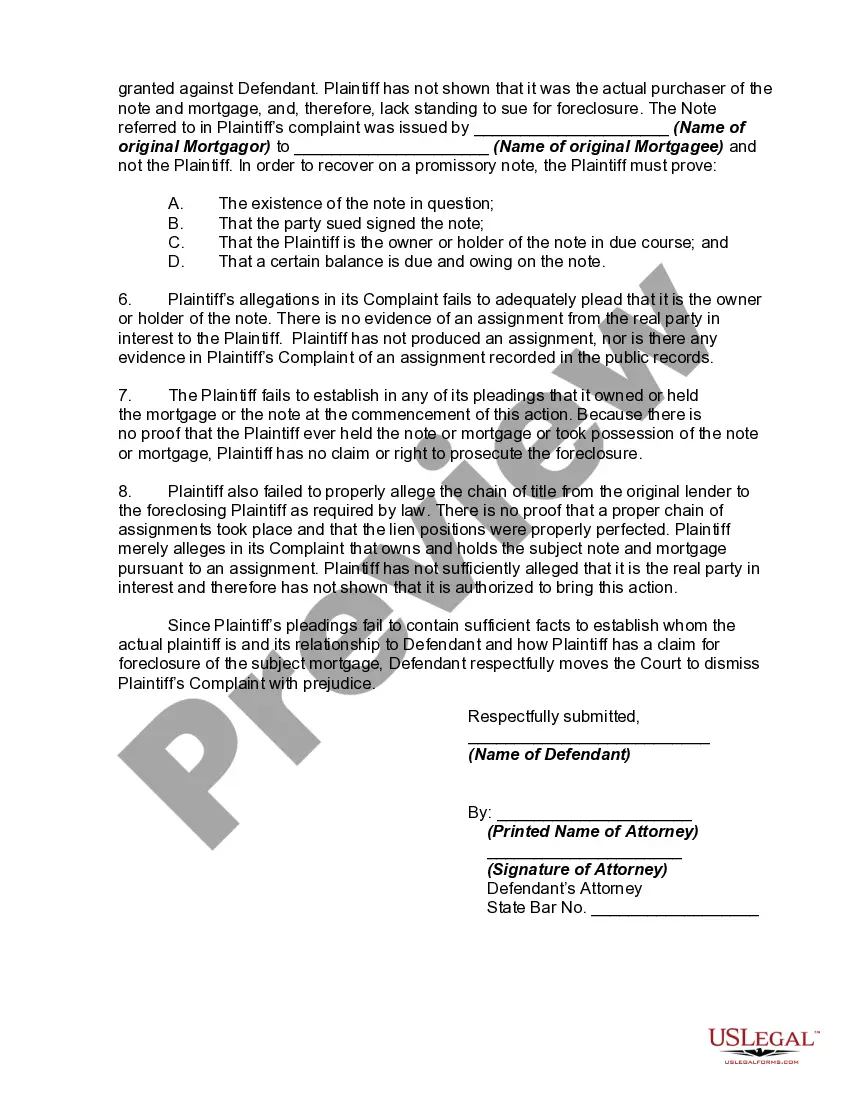
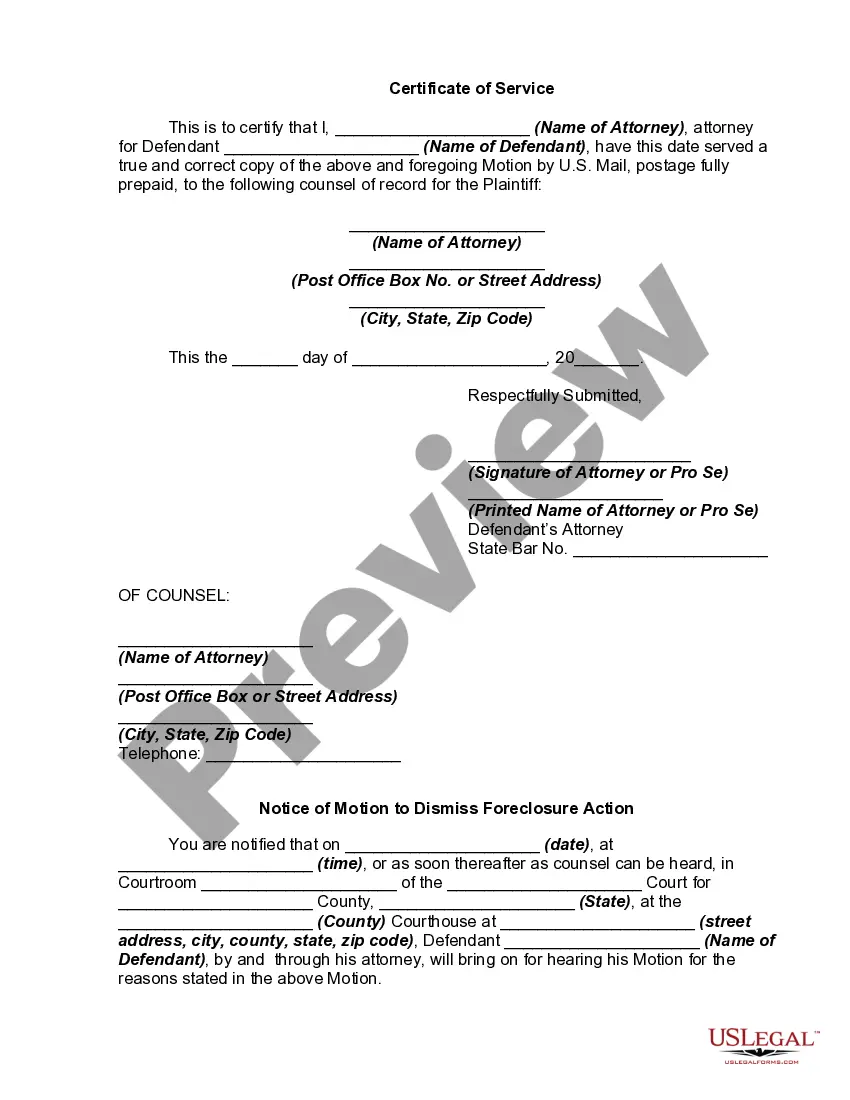
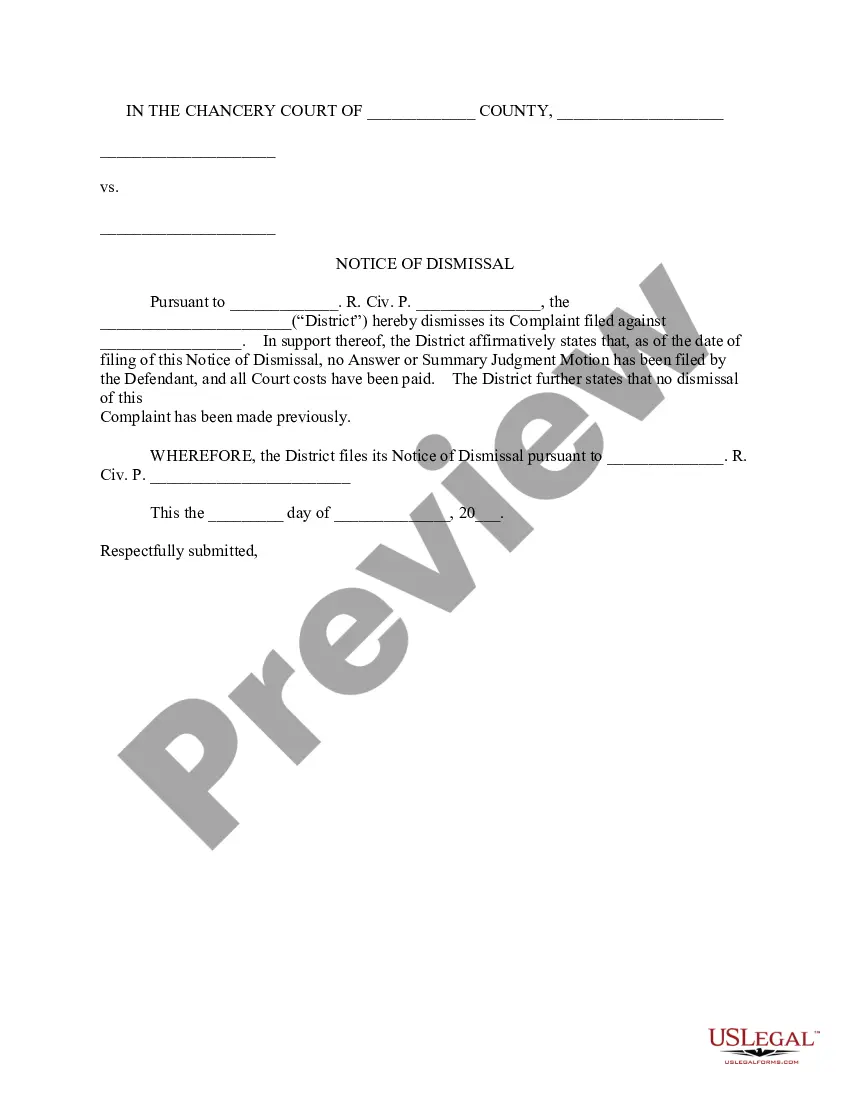
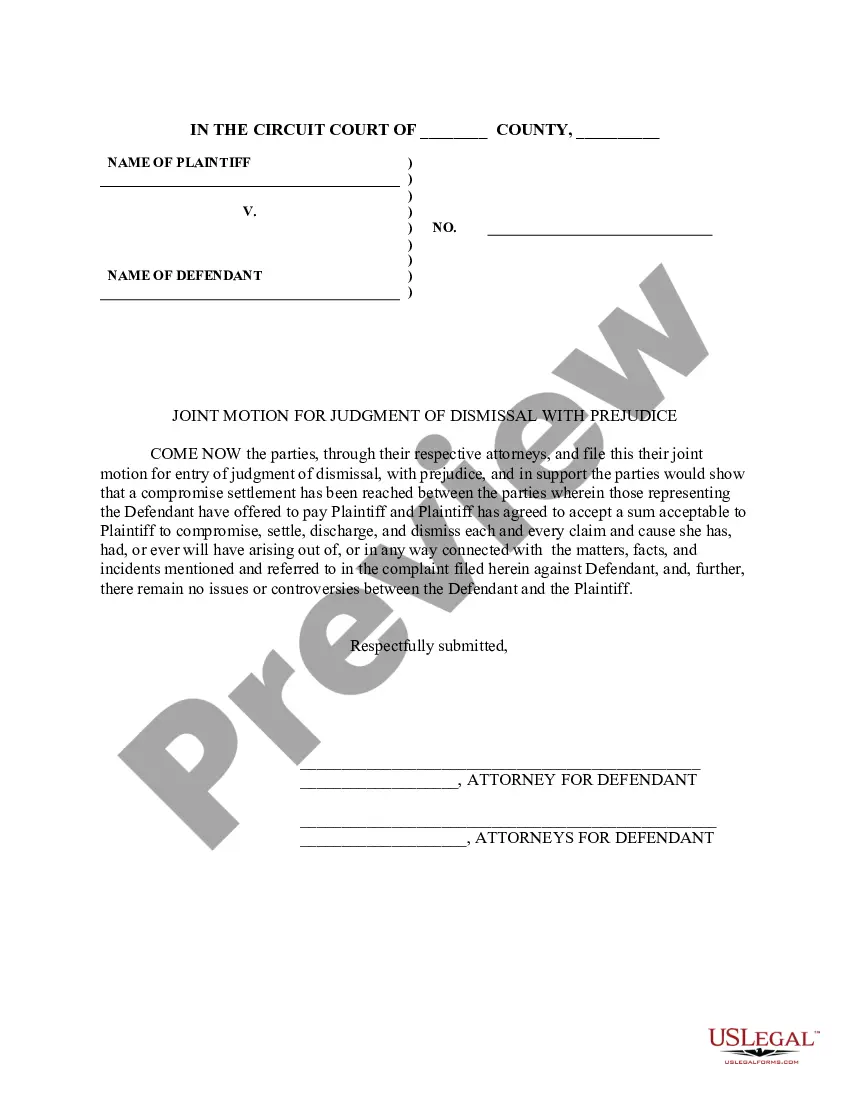
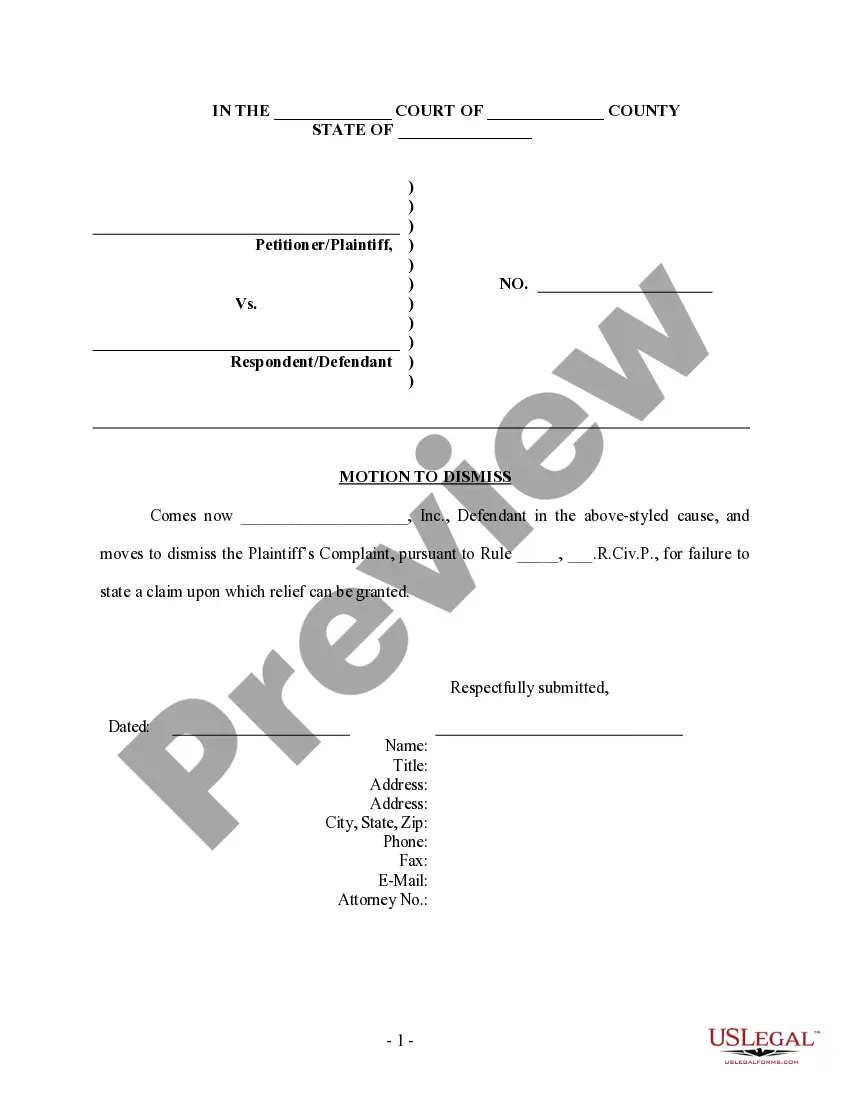
The Motion to Dismiss Foreclosure Action and Notice of Motion is a legal document that allows a defendant in a foreclosure case to challenge the lawsuit filed against them before submitting a full answer. This form is utilized to assert that the plaintiff does not have the legal standing to pursue the foreclosure due to issues such as lack of ownership of the mortgage or insufficient evidence to support their claims. Using this motion can temporarily halt the foreclosure process while a court evaluates the validity of the motion.
Main sections of this form
- Identification of the parties involved, including the plaintiff and defendant.
- Specific grounds for dismissal based on lack of standing or evidence.
- Citation of relevant rules of civil procedure supporting the motion.
- A statement of the requested relief, which is the dismissal of the foreclosure action.
- Notice of the motion hearing details, including date, time, and location.
Common use cases
This form should be used when a defendant wishes to contest a foreclosure action filed against them, particularly when they believe the plaintiff lacks the necessary legal standing. Situations may include cases where the plaintiff cannot prove ownership of the mortgage, fail to provide the original loan documents, or do not demonstrate a legitimate claim for foreclosure. Using this motion can be a strategic legal defense to delay or dismiss the foreclosure proceedings.
Who should use this form
- Homeowners facing foreclosure actions who believe the lender has no legal right to foreclose.
- Individuals who have received a foreclosure complaint but have not yet filed a full answer.
- Defendants who have evidence that addresses the plaintiff's claim, such as lack of assignment of mortgage or note.
- Anyone wishing to challenge the validity of a foreclosure based on procedural or substantive grounds.
How to complete this form
- Enter the names of the parties in the case, specifying the plaintiff and defendant.
- Clearly state the specific reasons for the motion to dismiss, citing related legal standards.
- Include a complete description of the complaint being challenged.
- Provide relevant citations of laws or civil procedures backing your argument.
- Fill out the notice of motion section with details of the hearing.
- Sign and date the form, ensuring all required fields are completed.
Is notarization required?
This form does not typically require notarization unless specified by local law. It is important to verify the requirements in your jurisdiction before submission.
Get your form ready online
Our built-in tools help you complete, sign, share, and store your documents in one place.
Make edits, fill in missing information, and update formatting in US Legal Forms—just like you would in MS Word.
Download a copy, print it, send it by email, or mail it via USPS—whatever works best for your next step.
Sign and collect signatures with our SignNow integration. Send to multiple recipients, set reminders, and more. Go Premium to unlock E-Sign.
If this form requires notarization, complete it online through a secure video call—no need to meet a notary in person or wait for an appointment.
We protect your documents and personal data by following strict security and privacy standards.

Make edits, fill in missing information, and update formatting in US Legal Forms—just like you would in MS Word.

Download a copy, print it, send it by email, or mail it via USPS—whatever works best for your next step.

Sign and collect signatures with our SignNow integration. Send to multiple recipients, set reminders, and more. Go Premium to unlock E-Sign.

If this form requires notarization, complete it online through a secure video call—no need to meet a notary in person or wait for an appointment.

We protect your documents and personal data by following strict security and privacy standards.
Mistakes to watch out for
- Failing to include necessary supporting documentation, such as proof of assignment.
- Not citing the correct rules of civil procedure relevant to your state.
- Submitting the motion without proper notice to the plaintiff.
- Relying on vague allegations rather than well-supported legal arguments.
Why complete this form online
- Convenience of completing and downloading the form at any time.
- Editability allows customization based on individual situations.
- Reliability from professionally drafted templates that comply with legal standards.
Legal use & context
- The motion to dismiss is a procedural tool to address legal deficiencies in a foreclosure complaint.
- It can help defendants pause the foreclosure proceedings while the court considers its merits.
- Successful filings can lead to the outright dismissal of the foreclosure action if the plaintiff cannot establish their right to sue.
Key takeaways
- The Motion to Dismiss is crucial for challenging the legitimacy of a foreclosure complaint.
- Proper documentation and legal grounds are essential for a successful filing.
- This motion provides a temporary hold on foreclosure proceedings while the court evaluates its validity.
Looking for another form?

Form popularity
FAQ
This form is a legal tool used by a defendant in a foreclosure case to ask the court to dismiss the plaintiff’s complaint on specific grounds, such as lack of standing or insufficient ownership documentation. It helps halt the foreclosure while the court considers the motion, and it can delay proceedings without the need to file a full answer to the complaint.
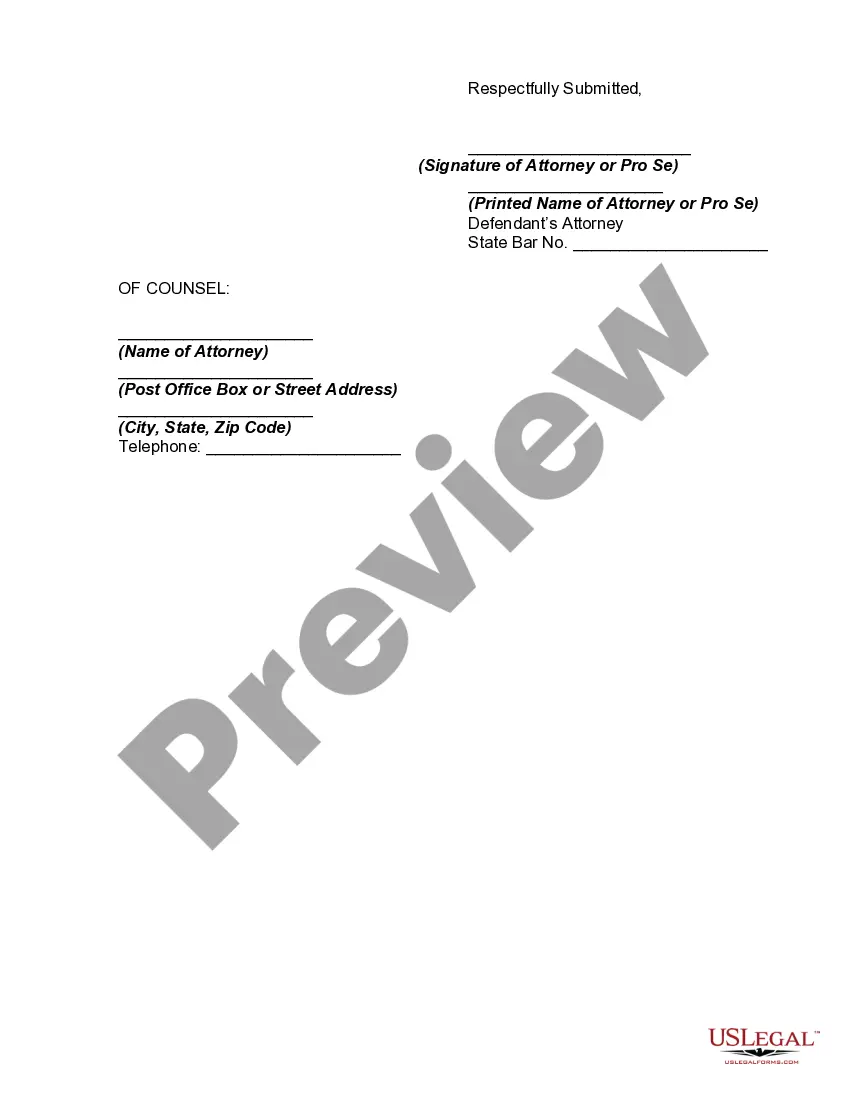
If the court grants the motion, the foreclosure action may be dismissed, ending the lawsuit against the defendant. The grant is reflected in an order dismissing the action. The form’s Grounds for dismissal explain why dismissal is appropriate (for example, lack of standing or insufficient documentation), the Notice of Motion provides the hearing date and time, and the Certificate of Service shows proper service to the plaintiff’s counsel.
A judge may grant the motion when the plaintiff cannot demonstrate standing or has not provided adequate documentation to prove ownership of the mortgage, as identified in the Grounds for dismissal. Granting the motion stops the foreclosure action pending further review.
Foreclosure cases may be dismissed when the plaintiff cannot establish standing or fails to produce the necessary documents showing ownership, which are listed as Grounds for dismissal on this form. A dismissal ends the current action, while the court may consider subsequent steps as the case develops.
Lawyers file this motion to challenge the foreclosure action by raising defenses based on lack of standing or missing documentation, and to delay proceedings while the court reviews the motion. The form includes a Notice of Motion for hearing details and a Certificate of Service to prove the motion was served.
This form includes a Notice of Motion and a Certificate of Service along with the Grounds for dismissal, and it’s specifically tailored for foreclosure actions to pause the case while the court considers the request.